
How Long Does It Take to Cook Chicken Thighs in Oven: Timing, Techniques & Tips
Bone-in, skin-on chicken thighs usually take about 35–45 minutes at 400°F (200°C). Boneless thighs cook in roughly 25–30 minutes at the same temperature, both done when the internal temperature reaches 165°F (74°C).
Bone-in, skin-on thighs: 35–45 minutes at 400°F (200°C); boneless thighs: 25–30 minutes at 400°F (200°C), cooked to 165°F (74°C) internal temperature.
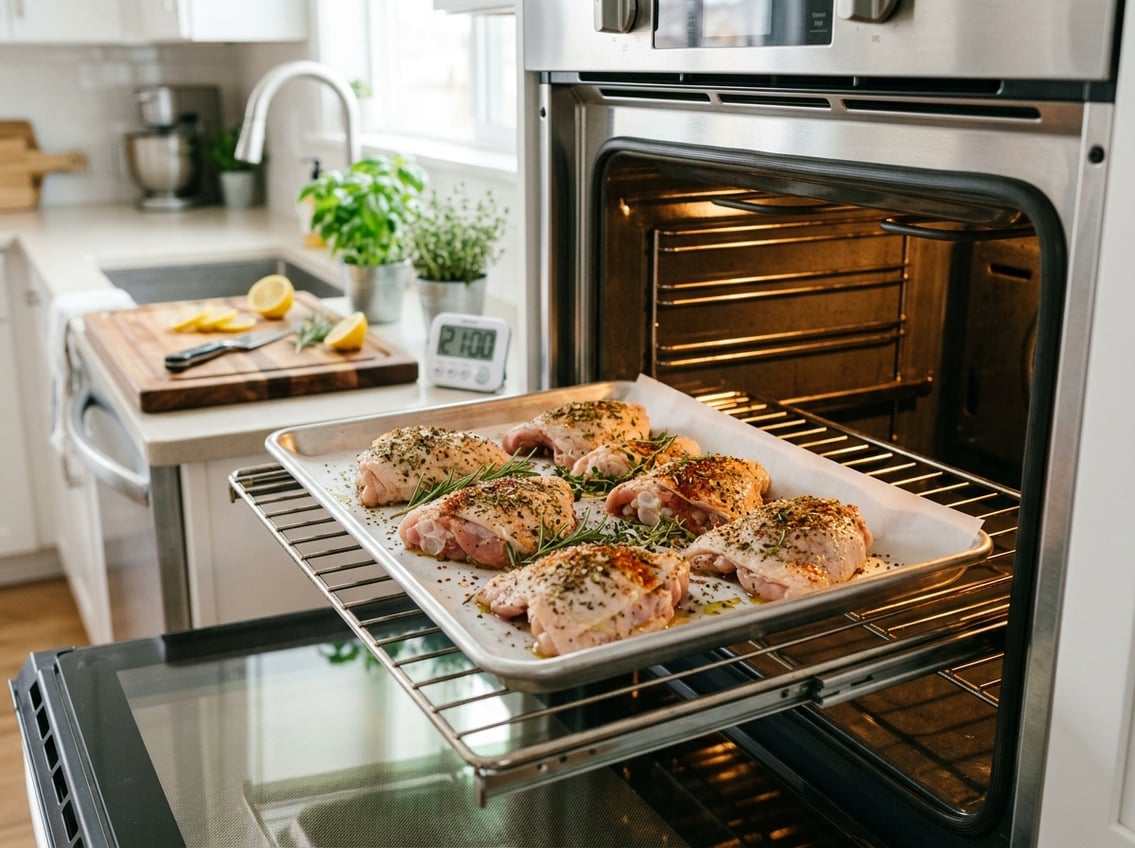
Oven temperature, bone presence, and technique all affect cook time. You can tweak time for crisp skin or extra-juicy meat.
You’ll find tips on prep, baking vs. roasting, and serving ideas for consistent results.
Essential Timing and Temperatures for Oven-Cooked Chicken Thighs
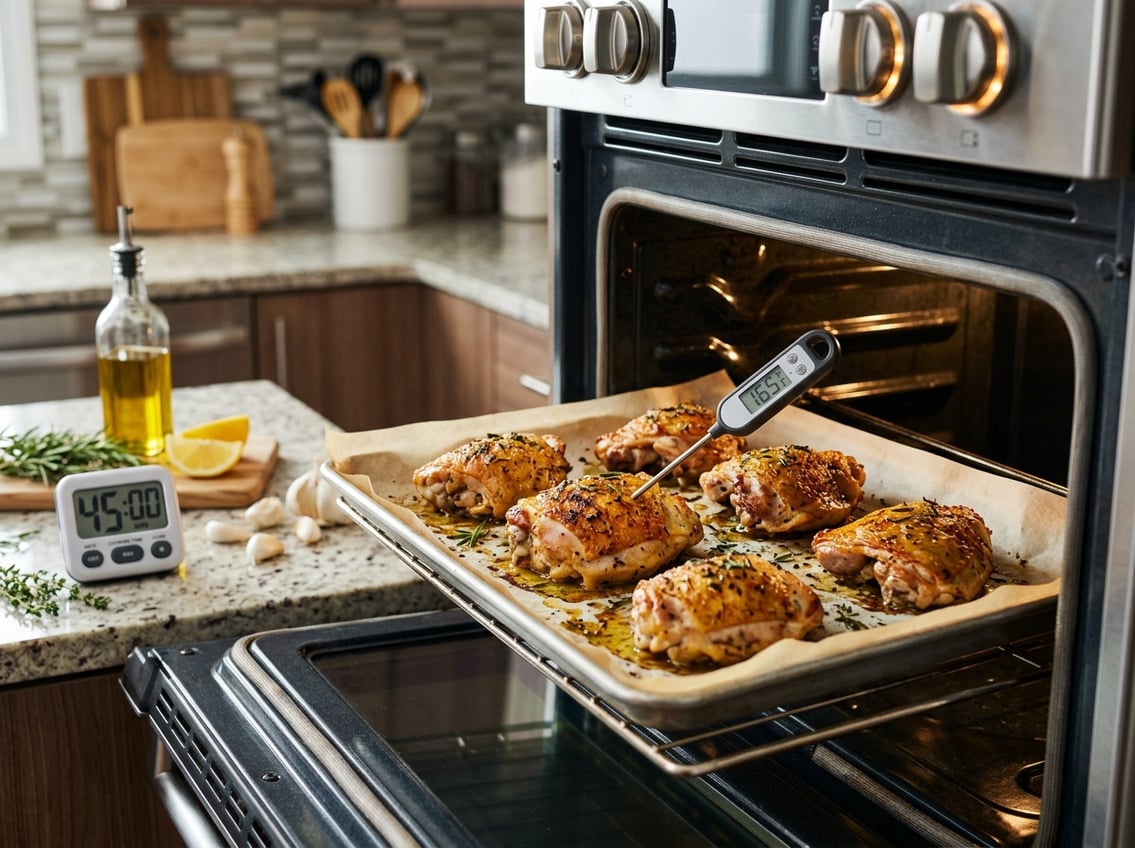
Oven temperature, thigh size, and internal temperature determine cook time and final texture. Adjust heat to prioritize crisp skin with higher temperatures or use lower heat for gentler cooking.
Typical Baking Times by Oven Setting
Set the oven based on your texture goals. At 425°F (220°C), boneless thighs cook in about 20–30 minutes and develop a crisp exterior.
Bone-in, skin-on thighs usually take 30–40 minutes at 400–425°F. At 375°F, expect 35–45 minutes.
At 350°F (175°C), plan on 40–50 minutes for 4–8 oz thighs. For very high heat (475–500°F), roast bone-in thighs for 25–35 minutes and watch closely to prevent burning.
Use an instant-read thermometer and start checking the thickest piece 5–10 minutes before the minimum time.
How Thickness and Size Affect Cooking Duration
Thickness matters more than weight. Thin boneless thighs (about 1/2 inch) finish in 20–25 minutes at 425°F.
Thicker boneless pieces (3/4–1 inch) need 25–30 minutes. Bone-in pieces require extra time because the bone slows heat transfer, so add 10–15 minutes compared to similar-weight boneless thighs.
Group similar sizes on the pan or remove smaller pieces earlier. Give thighs space in a single layer, skin-side up, on a rimmed sheet or shallow roasting pan for even browning.
Safe and Ideal Internal Temperatures
Poultry should reach a minimum internal temperature of 165°F (74°C) measured in the thickest part without touching bone. Insert an instant-read thermometer into the center of the thigh for an accurate reading.
You can remove thighs at 165°F and let carryover heat finish the job while resting. Some chefs cook dark meat to 175–185°F for a more tender, gelatin-rich texture, which requires longer bake times.
Always rest chicken 5–10 minutes to let juices redistribute before serving.
Bone-In vs. Boneless: What Changes in the Oven
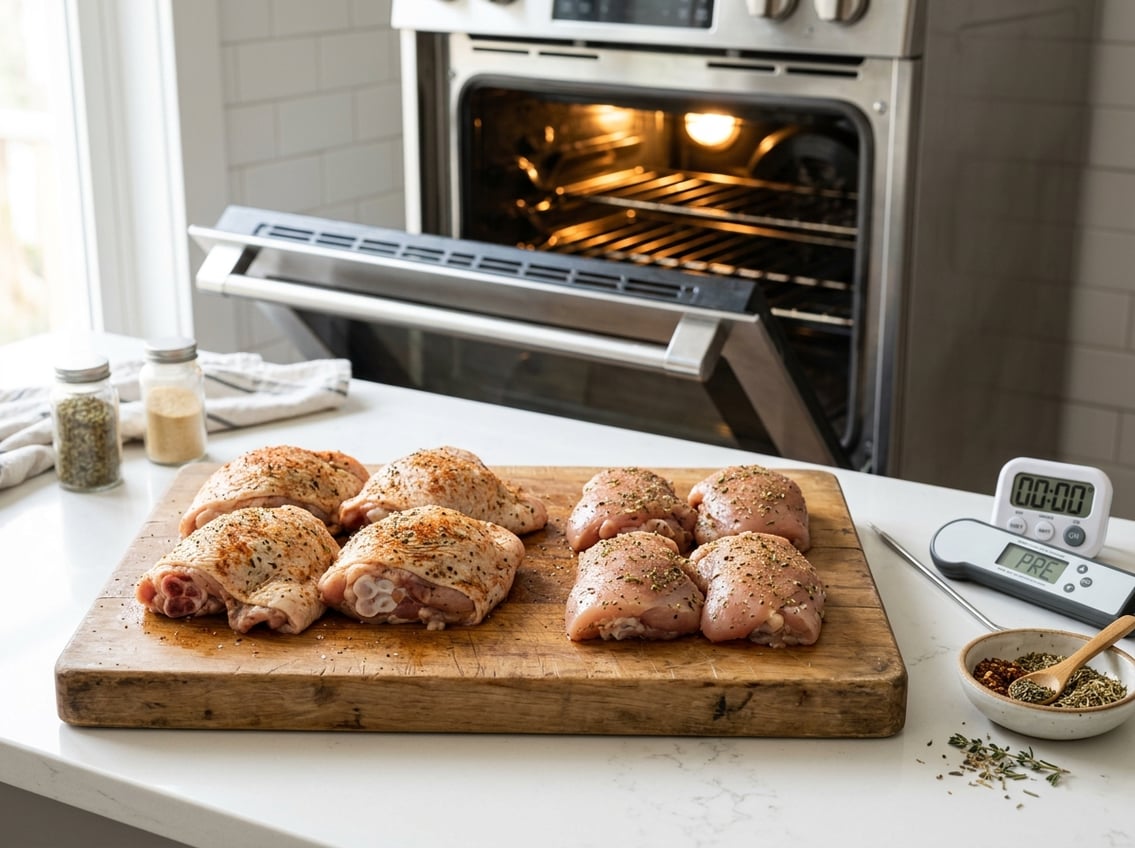
Bone-in thighs hold more fat and connective tissue, so they need more time and slightly lower heat to become tender. Boneless, skinless pieces cook faster and need shorter, higher-heat bursts for a browned exterior.
Cooking Times for Bone-In Chicken Thighs
Bone-in chicken thighs usually take about 30–45 minutes at 375–400°F (190–200°C), depending on size. The bone slows heat transfer, so check for an internal temperature of 165°F (74°C) near the thickest part but not touching bone.
Use skin-on for better crisping and flavor. Place thighs skin-side up on a rack or baking sheet to allow fat to render evenly.
If you want juicier results with fall-off-the-bone texture, lower the oven to 325–350°F and roast 40–55 minutes. Rest the thighs 5–10 minutes after baking.
Timing for Boneless and Skinless Thighs
Boneless, skinless chicken thighs typically finish in 15–25 minutes at 400°F (200°C), depending on thickness. They lack the bone’s heat buffer and reach safe temperature more quickly, so start checking at 12–15 minutes.
For browning, brush with oil and broil 1–2 minutes at the end or bake at 425°F for 18–22 minutes. Remove thighs at 160–162°F (71–72°C) and rest to reach 165°F (74°C).
Use even-sized pieces for consistent timing.
Preparation Steps for Juicy and Flavorful Results
Pat, season, and arrange the thighs so heat reaches the thickest part and skin crisps while meat stays moist. Small prep steps—drying, a balanced rub, and spacing—make a big impact on texture and flavor.
Trimming and Drying Chicken Thighs
Trim excess fat and loose skin from each thigh to prevent greasy drippings. Remove yellow fat deposits or ragged edges with a sharp knife, but leave most skin intact for flavor if you plan to bake skin-on thighs.
Pat each thigh thoroughly with paper towels until the surface feels dry. Moisture prevents browning, so drying is key for crispy skin.
If time allows, place the thighs uncovered on a rack in the fridge for 30–60 minutes to further dry the skin.
Bring thighs to near room temperature for 15–20 minutes before baking to promote even cooking.
Seasoning for Maximum Flavor
Season generously with kosher salt and freshly ground black pepper. Use about ¾–1 teaspoon kosher salt per pound of chicken, unless you use a brine or salty marinade.
Rub a dry spice mix (paprika, garlic powder, onion powder, and a pinch of dried thyme or oregano) into and under the skin. For boneless, skinless thighs, toss with oil to help spices adhere and promote browning.
Apply a glaze in the last 10–15 minutes of baking to avoid burning sugars. For marinating, 30 minutes is minimum and overnight yields deeper flavor; drain excess marinade before baking.
Arranging Thighs for Even Cooking
Place thighs skin-side up on a wire rack set over a rimmed baking sheet, or in a single layer on a baking dish with space between pieces. Elevating thighs allows hot air to circulate and the underside to brown.
Leave at least 1 inch between thighs to avoid overcrowding. Rotate the pan halfway through cooking if your oven has hot spots.
Position thicker, bone-in thighs toward the center of the pan. Use a meat thermometer inserted into the thickest part (not touching bone) to confirm an internal temperature of 165°F (74°C).
Technique Variations: Baking vs. Roasting
Choose a method based on skin texture and cooking time. Moderate baking gives even doneness and tender meat, high-heat roasting crisps skin and shortens cook time, and a final broil adds color and crunch.
Baking at Moderate Heat
Baking chicken thighs at 350–375°F (175–190°C) delivers gentle heat that cooks meat through without aggressive browning.
This method works for bone-in or boneless thighs when you want tender, evenly cooked meat for shredded chicken or casseroles.
Cook times:
- Boneless, skinless: about 25–35 minutes.
- Bone-in, skin-on: about 35–50 minutes.
Use an oven-safe pan with a bit of liquid (stock, marinade, or water) to keep the thighs moist. Cover with foil for the first part of cooking if you want very juicy meat, then uncover for the last 5–10 minutes.
Check doneness with an instant-read thermometer: target 165°F (74°C) in the thickest part. Rest for 5–10 minutes before serving.
Roasting at High Heat
Roasting at 425–450°F (220–230°C) focuses on crisp skin and concentrated flavor.
This method shortens cooking time and works best with skin-on, bone-in thighs but also produces good results with thicker boneless pieces.
Expect:
- Boneless, skinless: about 20–30 minutes.
- Bone-in, skin-on: about 30–40 minutes.
Place thighs skin-side up on a rimmed baking sheet or wire rack to promote airflow and even browning. Pat skin dry and oil lightly, then season well.
Preheat the pan or use a hot baking sheet to boost crisping. Monitor color and internal temperature to avoid burning the skin before the meat reaches 165°F (74°C).
Let thighs rest briefly before cutting.
Finishing with the Broiler
Use the broiler to add rapid browning after the thighs reach safe internal temperature.
Move the oven rack 4–6 inches from the broiler element. Set broiler to high and broil 1–4 minutes, watching constantly.
For skin-on thighs, broiling gives the best final crunch. For sauced or glazed thighs, broil briefly to caramelize sugars; reduce heat or move the rack up if charring starts.
Always confirm the final internal temperature is at least 165°F (74°C) after broiling.
Best Practices for Perfectly Cooked Chicken Thighs
Focus on accurate internal temperature, a short rest, and avoid common timing or temperature mistakes.
Using a Meat Thermometer
Use an instant-read thermometer to confirm doneness. Insert the probe into the thickest part of a bone-in thigh without touching bone; for boneless, check the center.
Aim for 165°F (74°C) as the minimum safe temperature. Remove chicken at 170–175°F for juicier baked thighs and let carryover heat finish the job.
Check temperature toward the end of the expected cook time. Calibrate your thermometer periodically and clean the probe between uses.
Resting and Carving
Rest the thighs for 5–10 minutes after removing them from the oven. Resting allows juices to redistribute and raises internal temperature a few degrees.
Place thighs on a warm plate or cutting board, loosely tent with foil to retain heat but avoid steaming the skin. Slice against the grain and serve promptly.
Avoiding Common Mistakes
Don’t rely only on time or appearance. Timing varies with thigh size, bone-in vs boneless, and oven accuracy.
Use a thermometer instead of cutting into meat to check doneness. Avoid overcrowding the pan and give thighs space for hot air circulation.
Preheat the oven and, if you want crisp skin, start at a higher temperature (400–425°F) or finish under the broiler for 2–3 minutes.
Serving, Storage, and Recipe Inspiration
Serve baked chicken thighs hot to keep skin crisp and meat juicy. Store leftovers promptly and reheat gently to preserve texture.
Use simple sides that balance rich, savory thighs and plan versatile ways to reuse the meat for quick meals later.
Recommended Side Dishes
Pair bone-in, skin-on baked chicken thighs with starches that absorb juices, such as roasted baby potatoes or lemon-parsley couscous.
A tray of roasted potatoes at 400°F complements thighs baked at similar temps. Add a bright vegetable to cut richness, like sautéed green beans with garlic, a cabbage slaw with vinaigrette, or quick-blanched asparagus with olive oil and lemon.
For a lighter plate, serve thighs over mixed greens with cherry tomatoes and a mustard-yogurt dressing. For family-style meals, place thighs on a platter with warm flatbread and a yogurt-tahini dip.
Storing and Reheating Leftovers
Let baked chicken thighs cool to room temperature within two hours after cooking. Place them in an airtight container and store in the refrigerator for up to 3–4 days.
Freeze chicken thighs for 2–3 months in a freezer-safe bag after removing excess air.
To keep the skin crisp, use the oven for reheating. Put the thighs on a rack over a baking sheet and heat at 325–350°F until the internal temperature reaches 165°F. This usually takes about 15–20 minutes from refrigerated.
For a faster method, microwave the chicken on medium for 1–2 minutes. Then finish reheating in a preheated oven for 5–7 minutes to restore texture.
If reheating from frozen, thaw the chicken overnight in the refrigerator. Alternatively, bake from frozen at 375°F for 30–40 minutes, covering with foil until the internal temperature is safe.
Check the temperature with a thermometer to ensure the chicken is fully reheated.
Flavor Ideas for Future Meals
Shred warm chicken thighs and mix with barbecue sauce or pesto. Serve on crusty rolls with pickles or arugula.
Slice thighs over rice or quinoa. Add roasted vegetables and drizzle with chimichurri or tzatziki.
Simmer chopped thighs in coconut milk with curry paste and vegetables for 10–15 minutes to make a quick curry.
Toss shredded chicken into baked pasta with marinara and mozzarella. Broil briefly.
Chop cold baked chicken thighs and add to Caesar, spinach-berry, or grain salads.
Store seasoned shredded meat in single-serve containers to speed future meal assembly.


