
How Long Does Chicken Thighs Take to Cook on Stove: Complete Skillet Guide
Boneless, skinless chicken thighs usually cook in about 10–15 minutes on the stove. Bone-in, skin-on thighs need about 20–30 minutes to cook through.
Use a meat thermometer and aim for 165°F (75°C) at the thickest point for safety and juiciness.
Sear the thighs, then simmer to achieve crispy skin and tender meat without overcooking.
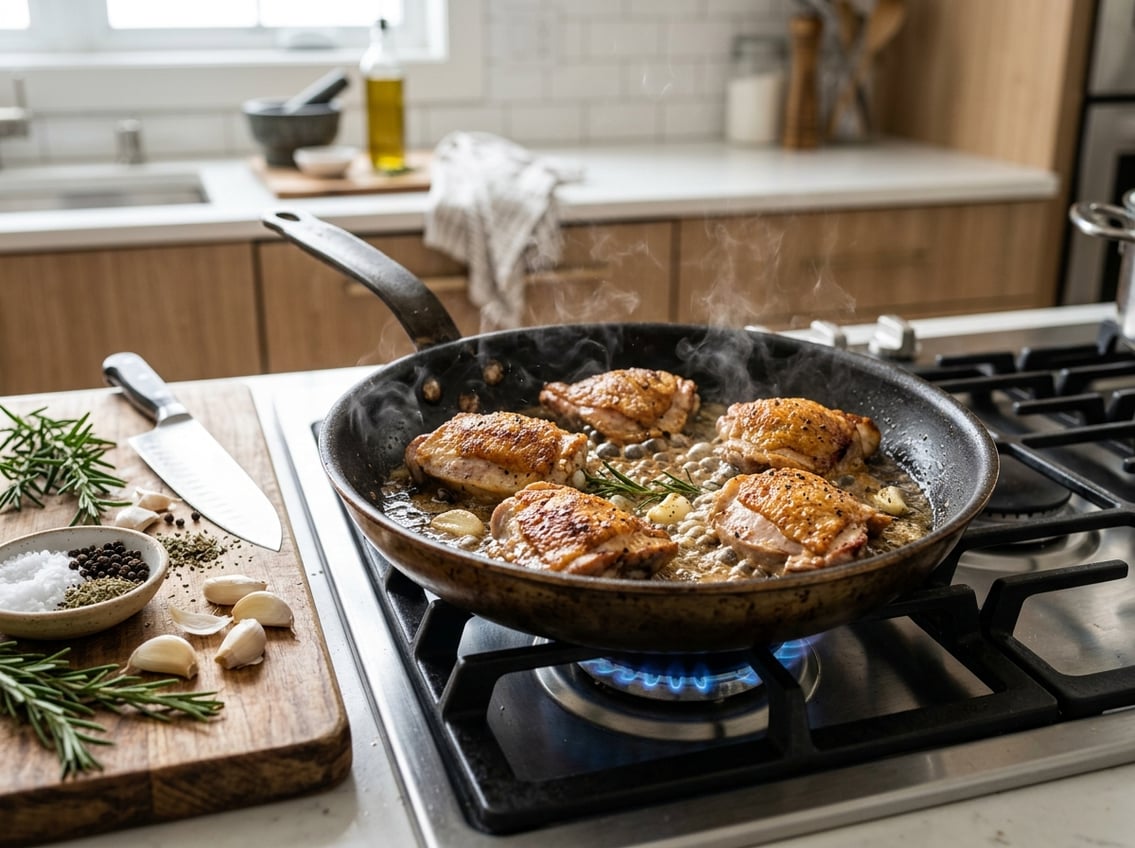
Heat level, pan type, and whether the thighs are bone-in or boneless affect the timing.
Practical prepping and seasoning tips help speed up cooking and boost flavor.
Learn techniques for searing, finishing under a lid, and checking doneness so your chicken thighs come out juicy every time.
Stovetop Cooking Times for Chicken Thighs
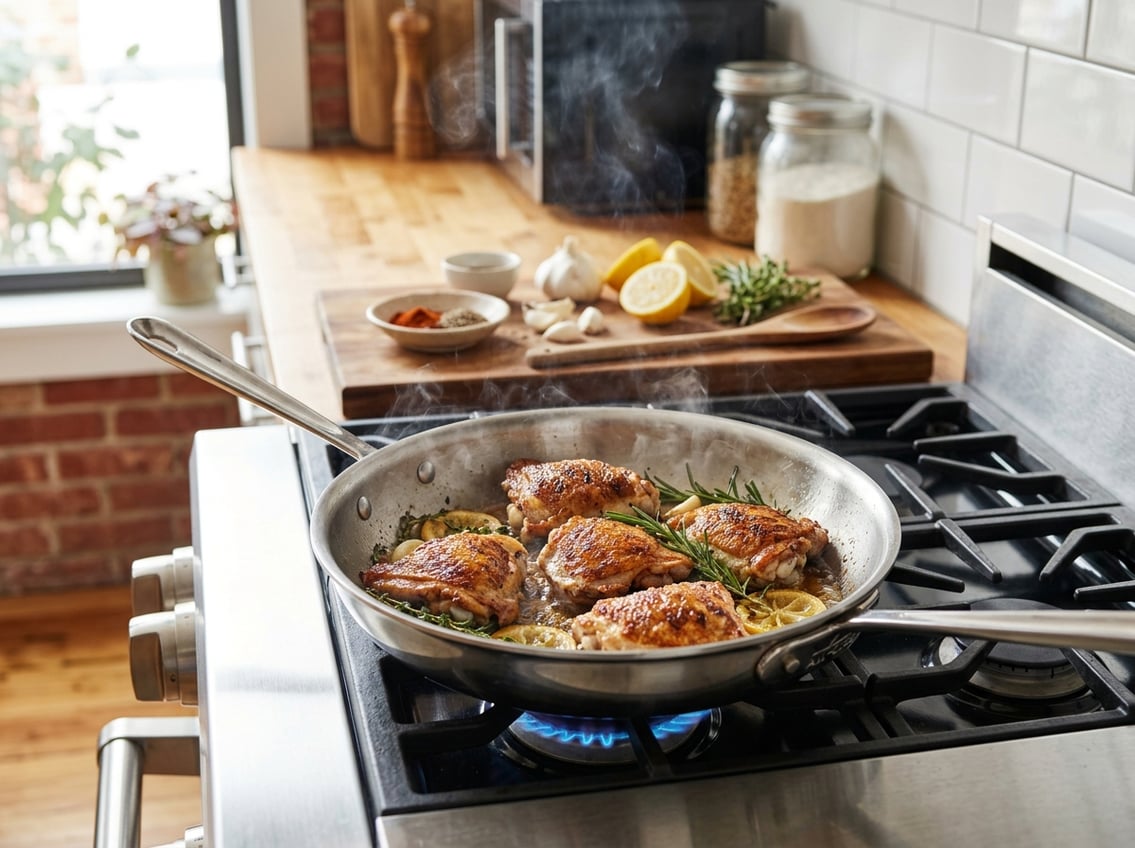
Cook times change based on bone, skin, and technique.
Use a meat thermometer and adjust heat so the thickest part reaches 165°F (74°C) without burning the outside.
Timing for Boneless Chicken Thighs
Boneless chicken thighs cook fastest on the stove.
Sear over medium-high heat oil-side down for 3–4 minutes, then flip and cook 4–7 minutes more depending on thickness.
Thin boneless thighs finish around 8–10 minutes total, while thicker pieces may need up to 12–15 minutes.
Check doneness with an instant-read thermometer in the center.
Rest boneless thighs 3–5 minutes off the heat so juices redistribute.
Lower the heat to medium and cover for the last few minutes if you want extra moisture.
Timing for Bone-In Chicken Thighs
Bone-in chicken thighs require longer cooking to transfer heat through the bone.
Start skin-side down in a hot skillet for 6–8 minutes to crisp the skin.
Reduce to medium and cook 12–18 minutes after flipping.
Total time is about 20–30 minutes depending on thigh size.
Insert a thermometer near the bone but not touching it; aim for 165°F (74°C).
If the exterior browns too quickly, lower the heat and continue cooking covered for 6–10 minutes.
Rest bone-in thighs 5–10 minutes before serving.
Timing for Skin-On and Skinless Chicken Thighs
Skin-on thighs take longer because you sear the skin to render fat and crisp it.
Sear skin-side down 5–8 minutes on medium-high, then finish 12–20 minutes with medium heat for bone-in or 8–12 minutes for boneless.
Skin-on boneless thighs usually take 12–20 minutes total.
Skinless thighs skip the long skin-searing step and can cook faster but may dry out more easily.
For skinless boneless, sear 3–4 minutes per side, then reduce heat if needed and cook until 165°F.
For skinless bone-in, follow bone-in timings but omit the initial long skin render; expect 18–25 minutes total.
Pan-Frying and Skillet Cooking Durations
Pan-frying and skillet methods vary by pan type and heat.
Use a heavy skillet and oil with a high smoke point.
For pan-fried boneless thighs: medium-high sear 3–4 minutes per side, then 4–8 minutes over medium until 165°F.
For pan-fried bone-in or skin-on: sear 5–8 minutes skin-side down, then finish covered on medium 12–18 minutes.
Finishing in the pan with a lid or a splash of broth reduces uncovered cooking time by several minutes because steam speeds cooking.
Always confirm with a thermometer and adjust heat to prevent burning while the interior reaches a safe temperature.
Essential Factors Affecting Cooking Time
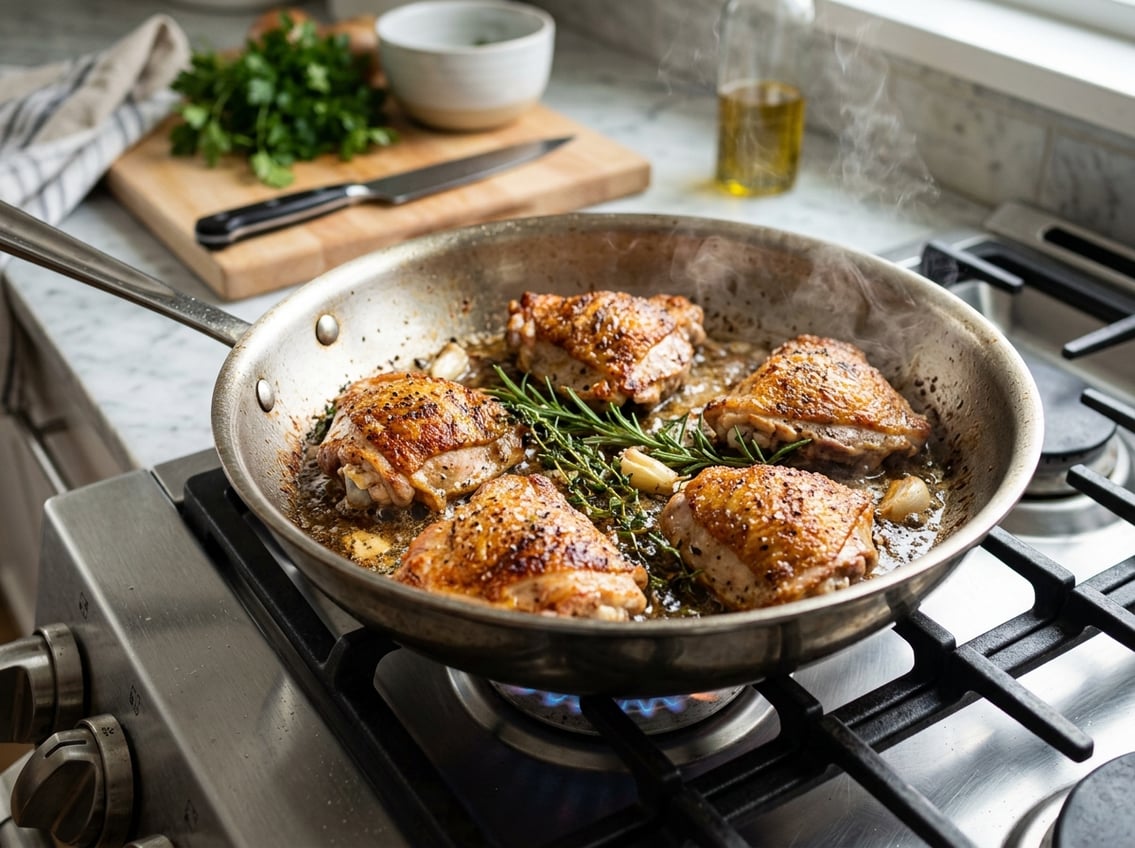
Thickness, bone presence, starting temperature, and the heat your pan delivers determine how long chicken thighs take to reach 165°F.
Each factor interacts with the others, so using a cast-iron skillet or flattening a thick thigh will shift your total cook time.
Thickness and Size Considerations
Thicker thighs take longer because heat must travel farther to the center.
A 1-inch boneless thigh typically finishes in 8–12 minutes per side on medium-high heat.
A 1.5–2 inch bone-in thigh often needs 20–30 minutes total when pan-frying.
Measure thickness or tap the meat to estimate density.
Adjust heat and time rather than relying on appearance.
If pieces vary, cook thicker ones first or finish them in a covered pan to equalize internal temperature.
Pound to uniform thickness or slice very large thighs into smaller pieces for even cooking.
Heat Settings and Pan Type
Your burner setting and pan material control how quickly the exterior browns and how evenly heat moves inward.
Cast iron holds heat and gives fast, steady browning, but may require lower settings to avoid burning.
Nonstick heats faster but gives less crust; raise the heat for color and lower it to finish cooking.
Use medium to medium-high for boneless thighs and medium for bone-in to avoid overcooking the outside.
A heavy lid traps heat and steam to speed through the final internal cook without drying the surface.
Monitor temperature with an instant-read thermometer.
Room Temperature and Starting Conditions
Starting meat closer to room temperature shortens stovetop cooking time and promotes even doneness.
If your thighs are straight from the fridge, add about 25–50% more cook time.
Pat thighs dry to improve searing.
Excess moisture forces you to cook longer to evaporate water.
Marinated or brined thighs may brown slower because surface sugars or moisture change heat transfer.
Wipe lightly before pan-frying to speed browning while preserving flavor.
Preparing and Seasoning Chicken Thighs
Dry the skin, trim excess fat, and choose a bold but simple seasoning approach to boost flavor and help the skin crisp.
Trimming and Drying Techniques
Trim loose skin and large pockets of fat with kitchen shears to reduce flare-ups and uneven cooking.
If you cook boneless chicken thighs, remove silverskin and small connective bits so the meat sears evenly.
Pat each thigh very dry with paper towels.
For extra-crispy skin, salt the skin-side and refrigerate uncovered for 2–24 hours to draw out surface moisture.
If you’re short on time, pat dry and salt 15 minutes before cooking.
Bring thighs to room temperature for 15–30 minutes before they hit the hot pan.
This short rest reduces cold centers and helps you hit the target internal temperature without overcooking the exterior.
Recommended Spices and Marinades
Use kosher salt and freshly ground black pepper as the base.
Add garlic powder, smoked paprika, and a pinch of cumin for savory depth.
Combine olive oil, lemon juice, minced garlic, and soy sauce or yogurt for 30 minutes to 6 hours if you want a marinade.
Yogurt tenderizes darker thigh meat; keep marinating under 6 hours to avoid altered texture.
For boneless chicken thighs, use a thinner marinade or just a dry rub.
Pat marinated thighs lightly before searing to promote a crisp crust.
Resting and Juiciness Tips
After cooking, transfer thighs to a plate and rest them skin-side up for 5–10 minutes.
Resting lets juices redistribute, so the chicken stays moist.
Check internal temperature with an instant-read thermometer; for thighs, aim for 175°F for tender, pull-apart meat.
If you hit 165°F, hold them tented for a few minutes to let carryover heat finish the collagen breakdown.
If you plan to reheat cooked thighs later, cool quickly, refrigerate within two hours, and reheat gently in a low oven or skillet with a splash of stock.
Types of Chicken Thighs and Their Cooking Needs
Different thigh cuts change how long and how you should cook them on the stove.
Pay attention to bone, skin, and thickness to hit a safe internal temperature of 165°F while keeping meat juicy.
Boneless Skinless Chicken Thighs
Boneless skinless thighs cook fastest because there’s no bone to slow heat transfer.
In a hot skillet over medium-high, cook evenly sized pieces about ¾–1 inch thick for 5–7 minutes per side.
Use an instant-read thermometer at the thickest point to confirm 165°F.
Pound or trim uneven pieces to a uniform thickness to avoid overbrowning before the center cooks through.
These thighs absorb marinades and sauces quickly.
They also release less fat while cooking, so add a tablespoon of oil or butter to the pan to promote browning and prevent sticking.
Bone-In vs. Boneless Cuts
Bone-in thighs take longer because the bone draws heat away from surrounding meat.
Sear bone-in thighs skin-side down for 6–8 minutes, then lower heat and cook another 10–12 minutes, or finish covered on low until the thickest part reads 165°F.
Expect total cook times 30–40% longer than equivalent boneless pieces.
Boneless thighs need less time and are easier to control for uniform doneness.
Choose bone-in for richer flavor and slightly slower cooking; pick boneless for speed and easier slicing or shredding.
Skin-On vs. Skinless Varieties
Skin-on thighs provide a protective fat layer that helps retain moisture and develop a crisp exterior when seared.
Start skin-side down in a cold or moderately hot skillet to render fat and crisp the skin.
Cook 6–10 minutes skin-side down until golden, then flip and finish on lower heat until 165°F.
The rendered fat bastes the meat, reducing the risk of drying out.
Skinless thighs brown faster directly against the pan but lack the self-basting fat.
They benefit from a little added oil and slightly shorter, higher-heat searing.
If you want crispy skin but have skinless thighs, finish under a broiler after stove-top cooking for a minute or two.
Techniques for Perfect Stovetop Chicken Thighs
Control your pan, oil, and timing to get a brown crust and a fully cooked interior without drying the meat.
Small adjustments in pan material, temperature, and when you flip determine whether your chicken thighs finish juicy or overcooked.
Choosing the Right Pan
Use a heavy-bottomed skillet like cast iron or stainless steel for even heat and reliable searing.
Cast iron holds heat well for a deep crust; stainless steel heats evenly and releases better when properly preheated.
Pick a pan large enough so the thighs sit in a single layer with at least 1/2 inch between pieces.
Overcrowding drops surface temperature and causes steaming instead of browning.
For bone-in chicken thighs, use a deeper skillet or sauté pan to accommodate thickness and any liquids you’ll add.
Avoid thin nonstick for the initial sear.
Reserve nonstick for gentler finishes or for boneless, thin-cut thighs that need less aggressive heat.
Managing Oil and Pan Temperature
Preheat the skillet on medium to medium-high until it’s hot but not smoking.
Test readiness by flicking a few drops of water; if they skitter and evaporate quickly, the pan is ready.
Add a tablespoon or two of oil with a high smoke point and let it shimmer.
Coat the chicken lightly with oil or pat dry and season.
Excess moisture prevents a good sear.
Maintain steady heat: if oil smokes, lower the burner; if the oil sputters aggressively, remove the pan briefly.
For bone-in chicken thighs, start slightly higher to sear, then reduce heat to finish cooking through.
Use a thermometer to monitor internal heat; 165°F (75°C) at the thickest part near the bone ensures safety.
Searing and Flipping for Even Cooking
Place thighs skin-side down and leave them undisturbed for 4–7 minutes depending on thickness.
A single, confident sear develops a deep brown crust and releases the meat from the pan when ready to flip.
If the chicken resists, it usually needs more time.
After flipping, lower heat to medium-low for boneless or low for bone-in and cook until the internal temperature reaches 165°F (75°C).
For bone-in chicken thighs, sear both sides then cover and simmer 10–15 minutes to finish through.
For boneless thighs, finish uncovered for 5–8 minutes after the flip.
Let the meat rest 4–5 minutes before slicing to allow juices to redistribute.
Safety, Doneness, and Storage Best Practices
Cook chicken thighs to the right temperature, check doneness with a thermometer, and chill leftovers promptly. Store cooked thighs in shallow containers and reheat them until steaming hot before serving.
Using a Meat Thermometer
Use an instant-read meat thermometer every time you cook chicken thighs on the stove. Insert the probe into the thickest part of the thigh without touching the bone, since bone conducts heat and gives a falsely high reading.
Check the temperature near the end of your cooking window, which is usually 20–30 minutes for bone-in thighs over medium heat or 12–20 minutes for boneless thighs, depending on thickness. If the reading is below the target, keep cooking and recheck in 2–3 minutes.
Calibrate your thermometer regularly. Clean the probe with hot, soapy water between uses to prevent cross-contamination.
Minimum Internal Temperature Guidelines
Cook chicken thighs to at least 165°F (74°C) measured at the thickest point. This temperature destroys pathogenic bacteria and makes the meat safe to eat.
Bone-in thighs often taste better when cooked to a higher final temperature, like 175–185°F, to break down connective tissue and make the meat more tender. Use 165°F as the safety minimum.
Let cooked thighs rest for 3–5 minutes after removing them from the pan. This rest allows carryover heat to raise the internal temperature slightly and helps juices redistribute.
Storing and Reheating Cooked Chicken Thighs
Refrigerate cooked chicken within 2 hours of cooking, or within 1 hour if the room temperature is above 90°F (32°C). Use shallow, airtight containers or wrap pieces individually to help them cool faster and reduce bacterial growth.
Keep cooked thighs in the refrigerator at 40°F (4°C) or below for up to 3–4 days. For longer storage, freeze them in airtight packaging.
For best quality, use frozen chicken within 4 months, though it remains safe if kept frozen continuously.
When reheating, bring the internal temperature to 165°F (74°C). Reheat in a 325°F oven, a covered skillet over medium heat, or in the microwave with a cover.
Stir or rotate the chicken in the microwave to avoid cold spots. Discard any reheated chicken that smells off, has an unusual texture, or was left out too long.


