
How Long Can Chicken Thighs Stay in the Fridge Raw: Safe Storage, Spoilage, and Best Practices
You can safely keep raw chicken thighs in the refrigerator for 1–2 days.
If you need to store them longer, freeze within that window to protect quality and food safety.
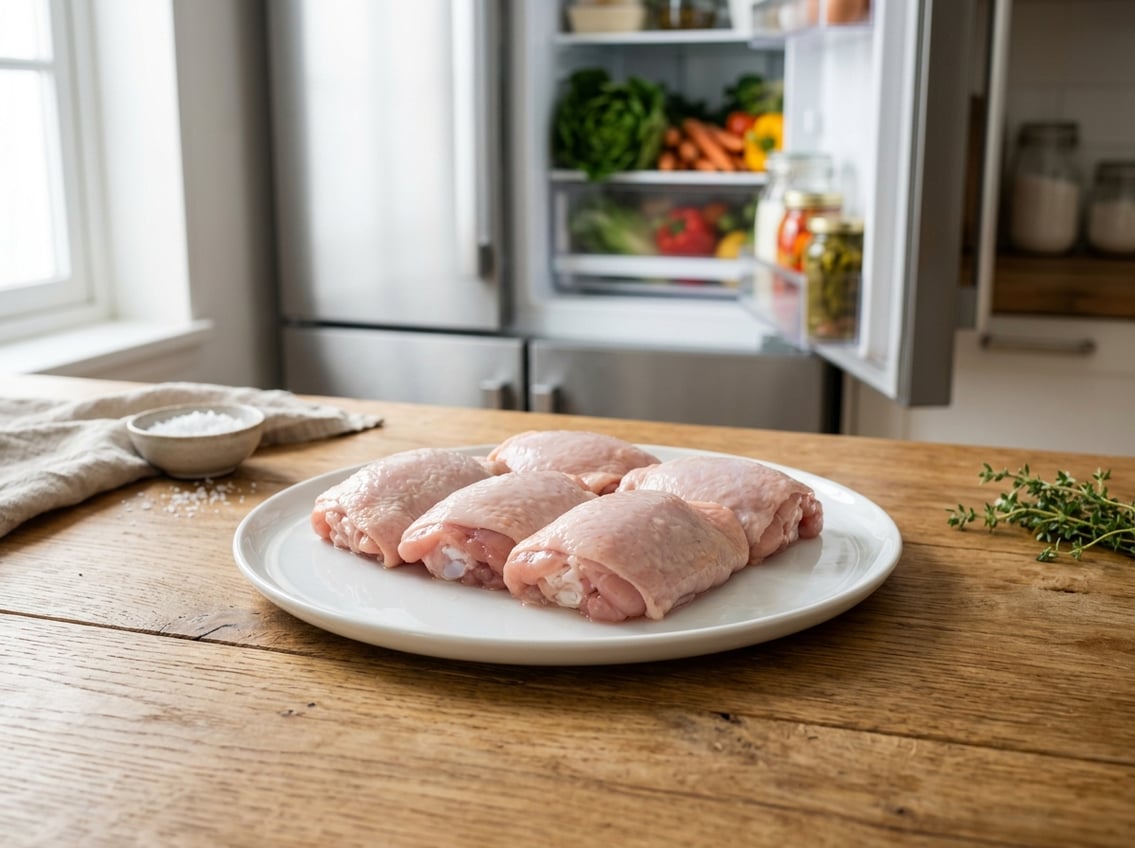
Seal chicken thighs tightly and place them on the coldest shelf to slow bacterial growth.
The following sections explain storage times, wrapping and container options, how to avoid cross-contamination, signs of spoilage, and when freezing is best.
Recommended Storage Duration for Raw Chicken Thighs
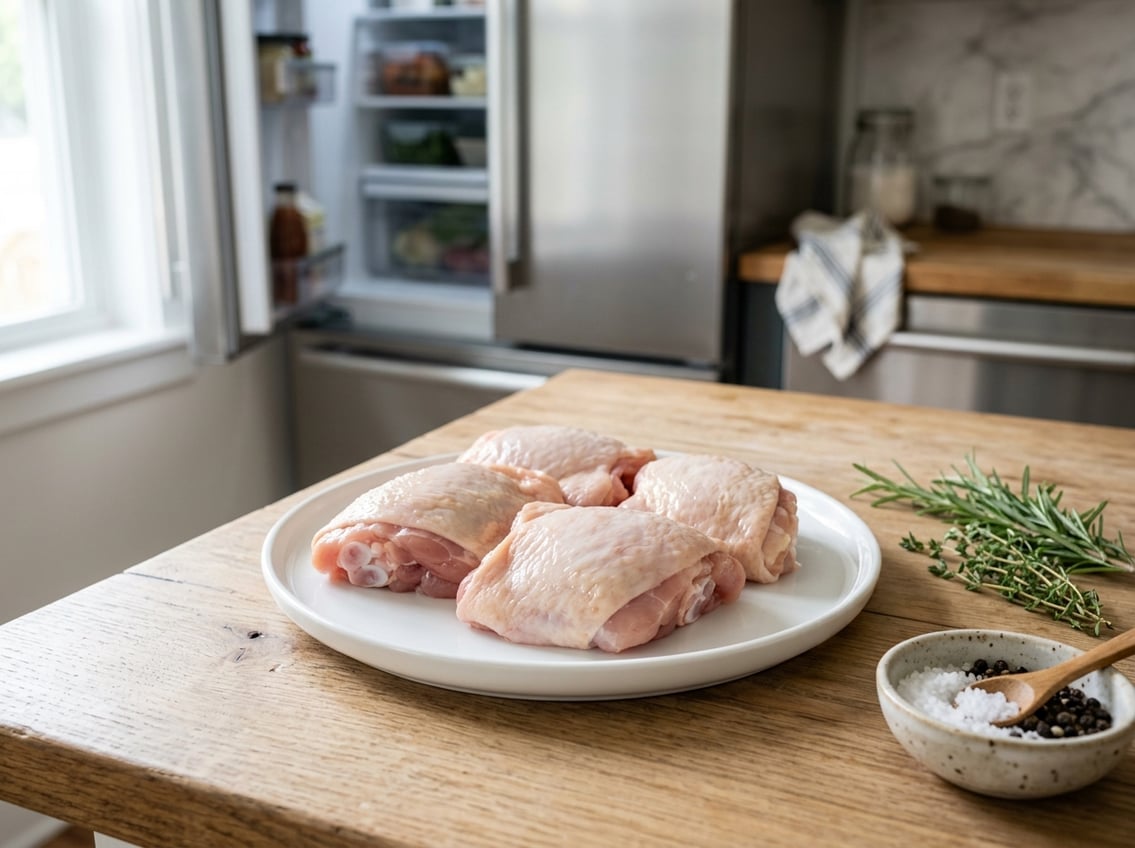
Keep raw chicken thighs cold and use or freeze them quickly.
Refrigerate at 40°F (4°C) or below, keep thighs sealed, and place them on the lowest shelf to prevent cross-contamination.
Official Guidelines on Refrigeration Time
The USDA and food-safety authorities recommend refrigerating raw chicken parts, including thighs, for no more than 1–2 days.
This 1–2 day window starts the day you bring the package home or the package’s pack date, whichever is later.
If you won’t cook within that period, freeze the thighs; frozen chicken pieces remain safe for several months, with best quality up to about 9 months.
Follow these practical steps:
- Temperature: Keep the fridge at or below 40°F (4°C).
- Placement: Store thighs on the bottom shelf in a leak-proof container or sealed plastic bag.
- Labeling: Mark the date on the package so you know when the 1–2 day period expires.
Why Raw Chicken Thighs Have a Short Shelf Life
Raw chicken thighs spoil faster than many other foods because poultry naturally carries bacteria like Salmonella and Campylobacter.
Those bacteria multiply when the meat sits above refrigeration temperatures, so time and temperature control are critical.
Thighs also contain more surface moisture and fat than lean cuts, which can speed microbial growth and degrade quality more quickly.
You can slow spoilage by keeping the original packaging sealed, minimizing air exposure, and storing thighs in the coldest part of the fridge.
If you notice any off odor, sliminess, or a change in color, discard the thighs immediately.
Optimal Methods to Store Raw Chicken Thighs
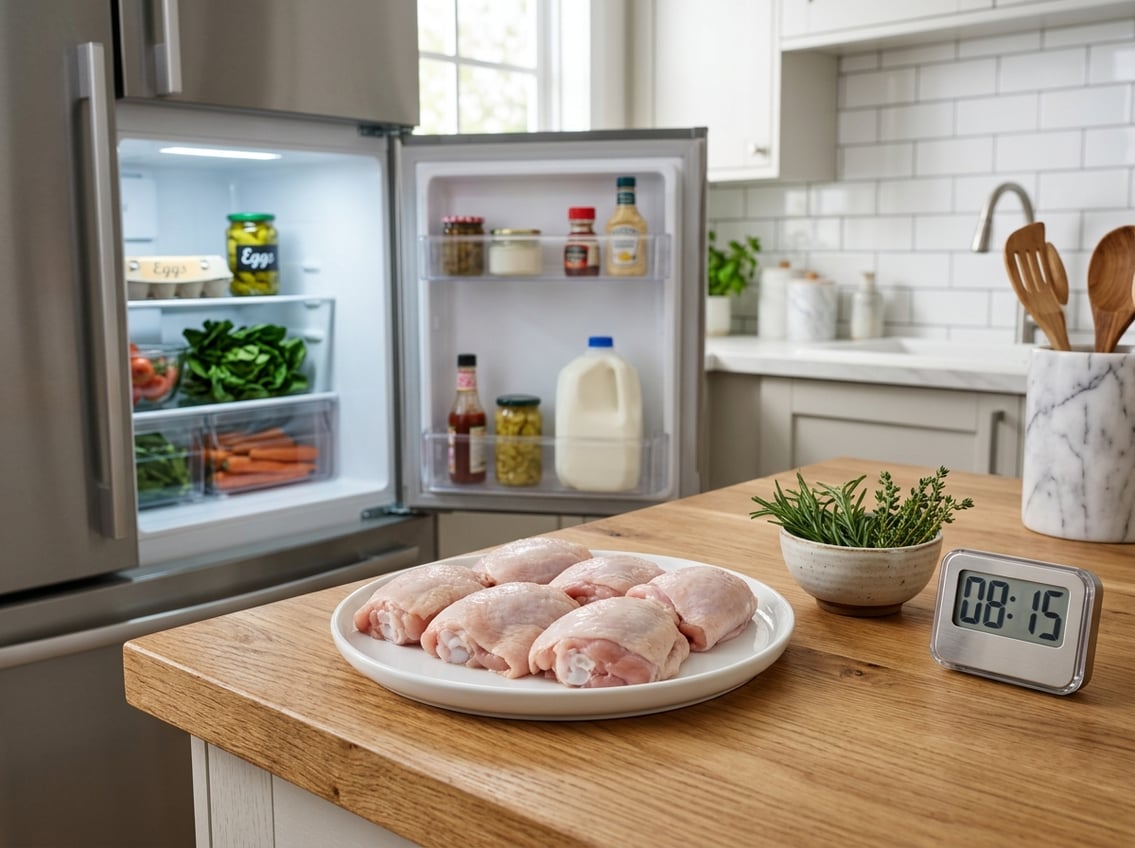
Store raw chicken thighs so they stay cold, contained, and separated from ready-to-eat foods.
Use airtight packaging and place the package where drips cannot contaminate other items.
Airtight Packaging and Storage Containers
Use airtight packaging to keep air out and odors contained.
If the thighs are in store packaging, transfer them into a sealed container or resealable bag and press out excess air, or wrap tightly with plastic wrap then place in a leakproof container.
Vacuum sealing works best for maximum shelf life and to prevent freezer burn if you plan to freeze.
Label the container with the date you stored it.
This helps you track the 1–2 day safe refrigeration window for raw chicken thighs.
Avoid reusing porous containers that have held raw poultry unless you’ve sanitized them.
Correct Placement in the Refrigerator
Place raw chicken thighs on the bottom shelf of your refrigerator.
Use a tray or a shallow lidded pan to catch any drips and prevent cross-contamination with vegetables, ready-to-eat foods, or cooked items.
Keep the fridge temperature at 40°F (4°C) or below and store chicken toward the back where temperature is most stable.
Don’t stack other foods on top of the chicken package; maintain dedicated space to reduce handling and accidental punctures of packaging.
Preventing Cross-Contamination and Foodborne Illness
Keep raw chicken contained, chilled at 40°F (4°C) or below, and away from ready-to-eat foods.
Use sealed containers or leakproof bags and a bottom-shelf placement to stop juices from dripping onto other items.
Safe Handling During Storage
Store raw chicken thighs in a sealed container or heavy-duty resealable bag to contain juices.
Label with the date and place them on the refrigerator’s lowest shelf so any leaks cannot drip onto other foods.
Keep your fridge at 40°F (4°C) or below and check with an appliance thermometer.
Refrigerate raw chicken within two hours of purchase or preparation; shorten to one hour if the ambient temperature is above 90°F (32°C).
Use clean hands and clean utensils when moving raw chicken.
Wash cutting boards, knives, and countertops with hot, soapy water after contact.
Sanitize surfaces with a diluted bleach solution (1 tablespoon bleach per gallon of water) if raw juices touched them.
Segregating Raw and Cooked Foods
Designate a specific shelf or drawer for raw meats so they never sit above ready-to-eat items like salads, deli meats, or cooked leftovers.
If your refrigerator lacks clear zones, use a sealed plastic bin for all raw poultry.
When you store raw chicken near other packaged items, place it inside a secondary container to prevent punctures or leaks.
Keep cooked chicken and other prepared foods in airtight containers and at least one shelf above raw meats.
If you marinate raw thighs, do so in the fridge and discard the marinade after use, or boil it before using it as a sauce.
Never reuse plates or utensils that held raw chicken without washing them first.
Identifying Spoilage in Raw Chicken Thighs
Check the chicken’s color, texture, and smell closely before use.
Small changes can signal spoilage and should guide whether you cook, freeze, or discard the thighs.
Visual and Textural Changes
Look for any color shifts from healthy pink to gray, greenish, or yellow tones.
Fresh raw chicken thighs have a uniform pink hue; mottled or dark spots often mean bacterial or chemical changes.
Inspect the surface for sliminess or an unusually glossy film.
A sticky or slimy texture that doesn’t wash away with cold water indicates breakdown of muscle proteins and bacterial growth.
Note packaging condition and juices.
Swollen or leaking store packaging, excessive cloudy or greenish liquid pooled under the thighs, and separation of meat fibers are red flags.
If the meat is unusually stiff or gummy when pressed, that also suggests spoilage.
Use visual and tactile checks together.
Multiple signs reliably indicate you should not use the thighs.
Odor and Off-Smell Indicators
Smell the chicken before you touch it; your nose often detects spoilage first.
Fresh raw thighs have little to no odor; any sharp, sour, fermented, or ammonia-like smell signals spoilage.
Avoid relying on faint smells through sealed packaging.
Open the package in a well-ventilated area and sniff close to the meat rather than the juices to assess the true odor.
Be cautious with mildly sweet or “metallic” notes; these can precede stronger foul odors as bacteria multiply.
If the smell triggers doubt, discard the thighs.
Cooking won’t reliably remove toxins produced by some bacteria.
Combine smell with visual and texture cues for a confident decision.
When two or more indicators line up, treat the chicken as unsafe and discard it.
Extending Shelf Life Through Freezing
Freezing stops bacterial growth and preserves raw chicken thighs for months when you do it correctly.
Use airtight packaging, label with dates, and keep freezer temperature at 0°F (-18°C) or below.
How to Freeze Raw Chicken Thighs
Trim excess fat and pat thighs dry with paper towels to reduce ice crystals.
Portion thighs by meal-size so you only thaw what you need.
Wrap each thigh or portion tightly in plastic wrap or freezer film, then place wrapped pieces in a heavy-duty freezer bag or vacuum-seal bag.
Remove as much air as possible before sealing.
For bags, press out air or use a straw to suck out remaining air if you don’t have a vacuum sealer.
Label each package with the date and number of pieces.
Store on a flat surface in the coldest part of the freezer so packages freeze quickly and maintain shape.
Frozen properly, quality stays high for about 6–9 months; safety is maintained longer at 0°F.
Preventing Freezer Burn
Freezer burn happens when moisture leaves the meat, causing dry, discolored patches and off texture.
Eliminate air to prevent freezer burn.
Use vacuum sealing when possible; it removes nearly all air and offers the best protection.
If you use bags, squeeze out air, fold edges tightly, and double-bag if needed.
Wrap first in plastic wrap, then foil for extra barrier against air and light.
Keep freezer temperature steady at 0°F (-18°C).
Avoid storing packages near the door where temperature fluctuates.
Use older packages first and don’t refreeze thawed thighs unless you cook them first.
Thawing Frozen Chicken Thighs Safely
Plan ahead and thaw in the refrigerator to keep thighs at a safe temperature below 40°F (4°C).
Place sealed packages on a tray or dish to catch drips.
Allow 24 hours per 1–2 pounds; individual thighs typically thaw overnight.
For faster thawing, use cold water.
Keep thighs in a sealed, leak-proof bag and submerge in cold water, changing the water every 30 minutes.
Cook immediately after thawing by this method.
You can also thaw in a microwave using the defrost setting, but cook immediately afterward because parts may begin to warm and allow bacterial growth.
Never thaw raw chicken at room temperature on the counter.
Tips to Maximize Freshness and Food Safety
Store raw chicken thighs at or below 40°F (4°C) and use them within the safe time window to prevent bacterial growth.
Proper labeling, rotation, and prompt use after purchase will keep your chicken safe and reduce waste.
Labeling and First-In-First-Out Practices
Label packages with the purchase date and the planned use-by date.
Use a waterproof marker on the original store package or transfer thighs to airtight containers and label those.
Place the oldest packages at the front of the fridge and newer ones behind them so you grab the right piece first.
Keep raw chicken on the lowest refrigerator shelf to prevent drips onto other foods.
Use clear containers or sealed trays to contain juices.
This reduces cross-contamination and makes it easy to see which items need using soon.
If you prepare marinades or brine the thighs, label the container with the start date and discard after 24 hours if still raw and unrefrigerated.
Purchasing and Using Chicken Thighs Promptly
Buy chicken thighs late in your shopping trip and head straight home to refrigerate within two hours. Refrigerate within one hour if the temperature is above 90°F or 32°C.
Cold chain breaks accelerate spoilage. Place packages in an insulated bag or cooler for long drives.
At home, check the fridge thermometer and set it between 34–40°F (1–4°C). Freeze the thighs immediately if you won’t cook them within 1–2 days.
Wrap the thighs tightly or use vacuum sealing to prevent freezer burn.
Thaw frozen thighs in the fridge on a plate to catch drips. Cook them within 24 hours of full thaw.
Refrigerate cooked leftovers within two hours. Use leftovers within 3–4 days.


