
How Long Does Chicken Thighs Take to Cook in the Oven: Optimal Times and Expert Tips
Boneless chicken thighs generally take about 18–30 minutes at 375–425°F. Bone-in, skin-on thighs usually need about 30–45 minutes at 375°F to reach a safe internal temperature of 165°F.
Use an instant-read thermometer in the thickest part (avoiding bone) to confirm doneness. That’s the most reliable way to get juicy, safe baked chicken thighs every time.
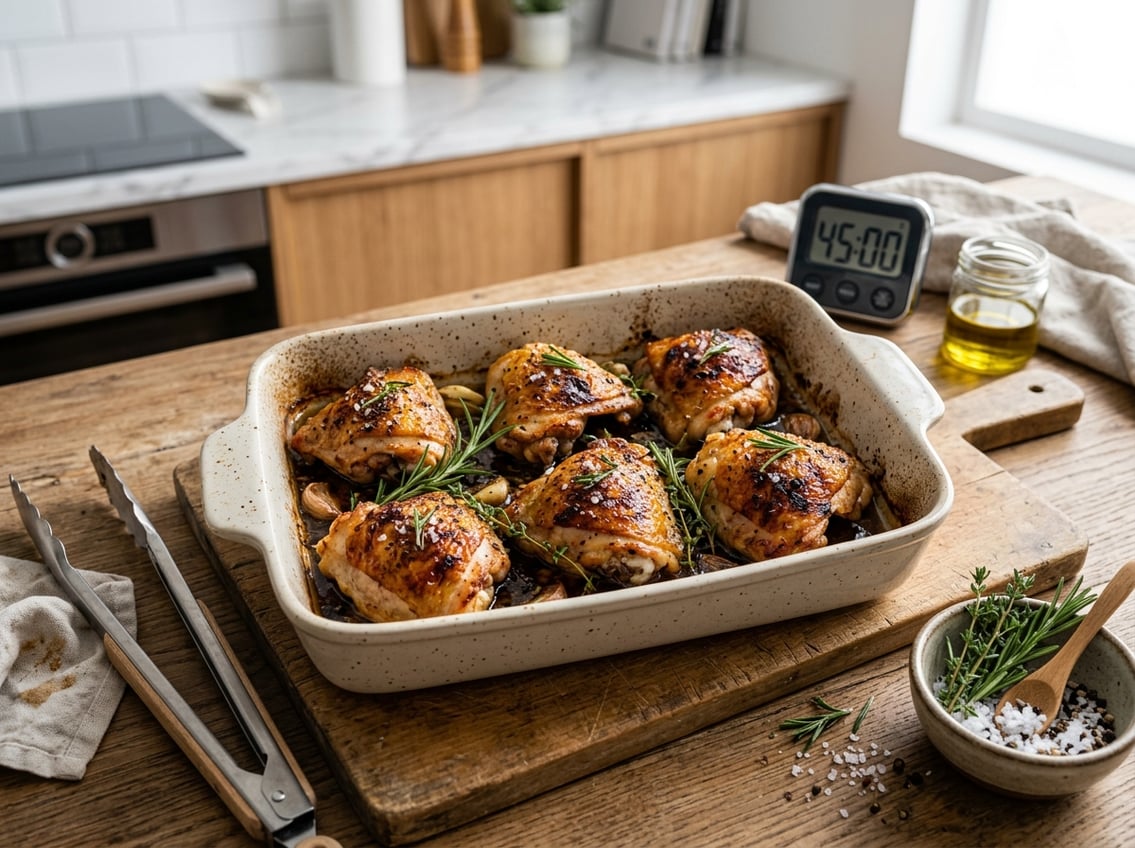
Oven temperature, bone-in versus boneless cuts, and different roasting or baking methods change cook times and texture. The following sections explain ideal temps and timings, how to crisp skin or keep meat tender, simple seasoning and prep tips, and how to store and reheat leftovers.
Oven Temperatures and Cooking Times for Chicken Thighs
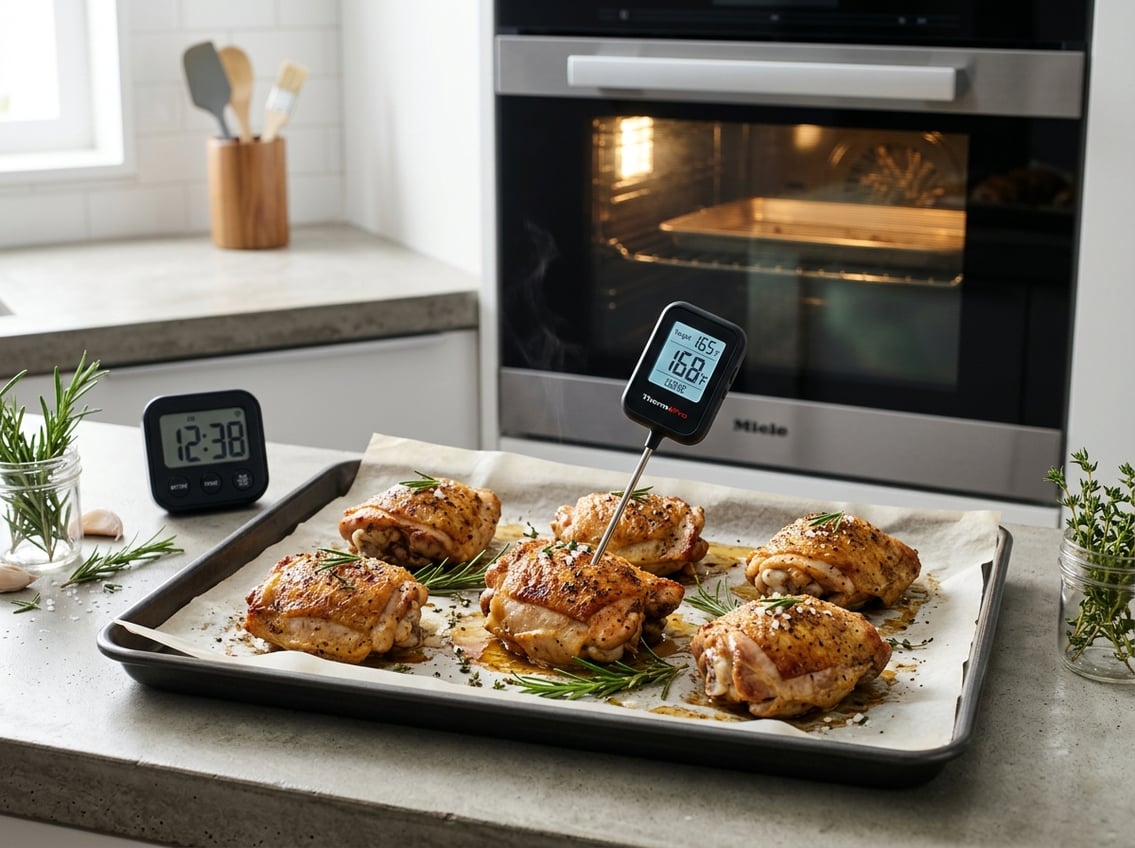
Choose an oven temperature based on whether you want faster cooking with crisp skin or slower cooking for juiciness. Use an instant-read thermometer to confirm 165°F (74°C) in the thickest part.
Standard Baking Temperatures and Results
Bake boneless thighs at 425°F (218°C) for 20–30 minutes until the internal temperature reaches 165°F. High heat browns the surface quickly and keeps the meat juicy.
For bone-in, skin-on thighs, bake at 400°F (204°C) for 30–40 minutes depending on thigh size. Larger 6–8 oz pieces take longer because the bone slows heat penetration.
Lower temperatures like 350°F (177°C) produce a more even texture but take 40–50 minutes for 4–8 oz thighs. Use lower heat when cooking with vegetables or in a covered dish.
Quick Reference Baking Time Chart
- Boneless, skinless — 425°F: 20–30 minutes
- Bone-in, skin-on — 400°F: 30–40 minutes
- Any thigh — 350°F: 40–50 minutes
If you want crispier skin, finish under a broiler for 1–3 minutes after baking. Let thighs rest 5 minutes off heat so juices redistribute.
How Internal Temperature Affects Doneness
Aim for 165°F (74°C) in the thickest meat, not touching bone. That temperature is the safe minimum for poultry.
If your thermometer reads 160–164°F, return thighs to the oven briefly. Carryover heat during a 5-minute rest can add a few degrees.
Readings above 170°F indicate drier meat, especially with boneless thighs, so remove earlier in high-heat methods. Insert the thermometer horizontally into the center of the thigh and avoid the bone for accuracy.
Bone-In Versus Boneless Chicken Thighs in the Oven
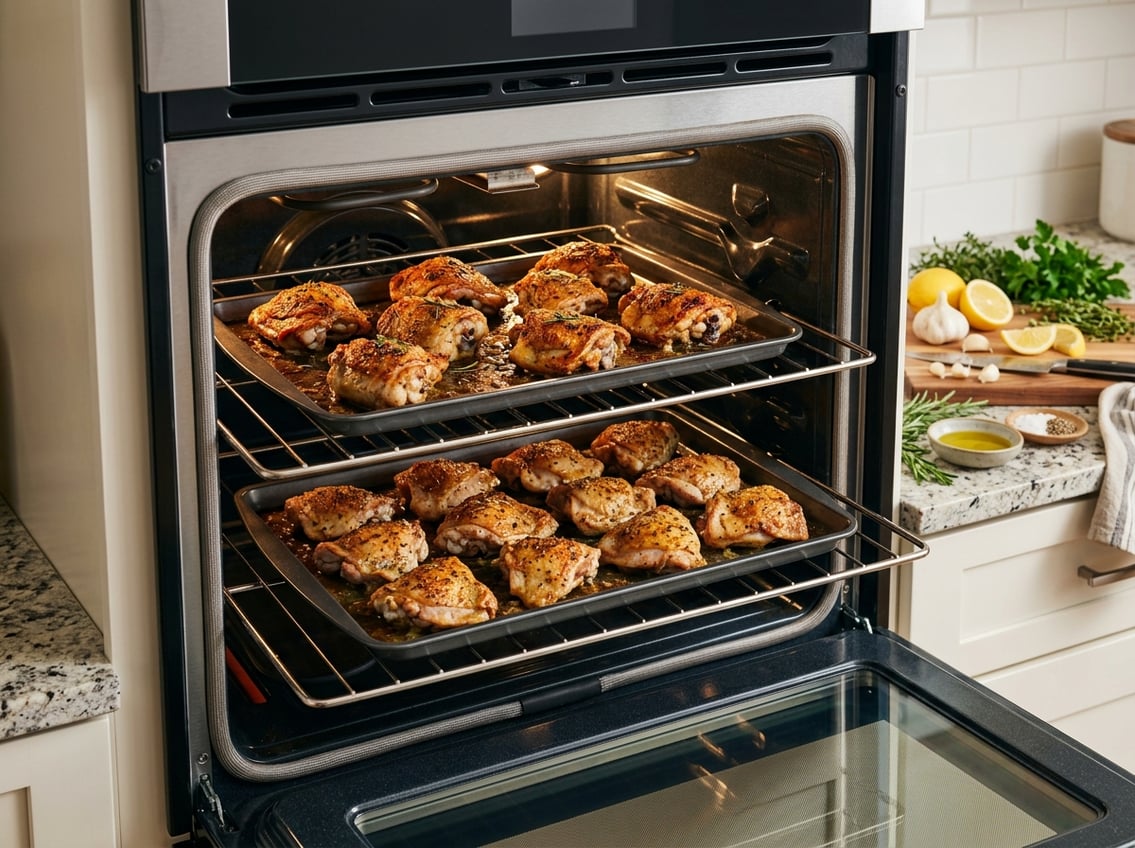
Bone-in, skin-on thighs need longer, steadier heat to reach safe temperature without drying. Boneless, skinless thighs cook faster and require closer timing or lower temperatures to stay juicy.
Bone-In and Skin-On: Key Cooking Guidelines
Cook bone-in, skin-on chicken thighs at 400–425°F (200–220°C) for 35–45 minutes depending on thigh size. Roast uncovered on a rimmed baking sheet or in a shallow pan so hot air reaches the skin.
Use a meat thermometer and target 165°F (74°C) at the thickest point near the bone. Avoid touching the bone with the probe for an accurate reading.
Pat skin dry and season or oil before roasting to promote browning. If skin crisps too fast, lower temperature to 375°F and finish under the broiler for 1–2 minutes. Let thighs rest 5 minutes to redistribute juices.
Boneless and Skinless: Adjusting for Quickness
Bake boneless, skinless chicken thighs at 375–400°F (190–200°C) for about 20–30 minutes until internal temperature reaches 165°F (74°C). Thicker pieces need the longer end of the range.
Use a shallow baking dish and space pieces 1 inch apart for even air circulation. Marinate or add a light oil coating to preserve moisture. Rest 3–5 minutes before slicing.
Tips for Cooking Mixed Types Evenly
If you cook bone-in and boneless together, separate them by pan or place bone-in on the hotter rack farther from the oven center. Begin roasting bone-in first for 10–15 minutes, then add boneless pieces so both finish within the same 5–10 minute window.
Arrange bone-in thighs skin-side up and elevate them on a wire rack to speed heat transfer. Use an instant-read thermometer to check each piece; remove boneless when they hit 165°F and let bone-in continue until they reach 165°F near the bone.
You can also cut bone-in thighs off the bone to match cooking times, or use lower temperature (375°F) and extend total time for gentler results.
Roasting and Baking Methods Explained
Heat, timing, and oven type change skin texture and internal juiciness. Specific temps and techniques help you get crispy skin, moist meat, or faster, even cooking.
Roasting Chicken Thighs for Crispy Skin
Roast at 425°F (220°C); place thighs skin-side up on a wire rack over a rimmed sheet pan so air circulates and fat drips away. Pat skin dry with paper towels and season; a light coating of oil or a sprinkle of baking powder (not baking soda) helps browning.
Bone-in, skin-on thighs usually take 30–40 minutes at 425°F. Remove at 165°F (74°C) in the thickest part and let rest. For extra crispness, finish under the broiler 1–3 minutes while watching closely.
Traditional Baking for Juiciness
Bake at 350–375°F (175–190°C) and arrange thighs in a single layer in a baking dish or sheet pan. Add a small amount of liquid (broth, wine, or pan juices) or cover loosely with foil for the first half to reduce drying.
Bone-in, skin-on thighs take about 40–50 minutes at 350°F; boneless thighs take 20–30 minutes. Check with an instant-read thermometer — target 165°F (74°C). Remove from oven and rest 5–10 minutes before slicing or serving.
Convection vs. Conventional Ovens
Convection ovens use a fan to circulate hot air, producing faster, more even cooking and crisper skin. Reduce temperature by 25°F (about 15°C) or shorten cook time by 10–20% compared to conventional settings.
If a recipe calls for 425°F in a conventional oven, set convection to 400°F and start checking doneness 5–10 minutes earlier. Conventional ovens cook more slowly with gentler browning, which can help in recipes requiring sauces or covered baking.
Calibrate your oven and use an instant-read thermometer to avoid under- or overcooking regardless of mode.
How to Achieve the Perfect Texture and Flavor
Focus on internal temperature, brief resting, and a short high-heat finish to get juicy meat and crisp skin.
Best Internal Temperatures for Tenderness
Cook bone-in thighs to a safe internal temperature of 165°F (74°C) measured at the thickest part, away from bone. For more tender results, you can remove them at 165°F and let carryover heat raise the temp a few degrees, or cook to 175–185°F (79–85°C) if you prefer fall-apart texture.
Use an instant-read thermometer for accuracy. Insert it horizontally into the thickest part and avoid touching bone.
If baking chicken thighs at 400°F, expect bone-in pieces to reach 165°F in about 35–45 minutes depending on size. Boneless thighs at the same temp usually finish in 20–30 minutes.
Resting and Juiciness
Rest the baked chicken thighs for 5–10 minutes on a warm plate or cutting board after you remove them from the oven. Resting lets juices redistribute back into the meat instead of running out when you cut it.
Tent loosely with foil to keep skin crisp but avoid sealing tightly. For bone-in thighs, a slightly longer rest (8–12 minutes) improves juiciness because thicker pieces retain more heat.
Finishing With Broiling for Extra Crisp
If skin isn’t crisp after baking, switch the oven to broil for 2–4 minutes, placing thighs about 6 inches from the heat source. Watch constantly; broiling chars quickly and can burn in under a minute.
For even crisping, pat skin dry before seasoning and brush a thin layer of oil. A final sprinkle of flaky salt immediately after broiling enhances texture and flavor.
Seasoning and Preparation Essentials
Proper seasoning and a few prep steps set you up for juicy, well-browned chicken thighs. Salt timing, fat or oil, and surface dryness affect crisping and internal flavor more than exotic spices.
How to Season Chicken Thighs
Salt is the most important seasoning; use about 3/4 to 1 teaspoon kosher salt per pound and apply it evenly to both sides. Season at least 15–30 minutes before baking, or up to overnight in the refrigerator.
Add freshly ground black pepper and a simple herb blend such as thyme, rosemary, or smoked paprika. For skin-on thighs, rub oil under and over the skin to help seasonings stick and to promote crisping.
For boneless thighs, a light dusting of cornstarch or baking powder (about 1/2 teaspoon per pound) can improve surface browning when baked at higher heat. Pat the skin or meat dry with paper towels before seasoning to remove excess moisture.
Using Marinades and Dry Rubs
Marinades (acid, oil, and aromatics) add flavor and can tenderize slightly. Use 1/4 to 1/2 cup marinade per pound and marinate 30 minutes to 8 hours.
Keep highly acidic marinades under 2 hours for boneless thighs to avoid a mushy texture. Reserve some plain marinade if you want to baste; discard any marinade that contacted raw chicken unless you boil it first.
Dry rubs deliver a concentrated crust. Combine salt, sugar, paprika, garlic powder, onion powder, and optional cumin or chili for heat. Apply rub generously and let sit 15–60 minutes at room temperature or refrigerate up to overnight.
For crisp skin, apply rub to dry skin and avoid oily marinades right before baking.
Trimming and Preparing for Baking
Trim excess fat and loose skin flaps that can burn or curl during baking. Leave the skin intact for flavor and moisture unless you prefer skinless.
For bone-in thighs, check for any small bone fragments and remove them. Bring thighs to near room temperature (20–30 minutes on the counter) before baking to shorten bake time and promote even cooking.
Arrange thighs on a rimmed baking sheet or in a shallow roasting pan with space between pieces for air circulation. Use a rack if you want maximum airflow and uniform browning.
Serving, Storage, and Reheating Recommendations
Serve baked chicken thighs hot from the oven for best texture. Plan how much you’ll keep, refrigerate, or freeze immediately after cooling.
Use a thermometer to confirm doneness and follow safe-storage windows to avoid waste.
Best Side Dishes for Baked Chicken Thighs
Pair baked chicken thighs with sides that balance richness and texture. Roast vegetables like Brussels sprouts or carrots on the same sheet pan for 20–30 minutes at 400°F so flavors align and timing stays simple.
Starchy sides work well. Mashed potatoes or a lemon-herb rice provide neutral bases that soak up pan juices.
For lighter meals, serve thighs over a crisp mixed green salad with a vinaigrette to cut the fat. If you want quick prep, steam green beans while the thighs rest for 5–7 minutes.
For crispy contrast, roast fingerling potatoes at 425°F for 25–30 minutes until golden.
Proper Storage and Reheating Methods
Let cooked chicken thighs cool to room temperature for no more than two hours, then refrigerate them in an airtight container.
Store in the refrigerator for up to 4 days at 40°F (4°C) or below. For longer storage, wrap tightly or use freezer-safe bags and keep in the freezer for up to 3 months for best quality.
Reheat in the oven to retain texture. Preheat to 325–350°F (160–175°C), place thighs in a baking dish, add a tablespoon of broth or water per cup to prevent drying, and cover loosely with foil.
Heat for 15–20 minutes from refrigerated, or 25–35 minutes from frozen, until the internal temperature reaches 165°F (74°C).
For a faster option, use the microwave. Cover and use medium power, checking every 45–60 seconds to avoid tough meat.
Finish under the broiler for 1–2 minutes if you want to crisp the skin.
Using Leftover Chicken Thighs Creatively
Quickly turn leftover baked chicken thighs into new meals. Shred or slice the meat for tacos and toss with salsa, pickled onions, and cilantro inside warmed corn tortillas.
Simmer diced thighs with chicken stock, diced carrots, celery, and a splash of cream for 10–12 minutes to make a creamy chicken and rice soup.
Halve potatoes, toss with oil and spices, add thigh pieces on top, and roast at 400°F for 10–15 minutes to refresh crispness.
Use sliced thighs on sandwiches with mustard and arugula. Chop and fold the meat into pasta salads with olives and feta for cold lunches.


