
How Long Can You Keep Raw Chicken Thighs in the Fridge: Essential Food Safety Facts
You can safely keep raw chicken thighs in the fridge for 1 to 2 days when you store them at 40°F (4°C) or below.
If you need to keep them longer, freeze them to preserve quality and safety.
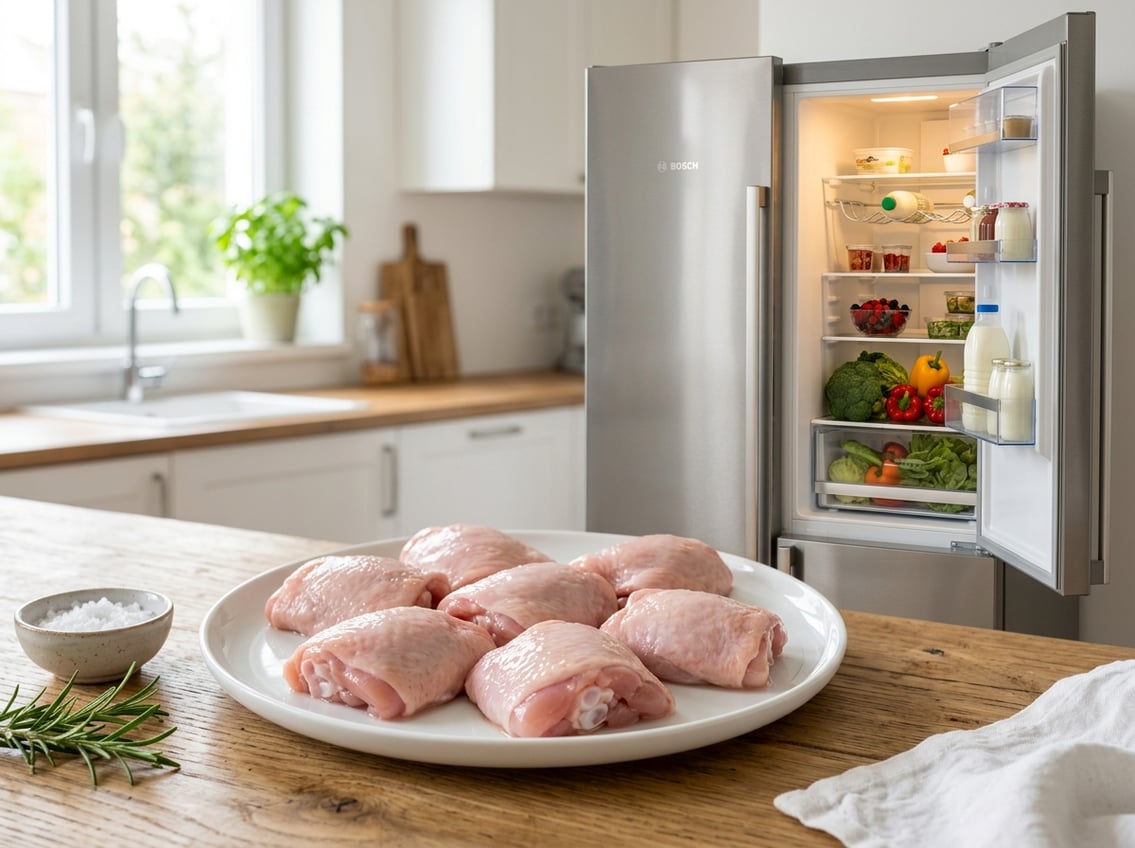
You’ll find practical tips ahead on how to store thighs properly and spot spoilage before it makes you sick.
You’ll also learn when freezing makes more sense, where to place chicken in the fridge, and how cooked thighs differ in shelf life.
Optimal Refrigerator Storage Times for Raw Chicken Thighs
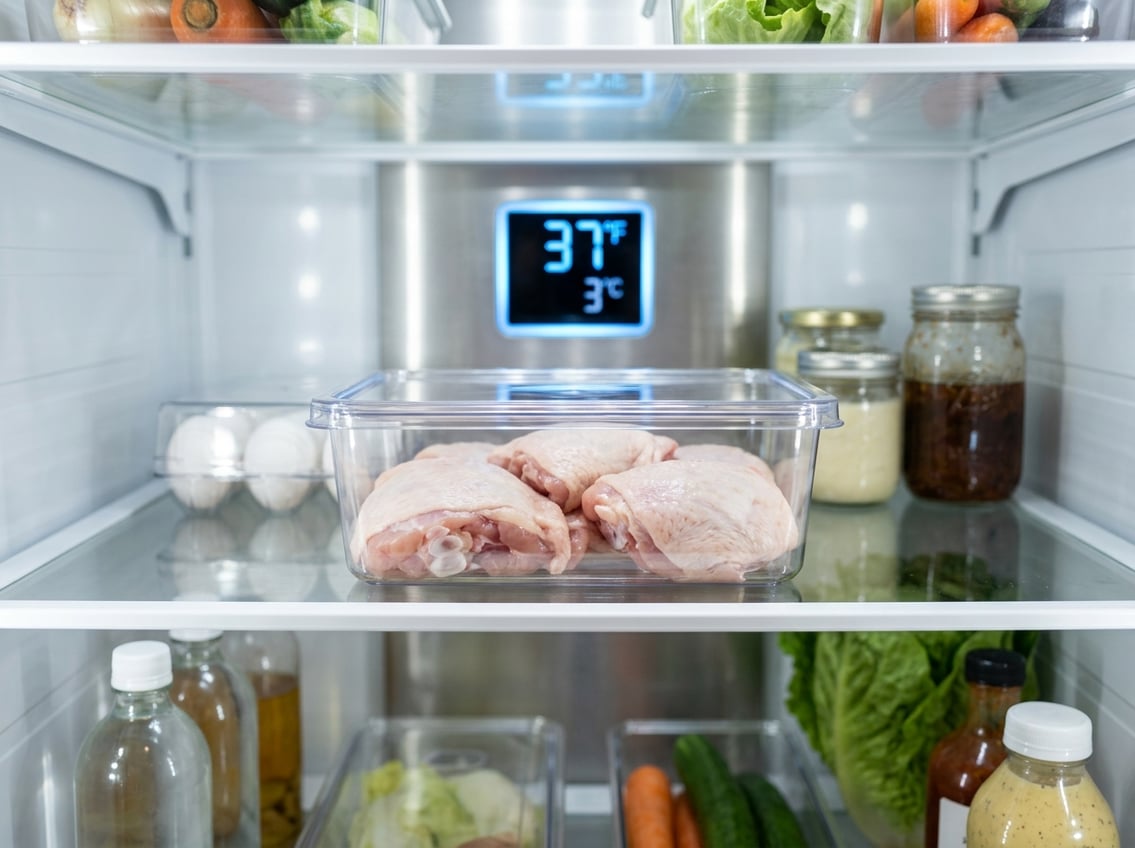
Refrigerate chicken within 2 hours of purchase or preparation.
Keep the fridge at or below 40°F (4°C), and plan to cook or freeze thighs within the recommended timeframe.
Official Guidelines and Safe Temperature Range
The USDA and FDA recommend storing raw chicken thighs in the refrigerator for 1–2 days.
Start the clock when you purchase the chicken or when it finishes cooling after preparation.
If you don’t plan to cook within that window, freeze the thighs to extend safe storage.
Keep your refrigerator at 40°F (4°C) or below.
Use an appliance thermometer to verify temperature.
Refrigerate chicken within 2 hours of purchase or cooking, and within 1 hour if ambient temperature is above 90°F (32°C).
How Packaging Affects Freshness
Packaging affects how long raw chicken thighs stay usable.
Keep thighs in their original airtight store packaging for short-term fridge storage.
Place the pack on a plate or tray to catch leaks and put it on the lowest shelf to prevent cross-contamination.
For longer fridge life or freezer prep, transfer thighs into a sealed container or heavy-duty freezer bag, remove excess air, and label with the date.
Vacuum-sealing slows oxidation and bacterial growth, letting you safely freeze thighs for months.
Always check for sour smell, slimy texture, or grayish color before cooking.
Recognizing Signs of Spoilage in Raw Chicken Thighs
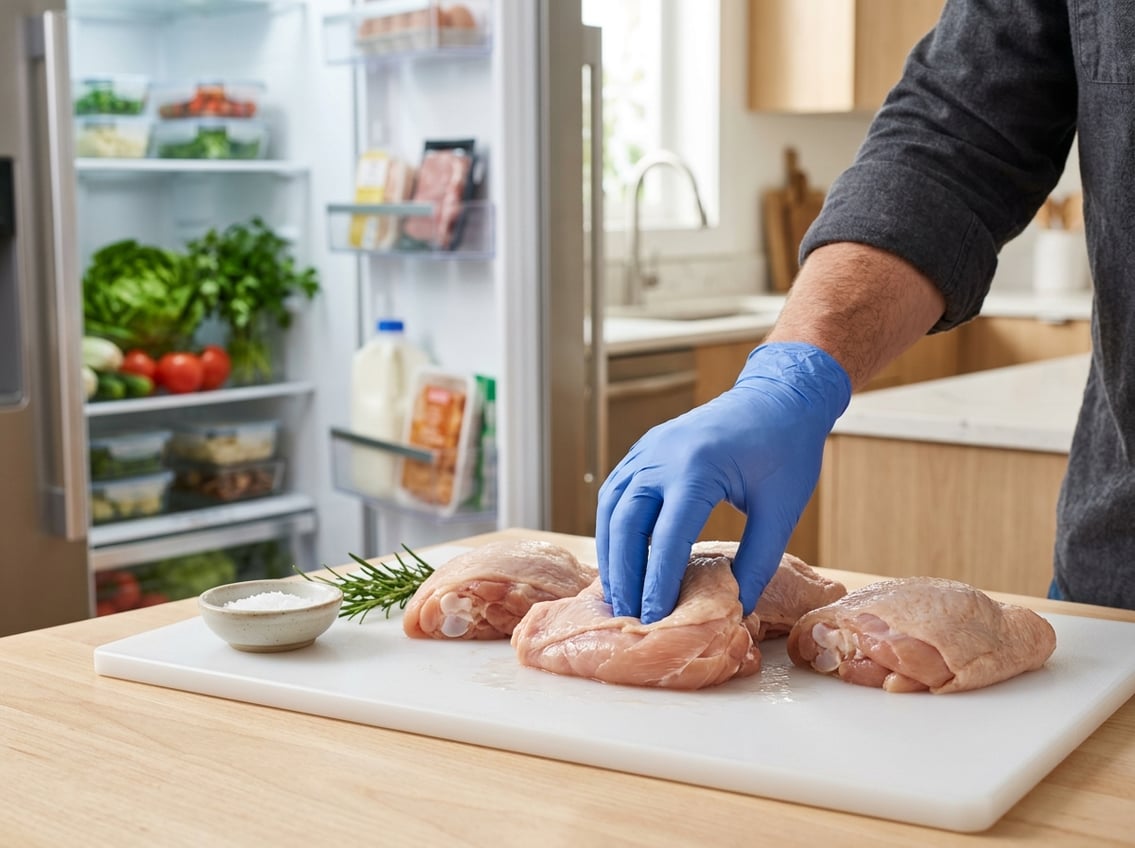
Check appearance, feel, and dates before cooking.
Small changes can indicate spoilage, so act on clear physical cues to keep yourself and others safe.
Visual and Texture Cues
Look for color shifts from normal pale pink to gray, green, or yellowed patches.
Fresh chicken thighs have even pink tones; any mottling or dark spots suggest bacterial or chemical changes.
Touch the surface through the packaging or with clean hands.
Fresh meat feels moist but not sticky.
If the skin or flesh feels slimy, tacky, or unusually slippery, discard the thighs.
Inspect fat and bone areas closely.
Fat should be white to creamy; brown or greenish fat and discolored bone marrow are red flags.
Check for excessive liquid in the package—cloudy or foul-looking juices indicate breakdown.
Noticing Off Odors
Smell is one of the fastest spoilage checks.
Raw chicken normally has only a faint, neutral smell; any sour, ammonia-like, or rotten odor means the thighs are unsafe.
Sniff after opening the package, not through sealed plastic.
Odors often become stronger once the meat is exposed to air and at room temperature.
If it smells off immediately, throw it out.
Rinsing doesn’t remove bacteria or toxins.
When in doubt, discard questionable chicken.
Interpreting Package Dates
Understand the difference between “sell-by,” “use-by,” and “best-by” dates.
Sell-by guides stores on display time; use-by is the manufacturer’s recommended last day for peak quality.
For raw chicken thighs, store in the refrigerator at 40°F (4°C) or below and use within 1–2 days of purchase or by the use-by date, whichever comes first.
If the use-by date has passed, do not cook or consume the thighs.
If you need longer storage, freeze the thighs promptly.
Label packages with the date frozen so you can track how long they remain in storage.
Best Practices for Storing Chicken in the Fridge
Keep raw chicken thighs cold, contained, and separated from ready-to-eat foods.
Use airtight wrapping or sealed containers, place them where the temperature is coldest, and clean any surfaces that touch raw juices.
Placement in the Refrigerator
Store raw chicken thighs on the lowest shelf or in the meat drawer to keep them at the coldest, most stable temperature.
Place the package on a rimmed tray or inside a shallow, leak-proof container to catch any juices.
Keep raw chicken in the original packaging if it’s intact, then slide that into a sealed plastic bag or airtight container for an extra barrier.
Label with the date you bought or refrigerated them so you know to use or freeze within 1–2 days.
Avoid the refrigerator door and upper shelves; those spots experience more temperature swings.
Maintain your fridge at or below 40°F (4°C) and check with a fridge thermometer periodically.
Preventing Cross-Contamination
Treat raw chicken as a contamination risk.
Use a dedicated cutting board or sanitize boards and utensils immediately after contact with raw thighs.
Store raw chicken away from ready-to-eat items like salads, cooked foods, and deli meats.
If you must place different foods nearby, keep raw chicken in a sealed container on the bottom shelf and ready-to-eat items above it.
Wash your hands for at least 20 seconds after handling raw chicken and sanitize any surfaces with hot, soapy water followed by a food-safe disinfectant.
Replace sponges or cloths used on raw-chicken surfaces frequently to avoid bacterial transfer.
Extending Shelf Life: Freezing Raw Chicken Thighs
Freezing locks in safety and stalls quality loss.
Packaging and thawing choices determine how long your raw chicken thighs stay tasty and usable.
Use airtight wrapping or vacuum sealing to prevent freezer burn.
Choose a thawing method that keeps the meat below 40°F until you cook it.
Packaging Methods for Freezing
Wrap each thigh tightly in plastic wrap or butcher paper, then place them in a heavy-duty freezer bag.
Squeeze out as much air as possible before sealing.
Label each bag with the date and contents so you can use older packs first.
Vacuum sealing is the best option if you have the equipment.
It removes air completely and preserves texture.
Vacuum-sealed chicken thighs stay at peak quality for up to 9 months.
If you don’t vacuum-seal, double-wrap: first plastic wrap, then aluminum foil or an airtight plastic container.
Portion before freezing to avoid repeated thawing.
Freeze single meals or specific recipe quantities so you only defrost what you need.
Lay thighs flat on a tray to pre-freeze for 1–2 hours, then move to bags to save space and keep pieces separate.
Defrosting Safely
Plan ahead and thaw raw chicken thighs in the refrigerator.
This keeps the meat under 40°F and preserves safety.
Small packages may take 12–24 hours; larger packs can need up to 24–48 hours.
Keep thawed chicken on the bottom shelf to prevent drips onto other foods.
If you need faster thawing, use the cold water method.
Keep chicken sealed in a leak-proof bag and submerge in cold water, changing the water every 30 minutes.
Thaw time is roughly 1–2 hours per pound, and you must cook the chicken immediately after using this method.
Microwave thawing works for immediate cooking but can start to cook edges and create warm spots where bacteria grow.
Use the defrost setting, check frequently, and cook the chicken right away.
Never thaw raw chicken on the counter at room temperature.
How Long Cooked Chicken Thighs Last After Refrigeration
Cooked chicken thighs typically remain safe and palatable for a specific window when stored at or below 40°F (4°C).
Follow strict cooling and storage steps to keep them within that window and reduce bacterial growth.
Timeframes for Leftovers
Cooked chicken thighs are safe in the refrigerator for 3 to 4 days when kept at 40°F (4°C) or colder.
If you store them sooner than two hours after cooking, you preserve quality and reduce bacterial risk.
Label containers with the cooking date so you know when the 4-day limit ends.
If you need longer storage, freeze cooked thighs within those 3–4 days.
Frozen cooked chicken maintains best quality for about 2 to 4 months.
Reheat leftovers to 165°F (74°C) before eating and discard any portion with off-odors, sliminess, or unusual colors.
Storing and Cooling Guidelines
Cool cooked thighs quickly. Divide large batches into shallow airtight containers or wrap them tightly in foil to lower the interior temperature below 40°F within two hours.
Rapid cooling prevents bacterial growth. It also preserves texture.
Store containers on a refrigerator shelf. Avoid placing them in the door to keep the temperature stable.
Use airtight containers or heavy-duty freezer bags to limit moisture loss and cross-contamination.
Keep cooked chicken on the middle shelf and separate it from raw meat.
Write the date on the container. Use or freeze the chicken within 3–4 days.


