
How Long Do I Cook Chicken Thighs: Oven Timing & Top Tips
Deciding how long to cook chicken thighs depends on the type of thigh (boneless or bone-in) and the oven temperature.
Aim for an internal temperature of 165°F. Boneless thighs generally need 20–30 minutes at 425°F, while bone-in thighs require 30–40 minutes at 375–425°F.
Check with an instant-read thermometer to confirm doneness.
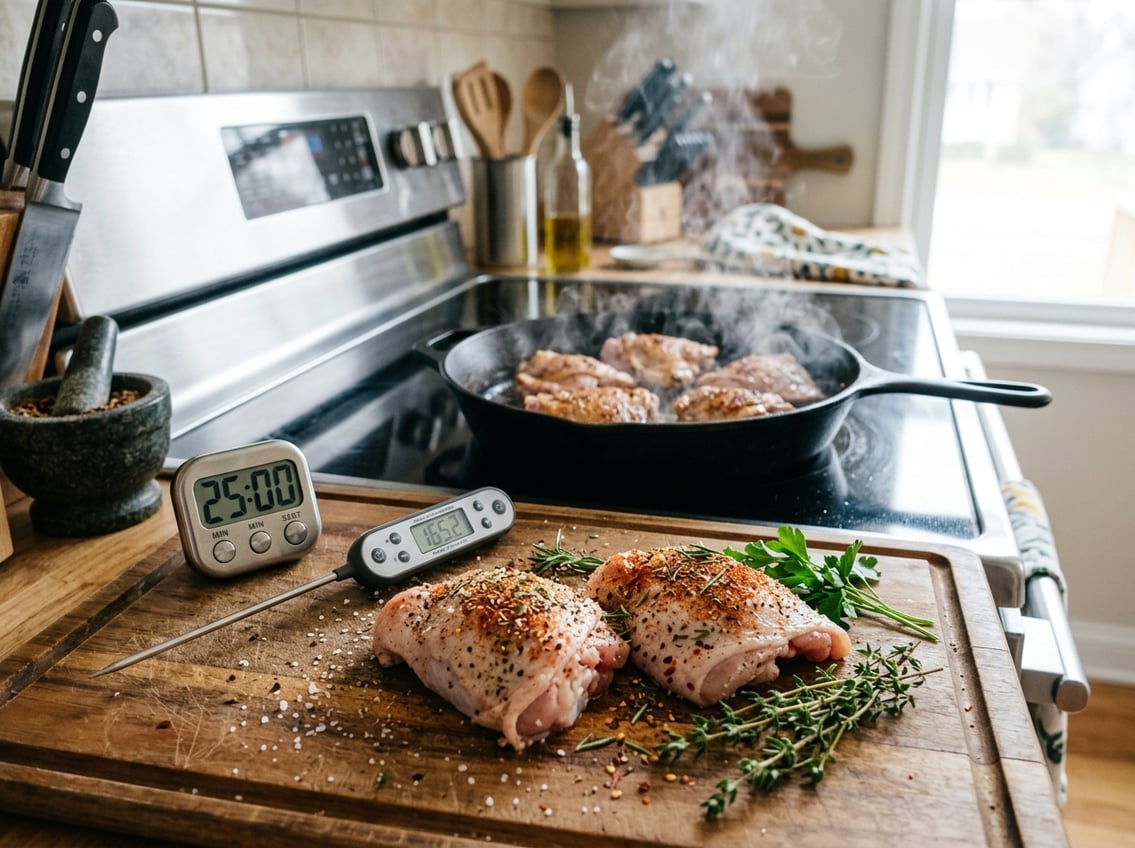
You’ll find time ranges, temperature tips, and ways to check doneness without overcooking. Guidance on oven settings, crisp-skin techniques, seasoning, and ideas for leftovers will help your next batch come out juicy and reliable.
Essential Oven Cooking Times by Chicken Thigh Type
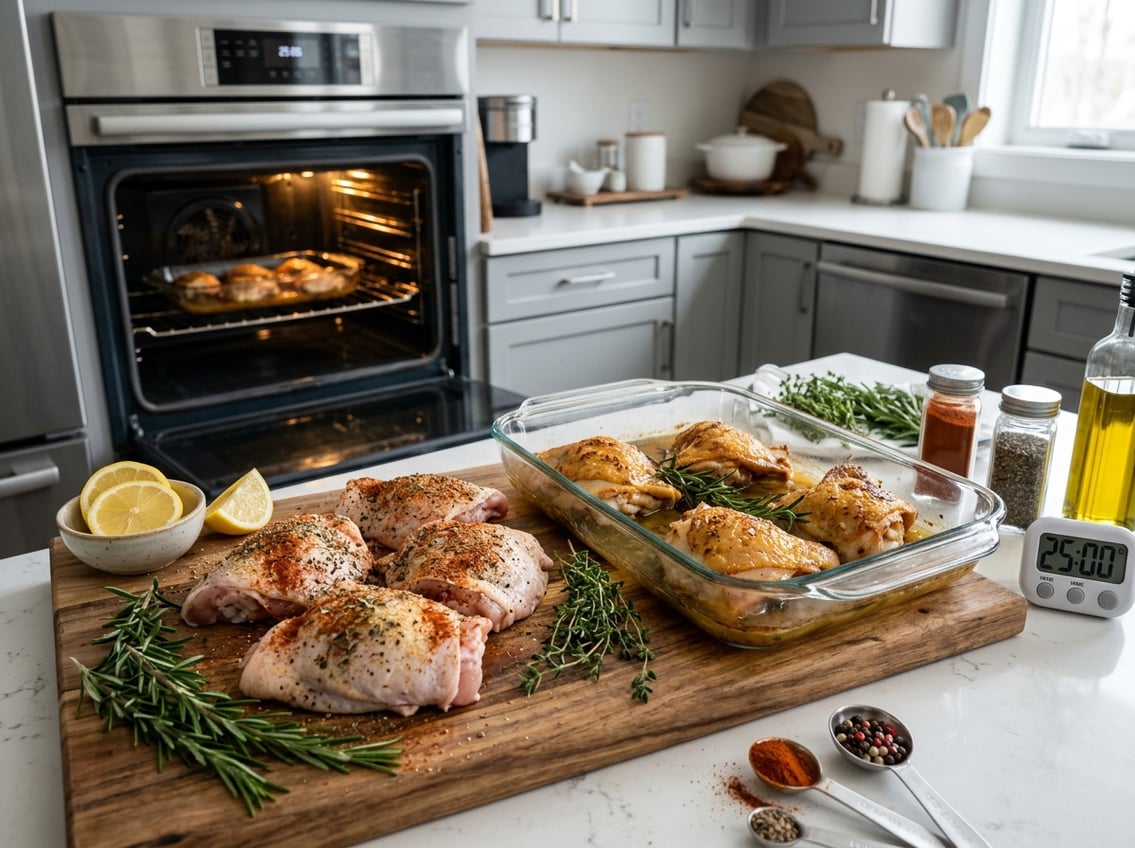
Target an internal temperature of 165°F (74°C) for all thighs. Oven temperature and whether the thigh is bone-in or skin-on affect cook time and texture.
Bone-In Chicken Thigh Timing
The bone slows heat transfer, so bone-in chicken thighs take longer.
Bake at 375°F (190°C) for 35–45 minutes for 4–8 ounce pieces; larger pieces may need up to 50 minutes.
Use an instant-read thermometer in the thickest part, avoiding the bone, to confirm 165°F.
For crisp skin, start at 425°F for the first 10–15 minutes, then reduce to 375°F to finish.
Rest the thighs 5–10 minutes after baking so juices redistribute.
If you bake chicken thighs on a single sheet, space pieces so air circulates and skin crisps.
Boneless Chicken Thigh Timing
Boneless chicken thighs cook faster because there’s no bone barrier.
Bake at 425°F (220°C) for 20–30 minutes for 4–6 ounce pieces.
Thicker or marinated pieces may need closer to 30 minutes; thin cutlets finish in about 15–18 minutes.
Check doneness with an instant-read thermometer at 165°F.
Remove from the oven as soon as they reach target temp and let rest 3–5 minutes.
For meal prep, bake at 400°F for 20–25 minutes to balance even cooking and moisture retention.
Skin-On vs. Skinless Timing
Skin affects cooking time and texture.
Skin-on thighs take the same or slightly longer time than skinless at the same temp because skin protects meat and benefits from higher initial heat.
For bone-in, skin-on: bake at 375–425°F for 35–45 minutes. For boneless, skin-on: use 400–425°F for 20–30 minutes.
Skinless thighs cook a bit faster and dry out sooner.
Reduce time by 3–5 minutes at the same temperature, or lower oven temp by 25°F and add a short rest covered with foil to retain moisture.
Always use the 165°F internal temp as your guide.
Determining Doneness and Oven Temperatures
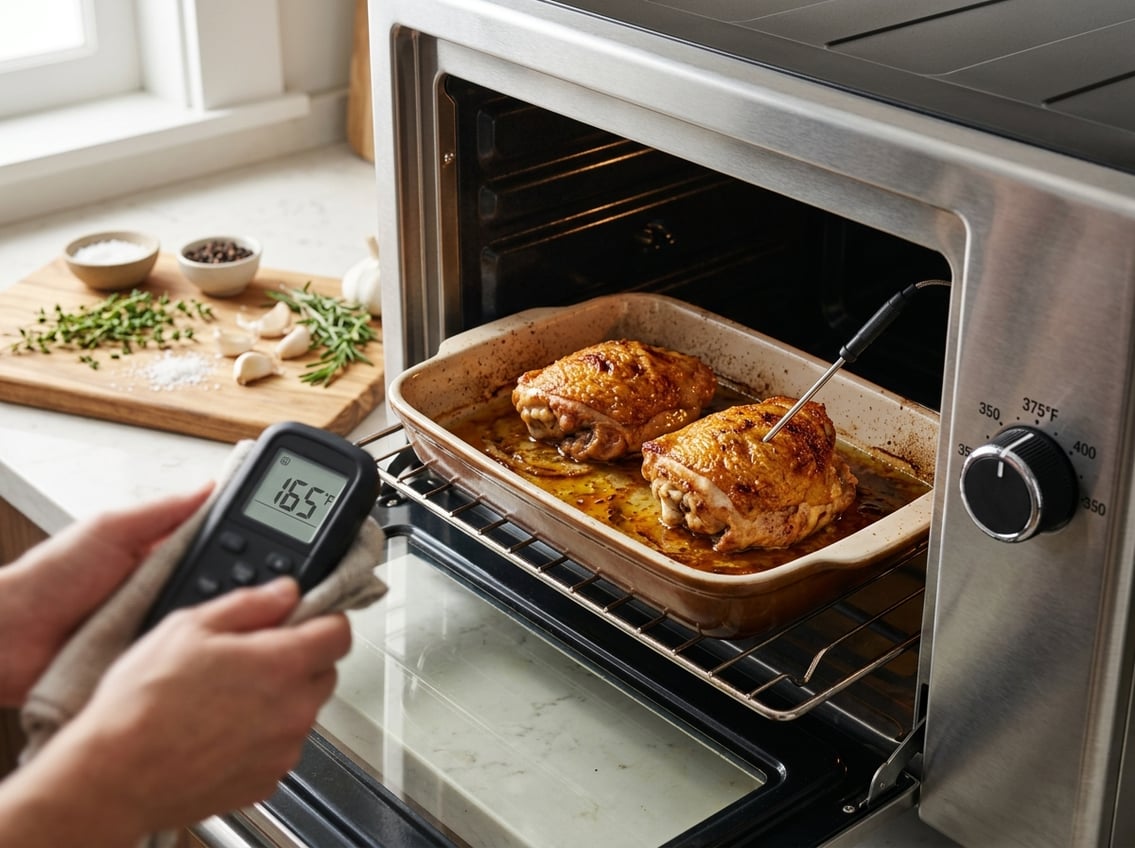
Use precise temperature targets and visual cues to know when chicken thighs are safe and tasty.
Oven heat changes texture and time, so match the thermometer reading with how the meat looks and feels.
Internal Temperature Guidelines
Check doneness with an instant-read thermometer. Insert the probe into the thickest part of the thigh without touching bone.
The USDA minimum safe temperature is 165°F (74°C).
For more tender bone-in thighs, cook to 175–185°F (79–85°C). This extra heat breaks down connective tissue for juicier meat.
For boneless thighs, aim for 165–175°F (74–79°C) to avoid drying.
Let thighs rest 5–10 minutes after removing from the oven for carryover cooking and even juices.
Visual and Texture Cues
Look for no pink near the bone and clear juices when pierced.
The skin should be crisp if roasted at a high temperature.
Meat fibers will separate slightly when you pull with a fork.
Undercooked thighs feel soft and slightly gelatinous.
Done thighs feel firm but springy.
Overcooked thighs become dry and stringy.
For boneless thighs, check the thickest area for a uniform color and slight resistance to the probe.
Impact of Oven Heat Levels
Oven temperature affects timing and outcome.
At 375–400°F (190–204°C), you balance browning and moisture; bone-in thighs usually need about 35–50 minutes.
At 425°F (218°C), boneless thighs often finish in 20–30 minutes with crisp skin.
Lower temperatures (around 350°F / 175°C) lengthen cooking time and produce more even doneness, useful for larger bone-in thighs or recipes with sauce.
Convection ovens reduce time by about 10–20%, so check temperature sooner.
Prioritize the internal temperature over elapsed minutes.
Best Techniques for Baking Chicken Thighs
Prepare, position, and finish your thighs properly for juicy meat and crispy skin.
Focus on seasoning, spacing, and choosing the right surface so heat reaches all sides and the skin browns.
Arranging and Prepping Thighs
Pat skin-on chicken thighs dry with paper towels to remove moisture. This helps the skin crisp.
Trim excess fat and any loose skin so thighs lay flat and cook evenly.
Season both sides generously with salt and a little oil. Add pepper, garlic powder, paprika, or your preferred spice rub.
For boneless thighs, let them rest 15–30 minutes after seasoning for flavor.
For bone-in, season at least 30 minutes ahead or refrigerate uncovered for several hours to dry the skin.
Arrange thighs skin-side up on a rimmed baking sheet or shallow pan, spaced about 1 inch apart.
Place bone-in pieces with the bone toward the center of the pan for even heat.
Using Foil, Racks, or Skillets
Line a baking sheet with foil for easier cleanup, but don’t wrap thighs tightly.
Use a rimmed sheet to catch drips and keep the oven clean.
A wire rack set over the sheet lifts thighs so hot air circulates underneath. This speeds fat rendering and crisps the underside of the skin.
For boneless thighs, a rack reduces sticking and promotes browning.
Cast-iron or oven-safe skillets concentrate heat and give a better sear.
Sear skin-side down in a hot skillet for 3–4 minutes until browned, then transfer to the oven to finish.
That method combines pan-sear flavor with reliable oven doneness.
Finishing for Crispy Results
Bake at higher heat for crisper skin. Use 425°F for boneless thighs (about 20–30 minutes).
Bone-in skin-on pieces benefit from 425–450°F for 25–35 minutes depending on size.
Use an instant-read thermometer and remove thighs at 165°F in the thickest part.
If skin needs extra crisping, broil for 1–3 minutes at the end, keeping the pan on the middle rack and watching closely.
Rest thighs for 5 minutes before serving so juices redistribute.
Brush with a light glaze (honey, vinegar-based sauce) in the final 5 minutes if you want sticky, caramelized skin.
Seasoning and Flavoring Options
Choose a base seasoning that complements the cooking method and the flavors you want.
Salt brings out moisture and savory notes, acid in marinades tenderizes, and bold spices create distinct profiles.
The approaches below show quick finishes, make-ahead marinades and rubs, and global flavor templates.
Simple Salt and Pepper
Salt and pepper form the foundation for seasoning chicken thighs.
Use kosher salt at about 1 teaspoon per pound applied evenly.
Coarse black pepper adds sharpness.
Pat thighs dry before seasoning so the skin crisps in the oven.
For bone-in, skin-on thighs, season under the skin as well as on top.
Optionally add a pinch of garlic powder or smoked paprika for color.
If baking immediately, let seasoned thighs rest 10–15 minutes at room temperature.
For better results, salt them and refrigerate uncovered for a few hours to dry the skin.
Homemade Marinades and Rubs
Marinades combine acid, oil, and aromatics to tenderize and flavor chicken thighs.
Use a basic ratio: 1 part acid (lemon juice, vinegar), 2 parts oil, and seasonings.
Marinate skinless or bone-in thighs for 30 minutes to 4 hours; avoid overnight in strong acids.
Dry rubs use salt, sugar, and spice blends.
Apply rubs 30 minutes to overnight before baking.
Example rub: 1 tbsp brown sugar, 1 tsp smoked paprika, 1 tsp garlic powder, 1 tsp kosher salt, ½ tsp black pepper.
Massage rub into the thighs and let them sit at least 30 minutes before baking.
Use airtight containers or resealable bags and discard leftover marinade that has contacted raw chicken.
Pat marinated thighs dry before baking to improve browning.
Global and Bold Flavors
Choose a regional flavor template for your chicken thighs.
For Mediterranean: use olive oil, lemon zest, oregano, and minced garlic.
For Middle Eastern: use yogurt, ground cumin, coriander, turmeric, and a touch of cinnamon as a marinade.
For Asian-inspired options, try soy sauce, rice vinegar, sesame oil, ginger, and scallions. Marinate 30–60 minutes and bake or broil to finish.
For a Latin profile, use a dry rub of smoked paprika, cumin, garlic powder, and oregano with a squeeze of lime after baking.
Match cooking method to the flavor.
Bold, sugary glazes work well under high heat for caramelization.
Yogurt and dairy-based marinades benefit from moderate oven temperatures.
Oven Tips for Juicy and Tender Meat
Control oven temperature, check internal temperature with a thermometer, and manage timing and resting to keep thighs moist.
Use high heat for crispy skin or moderate heat for even cooking.
Plan storage if you’ll keep leftovers.
Avoiding Overcooking and Dryness
Overcooking dries thighs fast, especially boneless cuts.
Set the oven to 400–425°F (204–218°C) for boneless thighs (about 20–30 minutes) or 375–400°F (190–204°C) for bone-in thighs (about 30–40 minutes).
Use an instant-read thermometer and remove the thighs at 160–162°F (71–72°C); carryover heat will bring them to 165°F (74°C).
Pat thighs dry with paper towels and rub with oil to help skin crisp.
Arrange pieces skin-side up on a rimmed sheet or rack so air circulates and fat renders away.
If you see juices running pink, keep cooking; clear juices and an internal temp of 165°F confirm doneness.
Benefits of Resting After Cooking
Resting lets juices redistribute from muscle fibers back into the meat.
Let thighs rest 5–10 minutes on a warm plate loosely tented with foil.
Larger bone-in pieces benefit from 10–15 minutes.
During rest, internal temperature will rise 3–5°F, so factor that into your pull temperature.
Use the rest time to finish a pan sauce or crisp skin under the broiler for 30–60 seconds if you want extra texture.
Batch Cooking and Storage Advice
If you batch cook, cool thighs quickly to limit bacterial growth.
Transfer leftover baked chicken thighs to shallow airtight containers and refrigerate within two hours.
Consume refrigerated leftovers within 3–4 days for safety and best texture.
For freezing, wrap thighs individually in plastic wrap then foil, or place on a baking sheet to flash-freeze before bagging.
Frozen cooked thighs keep well for 2–3 months.
To reheat, thaw in the fridge overnight, then warm in a 325°F (163°C) oven until internal temp reaches 165°F.
Cover loosely with foil to retain moisture and finish uncovered for 5 minutes to refresh the skin.
Creative Ways to Use Baked Chicken Thighs
Add leftover baked chicken thighs to new meals for quick protein and flavor. Build fast weeknight dinners and stretch ingredients across several lunches.
Quickly shred, slice, or glaze the thighs so they become the base for fresh dishes instead of simple reheats.
Repurposing Leftovers
Shred or chop leftover baked chicken thighs within a day or two of cooking for the best texture and flavor. Use a fork to pull the meat into bite-sized pieces, then toss with a splash of lemon juice or a spoonful of mayo to add moisture.
Turn shredded thighs into quick salads, grain bowls, or tacos. Combine the chicken with mixed greens, sliced cucumber, roasted nuts, and vinaigrette for salads.
For tacos, warm the chicken with salsa, lime, and chopped cilantro. Serve on corn tortillas with pickled onions.
Store cooled thighs in an airtight container for up to 3–4 days in the fridge. You can also freeze them in portions for up to 3 months.
Label containers with the date and planned use to keep your meal plan organized.
Pairing with Sides
Pair baked chicken thigh recipes with sides that balance fat and seasoning. Choose bright sides like herbed couscous, lemony roasted broccoli, or cabbage slaw for richly seasoned thighs.
If the thighs are lightly seasoned, serve with bold sides such as spicy roasted potatoes, chimichurri-dressed greens, or creamy parmesan polenta. Include contrasting textures like crispy, soft, and crunchy on the plate.
For speed, use one-pan sheet meals by adding quartered potatoes and halved Brussels sprouts to the pan during reheating. Drizzle with olive oil, sprinkle salt, and roast at 400°F (205°C) for 15–20 minutes until vegetables caramelize and chicken heats through.
Incorporating into Other Recipes
Transform baked chicken thighs into new recipes to keep meals interesting. Add chopped thighs to pasta with a garlic-cream sauce.
Stir them into fried rice with peas and scrambled egg. Fold pieces into a savory bread pudding for brunch.
Simmer thighs briefly in tomato-based enchilada sauce for casseroles. Toss with pesto and roasted tomatoes for a pasta topping.
Use bone-in or boneless thighs. Remove the skin first for casseroles or salads to prevent sogginess.
For meal prep, slice the thighs and portion them into mason jars with grains and vegetables. Add dressing just before eating.


