
How Are Chicken Thighs Different From Chicken Breast: Nutrition, Flavor, and Cooking
You’ll notice the moment you cook them: thighs stay juicier and richer, while breasts deliver leaner, higher-protein bites.
Chicken thighs differ from breasts mainly by cut, fat content, and texture. Thighs are darker, fattier, and more forgiving in cooking. Breasts are leaner, milder, and higher in protein per ounce.
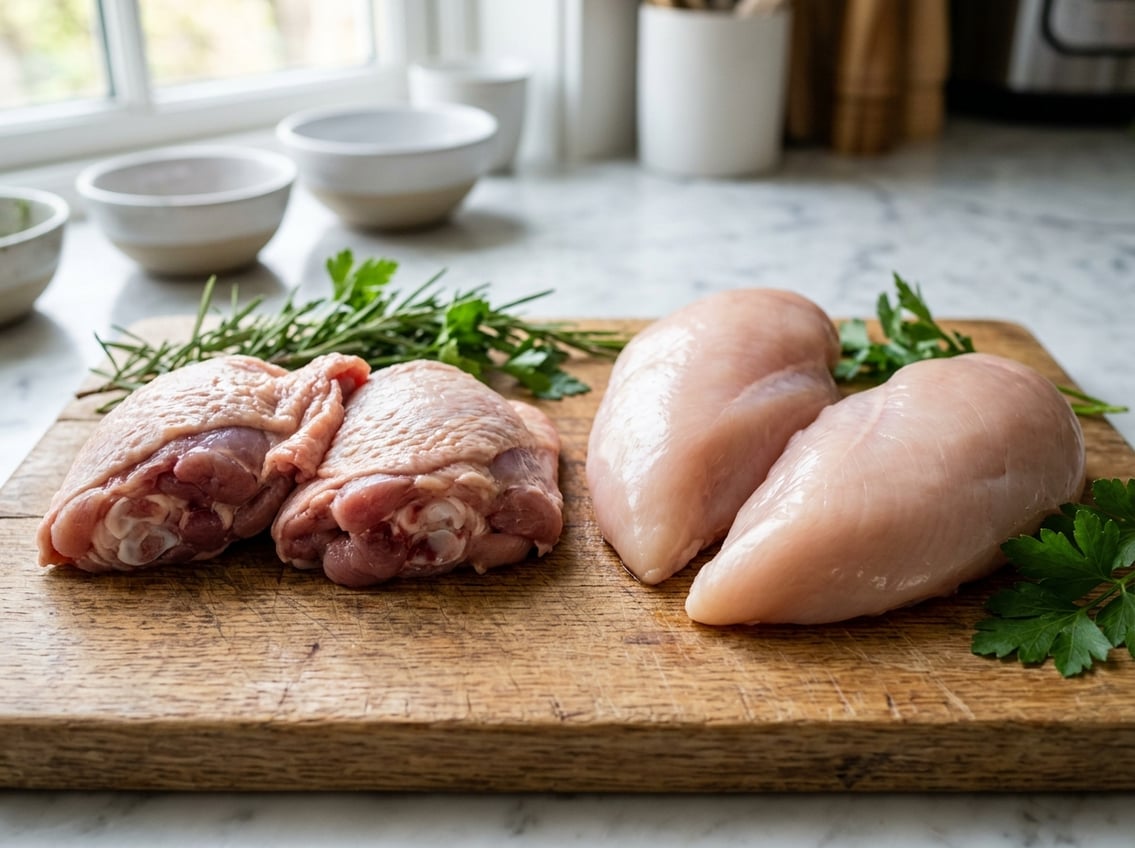
Knowing those core differences helps you choose based on flavor, nutrition, and cooking plans.
Anatomy affects taste and cooking, while nutrition and portioning change meal planning.
Anatomical and Culinary Distinctions
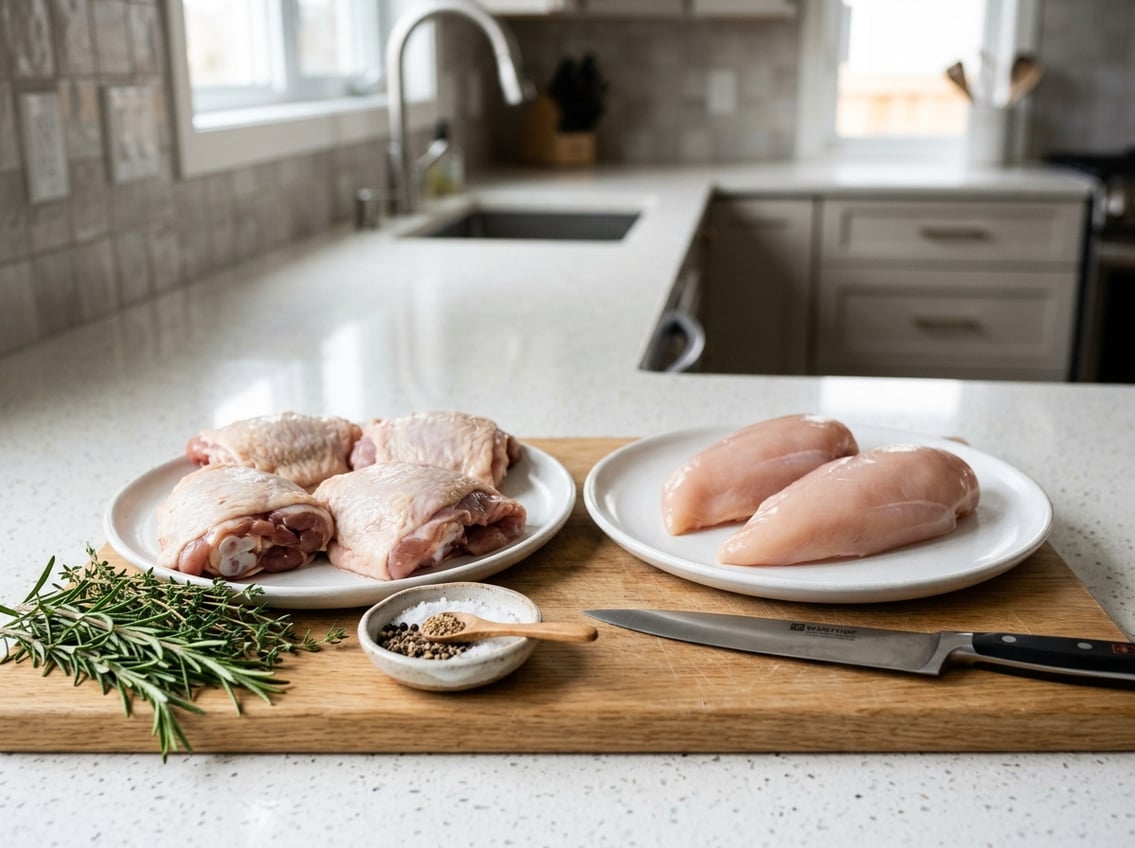
Chicken thighs and breasts differ in where they sit on the bird and how muscle and fat content affect cooking.
You’ll notice differences in color, fiber, and moisture that influence how you cook and season each cut.
Location and Muscle Structure
The chicken thigh sits on the upper portion of the leg, between the body and the drumstick.
It’s a load-bearing muscle that moves regularly, so the fibers are denser and contain more connective tissue than the breast.
The breast sits on the bird’s chest and serves as a primarily non-weight-bearing muscle.
Its muscle fibers are finer and leaner, with much less intramuscular fat and connective tissue.
Thighs tolerate longer, higher-heat methods like braising and roasting without drying out.
Breasts respond best to quick, precise cooking such as grilling, pan-searing, or poaching to avoid becoming tough and dry.
Appearance and Texture
Chicken thighs look darker pink to deep red compared with the pale, almost translucent white of chicken breasts.
Thighs often come bone-in with skin attached. Breasts are commonly sold boneless and skinless.
Thighs are juicier and more forgiving because of higher fat and gelatinous connective tissue.
That gives a richer mouthfeel and more flavor when roasted or braised.
Breasts are firmer and can become stringy if overcooked, but they take marinades and brines well to add moisture and flavor.
Key considerations at the store or in recipes:
- Thighs: choose for slow-cooked stews, shredded meat, or high-flavor applications.
- Breasts: choose for lean-protein dishes, quick sautés, or sliced presentations.
Nutritional Comparison
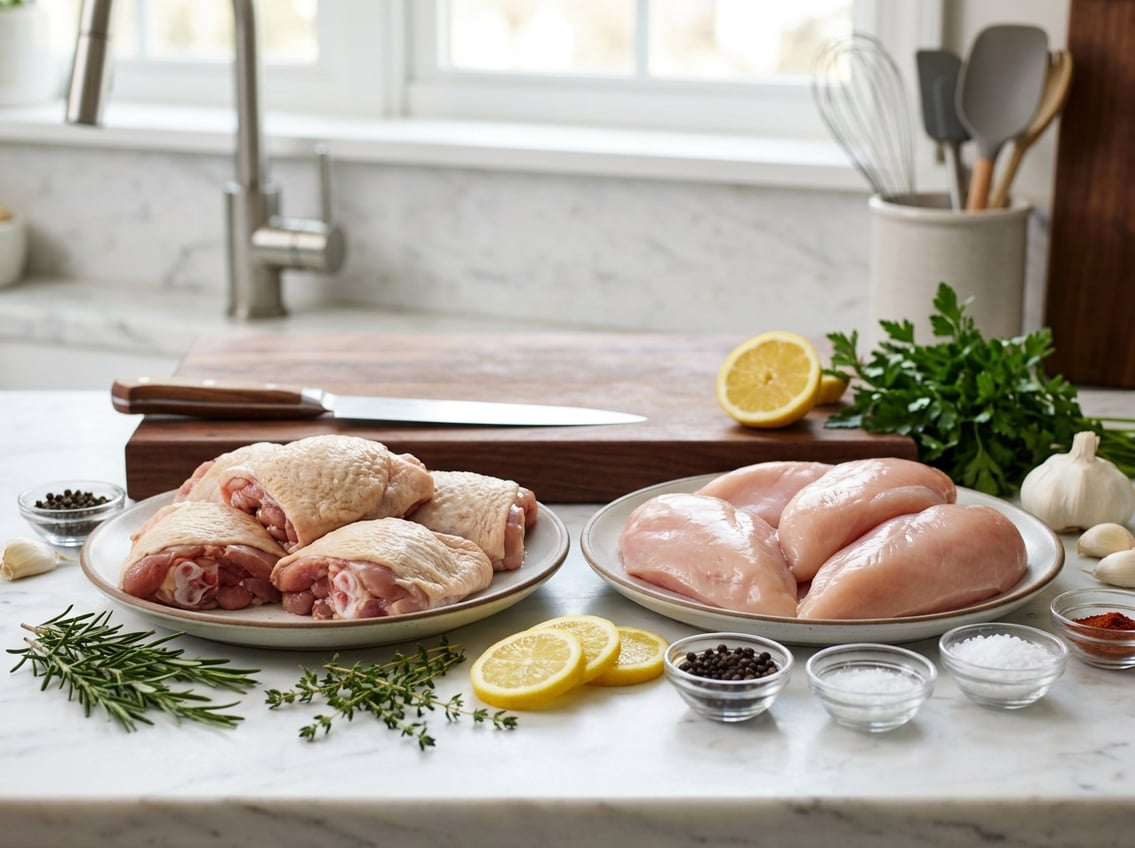
Chicken thighs and chicken breasts differ most in protein, fat, calories, and select micronutrients.
Breasts give you more protein per calorie, while thighs deliver more fat, iron, and zinc per serving.
Protein Content
A 100-gram serving of skinless chicken breast provides about 22–23 grams of protein.
This makes chicken breasts one of the leanest animal proteins and a practical choice when you need concentrated protein without many calories.
Skinless chicken thighs provide roughly 18–19 grams of protein per 100 grams.
Each gram of protein comes with more calories because of higher fat content.
For a standard 3-ounce (≈85 g) serving, breasts generally deliver several more grams of protein than thighs.
If you want maximal protein per calorie for muscle building or weight control, choose chicken breast.
If you want reasonable protein plus more energy-dense food, include chicken thighs.
Fat and Calorie Differences
Per 100 grams, skinless chicken breast contains about 2–3 grams of total fat and roughly 100–110 calories.
That low fat content keeps calories down and makes breasts easier to fit into calorie-controlled plans.
Skinless chicken thighs have closer to 7–9 grams of fat per 100 grams and around 140–160 calories.
The extra fat increases satiety and juiciness, so thighs often feel more satisfying at the same portion size.
Adding skin or frying increases fat and calories substantially for both cuts.
If you’re watching saturated fat or total calorie intake, remove the skin and use grilling, baking, or poaching.
Vitamins and Minerals
Chicken breast supplies B vitamins, especially niacin (B3) and vitamin B6, which support energy metabolism.
It also contributes selenium and phosphorus in meaningful amounts per serving.
Chicken thighs contain higher amounts of iron and zinc compared with breasts.
The darker meat and higher myoglobin level give thighs more bioavailable iron.
Thighs also retain slightly more fat-soluble nutrients due to their higher fat content.
Pick breasts when you need B vitamins and lower calories, and pick thighs when you want more iron, zinc, and a richer mouthfeel.
Health Considerations and Dietary Impact
Choice between cuts affects calories, fat, protein, and how filling a meal feels.
Pay attention to serving size and whether the meat is skin-on or skinless, since that alters nutrient totals and cooking choices.
Weight Management and Satiety
Skinless chicken breast provides more protein per calorie than a same-size serving of chicken thigh.
A 100 g serving of skinless breast offers roughly 30–31 g protein and about 165 calories.
100 g of skinless thigh typically gives closer to 22–24 g protein and ~210 calories.
Higher protein density in breast supports muscle maintenance and helps you meet daily protein targets with fewer calories.
Thighs contain more fat, which slows gastric emptying and can increase perceived fullness.
A single serving of skinless chicken thigh may keep you satisfied longer than the same-weight serving of breast.
Balance this by adjusting serving size: choose a 3–4 oz (85–113 g) portion for breast when cutting calories, or reduce thigh portion by 25–30% to match calorie goals.
Cholesterol and Heart Health
Total fat and saturated fat are higher in chicken thighs than in chicken breast, particularly with skin on.
A 3-ounce serving of skinless chicken breast contains about 1 g saturated fat.
The same amount of skinless thigh contains closer to 3 g.
That difference matters if you monitor saturated fat intake for cardiovascular risk reduction.
Cholesterol content is similar between cuts but varies with portion and preparation.
Removing the skin and using grilling, baking, or roasting instead of frying minimizes added fats and keeps saturated fat and sodium lower.
If you have elevated LDL cholesterol or follow a heart-healthy eating plan, prefer skinless breast or trim visible fat from thighs and control your serving size.
Flavor and Texture Profiles
Thighs and breasts differ mainly in richness and mouthfeel.
Thighs give you more fat-driven flavor and a softer bite.
Breasts offer a milder taste and firmer texture.
These differences affect seasoning choices, cooking methods, and how the meat performs in recipes.
Taste Differences
Chicken thighs taste richer and more savory because they contain more intramuscular fat and connective tissue.
That fat carries fat-soluble flavor compounds and amplifies browning reactions.
Thighs develop deeper, umami-forward notes when roasted, grilled, or pan-seared.
Chicken breasts are much milder; their low fat leaves a cleaner, more neutral canvas that highlights marinades, herbs, and acidic components like lemon or vinegar.
If you prefer bold spices or long braises, reach for thighs.
If you want subtlety or a protein that lets other ingredients dominate, choose breasts.
Moisture and Tenderness
Thigh meat retains moisture better under heat because of higher fat and connective tissue.
You can cook chicken thighs to higher internal temperatures and slow methods like braising or stewing will break down collagen into gelatin, producing a silky mouthfeel.
Chicken breasts are lean and can dry quickly; they require careful timing, brining, or external fats to stay juicy.
Quick, high-heat methods and resting after cooking help keep breasts tender.
Practical cues:
- Thighs: forgiving, remain juicy above 165°F; ideal for grilling, roasting, and slow cooking.
- Breasts: best hit precisely (around 160–165°F) and rested; use brines, marinades, or sauces to add moisture.
Versatility in Cooking Methods
Breasts cook quickly and reward precise timing and high heat for a clean, lean result.
Thighs tolerate higher temperatures and longer cooking, and their extra fat keeps them moist and forgiving.
Best Techniques for Chicken Breasts
- Pan-searing or grilling over medium-high heat gives a golden crust while preserving juiciness. Sear 3–4 minutes per side for boneless, skinless breasts about 1-inch thick; finish in a 375°F oven if needed.
- Pound thicker breasts to even thickness (about 3/4–1 inch) so they cook uniformly. Use an instant-read thermometer: remove at 160–162°F and rest 5 minutes to reach 165°F.
- Poaching keeps breasts moist for salads or cold dishes. Simmer gently in seasoned liquid 12–15 minutes for average-sized breasts.
- Slicing against the grain after resting improves tenderness. Marinate briefly (30–60 minutes) for added flavor.
Optimal Methods for Chicken Thighs
- Roast bone-in, skin-on thighs at 425°F for 25–30 minutes to crisp skin and render fat; internal temperature should reach 175–185°F for tender, slightly gelatinous texture.
- Braising and slow cooking work well with thighs, including skinless chicken thighs. Cook low and slow in flavorful liquid 1–2 hours until meat pulls apart easily.
- Grilling or pan-frying works well because thighs resist drying. For skinless thighs, cook a bit longer than breasts and watch for flare-ups from fat if skin is present.
- Use higher final temperatures or longer cook times for safety and texture. Rest 5–10 minutes before serving and consider shredding for tacos, sandwiches, or stews.
Serving Sizes and Practical Tips
Chicken thighs contain more fat and collagen and usually weigh less per piece than breasts.
Use weight and number of pieces to plan portions, and pick thigh or breast based on cooking method, flavor preference, and budget.
Determining Appropriate Servings
Plan about 3–4 ounces (85–115 g) of cooked meat per person for a main course.
For boneless chicken breasts, that usually equals one medium breast (6–8 oz raw) per person.
For boneless thighs, count 2–3 thighs (total 6–9 oz raw) per person.
If pieces are bone-in or skin-on, add 20–30% to raw weight because bone reduces edible yield.
Weighing meat before cooking gives the most accurate result; packaged serving sizes can vary widely.
Adjust servings for appetite and dish type.
For high-protein needs or hungry eaters, increase to 5–6 ounces cooked.
For salads or casseroles, use 2–3 ounces cooked per person.
When substituting thighs for breasts, expect slightly lower cooked yield by weight but more flavor and moisture.
Budget and Convenience Factors
Thighs cost less per pound than breasts and tolerate longer, slower cooking without drying. They work well for braises, stews, and batch-cooked meals.
If price matters, buy family packs of thighs and freeze portions in 8–12 ounce (225–340 g) bags for 2–3 servings each.
Breasts cook faster and are leaner, making them convenient for quick sautés, grilling, or meal-prep portions. Choose boneless, skinless breasts for predictable portion sizes and bone-in thighs for lower cost and more flavor per dollar.
Consider prep time and equipment. Thighs need less attention in moist-heat methods, while breasts require careful timing to avoid dryness.
For consistent servings, trim and portion raw breasts into 4–6 ounce pieces. Label packages with intended serving counts.


