
Granular Cheese: Understanding This Trending Ingredient and 15 Creative Cooking Applications
Last updated: June 23, 2026
Quick Answer
Granular cheese refers to cheese with a distinct grainy, crumbly, or small-curd texture, including finely grated hard cheeses like Parmesan and fresh soft cheeses like cottage cheese. This ingredient category has seen explosive growth in 2026, with U.S. sales up approximately 20% year-over-year, driven by social media trends and demand for high-protein, versatile cooking ingredients. Granular cheese works in both sweet and savory applications, from pasta toppings to smoothie bases, making it one of the most adaptable ingredients in modern kitchens.
Key Takeaways
- Granular cheese encompasses both hard grated cheeses (Parmesan, Romano) and soft curd cheeses (cottage cheese, ricotta), unified by their distinctive grainy texture
- U.S. cheese-category sales featuring granular textures grew roughly 20% in mid-2026, continuing multi-year growth driven by TikTok recipes and high-protein diets [1]
- Cottage cheese and similar granular-style products are positioned as long-term strategic growth categories, not short-lived fads, with 2022-2024 gains of 11-17% annually [1]
- Protein content is the primary driver: cottage cheese delivers 12-14g protein per half-cup, making it competitive with Greek yogurt
- Granular cheese melts differently than shredded cheese—fine powders incorporate smoothly into sauces, while curd-style cheeses add texture rather than stretch
- Supply constraints persist in mid-2026, with cottage cheese shortages expected to last several more months due to limited processing capacity [1][2]
- Best storage practice: keep granular cheese in airtight containers in the coldest part of your refrigerator; hard grated varieties last 6+ months, fresh curd styles 7-10 days after opening
- Creative applications range from traditional pasta toppings to protein-packed desserts, breakfast bowls, and even baking substitutes
What Is Granular Cheese and How Is It Different From Regular Cheese
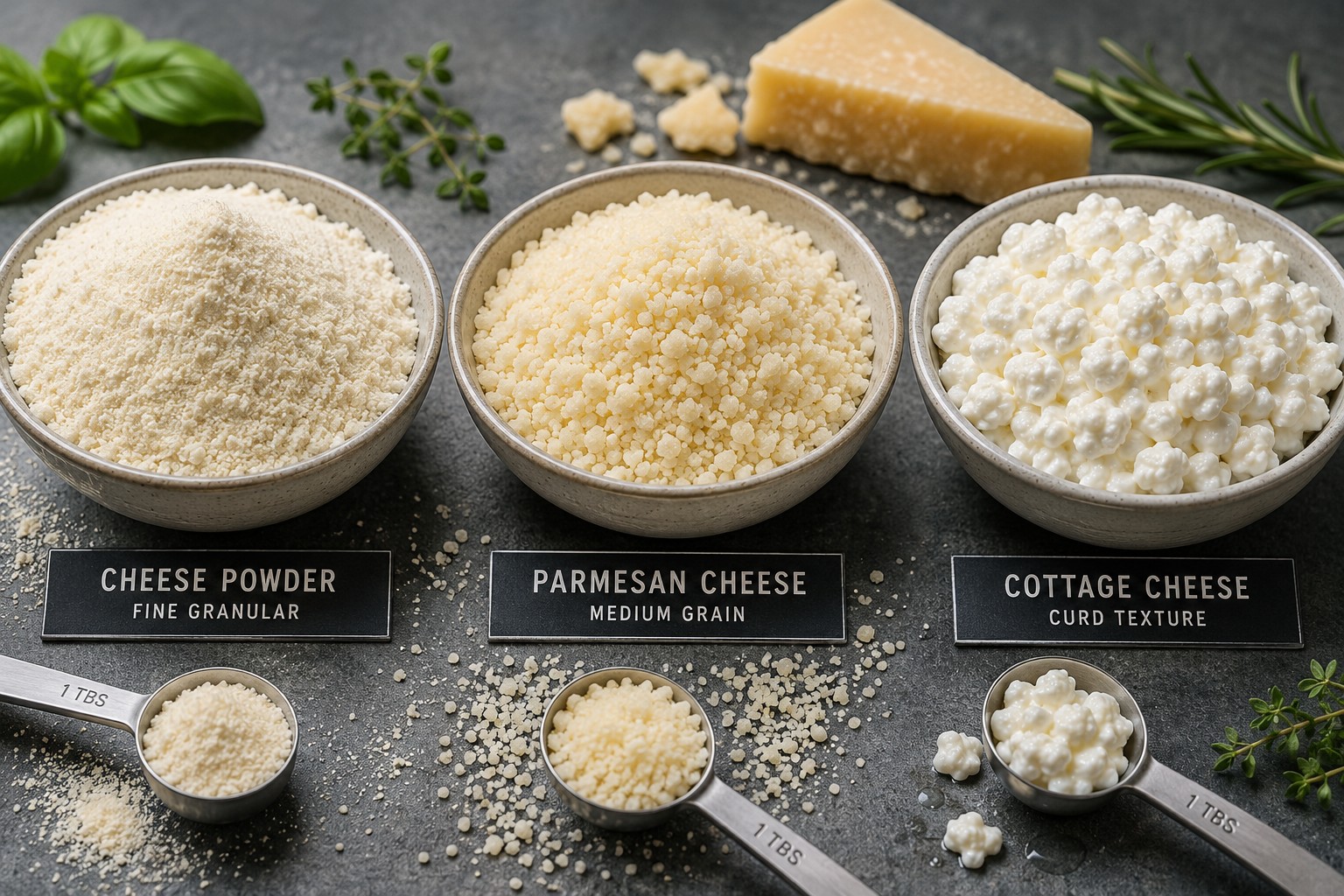
Granular cheese is any cheese characterized by a grainy, crumbly, or small-curd texture rather than a smooth, elastic consistency. This category includes both aged hard cheeses that are finely grated (like Parmesan, Pecorino Romano, and Asiago) and fresh soft cheeses with visible curds (such as cottage cheese, farmer’s cheese, and fresh ricotta). The defining feature is texture: granular cheeses feel sandy, pebbly, or curd-like rather than creamy or stretchy.
The difference from “regular” cheese lies in production and aging. Hard granular cheeses are aged for extended periods (often 12-36 months), which causes protein and fat structures to crystallize and break down into a crumbly texture. When grated, they form fine particles rather than shreds. Fresh granular cheeses, by contrast, are made by cutting curds into small pieces and draining whey without pressing or aging, preserving individual curd structure.
Why texture matters in cooking: Granular cheeses behave differently than block or shredded varieties. Fine-grained hard cheeses dissolve quickly into sauces and coat pasta evenly. Curd-style granular cheeses add protein and moisture without creating the stringy melt you get from mozzarella or cheddar. Choose granular cheese when you want flavor and nutrition without heavy, gooey texture.
Granular Cheese vs Parmesan: What’s the Difference
Parmesan (specifically Parmigiano-Reggiano) is one type of granular cheese, but not all granular cheese is Parmesan. Parmesan refers to a specific aged Italian cheese with PDO (Protected Designation of Origin) status, made from cow’s milk in designated regions of Italy and aged at least 12 months. Its granular texture comes from long aging that creates tyrosine crystals and breaks down protein structures into a crumbly consistency.
The broader “granular cheese” category includes Parmesan but also encompasses:
- Grana Padano – similar to Parmesan but aged 9-20 months, slightly milder
- Pecorino Romano – sheep’s milk, sharper and saltier than Parmesan
- Asiago – cow’s milk, aged 9+ months, nutty and sweet
- Cottage cheese – fresh, high-moisture, small-curd texture
- Dry ricotta – drained ricotta with a grainy, crumbly consistency
Key distinction: When recipes call for “granular cheese,” they usually mean finely grated hard cheese (Parmesan-style) or cottage cheese, depending on context. Hard granular cheeses are low-moisture and shelf-stable; soft granular cheeses are high-moisture and perishable. Both share a non-smooth texture but serve different culinary roles.
Where Can I Buy Granular Cheese Near Me
Most granular cheese varieties are widely available at standard grocery stores, though selection and quality vary by format. For hard granular cheeses like Parmesan, check the deli counter for freshly grated or block options, or find pre-grated containers in the refrigerated cheese section. Cottage cheese and other fresh curd-style granular cheeses are stocked in the dairy aisle near yogurt and sour cream.
Best places to buy:
- Supermarkets – Kroger, Safeway, Publix, and regional chains carry multiple brands of cottage cheese, plus grated Parmesan and Romano in various grain sizes
- Warehouse clubs – Costco and Sam’s Club offer bulk containers of cottage cheese (often 3-5 lb tubs) and large wedges of Parmigiano-Reggiano at competitive prices
- Specialty cheese shops – Local cheese counters and shops like Whole Foods or independent fromageries stock artisan granular cheeses, including aged Grana Padano and small-batch cottage cheese
- Farmers markets – Look for fresh farmer’s cheese and cottage cheese from local dairies, often with higher butterfat content and richer flavor
- Online retailers – Amazon Fresh, Thrive Market, and specialty sites like iGourmet ship aged hard cheeses and shelf-stable grated varieties nationwide
Supply note: As of mid-2026, cottage cheese remains in short supply due to processing capacity constraints and surging demand [1][2]. If your local store is out of stock, try visiting early in the week after restocking or ask staff when the next delivery is expected.
How Much Does Granular Cheese Cost Compared to Grated Parmesan
Pricing for granular cheese varies widely by type, quality, and format. Pre-grated Parmesan in plastic shakers costs $0.30-0.50 per ounce, while authentic Parmigiano-Reggiano wedges run $1.20-1.80 per ounce at specialty retailers. Cottage cheese typically costs $0.20-0.40 per ounce ($3-6 for a 16 oz container), making it one of the most affordable high-protein dairy options.
Price comparison (per ounce, mid-2026 U.S. averages):
| Cheese Type | Price Range | Notes |
|---|---|---|
| Pre-grated Parmesan (shaker) | $0.30-0.50 | Contains cellulose anti-caking agents |
| Grated Parmesan (refrigerated) | $0.60-0.90 | Higher quality, no fillers |
| Parmigiano-Reggiano wedge | $1.20-1.80 | Authentic PDO, best flavor |
| Pecorino Romano | $0.80-1.40 | Sheep’s milk, sharper taste |
| Cottage cheese (regular) | $0.20-0.30 | High protein, budget-friendly |
| Cottage cheese (organic) | $0.35-0.50 | Grass-fed, no additives |
Value tip: Buying block Parmesan and grating it yourself saves 40-60% compared to pre-grated options and delivers superior flavor. For cottage cheese, store brands offer the same protein content as premium labels at half the price. Choose organic or grass-fed only if clean-label ingredients matter to you; nutritional differences are minimal.
Best Brands of Granular Cheese to Buy in 2026
Brand quality varies significantly across granular cheese categories. For hard aged cheeses, authenticity and aging time determine flavor depth. For cottage cheese, fat content, curd size, and additive-free formulations are key quality markers.
Top hard granular cheese brands:
- Parmigiano-Reggiano Consortium – Look for the official stamp; any wheel with the dotted rind pattern is authentic and aged 12-36 months
- BelGioioso – U.S.-made Parmesan and Romano with consistent quality, widely available, aged 10+ months
- Sartori – Artisan Wisconsin Parmesan and Asiago, hand-crafted, excellent for grating
- Locatelli – Premium Pecorino Romano, sharp and salty, ideal for pasta dishes
Top cottage cheese brands (2026):
- Good Culture – Live probiotic cultures, no gums or stabilizers, 14g protein per serving
- Daisy – Simple ingredients (milk, cream, salt, enzymes), no additives, budget-friendly
- Nancy’s – Organic, probiotic-rich, tangy flavor, small-batch production
- Breakstone’s – Widely available, consistent curd size, multiple fat levels (1%, 2%, 4%)
What to avoid: Pre-grated Parmesan in shelf-stable shakers often contains up to 9% cellulose (wood pulp) as an anti-caking agent. While safe, it dilutes flavor and adds no nutritional value. For cottage cheese, skip brands with carrageenan, guar gum, or modified food starch if you prefer clean-label products; these stabilizers prevent whey separation but aren’t necessary for quality.
Why Does My Granular Cheese Clump Together
Clumping in granular cheese happens when moisture, heat, or pressure causes individual particles to stick together. For hard grated cheeses, the culprit is usually humidity or improper storage. For cottage cheese, clumping (or “weeping”) occurs when curds release excess whey due to temperature fluctuations or age.
Common causes and fixes:
- Moisture exposure – Grated Parmesan absorbs humidity from the air, causing particles to bind. Store in airtight containers with a silica gel packet or a piece of dry rice to absorb moisture.
- Warm storage – Cheese stored above 40°F softens and clumps. Keep granular cheese in the coldest part of your refrigerator (usually the back of the bottom shelf).
- Freezer burn – Frozen grated cheese can clump when thawed. Freeze in small portions in vacuum-sealed bags, and toss gently after thawing to separate grains.
- Old cottage cheese – Curds break down and release whey as cottage cheese ages, creating a watery, clumpy texture. Use within 7-10 days of opening for best consistency.
Prevention tip: For hard granular cheese, buy in blocks and grate fresh as needed. Pre-grated cheese has more surface area exposed to air, accelerating moisture absorption and clumping. If you must buy pre-grated, transfer it to a glass jar with a tight-fitting lid immediately after opening.
Can I Use Granular Cheese Instead of Shredded Cheese in Recipes
Yes, but the substitution works best in specific applications. Granular cheese and shredded cheese behave differently due to particle size, moisture content, and melting properties. Fine-grained hard cheeses (like grated Parmesan) incorporate smoothly into sauces and coat ingredients evenly, while shredded cheeses (like cheddar or mozzarella) melt into stretchy, gooey layers.
When granular cheese works as a substitute:
- Pasta dishes – Grated Parmesan or Pecorino coats noodles better than shredded cheese and adds sharp, salty flavor without greasiness
- Salads and toppings – Fine granular cheese distributes evenly and doesn’t overpower other ingredients
- Soups and sauces – Dissolves quickly without clumping, thickening and flavoring in one step
- Breading and crusts – Adheres to proteins and vegetables better than shreds, creating crispy, flavorful coatings
When shredded cheese is better:
- Melted cheese layers – Pizza, quesadillas, and grilled cheese need the stretch and coverage that shredded mozzarella or cheddar provide
- Casseroles – Shredded cheese creates a cohesive, gooey top layer; granular cheese can turn gritty when baked in thick layers
- Nachos and dips – Shredded cheese melts into smooth, creamy textures; granular cheese may stay grainy
Cottage cheese substitution: Use cottage cheese in place of ricotta in lasagna or stuffed shells (blend smooth if you prefer ricotta’s texture). It also works as a high-protein substitute for sour cream or Greek yogurt in dips and dressings. For more protein-rich cooking ideas, see our guide on keeping chicken breast moist.
Is Granular Cheese Good for People Who Are Lactose Intolerant
Hard granular cheeses like Parmesan, Pecorino, and aged Asiago are naturally very low in lactose and safe for most lactose-intolerant individuals. During the aging process (12-36 months), bacteria consume nearly all the lactose, leaving less than 0.1g per ounce. Fresh granular cheeses like cottage cheese, however, contain significant lactose (2-4g per half-cup) and may cause symptoms in sensitive individuals.
Lactose content by granular cheese type:
- Parmigiano-Reggiano (aged 24+ months) – Virtually lactose-free (<0.1g per oz)
- Pecorino Romano – Trace amounts, safe for most lactose-intolerant people
- Grana Padano – Similar to Parmesan, minimal lactose
- Cottage cheese (regular) – 2-4g lactose per half-cup, moderate to high
- Lactose-free cottage cheese – Available from brands like Green Valley Organics, 0g lactose
Tolerance tip: If you’re lactose intolerant, start with small amounts of aged hard granular cheeses and monitor symptoms. Most people tolerate 1-2 tablespoons of grated Parmesan without issue. For cottage cheese, choose lactose-free brands or take a lactase enzyme supplement before eating. Alternatively, try blending silken tofu with lemon juice and salt as a dairy-free cottage cheese substitute.
What Are the Most Creative Ways to Use Granular Cheese
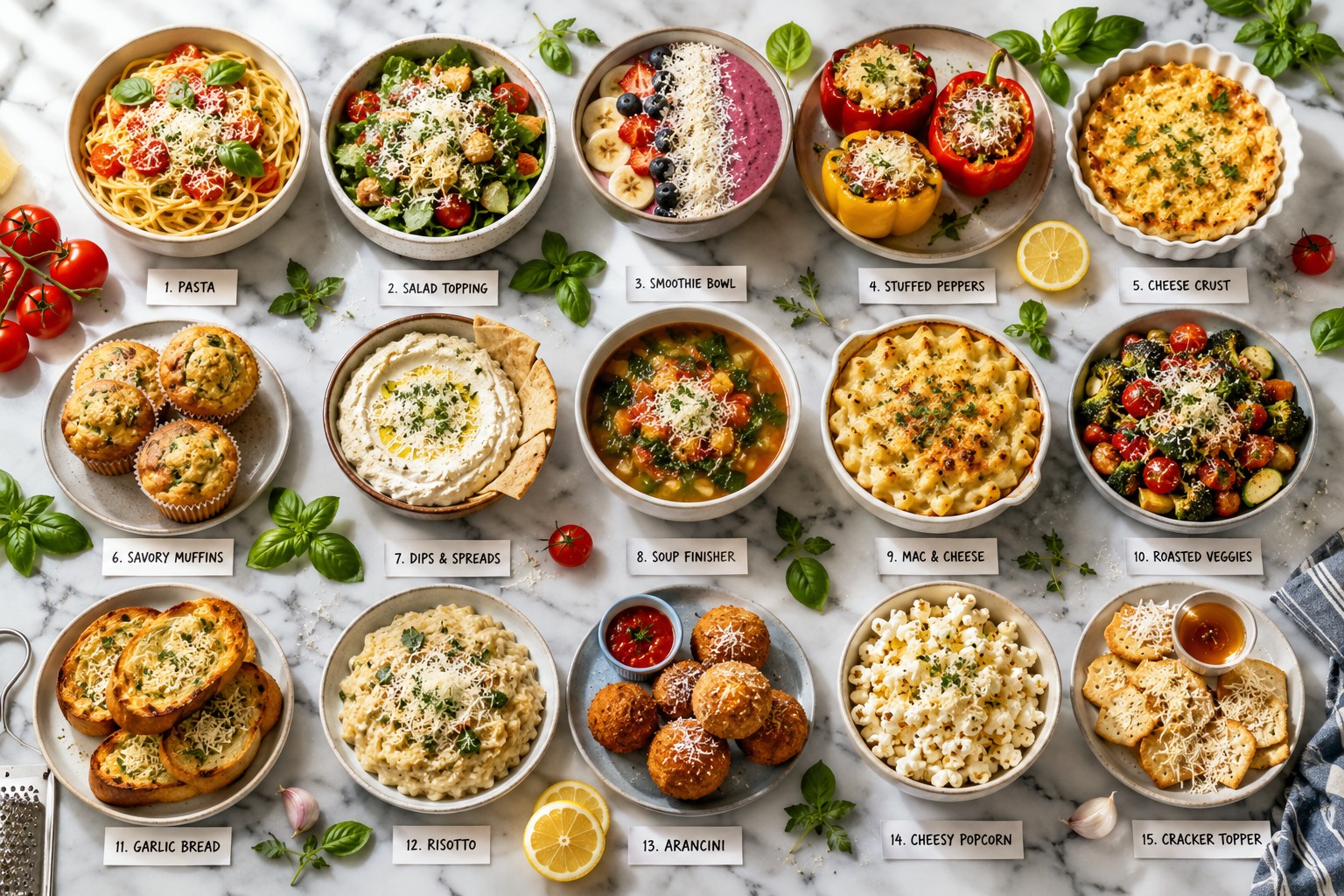
Granular cheese’s versatility extends far beyond traditional pasta toppings. The 2026 surge in popularity is driven by social-media-fueled recipe innovation, with creators using cottage cheese and grated hard cheeses in unexpected sweet and savory applications [1][2]. High protein content (12-14g per serving for cottage cheese) makes it particularly appealing for meal prep and snacking.
15 Creative Cooking Applications for Granular Cheese
Savory Applications:
High-Protein Pasta Sauce Base – Blend cottage cheese with garlic, lemon, and herbs for a creamy, protein-rich Alfredo alternative (25g protein per serving vs. 6g in traditional cream sauce)
Crispy Parmesan Crisps – Bake small mounds of grated Parmesan at 400°F for 5-7 minutes until golden; use as low-carb crackers or salad toppers
Cottage Cheese Scrambled Eggs – Fold cottage cheese into eggs during the last minute of cooking for extra creaminess and 20g protein per serving
Parmesan-Crusted Vegetables – Coat roasted Brussels sprouts, cauliflower, or zucchini with grated Parmesan in the final 5 minutes of roasting for a savory, crispy finish
Protein-Packed Mashed Potatoes – Stir cottage cheese into mashed potatoes instead of butter and cream; adds protein and tang while cutting calories by 40%
Savory Cottage Cheese Bowl – Top cottage cheese with cherry tomatoes, cucumber, olive oil, za’atar, and everything bagel seasoning for a quick, high-protein lunch
Parmesan Polenta – Stir grated Parmesan into cooked polenta for rich, umami flavor; serve as a base for braised meats or roasted vegetables
Cottage Cheese Dip Base – Blend cottage cheese with ranch seasoning, dill, or buffalo sauce for a high-protein alternative to sour cream dips
Cheese-Stuffed Chicken Breast – Mix cottage cheese with spinach and Parmesan, then stuff into chicken breasts before baking for a moist, protein-rich entrée (see our step-by-step chicken cooking guide for technique tips)
Parmesan Risotto Finish – Stir grated Parmesan into risotto off-heat for creamy texture without added butter; the residual heat melts the cheese perfectly
Sweet Applications:
Cottage Cheese Pancakes – Blend cottage cheese with eggs, oats, and vanilla for high-protein pancakes (15g protein per serving); top with berries and honey
Protein Smoothie Bowl – Use cottage cheese as a smoothie base instead of yogurt; blend with frozen fruit, spinach, and protein powder for 30g+ protein
Cottage Cheese Ice Cream – Blend frozen cottage cheese with cocoa powder, vanilla, and sweetener for a high-protein, low-sugar ice cream alternative
Parmesan Shortbread Cookies – Add grated Parmesan to shortbread dough for savory-sweet cookies; pair with wine or serve as appetizers
Cottage Cheese Cheesecake – Substitute cottage cheese for half the cream cheese in cheesecake recipes; reduces calories by 30% while maintaining creamy texture (blend smooth for best results)
Pro tip: When using cottage cheese in recipes that require smooth texture (sauces, baked goods, smoothies), blend it in a food processor or high-speed blender for 30-60 seconds. This breaks down curds and creates a ricotta-like consistency that incorporates seamlessly into dishes.
Common Mistakes When Cooking With Granular Cheese
Even experienced cooks make errors with granular cheese that compromise texture, flavor, or nutrition. Understanding how different granular cheeses behave under heat and in various applications prevents disappointing results.
Top mistakes and how to avoid them:
1. Adding grated Parmesan to boiling liquid – High heat causes proteins to seize and clump. Always remove pasta water or sauce from heat before stirring in grated cheese, or add cheese gradually while whisking constantly over low heat.
2. Using pre-grated Parmesan in delicate sauces – Cellulose anti-caking agents in pre-grated cheese prevent smooth melting and create grainy texture. Grate fresh from a block for carbonara, cacio e pepe, and cream sauces.
3. Overcooking cottage cheese – High heat causes curds to tighten and release moisture, creating a rubbery, watery mess. Add cottage cheese to hot dishes at the end of cooking, or use it cold/room temperature in no-cook applications.
4. Not draining cottage cheese for baking – Excess whey adds unwanted moisture to baked goods. Strain cottage cheese through cheesecloth or a fine-mesh sieve for 15-30 minutes before using in pancakes, muffins, or casseroles.
5. Storing grated cheese in original packaging – Plastic bags and containers allow moisture and air exposure. Transfer to airtight glass jars or vacuum-sealed bags immediately after opening.
6. Freezing cottage cheese without blending – Freezing breaks down curd structure, creating a grainy, separated texture when thawed. Blend smooth before freezing if you plan to use it in smoothies or baking; otherwise, use fresh cottage cheese within 7-10 days.
7. Using low-fat cottage cheese in creamy applications – Fat carries flavor and creates smooth mouthfeel. For sauces, dips, and desserts, choose 4% milkfat (full-fat) cottage cheese; save 1-2% versions for high-volume, low-calorie meals where texture is less critical.
Does Granular Cheese Melt Well or Does It Stay Grainy
Melting behavior depends entirely on which type of granular cheese you’re using. Hard aged granular cheeses (Parmesan, Pecorino) melt into smooth, cohesive sauces when handled correctly, while fresh curd-style granular cheeses (cottage cheese) do not melt in the traditional sense—they soften and release moisture but maintain visible curd structure.
Hard granular cheese melting:
Finely grated Parmesan and similar aged cheeses melt smoothly because small particle size allows proteins to disperse evenly in liquid. The key is temperature control: add cheese to warm (not boiling) liquid and stir constantly. Residual heat melts the cheese without causing proteins to seize. This technique works perfectly for pasta sauces, risotto, and polenta.
Common melting mistake: Adding cold grated cheese to boiling pasta water causes clumping. Instead, reserve 1 cup of starchy pasta water, remove the pan from heat, add cheese gradually while tossing, and thin with pasta water as needed. The starch in the water acts as an emulsifier, creating a silky, cohesive sauce.
Fresh granular cheese behavior:
Cottage cheese curds soften when heated but don’t melt into a smooth, stretchy consistency like mozzarella. The curds remain distinct, though they become creamier and release whey. This makes cottage cheese ideal for adding protein and moisture to dishes without creating a heavy, gooey texture. Use it in lasagna, stuffed shells, or as a topping for baked potatoes where you want richness without excessive melt.
Best melting applications by cheese type:
- Parmesan/Pecorino – Pasta sauces, risotto, polenta, soups (add off-heat)
- Asiago – Grilled cheese, quesadillas, baked pasta (melts more smoothly than Parmesan)
- Cottage cheese – Lasagna, stuffed shells, casseroles (adds moisture and protein, not stretch)
- Dry ricotta – Baked dishes, fillings (similar to cottage cheese, softens but doesn’t melt)
Is Granular Cheese Worth It for Home Cooks or Just for Restaurants
Granular cheese is absolutely worth keeping in a home kitchen, and in many ways, it’s more practical for home cooks than for restaurants. The long shelf life of hard granular cheeses (6+ months refrigerated) and the high protein content of cottage cheese make both types valuable staples for everyday cooking. The 2026 surge in home use is driven by convenience, nutrition, and versatility—not professional culinary trends [1][7].
Why home cooks benefit:
Cost-effectiveness – A $12 wedge of Parmigiano-Reggiano yields 2-3 cups of grated cheese and lasts months, making it cheaper per use than buying pre-grated. Cottage cheese delivers 12-14g protein per serving at $0.20-0.30 per ounce, undercutting protein powders and Greek yogurt.
Minimal waste – Hard granular cheeses don’t spoil quickly, so you can use small amounts over time without pressure to consume quickly. Cottage cheese freezes well when blended, extending usability for smoothies and baking.
Flavor enhancement – A tablespoon of grated Parmesan adds umami depth to soups, salads, and vegetables with minimal effort. Cottage cheese boosts protein in everyday meals (eggs, pasta, potatoes) without requiring special cooking skills.
Meal-prep friendly – Both types work in make-ahead dishes. Grated Parmesan stores in portioned containers for quick weeknight cooking. Cottage cheese preps into snack bowls, smoothie packs, and baking ingredients for the week ahead.
Restaurant perspective: Professional kitchens use granular cheese for the same reasons—consistency, shelf stability, and ease of portioning—but home cooks gain more relative value because small quantities go further in home-scale recipes. A restaurant might go through 5 pounds of grated Parmesan per week; a home cook can make a single wedge last three months.
How to Store Granular Cheese So It Doesn’t Get Hard
Proper storage extends shelf life and maintains texture for both hard and soft granular cheeses. The enemy is air exposure, temperature fluctuation, and moisture loss (for hard cheeses) or moisture gain (for soft cheeses).
Hard granular cheese storage (Parmesan, Pecorino, Asiago):
Block/wedge storage:
- Wrap tightly in parchment paper or cheese paper (allows cheese to breathe while preventing moisture loss)
- Place wrapped cheese in a resealable plastic bag or airtight container
- Store in the vegetable crisper drawer (slightly warmer and more humid than the main fridge compartment)
- Shelf life: 6-12 months when properly wrapped; check for mold and trim if necessary
Grated cheese storage:
- Transfer to an airtight glass jar or vacuum-sealed bag immediately after grating
- Add a small piece of dry rice or silica gel packet to absorb moisture
- Store in the coldest part of the refrigerator (back of bottom shelf)
- Shelf life: 4-6 months in airtight container; 1-2 months in original packaging
Freezing hard granular cheese:
- Grate cheese before freezing (frozen blocks are difficult to grate)
- Portion into small amounts (1/4 to 1/2 cup) in vacuum-sealed bags
- Freeze flat for easy storage and quick thawing
- Shelf life: 12+ months frozen; use directly from frozen in hot dishes
Fresh granular cheese storage (cottage cheese, farmer’s cheese):
- Keep in original container or transfer to airtight glass container
- Store in the coldest part of the refrigerator (32-38°F)
- Always use a clean spoon to avoid introducing bacteria
- Shelf life: 7-10 days after opening; check “use by” date on unopened containers
Freezing cottage cheese:
- Blend smooth in a food processor before freezing (prevents grainy texture when thawed)
- Portion into ice cube trays or small containers (2-4 oz portions)
- Label with date and intended use (smoothies, baking, etc.)
- Shelf life: 3-6 months frozen; thaw in refrigerator overnight before use
Signs of spoilage: Discard hard granular cheese if you see pink, green, or black mold (white surface mold can be trimmed off). Discard cottage cheese if it smells sour, develops mold, or separates excessively (some whey separation is normal; excessive liquid with curdled appearance indicates spoilage).
Can You Make Granular Cheese at Home
Yes, you can make both types of granular cheese at home, though the process and difficulty level vary significantly. Fresh curd-style granular cheese (cottage cheese, farmer’s cheese) is straightforward and requires only milk, acid, and heat. Hard aged granular cheese (Parmesan-style) requires specialized equipment, cultures, and months of aging, making it impractical for most home cooks.
How to make cottage cheese at home:
Ingredients:
- 1 gallon whole milk (not ultra-pasteurized)
- 1/4 cup white vinegar or lemon juice
- 1 teaspoon salt
- 1/4 cup heavy cream (optional, for creamier texture)
Steps:
- Heat milk in a large pot to 185°F, stirring occasionally to prevent scorching
- Remove from heat and stir in vinegar or lemon juice; let sit 10 minutes until curds separate from whey
- Line a colander with cheesecloth and pour in the mixture; let drain 5 minutes
- Rinse curds under cold water to remove acid taste and cool them down
- Squeeze out excess moisture, transfer to a bowl, and stir in salt and cream
- Refrigerate and use within 7 days
Yield: About 2 cups cottage cheese from 1 gallon milk
Customization: For larger curds, cut the curd mass into 1/2-inch pieces before draining. For drier farmer’s cheese, skip the cream and drain longer (30-60 minutes). Add herbs, garlic, or black pepper for flavored varieties.
Why homemade cottage cheese is worth it: You control curd size, fat content, and additives. Homemade versions taste fresher and tangier than store-bought, and cost about 40% less per ounce when using sale-priced milk.
Making hard granular cheese at home:
Producing authentic Parmesan-style cheese requires:
- Specific bacterial cultures (thermophilic starters)
- Rennet (animal or vegetable)
- Cheese press
- Aging cave or temperature-controlled space (50-55°F, 80-85% humidity)
- 12-24 months of aging time
Practical alternative: Make a quick “Parmesan-style” cheese by pressing and air-drying homemade farmer’s cheese for 2-4 weeks. While it won’t replicate true Parmesan’s complex flavor and crystalline texture, it will develop a firm, gratable consistency suitable for cooking. For authentic aged hard cheeses, buying from specialty retailers is more practical and cost-effective than home production.
Frequently Asked Questions
What is the difference between granular cheese and powdered cheese?
Granular cheese is real cheese that has been grated or formed into small curds, retaining full flavor and nutritional value. Powdered cheese is dehydrated cheese mixed with additives (whey, salt, anti-caking agents) and often contains less than 50% actual cheese. Granular cheese requires refrigeration; powdered cheese is shelf-stable but delivers inferior taste and texture.
Can I substitute cottage cheese for ricotta in lasagna?
Yes, cottage cheese works well as a ricotta substitute in lasagna and saves money (cottage cheese costs 30-50% less per ounce). For best results, choose small-curd cottage cheese and drain excess whey for 15 minutes before layering. Blend smooth if you prefer ricotta’s creamy texture, or leave curds intact for added texture and protein.
Why does my grated Parmesan smell like feet?
The “feet” smell comes from butyric acid, a natural byproduct of bacterial fermentation during cheese aging. This is normal and indicates authentic, traditionally made Parmesan. The smell dissipates when cheese is heated or mixed into dishes. If the smell is accompanied by pink or green mold, discard the cheese—but a strong, funky aroma alone is a sign of quality, not spoilage.
Is cottage cheese considered a processed cheese?
No, cottage cheese is a fresh cheese, not a processed cheese. It’s made by acidifying milk and cutting curds, with minimal processing. Processed cheese (like American cheese or Velveeta) is made by melting natural cheese with emulsifiers, preservatives, and other additives. Cottage cheese contains only milk, cream, salt, and enzymes in most brands.
How long does grated Parmesan last in the fridge after opening?
Properly stored grated Parmesan lasts 4-6 months in an airtight container in the refrigerator. Pre-grated Parmesan in original packaging lasts 1-2 months after opening due to air exposure. Block Parmesan lasts 6-12 months when wrapped in parchment and stored in a resealable bag. Always check for mold, off-smells, or hardening before use.
Can you eat cottage cheese if you’re trying to lose weight?
Yes, cottage cheese is excellent for weight loss. A half-cup serving delivers 12-14g protein for only 80-110 calories (depending on fat content), promoting satiety and preserving muscle mass during calorie restriction. Choose 1-2% milkfat versions to minimize calories while maintaining protein content. Pair with vegetables or fruit for balanced, filling meals.
What’s the best way to use up a large container of cottage cheese before it expires?
Blend cottage cheese into smoothies (adds 12g protein per half-cup), use as a base for high-protein pancakes or muffins, mix into scrambled eggs, substitute for sour cream in dips, or freeze in portions for later use in baking. Cottage cheese also works well in savory bowls topped with vegetables, olive oil, and seasonings for quick, protein-rich lunches.
Does Parmesan cheese need to be refrigerated?
Yes, Parmesan should be refrigerated to maintain quality and prevent mold growth, though it won’t spoil immediately at room temperature due to low moisture content. Refrigeration slows fat oxidation and preserves flavor. Store wrapped blocks in the vegetable crisper (slightly warmer than the main fridge) for optimal texture and taste.
Can I use granular cheese in a cheese sauce without it getting grainy?
Yes, but technique matters. Use finely grated Parmesan or Pecorino, and add it off-heat to warm (not boiling) liquid while whisking constantly. The residual heat melts the cheese smoothly without causing proteins to seize. Add cheese gradually and thin with reserved pasta water or milk if the sauce becomes too thick. Avoid pre-grated cheese with cellulose, which prevents smooth melting.
Is cottage cheese safe to eat during pregnancy?
Yes, cottage cheese is safe during pregnancy if it’s made from pasteurized milk (which nearly all U.S. brands are). Check the label to confirm pasteurization. Cottage cheese provides high-quality protein and calcium essential for fetal development. Avoid unpasteurized or imported soft cheeses, but standard refrigerated cottage cheese from U.S. supermarkets is safe and nutritious for pregnant women.
What can I do with hardened Parmesan cheese?
Grate hardened Parmesan using a microplane or box grater—the fine particles work perfectly in pasta, soups, and salads. If the cheese is too hard to grate, wrap it in a damp paper towel and microwave for 10-15 seconds to soften slightly. Alternatively, use a vegetable peeler to shave thin strips for garnishing dishes. Extremely hard, dried-out Parmesan can be saved for making Parmesan broth (simmer rinds in water for rich, umami stock).
Can you freeze cottage cheese for smoothies?
Yes, freezing cottage cheese for smoothies works well. Blend cottage cheese smooth before freezing, then portion into ice cube trays or small containers (2-4 oz portions). Frozen cottage cheese cubes blend directly into smoothies, adding 12-14g protein per half-cup and creating a thick, creamy texture. Thaw in the refrigerator if using for other applications, as frozen-then-thawed cottage cheese becomes grainy if not blended.
Conclusion
Granular cheese—whether finely grated Parmesan or protein-rich cottage cheese—has earned its place as one of 2026’s most versatile and valuable kitchen staples. The 20% year-over-year sales growth reflects genuine utility: these cheeses deliver bold flavor, high protein, and remarkable adaptability across sweet and savory applications [1]. From traditional pasta dishes to innovative smoothie bowls and high-protein baking, granular cheese solves real cooking challenges while meeting modern nutritional priorities.
Take action:
- Stock your kitchen with both types: buy a wedge of Parmigiano-Reggiano for grating fresh, and keep full-fat cottage cheese on hand for quick protein boosts
- Experiment with substitutions – swap cottage cheese for ricotta in lasagna, use grated Parmesan instead of shredded cheese in sauces, and blend cottage cheese into smoothies for 30g+ protein breakfasts
- Master storage techniques to extend shelf life and prevent waste: wrap hard cheeses in parchment, store grated varieties in airtight glass jars, and freeze cottage cheese in portions for long-term use
- Try three new applications this week – make cottage cheese scrambled eggs for breakfast, add grated Parmesan to roasted vegetables at dinner, and blend cottage cheese into a protein-packed dessert
The current supply constraints for cottage cheese [1][2] underscore how quickly this ingredient category has moved from niche to mainstream. Whether you’re drawn by the protein content, the culinary versatility, or simply the bold flavors that granular cheeses bring to everyday cooking, now is the time to explore what this trending ingredient can do in your kitchen. Start with the basics—a quality wedge of Parmesan and a container of cottage cheese—and discover why millions of home cooks have made granular cheese a non-negotiable pantry staple in 2026.
References
[1] Cnn In The United States The Viral Popularity Of Granular Cheese On Tiktok Has Led To An Increase In Sales – https://biz.liga.net/en/all/prodovolstvie/novosti/cnn-in-the-united-states-the-viral-popularity-of-granular-cheese-on-tiktok-has-led-to-an-increase-in-sales
[2] Cottage Cheese Shortage – https://www.nytimes.com/2026/06/20/business/cottage-cheese-shortage.html
[3] Top Cheese Trends For 2026 – https://hartdesign.com/industry-news/top-cheese-trends-for-2026/
[4] Newproducts – https://cheesemarketnews.com/newproducts/newproducts.html
[5] 97382 Cheese Ingredients Ignite Excitement – https://www.dairyfoods.com/articles/97382-cheese-ingredients-ignite-excitement
[6] Whats Trending In Cheese – https://www.specialityfoodmagazine.com/food-and-drink/whats-trending-in-cheese
[7] Us Cheese Market Evolves With Shifting Consumer Perspectives – https://www.foodmanufacturing.com/consumer-trends/news/13166829/us-cheese-market-evolves-with-shifting-consumer-perspectives
[8] Cheese Trends – https://tastewise.io/blog/cheese-trends
[9] Cottage Cheese Makes A Comeback As A Popular Protein Source – https://dairynews.today/news/cottage-cheese-makes-a-comeback-as-a-popular-protein-source.html
[10] Outbreak Investigation Listeria Monocytogenes Soft Cheese June 2026 – https://www.fda.gov/food/outbreaks-foodborne-illness/outbreak-investigation-listeria-monocytogenes-soft-cheese-june-2026
SEO Meta Title: Granular Cheese Guide: 15 Creative Uses & Tips 2026


