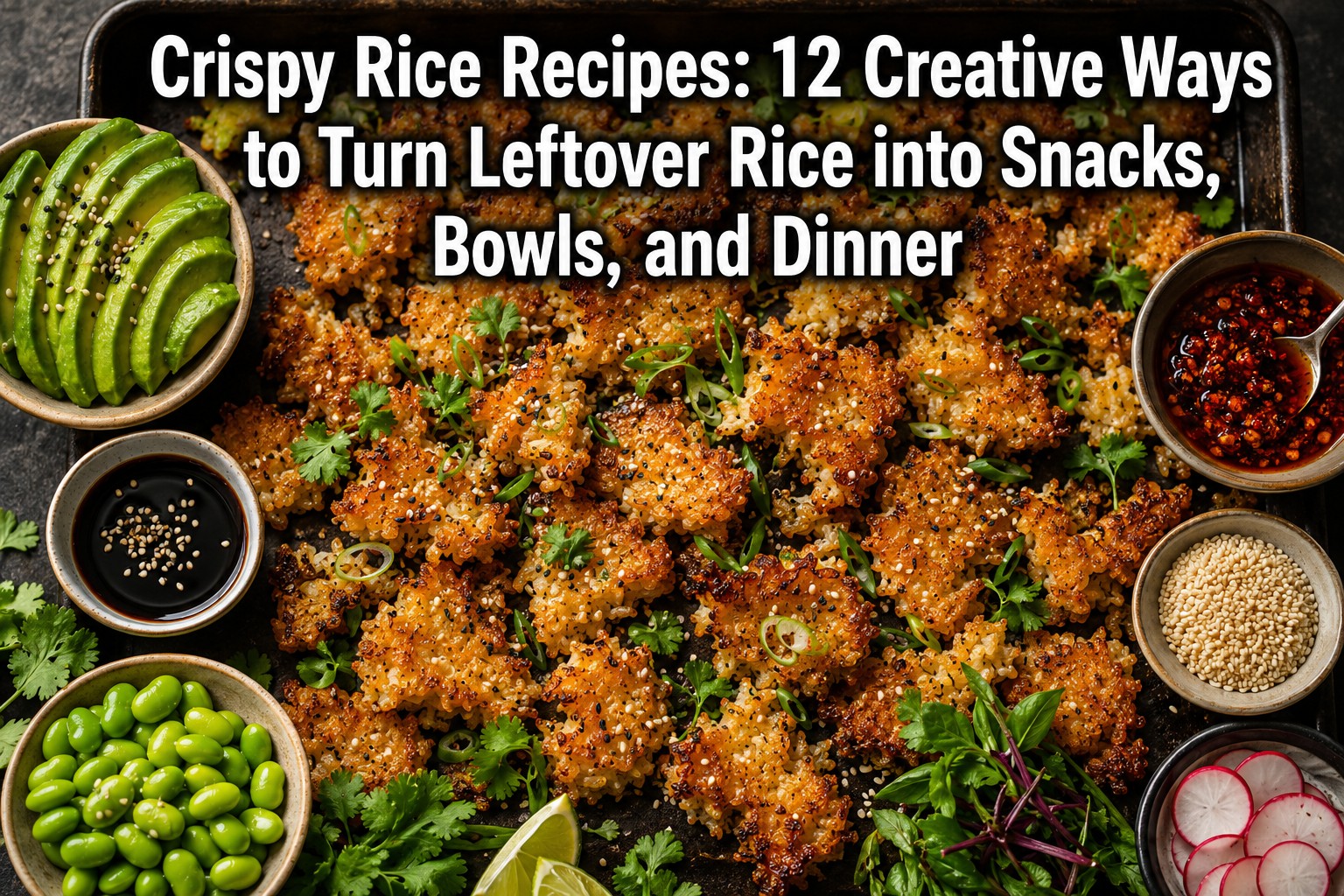
Crispy Rice Recipes: 12 Creative Ways to Turn Leftover Rice into Snacks, Bowls, and Dinner
Last updated: May 17, 2026
Quick Answer
Crispy rice transforms leftover cooked rice into crunchy, golden bites perfect for snacks, salad bowls, and dinner bases. The most popular method in 2026 is baking rice at 400°F for 12–20 minutes on a sheet pan, seasoned with sesame oil and soy sauce. You can also pan-fry, air-fry, or deep-fry rice for different textures, then top with proteins, vegetables, and sauces for endless meal variations.
Key Takeaways
- Baking is the easiest method: Spread cold, dry leftover rice on a sheet pan at 400°F for 12–20 minutes until golden and crunchy
- Simple seasoning works best: Mix rice with 1 tablespoon sesame oil and 1 teaspoon soy sauce per 2 cups of rice before cooking
- Any rice type works: Jasmine, basmati, brown, black, and sushi rice all crisp well using the same techniques
- Cold rice crisps better: Refrigerated, day-old rice with less moisture produces the crunchiest results
- Skip parchment for maximum crunch: Direct contact with the baking sheet helps rice crisp faster and more evenly
- Crispy rice salad bowls are trending: Add crisped rice to fresh vegetables, proteins, and dressings at the last minute to maintain crunch
- Multiple cooking methods available: Oven-baking, pan-frying, air-frying, and deep-frying each create different textures and cook times
- Toppings make it a meal: Layer crispy rice with salmon, shrimp, tofu, avocado, or vegetables for complete bowls and appetizers
What Makes Rice Crispy and How Does the Technique Work?
Rice becomes crispy when moisture evaporates from the surface and the starches caramelize under high heat. The key is starting with cold, relatively dry cooked rice that has been refrigerated, which allows the grains to firm up and lose excess moisture. [2]
When you spread rice in a thin, even layer and apply heat (whether from an oven, skillet, or air fryer), the exterior of each grain dehydrates and browns while the interior stays tender. This creates the signature crispy-chewy texture that makes the dish so satisfying.
Why leftover rice works better than fresh:
- Refrigeration removes surface moisture that would otherwise steam the rice
- Cold rice grains separate more easily, preventing clumping
- Day-old rice has a firmer texture that holds up to high-heat cooking
- The starch structure changes slightly during cooling, improving crispiness
Common mistake to avoid: Using freshly cooked, warm rice leads to steaming instead of crisping, resulting in mushy or unevenly cooked rice. Always cool your rice completely before attempting to crisp it.
How Do You Make Crispy Rice in the Oven?
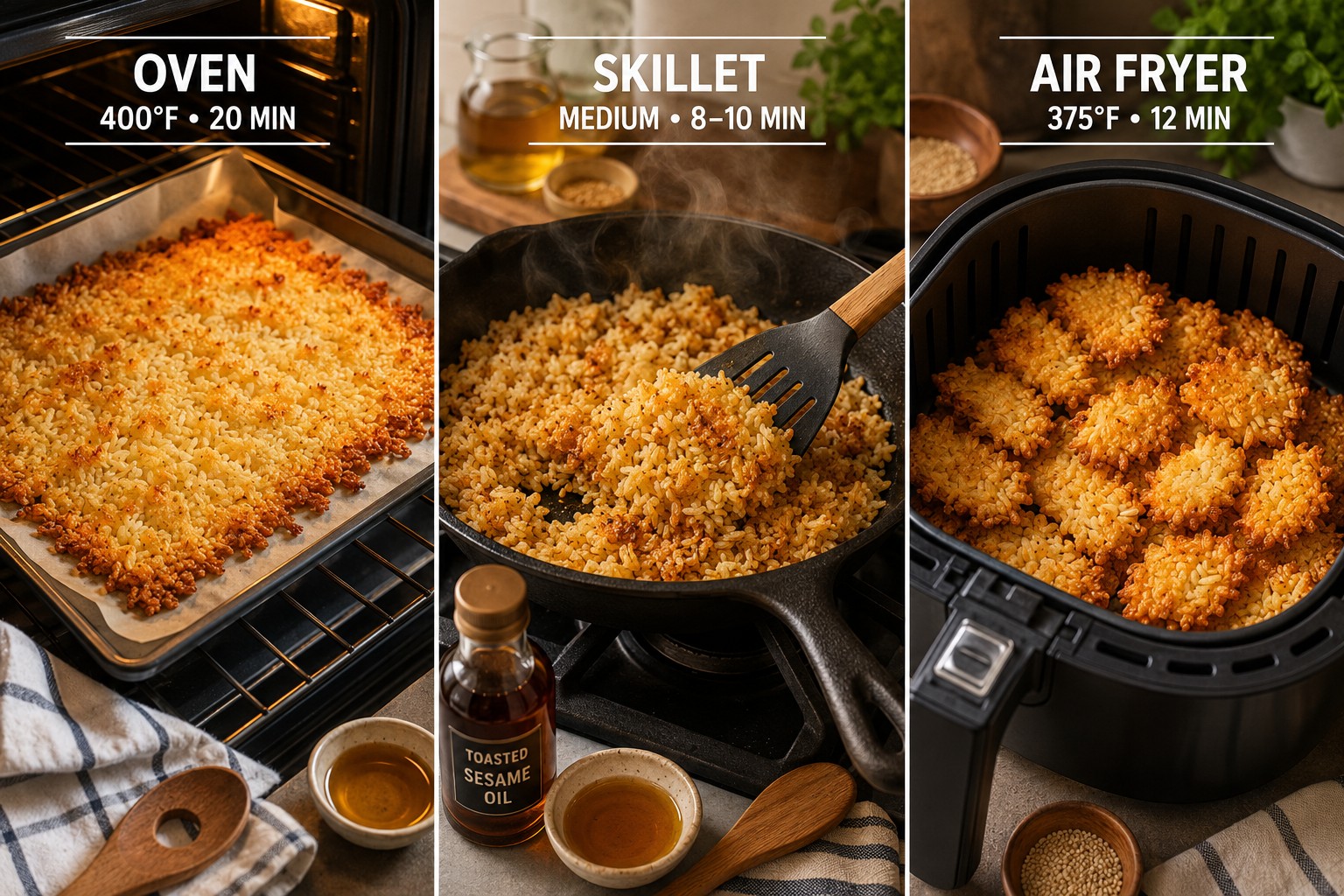
Oven-baked crispy rice is the most hands-off method and produces consistent results. Preheat your oven to 400°F (200°C), then spread 2 cups of cold cooked rice on a baking sheet in a thin, even layer. [1][2]
Step-by-step oven method:
- Prepare the rice: Toss 2 cups cold cooked rice with 1 tablespoon sesame oil and 1 teaspoon soy sauce or tamari in a bowl
- Spread evenly: Distribute rice across a baking sheet in a single layer, breaking up any clumps
- Choose your surface: Use a bare baking sheet for maximum crispiness, or parchment paper for easier cleanup (note: parchment may reduce crispiness slightly) [1][2]
- Bake: Place in preheated oven for 12–20 minutes, checking at 12 minutes for a slightly tender crisp, or continuing to 20 minutes for deeper golden color
- Optional flip: For extra-crispy results, flip the rice halfway through cooking
- Cool briefly: Let rice sit for 1–2 minutes after removing from oven to firm up
Timing guide:
- 12 minutes: Lightly crispy with some tender spots, good for salad bowls
- 15–18 minutes: Medium crisp, golden edges, versatile for most uses
- 20+ minutes: Deep golden, maximum crunch, best for standalone snacks
Choose oven-baking if you’re making a large batch, want consistent results without constant monitoring, or prefer a hands-off approach. This method works especially well when preparing crispy rice as a meal-prep base for the week.
What’s the Best Way to Pan-Fry Crispy Rice?
Pan-frying creates restaurant-quality crispy rice with a golden crust on one side and tender interior. Heat 2–3 tablespoons of neutral oil (vegetable, canola, or avocorn) in a cast-iron or non-stick skillet over medium-high heat. [5]
Pan-frying technique:
- Heat the pan: Get your skillet hot before adding rice—a drop of water should sizzle immediately
- Add oil generously: Use enough oil to coat the bottom of the pan; rice needs fat to crisp properly
- Press rice flat: Spread seasoned rice in an even layer and press down gently with a spatula
- Don’t disturb: Let rice cook undisturbed for 4–6 minutes until the bottom forms a golden crust
- Flip or break apart: Either flip the entire rice cake for a second crispy side, or break into chunks and continue cooking
- Drain excess oil: Transfer to a paper towel-lined plate if needed
Pan-frying produces a crunchier exterior and more caramelized flavor than oven-baking, making it ideal for restaurant-style presentations. The direct contact with hot oil creates deeper browning and a more pronounced crispy layer.
Edge case: If your rice starts smoking or burning, reduce heat to medium and add a small splash of water to the pan (not directly on the rice) to create steam that prevents scorching while still allowing crisping.
For protein-topped bowls similar to those in oyakodon recipes, pan-fried crispy rice creates an excellent base that holds up to sauces and toppings.
Can You Make Crispy Rice in an Air Fryer?
Air fryers produce crispy rice quickly with minimal oil, making them a convenient option for small batches. Preheat your air fryer to 375°F, then spread seasoned rice in the basket in a single layer. [5]
Air fryer method:
- Temperature: 375°F (190°C)
- Time: 8–12 minutes, shaking basket every 3–4 minutes
- Oil: Lightly spray or toss rice with 1–2 teaspoons of oil before cooking
- Batch size: Work in small batches to avoid overcrowding, which causes steaming
Advantages of air frying:
- Fastest method for small portions
- Uses less oil than pan-frying
- Easy cleanup
- Good for quick snacks or single servings
Limitation: Air fryers work best for 1–2 cups of rice at a time. Larger batches require multiple rounds, making oven-baking more efficient for meal prep or family portions.
What Are the Best Seasonings and Flavor Combinations for Crispy Rice?
The most popular base seasoning in 2026 is sesame oil plus soy sauce, tamari, or coconut aminos, often enhanced with chili crisp or sriracha. [1][2][3] This simple combination adds umami depth and a subtle heat that complements most toppings.
Classic Asian-inspired base:
- 1 tablespoon sesame oil
- 1 teaspoon soy sauce or tamari
- ½ teaspoon chili crisp or sriracha (optional)
- Pinch of garlic powder
Global flavor variations:
| Flavor Profile | Seasoning Mix | Best Toppings |
|---|---|---|
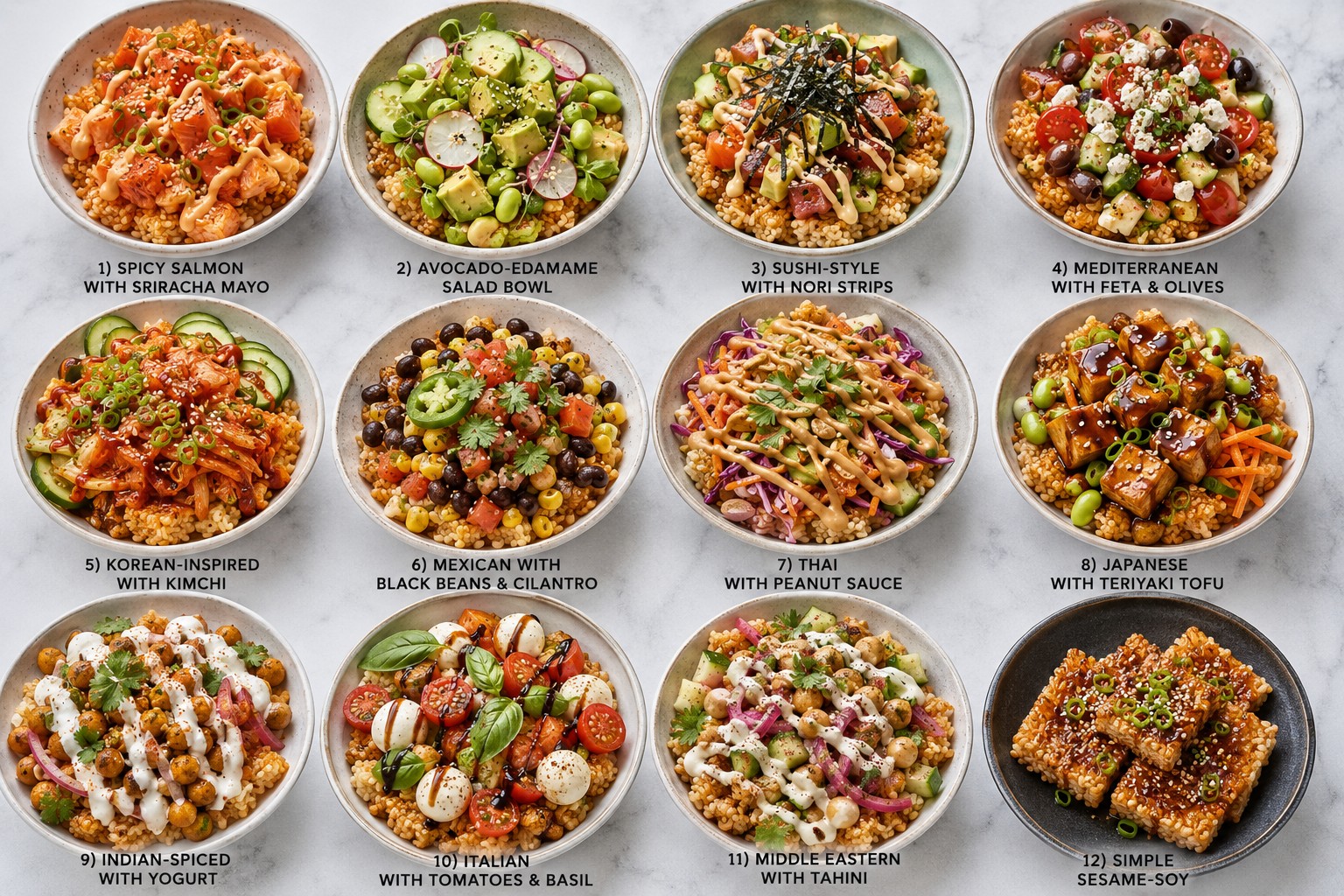
| Japanese | Soy sauce, mirin, furikake | Salmon, avocado, nori, edamame |
| Korean | Gochujang, sesame oil, rice vinegar | Kimchi, cucumber, tofu, scallions |
| Mexican | Lime juice, cumin, chili powder | Black beans, corn, cilantro, queso fresco |
| Mediterranean | Olive oil, za’atar, lemon zest | Feta, olives, tomatoes, cucumber |
| Thai | Fish sauce, lime, palm sugar | Peanuts, herbs, shrimp, mango |
| Indian | Curry powder, turmeric, ghee | Yogurt, chickpeas, cilantro, pickled onions |
Timing matters: Add liquid seasonings (soy sauce, vinegar) before cooking so they absorb into the rice. Add delicate toppings (fresh herbs, avocado, crispy garnishes) after cooking to preserve their texture and flavor.
How Do You Build a Crispy Rice Bowl for Dinner?
Crispy rice bowls have become a major trend in 2026, particularly as salad bases where the rice stays crunchy when added at the end. [3][4] The key is layering components strategically so textures and temperatures complement each other.
Bowl-building formula:
- Base layer (bottom of bowl): Fresh vegetables like cucumber, radish, shredded cabbage, or leafy greens
- Protein layer: Cooked and seasoned salmon, shrimp, tofu, chicken, or edamame
- Fresh elements: Avocado slices, herbs (cilantro, mint, basil), pickled vegetables
- Crispy rice: Add warm or room-temperature crispy rice just before serving
- Sauce and garnishes: Drizzle with dressing, sprinkle with sesame seeds, nori strips, or scallions
Popular 2026 crispy rice bowl combinations:
Spicy Salmon Bowl:
- Crispy rice base
- Sushi-grade salmon (raw or seared)
- Avocado, cucumber, edamame
- Spicy mayo (mayo + sriracha)
- Sesame seeds and nori
Mediterranean Tofu Bowl:
- Crispy rice with za’atar
- Crispy baked tofu
- Cherry tomatoes, cucumber, olives
- Tahini-lemon dressing
- Fresh parsley and feta
Thai-Inspired Shrimp Bowl:
- Crispy rice with lime
- Grilled or sautéed shrimp
- Mango, cucumber, red cabbage
- Peanut-lime dressing
- Crushed peanuts and cilantro
Pro tip: Keep crispy rice separate until serving time. If you’re meal-prepping, store crispy rice in an airtight container at room temperature and add it to bowls just before eating to maintain maximum crunch.
What Proteins Work Best with Crispy Rice Recipes?
Crispy rice pairs well with virtually any protein, but certain combinations have become restaurant favorites and social media trends. [4] The contrast between crunchy rice and tender protein creates an appealing textural experience.
Top protein choices:
Salmon (most popular):
- Raw sushi-grade with spicy mayo
- Seared with teriyaki glaze
- Smoked salmon with cream cheese and capers
- Pairs with: soy sauce, wasabi, avocado, cucumber
Shrimp:
- Grilled with garlic butter
- Tempura-fried for double crunch
- Spicy sautéed with chili oil
- Pairs with: lime, cilantro, mango, peanut sauce
Tofu (plant-based favorite):
- Crispy baked or pan-fried
- Marinated in soy-ginger sauce
- Silken tofu with ponzu
- Pairs with: sesame, scallions, edamame, tahini
Chicken:
- Teriyaki-glazed breast or thighs
- Spicy Korean-style with gochujang
- Grilled with herbs
- Pairs with: similar flavors to easy chicken breast dinners
Tuna:
- Sushi-grade raw with sesame
- Seared rare with black pepper crust
- Spicy tuna mixture
- Pairs with: avocado, jalapeño, ponzu, microgreens
Choose raw fish only if you’re using sushi-grade seafood from a trusted source and consuming immediately. For meal prep or longer storage, stick with cooked proteins.
How Do You Make Crispy Rice Appetizers and Snacks?
Restaurant-style crispy rice appetizers follow a specific technique: season hot rice, let it cool and absorb flavors, then cut into shapes before crisping. [8] This creates uniform pieces perfect for topping and serving.
Nobu-style crispy rice cakes:
- Season warm rice: Mix freshly cooked sushi rice with rice vinegar, sugar, and salt while still warm
- Spread and cool: Press seasoned rice into a parchment-lined pan (about ½-inch thick) and refrigerate for 1–2 hours
- Cut shapes: Use a sharp knife to cut rice into rectangles (about 2×3 inches)
- Crisp: Pan-fry in oil until golden on both sides, or bake at 400°F for 15 minutes
- Top immediately: Add spicy tuna, salmon, avocado, or other toppings while rice is still warm
Quick snack variations:
Crispy Rice Crackers:
- Spread seasoned rice paper-thin on a baking sheet
- Bake at 350°F for 20–25 minutes until completely crispy
- Break into irregular pieces
- Season with salt, furikake, or nutritional yeast
Crispy Rice Bites:
- Form cold rice into small balls
- Flatten slightly
- Pan-fry or air-fry until golden
- Serve with dipping sauces (soy-ginger, spicy mayo, sweet chili)
Crispy Rice Salad Topping:
- Make crispy rice as usual
- Break into small clusters
- Add to salads just before serving for crunch (similar to croutons)
Storage tip: Crispy rice appetizers stay crunchy for 2–3 hours at room temperature. For longer storage, keep them in an airtight container and re-crisp in a 350°F oven for 5 minutes before serving.
What Rice Types Work Best for Crispy Rice Recipes?
Most rice varieties can be transformed into crispy rice, but texture and flavor vary by type. [2] The best choice depends on your desired final texture and the flavor profile you’re building.
Rice type comparison:
White Rice (Jasmine, Basmati):
- Texture: Light, delicate crisp
- Flavor: Neutral, slightly floral (jasmine) or nutty (basmati)
- Best for: Asian-inspired bowls, delicate toppings
- Cook time: Shortest (12–15 minutes in oven)
Brown Rice:
- Texture: Heartier, chewier crisp
- Flavor: Nutty, earthy
- Best for: Grain bowls, Mediterranean flavors, meal prep
- Cook time: Longer (18–22 minutes in oven)
- Note: Takes longer to crisp due to higher fiber content [3]
Sushi Rice:
- Texture: Sticky when cooked, crispy-chewy when fried
- Flavor: Slightly sweet (if seasoned)
- Best for: Restaurant-style appetizers, shaped rice cakes
- Cook time: Medium (15–18 minutes)
Black or Wild Rice:
- Texture: Firm, dramatic appearance
- Flavor: Bold, nutty, slightly sweet
- Best for: Upscale presentations, visual contrast
- Cook time: Longest (20–25 minutes)
Day-old takeout rice works perfectly for crispy rice recipes, regardless of type. The slight drying that occurs during refrigeration actually improves the final texture.
Choose jasmine or sushi rice if you want the closest match to restaurant-style crispy rice. Choose brown rice if you’re prioritizing nutrition and don’t mind a slightly longer cooking time.
What Are Common Mistakes When Making Crispy Rice?
Even simple crispy rice recipes can go wrong if you skip key steps or use the wrong technique. Here are the most common issues and how to avoid them.
Using wet or freshly cooked rice:
- Problem: Rice steams instead of crisps, resulting in mushy texture
- Solution: Always use cold, day-old rice from the refrigerator [1][2]
- Why it matters: Moisture is the enemy of crispiness
Overcrowding the pan or baking sheet:
- Problem: Rice steams in its own moisture, crisps unevenly
- Solution: Spread rice in a single, thin layer with space between grains
- Choose smaller batches if your pan isn’t large enough for all the rice
Not using enough oil or fat:
- Problem: Rice dries out or burns instead of crisping
- Solution: Toss rice with at least 1 tablespoon oil per 2 cups rice
- Best oils: Sesame (flavor), vegetable or canola (neutral, high smoke point)
Using parchment paper or foil:
- Problem: Reduces direct heat contact, leading to less crispy results
- Solution: Use a bare baking sheet for maximum crispiness [2]
- Exception: Use parchment if you prioritize easy cleanup over maximum crunch
Adding toppings too early:
- Problem: Delicate ingredients (avocado, herbs, sauces) become soggy or overcooked
- Solution: Add fresh toppings after rice is crisped and slightly cooled
- Timing: Add proteins during the last few minutes of cooking if they need heating
Not seasoning before cooking:
- Problem: Bland rice that needs heavy saucing after cooking
- Solution: Mix seasonings into rice before crisping so flavors absorb and intensify
Edge case: If your rice is too dry and won’t hold together, lightly mist it with water or broth before adding oil and seasonings. This adds just enough moisture to help seasonings adhere without preventing crisping.
How Do You Store and Reheat Crispy Rice?
Proper storage maintains texture and food safety, while reheating techniques can restore most of the original crunch.
Storage guidelines:
Room temperature (best for short-term):
- Duration: 2–3 hours maximum
- Method: Leave in a single layer on a cooling rack or plate
- Best for: Serving at a party or meal prepping for same-day use
- Don’t cover: Covering traps moisture and makes rice soggy
Refrigerator (for leftovers):
- Duration: 3–4 days in an airtight container
- Method: Let rice cool completely, then store in a container with a paper towel to absorb moisture
- Note: Rice will lose some crispiness but can be re-crisped
Freezer (not recommended):
- Freezing and thawing significantly degrades texture
- If you must freeze, store cooked (but not crisped) rice, then crisp it after thawing
Reheating methods:
Oven (best results):
- Preheat to 350°F
- Spread rice on a baking sheet
- Heat for 5–8 minutes until crispy again
- No need to add more oil
Air fryer (fastest):
- Set to 350°F
- Heat for 3–5 minutes, shaking halfway
- Monitor closely to prevent burning
Skillet (for small portions):
- Heat a dry pan over medium heat
- Add rice and toast for 2–3 minutes, stirring occasionally
- Add a tiny bit of oil if rice seems too dry
Don’t use the microwave for reheating crispy rice—it will make it soggy and chewy rather than crispy.
What Sauces and Dressings Pair Best with Crispy Rice?
The right sauce elevates crispy rice from a simple side to a complete meal. The best sauces balance the rice’s crunch with creamy, tangy, or spicy elements.
Top sauce pairings:
Spicy Mayo (most popular):
- Mix: ½ cup mayo + 1–2 tablespoons sriracha + 1 teaspoon rice vinegar
- Pairs with: Salmon, tuna, shrimp, avocado
- Texture: Creamy, cuts through crispy rice
Tahini-Lime Dressing:
- Mix: ¼ cup tahini + 2 tablespoons lime juice + 1 tablespoon water + salt
- Pairs with: Tofu, chickpeas, Mediterranean vegetables [3]
- Texture: Creamy-tangy, plant-based
Soy-Ginger Sauce:
- Mix: 3 tablespoons soy sauce + 1 tablespoon rice vinegar + 1 teaspoon grated ginger + ½ teaspoon sesame oil
- Pairs with: Any protein, edamame, cucumber
- Texture: Light, savory
Peanut Sauce:
- Mix: 3 tablespoons peanut butter + 2 tablespoons soy sauce + 1 tablespoon lime juice + 1 teaspoon honey + water to thin
- Pairs with: Shrimp, chicken, vegetables
- Texture: Rich, slightly sweet
Ponzu:
- Use store-bought or mix citrus juice with soy sauce
- Pairs with: Raw fish, seared proteins
- Texture: Light, citrusy
Gochujang Glaze:
- Mix: 2 tablespoons gochujang + 1 tablespoon honey + 1 tablespoon rice vinegar
- Pairs with: Chicken, tofu, kimchi
- Texture: Thick, spicy-sweet
Application tip: Drizzle sauces over bowls rather than mixing them in, so the crispy rice maintains its texture. Serve extra sauce on the side for dipping.
Similar to how rotisserie-style chicken benefits from the right seasoning balance, crispy rice shines when sauces complement rather than overwhelm the base.
Conclusion
Crispy rice recipes offer one of the simplest and most versatile ways to transform leftover rice into exciting meals in 2026. Whether you choose the hands-off oven method, the quick air fryer approach, or the restaurant-quality pan-frying technique, the key to success is starting with cold, dry rice and spreading it in a thin, even layer.
The beauty of crispy rice lies in its adaptability—you can season it with anything from classic sesame-soy to bold global flavors, then top it with proteins, vegetables, and sauces to create snacks, appetizers, or complete dinner bowls. The trending crispy rice salad format, where crunchy rice is added at the last minute to fresh ingredients, shows how this technique has evolved beyond traditional restaurant appetizers into everyday home cooking.
Your next steps:
- Check your fridge for leftover rice (or cook a batch specifically for crisping tomorrow)
- Choose your method based on your equipment and time: oven for large batches, pan for restaurant-style, air fryer for speed
- Start simple with the basic sesame oil and soy sauce seasoning before experimenting with global flavors
- Build your first bowl using the formula: vegetables + protein + crispy rice + sauce + garnishes
- Experiment with toppings from the 12 creative combinations covered in this guide
Crispy rice proves that the best recipes often come from making the most of what you already have. With these techniques and ideas, that container of leftover rice becomes the foundation for your next favorite meal.
FAQ
How long does crispy rice stay crispy? Crispy rice stays crunchy for 2–3 hours at room temperature when left uncovered. Once refrigerated, it loses most of its crispiness but can be re-crisped in a 350°F oven for 5–8 minutes or in an air fryer for 3–5 minutes.
Can you make crispy rice with freshly cooked rice? No, freshly cooked rice contains too much moisture and will steam rather than crisp. Always use cold, day-old rice that has been refrigerated for at least a few hours or overnight for best results.
What’s the best oil for making crispy rice? Sesame oil adds the most flavor and is traditional for Asian-style crispy rice. For a neutral option with a high smoke point, use vegetable, canola, or avocado oil. Use about 1 tablespoon per 2 cups of rice.
Do you need to flip crispy rice when baking? Flipping is optional but recommended for maximum crispiness. If you flip the rice halfway through baking (around the 10-minute mark), both sides will develop a golden crust. For a quicker method, skip flipping and accept slightly less even browning.
Can you make crispy rice without oil? While possible, crispy rice made without oil tends to dry out and burn rather than develop a golden, crunchy texture. A small amount of oil (even just 1–2 teaspoons) significantly improves both texture and flavor.
What rice is best for crispy rice recipes? Jasmine and sushi rice produce the most authentic restaurant-style results with a light, delicate crisp. Brown rice works well for heartier bowls but takes longer to crisp. Any leftover rice can work, including takeout rice.
How do you keep crispy rice from getting soggy in a bowl? Add crispy rice to bowls at the very end, just before serving, rather than mixing it in with wet ingredients. Store crispy rice separately if meal prepping, and combine components only when ready to eat.
Can you make crispy rice in advance? Yes, you can make crispy rice up to 4 hours in advance and keep it at room temperature, uncovered. For longer storage, refrigerate in an airtight container for up to 4 days and re-crisp before serving.
What temperature should crispy rice be cooked at? The optimal oven temperature is 400°F (200°C) for 12–20 minutes. For air frying, use 375°F for 8–12 minutes. For pan-frying, use medium-high heat with enough oil to coat the pan bottom.
Why is my crispy rice mushy instead of crunchy? Mushy crispy rice usually results from using rice that’s too wet, overcrowding the pan, or cooking at too low a temperature. Make sure your rice is cold and relatively dry, spread it in a thin layer, and use high heat (400°F for baking).
Can you use brown rice for crispy rice recipes? Yes, brown rice works well for crispy rice but requires a longer cooking time (18–22 minutes in the oven) due to its higher fiber content and denser structure. The result is a heartier, nuttier crispy rice with more chew.
What’s the difference between crispy rice and fried rice? Crispy rice is cooked specifically to create a crunchy, golden texture and is often served as a base or appetizer. Fried rice is stir-fried with vegetables, proteins, and seasonings for a complete dish with a softer texture. Crispy rice focuses on texture; fried rice focuses on flavor combinations.
References
[1] Crispy Rice Recipe – https://www.homemadeinterest.com/crispy-rice-recipe/
[2] Crispy Rice – https://therealfooddietitians.com/crispy-rice/
[3] Duqhdq7aglq – https://www.instagram.com/reel/DUQhDQ7AgLQ/
[4] Crispy Rice Recipes – https://riceselect.com/blog/crispy-rice-recipes
[5] Crispy Rice Recipes – https://successrice.com/the-kitchen/crispy-rice-recipes/
[8] Crispy Rice – https://www.recipetineats.com/crispy-rice/