
Which Is More Tender: Chicken Thighs or Breast? The Definitive Guide
You want meat that stays juicy and tender after cooking. Chicken thighs are generally more tender than chicken breasts because their higher fat and connective tissue keep them moist and forgiving during cooking. Breasts require more precise timing or techniques to avoid drying out.
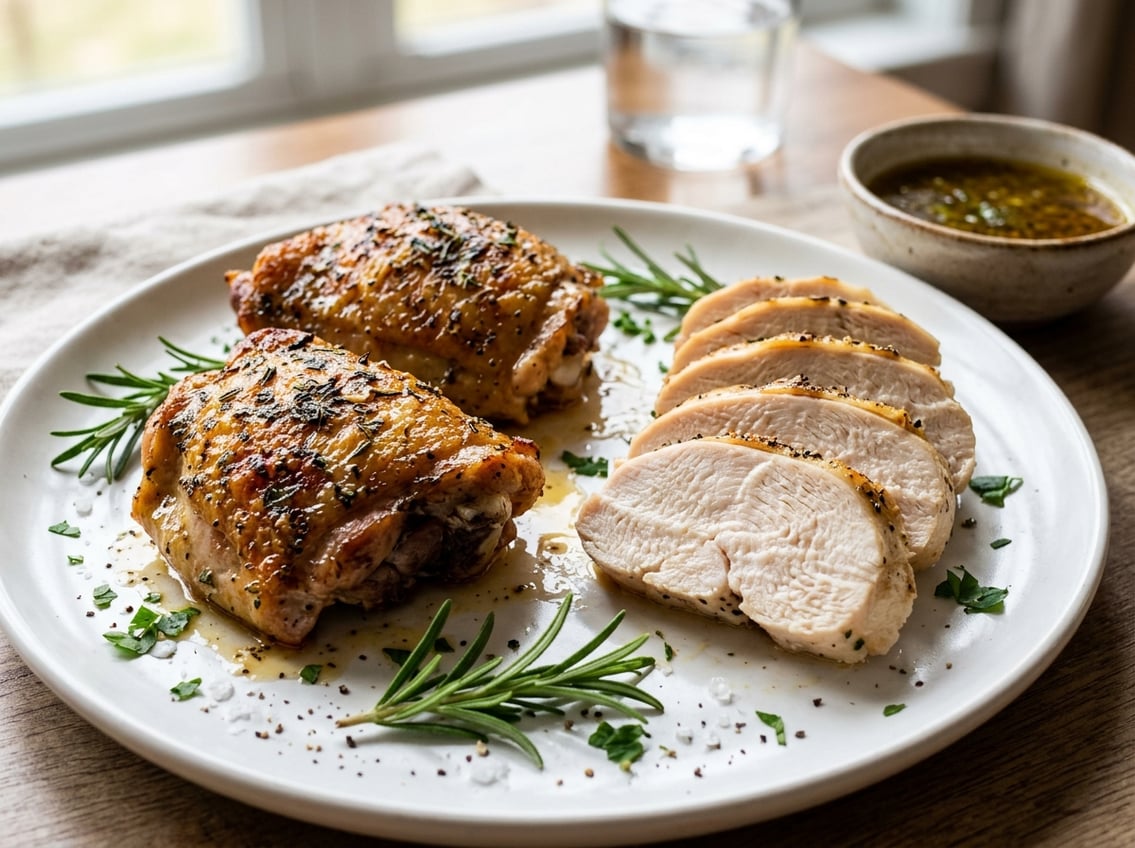
Let’s look at what makes meat tender, how muscle use, fat, and cooking methods change texture, and practical tips to get the best results from both cuts. Whether you prefer lean, firmer breast or richer, more succulent thigh, you’ll learn which cut suits specific recipes and how to maximize tenderness and flavor.
What Determines Chicken Meat Tenderness?
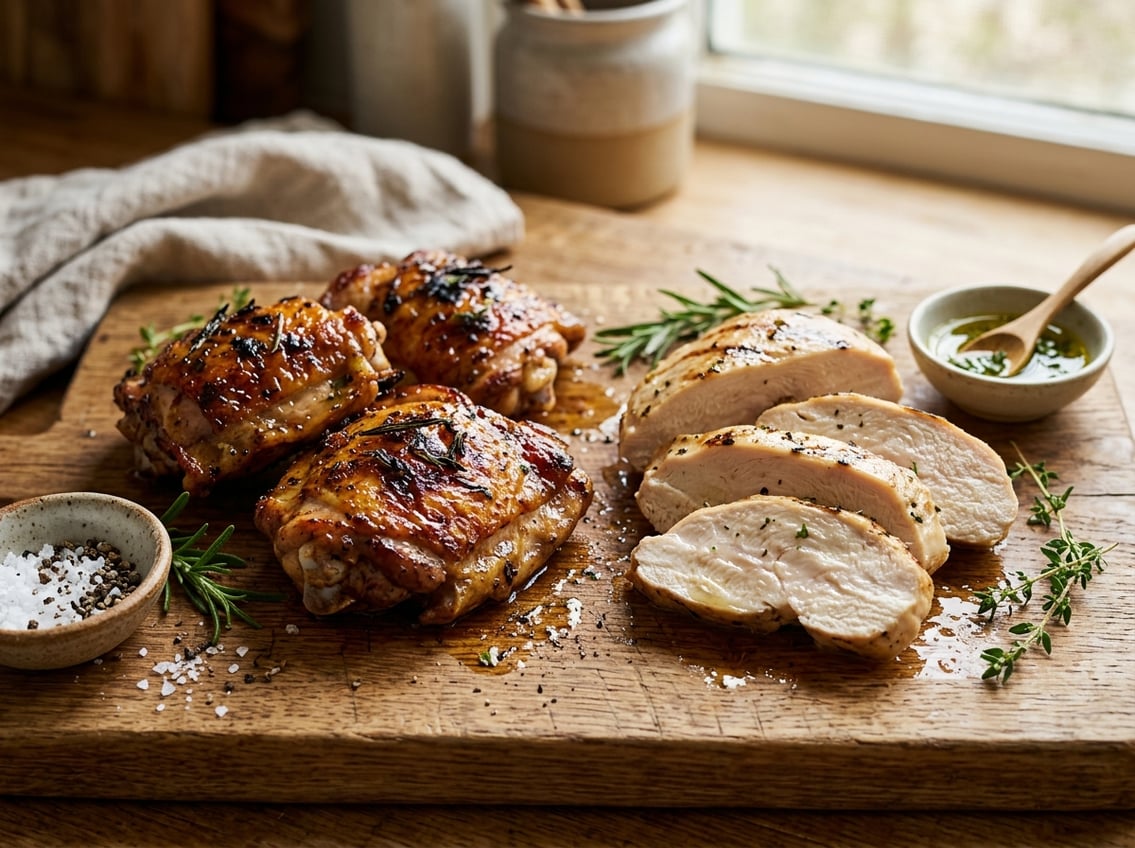
Tenderness depends on muscle fiber type, amount of connective tissue, and how much fat the cut contains. Cooking time and the final internal temperature also change tenderness significantly.
Muscle Structure and Connective Tissue
Muscle fibers vary by use. Breast muscles do most short, fast movements and have finer, less connective tissue. Thighs handle sustained activity and contain more collagen.
Collagen resists chewing when raw but softens into gelatin with slow, moist heat. If you cut across short, fine fibers (as in breast tenderloin), the bite feels more tender even if the meat is lean.
Longer, tougher fibers and higher collagen (common in thigh and leg muscles) require either longer cooking or moist methods to become tender. Pay attention to how the meat is butchered. Pieces with the silver skin or intact tendon will feel tougher unless removed or cooked until the connective tissue breaks down.
Impact of Fat Content in Chicken
Fat cushions muscle fibers and melts during cooking, which helps keep meat juicy and improves perceived tenderness. Thighs have higher intramuscular and subcutaneous fat than breasts, so they stay moist through higher heat and longer cooking.
Breast meat’s low fat content makes it prone to drying and becoming stringy when overcooked. You can offset that by brining, basting, or cooking sous-vide to retain moisture.
Fat doesn’t make fibers themselves softer, but it lubricates them and masks dryness. Fattier cuts like thighs often taste and feel more tender in typical home-cooking scenarios.
Role of Cooking Times and Internal Temperature
Temperature controls texture. Breasts become firm and dry above about 150–155°F (65–68°C), while thighs remain tender and forgiving up to higher temperatures because of their fat and connective tissue.
Short, high-heat methods like grilling or pan-searing suit breasts only if you monitor time and pull at the correct internal temperature. Longer, lower-temperature methods like braising, slow roasting, or sous-vide convert collagen in thighs to gelatin and yield consistently tender results.
Use an instant-read thermometer and target temperatures specific to the cut. For tenderness, aim for 145–150°F (63–66°C) for juicy breast when cooked quickly. For thighs, 170–185°F (77–85°C) lets collagen break down fully.
Chicken Thighs vs Chicken Breasts: Key Differences
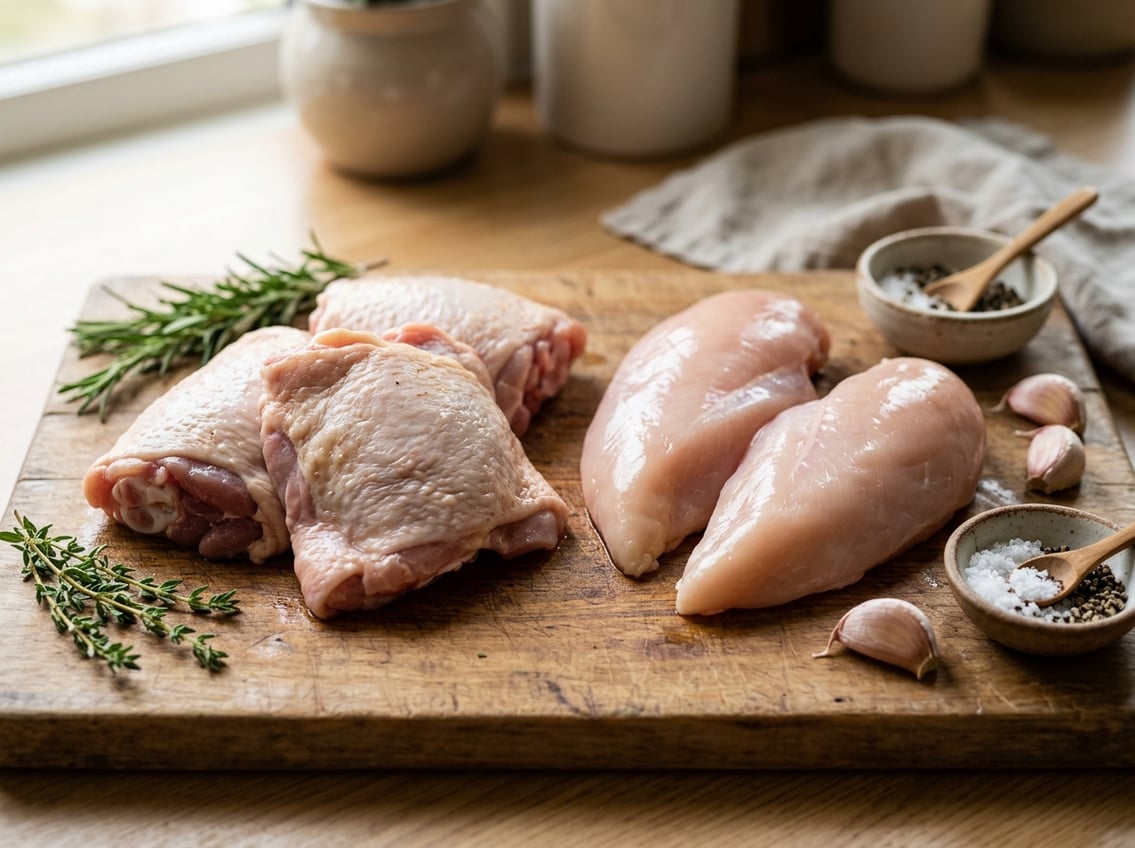
Thighs are darker, fattier, and built for sustained use. Breasts are lean, lighter-colored, and less collagen-rich.
These physical differences drive how each cut cooks, how tender it becomes, and the internal temperatures you should target.
Anatomy and Chicken Cuts
You get chicken breasts from the bird’s pectoral muscles and thighs from the upper leg. Breast meat contains mostly fast-twitch (white) fibers and very little connective tissue.
Thigh meat has more slow-twitch (red) fibers and noticeably more connective tissue and intramuscular fat. Those structural differences matter when you prep and portion.
A whole breast or a thick breast half will need flattening or butterflying to cook evenly. A bone-in thigh will take longer to heat through than a boneless thigh but benefits from the bone’s heat retention.
Texture and Juiciness
Breast meat feels firmer and can dry out quickly because it lacks the collagen and fat that hold moisture. At typical cooking ranges, breast becomes dry and chalky if pushed well above its ideal window.
Chicken thighs stay more forgiving because their fat and connective tissue render and gelatinize with longer cooking. That keeps the meat moist and tasting richer even at higher doneness.
If you want a tender, juicy result with less precision, thighs are usually the safer choice.
Typical Cooking Temperatures
For safety and texture, you should be aware of target internal temperatures. Food-safety guidance often cites 165°F as a conservative kill temperature for poultry.
For breast meat, keeping it around 155–160°F helps preserve juiciness while still achieving safe pasteurization with appropriate time at temperature. Thighs tolerate and benefit from higher temps.
You can cook thighs to 170°F or higher. Many cooks take dark meat to 180–185°F to dissolve more collagen into gelatin and gain extra tenderness.
Use a fast, accurate thermometer and check near the thickest part to confirm your chicken thigh or breast has reached the intended internal temperature.
Comparing Tenderness: Scientific and Culinary Perspectives
Thighs contain more connective tissue and fat, which lets them stay juicy at higher temperatures. Breasts have less collagen and dry out quickly, so precise temperature control matters.
Tender Chicken: Why Thighs Excel
Thigh meat has more slow-twitch (red) fibers and connective tissue than breast meat. That extra collagen converts to gelatin when cooked to higher temperatures, which bastes the muscle fibers and improves perceived tenderness.
You can cook thighs to 170–185°F (77–85°C) without them becoming unpleasantly dry. That wide temperature window gives you flexibility with grilling, braising, or roasting.
Fat content also adds flavor and helps the meat feel softer on the palate. If you use low-and-slow methods or high-heat searing followed by finishing, thighs remain forgiving.
For quick-cook methods, bone-in thighs keep moisture better than boneless. Thighs tolerate overcooking and still deliver a tender bite.
Breast Tenderness: How to Avoid Dryness
Breasts are mostly fast-twitch (white) fibers with very little connective tissue. They lose moisture as they pass 140–155°F (60–68°C), so your margin for error is small.
To keep breasts tender, use precise temperatures and short cooking times. Techniques that work well include sous-vide at 140–149°F (60–65°C), gentle poaching, or pounding/thin-slicing to reduce thickness.
Rest briefly so carryover cooking evens out without pushing internal temp too far. If you must cook breasts at high heat, brine, marinate, or coat with fat to protect surface moisture.
Cook to 150–155°F (66–68°C) for a balance between safety, juiciness, and texture when you’re not using sous-vide.
Which Is More Forgiving During Cooking?
Thighs give you a larger safe-and-pleasant temperature range, making them more forgiving for most home-cooking methods. You can grill, roast, or pressure-cook thighs and still retain tenderness even if temps climb.
Breasts require tighter control and faster cooling once removed from heat. They reward precision—sous-vide and poaching shine—but they penalize overcooking with a dry, stringy texture.
Use an instant-read thermometer for breasts. Pull at 150–155°F (66–68°C).
For thighs, aim for 170–185°F (77–85°C) depending on desired pull-apart texture. Choose thighs when you want less risk. Choose breasts when you can control temperature precisely.
Flavor, Fat, and Moisture
Fat level, connective tissue, and cooking method shape how chicken tastes and feels. Darker cuts bring more richness while lean white meat responds differently to heat.
These elements determine whether the meat feels tender, juicy, or dry and how much chicken flavor you actually notice.
Chicken Flavor Profiles by Cut
Chicken thighs deliver a stronger, more savory flavor because they contain higher concentrations of intramuscular fat and myoglobin. You’ll notice deeper “chicken” notes and a richer mouthfeel, especially when roasted or braised.
Chicken breasts are milder and leaner, with a clean, subtle taste that takes on marinades and spices more readily. You’ll get less natural flavor from the meat itself, so seasoning or sauces play a larger role.
If you want pronounced poultry flavor, choose thighs. If you prefer a neutral canvas for bold sauces or lighter preparations, choose breasts.
Influence of Fat Content on Tenderness and Taste
Fat acts as both flavor carrier and moisture reservoir. Thighs have higher fat content around and within the muscle fibers, which melts during cooking and bastes the meat internally.
That melting fat enhances perceived tenderness and amplifies savory compounds. Breasts have low fat content, so they rely on precise timing and added fats (oil, butter, marinades) to stay tender.
Without that, the lean fibers tighten and become firmer quickly as they lose moisture. Connective tissue in thighs converts to gelatin with longer, gentler cooking, producing a softer, silkier texture.
You’ll find thighs more forgiving. Breasts require shorter, controlled cooking to avoid dryness.
Juiciness and Texture Under Different Cooking Methods
High-heat, quick methods like grilling or pan-searing favor breasts when you stop cooking at the right moment. You’ll get firm but juicy slices if internal temperature stays near 150–160°F and the meat rests briefly.
Low-and-slow techniques like braising, slow roasting, or sous-vide excel with thighs. You’ll dissolve collagen into gelatin at 175–190°F or via extended low-temperature cook, producing pull-apart tenderness and sustained juiciness.
For crisp skin and moist interior, sear thighs skin-side down then finish in the oven. For breasts, brine or oil plus hot, fast sear and short oven finish preserves juiciness.
Use a thermometer to hit target temperatures and avoid guesswork.
Cooking Techniques for Maximum Tenderness
You’ll find thighs more forgiving and higher-heat tolerant. Breasts need gentler handling and precise timing.
Use searing and finishing for thighs, and quick, even heat plus resting for breasts to protect moisture.
Best Methods for Chicken Thighs
Sear skin-side down in a hot pan to render fat and crisp skin, about 4–6 minutes, then finish in a 350°F oven for even cooking. If you use bone-in, skin-on thighs, expect longer oven time but more flavor and moisture retention.
For boneless thighs, pan-fry over medium-high heat for 5–7 minutes per side until juices run clear. Thighs tolerate higher internal temperatures.
Slow braising or low-and-slow roasting at 300–325°F breaks down connective tissue, producing tender, pull-apart meat when you reach 175–185°F.
Use a tight-fitting lid or braising liquid to prevent surface drying. Rest thighs 5–10 minutes; carryover heat will raise internal temperature and redistribute juices.
Best Methods for Chicken Breasts
Start with even thickness—butterfly or pound to ¾-inch—so the breast cooks uniformly. Sear quickly on medium-high for 2–3 minutes per side, then transfer to a 375°F oven or reduce heat and finish on the stovetop.
Aim to remove breasts at 160–162°F and rest 5–10 minutes; carryover will bring them to the safe target of 165°F without overcooking. For moist results, use gentle methods.
Sous-vide at 140–145°F for 1–2 hours yields very tender, uniform texture. Marinades with acid or enzymatic tenderizers for 30–60 minutes improve tenderness but avoid long acidic soaks that cook the surface.
Importance of a Meat Thermometer
A digital instant-read thermometer gives repeatable results and prevents guesswork. Insert into the thickest part without touching bone; for breasts that’s the center, for thighs aim near the bone.
Target temperatures: pull breasts at 160–162°F to rest to 165°F, and for thighs plan for 175–185°F depending on texture preference.
Thighs need higher internal temps to break down connective tissue. Breasts require precise timing to avoid dryness.
Calibrate your thermometer occasionally and use it on multiple pieces to confirm consistent cooking across a pan or oven.
Ideal Cooking Times and Temperatures
Bake boneless breasts at 375°F for 20–25 minutes until they reach 160–165°F, depending on thickness. Cook bone-in, skin-on thighs at 350°F for 30–40 minutes to reach 175°F, increasing time for larger pieces.
Pan-sear boneless thighs over medium-high heat for 10–14 minutes total. Sear bone-in thighs, then roast them for the additional oven time listed above.
Sous-vide breasts at 140–145°F for 1–2 hours. Cook thighs sous-vide at 165–175°F for 1–4 hours to achieve tenderness.
Let chicken rest for 5–10 minutes. During resting, the internal temperature rises and juices redistribute.
Tips for Enhancing Tenderness and Flavor
Apply methods that improve texture and add moisture, such as acids and enzymes in marinades, salt in brines, and gentle long cooking or quick high-heat finishes. The following methods provide clear steps so you can choose what works for your recipe and schedule.
Marinating Chicken: How and Why
Combine an acid (lemon, vinegar, or yogurt), oil, and aromatics to flavor and slightly tenderize chicken surfaces. For thighs, choose a milder acid like yogurt or buttermilk and marinate for 1–8 hours to soften proteins without making the meat mushy.
Limit acidic marinades for breasts to 30–60 minutes to prevent a grainy texture. Use a ratio of 1 part acid to 2–3 parts oil, plus 1–2 teaspoons salt per pound.
Add herbs, garlic, and a touch of sugar to encourage browning. Pat chicken dry before cooking for better searing and crispier skin.
Marinate chicken in a nonreactive container or resealable bag in the refrigerator. Discard used marinade or boil it before using as a sauce.
Brining Chicken for Superior Results
Mix 1/4 cup kosher salt per quart (1 L) water for a basic brine. Add 1/4 cup sugar if you want sweeter notes.
Submerge chicken fully and refrigerate. Brine breasts for 30 minutes, and thighs or bone-in pieces for 1–4 hours.
Adjust brining time based on size, as longer brines can make small pieces too salty. Salt in the brine penetrates and dissolves muscle proteins, increasing water retention and making cooked meat juicier.
Rinse chicken briefly and pat dry after brining to avoid an overly salty surface and to help skin crisp. Add crushed garlic, peppercorns, bay leaf, or citrus peel for extra flavor.
Always use cold brine and keep it chilled for food safety.
Tricks to Achieve Perfectly Tender Meat
Control internal temperature. Aim for 165°F as a safe minimum. For thighs, cook to 185–195°F with gentle methods to convert collagen to gelatin and yield fall-apart tenderness.
Insert a probe thermometer in the thickest part, avoiding bone.
Choose the right technique. Braise, slow-roast at 275–325°F, or use sous-vide at 165–170°F for 1–4 hours to tenderize dark meat.
For crispy skin, finish with a 425–475°F blast or a quick skillet sear after low and slow cooking.
Gently pound breasts for even thickness. Score thick thigh skin to render fat.
Let cooked chicken rest 5–10 minutes before slicing to redistribute juices.


