
Best Seasoning for Chicken Thighs: Essential Spices and Expert Tips
You want chicken thighs that deliver juicy meat and a flavorful crust with minimal fuss. The best seasoning for chicken thighs combines salt, pepper, paprika, garlic, and onion powder, or a simple marinade. This reliable blend enhances moisture and creates a versatile base for any cuisine.
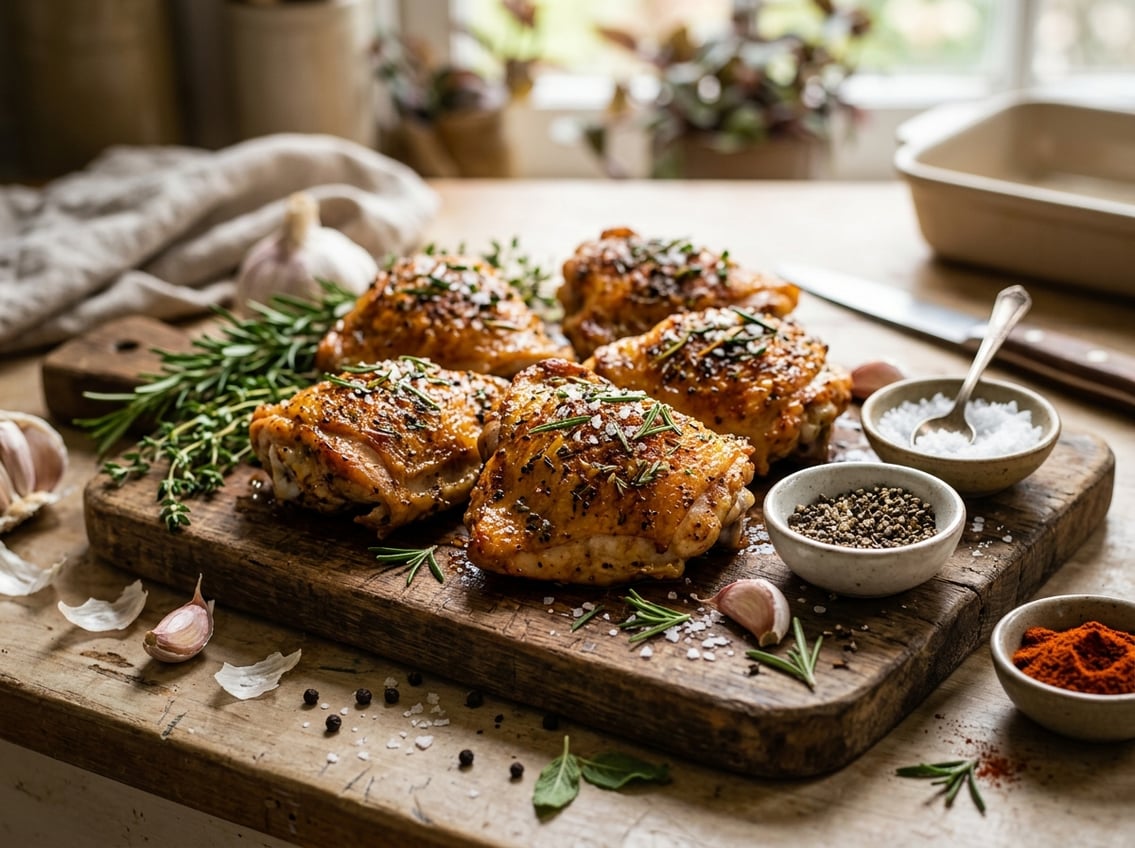
This guide covers core seasonings, spice blends, step-by-step techniques, cooking tips for juiciness and texture, recipe variations, and how to store or make your own mixes.
Core Seasonings and Spice Blends for Chicken Thighs
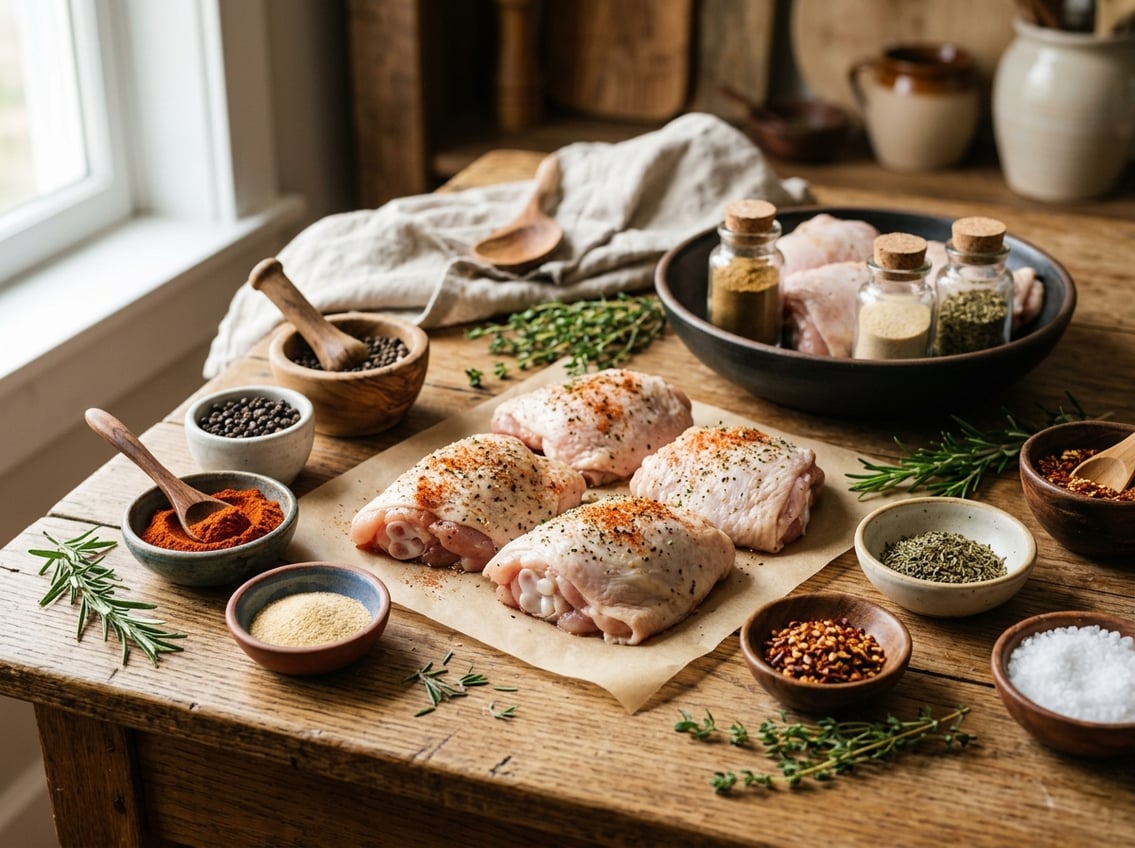
Start with a solid salt base, a savory backbone, and one bright or spicy accent. Focus on paprika or smoked paprika, garlic and onion powders, kosher or sea salt, and a touch of heat or herb.
Essential Herbs and Spices
Use kosher salt or sea salt—about 1 teaspoon per pound. Salt draws moisture to the surface and seasons through the meat when you let thighs rest 20–30 minutes after salting.
Add savory depth with garlic powder and onion powder (each 1/2–1 tsp per pound). These distribute evenly in a dry rub and don’t burn as fast as fresh garlic when grilling.
Paprika adds color and mild sweetness. Swap half or all for smoked paprika for a smoky profile.
Ground black pepper or freshly cracked pepper adds heat and aroma.
For herb notes, use dried thyme, dried rosemary, or dried oregano. Thyme works well with slow roasting; rosemary pairs with high-heat roasting; oregano suits Mediterranean flavors.
Add small amounts of cayenne pepper or ground cumin depending on the cuisine. Cayenne gives sharp heat; cumin adds warm, earthy complexity. Use turmeric sparingly for color and a subtle earthy note.
Building a Basic Seasoning Mix
Combine pantry staples for a homemade chicken seasoning. Use a simple ratio: 4 parts salt, 3 parts garlic powder, 2 parts onion powder, 2 parts paprika, 1 part black pepper.
For a 1/2 cup mix: use 4 tsp kosher salt, 3 tsp garlic powder, 2 tsp onion powder, 2 tsp paprika, 1 tsp ground black pepper, 1 tsp dried thyme. Use 1–1.5 tablespoons per pound of thighs.
For smoky or spicy versions, swap 1 tsp paprika for smoked paprika or add 1/4–1/2 tsp cayenne per tablespoon of mix. Store airtight up to six months and label with the date.
Customizing Flavors With Pantry Staples
Tailor blends to cooking methods and cuisines with common pantry spices. For grilling, increase smoked paprika and add 1 tsp ground cumin for warm notes.
For roasting, add extra dried thyme and crushed rosemary for aromatics. For a Latin profile, add more cumin and replace some paprika with chili powder.
For Mediterranean, boost oregano and add lemon zest or dried lemon peel.
Keep herbs and aromatics at about 40–60% of the non-salt components. Use spices like cayenne, turmeric, and cumin as accents—start small and taste as you go.
How to Season Chicken Thighs Like a Pro
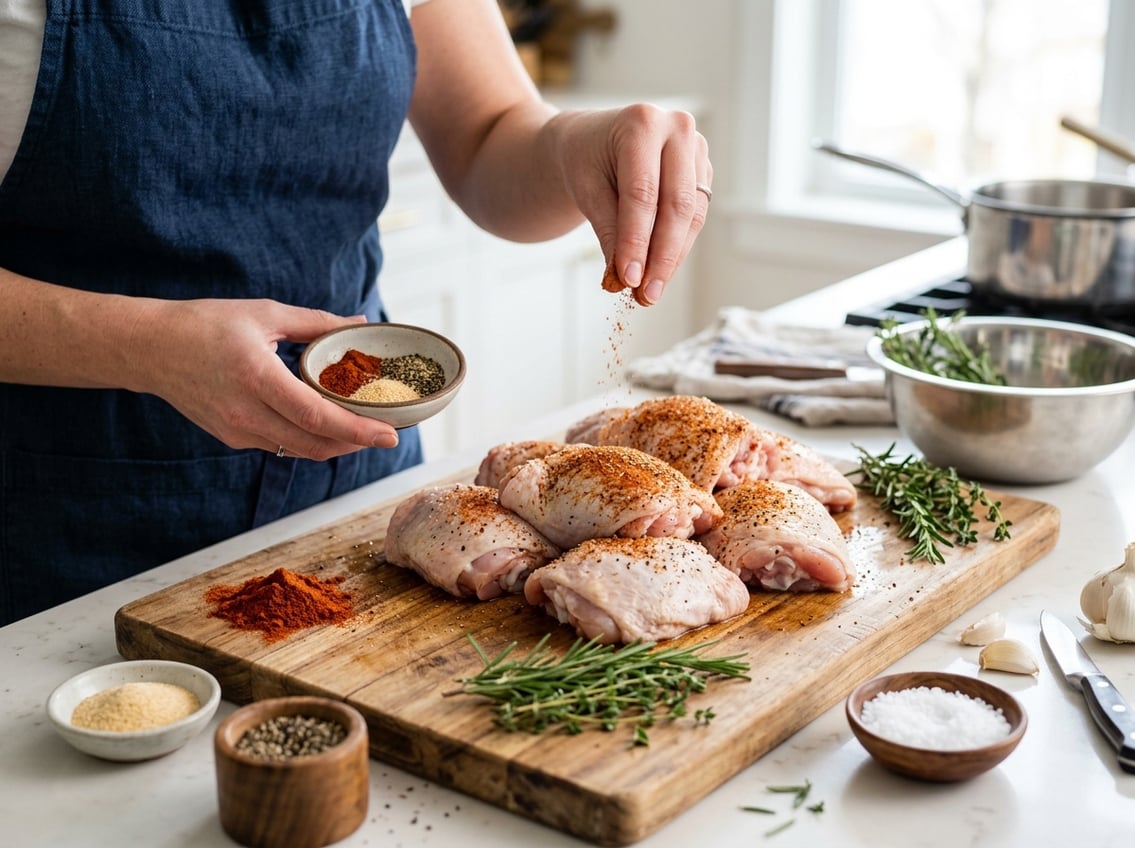
Focus on salt, fat, and even distribution. Choose between a wet marinade or a dry rub based on time and texture goals.
Pay attention to getting seasoning under the skin and use oil to help spices adhere and brown.
Application Methods and Techniques
Pat thighs dry with paper towels. Dry skin crisps better and lets salt penetrate the meat.
Brush a thin layer of olive oil over each thigh. Sprinkle kosher salt evenly—about ¾ to 1 teaspoon per pound—and let it draw in for 15–30 minutes, or up to overnight in the fridge.
Apply rubs with your hands, pressing them into the skin and sides. For even coverage, shake loose spice into your palm, then press and rub.
If you’re cooking multiple thighs, season them on a tray and let them rest uncovered in the fridge for at least 30 minutes to dry the skin further.
Seasoning Under the Skin for Maximum Flavor
Loosen the skin gently by sliding your fingers or a small knife between skin and meat. Work slowly to avoid tearing the skin.
Smear a thin layer of flavored fat—butter, olive oil mixed with minced garlic, or softened herb butter—directly onto the meat under the skin. Distribute a pinch of salt and your spice blend under the skin as well.
After filling under the skin, smooth it back down and rub the exterior with oil and a bit more seasoning.
Marinades Versus Dry Rubs
Choose a marinade for moisture and acid-driven flavor. Combine olive oil, an acid (lemon juice, vinegar, or yogurt), salt, and aromatics; marinate 30 minutes to 6 hours depending on acid strength.
Pick a dry rub for a crust and concentrated spice flavor. Typical rubs include salt, black pepper, paprika, garlic powder, onion powder, and optional brown sugar for caramelization.
Apply rubs generously and let sit at least 30 minutes. For best results, refrigerate uncovered for a few hours to dry the skin and deepen flavor.
You can combine methods—marinate briefly, then pat dry and finish with a dry rub—to get both internal flavor and a spicy, crisp exterior.
Best Practices for Cooking Seasoned Chicken Thighs
Season the meat well and get the skin or exterior hot and dry before cooking. Use salt early for dry rubs or at least 30 minutes before cooking; use acid-forward marinades for 2–8 hours to tenderize without breaking down texture.
Grilling and Barbecuing
Use bone-in, skin-on pieces for more flavor and stability over direct heat. Preheat the grill to medium-high (about 400–450°F) and oil the grates.
Start skin-side down to render fat and get crisp skin. Move to indirect heat after 4–6 minutes if flare-ups occur.
Use a two-zone fire: direct for sear (3–6 minutes per side) and indirect to finish (10–20 minutes depending on size). Probe to 165°F in the thickest part near the bone.
For glazed or barbecue sauce thighs, brush during the last 5–10 minutes to avoid burning sugars.
Baking and Roasting
Preheat the oven to 400–425°F for roasted or baked chicken thighs. Pat thighs dry, season under the skin when possible, and place skin-side up on a wire rack over a sheet pan.
Bake bone-in, skin-on thighs 30–40 minutes; boneless thighs take 20–30 minutes. Use an instant-read thermometer inserted into the thickest part to reach 165°F.
For extra-crispy skin, finish under a hot broiler for 1–3 minutes while watching closely.
Air Fryer and Frying Techniques
For air fryer chicken, preheat to 375–400°F and arrange thighs skin-side down with space between pieces. Lightly coat with oil or a binder to help dry rubs crisp.
Bone-in air fryer thighs usually take 18–25 minutes; boneless take 12–18. Flip halfway for even crisping and check for 165°F.
For frying, keep oil at 325–350°F for dark meat. Shallow or deep fry until internal temperature hits 165°F and crust is golden.
Use a seasoned flour or batter that complements your seasoning. Rest fried or air-fried thighs 5–8 minutes before serving.
Recipe Ideas and Popular Variations
Try specific spice blends, cooking uses, and simple swaps to suit texture, heat, and sweetness. Use well-balanced rubs or marinades, proper salt levels, and cooking methods that keep chicken thighs juicy and flavorful.
Classic and Bold Chicken Seasonings
Use a straightforward dry rub for reliably great results. Try: 1 tbsp smoked paprika, 1 tsp garlic powder, 1 tsp onion powder, 1 tsp kosher salt, 1/2 tsp black pepper, 1/2 tsp dried oregano.
Rub under and over the skin, let sit 30–60 minutes, then roast or grill.
For a bolder option, add 1 tsp cumin, 1/2 tsp cayenne, and 1 tsp brown sugar to the base mix. This creates a smoky-sweet crust that caramelizes during high-heat cooking.
If you prefer a wet seasoning, whisk olive oil, lemon zest, minced garlic, and chopped thyme with the dry rub. Brush before searing and again halfway through roasting.
International and Regional Flavors
For Mediterranean: combine dried oregano, rosemary, lemon zest, and garlic powder. Marinate thighs in yogurt and lemon for 1–4 hours.
For Middle Eastern or tandoori-style: mix yogurt, turmeric, ground cumin, ground coriander, garlic, and a little garam masala. Coat the thighs thoroughly and bake or grill.
For Latin-inspired dishes: use chipotle powder, smoked paprika, cumin, garlic powder, and lime zest. This blend works for tacos or grain bowls.
Adjusting Heat and Sweetness
Balance heat and sweet elements to match your taste. To reduce spice, halve cayenne or chipotle and boost smoked paprika.
To increase heat, add crushed red pepper flakes or a teaspoon of cayenne to the rub.
Add brown sugar or honey to marinades for caramelization. Use 1–2 tsp sugar per pound of chicken thighs; for honey, mix into a wet marinade or brush during the last 5 minutes of cooking.
For a savory-sweet glaze, combine soy sauce, honey, and a splash of rice vinegar, then reduce to a spoonable consistency before glazing.
Storage, Shelf Life, and DIY Seasoning Tips
Keep homemade chicken seasoning fresh by controlling air, light, heat, and moisture. Label your mixes with the date and intended use.
Making Chicken Seasoning Ahead
Make your homemade chicken seasoning in small batches to preserve potency. Use a ratio of 3 tbsp paprika, 1 tbsp garlic powder, 1 tbsp onion powder, 1 tsp salt, 1 tsp black pepper, 1 tsp dried thyme, 1 tsp dried oregano, and ½ tsp cayenne (adjust salt and heat to taste).
Mix thoroughly in a bowl, then transfer to an airtight jar.
If you plan to include dried citrus zest or sugar, add them right before using to avoid clumping. Note batch size and yield (for example, makes about 6 tbsp) and the date made. Use within 6–12 months for whole-spice-forward blends; expect ground herbs to lose strength faster.
Proper Storage for Spice Blends
Store seasoning blend jars in a cool, dark cupboard away from the stove and dishwasher. Use glass jars with tight lids or metal tins.
Avoid clear jars on open shelving unless you keep them out of direct light. Label each container with the blend name and date made.
Choose small 2–4 oz jars for blends you use often. Use larger jars for pantry backups.
Place silica gel or an oxygen absorber in long-term storage only with dry, airtight packaging. You do not need to refrigerate or freeze most dry blends, as this can introduce condensation when opened.
Efficient Meal Prep Strategies
Make a double batch of your favorite homemade spice blend. Portion it into single-use packets or 1–2 tablespoon containers.
This approach saves time and keeps the main jar uncontaminated when you season chicken thighs during weekly prep. Keep one jar by your prep station and store the extras in the cupboard.
Create a simple recipe card for chicken thighs. Use 1–2 tablespoons of seasoning per 2 pounds of thighs, let them rest for 30 minutes, then roast at 425°F for 25–30 minutes.
Write storage notes on the card, such as shelf life and flavor adjustments. For marinated prep, combine seasoning with oil and use within 24 hours.
Discard used marinade to avoid cross-contamination.


