
Easy Dinner Rolls Recipe for Soft, Buttery Rolls
Warm bread from your own oven changes the mood of a dinner table. A basket of soft dinner rolls, still steaming, with butter melting into every crack, does more for a meal than almost any other side dish. The good news is that soft, fluffy, buttery rolls are far more forgiving to make than most home bakers expect, and this easy dinner rolls recipe walks through every step so your first batch turns out right.
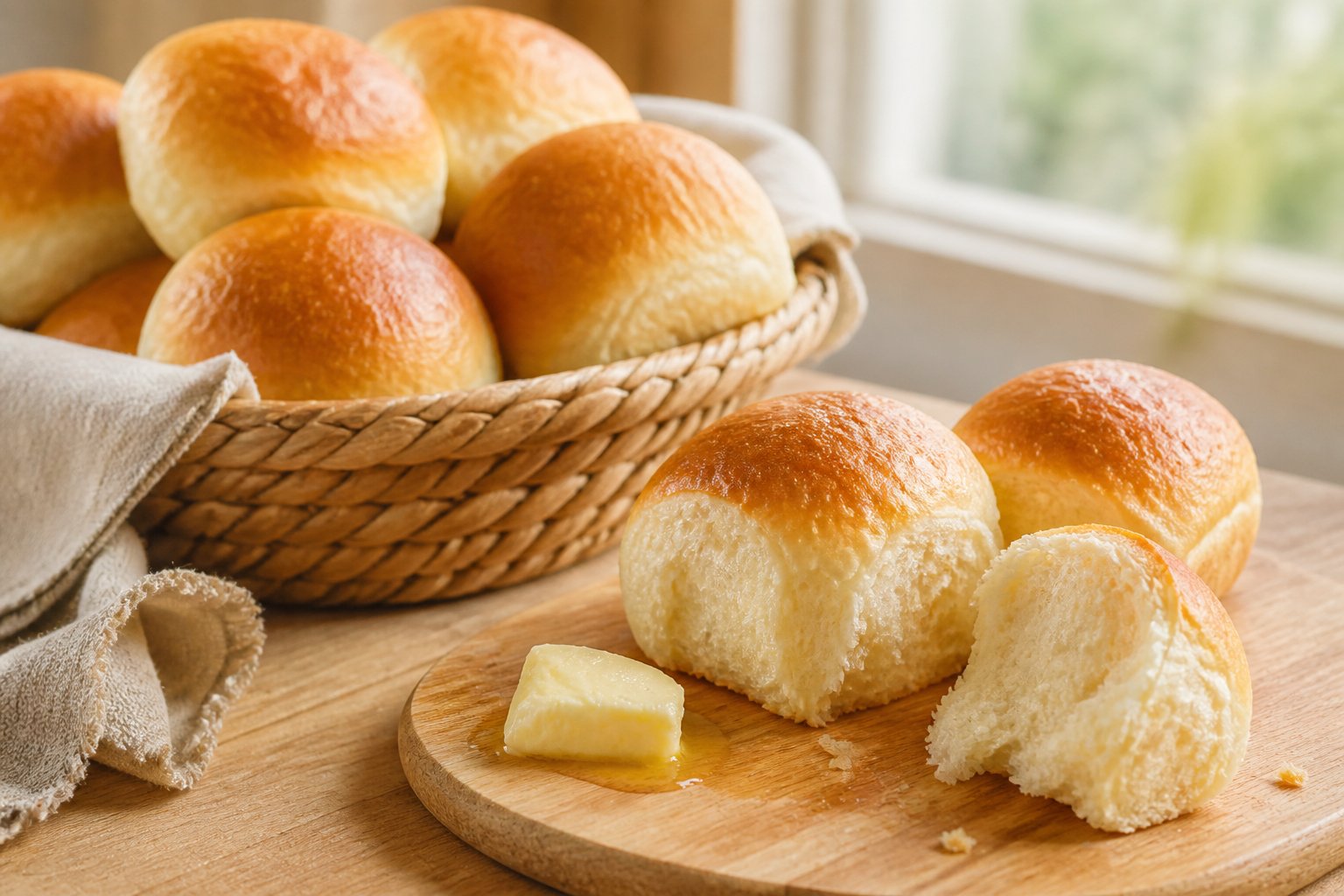
This dinner roll recipe uses ingredients already sitting in most kitchens: flour, yeast, milk, butter, and eggs. No specialty tools or hard-to-source ingredients are required, and the dough comes together whether you use a stand mixer or a wooden spoon. Grab your apron, preheat the oven, and let’s get these rolls rising.
What Makes These Rolls Soft, Fluffy, and Buttery?
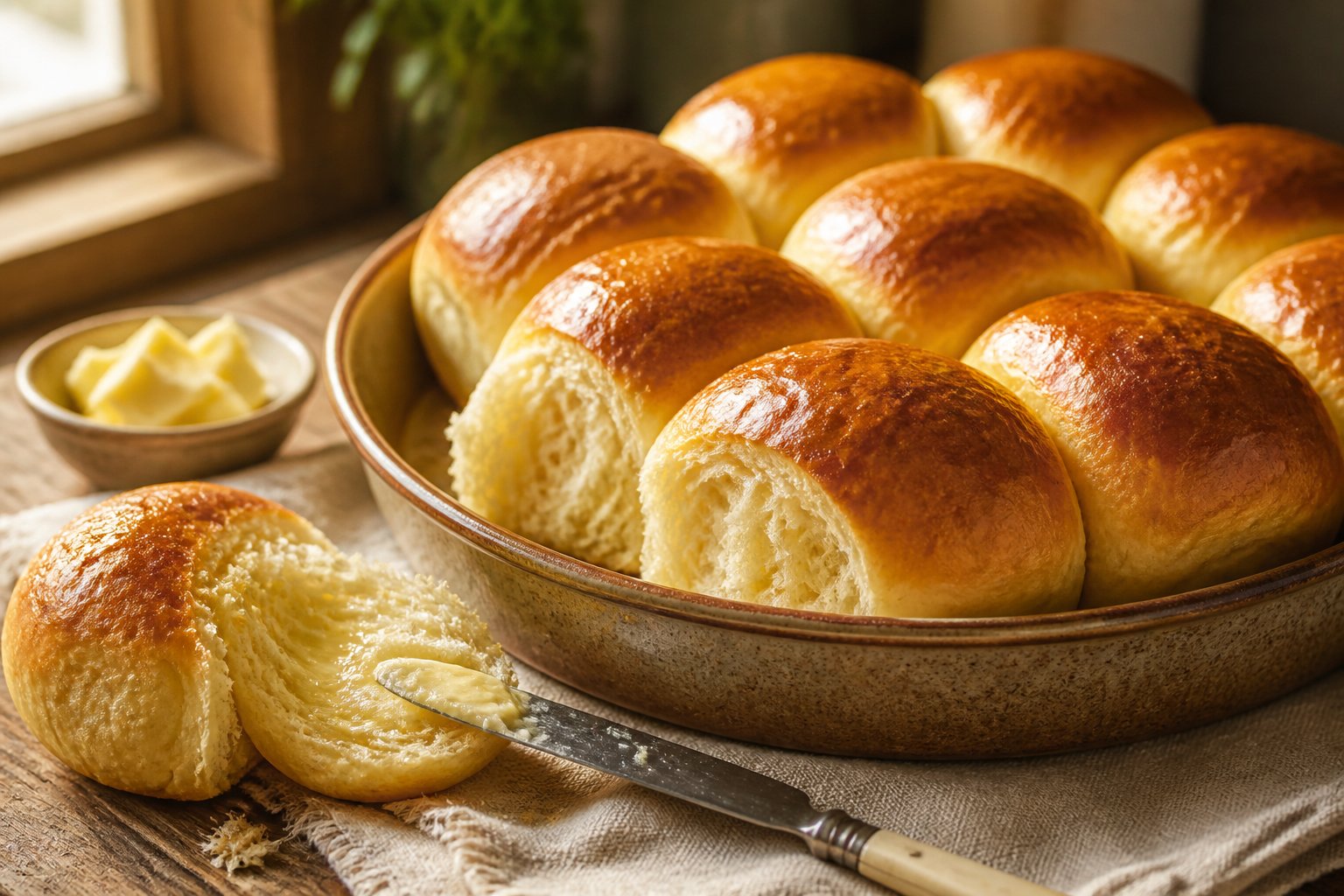
Soft, fluffy dinner rolls depend on a handful of key ingredients working together: fat, sugar, and the right flour and yeast. Milk and butter tenderize the crumb, egg adds structure and richness, and the choice between all-purpose and bread flour shapes how chewy or soft the final roll turns out.
Why Milk, Butter, and Egg Create a Tender Crumb
Whole milk brings fat and protein into the dough, which softens the crumb and adds a subtle sweetness that balances the sugar and butter, according to Handle the Heat’s ultimate dinner rolls recipe. Warm milk, heated to 100-110°F alongside the water, also helps activate the yeast without shocking it.
Melted butter contributes moisture and flavor, while a large egg enriches the dough and helps it hold its shape as it bakes. Lightly beating the egg before adding it to the dough ensures it blends evenly rather than forming streaks.
All-Purpose Flour vs. Bread Flour
Bread flour has a higher protein content than all-purpose flour, which builds more gluten structure and gives rolls a slightly chewier bite while keeping them soft, per the same dinner rolls recipe from Handle the Heat. All-purpose flour works as a substitute in equal amounts, though the dough may need a bit more kneading and rising time to develop enough structure.
| Flour Type | Protein Level | Texture Result | Kneading Time |
|---|---|---|---|
| Bread Flour | Higher | Chewier, sturdier | Standard |
| All-Purpose Flour | Lower | Softer, slightly less structure | Slightly longer |
Choosing Instant Yeast or Active Dry Yeast
Instant yeast can be mixed directly into the dry ingredients and speeds up the rise, while active dry yeast needs to dissolve in warm water first and takes about 20% longer to raise the dough, based on Handle the Heat’s ingredient breakdown. Either works in this recipe; just adjust your rise-time expectations accordingly.
Why Sugar and Salt Both Matter
Granulated sugar feeds the yeast, encourages browning, and adds a whisper of sweetness that balances the salt and butter. Sea salt sharpens flavor and keeps the dough from tasting flat, and a light sprinkle of flaky salt on top after baking adds a finishing touch.
How to Make the Dough With Confidence
Building confidence with yeast dough starts with blooming the yeast correctly and kneading until the texture feels right. Whether you use a stand mixer with a dough hook or a wooden spoon and your own hands, the dough should end up smooth, elastic, and only slightly tacky before its first rise.
How to Bloom Yeast Without Killing It
Warm water and warm milk should sit between 100-110°F before yeast goes in. Water any hotter kills the yeast outright, while water that’s too cold slows activation to a crawl, a detail confirmed in Handle the Heat’s water and yeast guidance. A kitchen thermometer removes the guesswork if you’re unsure by feel.
Mixing and Kneading by Hand or With a Stand Mixer
A stand mixer fitted with a dough hook handles the sticky, enriched dinner roll dough with less effort, kneading it into a smooth ball in a few minutes. Kneading by hand works just as well; it just takes more elbow grease and a bit longer to reach the same smooth, elastic texture.
If the dough sticks to your hands or the bowl, dampen your palms with water instead of adding more flour, since extra flour can make rolls dense. This approach is echoed by Handle the Heat’s technique for handling sticky dough. For readers newer to yeast dough overall, this guide on how a beginner starts baking offers useful context beyond this recipe.
How Should Dinner Roll Dough Feel?
Finished dinner roll dough should feel soft, slightly tacky, and elastic, springing back gently when poked. It should not feel wet or stick heavily to your fingers after kneading is complete.
How to Tell When the First Dough Rise Is Complete
The dough is ready for shaping once it has roughly doubled in size, which typically takes 60 to 90 minutes in a warm, draft-free spot. The “ripe” finger test confirms it: press two fingers into the dough, and if the indentation stays, the rise is done, a method detailed in Handle the Heat’s first-rise instructions.
Shape, Proof, and Bake Evenly
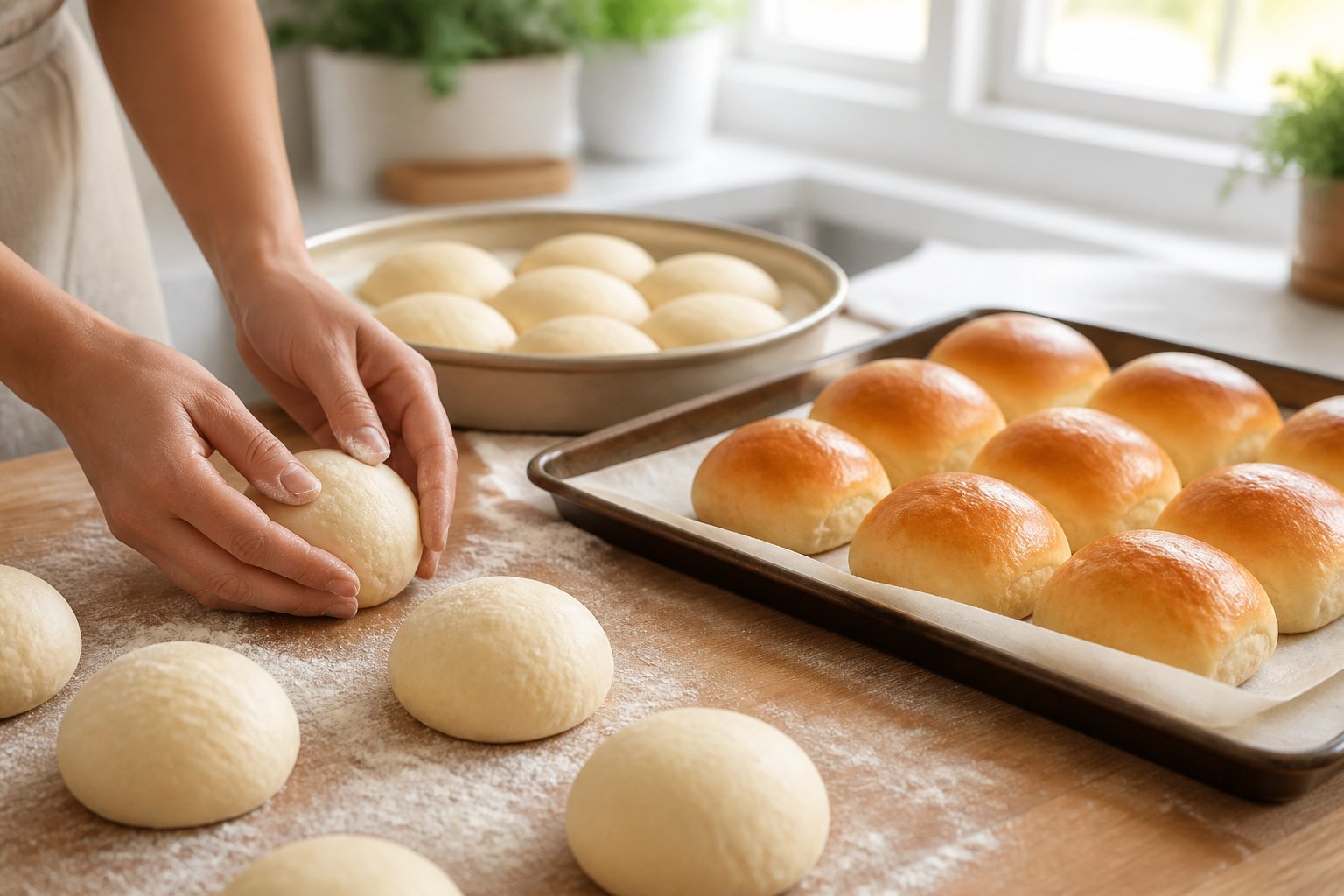
Even baking starts with evenly shaped dough balls, proper spacing in the pan, and a second rise that’s given enough time to finish. The finishing touches, egg wash or milk wash, along with correct oven timing, determine whether the rolls come out glossy, golden, and fully cooked through.
How to Form Smooth, Equal-Sized Dough Balls
Divide the risen dough into 12 equal pieces using a bench scraper or knife, then pinch and roll each piece into a tight, smooth ball. Keep the work surface unfloured while shaping, since a little resistance helps the dough form a taut, round shape, a tip shared in Handle the Heat’s shaping method. The classic shape for a dinner roll is a boule, a smooth ball with a sealed seam underneath, which The Forked Spoon’s dinner rolls recipe notes helps the rolls rise evenly and bake with a soft, fluffy crumb. Shaping also affects the final texture and rise, since rolls handled too roughly can turn chewy and dense, according to Simply Recipes’ visual guide to shaping dinner rolls.
How Long Should the Second Rise Take?
Shaped rolls need to double in size again before baking, which usually takes 30 to 60 minutes depending on kitchen temperature. The same finger-poke test used in the first rise works here too.
Baking Dish Sizes and Roll Spacing
A 9×13-inch pan fits 12 rolls with enough closeness that they rise into each other, creating soft, pull-apart sides. Metal pans conduct heat efficiently and promote even baking, while ceramic or glass dishes work well for holiday presentation, per Handle the Heat’s pan recommendations. For more on getting consistent results across different bakeware, see this guide on how to get an oven to bake evenly.
Egg Wash or Milk Wash: Which Finish Is Best?
An egg wash, made from a lightly beaten egg brushed on with a pastry brush, gives rolls a shiny, deep golden-brown finish. A milk wash produces a softer, more matte crust color, so egg wash is the better pick when a glossy, bakery-style shine is the goal.
When Are the Rolls Fully Baked?
Rolls are done baking at 375°F after about 20 minutes, once the tops turn golden brown and the interior reaches a fully set, springy texture. Brushing the hot rolls with melted butter right out of the oven adds shine and locks in extra flavor.
How to Make Quick Rolls Without Sacrificing Texture
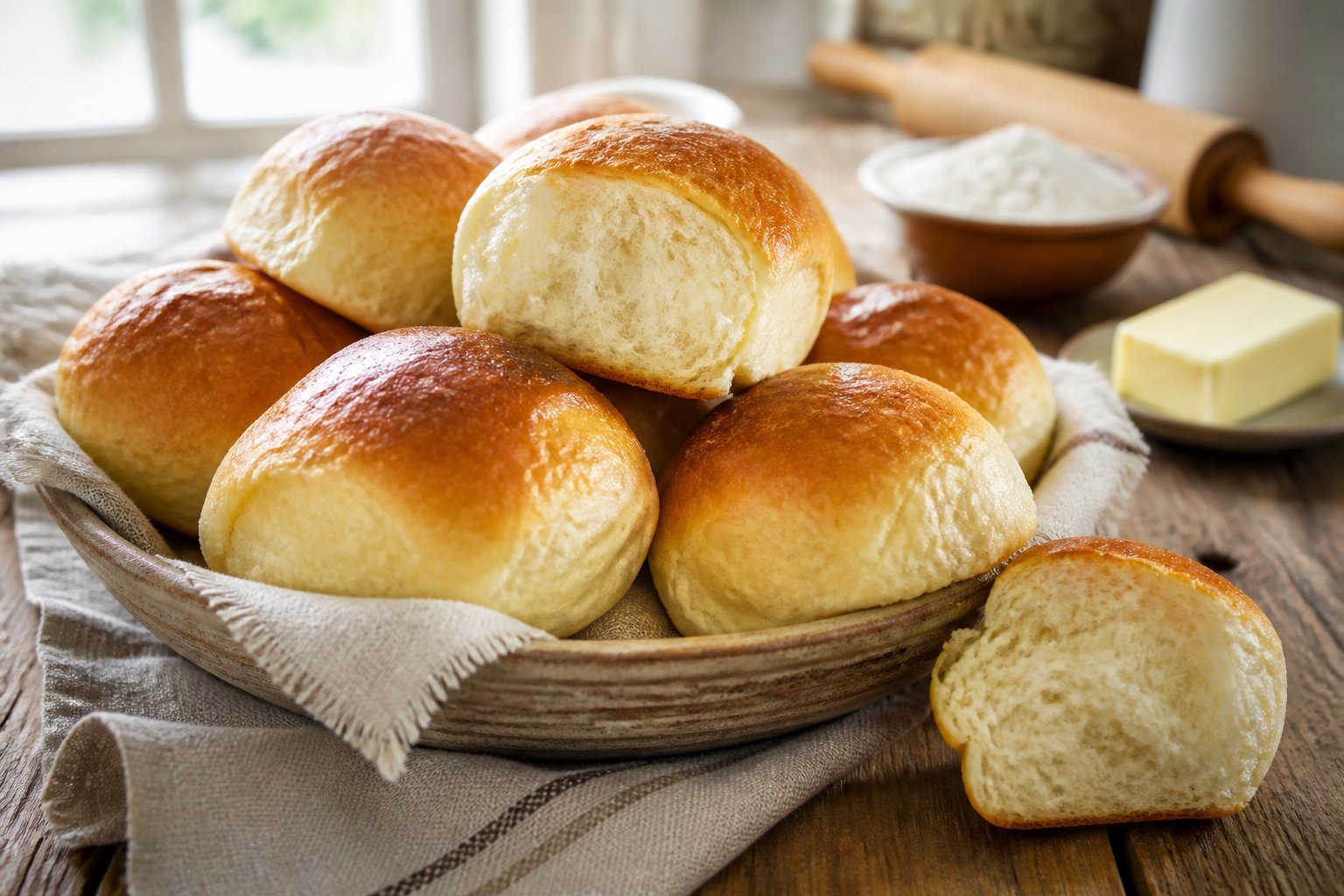
Quick dinner rolls trade some depth of flavor for speed, using instant yeast and shortened rise times to get warm bread on the table in under an hour. Several recipes demonstrate this trade-off works well for busy weeknights, including 30 Minute Dinner Rolls from Spend with Pennies and a version using no kneading or electric mixer from Bowl of Delicious’s quick dinner rolls.
When Quick Dinner Rolls Are the Right Choice
Quick dinner rolls make sense on a weeknight meal when time is tight but homemade bread still feels worth the effort. A single-rise method using instant yeast can have soft rolls ready in under 30 minutes, a timeline echoed across several fast-roll recipes among the research.
How Extra Rise Time Improves Flavor
A longer, slower rise, particularly an overnight rest in the refrigerator, deepens flavor because the yeast has more time to ferment and develop complexity. Handle the Heat’s recipe notes that shaped rolls can chill for up to 24 hours before baking, with the slow rise improving taste, according to its make-ahead instructions. Rolls made this way often taste noticeably richer than same-day quick versions.
Common Causes of Dense or Dry Rolls
Dense rolls usually come from too much added flour during kneading, under-proofing, or yeast that was killed by water that was too hot. Dry rolls often result from overbaking or skipping the post-bake butter brush that seals in moisture. If your dough consistently refuses to rise, this troubleshooting guide on why dough won’t rise covers common fixes.
Can You Make the Dough Ahead?
Yes, dinner roll dough can be shaped, refrigerated for up to 24 hours, and baked later, or frozen unbaked for up to 2 months, per Handle the Heat’s freezing and make-ahead tips. Bring refrigerated or thawed rolls to room temperature and let them finish rising before baking as directed.
Flavor Variations and Ways to Serve Them
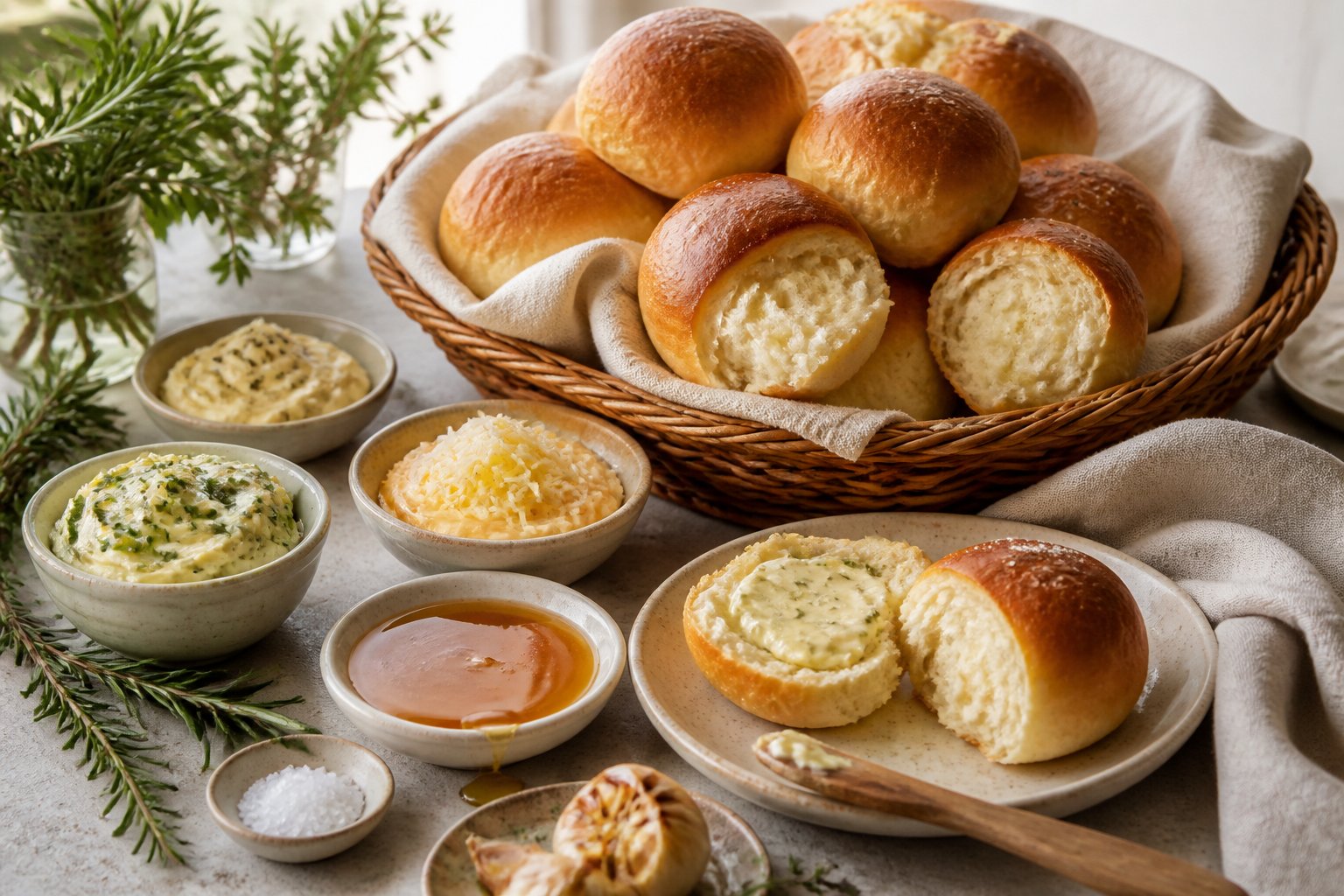
This base dinner roll recipe adapts easily into several flavor directions, from garlic and herb versions to sweet honey butter finishes. Each variation uses the same dough and technique, with the flavor added through toppings, mix-ins, or a finishing butter brushed on after baking.
Garlic Butter Rolls for Savory Meals
- Melt butter and stir in minced garlic and chopped parsley, then brush generously over warm rolls right out of the oven.
- Garlic butter rolls pair naturally with pasta dinners, roasted chicken, or a simple weeknight soup.
- For a stronger garlic flavor, mix a small amount of garlic into the dough itself before the second rise.
- These rolls also work well alongside a bowl of butternut squash soup, where the buttery, garlicky roll balances the soup’s sweetness.
Herb Dinner Rolls for Holiday Dinners
- Fold chopped fresh rosemary, thyme, or sage into the dough before shaping for a holiday-ready herb roll, an approach noted in Handle the Heat’s flavor variations.
- Herb rolls complement roasted turkey, glazed ham, or other traditional holiday centerpieces.
- A light egg wash still works for these rolls, giving the herb flecks a glossy backdrop once baked.
Honey Butter for Warm Rolls
- Whip softened butter with honey until light and fluffy, then serve alongside warm rolls for guests to spread themselves.
- Honey butter adds sweetness that pairs well with savory mains like roasted pork or grilled chicken.
- A pinch of flaky sea salt stirred into the honey butter balances the sweetness nicely.
What to Serve With Fresh-Baked Rolls
- Fresh dinner rolls suit nearly any main course, from roast chicken to holiday turkey to a simple weeknight stew.
- They work particularly well next to rustic bread-based meals like soups or braises, where a soft roll helps soak up sauce.
- Sliced in half, leftover rolls make excellent sliders or breakfast sandwiches the next day.
Fresh Rolls Are Always Within Reach
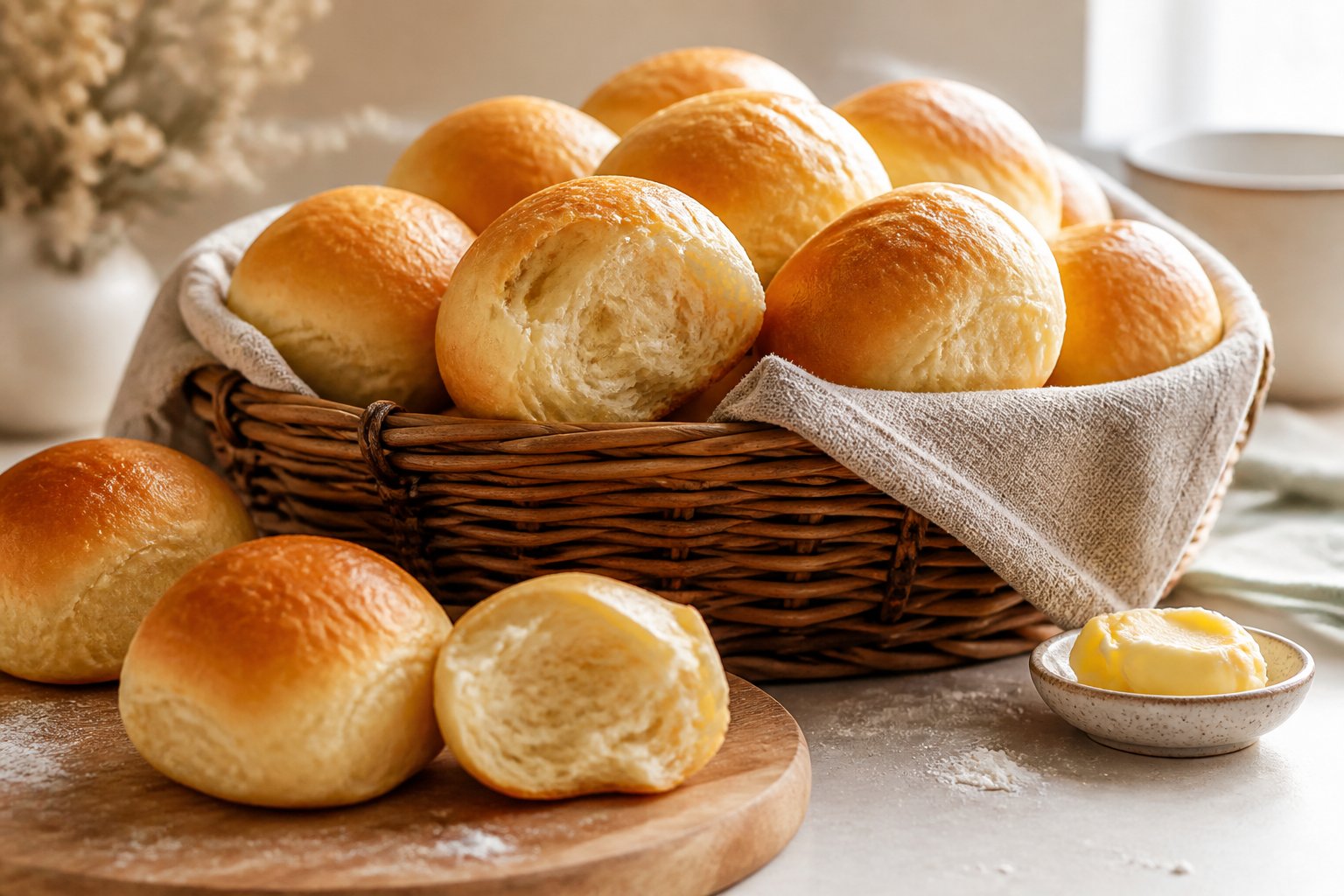
Homemade dinner rolls don’t have to be a special-occasion project, since both the dough and the baked rolls freeze well for later use. Shaping frozen dough balls ahead of time means fresh bread is only a thaw-and-bake away whenever a meal calls for it, an approach highlighted in Lil’ Luna’s homemade dinner rolls recipe.
Leftover dinner rolls keep well at room temperature in an airtight container for up to 3 days and reheat nicely in a 300°F oven until warmed through. Once you’ve got the base dough down, keeping a batch of frozen dough balls on hand turns any weeknight dinner into an occasion worth setting a real table for.


