
Do You Remove Skin From Chicken Thighs Before Cooking? Pros, Tips, and Best Practices
Deciding whether to remove the skin from chicken thighs depends on what you want from the dish: flavor and crispness or lower fat and a lighter texture.
If you want maximum flavor and a crispy exterior, keep the skin on. If you want less fat and easier trimming, remove it before cooking.
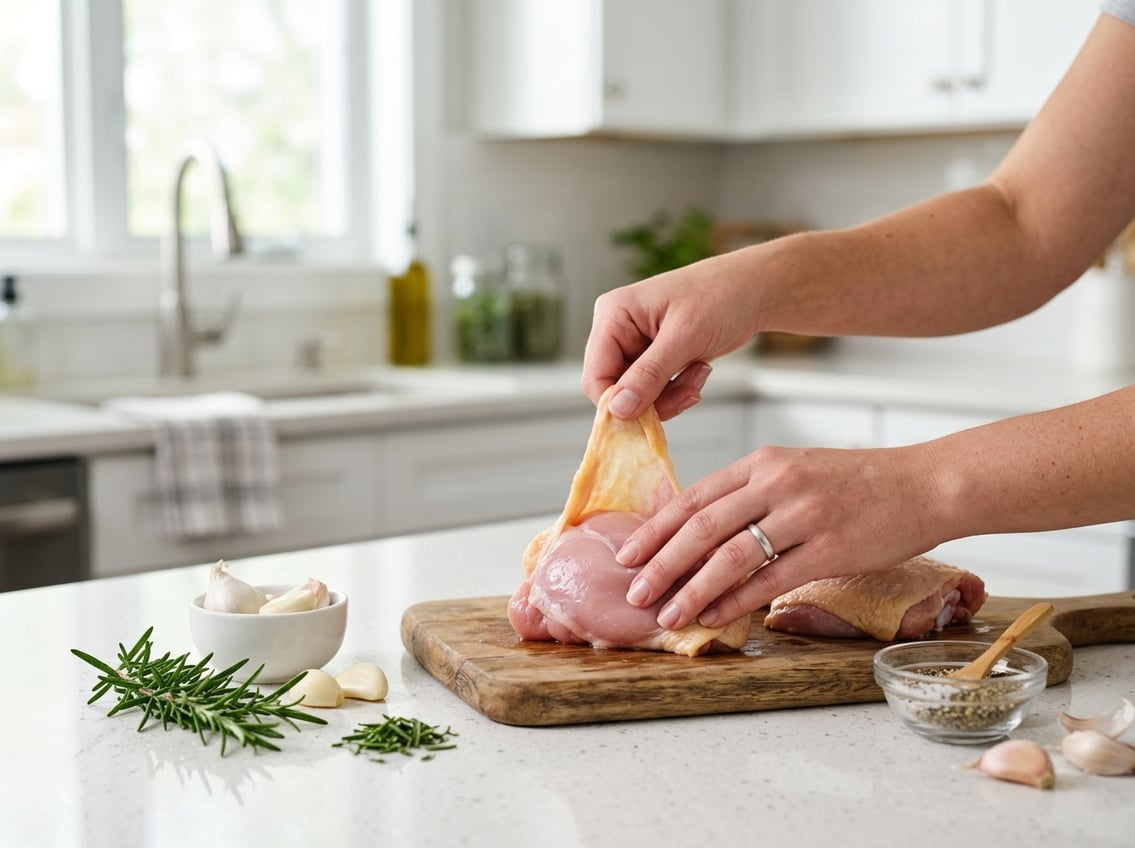
Consider factors like cut (bone-in vs boneless), cooking method (roasting, grilling, frying, or braising), and how much hands-on prep you want.
The sections ahead outline which thigh cuts suit your goals, how to remove skin cleanly, and practical tips for cooking both skin-on and skinless thighs.
Understanding Chicken Thigh Cuts
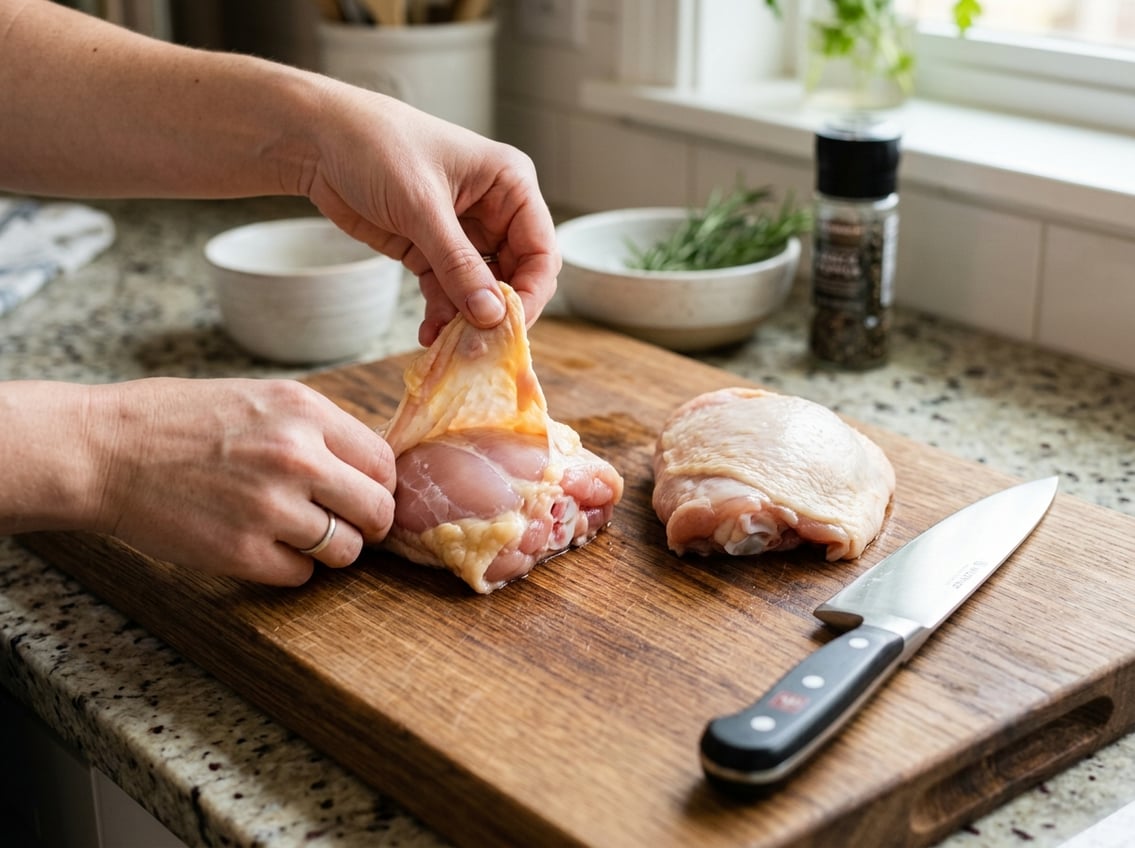
Chicken thighs offer choices that affect texture, cooking time, and flavor.
Pay attention to bone presence, meat type, and whether the skin stays on. These factors determine how you’ll cook and season the thighs.
Bone-In vs. Boneless Options
Bone-in thighs retain heat slower and distribute it more evenly around the meat. They take 10–20% longer to reach 165°F (74°C) than boneless pieces, and the bone helps retain moisture during roasting or braising.
Boneless, skinless chicken thighs cook faster and make uniform slices for stir-fries, skewers, and pan-searing. You can cut them into strips or pound them thin for quick-cook recipes, but you must watch timing closely to avoid dryness.
Boneless thighs also absorb marinades more readily because there’s no bone barrier.
Choose bone-in when you want juicier results and forgiving cooking windows. Pick boneless when speed, ease of eating, or consistent portion sizes matter.
Dark Meat Characteristics
Thighs are dark meat with higher myoglobin and intramuscular fat than breast meat. That gives you richer flavor and more forgiving texture during longer cooking methods.
Dark meat handles higher temperatures and longer times without becoming stringy. It also benefits from slow braises, roasting, and grilling, where the extra fat renders and bastes the meat.
Thighs contain more calories and fat than white meat. Trimming skin or visible fat reduces saturated fat and overall calories if that’s your goal.
Expect a deeper color, denser mouthfeel, and stronger chicken flavor when you choose thighs over white cuts.
Skin-On and Skinless Varieties
Skin-on chicken thighs provide a layer that renders to baste the meat and can crisp to a golden surface. If you want a crunchy exterior from roasting, pan-searing, or grilling, leave the skin on and score it or pat it very dry first.
Skinless chicken thighs let marinades and rubs penetrate directly into the meat and reduce surface fat. They suit stews, stir-fries, and recipes where you don’t want excess grease in the pan.
Skinless thighs also shorten cooking time slightly and produce a leaner finished dish.
If you remove the skin, trim large fat pockets but consider leaving a thin layer for flavor. If you keep it, expect more moisture and stronger browning. If you remove it, season and use wet cooking to maintain juiciness.
Benefits and Drawbacks of Cooking With Skin On
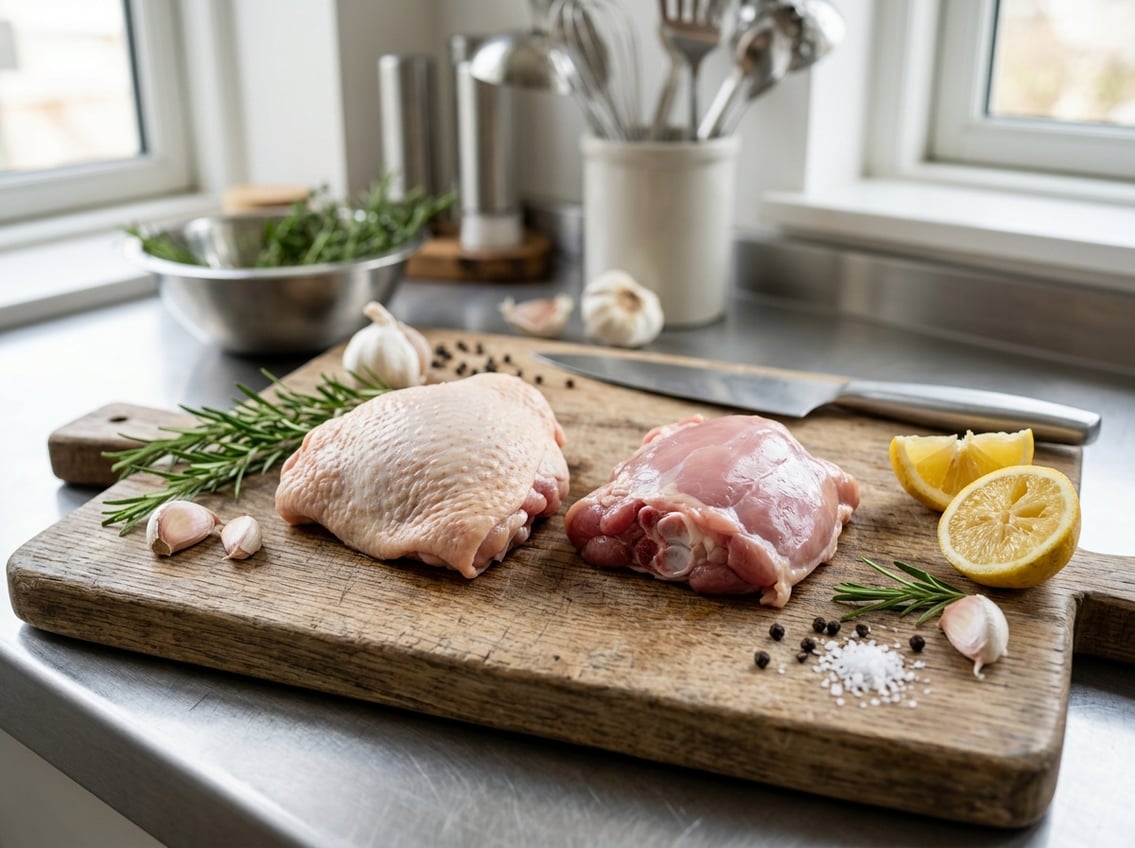
Cooking thighs with the skin intact changes texture, flavor, and fat content. You gain a protective barrier that helps retain juices but also add calories and require different techniques to avoid undercooked or greasy results.
Flavor and Moisture Retention
Leaving the skin on locks moisture into the dark meat of chicken thighs by forming a physical barrier during roasting, grilling, or pan-searing. As the skin renders, its fat bastes the meat, keeping the thigh juicy and reducing the chance of dry, stringy texture.
The skin also concentrates and carries seasonings. Salt applied to skin pulls out surface moisture, then reabsorbs flavor as the skin crisps, so your marinades and rubs taste more pronounced in the finished thigh.
Skin-on thighs take slightly longer to reach safe internal temperature (165°F/74°C) because the skin insulates the meat.
Creating Crispy Chicken Skin
To achieve crispy chicken skin, manage surface moisture and heat. Pat the skin thoroughly dry and season generously with salt.
Give thighs space on the pan or sheet to allow airflow. Overcrowding causes steaming and soggy skin.
Start on high heat or use an oven at 425–450°F to render fat quickly. Lower the heat if needed to finish cooking through.
If you want grill marks, place skin-side down over direct heat briefly to sear, then move to indirect heat to finish. For pan-frying, use a moderate amount of oil and press the thigh lightly to ensure even contact.
Expect some additional flare-ups on the grill from fat drip. Keep a thermometer handy to avoid burning the skin while the dark meat comes to temperature.
Nutritional Considerations
Skin-on chicken thighs add calories and fat relative to skinless thighs. Most of the extra energy comes from rendered fat in the skin.
If you track macros or limit saturated fat, removing skin cuts significant calories per serving and reduces saturated fat intake from the meal.
The skin contributes flavor and satiety, which can reduce the need for heavy sauces or added fats. You can cook with the skin on and remove it before eating to capture moisture and flavor while trimming some fat at the plate.
Consider portion size and cooking method. Roasting or grilling drains more fat away than pan-frying in retained oil.
Reasons to Remove Skin From Chicken Thighs
Removing the skin changes the dish’s fat, texture, and how the meat cooks. You’ll find benefits when you need lower fat, a firmer bite, or when the recipe calls for skinless chicken thighs.
Reducing Fat and Calories
If you want to cut calories, remove the skin to eliminate the majority of visible fat. A 3-ounce cooked chicken thigh without skin typically has substantially fewer grams of fat than the same piece with skin.
Removing the skin before cooking also prevents added fat from rendering into the pan or sauce. That makes it easier to control total fat in braises, stir-fries, or salads where excess oil would weigh the dish down.
Pat the meat dry and trim any thick fat deposits after removing the skin for consistent results.
Texture Preferences
Remove skin if you prefer a leaner, firmer mouthfeel or want pieces that absorb marinades and sauces uniformly. Skinless chicken thighs sear and brown differently; they don’t form a crisp, fatty crust, so the exterior will be more directly flavored by spices or sauces.
For shredded or diced chicken used in tacos, soups, or salads, skinless meat yields a cleaner texture and appearance. Removing the skin prevents chewy bits and reduces greasy residue on utensils and plates.
Recipe Requirements
Certain recipes work better with skin removed. Poaching, stewing, or recipes that call for uniform cubes or shredded chicken often specify skinless chicken thighs to avoid floating fat and inconsistent texture.
Follow recipe directions. If a stew asks for skinless thighs, remove the skin to keep the broth clear and prevent excess grease.
If a grilled or roasted recipe depends on crisp skin, leave it on. When the instruction says “remove skin from chicken,” do so to match the intended fat level, mouthfeel, and presentation.
How to Remove Skin From Chicken Thighs
Removing skin yields leaner meat and better marinade absorption. Loosen the skin, cut attachment points, and trim excess fat with a sharp knife and steady hands.
Step-by-Step Skin Removal Technique
Place the thigh skin-side down on a clean cutting board and pat it dry with paper towels for grip. Lift an edge of skin near one corner and gently pull it away from the meat to create a pocket.
Slide the tip of a sharp boning or paring knife into that pocket, blade angled slightly up and away from the flesh. Use short, controlled strokes to separate the skin from the connective tissue, working toward the other end.
Hold the skin taut with your fingers and guide the knife under the attachment when you hit stubborn spots. Remove the skin in one piece when possible, then trim visible pockets of fat with shallow, angled cuts.
Pat the thigh dry again before seasoning or marinating.
Best Tools for the Task
Use a sharp boning knife for control and to follow contours close to the meat. A paring knife works for smaller hands or lighter tasks.
Use a stable, non-slip cutting board—plastic or wood—sanitized and large enough to work comfortably. Paper towels help keep the thigh from slipping while you pull the skin.
Kitchen shears can clip any tiny stubborn bits. Disposable gloves add grip and hygiene. Keep a clean towel nearby to blot fat and prevent the surface from getting slick.
Tips for Cooking Skin-On and Skinless Thighs
Skin-on thighs give you crisp, flavorful bites when you render and brown the skin. Skinless thighs cook faster and absorb marinades more directly.
Focus on controlling moisture, heat, and seasoning to get the texture and flavor you want.
Preparing for Crispy Skin
Pat thighs very dry with paper towels, inside and out. Moisture on the skin prevents browning.
Salt the skin at least 30 minutes before cooking, or up to overnight in the fridge uncovered to dry-brine. The salt draws out moisture and seasons the meat and skin evenly.
If you’re short on time, salt just before cooking and increase heat slightly when searing.
Start skin-side down in a cold or room-temperature pan to slowly render fat. Use a heavy skillet and moderate heat so the skin browns without burning.
Finish in a 400–425°F oven if the thighs are thick or bone-in.
When to Cook Skin-Side Down
Begin skin-side down when you want to render fat and create a crisp surface. Place thighs in a cold skillet, then turn heat to medium.
Hold the thighs skin-side down until the skin is golden and releases from the pan, usually 8–12 minutes for bone-in, slightly less for boneless. Flip and finish cooking skin-side up in the oven or on the stovetop to preserve the crust.
For skinless thighs, sear both sides quickly over higher heat to form a brown exterior. Use an instant-read thermometer: 165°F internal when done for safety and best texture.
Enhancing Flavor With Seasonings
Use a simple base of kosher salt and freshly ground black pepper to season thighs. Salt early for depth; salt late for a surface seasoning.
For skin-on thighs, rub oil lightly over the skin before seasoning to help spices adhere and promote even browning.
Layer flavor with aromatics and marinades. Citrus, yogurt, garlic, soy, or vinegar-based marinades penetrate skinless thighs quickly and tenderize.
For skin-on, apply bold dry rubs (paprika, cumin, brown sugar) to the skin and finish with a sprinkle of fresh herbs after cooking to avoid burning.
When roasting or making sheet-pan recipes, toss vegetables in the rendered fat from skin-on thighs for extra flavor. For grilling, thread cubed boneless thighs on skewers or use direct heat briefly to get char without drying the meat.
Choosing the Right Method for Your Dish
Decide whether you want crisper texture, lower fat, or faster cooking based on the recipe and how you’ll serve the chicken. Match the cut — skin-on or skinless, bone-in or boneless — to the technique that delivers the result you want.
Health Considerations
If you need to cut calories or saturated fat, remove the skin before cooking. Skin contains a large portion of a thigh’s fat; removing it lowers total fat and makes the piece similar to leaner cuts in calories.
For meal plans focused on macronutrients, use boneless, skinless chicken thighs for predictable portion sizes and faster cook times.
If you prefer to control fat without losing flavor, cook skin-on thighs and remove the skin after cooking. This renders and drains some fat while the meat benefits from protected moisture during cooking.
Bone-in skinless thighs also help retain juiciness without the extra skin fat.
Cooking Techniques for Every Preference
Use skin-on chicken thighs for crispy, browned skin and rich flavor. Sear the chicken skin-side down in a hot skillet or on a grill to render fat.
Finish cooking in the oven at 400–425°F for even doneness. Bone-in, skin-on thighs take longer, so plan for 25–30 minutes in the oven or 15–20 minutes on the grill.
Check that the internal temperature reaches 165°F. For quick, low-fat weeknight dinners, choose boneless, skinless chicken thighs.
They cook in about 10–20 minutes depending on whether you use a skillet, grill, or oven. Boneless thighs also absorb marinades faster.
When making braises, stews, or saucy chicken thigh recipes, use skinless thighs to release less fat into the sauce and create a cleaner texture.


