
Can You Use Chicken Thighs in Chicken Soup? Expert Tips & Benefits
You can definitely use chicken thighs in chicken soup. They often give you richer flavor and a more forgiving texture than breasts.
Choose bone-in, skin-on thighs for deeper, gelatinous broth. Use boneless, skinless thighs when you want quicker prep and easy shredding.
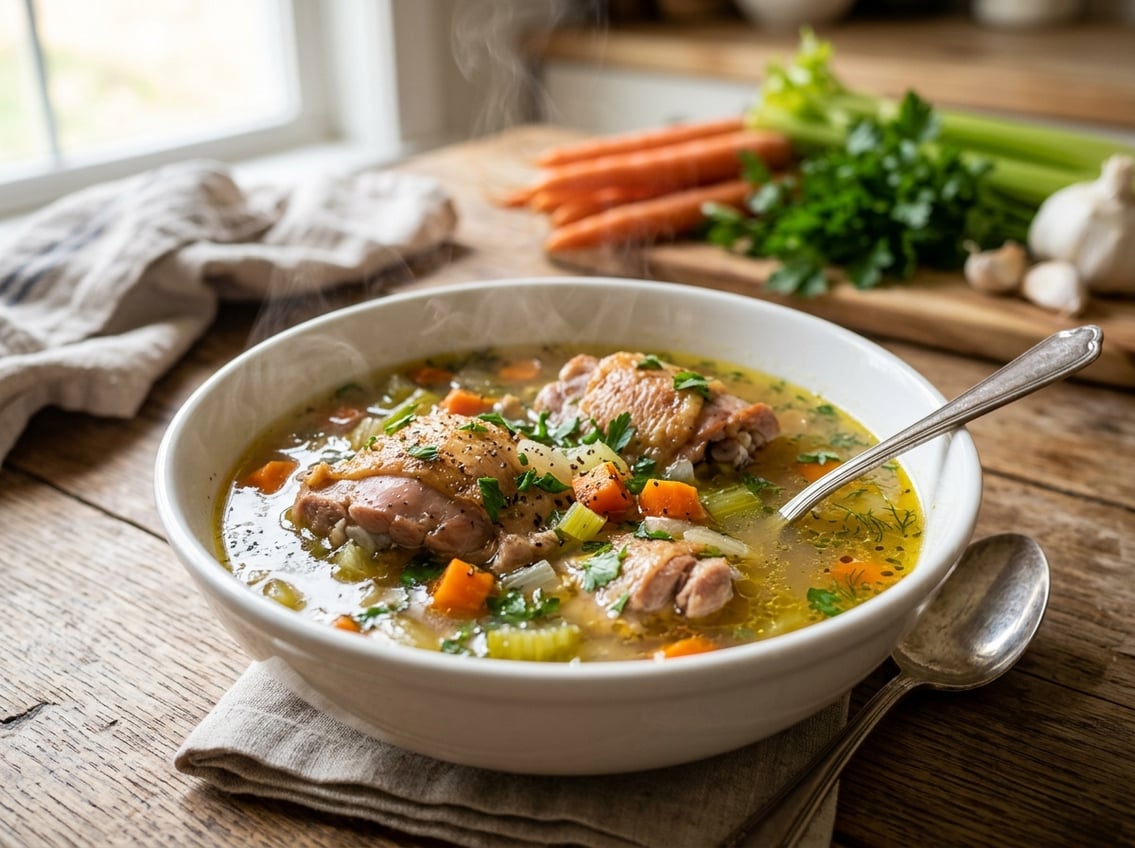
If you want a comforting, hearty bowl that holds up to long simmering, thighs deliver tender meat and savory depth. They pair well with noodles, vegetables, or orzo.
Advantages of Using Chicken Thighs in Soup
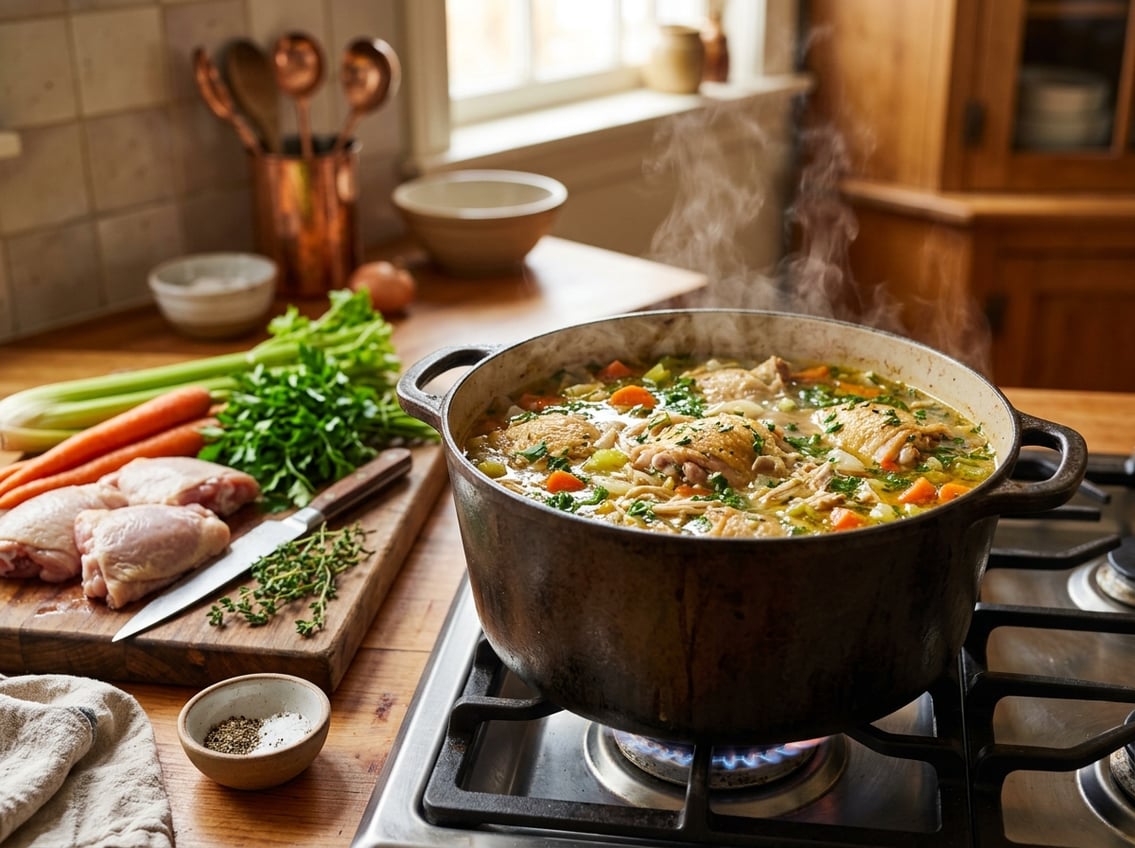
Chicken thighs bring deeper flavor and tender meat that shreds easily. The broth gains body from rendered fat and collagen.
They tend to cost less than breasts and provide nutrients that affect mouthfeel and satiety.
Flavor and Texture Gains
When you use chicken thighs, you get richer, more savory broth because their higher fat and connective tissue melt into the pot as you simmer. That rendered fat carries flavor and gives the liquid a silky mouthfeel.
Collagen converts to gelatin and produces a slightly gelatinous broth that clings to noodles or vegetables. The meat itself stays moist under longer cooking, so shredded chicken thighs remain tender.
If you brown skin-on thighs first, you add caramelized savory notes and extra depth to your chicken soup.
Cost-Effectiveness and Accessibility
Thighs usually cost less per pound than boneless chicken breasts. You can feed more people on the same budget.
You’ll often find both bone-in and boneless thighs at most supermarkets and butcher counters. This gives you options for convenience or maximum flavor.
Buying thighs frozen or in family packs increases savings. For weeknight cooking, boneless thighs cut prep time.
For richer stock, bone-in thighs give better return on flavor without added expense.
Nutritional Value Compared to Chicken Breasts
Thighs contain more fat and slightly more calories than chicken breasts. That extra fat includes monounsaturated and saturated fats and helps absorb fat-soluble vitamins from vegetables.
You’ll also get more iron and zinc per serving from thighs. If you want a lighter broth, use skinless thighs or skim fat after chilling.
Otherwise, the added fat contributes to a more satisfying comfort food experience while still supplying quality protein.
Choosing the Right Chicken Thighs for Soup
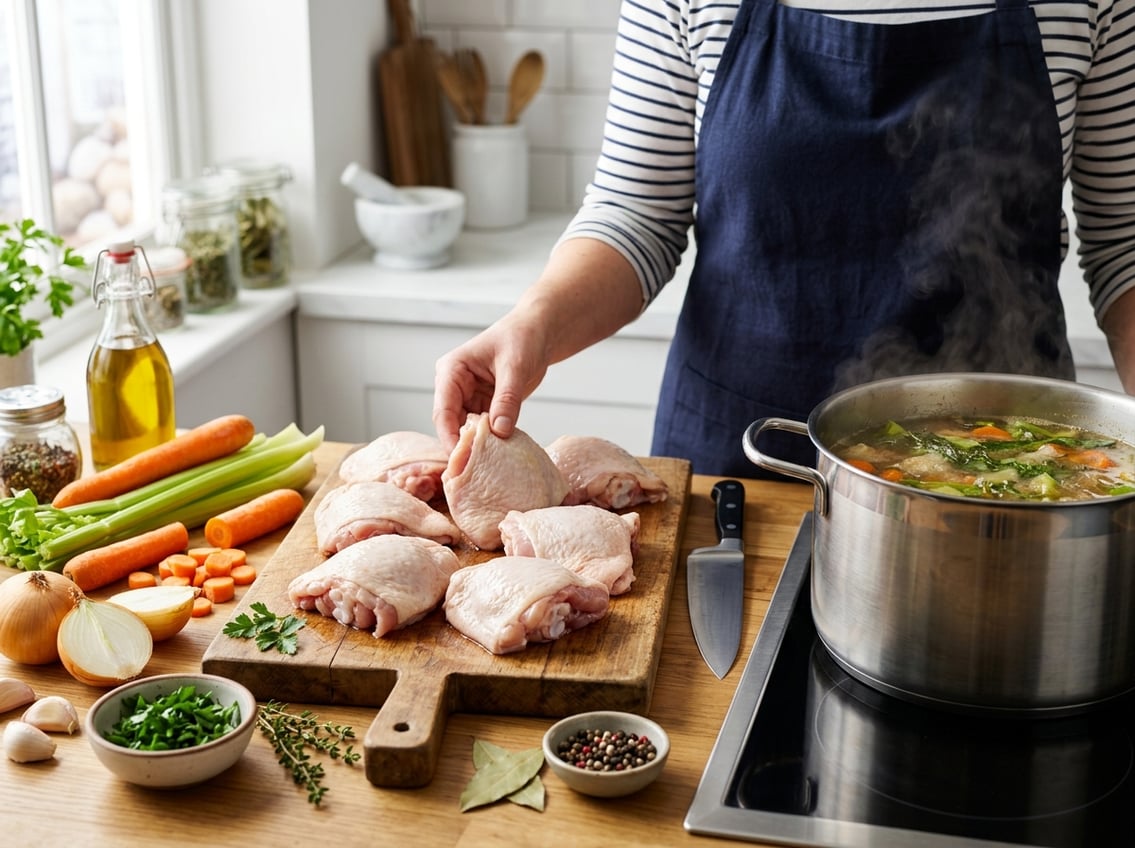
Pick thighs that match the depth of broth, cooking time, and final texture you want. Your choice will affect gelatin, cooking speed, and how much trimming or deboning you need.
Bone-In vs. Boneless Chicken Thighs
Bone-in chicken thighs add collagen and marrow to the pot. Collagen converts to gelatin during simmering and gives the broth body and a slightly silky mouthfeel.
Use bone-in if you plan to simmer 30–60 minutes and want a richer, more satisfying stock. Boneless chicken thighs cook faster and shred easily, so they suit quicker weekday soups or recipes where you want bite-sized pieces.
They won’t contribute much gelatin, so use low-sodium broth or combine with a bone-only stock if you still want depth. If you want both advantages, start with bone-in for stock, remove bones, then add boneless meat for texture.
Skin-On vs. Skinless Thighs
Skin-on chicken thighs render fat and brown well, which increases flavor and supplies fat for sautéing aromatics. Keep the skin if you like a richer, slightly glossy broth.
You can remove and discard it after browning if you prefer clarity but still want the flavor boost. Skinless thighs produce a cleaner, lower-fat broth and are easier to skim.
Choose skinless when you want a lighter soup or when you plan to cool and skim fat before reheating. For garnish or texture contrast, crisp the skin separately in the oven and serve on top.
Fresh and Frozen Varieties
Fresh chicken thighs give predictable searing and consistent cooking times. They’re preferable when you need reliable color development and plan to brown meat before simmering.
Frozen thighs work fine but thaw them before browning to avoid dilute, cloudy broth from excess water. If you must cook from frozen, partially thaw just enough to separate pieces and pat very dry, then adjust simmer time.
For best results, buy fresh or properly thawed bone-in skin-on thighs when you want maximum flavor extraction for your soup.
Preparing Chicken Thighs for Soup
Decide whether you’ll use bone-in or boneless and whether to keep the skin. Trim excess fat, brown the thighs to build flavor, and plan when to remove bones and shred.
Trimming, Searing, and Deboning
Trim visible fat and any ragged edges from boneless or bone-in thighs with a sharp knife. If you want a clearer broth, remove the skin before cooking.
Keep skin on if you prefer richer flavor and plan to skim fat later. Pat thighs dry to help them brown.
Heat a tablespoon of oil in a heavy pot over medium-high heat. Sear thighs 3–4 minutes per side until golden.
For bone-in thighs, sear with the bone side down last to render connective tissue. If using bone-in, simmer until the meat pulls from the bone, then transfer to a cutting board to cool slightly before deboning.
Use kitchen shears or a knife to remove bones. Reserve bones for stock if desired.
For boneless thighs, you can skip deboning and proceed to shredding after cooking.
When to Shred and Add to the Soup Pot
Shred cooked thighs off the heat to avoid dry, stringy meat. Let the meat rest 5–10 minutes after cooking.
Use two forks or your hands if cooled enough, pulling along the grain for even pieces. Add shredded chicken back to the pot near the end of simmering—typically the last 10–15 minutes—so it warms through and absorbs flavors without falling apart.
For soups with long simmer times or starch (rice, pasta), add shredded thighs after those ingredients are nearly done. If you prefer larger pieces, cut into chunks and add on the same timing.
Step-By-Step Chicken Thigh Soup Recipe
This recipe gives clear steps for making a flavorful chicken thigh soup. Learn how to build a rich broth, which vegetables and herbs pair best, how long to simmer and when to season, and simple ways to adjust thickness and texture.
Use bone-in thighs for depth, cook vegetables until tender, and finish with either noodles or a starch of your choice.
Building a Rich Chicken Broth
Start with 2–3 pounds of bone-in chicken thighs for a full-bodied broth. Place thighs in a large pot and cover with 10–12 cups cold water or a mix of half water and half low-sodium chicken stock.
Bring to a gentle simmer and avoid rolling boils which cloud the broth. Skim foam during the first 10–15 minutes to keep the liquid clear.
Add an onion quartered, 2 peeled carrots, 2 celery stalks, 4 crushed garlic cloves, and a bay leaf. Simmer uncovered for 45–60 minutes to extract gelatin and flavor from the bones.
Remove thighs, cool slightly, then shred meat and discard bones and skin unless you prefer extra fat. Strain the broth through a fine mesh sieve if you want a clearer, more gelatinous chicken broth.
Vegetable and Herb Combinations
Dice 2 carrots, 2 celery stalks, and 1 medium onion. Sauté these in 1–2 tablespoons olive oil until softened, about 5–7 minutes, before adding them back to the broth.
For herbs, combine 1–2 sprigs fresh thyme and a handful of chopped flat-leaf parsley. Add a bay leaf during simmering and remove before serving.
If you like brightness, squeeze 1 tablespoon lemon juice at the end or add 1–2 tablespoons chopped dill. For chicken noodle soup, add 6 ounces of egg noodles or 1 cup cooked rice in the final 8–10 minutes so they stay firm.
For heartier bowls, toss in diced potatoes or orzo. Adjust vegetables and herbs to taste, keeping stronger herbs like rosemary sparingly.
Tips for Simmering and Seasoning
Simmer gently and aim for small bubbles, not a boil. Gentle heat extracts more gelatin and keeps the shredded chicken tender.
Cook time after adding shredded meat is brief—5–10 minutes—just to meld flavors. Season in stages.
Start with 1–1½ teaspoons salt while simmering the bones, then taste and adjust after adding vegetables and starches. Use freshly ground black pepper and add salt incrementally to avoid over-salting.
If the broth tastes flat, a teaspoon of lemon juice or a splash of vinegar will lift it. If using store-bought stock, reduce added salt and simmer longer with bones or extra vegetables to build depth.
Keep noodles separate when storing leftovers to prevent sogginess.
Thickening and Texture Enhancements
To thicken without changing flavor, make a slurry of 1 tablespoon flour or cornstarch mixed with 2 tablespoons cold water. Whisk into simmering soup and cook 2–3 minutes until glossy.
For a silkier body, whisk 1 egg yolk with 1 tablespoon warm broth, temper it by adding hot broth slowly, then stir back into the pot off heat for a velvety finish. For a richer, slightly gelatinous broth, use more bone-in thighs and simmer longer, or add a few chicken feet if available.
You can also incorporate a tablespoon of butter or a splash of cream at the end for a smoother mouthfeel. If you prefer a stew-like texture, mash a portion of cooked potatoes or beans into the broth to thicken naturally.
Noodles and Serving Advice
Use noodles that hold texture. Cook them deliberately to avoid starchy broth.
Finish bowls with bright, simple garnishes to lift the rich flavor from chicken thighs.
Best Types of Noodles for Chicken Thigh Soup
Choose egg noodles, small pasta shapes, or short wheat noodles for a classic chicken noodle soup mouthfeel. Wide egg noodles (1/2–1 inch) give a silky, substantial bite that pairs well with the richer broth from thighs.
If you prefer firmer texture, choose ditalini, medium shells, or orzo; they trap broth and vegetables in each spoonful. Avoid very thin pastas (like angel hair) that turn mushy quickly.
Fresh egg noodles cook faster and stay tender; dried pasta is more durable for leftovers. If you plan to freeze portions, omit noodles or use hardy shapes like rotini and add cooked pasta later.
Why and How to Cook Noodles Separately
Cooking noodles separately prevents the broth from becoming cloudy and excessively starchy. Boil pasta in a large pot of salted water until just al dente, then drain and rinse briefly under hot water to remove surface starch.
This keeps the soup clear and the noodles from continuing to absorb liquid in the pot. Alternatively, cook pasta in the soup only if you’ll serve immediately and want the starch to slightly thicken the broth.
In that case, add pasta to a simmering pot late in the process and test often so it reaches al dente. For leftovers, always store cooked pasta apart from the soup to prevent sogginess.
Finishing Touches and Garnishes
Brighten the rich broth with acid and herbs. Add a squeeze of lemon or a splash of white wine vinegar to each bowl to cut through fat and enhance savory notes.
Fresh parsley, dill, or chives add color and aromatics. Scatter them over bowls just before serving.
For texture, offer crisp celery leaves, thinly sliced scallions, or a few toasted breadcrumbs. Season at the end with salt and freshly cracked black pepper.
If you want extra richness, stir in a pat of butter or a drizzle of good olive oil right before serving.
Storing and Freezing Chicken Thigh Soup
Keep cooked soup cool and use airtight containers. Label with date and contents so you can grab the right batch quickly.
Follow safe temperature and timing to avoid spoilage and preserve texture for reheating or freezing.
Storage Best Practices
Cool soup to room temperature no more than 2 hours after cooking, then refrigerate promptly. Transfer to shallow, airtight containers (1–2 inch depth) to speed chilling and keep the broth clear.
Store chicken thigh soup or chicken noodle soup in the fridge at 40°F (4°C) or below and use within 3–4 days for best safety and flavor. When reheating, heat to 165°F (74°C) throughout; stir and check temperature in several spots.
If your recipe contains noodles, consider storing noodles separately to prevent sogginess. Label containers with date and contents (e.g., “chicken thigh soup — 04/26/26”) so you rotate stock and avoid guessing.
Freezing Tips for Optimal Texture
Cool the soup completely before freezing. This step reduces ice crystals and helps maintain broth clarity.
Use freezer-safe containers or heavy-duty bags. Leave 1 to 1.5 inches of headspace for expansion.
Freeze portions sized for a single meal, about 1 to 2 cups. Smaller portions simplify thawing and limit repeated reheating.
Freeze broth and shredded chicken thighs together for chicken noodle soup. Store cooked noodles separately when possible.
Add noodles after thawing and reheating, as they keep better this way. Label containers with the date.
Freeze soup for up to 4 to 6 months. Thaw in the refrigerator overnight or use a cold-water bath for faster thawing.
Reheat gently to 165°F (74°C). Do not refreeze thawed soup to preserve quality.


