
How Long Can Chicken Thighs Stay in the Freezer: Storage, Safety, and Tips
Freezing chicken thighs preserves them for a long time, but quality declines over time. If you freeze raw chicken thighs at 0°F (-18°C) or lower, you get the best flavor and texture for about 6–9 months. Cooked chicken thighs maintain good quality for roughly 2–6 months.
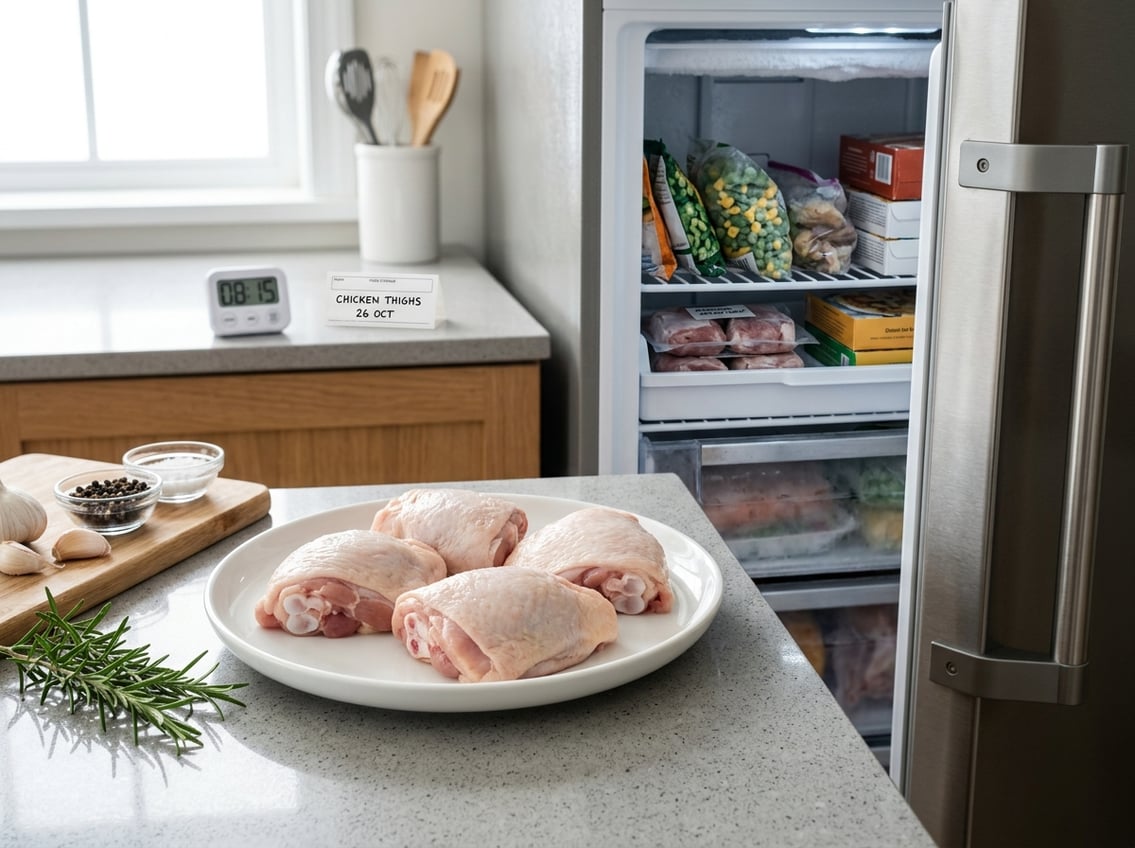
Packaging, freezer temperature, and portioning all affect storage timelines. Practical tips for freezing, thawing, and preventing freezer burn help you keep chicken thighs at their best.
Optimal Freezer Storage Time for Chicken Thighs
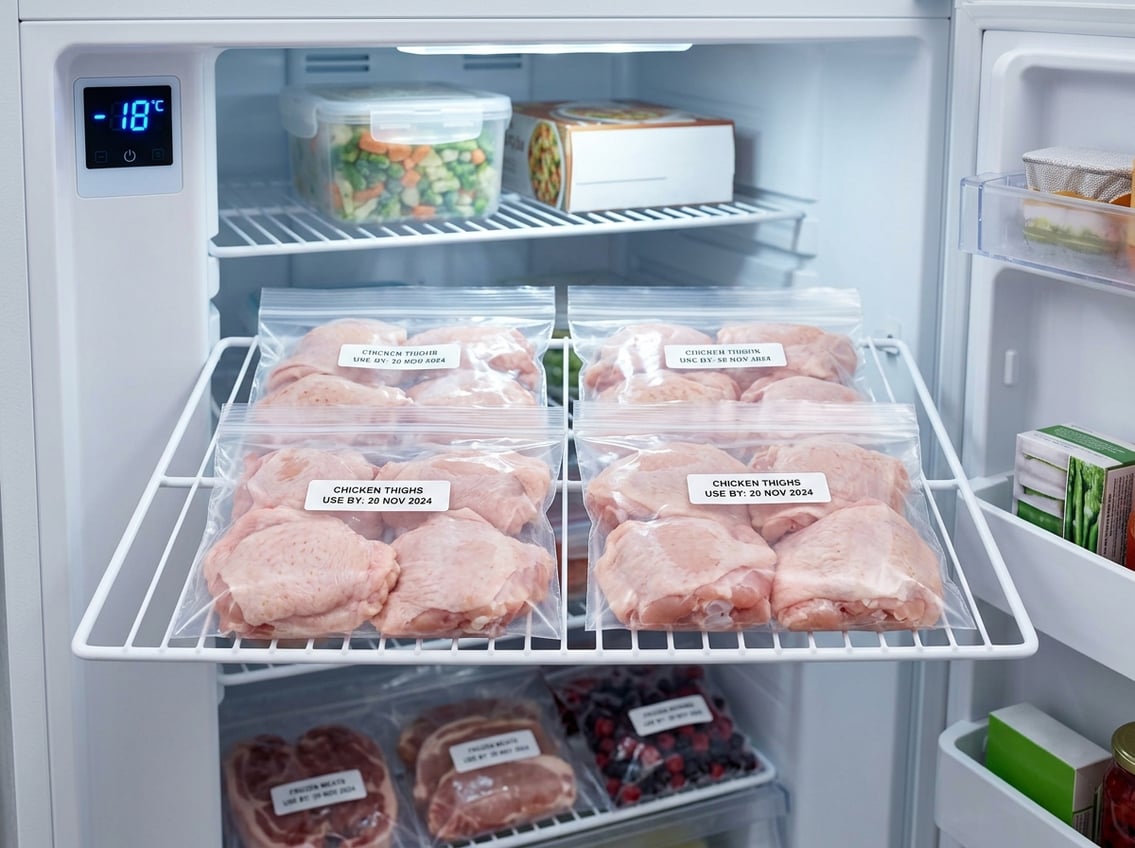
You can keep raw and cooked chicken thighs frozen for long periods, but quality and texture decline over time. Packaging and stable freezer temperatures influence how long thighs stay at peak quality.
Duration for Raw and Cooked Chicken Thighs
Raw chicken thighs stay safe indefinitely at 0°F (-18°C) or below, but for best quality, use them within 6–9 months. Vacuum-sealed or tightly wrapped thighs resist freezer burn and last closer to 9 months. If you use standard freezer bags with some air, plan on 6 months for optimal texture.
Cooked chicken thighs store well for shorter periods. Freeze cooked portions in airtight containers or heavy-duty freezer bags and use them within 2–4 months for best taste. Beyond 4 months, meat becomes drier and seasoning may fade, though food generally stays safe if frozen continuously.
Impacts of Freezer Temperature and Fluctuations
Set your freezer at 0°F (-18°C) or lower to maintain shelf life. Temperatures above this cause ice crystals to grow and speed up quality loss.
Frequent door openings, warm cycles from defrosting, or a crowded freezer that blocks airflow all cause temperature fluctuations. These fluctuations increase the risk of freezer burn, which dries and discolors the surface and ruins texture.
Use airtight wrap, remove excess air, and place newer packages behind older ones. Rotate stock to limit time near the door or in warm spots.
How Shelf Life Affects Taste and Texture
As freezer storage time increases, ice crystals damage cell structure, releasing moisture when thawed. You may notice meat that’s mushier or drier after cooking, or that sheds more liquid during thawing.
Packaging quality affects these outcomes. Vacuum sealing preserves texture and flavor best. Loose wrap invites freezer burn and leathery surfaces.
Label packages with freeze dates to use older items first and avoid eating thighs past their optimal freezer storage time.
Best Methods to Freeze Chicken Thighs
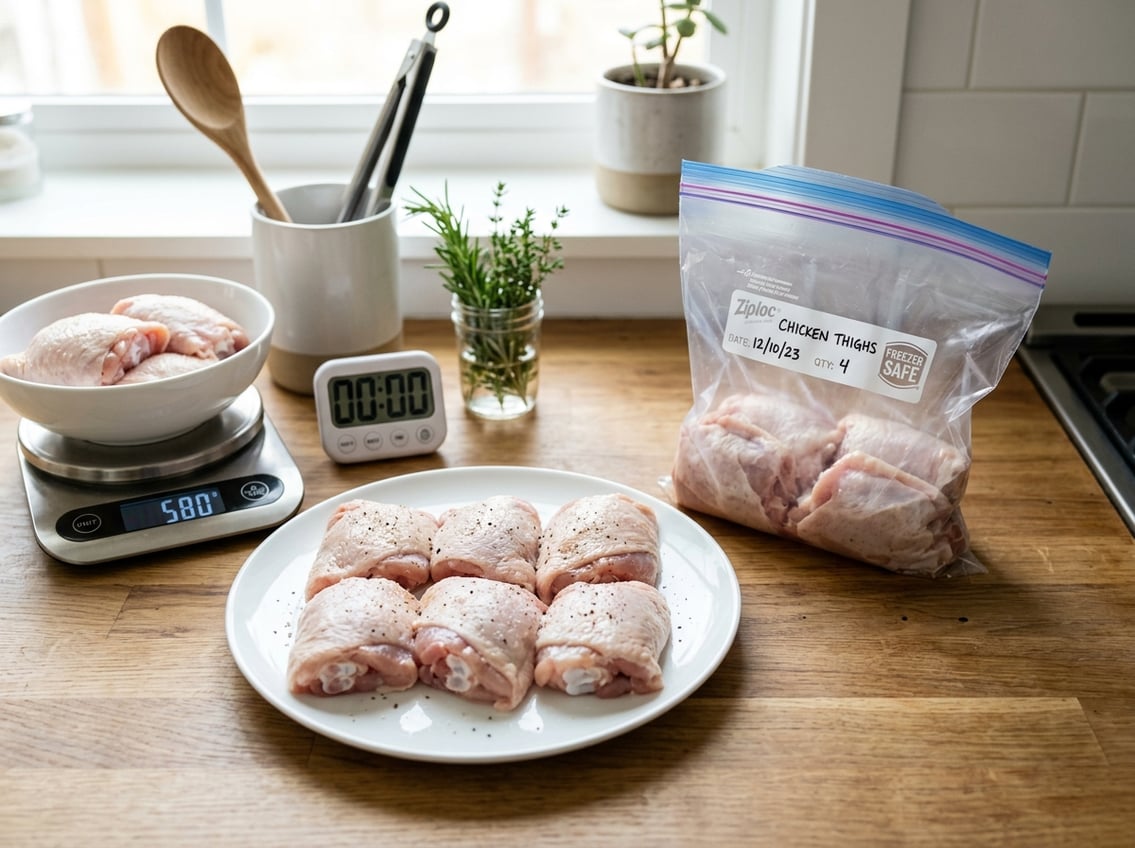
Follow simple steps to freeze thighs and retain texture and flavor. Use airtight packaging, portion to meals, and label with dates to prevent freezer burn and speed thawing.
Step-by-Step Freezing Instructions
Start with fresh or fully cooled cooked thighs. Pat them dry with paper towels to remove surface moisture.
For individual pieces, arrange thighs in a single layer on a rimmed baking sheet. Flash-freeze for 2–4 hours until solid, then transfer to storage. This prevents the pieces from freezing together.
If you skip flash-freezing, double-wrap each thigh. Use plastic wrap or freezer paper first, then place in a heavy-duty freezer bag or airtight container. Squeeze out as much air as possible before sealing.
For cooked chicken thighs, cool completely in the fridge. Portion into meal-sized amounts and remove excess gravy or sauce before sealing.
Recommended Packaging and Containers
Use vacuum-sealed bags for the best protection against freezer burn. Vacuum sealing removes air and extends quality.
If you don’t have a vacuum sealer, choose heavy-duty freezer bags with a one-way valve or press-seal closure. Press flat to expel air, then seal and store flat.
Airtight rigid containers work well for shredded or sauced cooked thighs. Leave a small headspace for liquids to expand and use freezer-safe plastic or glass.
Avoid thin grocery bags or loosely wrapped foil. Double-wrapping with plastic wrap and foil or a bag adds a reliable barrier.
Importance of Labeling and Portioning
Portion chicken thighs into servings you’ll cook at once. Thawing only what you need reduces waste and keeps quality high.
Label every package with the date and contents using a permanent marker. Include whether the thighs are raw or cooked, and any marinade or sauce.
Rotate older packages to the front of the freezer. Aim to use raw thighs within 3–4 months for best taste. Vacuum-sealed packages may last longer but still decline in quality.
If you marinate before freezing, note the marinade on the label for easy meal planning.
How to Prevent Freezer Burn and Maintain Quality
Freezer burn shows as dry, grayish-brown patches and can make meat taste bland. Keep air away and control moisture to protect texture and flavor.
Use tight packaging, remove excess air, and label packages with dates to use older items first.
Recognizing Freezer Burn and Discoloration
Freezer burn appears as pale, dry spots or leathery patches on the surface of chicken thighs. These areas result from ice turning to vapor and are not harmful, but they change texture and flavor.
Look for color shifts. Flesh that has turned grayish-brown or has white ice crystals often indicates moisture loss and surface dehydration.
Smell the chicken after thawing. An off or sour odor suggests spoilage and you should discard it.
If only small spots show freezer burn, trim those areas before cooking.
Tips for Superior Protection
Use heavy-duty freezer bags or vacuum sealing to minimize air exposure. Squeeze out excess air when using bags and press flat to freeze quickly.
Wrap thighs individually or in meal-sized portions so you only thaw what you need. Label each package with the cut and freeze date.
Freeze at 0°F (-18°C) or lower and keep the freezer full enough to maintain cold temperature. Group packages together if the freezer is half-empty.
How to Avoid Moisture Loss
Pat thighs dry before seasoning, then wrap immediately to prevent surface moisture from turning to ice. Use a layer system: first cling film or butcher paper, then an airtight container or heavy-duty freezer bag.
Avoid stacking warm packages. Spread pieces in a single layer until solid to freeze rapidly and reduce large ice crystals.
If you must refreeze thawed chicken, do so only if it stayed refrigerated and shows no signs of spoilage. Repeated thawing and refreezing increases moisture loss and discoloration.
Safe Thawing Methods for Frozen Chicken Thighs
You have three safe, USDA-recommended ways to thaw chicken thighs. Follow specific timing, packaging, and handling details for each method to keep your chicken safe and maintain quality.
Refrigerator Thawing Basics
Place frozen chicken thighs in their original packaging or a sealed leakproof bag before refrigerating. Put the package on a plate or shallow pan on the refrigerator’s bottom shelf to catch any drips.
Plan for about 24 hours of thawing per pound. A typical package of thighs (1–2 pounds) usually finishes in 24 hours. Larger packs may need 36–48 hours.
Once thawed in the refrigerator, cook within 1–2 days. You can refreeze refrigerator-thawed chicken, though quality may decline.
Cold Water Thawing Process
Use this method when you need chicken thawed faster than the fridge allows. Keep the chicken sealed in a leakproof bag and fully submerge it in cold tap water in a bowl or sink.
Change the water every 30 minutes so it stays cold. Expect about 1–2 hours for small packs or individual thighs and 2–3 hours for larger packs.
Cook the chicken immediately after thawing by this method. Do not return it to the fridge unfrozen.
How to Thaw in the Microwave
Remove all packaging and place thighs in a microwave-safe dish to catch juices. Use the microwave’s defrost function or 20–30% power and follow the manufacturer’s time guidelines.
Microwave thawing can partially cook edges, so rotate or flip pieces during defrosting. Cook chicken immediately after microwave thawing because parts may enter the 40–140°F “danger zone” where bacteria can multiply.
Steps to Thaw Chicken Thighs Safely
Keep chicken sealed, avoid room-temperature thawing, and prevent cross-contamination by using trays and cleaning surfaces. Handle thawed juices carefully and wash hands, cutting boards, and utensils with hot, soapy water after contact.
If you thaw in cold water or the microwave and cannot cook immediately, either cook thoroughly before refreezing or avoid refreezing. Use a food thermometer to confirm cooked thighs reach 165°F (74°C) before serving.
Identifying Spoilage and When to Discard Chicken Thighs
Check the meat’s smell, color, and feel right after thawing. Strong sour or ammonia-like odors, greenish or gray patches, or a slimy coating mean you should discard the thighs immediately.
Main Signs of Spoilage After Thawing
Look for three indicators: odor, color change, and texture. If the chicken gives off a sour, rotten, or ammonia-like smell, throw it out. Fresh or properly frozen chicken has little to no odor.
Discoloration such as green, blue, or gray patches signals chemical or bacterial breakdown. Pale pink or slightly brown edges can be normal after freezing, but greenish or gray tones are not.
Check packaging too. Unexpected thaw marks, excessive liquid, or broken seals could mean contamination or freezer-thaw cycles. Discard if packaging was compromised or if you’re unsure.
Texture and Odor Issues
A slimy, sticky, or tacky surface after thawing signals bacterial growth and calls for disposal. Wipe the meat with a paper towel only to inspect; persistent slime that doesn’t come off is spoilage.
Odor matters more than texture alone. A strong sour, rotten, or chemical smell means unsafe chicken.
Avoid rinsing raw chicken to mask smells. Rinsing spreads bacteria. If either texture or odor suggests spoilage, don’t cook it.
Safety Considerations with Bacterial Risks
Spoiled chicken can harbor pathogens such as Salmonella and Campylobacter, which cause foodborne illness. These bacteria multiply quickly when meat is stored improperly, and some strains produce heat-stable toxins.
Even if cooked to 165°F (74°C), meat with heavy contamination or toxins may still be unsafe. Discard any surfaces, utensils, or packaging that contacted spoiled chicken and sanitize thoroughly.
When in doubt, throw it out. Correct freezing, prompt thawing in the refrigerator, and checking for the signs above reduce your risk.
Refreezing Chicken Thighs
You can refreeze chicken thighs in certain situations without a safety hazard, but you must control temperature and time. Improper thawing, leaving meat at room temperature, or partial cooking changes when and how you can refreeze.
Guidelines for Refreezing Safely
Only refreeze chicken thighs that stayed at refrigerator temperature (40°F / 4°C or below) the entire time after thawing. If you thawed the thighs in the fridge and they have been held for less than 1–2 days, you can return them to the freezer in their original packaging or in an airtight freezer bag.
Do not refreeze thighs thawed in cold water or the microwave unless you cook them first. Those methods can allow surface warming or partial cooking, which requires immediate cooking before freezing.
Label packages with the date you refroze them and use within recommended freezer storage times (raw: about 9 months for quality; cooked: 2–6 months for best texture). Always freeze in portions you will use at one time to avoid repeated thaw and refreeze cycles.
Risks of Repeated Freezing and Thawing
Each freeze and thaw cycle damages muscle fibers and causes moisture loss. Repeatedly refreezing chicken thighs reduces juiciness and texture.
You can expect drier meat and an increased risk of freezer burn. Multiple cycles also cause loss of flavor.
The main safety risk comes from time spent above 40°F. If the meat stays at room temperature for more than two hours, or one hour above 90°F, bacteria can multiply to unsafe levels.
Freezing stops bacterial growth but does not kill existing pathogens. Refreezing contaminated thighs does not make them safe.
Thaw only the amount you plan to cook. If you must refreeze, do so only once when the meat has stayed within safe temperature limits.
Best Practices for Refreezing Cooked and Raw Chicken
Keep raw chicken thighs sealed, remove excess air, and freeze them flat so they freeze quickly and evenly.
Use heavy-duty freezer bags or vacuum sealing to reduce freezer burn. Label with the refreeze date.
Cool cooked chicken thighs to refrigerator temperature within two hours. Store them in shallow airtight containers and freeze within 3–4 days of refrigeration.
Cooked thighs lose some moisture when refrozen. Reheat gently to help preserve texture.
If you thawed raw thighs outside safe conditions, cook them fully to an internal temperature of 165°F (74°C). You can then freeze the cooked product for later use.


