
Can You Boil Chicken Breast From Frozen? Safe Guide
Can you boil chicken breast from frozen? Yes, you can, and it can be a safe, practical way to get dinner on the table when you forgot to thaw it.
The key is to cook it all the way through, use gentle heat, and check the thickest part for 165°F.
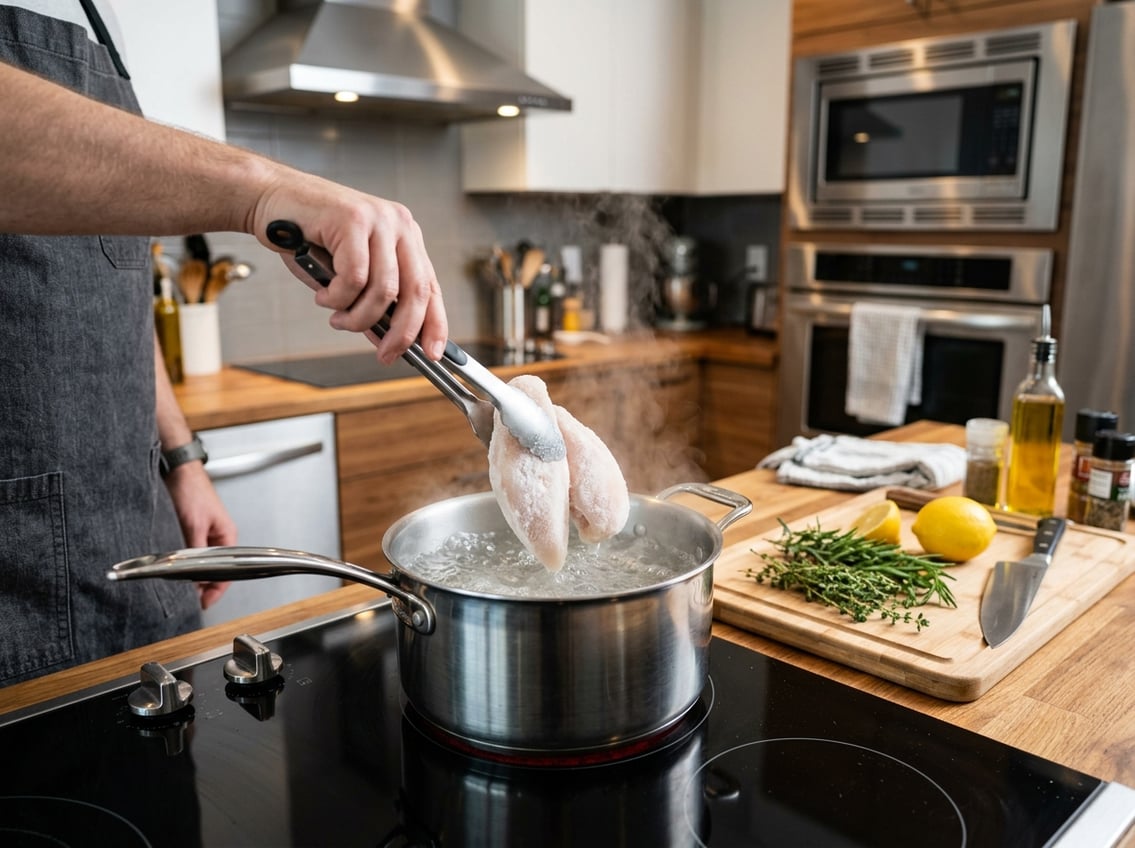
If you boil frozen chicken breast the right way, you can make safe, tender chicken without thawing first, as long as you cook it to 165°F and avoid a hard boil.
Boiling works well for shredded chicken, soups, salads, and meal prep, especially when time is short.
You should still know when this method makes sense and when another cooking method gives you better texture.
Is It Safe and When Does It Make Sense?
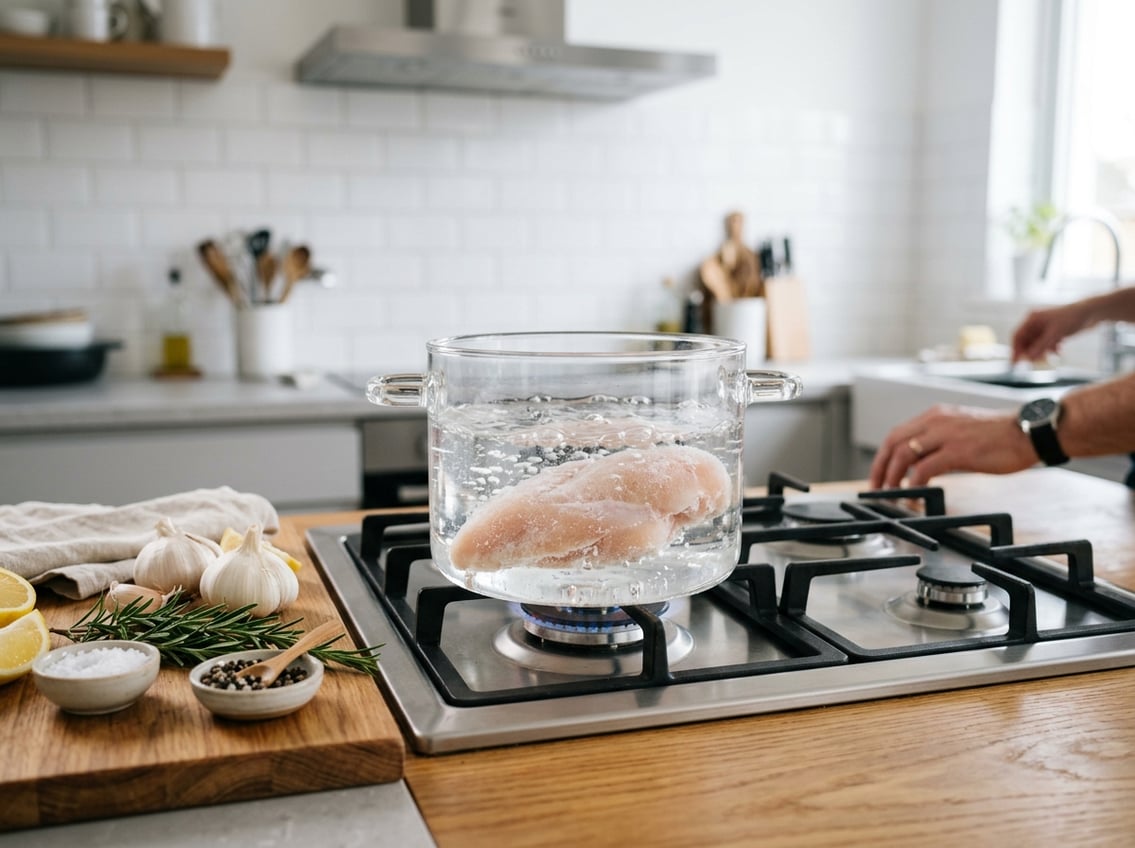
You can boil frozen chicken safely when you cook it properly and verify that the center reaches 165°F.
The real food safety issue is not the frozen state, it is whether the chicken stays at a safe temperature long enough to kill harmful bacteria.
The chicken must be cooked through, the liquid should not stay at a weak lukewarm temperature for long, and you should use a thermometer instead of guessing.
A reliable overview from Chef’s Resource also notes that boiling frozen chicken is safe when done correctly, though it is not the best method for texture.
What Food Safety Rules Matter Most
You need to keep the chicken moving toward a safe internal temperature and avoid partial cooking.
The thickest part should reach 165°F, which is the standard safe temperature for poultry in the U.S.
Do not rely on color alone.
Frozen chicken can look done on the outside while the center is still undercooked.
When Cooking From Frozen Is Better Than Waiting to Thaw
Boiling chicken from frozen makes sense when you need a fast meal, you forgot to thaw dinner, or you want easy shredded chicken for several dishes.
It also helps when you want to skip the long thawing window in the fridge.
If you need plain cooked chicken for wraps, soups, or tacos, this method is a good fit.
It can also work well when you plan to slice or shred the meat after cooking.
When This Method Is Not the Best Choice
Skip this method if you want browned skin, crisp edges, or a roasted flavor.
A stove pot gives you tender chicken, not a finished seared texture.
It is also a weaker choice for very thick breasts when you want the most even texture.
In that case, thaw frozen chicken first or use a method that gives you more control.
How to Cook It Properly on the Stove
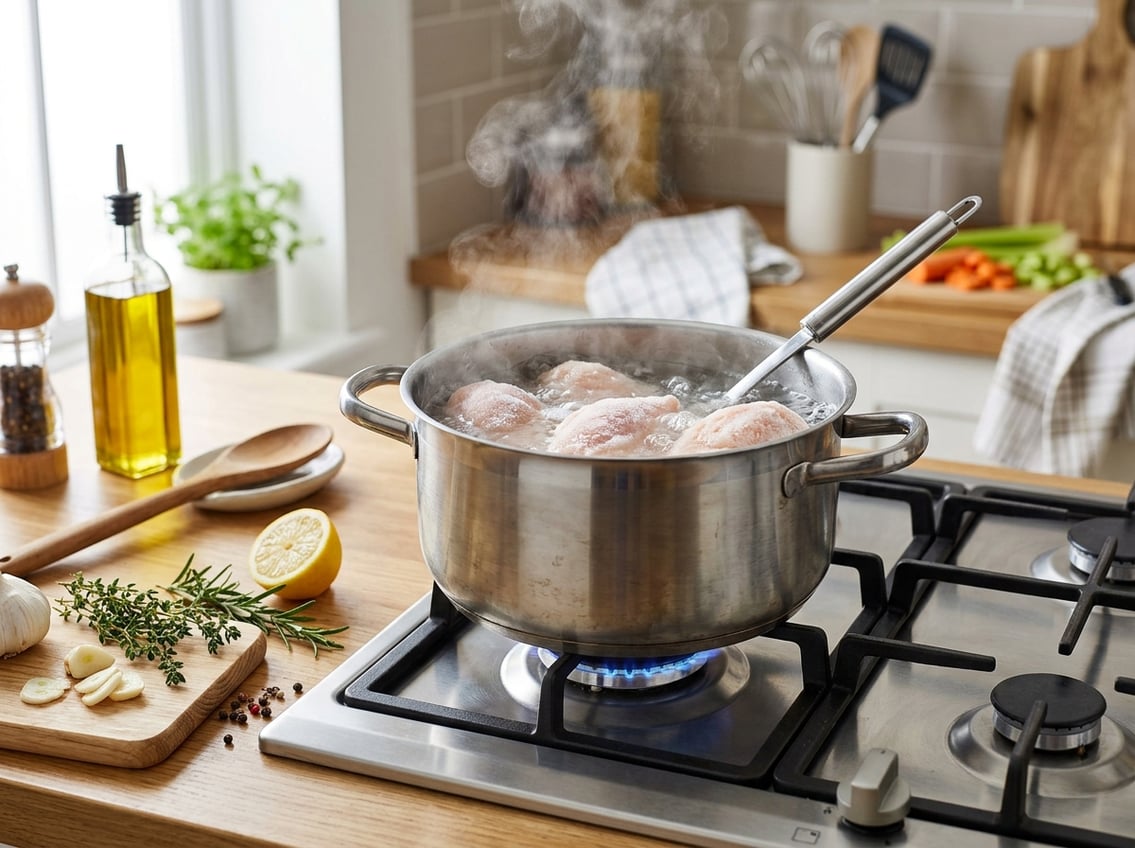
Keep the heat moderate and the liquid at a gentle simmer when you boil frozen chicken.
A hard boil can make the outside tough before the inside is fully cooked, especially with a boil frozen chicken breast recipe.
You can use water alone or add seasoning and broth for more flavor.
A well-seasoned pot gives you more usable boiled frozen chicken for salads, sandwiches, and meal prep.
How to Boil Frozen Chicken Breast Step by Step
- Put the frozen chicken breast in a pot and remove all packaging.
- Cover it with water by about 1 inch.
- Add salt, pepper, onion, garlic powder, herbs, or chicken broth if you want more flavor.
- Bring the liquid to a boil over medium heat.
- Lower the heat and keep it at a gentle simmer.
- Cook until the thickest part reaches 165°F.
- Remove the chicken and let it rest a few minutes before slicing, shredding, or dicing.
For a practical stove-top method, Country Living recommends water, stock, or a mix of both, plus herbs and seasoning for better flavor.
Why a Gentle Simmer Works Better Than a Hard Boil
A hard boil can make chicken breast stringy and dry.
A gentle simmer cooks the meat more evenly and helps it stay tender.
This matters even more with boiling frozen chicken breast, because the outside thaws first while the inside warms more slowly.
Lower heat gives the whole piece time to cook at the same pace.
Using Water vs. Chicken Broth for More Flavor
Water gives you a clean base, especially if you want to use the chicken in another recipe later.
Chicken broth adds flavor to the meat and gives you a useful cooking liquid for soup or rice.
If you want the boiled frozen chicken to taste less plain, broth is the better choice.
If you want flexibility, water works fine as long as you season it well.
How Long It Takes and How to Tell It Is Done
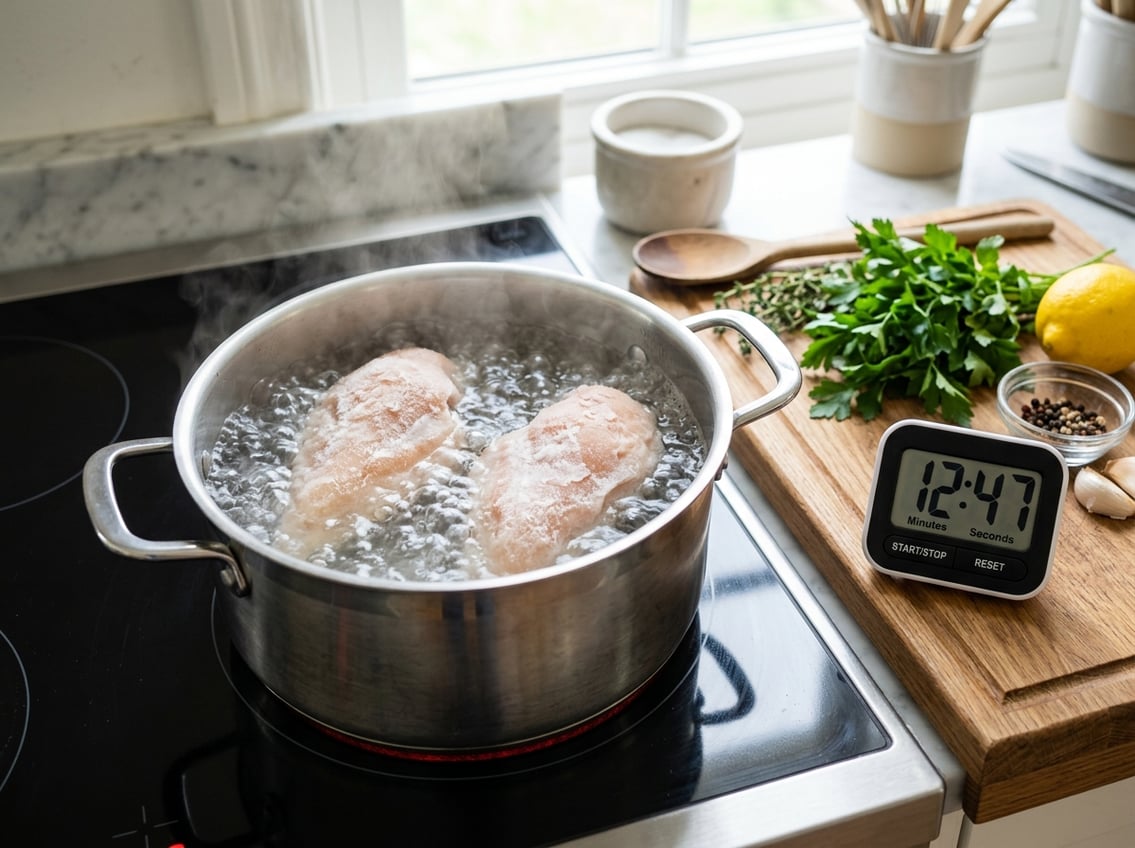
How long to boil frozen chicken depends on thickness, size, and how many pieces are in the pot.
Thin pieces finish faster, while thick or crowded pieces need more time.
A reliable estimate is to plan for about 50% more time than thawed chicken.
For frozen boneless skinless chicken breasts, that often lands in the 15 to 20 minute range, though thicker pieces can take longer.
Timing for Frozen Boneless Skinless Chicken Breasts
For most frozen boneless skinless chicken breasts, start checking at 15 minutes.
Many will finish in 15 to 20 minutes, especially if they are not very thick.
If you are cooking several pieces at once, add time and test each piece separately.
The biggest breast in the pot controls the real cook time.
How Thickness and Quantity Affect Cook Time
A thick frozen chicken breast takes longer because the center starts colder and heats more slowly.
A very full pot also slows the process because the water temperature drops each time you add more chicken.
If you are boiling frozen chicken breasts that are large or uneven, expect extra minutes.
The safest approach is to check early and keep cooking only as needed.
Checking for 165°F Without Guesswork
Use a food thermometer in the thickest part of the breast.
The chicken is done when it reaches 165°F, not when the juices run clear or the outside looks opaque.
If you do not have a thermometer, cut into the thickest part and look for no pink center, but that is only a backup check.
A thermometer gives you the most reliable result, especially when you boil frozen chicken breasts from the start.
Best Results, Common Mistakes, and Storage
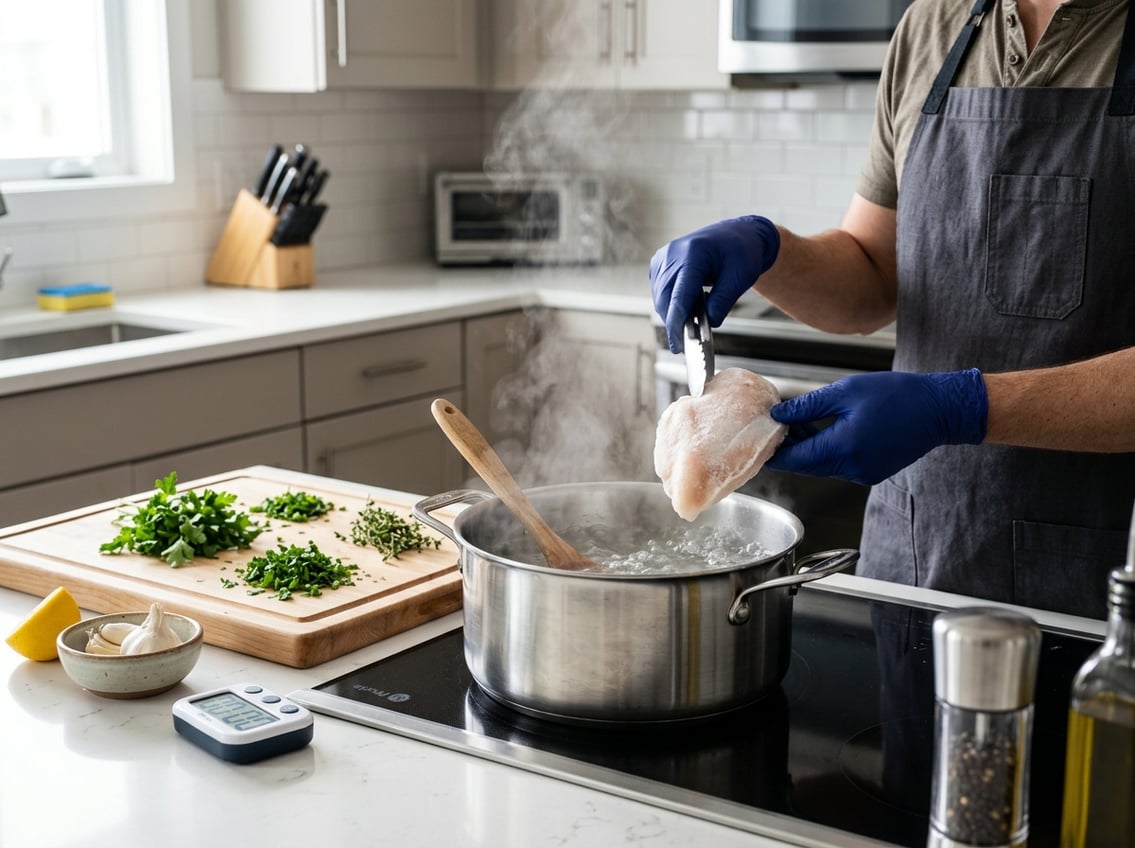
You can get tender, useful boiled frozen chicken, especially for shredded recipes.
The best results come from steady heat, enough seasoning, and careful timing.
You also need to avoid overcooking.
Chicken breast dries out fast once it passes done, so a few extra minutes can change the texture a lot.
How to Keep the Meat Tender and Juicy
Use a gentle simmer, not a rolling boil.
Add enough liquid to cover the chicken, and season the liquid so the meat does not taste flat.
Let the chicken rest for a few minutes after cooking.
That short pause helps the juices settle before you slice or shred it.
Mistakes That Cause Rubbery or Bland Chicken
A few common errors cause problems:
- Boiling too hard
- Leaving the chicken in the pot too long
- Skipping salt or broth
- Using pieces that are much thicker than others without adjusting time
- Cutting into the chicken before it rests
If you want a better flavor base, a simple broth helps more than plain water.
A helpful boiled frozen chicken guide from Chicken Vibes also notes that overcooking can make the meat tough and dry.
How to Shred, Store, and Reuse Cooked Chicken
Let the chicken cool slightly. Shred it with two forks or chop it into cubes.
Use the chicken in soups, tacos, wraps, pasta, or chicken salad.
Place cooked chicken in an airtight container and store it in the fridge for up to 3 days. Freeze it for later use if needed.
Thaw frozen chicken in the fridge before reheating. Do not refreeze chicken after reheating.


