
Can I Boil Chicken Breast From Frozen? Safe Timing Guide
You can boil chicken breast from frozen if you keep the heat gentle and check the internal temperature.
Simmer frozen chicken instead of boiling it hard so the outside does not overcook before the center is done.
If you want tender chicken for shredding, slicing, or dicing, boil chicken from frozen as long as it reaches 165°F in the thickest part.
This makes boiling frozen chicken a practical backup method when you forgot to thaw dinner.
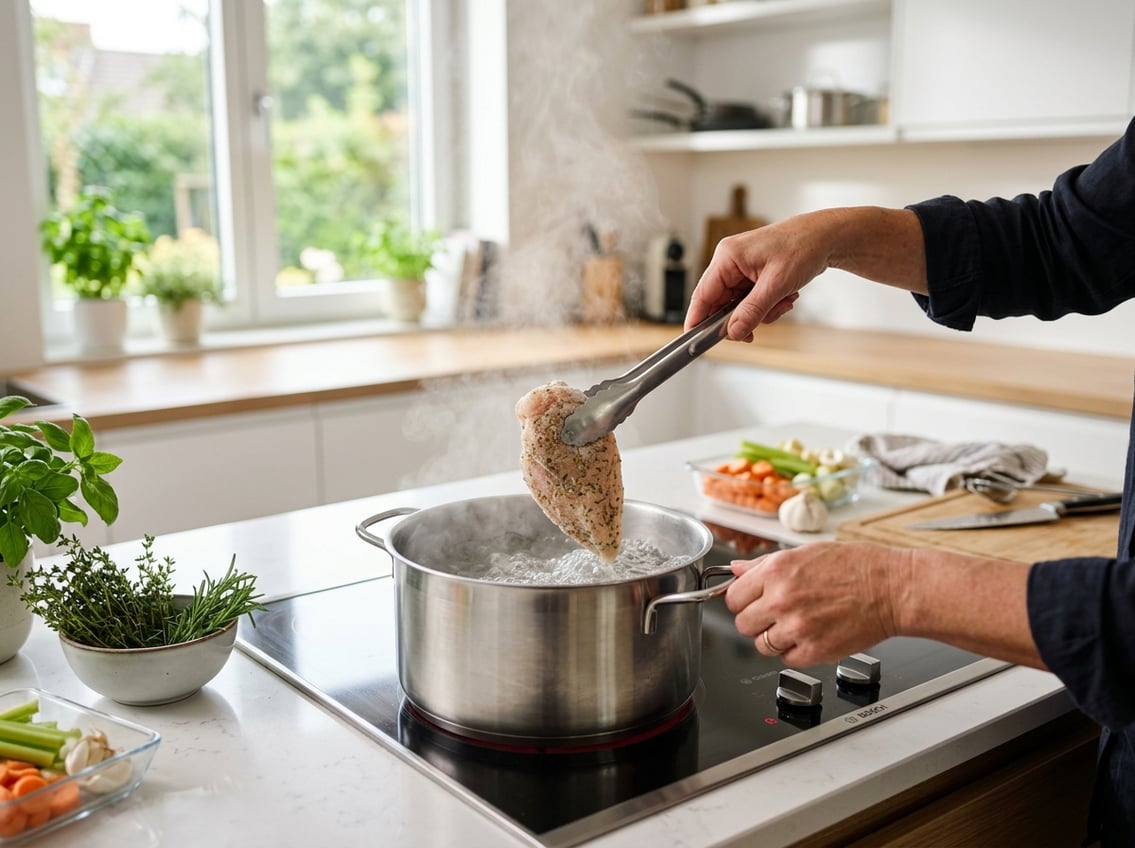
This method works best for plain chicken breast and simple meal prep.
It does not work as well if you want browned skin or crisp edges, since boiling gives a softer texture.
Is It Safe and When Does It Make Sense?
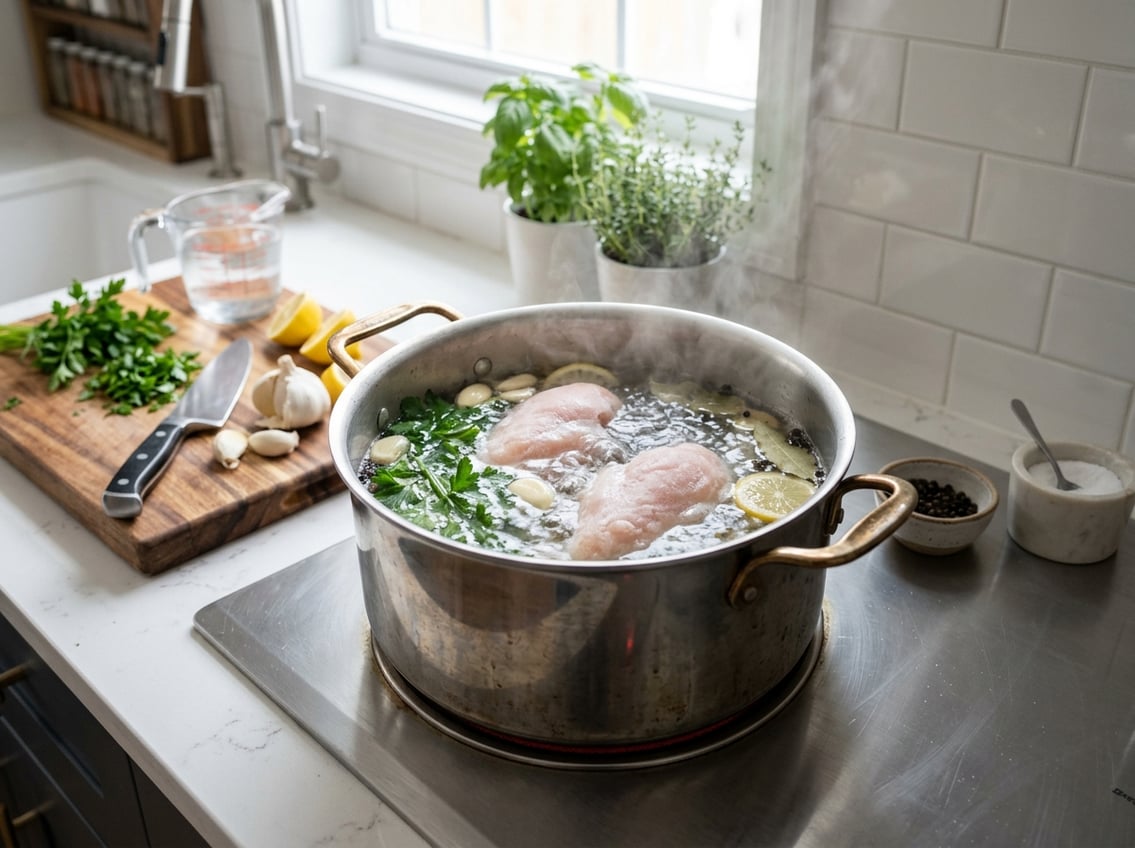
You can boil frozen chicken safely if you cook it all the way through.
Check that the internal temperature reaches 165°F at the thickest part, which matches the USDA standard for poultry.
Boiling frozen chicken works well when you need cooked chicken for soup, sandwiches, salads, wraps, or meal prep and do not have time to thaw.
It is also useful when you want mild, plain meat that you can season later.
USDA Doneness and Internal Temperature
Use a meat thermometer to check doneness.
According to USDA food safety guidance, chicken is done at 165°F.
If you do not check the center, you might serve chicken that is still undercooked inside.
Why Simmering Works Better Than a Rolling Boil
A rolling boil makes the outside tough before the inside finishes.
A gentle simmer gives the heat more time to move evenly through the meat, which helps the chicken stay more tender.
Best Uses for Tender Poached Chicken
Use this method for chicken breast you plan to shred for tacos, chop for chicken salad, or slice for grain bowls.
It also works when you want plain, moist chicken breast that takes on sauce later.
If you want crispy skin or a roasted flavor, use another cooking method.
How to Cook It Step by Step
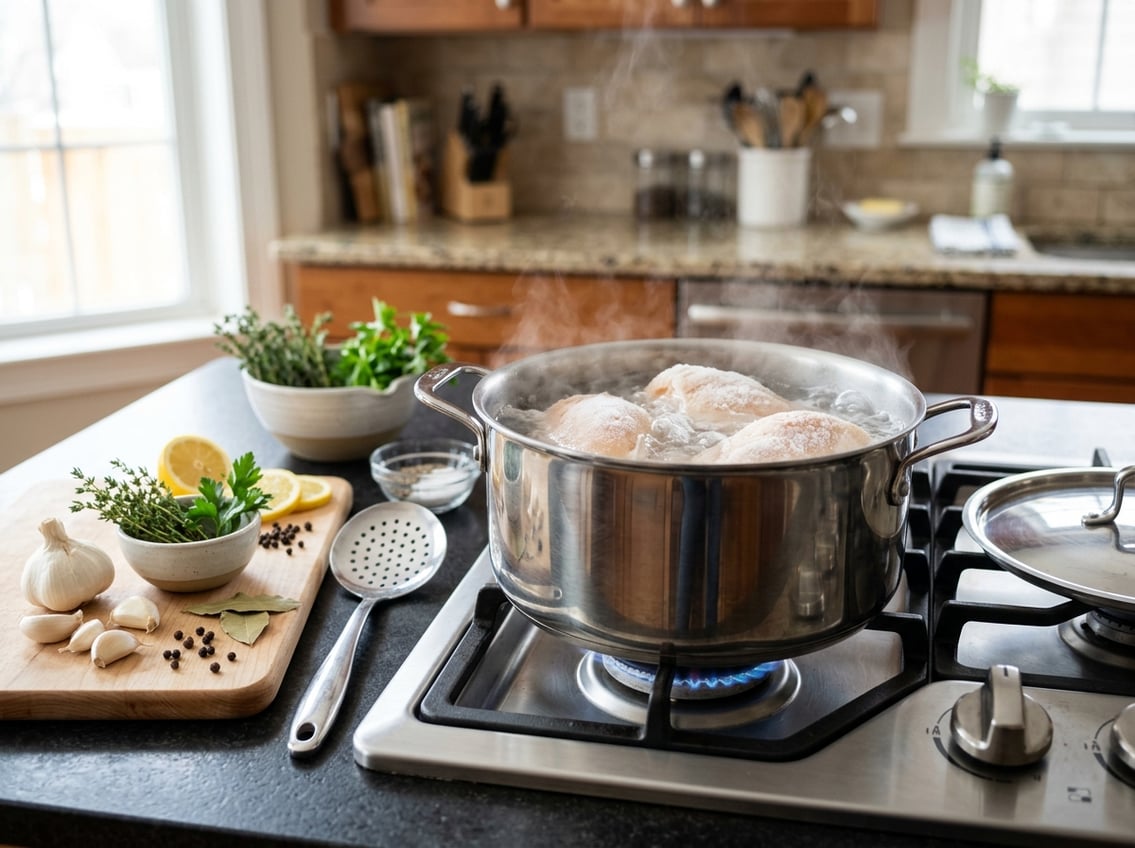
Boiling frozen chicken is simple, but small details matter.
Use enough liquid, mild seasoning, and steady heat so the chicken cooks through without turning stringy.
What to Use: Pot, Water or Broth, and Seasonings
Choose a pot that holds the chicken in a single layer if possible.
Water works fine, and broth adds more flavor.
For frozen boneless skinless chicken breasts, season with salt, pepper, garlic powder, onion, thyme, or a bouillon cube.
How to Boil Frozen Chicken Breast Evenly
Place the frozen chicken breast in the pot and cover with water or broth by about 1 inch.
Bring the liquid up to a boil, then lower it to a simmer.
Keep the lid partly on so the temperature stays steady.
Do not crowd the pot.
If the pieces overlap too much, the center takes longer to heat.
How to Tell When It Is Done Without Guessing
Check for 165°F in the thickest part with a thermometer.
If you do not have a thermometer, cut into the thickest area and look for meat that is opaque all the way through with no pink center.
The juices should run clear, and the meat should pull apart easily.
Timing by Size, Cut, and End Use
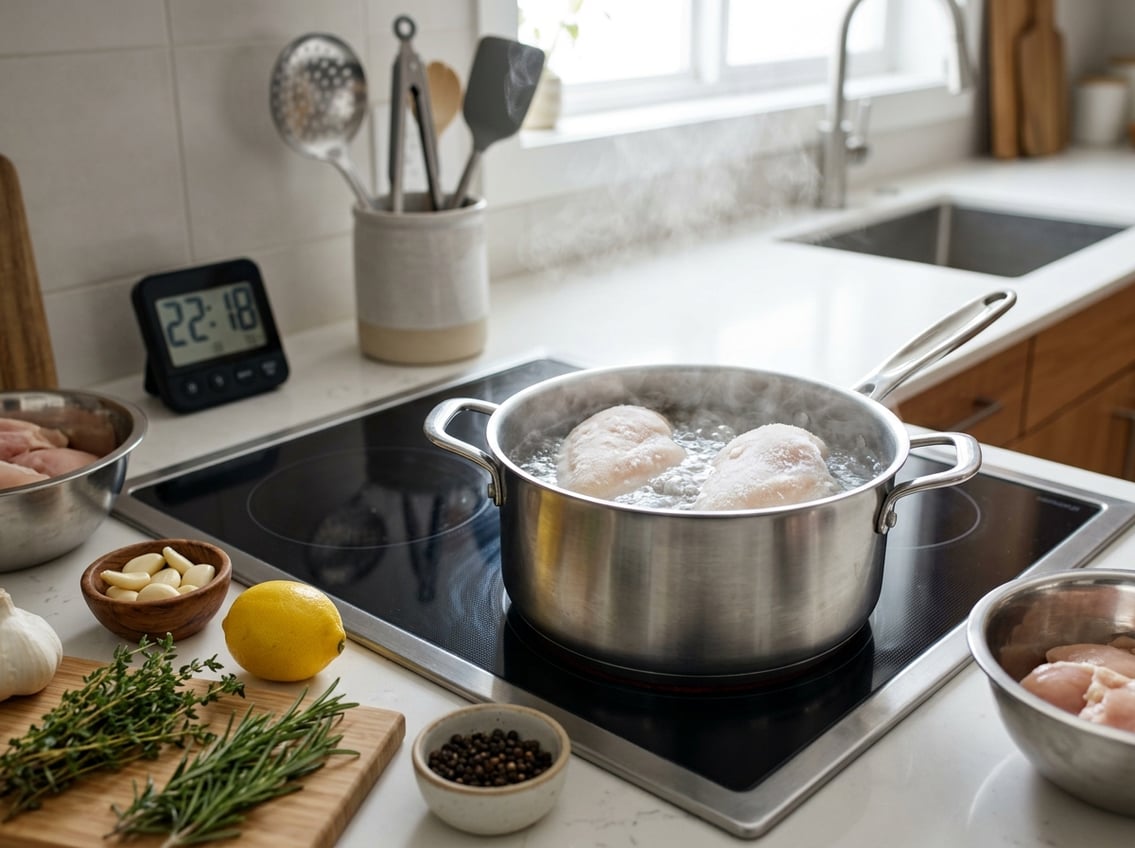
How long you boil frozen chicken depends on size, thickness, and whether the chicken is boneless or bone-in.
Frozen boneless skinless chicken breasts usually cook faster than thicker or bone-in pieces.
Batch size also changes the timing because more cold chicken lowers the temperature of the water.
Boneless vs. Bone-In Timing Differences
Boneless pieces usually take about 15 to 20 minutes once the liquid is at a steady simmer.
Bone-in chicken breasts take longer, often 20 to 25 minutes or more, depending on size.
As noted in a frozen chicken breast guide, thickness and cut make a real difference.
How Long for Shredding, Slicing, or Cubing
If you want chicken for shredding, start checking near the lower end of the time range.
Smaller pieces become tender sooner and are easier to pull apart.
For slicing or cubing, cook just until the center reaches 165°F so the meat stays moist.
What Changes With Larger Batches
A larger pot of frozen boneless skinless chicken breasts cools the liquid more at the start.
That can add several minutes.
Keep the simmer steady, and give the pieces space so the heat can move around each one.
Common Mistakes, Storage, and Leftover Broth
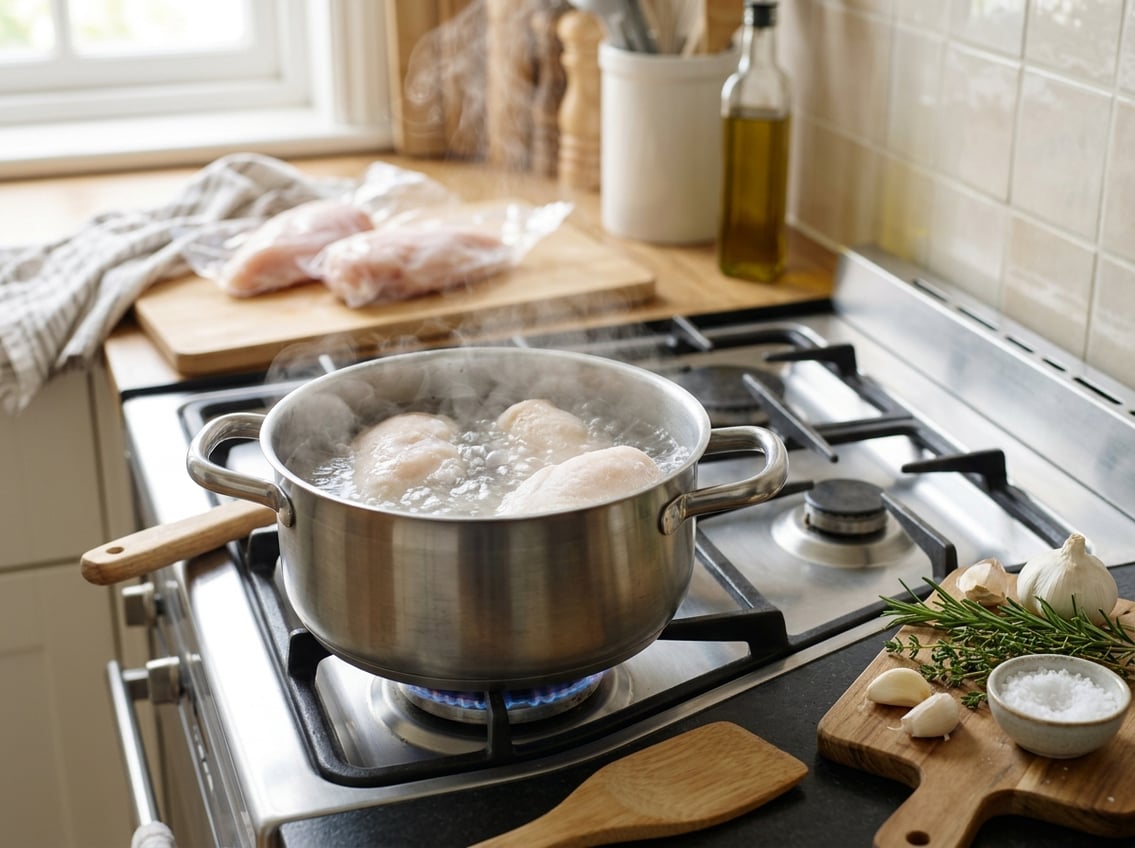
The biggest problems with boiled frozen chicken are too much heat, too little seasoning, and guessing on doneness.
You can avoid these with a calm simmer, a thermometer, and a proper cool-down after cooking.
Safe storage matters just as much as the cooking step.
Mistakes That Make Chicken Tough or Bland
A hard boil dries out the outside and makes boiled chicken breast rubbery.
Skipping salt or broth leaves the meat flat and bland.
Another common mistake is pulling the chicken too early, before the center reaches 165°F.
How to Store and Reheat Safely
Cool boiled frozen chicken quickly, then store it in a sealed container in the fridge for up to 3 to 4 days.
For longer storage, freeze it in portions.
When you reheat cooked chicken, warm it until it reaches 165°F again, which matches standard safe handling guidance like this chicken safety overview.
Ways to Use the Cooking Liquid
If you did not oversalt the cooking liquid, you can turn it into a light broth. Strain it and use it for soup or cooking rice and grains.
If you added strong seasonings or lots of fat, use the liquid only in dishes where that flavor fits.


