
Which Is Better: Chicken Thighs or Legs? A Full Comparison Guide
Deciding between chicken thighs and legs depends on what you want from the dish. Thighs offer richer, juicier meat that works well with bold sauces, while legs (drumsticks) are leaner, cook faster, and get crispy skin.
Choose thighs for deep flavor and forgiving cooking in braises, roasting, or grilling. Choose legs when you want a leaner, faster option with crispy skin.
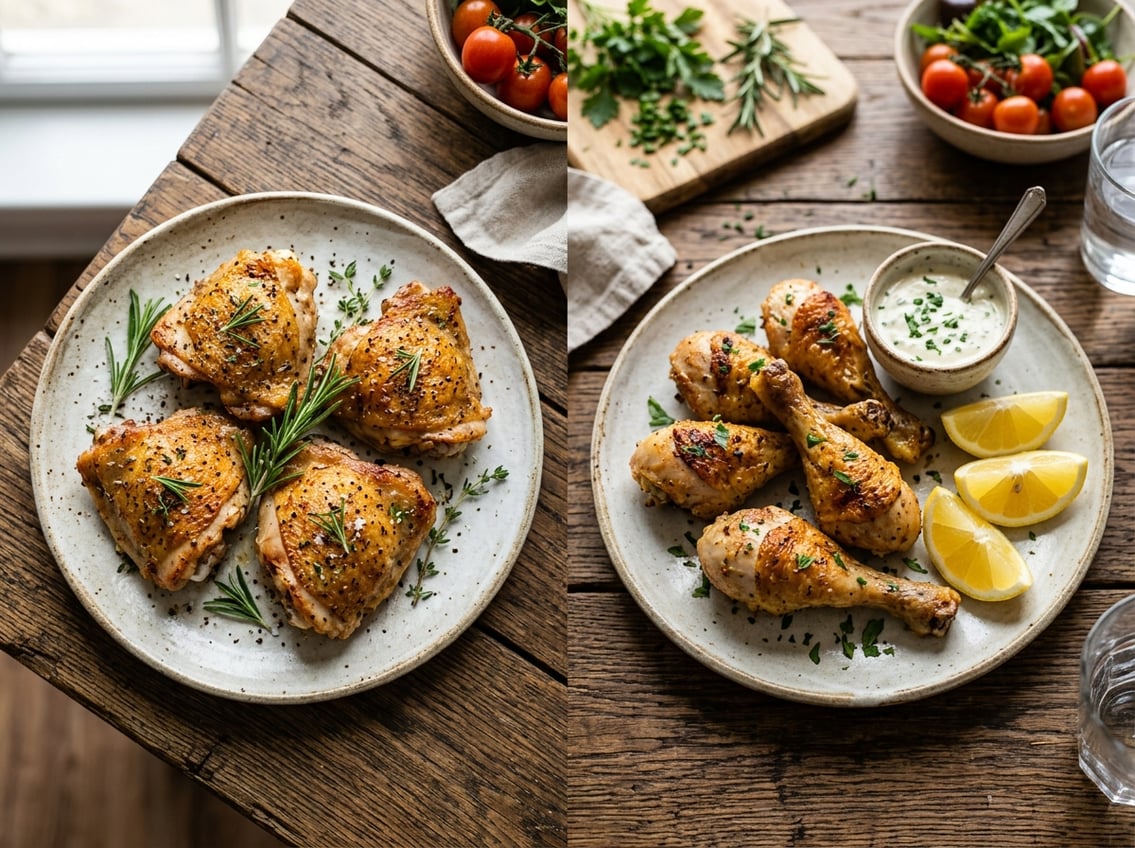
Anatomy affects taste and texture, and different cuts suit different cooking methods. Nutrition and cost can also influence your choice.
Anatomy and Cut Differences
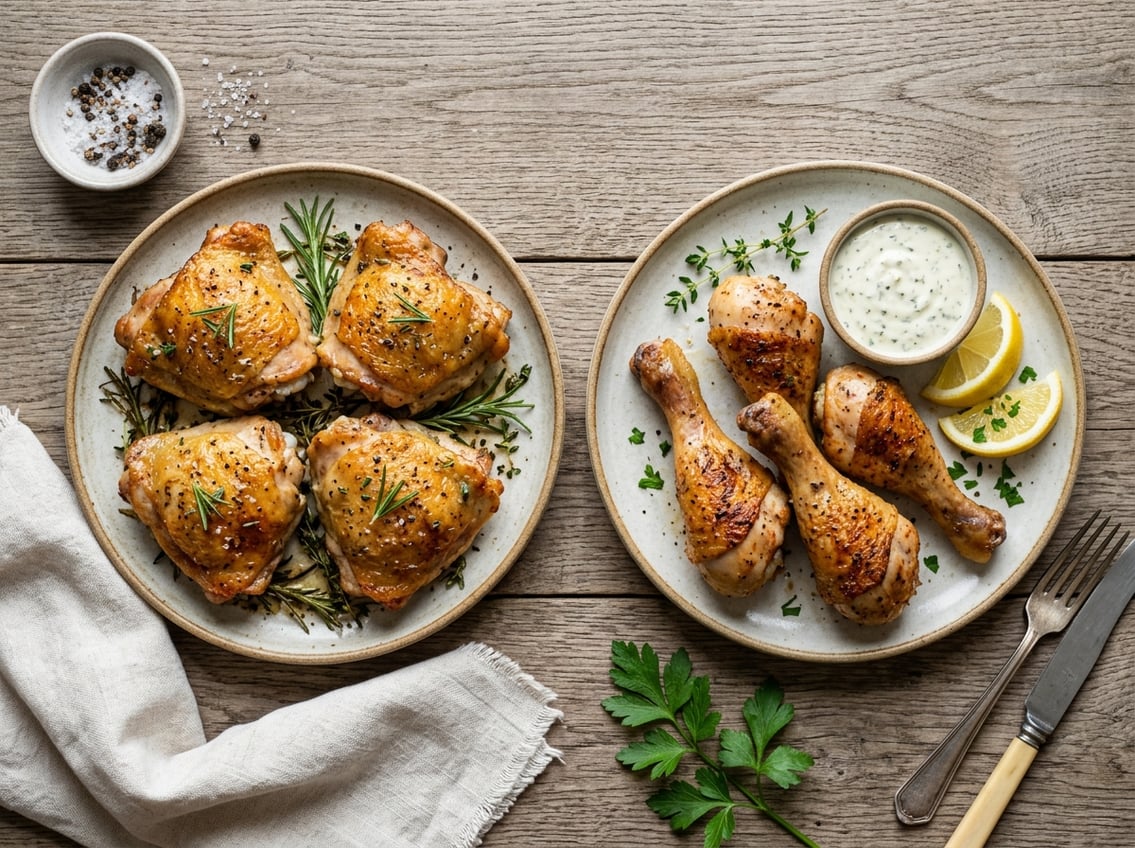
Each part of the bird offers different shapes, bone content, and cooking qualities. Knowing these differences helps you portion and cook your meal properly.
Identifying Chicken Thighs and Legs
When butchers or packaging label “thigh,” they mean the upper segment of the leg attached to the body. Thighs are broad, roughly square, and often sold bone-in with skin or boneless and skinless as fillets.
If you buy a whole chicken leg (sometimes called a leg quarter), it includes the thigh plus the lower segment. That larger piece takes longer to cook because it contains more meat and a joint between two bones.
Individual thighs usually weigh 3–5 ounces each. Boneless thighs give you a higher usable meat yield per piece compared with drumstick portions.
Use thighs when you want meaty, even slices or for shredding.
What Is a Drumstick?
A drumstick is the lower portion of the chicken leg, the part you hold when eating on the bone. It’s long and rounded, tapering to a knob of bone at the end that provides a convenient handle.
Drumsticks are almost always sold bone-in with skin, and they contain less meat than a thigh but often cost less per piece.
Because drumsticks are smaller and contain a single long bone, they heat through faster than thighs. Choose drumsticks for easy finger food, consistent single-serving portions, or a lower price-per-piece.
Dark Meat Overview
Thighs and drumsticks are classified as dark meat because those muscles have more myoglobin and connective tissue than breast meat. Dark meat appears darker, ranging from pinkish to deep red, and stays juicier at higher internal temperatures.
The extra fat and connective tissue in dark meat give you more forgiving results for roasting, braising, or slow cooking. You can cook thighs and drumsticks to about 180°F without drying them out, which helps break down collagen for tender texture.
Dark meat has a bit more fat and a stronger flavor than white meat. If you want richer taste and resilience to longer cooking, thighs and drumsticks work well.
Taste and Texture
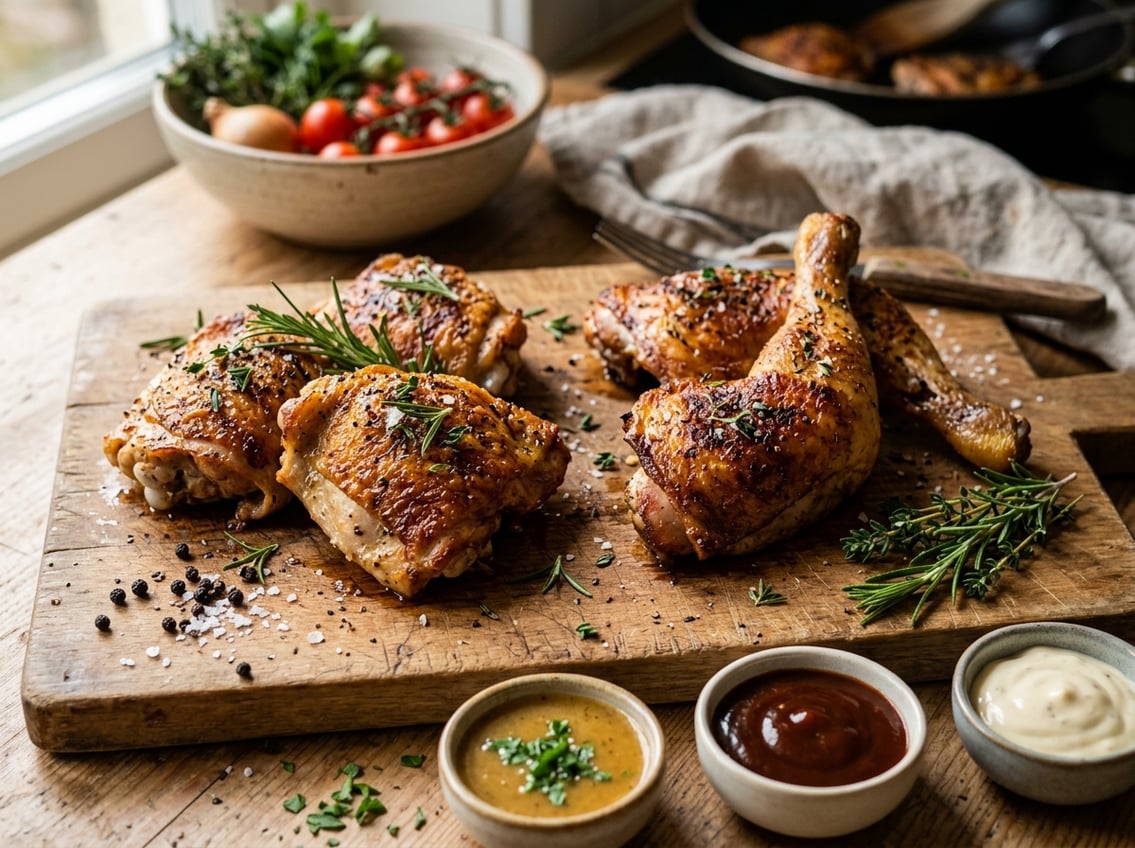
Thighs and legs have different flavors and textures. Fat and connective tissue affect juiciness and how they cook.
Flavor Profiles of Thighs vs Legs
Chicken thighs, with higher fat and myoglobin, provide a richer, more savory taste that pairs well with bold marinades, BBQ sauces, and long braises. If you want pronounced chicken flavor and deeper umami, choose thighs.
Chicken legs (drumsticks) have a slightly milder, cleaner flavor than thighs but still taste richer than white meat. Legs work well with citrusy or herb-forward seasonings that highlight the meat.
Pick thighs for intense, robust sauces and legs or drumsticks when you want handheld pieces that pair with lighter, fresher flavors.
Juiciness and Tenderness
Thighs retain moisture thanks to higher fat content and more connective tissue. They stay tender and moist even with longer cooking.
Drumsticks have a denser bite and a bit less fat than the thigh. They can be tender and juicy, especially when cooked with the bone, which helps retain moisture and flavor.
If you want maximum juiciness with flexible timing, pick thighs. If you want a firmer texture and a convenient handle for grilling or frying, choose drumsticks or whole legs.
Bone-in cuts of either type increase tenderness and mouthfeel.
How Texture Affects Cooking Results
Texture determines the best cooking method. Thighs respond well to searing, high-heat roasting, grilling, and slow braising because fat melts and connective tissue softens.
Legs and drumsticks work well for frying and direct-heat grilling. Their firmer texture suits skewers and street-food style preparations.
Boneless thighs cook faster and absorb marinades better, while bone-in pieces need more time but yield better flavor and succulence.
Nutritional Value and Health Considerations
Chicken thighs and legs both provide concentrated protein and several micronutrients. They mainly differ in fat content and calorie density.
Choose skinless cuts to reduce added fat and compare portions by cooked weight for accurate nutrition tracking.
Protein and Fat Content
A 3-ounce cooked, skinless chicken thigh delivers about 20–22 grams of protein. A 3-ounce cooked drumstick gives similar protein, around 18–20 grams.
Both cuts provide complete animal protein, supplying all essential amino acids.
Thighs generally contain more intramuscular fat than drumsticks. Leaving the skin on raises total and saturated fat. Removing the skin lowers fat, making either cut reasonable for most protein-focused plates.
Calories and Macronutrient Comparison
Portion size and skin status change calorie content. For a 3-ounce cooked portion:
- Skinless thigh: roughly 160–170 kcal, about 9 grams fat, about 20 grams protein.
- Skin-on thigh: about 270–280 kcal, about 18 grams fat, about 22 grams protein.
- Skinless drumstick: roughly 140–160 kcal, about 6–8 grams fat, about 18–20 grams protein.
Prioritize skinless cuts to limit calories from fat. Cooking method also matters: frying or heavy sauces add calories, while grilling or baking keeps fat lower.
Weigh cooked portions for the most accurate tracking.
Iron, Zinc, and Vitamins
Dark meat contains more iron and zinc than white meat. A 3-ounce cooked thigh provides about 1 mg iron and 2 mg zinc, supporting oxygen transport and immune function.
Both cuts offer B-vitamins such as niacin (B3), pyridoxine (B6), and B12, which support energy metabolism and nervous system health.
If you need higher iron and zinc, pick skinless dark meat and pair it with vitamin C–rich vegetables to boost iron absorption.
Best Cooking Methods
Choose cooking methods that match the cut and texture you want. Thighs tolerate higher heat and longer cook times, while legs and drumsticks do well with direct heat and slow braises.
Focus on crisp skin for roasted or fried dishes, and use low heat to break down connective tissue for tender braises.
Roasting and Baking
Roasting works well for bone-in, skin-on chicken thighs and legs because the bone helps retain moisture at higher heat. Pat skin dry and season, then roast at 400–425°F (200–220°C) to render fat and crisp skin while keeping meat juicy.
If you prefer gentler heat, bake at 350°F (175°C) until the internal temp reaches your target. Thighs can be removed between 160–175°F, while legs and drumsticks finish at similar temps.
Use a rimmed sheet or roasting pan to collect drippings. Add vegetables to the pan for one-sheet meals and rotate pieces once for even browning.
Grilling and Pan-Frying
Grilling and pan-frying create intense surface char and fast flavor development, ideal for drumsticks and skin-on thighs. On the grill, sear over direct high heat for a few minutes per side, then move to indirect heat to finish cooking.
For pan-frying, start skin-side down in a hot skillet to crisp the skin, then lower heat and finish in a 350°F oven if needed.
Use a thermometer to avoid under- or overcooking. Marinades and rubs work well; oil the grates or pan to prevent sticking.
Slow Cooking and Braising
Slow cooking and braising suit thighs and legs because low heat breaks down connective tissue, producing tender, pull-apart meat for stews, curries, and braised dishes.
Brown the pieces first to develop flavor, then simmer in a flavorful liquid at a gentle simmer or in a slow cooker.
Cook until meat reaches at least 175°F or is falling off the bone. Use braising for hearty plates or shred thigh meat for tacos or to crisp after slow-cooking.
Popular Dishes and Recipe Ideas
Thighs and legs both appear in classic comfort dishes and global street food. Choose thighs for rich, forgiving meat that stays moist. Pick drumsticks or whole legs for bone-in flavor and easy serving.
Fried Chicken Favorites
You can get crisp skin and juicy meat from either thighs or drumsticks. Thighs hold up to high heat and repeated frying without drying, making them ideal for fried chicken that stays tender inside.
Drumsticks offer a convenient handle and satisfying portion. They brown evenly and deliver concentrated flavor thanks to the bone.
Use a buttermilk brine to tenderize and season the meat. Dredge in seasoned flour, shake off excess, and fry at 325–350°F until internal temp reaches 165°F (thighs may be better around 175°F for tenderness).
For oven-fried, air-dry the skin and finish at high heat (425°F) to crisp while keeping the inside moist.
Hearty Chicken Soup and Stews
Legs and thighs both add depth to soups and stews. Use bone-in legs or thighs to build richer stock; simmering releases collagen that creates body and mouthfeel.
Thigh meat breaks down into tender pieces that enrich broths, while drumsticks offer easy portioning and a rustic presentation.
For classic chicken soup, simmer legs with onion, carrot, celery, and herbs for 45–60 minutes. Remove bones, shred the meat, return it to the pot, and finish with fresh parsley and lemon.
In slow-cooked stews, thighs hold shape yet become fork-tender after long braises, making them a good pick when you want large pieces of meat in sauce.
Tacos and Global Inspirations
Thighs shine in tacos and bold-flavored dishes where saucy, shredded meat is desirable. Braise thighs in adobo, salsa verde, or chipotle, shred, and finish with lime and cilantro.
Drumsticks work well for street-food style servings—grill or roast with spice rubs, then pull the meat off the bone at the table.
Across cuisines, use thighs for Korean-style dak galbi, Indian curries, or Mexican tinga where fat and connective tissue boost flavor and texture. Choose legs for smoky, grilled character or simple roasted portions for salads and family meals.
For tacos, crisp the edges of shredded thigh meat in a hot skillet before serving on tortillas with onions and salsa.
Choosing the Right Cut for Your Meal
Pick the cut that matches the cooking time, desired texture, and how you plan to serve the dish. Consider moisture retention, ease of eating, and whether the recipe benefits from bone-in or boneless pieces.
Factors to Consider
Chicken thighs contain more fat and connective tissue. This gives richer flavor and better juiciness during long cooks.
If you braise, slow-cook, or roast at moderate heat, thighs stay tender and resist drying. Chicken legs (drumsticks) offer a firmer bite and work well for high-heat methods like grilling or frying.
Drumsticks create a crispy exterior. They often cost less per piece and are convenient for finger-food service.
Thighs contain more iron and slightly higher calories from fat. Legs are a bit leaner per ounce.
Remove skin to cut calories, or keep it for crispness and flavor. Use a thermometer to reach 165°F (74°C) safely.
Personal Preference and Dietary Needs
Choose based on taste and your dietary goals. If you prefer a richer mouthfeel or need higher iron, select thighs.
If you want leaner portions or handheld servings, select legs. Trim visible fat and remove skin before cooking for fewer calories.
Favor baking or grilling over frying for low-sodium or heart-healthy needs. Season with herbs and citrus instead of heavy sauces.
Thighs shred easily for tacos and stews. Legs are easier for kids or casual settings where people eat with their hands.
Versatility in Culinary Applications
You can use thighs in many ways: curry, confit, pulled chicken, and kebabs when deboned. Thighs absorb marinades and stay tender in long-simmer dishes.
They work well in stews and casseroles. Legs fit grilled platters, fried chicken, and barbecues where presentation and bite matter.
They crisp easily and are simple to portion for single servings.
Use this quick decision table to match cut to method:
- Thighs: slow braise, shredding, confit, richer sauces.
- Legs: grilling, frying, single-serve portions, finger food.


