
What Does Chicken Breast Temp Need to Be? Safe Guide
You can cook chicken breast safely and keep it juicy if you know the right temperature to target.
Chicken breast needs to reach 165°F at the thickest part for food safety. Use a meat thermometer to measure instead of judging by color or texture.
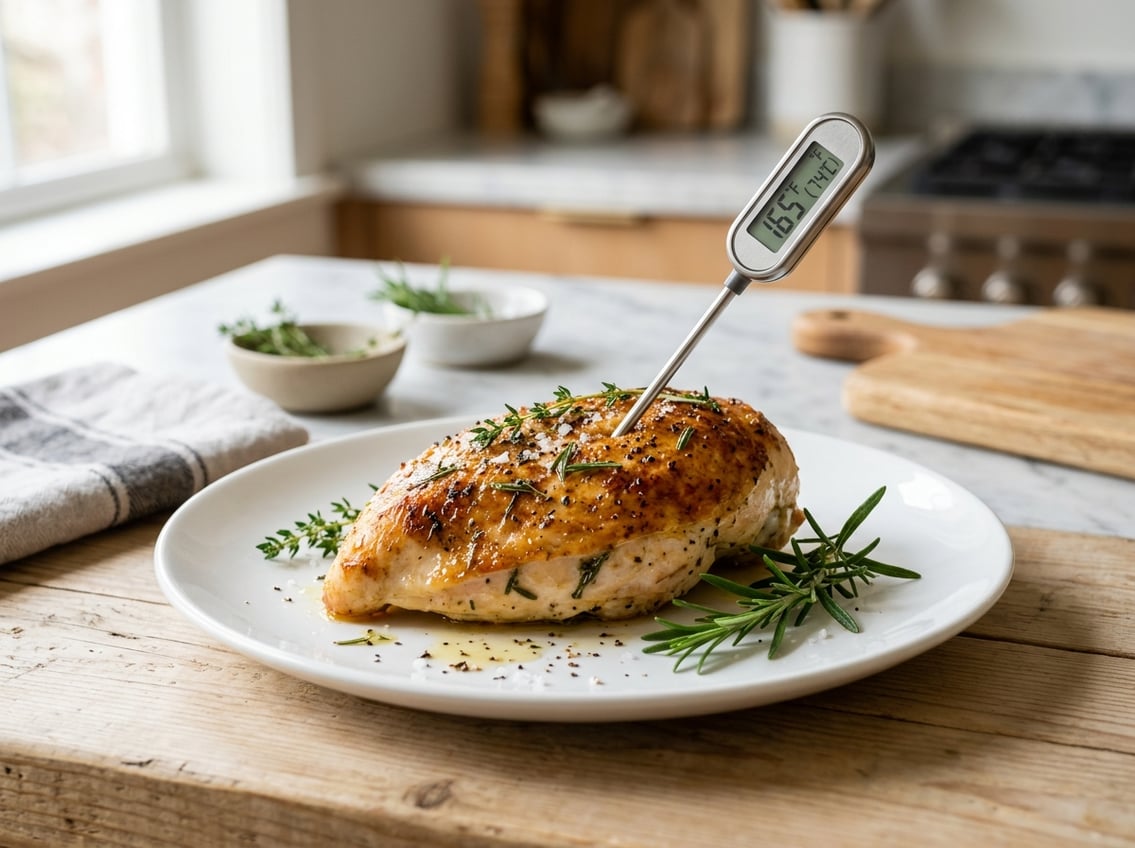
Chicken can carry harmful bacteria such as campylobacter even when it looks done on the outside.
If you rely only on appearance, you might end up with dry chicken or meat that is still undercooked in the center.
The Exact Safe Temperature for Breast Meat
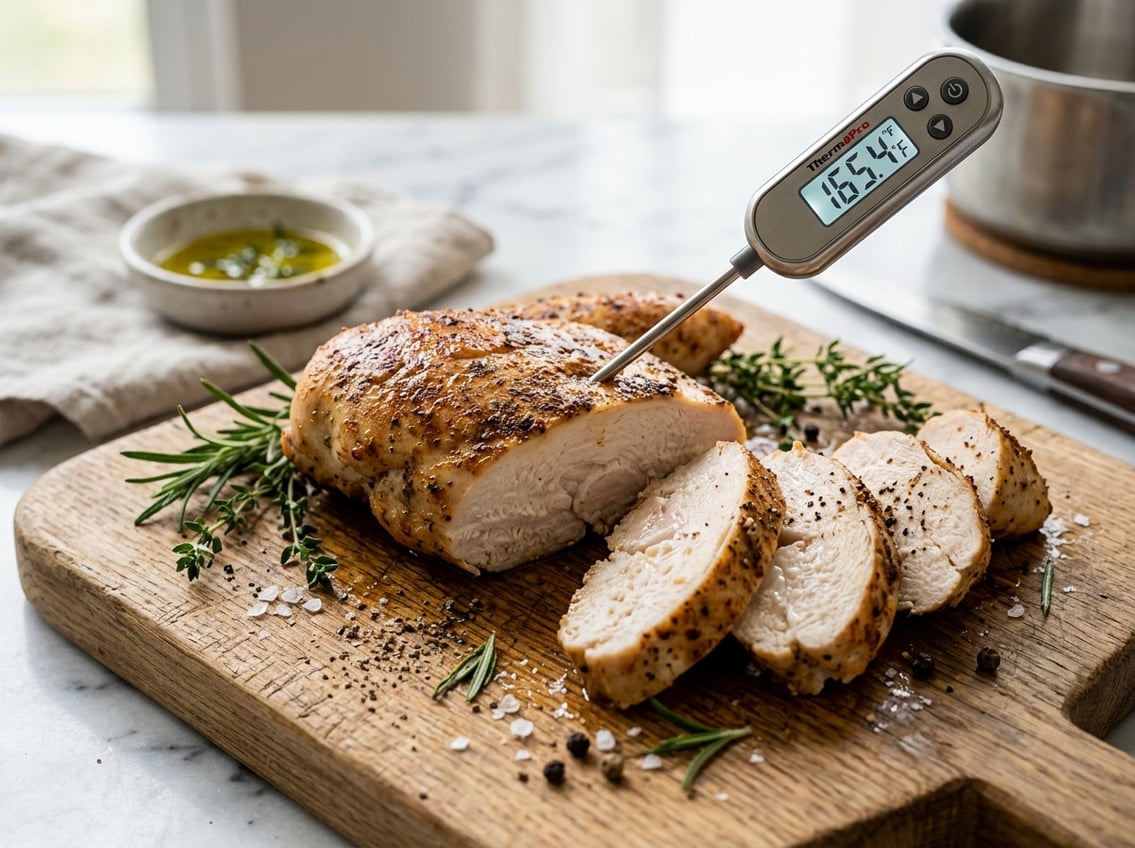
For chicken breast, the safe minimum internal temperature is 165°F.
That is the standard food safety target in the U.S. for chicken internal temperature, and you should trust this number more than timing alone.
Chicken breast is lean and can dry out fast if you cook far past that point.
Aim for safe chicken that is juicy and cooked through without becoming tough.
Why 165°F Is the Safe Minimum
At 165°F, the heat destroys harmful bacteria fast enough to make the meat safe to eat.
This is why the internal temperature matters more than the color of the meat or the juices running clear.
A thermometer gives you a clear answer, while appearance can fool you.
A breast can look white and still be too cool in the center.
When to Pull Chicken for Carryover Cooking
You do not always need to keep the breast on the heat until the last second.
Carryover cooking can raise the temperature a few degrees after you remove it from heat, especially if the piece is thick.
Many cooks pull chicken a little early and let it rest for the best texture.
The temperature can climb as it sits, which helps protect moisture and avoid overcooking.
Why Chicken Breast Can Be Safe Before It Looks Perfect
Chicken breast can still have a faint pink tint and be safe if it has reached the proper internal temperature.
Color changes depend on factors like cooking method, marinade, and bone contact, not just doneness.
That is why food safety guidance depends on temperature, not appearance.
A thermometer gives you the most reliable answer.
How to Measure Doneness Accurately
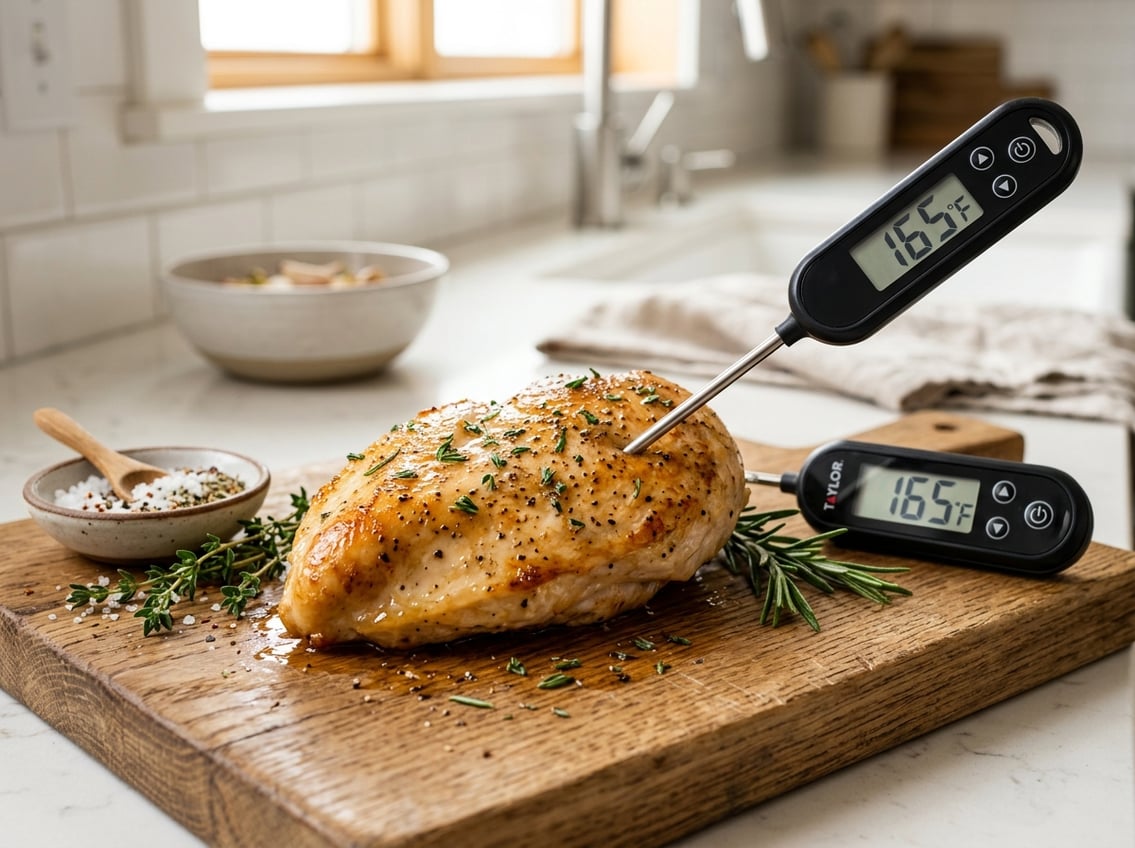
A meat thermometer is the best tool for checking chicken internal temperature.
An instant-read thermometer or digital meat thermometer gives you a fast result, and the right placement matters as much as the tool you use.
You want the reading from the thickest part of the breast, not the thin edge.
If you place the thermometer wrong, the number can be too low or too high.
Thermometer Placement in the Thickest Part of the Breast
Insert the thermometer into the thickest part of the breast, aiming for the center.
Avoid touching the pan, bone, or gristle, since that can distort the reading.
If the breast is uneven, check more than one spot.
The thickest part is the best place to judge the true internal temperature.
How to Use a Meat Thermometer Correctly
If you use an instant-read thermometer, insert it near the end of cooking and wait for the number to settle.
If you use a probe-style food thermometer, leave it in during cooking and watch the temperature rise.
Clean the probe before and after use.
That helps keep your cooking safe and makes each reading more accurate.
Instant-Read vs Digital Probe Options
An instant-read thermometer is best when you want a quick check at the end of cooking.
A digital probe is useful when you want to monitor the temperature without opening the oven or lifting the lid.
Both tools can work well.
The key is accurate placement and knowing that chicken breast is done at 165°F.
Best Results by Cooking Method
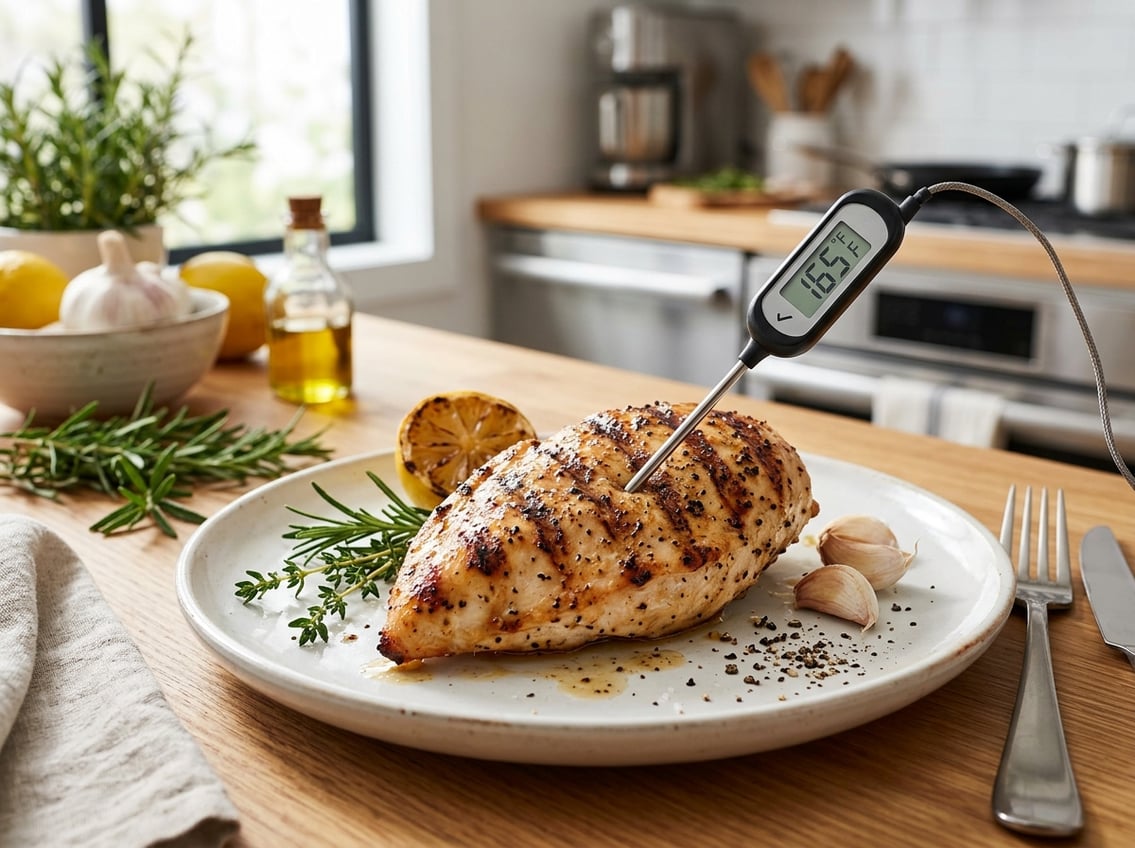
Different cooking methods change how fast the breast reaches the target temperature.
The same safe internal temperature still applies, but timing and resting can change the final texture.
Thicker breasts need more attention than thinner ones.
Carryover cooking matters in every method.
Aim for even heat and enough rest for the juices to settle.
Baked and Roasted Breast Meat
For baked chicken breast, a hot oven helps you finish faster and limit moisture loss.
Recipes from Allrecipes note that roasting chicken breasts at 450°F until they reach 165°F is a reliable approach for good browning and texture. Resting helps lock in juices after cooking, according to Allrecipes chicken breast temperature guidance.
If you prefer a gentler oven, lower heat can still work.
Watch the thickest part and remove it when the internal temperature reaches the safe target.
Grilled and Pan-Cooked Breast Meat
On the grill or in a skillet, the outside can cook much faster than the middle.
Thermometer checks become even more important.
Use moderate to medium-high heat so the outside does not burn before the center is done.
A short rest after cooking helps keep the chicken juicy when you slice it.
Roasting a Whole Chicken Without Drying the Breast
When you roast a whole chicken, the breast often finishes before the thighs.
Carryover cooking and careful temperature checks help you avoid dry breast meat.
Check the thickest part of the breast near the center of the bird.
If the breast reaches 165°F early, resting the bird helps the juices settle before carving.
Quick Reference by Cut and Common Mistakes
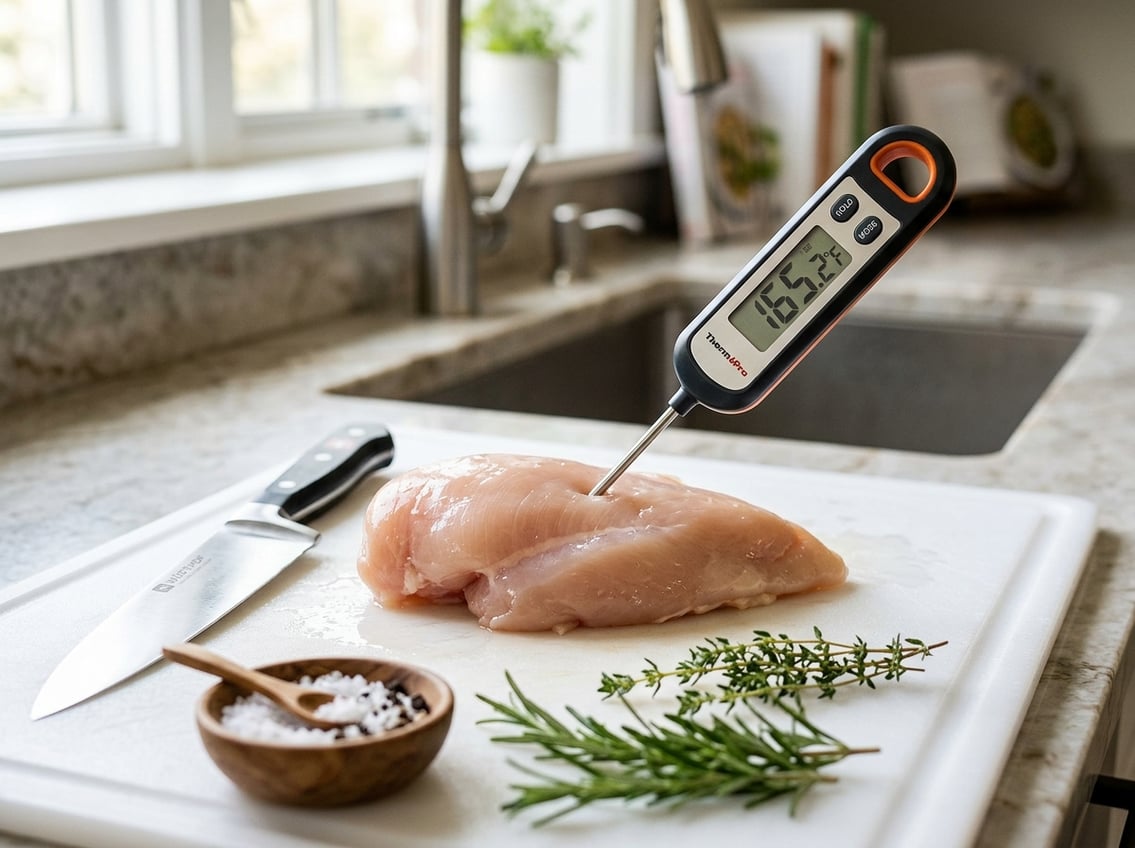
A simple chicken temperature chart can help you remember the safe minimum internal temperature.
The number changes by cut, and mistakes usually come from cooking by time alone or using the wrong thermometer method.
If you know the cut, the target gets easier to remember.
Knowing the common mistakes helps you avoid dry or unsafe chicken.
Simple Chicken Temperature Chart
| Cut | Safe Internal Temperature |
|---|---|
| Chicken breast | 165°F |
| Ground chicken | 165°F |
| Whole chicken, breast area | 165°F |
| Thighs and drumsticks | 165°F to 175°F for better texture |
This chicken temperature chart is a quick guide.
The reading from the thickest part is still the best test.
Why Dark Meat Often Finishes Higher
Dark meat has more connective tissue and fat, so it can stay juicy at a higher temperature.
That is why thighs often taste better a little above the minimum internal temperature.
Breast meat is leaner and dries out sooner.
You usually want the breast to hit the safe number without much extra time on the heat.
Mistakes That Lead to Dry or Undercooked Chicken
Cutting into the breast too soon is a common mistake. Reading the temperature from the thin end instead of the thickest part can also lead to problems.
Relying on color or cooking on heat that is too high often results in dry or undercooked chicken. Skipping the thermometer makes it difficult to know when the chicken is done.
Use a thermometer to check the temperature, then look at the appearance if needed.


