Tinned Fish Recipes: 15 Easy Ways to Use Sardines, Mackerel, and Tuna for Fast Meals
Last updated: June 4, 2026
Tinned fish has shifted from emergency pantry backup to trendy meal centerpiece, with canned sardines, mackerel, and tuna now appearing on restaurant menus, social media feeds, and home dinner tables as stylish, high-flavor ingredients. These shelf-stable proteins deliver restaurant-quality results in minutes, whether you’re building a quick toast topper, tossing together a weeknight pasta, or assembling an impressive snack board. With the U.S. canned seafood market reaching over $5 billion in profit in 2023 and expected to grow to more than $7.9 billion by 2030, tinned fish recipes are becoming a permanent fixture in modern cooking rather than a passing trend.
Key Takeaways
- Tinned fish recipes center on fast assembly: toast, salads, pastas, and snack boards remain the most popular formats for sardines, mackerel, and tuna
- Each fish type has distinct uses: sardines work best in bold, Mediterranean-style dishes; mackerel suits creamy spreads and dips; tuna fits pasta, casseroles, and Asian-inspired meals
- Quality matters for flavor: premium brands ($4-12 per tin) taste significantly better than budget options ($1-3 per tin) and reduce the “fishy” taste many people dislike
- Drain and rinse properly: removing excess oil or brine and patting fish dry prevents soggy, overly salty results
- The oil is valuable: high-quality olive oil from sardine or mackerel tins can be used for salad dressings, pasta sauces, or bread dipping
- Substitutions work with adjustments: you can swap tuna for sardines or mackerel in most recipes, but expect stronger flavor and different texture
- Tinned fish supports weight loss and health goals: high protein, omega-3 fatty acids, and low calories make canned fish ideal for nutritious quick meals
- Pregnant women should choose carefully: light tuna, sardines, and mackerel are generally safe, but albacore tuna should be limited due to mercury content
- Most recipes take under 10 minutes: the fastest meals require only opening a tin, draining, and combining with pantry staples
- Common mistakes include overcooking and over-seasoning: tinned fish is already cooked and often pre-seasoned, so gentle heating and light seasoning work best
What Are the Easiest Tinned Fish Recipes for Beginners?
The easiest tinned fish recipes for beginners are simple toast toppers, mixed salads, and pasta dishes that require no cooking beyond boiling water or toasting bread. These recipes work because tinned fish is already fully cooked, so you’re assembling ingredients rather than executing complex techniques.
Three foolproof starter recipes:
- Sardine toast: Drain a tin of sardines, mash lightly with a fork, spread on toasted sourdough, and top with lemon juice, olive oil, and red pepper flakes
- Tuna salad: Mix drained tuna with mayonnaise, diced celery, and black pepper, then serve on crackers or lettuce cups
- Mackerel pasta: Toss drained mackerel chunks with hot pasta, cherry tomatoes, garlic, and olive oil
These recipes work well for beginners because they use minimal ingredients (typically 5-7 items), require no special equipment beyond a fork and bowl, and take less than 10 minutes from start to finish. The Modern Proper emphasizes that tinned fish works particularly well for “fast brunch on toast” and “cocktail-snack style uses,” making it ideal for new cooks who want impressive results without advanced skills.
Choose toast-based recipes if you want the fastest possible meal (under 5 minutes) and prefer bold, Mediterranean flavors. Choose pasta or salad recipes if you want a more filling meal and have 10-15 minutes to spare.
How to Make Canned Sardines Taste Good
Making canned sardines taste good requires balancing their strong, briny flavor with bright acids, rich fats, and aromatic herbs. Sardines have a more intense taste than tuna or mackerel, so they need complementary ingredients that enhance rather than mask their natural flavor.
Five techniques that improve sardine flavor:
- Add citrus: Squeeze fresh lemon or lime juice over sardines to cut through oiliness and add brightness
- Use quality olive oil: Drizzle extra-virgin olive oil over drained sardines to add richness and smooth out sharp edges
- Include fresh herbs: Parsley, dill, cilantro, or basil add aromatic complexity that balances fishy notes
- Add crunch: Toasted bread, crackers, or raw vegetables provide textural contrast that makes sardines more enjoyable
- Incorporate umami: Capers, olives, sun-dried tomatoes, or soy sauce amplify savory depth without adding fishiness
The key mistake beginners make is eating sardines straight from the tin without any preparation. Even high-quality sardines benefit from a quick drain, a squeeze of lemon, and a sprinkle of flaky salt. If you find sardines too strong, start with smaller portions mixed into pasta or salad rather than eating them as the main component.
Choose sardines packed in olive oil if you want richer flavor and plan to use the oil in your recipe. Choose water-packed sardines if you want to control the fat content and add your own dressing or sauce.
Difference Between Cooking With Sardines vs Mackerel vs Tuna
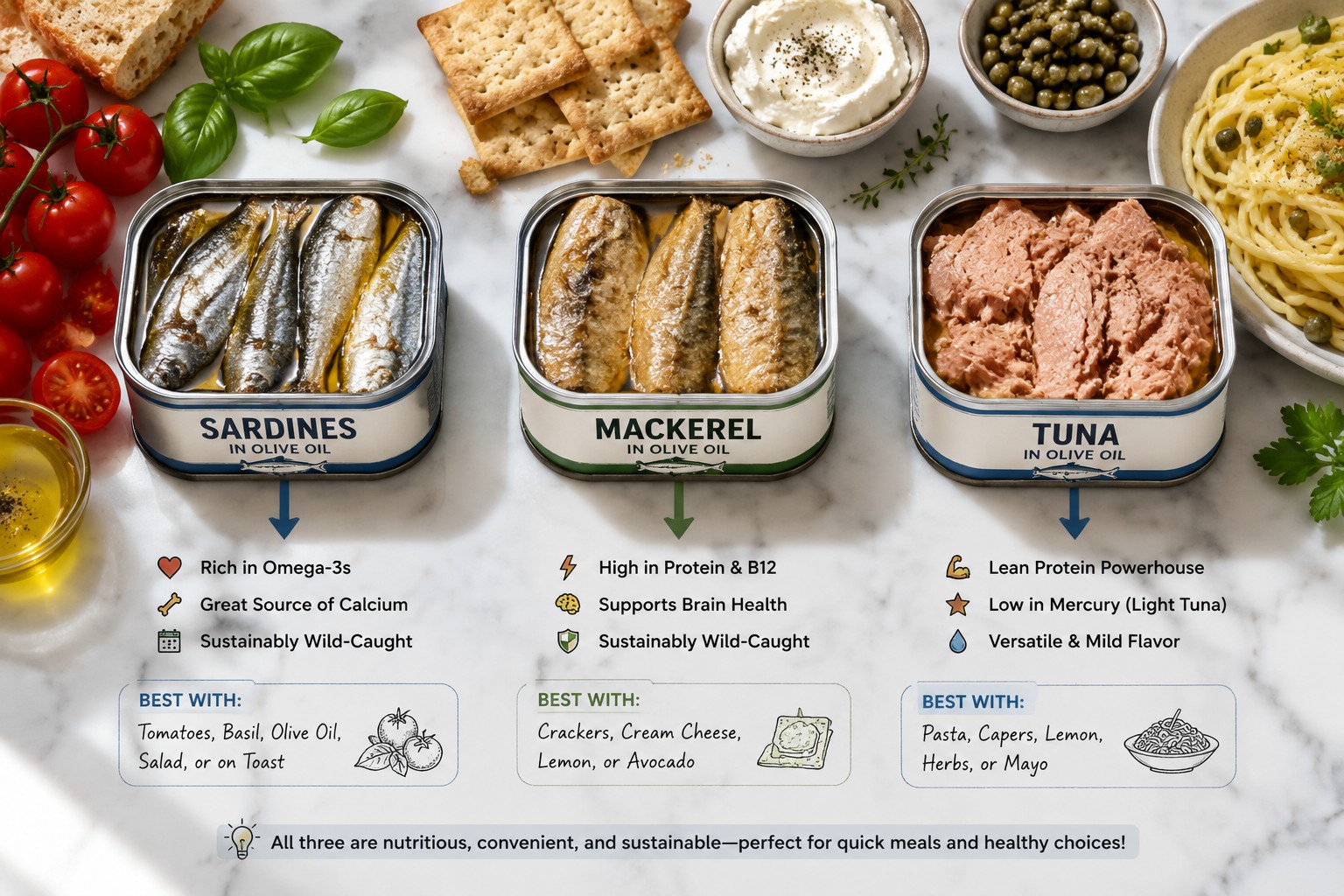
Sardines, mackerel, and tuna differ significantly in flavor intensity, texture, and best culinary applications, even though all three come in similar tins. Understanding these differences helps you choose the right fish for each recipe and avoid disappointing results.
| Fish Type | Flavor Profile | Texture | Best Uses | Price Range |
|---|---|---|---|---|
| Sardines | Strong, briny, oily | Soft, delicate bones | Toast, salads, Mediterranean dishes | $3-8 per tin |
| Mackerel | Rich, smoky, moderately strong | Firm, meaty flakes | Spreads, dips, pâtés, salads | $4-10 per tin |
| Tuna | Mild, neutral, versatile | Firm chunks or flakes | Pasta, casseroles, sandwiches, Asian dishes | $2-12 per tin |
Sardines work best in recipes where their bold flavor can shine alongside equally strong ingredients like garlic, chili, and aged cheese. They’re the smallest of the three, often packed whole with edible bones that add calcium. Sardines contain the highest omega-3 content per serving.
Mackerel offers a middle ground between sardines and tuna, with a rich, slightly smoky taste that works well in creamy preparations. Smoked mackerel is particularly popular for spreads and dips because the smoking process adds depth without overwhelming fishiness.
Tuna is the mildest and most versatile, making it the best choice for picky eaters or recipes where you want fish protein without strong seafood flavor. Tuna accounts for roughly 37% of social media posts about tinned fish, according to Tastewise, making it the most popular option for home cooks.
Common mistake: Using sardines in recipes designed for tuna. Sardines have 3-4 times more flavor intensity than tuna, so direct substitution often results in overpowering dishes. When substituting, reduce the amount of sardines by one-third and increase complementary ingredients like pasta, rice, or vegetables.
Best Brands of Tinned Fish for Recipes
The best tinned fish brands for recipes balance quality, flavor, and price, with premium options ($6-12 per tin) delivering noticeably better taste than budget brands ($1-3 per tin). Quality matters more for simple recipes where the fish is the star ingredient, while budget brands work fine in heavily seasoned dishes like casseroles or curries.
Premium brands worth the cost:
- Matiz Sardines (Spain): Firm texture, clean flavor, packed in high-quality olive oil
- King Oscar Sardines (Norway): Consistent quality, widely available, good balance of price and taste
- Fishwife Tinned Fish (USA): Trendy packaging, sustainably sourced, excellent for gift-giving or special occasions
- Ortiz Bonito del Norte (Spain): Premium white tuna, meaty texture, ideal for salads and pasta
- Bar Harbor Smoked Mackerel (USA): Rich smoke flavor, firm flakes, great for spreads
Budget-friendly options for everyday cooking:
- Season Brand Sardines: Reliable quality at $2-3 per tin, good for pasta and casseroles
- Wild Planet Tuna: Sustainably caught, solid chunks, works well in most recipes
- Brunswick Sardines: Widely available, consistent flavor, best for heavily seasoned dishes
The Tinned Fish Market maintains a dedicated recipe hub specifically for “fast & easy recipes using canned fish,” indicating that specialty retailers are curating both products and cooking guidance for home cooks.
Choose premium brands if you’re making simple recipes like toast or salads where the fish flavor is prominent. Choose budget brands if you’re making heavily seasoned dishes like tuna casseroles, curries, or pasta sauces where other ingredients dominate.
How Much Does Quality Tinned Fish Cost?
Quality tinned fish typically costs between $4 and $12 per tin, with premium imported brands reaching $15-20 for specialty products like ventresca (tuna belly) or hand-packed sardines. Budget options range from $1 to $3 per tin but often contain lower-quality fish, cheaper oils, and less careful packing.
Price breakdown by category:
- Budget tier ($1-3): Mass-market brands, often packed in soybean oil or water, smaller fish, more broken pieces
- Mid-range ($4-7): Better quality fish, olive oil packing, more consistent sizing, better flavor
- Premium ($8-12): Imported from Spain, Portugal, or Norway, hand-packed, high-quality olive oil, whole fish
- Luxury ($15-20+): Specialty cuts, vintage-dated tins, rare species, artisanal production
The U.S. canned seafood market generated more than $5 billion in profit in 2023, with tinned fish sales volume exceeding $2.7 billion in 2024, according to Tastewise. This growth has brought more premium options to mainstream grocery stores, making quality tinned fish more accessible than in previous years.
Cost per serving: A typical 4-ounce tin provides 2-3 servings depending on the recipe. At $6 per tin, that’s $2-3 per serving for premium fish, which is comparable to fresh fish at the grocery store but with zero prep time and no risk of spoilage.
Choose budget tins if you’re feeding a family on a tight budget or making recipes where the fish is mixed with many other ingredients. Choose premium tins if you’re making simple recipes where fish quality directly impacts the final dish, or if you’re serving guests and want impressive results.
Why Does My Canned Fish Recipe Taste Too Fishy?
Canned fish recipes taste too fishy when you use low-quality brands, skip the draining and rinsing step, or use fish packed in cheap oils that amplify unpleasant flavors. The “fishy” taste most people dislike comes from oxidized fats and strong brine, not from the fish itself.
Five fixes for overly fishy recipes:
- Drain thoroughly: Pour off all liquid and press fish gently with paper towels to remove excess oil or brine
- Rinse if needed: For very strong-tasting fish, rinse briefly under cold water and pat completely dry
- Add acid: Lemon juice, vinegar, or lime juice neutralize fishy compounds and brighten flavor
- Use aromatics: Garlic, onion, ginger, or fresh herbs mask unpleasant notes while adding complexity
- Upgrade your brand: Premium fish packed in olive oil tastes significantly less fishy than budget options in soybean oil
Common mistake: Using the packing liquid in your recipe without tasting it first. Some high-quality tins contain delicious olive oil worth saving, while others contain cheap oil or salty brine that ruins dishes. Always taste the liquid before deciding whether to use it.
If you consistently find canned fish too fishy, start with tuna (the mildest option) and gradually work up to mackerel and sardines as your palate adjusts. You can also try smoked varieties, which have a different flavor profile that many people find more appealing than plain canned fish.
Choose water-packed fish if you’re sensitive to fishy flavors and want maximum control over the final taste. Choose oil-packed fish if you want richer flavor and plan to use complementary ingredients that balance the intensity.
Can I Substitute Tuna for Sardines in Recipes?
You can substitute tuna for sardines in most recipes, but expect milder flavor, firmer texture, and less oiliness in the final dish. Because sardines have 3-4 times more flavor intensity than tuna, you’ll need to adjust seasoning and may want to add extra fat to compensate for sardines’ natural richness.
Substitution guidelines:
- Tuna for sardines: Use 1.5 times the amount of tuna to match protein content, add extra olive oil (1-2 tablespoons), increase garlic and herbs by 50%, and add a pinch of anchovy paste or fish sauce for depth
- Sardines for tuna: Use two-thirds the amount of sardines, reduce added salt by half, skip any additional oil, and increase acid (lemon juice or vinegar) to balance richness
Recipes where substitution works well:
- Pasta dishes with tomato sauce
- Mixed green salads with vinaigrette
- Rice bowls with vegetables
- Sandwich spreads and dips
Recipes where substitution doesn’t work:
- Sardine toast (tuna lacks the necessary richness and flavor)
- Tuna casserole (sardines would overpower the dish)
- Nicoise salad (traditionally requires tuna, not sardines)
- Mackerel pâté (different fish entirely, not interchangeable)
Sabrina Currie’s recipe collection includes salads, stir fries, patties, dips, and pasta as versatile applications for canned fish, suggesting that many recipes can accommodate different fish types with minor adjustments.
Choose tuna if you’re cooking for picky eaters or want a neutral base that won’t dominate other flavors. Choose sardines if you want maximum omega-3 content, bold Mediterranean flavor, and don’t mind a stronger seafood taste.
Are Tinned Fish Recipes Healthy for Weight Loss?
Tinned fish recipes are highly effective for weight loss because they provide 20-25 grams of protein per serving with minimal calories (typically 100-200 calories per tin), high satiety, and beneficial omega-3 fatty acids that support metabolism. The combination of high protein and healthy fats helps control hunger while preserving muscle mass during calorie restriction.
Nutritional benefits for weight loss:
- High protein: 20-25g per 4-ounce tin supports muscle maintenance and increases calorie burn through the thermic effect of food
- Low calories: Most tins contain 100-200 calories, making portion control easy
- Omega-3 fatty acids: Support fat metabolism and reduce inflammation that can interfere with weight loss
- Zero carbs: Fits low-carb and ketogenic diets perfectly
- Convenient portions: Pre-portioned tins prevent overeating
Best tinned fish choices for weight loss:
- Water-packed tuna: Lowest calorie option at 90-100 calories per tin
- Sardines in water: 130-150 calories with maximum omega-3 content
- Mackerel in water: 150-180 calories with rich flavor that increases satisfaction
Avoid for weight loss: Fish packed in heavy sauces, mayonnaise-based preparations, or recipes that add significant bread, pasta, or cheese. A simple sardine toast on whole grain bread with vegetables makes a 300-calorie meal, while a tuna casserole with pasta and cream sauce can exceed 600 calories per serving.
Common mistake: Assuming all tinned fish recipes are healthy. Tuna melts with cheese and mayo, fish dips with cream cheese, and pasta dishes with heavy sauces can contain 500-800 calories per serving. For weight loss, stick to simple preparations with vegetables, whole grains, and light dressings.
Choose water-packed fish if you’re strictly counting calories and want the leanest option. Choose oil-packed fish if you’re following a higher-fat diet like keto and want more satiety from each meal.
What to Do With the Oil From Canned Sardines
The oil from canned sardines is valuable cooking fat that can be used for salad dressings, pasta sauces, bread dipping, or sautéing vegetables, but only if the fish was packed in high-quality olive oil. Cheap soybean or vegetable oil should be discarded, while premium olive oil from Spanish or Portuguese tins is worth saving.
Five ways to use sardine oil:
- Pasta sauce base: Use 2-3 tablespoons of sardine oil to sauté garlic and chili flakes, then toss with pasta and the sardines themselves
- Salad dressing: Whisk sardine oil with lemon juice, Dijon mustard, and herbs for a protein-rich vinaigrette
- Bread dipping: Pour into a small dish, add black pepper and red pepper flakes, and serve with crusty bread
- Vegetable sauté: Use instead of regular olive oil when cooking greens, tomatoes, or peppers
- Flavor booster: Drizzle over finished dishes like roasted vegetables, grain bowls, or soups
How to tell if the oil is worth saving: Check the tin label. If it says “extra virgin olive oil” or “olive oil” and the brand is premium ($6+ per tin), the oil is likely high quality. If it says “soybean oil,” “vegetable oil,” or the tin cost under $3, discard the oil.
The Modern Proper highlights that tinned fish works well for “cocktail-snack style uses,” and the flavorful oil from premium tins can be part of that presentation, drizzled over the fish on a serving board or used to dress accompanying vegetables.
Storage tip: If you’re not using the oil immediately, transfer it to a small jar and refrigerate for up to one week. The oil will solidify when cold but will return to liquid at room temperature.
Choose to save the oil if you bought premium fish packed in olive oil and plan to use it within a week. Discard the oil if it’s cheap vegetable oil, the fish smells off, or you don’t have an immediate use for it.
Is Tinned Fish Safe for Pregnant Women to Eat?
Tinned fish is generally safe for pregnant women to eat, with sardines and light tuna being the best choices due to their low mercury content, while albacore (white) tuna should be limited to 6 ounces per week due to higher mercury levels. Canned fish provides essential omega-3 fatty acids and protein that support fetal brain development, making it a valuable part of a pregnancy diet when chosen carefully.
Safe tinned fish options for pregnancy:
- Sardines: Very low mercury, high omega-3s, safe to eat 2-3 times per week
- Light tuna (skipjack): Low mercury, safe up to 12 ounces per week
- Mackerel (Atlantic, not king): Low mercury, high omega-3s, safe 2-3 times per week
- Salmon: Very low mercury, excellent omega-3 source, safe 2-3 times per week
Limit or avoid during pregnancy:
- Albacore (white) tuna: Higher mercury, limit to 6 ounces per week
- King mackerel: High mercury, avoid completely
- Tuna packed in oil: Higher calorie content may not fit pregnancy nutrition goals
The FDA recommends pregnant women eat 8-12 ounces of low-mercury fish per week to support fetal development. Canned sardines and light tuna fit easily into this recommendation and provide convenient, affordable protein that requires no cooking.
Food safety considerations: Always check that tins are not dented, bulging, or expired, as these signs indicate potential bacterial contamination. Once opened, use tinned fish within 2-3 days and store in the refrigerator in a covered container (transfer from the tin to prevent metallic taste).
Choose sardines or light tuna if you’re pregnant and want maximum omega-3 benefits with minimal mercury risk. Avoid albacore tuna and king mackerel if you’re pregnant or planning to become pregnant, as mercury accumulates in the body over time.
Common Mistakes When Cooking With Canned Mackerel
The most common mistakes when cooking with canned mackerel are overcooking (since it’s already fully cooked), using too much salt (mackerel is often pre-salted), and failing to remove skin or bones that some brands include. Mackerel has a richer, oilier texture than tuna, so it needs different handling to achieve the best results.
Five mistakes to avoid:
- Overcooking: Mackerel is already cooked; it only needs gentle warming (2-3 minutes max) or can be eaten cold
- Over-salting: Taste mackerel before adding salt to your recipe, as many brands are heavily salted during canning
- Ignoring the skin: Some tins include skin, which can be chewy and unpleasant; remove it before using
- Using it like tuna: Mackerel is richer and oilier than tuna, so it works better in creamy preparations than light salads
- Skipping the drain step: Mackerel releases more oil than tuna, so thorough draining prevents greasy dishes
Best techniques for canned mackerel:
- For spreads and dips: Mash mackerel with cream cheese, Greek yogurt, or mayonnaise to create smooth, rich spreads
- For salads: Break into large flakes rather than shredding, and pair with sturdy greens like kale or arugula that can handle the oil
- For pasta: Add mackerel at the very end of cooking, just to warm through, and use the pasta water to create a light sauce
- For toast: Serve cold or at room temperature rather than heating, which can make mackerel rubbery
Smoked mackerel is particularly popular because the smoking process adds depth and reduces the “fishy” taste that some people find off-putting in plain canned mackerel. If you’re new to mackerel, start with smoked varieties.
Choose smoked mackerel if you want the richest flavor and plan to make spreads or dips. Choose plain mackerel if you want a neutral base that you can season yourself for salads or pasta dishes.
Quick Tinned Fish Meals Under 10 Minutes
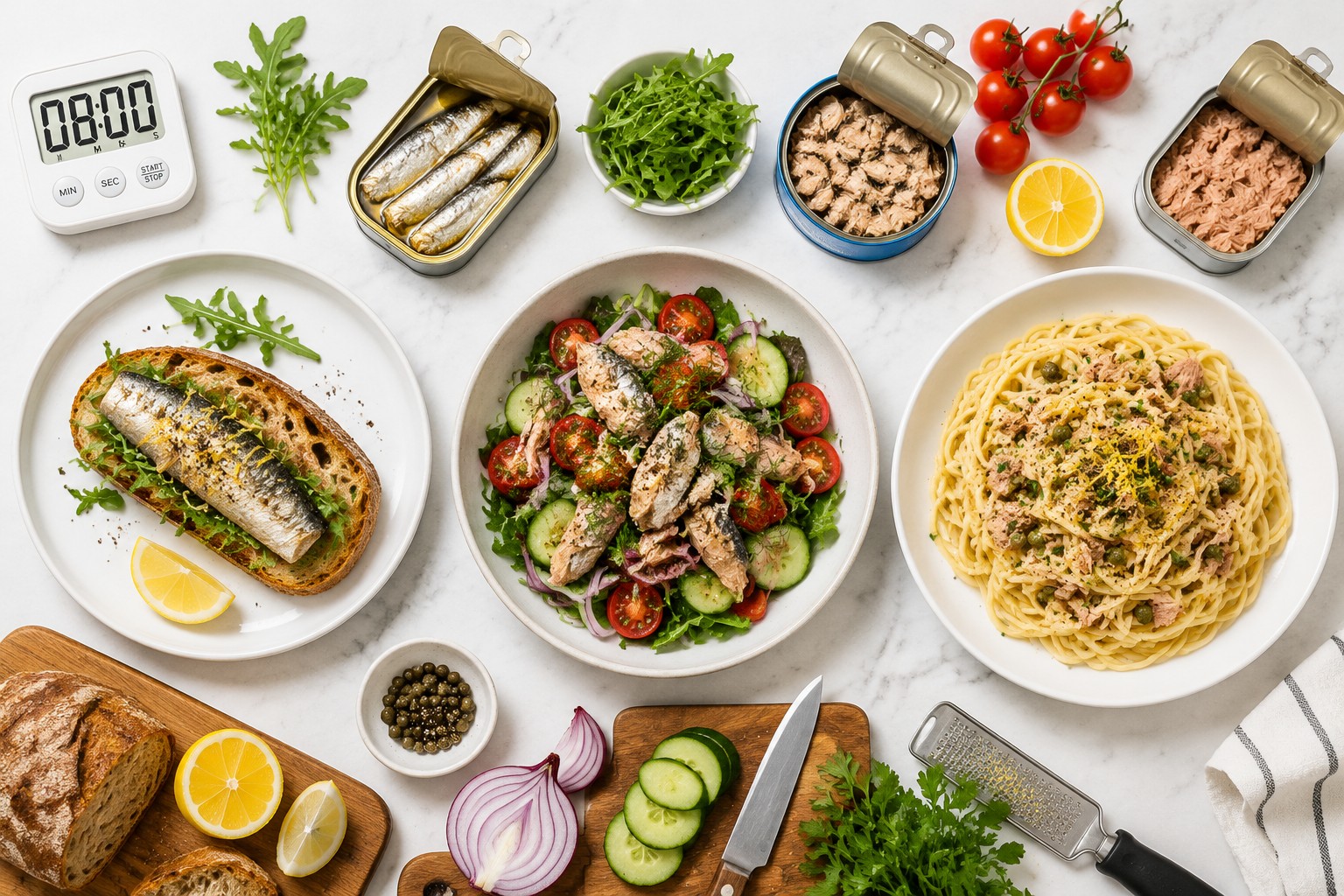
Quick tinned fish meals under 10 minutes focus on assembly rather than cooking, combining pre-cooked fish with pantry staples and fresh ingredients that need no preparation. These recipes work because tinned fish is already fully cooked and seasoned, so you’re simply building complementary flavors and textures.
Five meals ready in under 10 minutes:
- Sardine avocado toast (5 minutes): Mash avocado on toasted bread, top with drained sardines, squeeze lemon juice, sprinkle red pepper flakes
- Tuna white bean salad (7 minutes): Mix drained tuna with canned white beans, cherry tomatoes, olive oil, and fresh basil
- Mackerel rice bowl (8 minutes): Top microwaved rice with flaked mackerel, sliced cucumber, shredded carrots, and soy sauce
- Sardine pasta (9 minutes): Toss hot pasta with drained sardines, garlic, olive oil, and parsley (pasta cooking time not included)
- Tuna lettuce wraps (6 minutes): Mix tuna with diced celery and mayo, spoon into lettuce cups, top with sliced radishes
Allrecipes published a 2026 video titled “5 Easy Dinners You Can Make With Tinned Fish” that emphasizes building a canned-fish tomato sauce by thinning canned tomatoes with water and finishing with black beans and cilantro, demonstrating that even “cooked” tinned fish meals can be extremely fast.
Meal prep tip: Keep these pantry staples on hand for instant tinned fish meals: canned beans, cherry tomatoes, lemons, olive oil, garlic, pasta, rice, crackers, and mixed greens. With these items plus a few tins of fish, you can create dozens of different meals without grocery shopping.
Time-saving techniques:
- Use pre-washed salad greens instead of chopping vegetables
- Keep cooked rice or quinoa in the fridge for instant grain bowls
- Buy pre-minced garlic in jars to skip chopping
- Use quality bread that tastes good lightly toasted or untoasted
Choose toast-based meals if you want the absolute fastest option (under 5 minutes). Choose bowl-based meals if you want something more filling and have leftover grains or pasta in the fridge.
Who Should Avoid Eating Canned Sardines
People with fish or shellfish allergies, those on low-sodium diets, and individuals with gout or high uric acid levels should avoid or limit canned sardines. While sardines are highly nutritious for most people, certain health conditions make them problematic.
Groups who should avoid or limit sardines:
- Fish allergy sufferers: Sardines can trigger severe allergic reactions in people with fish allergies
- Low-sodium diets: Most canned sardines contain 200-400mg sodium per serving; choose low-sodium versions or avoid entirely
- Gout patients: Sardines are high in purines, which can trigger gout flares in susceptible individuals
- People taking blood thinners: High omega-3 content may interact with anticoagulant medications; consult your doctor
- Those with histamine intolerance: Canned fish can be high in histamine, causing reactions in sensitive individuals
Safe consumption for most people: Healthy adults can safely eat sardines 2-3 times per week as part of a balanced diet. The high omega-3 content, calcium from edible bones, and vitamin D make sardines one of the most nutritious tinned fish options.
Sodium considerations: A typical tin of sardines contains 300-400mg of sodium, which is 13-17% of the daily recommended limit. If you’re watching sodium intake, look for “low-sodium” or “no salt added” versions, which contain 50-100mg per serving.
Purine content: Sardines contain 100-150mg of purines per 100g serving, making them a high-purine food. People with gout should limit intake to once per month or avoid entirely during active flare-ups.
Choose low-sodium sardines if you have high blood pressure or are watching salt intake. Avoid sardines entirely if you have a confirmed fish allergy or active gout, and consult your doctor if you’re taking blood thinners.
How to Drain and Prepare Tinned Fish Properly
Draining and preparing tinned fish properly requires opening the tin carefully, pouring off all liquid, and patting the fish dry with paper towels to remove excess oil or brine that can make dishes soggy or overly salty. Proper preparation takes only 1-2 minutes but significantly improves the final dish.
Step-by-step preparation:
- Open carefully: Use a can opener or pull-tab to open the tin completely, avoiding sharp edges
- Pour off liquid: Tilt the tin over the sink and let all liquid drain out (save premium olive oil if desired)
- Press gently: Use the lid or a fork to press down on the fish, releasing additional liquid
- Pat dry: Transfer fish to paper towels and gently pat to remove surface moisture
- Inspect: Remove any skin, bones (if undesired), or dark bits that may have an off taste
- Flake or leave whole: Break into chunks for salads and pasta, or leave whole for toast and presentations
Common preparation mistakes:
- Using fish straight from the tin: Excess liquid makes dishes watery and dilutes flavors
- Pressing too hard: Sardines and mackerel are delicate and can turn to mush if handled roughly
- Discarding quality oil: Premium olive oil from good tins is worth saving for cooking
- Not checking for bones: Some brands include small bones that are edible but may be unpleasant for some eaters
For different fish types:
- Sardines: Usually packed whole with edible bones; remove heads and tails if desired, but bones are soft and nutritious
- Mackerel: Often includes skin; remove if you find it chewy or unpleasant
- Tuna: Typically comes in chunks or flakes; drain thoroughly as it releases more liquid than other fish
The Tinned Fish Market’s recipe hub emphasizes “fast & easy recipes,” suggesting that proper preparation should be quick and straightforward rather than complicated.
Choose to save the oil if you’re using premium fish packed in olive oil and plan to incorporate it into your recipe. Discard the liquid if the fish is packed in water, cheap oil, or has an off smell.
15 Easy Tinned Fish Recipes for Fast Meals
Here are 15 practical tinned fish recipes that use sardines, mackerel, and tuna for quick, flavorful meals. Each recipe takes 15 minutes or less and uses common pantry ingredients.
Sardine recipes:
- Classic sardine toast: Mash sardines with lemon juice and olive oil, spread on toasted sourdough, top with arugula and red onion
- Sardine Caesar salad: Toss romaine with drained sardines, Caesar dressing, croutons, and Parmesan
- Sardine pasta puttanesca: Combine sardines with spaghetti, tomatoes, capers, olives, and garlic
- Sardine grain bowl: Layer quinoa, roasted vegetables, sardines, and tahini dressing
- Sardine bruschetta: Top toasted baguette slices with chopped sardines, tomatoes, basil, and balsamic
Mackerel recipes:
- Smoked mackerel spread: Blend mackerel with cream cheese, lemon juice, and dill; serve with crackers
- Mackerel salad: Mix flaked mackerel with mixed greens, cucumber, radishes, and vinaigrette
- Mackerel rice bowl: Top rice with mackerel, edamame, avocado, and soy-ginger dressing
- Mackerel pâté: Puree mackerel with butter, capers, and lemon; serve on toast points
- Mackerel potato salad: Fold flaked mackerel into potato salad with dill and mustard
Tuna recipes:
- Tuna nicoise bowl: Arrange tuna, hard-boiled eggs, green beans, potatoes, and olives over greens
- Tuna pasta salad: Mix tuna with cooked pasta, cherry tomatoes, mozzarella, and Italian dressing
- Tuna avocado boats: Fill avocado halves with tuna salad made with Greek yogurt and celery
- Tuna fried rice: Stir-fry rice with tuna, peas, carrots, egg, and soy sauce
- Tuna white bean soup: Heat canned white beans with broth, add tuna, spinach, and lemon
These recipes demonstrate the versatility of tinned fish across different cuisines and meal types, from Mediterranean-inspired toasts to Asian-style rice bowls. Food52 and other major food publishers maintain evergreen tinned-fish collections, confirming that these recipes have become a durable pantry-cooking format.
Customization tips: Swap vegetables based on what’s in season, adjust seasoning to your taste, and experiment with different herbs and spices. The basic formula (tinned fish + grain or vegetable + acid + fat + herbs) works for countless variations.
Frequently Asked Questions
How long does tinned fish last after opening? Tinned fish lasts 2-3 days in the refrigerator after opening when transferred to an airtight container. Never store opened fish in the original tin, as it can develop a metallic taste and oxidize quickly.
Can you eat canned sardines every day? You can safely eat canned sardines 2-3 times per week, but daily consumption may provide excessive sodium (300-400mg per tin) and purines that could cause issues for some people. Rotate with other protein sources for balanced nutrition.
Do you need to cook canned tuna before eating? No, canned tuna is fully cooked during the canning process and is safe to eat straight from the tin. Heating is optional and only for preference or to incorporate into hot dishes.
What’s the white stuff in canned sardines? The white stuff in canned sardines is usually calcium deposits from the bones or coagulated protein, both of which are safe to eat. Some tins also include small amounts of solidified olive oil that appears white when cold.
Can you freeze leftover tinned fish? Yes, you can freeze leftover tinned fish for up to 3 months in an airtight container, though texture may become slightly softer after thawing. Frozen tinned fish works best in cooked dishes rather than salads.
Why are some tinned fish so expensive? Expensive tinned fish ($10-20 per tin) reflects hand-packing, premium olive oil, sustainable fishing practices, and import costs from Spain or Portugal. The fish quality, size consistency, and flavor are noticeably better than budget options.
Is the liquid in canned fish safe to drink? The liquid in canned fish is safe to consume but not recommended for drinking straight. High-quality olive oil can be used in cooking, while water or brine is typically discarded due to high sodium content.
How can you tell if canned fish has gone bad? Bad canned fish shows bulging or dented tins, foul odor when opened, discolored flesh, or slimy texture. If the tin is intact and stored properly, canned fish remains safe for 3-5 years past the printed date.
Can cats eat human canned sardines? Cats can eat plain canned sardines in water as an occasional treat, but avoid sardines in oil or with added salt, garlic, or onions. Limit to small portions (1-2 sardines) once or twice per week.
What’s better for recipes: oil-packed or water-packed fish? Oil-packed fish provides richer flavor and works better for Mediterranean-style recipes, while water-packed fish offers fewer calories and more control over added fats. Choose based on your recipe and dietary goals.
Do expensive tinned fish brands taste better? Yes, premium brands ($6-12 per tin) consistently taste better than budget options due to higher-quality fish, better olive oil, and more careful packing. The difference is most noticeable in simple recipes where fish is the star.
Can you use tinned fish in meal prep? Tinned fish works excellently for meal prep when kept separate from wet ingredients until serving. Prepare grain bowls, salads, or pasta components in advance and add drained fish just before eating to maintain texture.
Conclusion
Tinned fish recipes offer a practical solution for fast, nutritious meals that don’t sacrifice flavor or quality. Whether you’re working with sardines, mackerel, or tuna, these shelf-stable proteins deliver restaurant-quality results in minutes when you understand how to select quality brands, prepare them properly, and pair them with complementary ingredients.
The key to success with tinned fish is matching the right fish to the right recipe: use bold sardines for Mediterranean toast and pasta, rich mackerel for creamy spreads and dips, and mild tuna for versatile salads and casseroles. Proper draining and preparation prevent common problems like excessive saltiness or fishy taste, while quality brands make a noticeable difference in flavor.
Start with these action steps:
- Buy one tin each of sardines, mackerel, and tuna to discover which flavor profile you prefer
- Try the simplest recipe first (sardine toast or tuna salad) to build confidence
- Invest in at least one premium brand ($6-8 per tin) to experience the quality difference
- Keep pantry staples on hand (olive oil, lemons, garlic, pasta, crackers) for instant meals
- Experiment with the 15 recipes provided to find your favorites
With the U.S. canned seafood market growing steadily and expected to reach $7.9 billion by 2030, tinned fish has moved beyond trend status to become a permanent fixture in modern cooking. Stock your pantry with quality tins, master a few basic preparations, and you’ll always have the foundation for a fast, impressive meal.
References
[1] What To Do With Tinned Fish – https://themodernproper.com/what-to-do-with-tinned-fish
[2] Tinned Fish Recipes – https://www.thetinnedfishmarket.com/pages/tinned-fish-recipes
[3] 35 Best Easy Canned Fish Recipes That Feel Fancy – https://sabrinacurrie.com/35-best-easy-canned-fish-recipes-that-feel-fancy/
[4] Watch – https://www.youtube.com/watch?v=S5CCuFFDtnE
[5] Tinned Fish Trend – https://tastewise.io/blog/tinned-fish-trend
[6] 26451 Best Tinned Fish Recipes – https://food52.com/story/26451-best-tinned-fish-recipes
SEO Meta Title: Tinned Fish Recipes: 15 Easy Ways to Use Sardines & Tuna


