
Is It Good to Eat Chicken Thighs? Nutrition, Benefits, and Best Ways to Cook
You can enjoy chicken thighs without guilt when you cook them smartly and balance them on your plate.
Chicken thighs deliver high-quality protein, important vitamins and minerals, and flavorful, satisfying fat. When you prepare them with healthier methods and pair them with vegetables and whole grains, they fit well into a balanced diet.
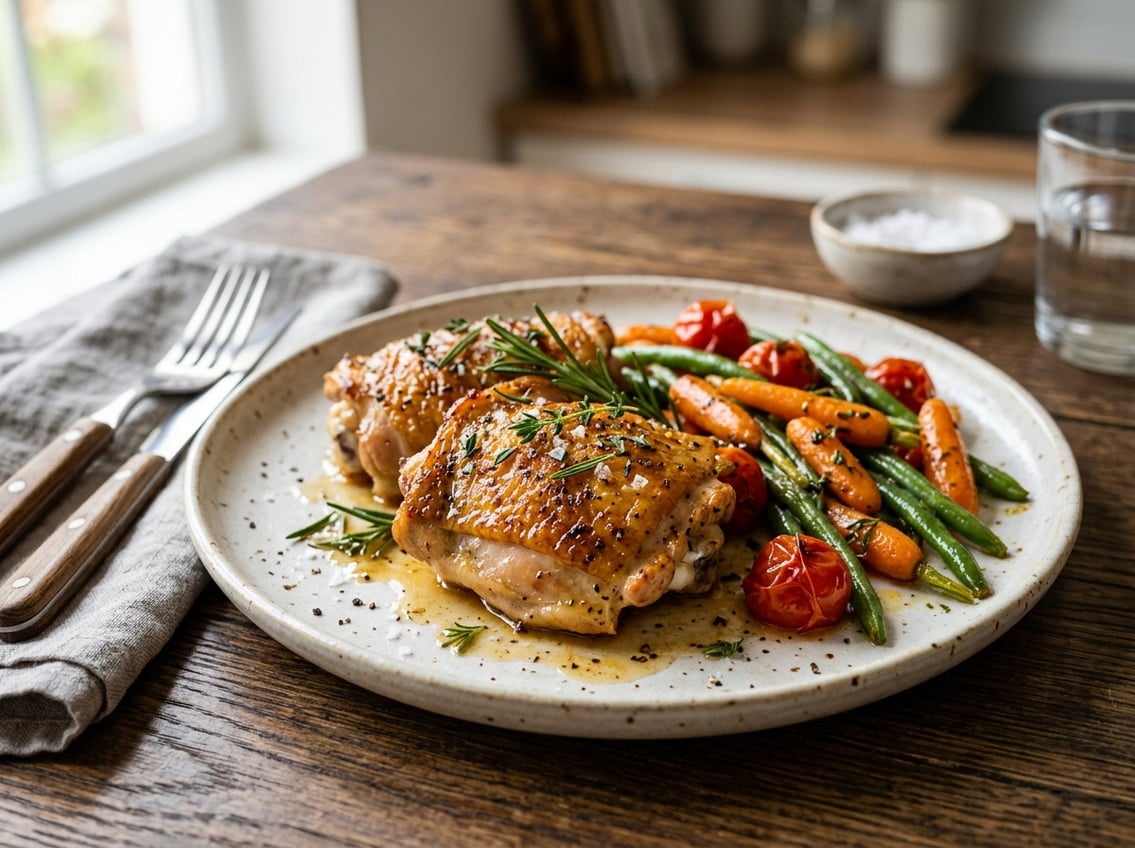
This article breaks down chicken thigh nutrition and the specific benefits they offer. You’ll also find trade-offs to watch for, clear comparisons to leaner cuts, practical cooking tips to lower extra fat and sodium, and simple ways to get the benefits of dark meat while minimizing risks.
Nutritional Profile of Chicken Thighs
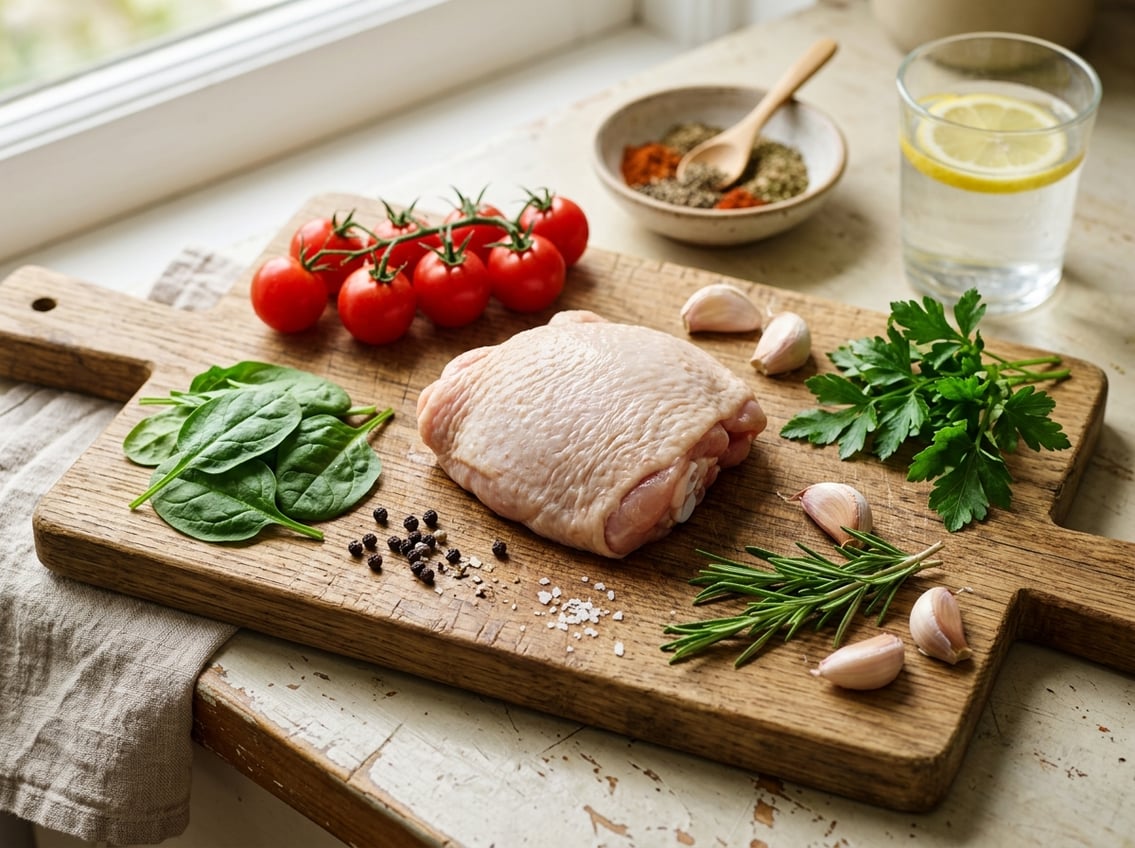
Chicken thighs provide concentrated protein, moderate fat, and several vitamins and minerals that support muscle maintenance and energy metabolism.
You’ll get more calories and fat than from breast meat, but also higher levels of certain nutrients like iron and zinc.
Macronutrients and Calorie Content
A cooked, skinless 100 g chicken thigh usually contains about 200–210 calories, roughly 25–26 g of protein, and about 9–11 g of total fat.
Protein in chicken thighs supplies all nine essential amino acids, supporting muscle repair, satiety, and recovery after exercise.
If you keep the skin on, calories rise substantially—often to around 270–280 kcal per 100 g—because the skin adds about 8–10 g more fat, including saturated fat.
Carbohydrates are negligible in plain chicken thighs, so they don’t affect blood glucose unless you pair them with sauces or breading.
Micronutrients and Essential Vitamins
Chicken thighs are a good source of iron and zinc, which help oxygen transport and immune function.
You’ll also get B vitamins, notably niacin (B3) and B12, which support energy metabolism and nervous system health.
Selenium appears in useful amounts, contributing antioxidant defense and thyroid support.
If you eat thighs with skin and darker meat, you may absorb slightly more fat-soluble nutrients, but sodium content can increase depending on seasoning or brining.
Comparing Chicken Thighs and Chicken Breasts
Chicken breasts are leaner. A 100 g cooked chicken breast provides roughly 165–170 calories and about 31 g protein with around 3–4 g fat.
Thighs offer more flavor and slightly fewer grams of protein per 100 g, but more iron, zinc, and B vitamins.
Choose thighs when you want higher micronutrient density, more fat for flavor and satiety, or a lower cost per pound.
Choose breasts when your priority is maximum protein with minimal fat and calories.
Health Benefits of Chicken Thighs
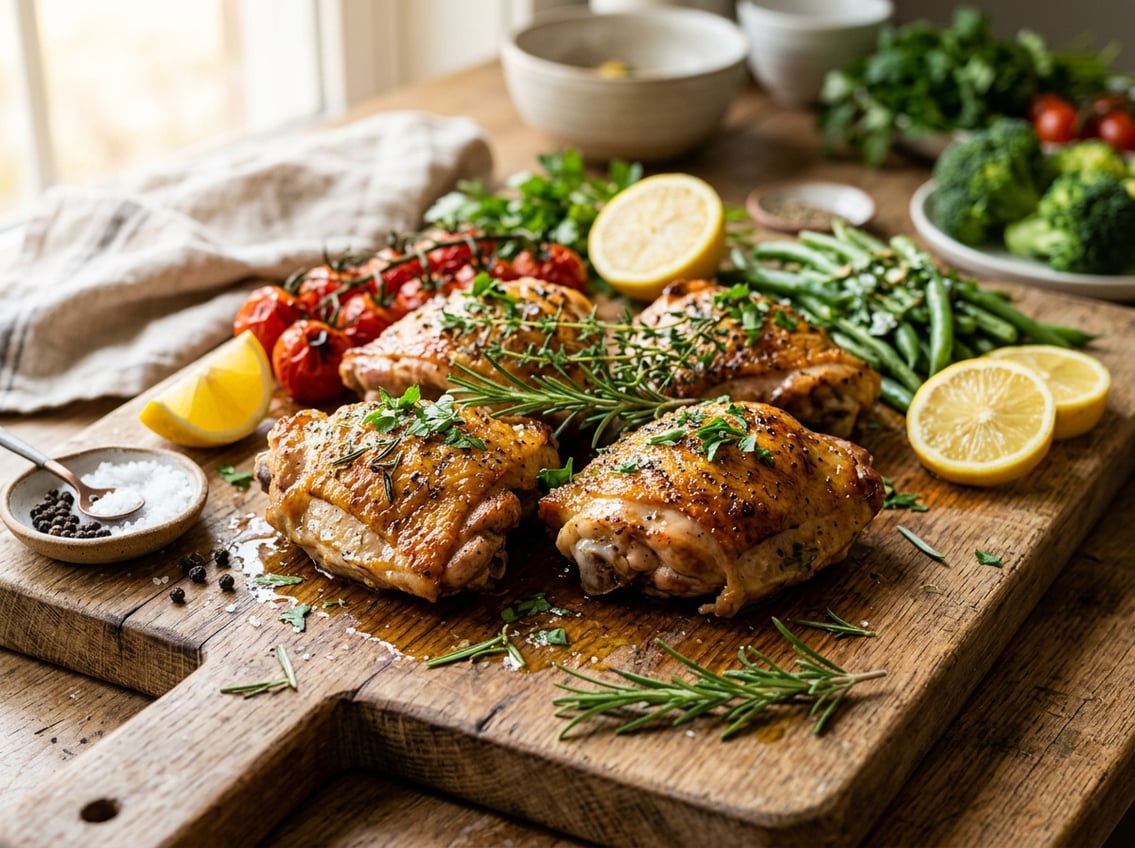
Chicken thighs supply concentrated protein, key minerals, and B vitamins in a compact, affordable package.
Their higher fat content compared with breast meat also delivers more iron, zinc, and flavor, which can help you meet nutrient needs without relying on processed foods.
Supporting Muscle and Bone Health
Chicken thighs provide high-quality complete protein, supplying all nine essential amino acids your body cannot make.
A typical 3–4 ounce cooked serving delivers roughly 20–32 grams of protein, which supports muscle repair after exercise and helps preserve lean mass as you age.
You also get B vitamins—especially B12—and minerals such as iron and zinc.
Vitamin B12 helps with energy metabolism and red blood cell formation.
Iron supports oxygen transport, and zinc contributes to protein synthesis and bone remodeling.
If you aim to maintain or build muscle, pair chicken thighs with resistance training and adequate total daily protein (about 0.7–1.0 g per pound of body weight for many active adults).
Removing the skin reduces fat while preserving most of the protein and micronutrients.
Satiety and Weight Management
The combination of protein and fat in chicken thighs increases meal satiety more than lower-fat lean cuts alone.
Protein triggers fullness hormones and preserves lean mass during calorie restriction, while the monounsaturated and saturated fats slow gastric emptying so you feel satisfied longer.
That greater satisfaction can reduce snacking and lower overall calorie intake, helping weight control when you watch portion sizes.
Choose cooking methods like grilling, baking, or air-frying and limit heavy breading or sugary sauces to keep calories in check.
If you want to trim calories further, remove the skin or serve smaller thigh portions alongside high-fiber vegetables and whole grains to stretch the meal without sacrificing fullness.
Immune Support and Overall Wellness
Chicken thighs contain several micronutrients that support immune function and general health.
Zinc and iron are present in higher amounts than in many white-meat cuts, and both play roles in immune cell activity and defense against infection.
Selenium and B vitamins found in thighs support antioxidant defenses and DNA repair, which contribute to long-term cellular health.
The amino acid tryptophan in chicken also helps neurotransmitter synthesis tied to sleep and mood regulation.
Using thighs in homemade broths or stews adds hydration and minerals, which can be helpful during illness.
Keep preparation simple and low in sodium to retain the health benefits while minimizing added risks from excess salt.
Potential Drawbacks and Considerations
Chicken thighs provide more calories, fat, and some micronutrients than lean cuts, and preparation choices strongly affect their health impact.
Pay attention to portion size, cooking method, and whether the skin or processed products are involved.
Fat Content and Heart Health
Chicken thighs contain more total and saturated fat than chicken breast.
A 3-ounce serving of skinless chicken thigh typically supplies about 9 g of fat and around 2 g saturated fat, while the same portion of breast has roughly 3 g total fat and under 1 g saturated fat.
Those differences add up if you eat thighs frequently.
If you have high LDL cholesterol or a history of heart disease, choose smaller portions, limit added fats in cooking, and aim to keep saturated fat under 10% of daily calories.
Replace some thigh servings with skinless chicken breast or plant proteins to lower overall saturated fat intake without cutting protein.
Grilling, baking, or braising lets excess fat drain away, while frying or cooking in butter raises calorie and saturated-fat content substantially.
Track portion sizes—3–4 ounces cooked is a typical serving—to manage daily fat intake.
Skin-On vs. Skinless Chicken Thighs
Keeping the skin increases calories and fat substantially.
A roasted chicken thigh with skin can jump from around 164 calories (skinless) to roughly 275–280 calories per 3-ounce serving, and saturated fat rises by several grams.
Removing the skin before or after cooking cuts most of that added fat.
Skin adds flavor and helps retain moisture.
If you prefer skin-on, balance it by reducing other sources of saturated fat in the meal and increasing vegetables or whole grains on the plate.
For recipes that need crisp skin, cook skin-on and remove it before eating to gain flavor while limiting intake.
If you’re monitoring sodium or overall calories, choose skinless thighs for stews, stir-fries, and sandwiches.
Skinless chicken thighs still deliver about 20 g of protein per 3-ounce serving and retain B vitamins and minerals found in chicken thigh nutrition.
Sodium and Additives in Processed Chicken
Manufacturers often add salt, phosphates, and flavor enhancers to processed chicken products—marinated, pre-seasoned, or injected—which raises sodium and water retention.
Sodium levels can exceed 300 mg per serving in some packaged thighs, compared with much lower amounts in plain, fresh skinless thighs.
High sodium increases blood pressure risk if you consume many processed portions.
Read labels and aim for products with under 140 mg sodium per serving when possible.
Choose plain fresh or frozen skinless chicken thighs and season with herbs, citrus, and spices to control sodium.
Phosphates and some additives can change texture and juiciness but also increase labeled weight and cost.
If you want predictable nutrition, buy unprocessed thighs.
Note that skinless chicken thighs supply substantial protein, B12, selenium, iron, and potassium without the extra additives.
Cooking Methods and Health Impact
You can control calories, fat, and nutrient retention by choosing cooking methods and small technique tweaks.
Focus on skin removal, minimal added oils, and cooking temperatures to keep thighs nutritious and flavorful.
Baking and Roasting Chicken Thighs
Baking or roasting at 375–425°F gives you a juicy interior while letting fat render away from the meat.
Use skinless thighs or remove skin after roasting to cut saturated fat.
A 3-ounce skinless serving contains about 160 calories and 9 g fat, while skin-on increases both calories and saturated fat noticeably.
Season with herbs, citrus, and a light brush of olive oil (1 tsp per thigh) rather than heavy sauces to control sodium and calories.
Roast on a rack so rendered fat drips away and use a meat thermometer (165°F internal) to avoid overcooking and nutrient loss.
If you braise or bake in a sauce, choose low-sodium broths and add vegetables or whole grains to make a balanced plate that stretches protein and boosts fiber.
Grilling and Air Frying
Grilling and air frying create a crisp exterior with less oil, which reduces total fat compared with pan-frying.
Grill over medium heat to prevent charring and avoid high flames that produce more polycyclic aromatic hydrocarbons (PAHs).
Trim excess fat and use marinades that include acid (vinegar, citrus) and oil to keep meat moist without adding too many calories.
Air fryers circulate hot air to mimic frying while using one tablespoon or less of oil for several thighs.
This method cuts added fat and yields a roasted, crispy texture.
Monitor time closely—air-fried thighs cook quickly, so check internal temperature early to prevent dryness.
Marinating for Flavor and Nutrition
A short marinade (30 minutes to 2 hours) improves flavor and can reduce the need for high-sodium or high-fat sauces.
Use marinades with acid (lemon, yogurt, vinegar), aromatics (garlic, herbs), and modest oil amounts.
Acidic marinades also help tenderize meat and may reduce formation of harmful compounds during high-heat cooking.
Limit salt and sugar in your marinade to avoid excess sodium and calories.
For added nutrition, include antioxidant-rich herbs (rosemary, thyme) and spices (paprika, turmeric).
Pat thighs dry before cooking to improve browning and reduce flare-ups on the grill.
Frying and High-Fat Preparations
Pan-frying and deep-frying increase calories and saturated fat substantially, especially with skin-on thighs or batter coatings.
A single serving of fried thigh can add 100–200+ extra calories compared with baked skinless meat.
If you fry, use stable oils with high smoke points (peanut, refined avocado) and keep oil temperature around 350–375°F to minimize oil absorption.
Consider shallow pan-searing followed by oven finishing to limit oil use while achieving a crispy crust.
Drain fried thighs on paper towels and trim visible fat before serving.
Reserve fried preparations for occasional meals and balance them with vegetables and whole grains to offset higher energy density.
Maximizing Benefits While Minimizing Risks
Choose lean cuts, cook with low added fat, and pair thighs with fiber-rich sides to boost nutrition while limiting calories, saturated fat, and sodium.
Opt for skinless, responsibly raised meat and control portion size and frequency to fit thighs into a balanced eating pattern.
Choosing Skinless and Free-Range Chicken Thighs
Pick skinless chicken thighs to cut about 8–12 grams of fat and roughly 100 calories per 3-ounce serving compared with skin-on thighs.
Remove the skin before cooking or buy pre-skinless thighs to reduce saturated fat and make baking, grilling, or stir-frying a lower-calorie option.
Select free-range chicken thighs when you can afford them.
Free-range hens often show slightly different fat composition and are less likely to be raised with routine antibiotics.
Look for labels like “free-range” or “pasture-raised” and check third-party certifications for transparency.
Store and handle raw thighs at or below 40°F and cook to an internal temperature of 165°F to eliminate salmonella risk.
Marinate in acid-based marinades and use herbs and spices to add flavor instead of salt or heavy sauces.
Balancing Portions and Frequency
Aim for a cooked portion of about 3–4 ounces (85–113 g) of skinless chicken thigh per meal.
That portion provides roughly 20–25 g of protein while keeping calories and fat moderate.
Use a kitchen scale or visual cues (palm-sized) to avoid oversized portions.
Include thighs 2–4 times per week depending on your total saturated fat targets and overall diet.
If you consume other animal fats the same week, reduce thigh servings or choose grilled breast to balance saturated fat intake.
Rotate cooking methods to control added fat.
Prefer grilling, baking, or air-frying over deep-frying.
When you use oil, measure 1 teaspoon at a time and choose unsaturated oils like olive or canola to improve the fat profile of the meal.
Pairing with Vegetables and Whole Grains
Pair chicken thighs with nonstarchy vegetables and whole grains to increase fiber, vitamins, and satiety. Combine a 3–4 ounce thigh with 1 cup of roasted broccoli and ½–1 cup of brown rice for a balanced plate with roughly 400–600 calories depending on preparation.
Use colorful vegetables like spinach, bell peppers, and carrots to boost vitamin A, C, and potassium without adding much fat. Add legumes such as lentils or chickpeas to increase plant protein and fiber, which supports heart health and digestion.
Season with herbs, citrus, and vinegar instead of heavy cream or sugar-based sauces. This keeps sodium and added calories lower while maintaining the benefits of chicken thighs as a nutrient-dense protein source.
Incorporating Chicken Thighs Into a Healthy Diet
Chicken thighs give you protein, iron, zinc, and B12. They tolerate bold flavors and slower cooking without drying out.
Prepare them with low added fat, and pair them with whole grains and vegetables. You can stretch a small number of thighs into several meals for variety and economy.
Recipe Ideas and Meal Inspiration
Bake chicken thighs to reduce added oil while keeping the meat juicy. Roast skinless thighs at 400°F for about 25–30 minutes, or until the internal temperature reaches 165°F. Finish under high heat for crisp edges.
Marinate chicken thighs in a mixture of lemon, garlic, and herbs for 30–60 minutes to add flavor without heavy sauces. Try a simple marinade with 2 tbsp olive oil, juice of 1 lemon, 2 cloves minced garlic, 1 tsp paprika, and salt and pepper.
Stretch cooked thighs across these meals:
- Grain bowls with sliced thighs, quinoa, roasted broccoli, and a squeeze of lemon.
- One-pan dinners with baked thighs, potatoes, and carrots, seasoned with rosemary.
- Stir-fries using boneless thighs sliced thin, quickly seared, and tossed with mixed vegetables and low-sodium soy sauce.
Swap heavy creams or sugary glazes for yogurt-based sauces, chimichurri, or a citrus-herb vinaigrette to keep calories and sodium down.
Budget and Accessibility Considerations
Chicken thighs usually cost less per pound than breasts. When you buy thighs, you can feed more people for the same budget.
Buy family packs, portion them, and freeze individual servings to cut waste. Take advantage of sales when possible.
Choose boneless skinless thighs if you want quicker cooking and leaner servings. Keep skin-on for recipes where fat adds flavor, and remove it on the plate if you want to limit fat.
If you prefer organic or free-range thighs for differences in omega-3s or animal welfare, compare unit prices and decide based on your budget.
Pair thighs with inexpensive staples like brown rice, canned beans, and frozen vegetables to maximize nutrients. Season with pantry spices instead of pre-made high-sodium sauces.


