
How Long Does Chicken Thighs Take to Smoke: Complete Guide to Timings, Temps, and Techniques
Smoking chicken thighs usually takes 1 to 2.5 hours depending on temperature and whether they’re bone-in or boneless. At 225–250°F, plan for roughly 1.5–2.5 hours.
At 275°F, expect about 45–90 minutes. Higher temps cut the time further.
Aim for an internal temperature of 175–180°F for tender, fully rendered smoked chicken thighs rather than relying on time alone.
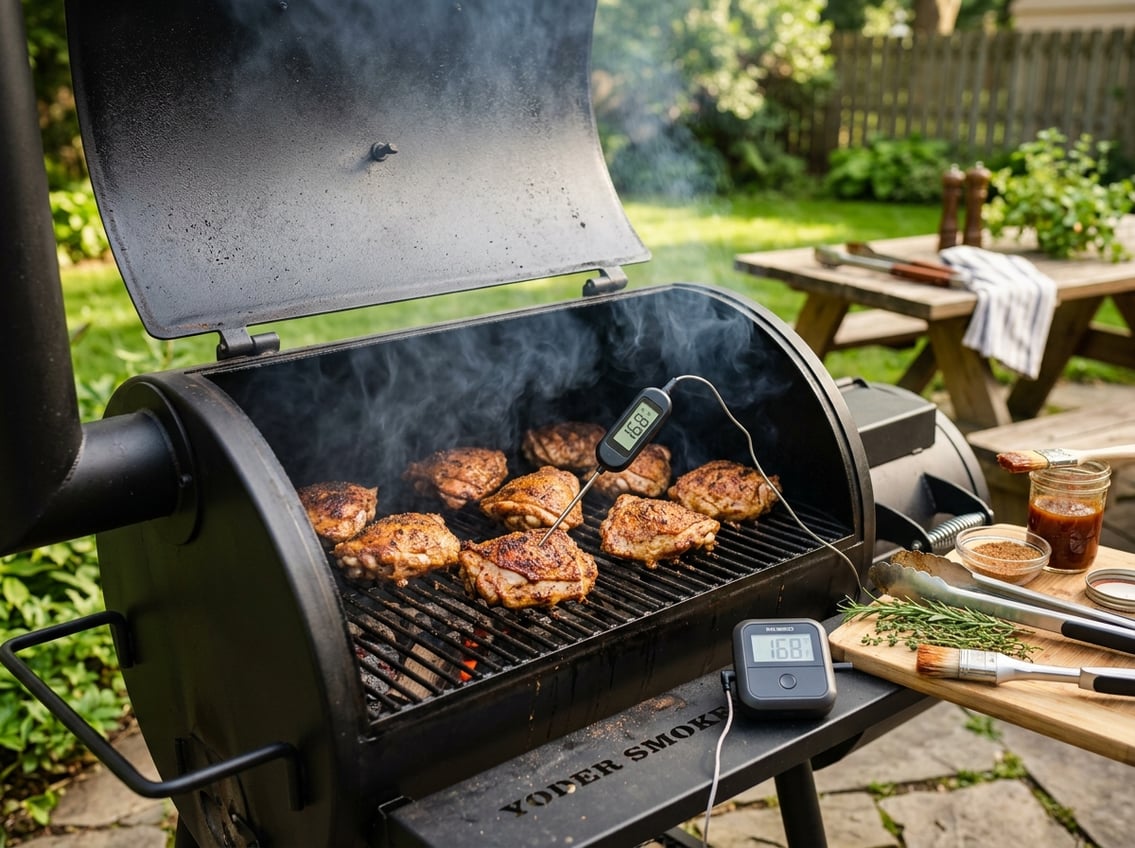
Temperature, bone presence, and preparation affect total cook time. Simple tricks can help you get crisp skin and deep smoke flavor without overcooking.
You’ll find guidance on timing, seasoning, wood choices, and finishing techniques to help your smoked chicken turn out juicy and consistent.
Time and Temperature Essentials for Smoking Chicken Thighs
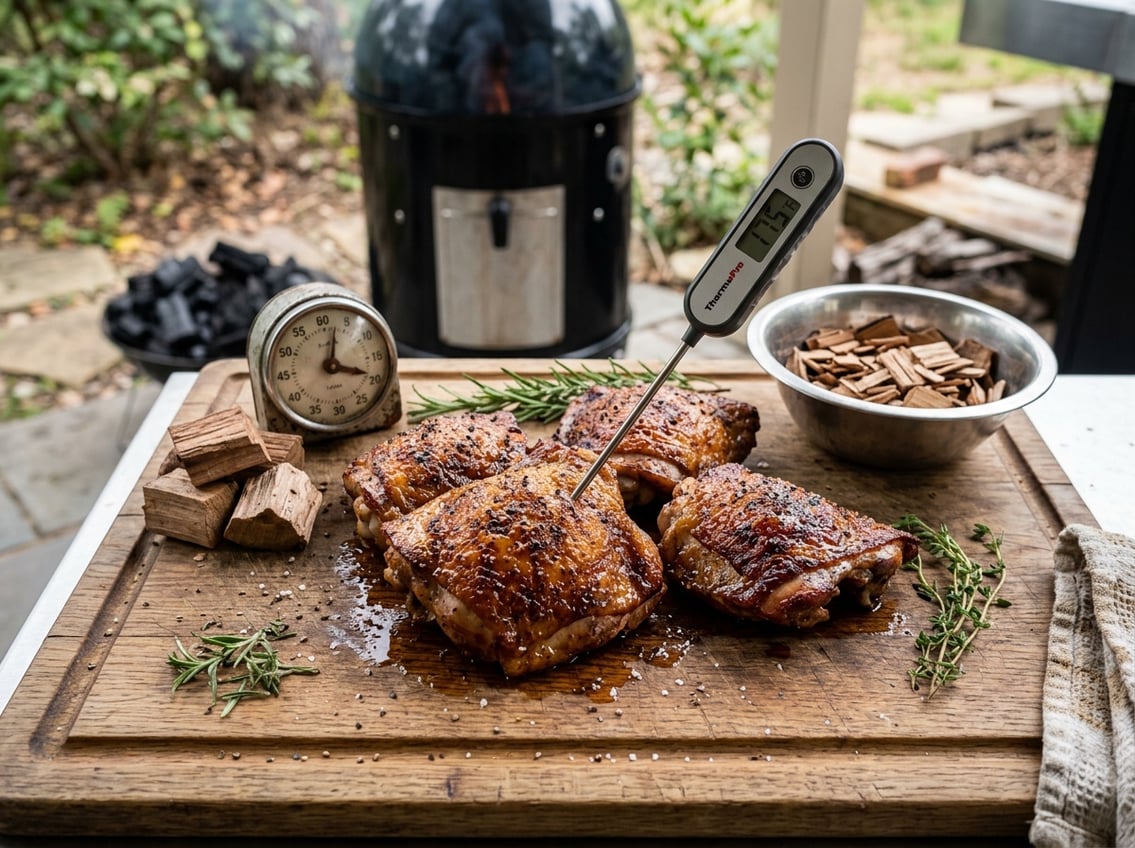
Choose a smoker temperature that matches your desired smoke flavor, skin crispness, and available time. Monitor internal temperature with a probe thermometer.
Plan finishing steps if you want crispy skin.
Recommended Smoking Temperatures
Pick 225°F for maximum smoke absorption and a gentle cook. Expect longer times and plan a high-heat finish if you want crisp skin.
This range gives deep smoke flavor but doesn’t render skin fat quickly.
Use 250°F as a balanced option. It delivers good smoke, shorter smoking time, and better skin rendering than 225°F.
Most backyard cooks use 250°F for consistent results.
Use 275°F when you want a faster cook and naturally better skin render. Smoke flavor will be lighter than at 225°F.
The higher heat often eliminates a separate crisping step. Above 300°F, you move toward roast or sear territory with less smoke and faster cooks.
Typical Smoking Times for Bone-In and Boneless
For bone-in thighs at 225°F, expect roughly 2.0–2.5 hours. At 250°F, expect 1.75–2.25 hours.
At 275°F, expect about 1.0–1.5 hours. Times vary with thigh size, smoker stability, and ambient conditions.
For boneless thighs, subtract about 30–45 minutes from bone-in times at the same temperature. At 225–250°F, boneless thighs often finish in 1.25–2.0 hours.
At 275°F, plan 45–75 minutes. Always check with a meat thermometer rather than relying on time alone.
If you plan to sauce, apply glaze in the final 10–15 minutes to avoid burning. If you’ll finish with a high-heat sear, pull thighs slightly early (around 150–160°F) so the finish brings them to target without overcooking.
Internal Temperature Targets for Food Safety
Insert a calibrated probe thermometer into the thickest part of the thigh, avoiding bone contact. The USDA minimum safe temperature for poultry is 165°F.
For tender, gelatinized thighs, aim for 175–180°F. At that range, connective tissue breaks down and the meat becomes silky and juicy.
Some cooks push to 185–195°F for a fall-off-the-bone result on bone-in thighs, but that can dry boneless or skinless pieces.
Check temperature near the end of smoking and rest thighs 5–10 minutes after pulling. Resting evens internal temperature and redistributes juices.
Choosing and Preparing Chicken Thighs
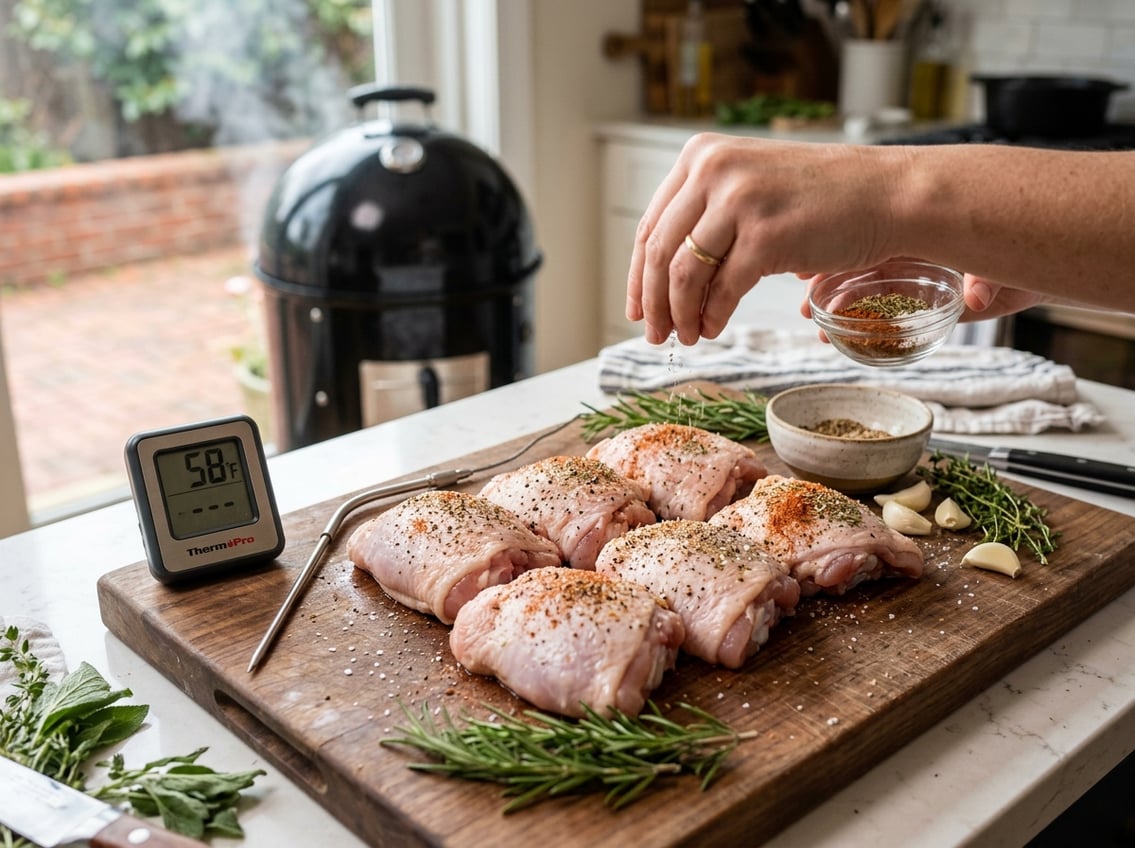
Pick thighs based on your desired time, texture, and flavor. Bone-in and skin-on add flavor and forgiveness during a long smoke.
Boneless or skinless thighs shorten cook time and simplify eating.
Bone-In vs Boneless Chicken Thighs
Bone-in chicken thighs hold heat longer and take roughly 30–45 minutes more at the same smoker temperature than boneless pieces. The bone acts as insulation and contributes subtle marrow flavor during a low-and-slow cook.
This helps the meat stay moist as collagen converts to gelatin around 175–180°F.
Boneless thighs cook faster and more evenly. Expect shorter smoking times and less variability between pieces.
They’re convenient for quick meals and for smoking at higher temps because they reach target temp faster. If you use boneless skinless thighs, pull them at the lower end of the target range to avoid dryness.
Skin-On vs Skinless: What to Know
Skin-on chicken thighs protect the meat from direct smoke and help retain moisture. The skin contains fat that needs higher heat to render.
Smoking at 225°F will require a finish at 400°F or a quick sear to get crispy skin. If you want crisp skin directly from the smoker, choose 275°F or plan a two-stage cook.
Skinless thighs absorb rubs faster and develop stronger surface flavor, but they lose moisture more quickly. Serve sauce on the side if you want remaining skin texture after saucing.
Trimming and Brining Tips
Trim excess loose skin and large fat flaps with kitchen shears so skin lays flat and renders evenly. Pat the thighs completely dry before seasoning.
A dry surface promotes browning and prevents steaming. Tuck skin edges to cover meat where needed for uniform cooking.
Dry-brine or wet-brine your thighs depending on your schedule. For wet brine: dissolve kosher salt (about 1/4 cup per quart water) and brine 4–8 hours for bone-in, 2–4 hours for boneless.
Refrigerate while brining. For dry brine: sprinkle ½–1 teaspoon kosher salt per pound and refrigerate uncovered 8–24 hours to firm the skin and improve flavor.
Avoid flipping chicken thighs frequently while smoking. Keep them skin-side up for most of the cook to let rendered fat baste the meat.
Flip only during a high-heat finish or sear when you want direct contact to crisp the skin.
Smoking Techniques for the Best Results
Control temperature, staging, and finish to balance smoke flavor, internal tenderness, and skin texture. Use a reliable probe thermometer and plan a high-heat finish if you want both deep smoke and crackling skin.
Two-Stage Cooking for Juicy and Crispy Skin
Start by smoking at a low temperature (225–250°F) to maximize smoke absorption and allow connective tissue to convert to gelatin. Smoke until the thighs reach about 150–155°F internal.
At that point, raise the smoker to 400–425°F or transfer the thighs to a hot grill or oven. Apply direct heat for 8–15 minutes to finish the cook and force the subcutaneous fat to render quickly.
Monitor probe temp and pull at 175–180°F for tender, juicy thighs. Keep the lid closed as much as possible and use apple or cherry wood for a balanced smoke profile.
How to Get Crispy Skin on Smoked Chicken Thighs
Dry the skin thoroughly before you smoke and consider a dry brine (salt overnight uncovered) to remove surface moisture. Pat skin with paper towels right before the rub.
Add 1 tsp baking powder per pound to the rub to raise surface pH and speed browning. Smoke skin-side up, leaving the thighs undisturbed so rendered fat can baste the meat.
If you smoke at 275–300°F you’ll render more fat during the cook, but a finishing blast at 400–425°F remains the most reliable way to get crackling skin. For a quick finish, sear skin-side down in a preheated cast-iron skillet with a tablespoon of oil for 4–8 minutes, pressing for full contact.
Apply any sugar-based sauce only in the last 5–10 minutes to avoid burning and to preserve crispness.
Dry Rubs, Seasoning, and Marinades
Choose a balance of salt, sugar, acid, and aromatics to build deep flavor, help the skin brown, and prevent dryness. Apply rubs generously and give time for the flavors to adhere before the smoker reaches temperature.
Essential Spices for Chicken Thighs
Focus on salt first. Kosher salt or sea salt seasons the meat and helps retain juiciness.
Use ¾–1 teaspoon kosher salt per pound of thighs as a starting point. Include garlic powder and onion powder for aroma and backbone.
Garlic powder lends savory depth without burning. Onion powder adds sweetness and complexity.
Add ground black pepper for bite. Paprika and smoked paprika provide color and a mild, smoky note.
Use smoked paprika if you want a stronger smoke character without extra time in the smoker. Brown sugar helps caramelize the skin and balance heat, but reduce if you plan long, high-heat finishing to avoid burning.
Optional accents: cayenne or chili powder for heat, dried thyme or oregano for herbiness, and a touch of mustard powder to enhance crust formation.
Creating Flavorful Dry Rubs
Start with a base ratio: 3 parts paprika (or smoked paprika), 2 parts brown sugar, 2 parts salt, 1 part black pepper, 1 part garlic powder, 1 part onion powder. Adjust for sweetness or heat to match your smoked chicken thighs recipe.
Mix thoroughly and press the rub into both sides of the thighs and under the skin where possible. For best adhesion, pat the meat dry first and brush lightly with oil.
Let the rub sit on the thighs at least 30 minutes at room temperature or refrigerate up to 24 hours. Longer than 24 hours can make the texture mushy if the mix contains acidic ingredients.
When smoking at 225–275°F, the rub will form a flavorful crust. Monitor sugar-heavy rubs near the end to prevent scorching.
Store extra rub in an airtight jar for repeat use.
Wood Selection and Smoke Flavor Pairings
Choose woods that complement chicken’s mild, fatty flavor rather than overpower it. Lighter fruitwoods add sweetness and color while stronger woods add savory depth.
Match wood to your finish and cooking method.
Best Woods for Smoking Chicken
Use apple or cherry for mild, sweet smoke that enhances skin color and keeps the meat approachable. These fruitwoods work well on a pellet smoker or in an offset smoker with short smoke windows.
Choose oak when you want a steady, moderate smoke that won’t dominate. Oak pairs well with longer cooks and holds heat predictably on charcoal grills and wood or charcoal combos.
Reserve hickory for bolder, bacon-like flavor. Use it sparingly—either mixed with fruitwood or used for the first hour only—so the thighs don’t taste bitter.
You can mix woods (such as oak and cherry) to balance color and strength. For pellet smokers, choose blended pellets labeled for poultry to simplify flavor control.
How Wood Choice Influences Smoke Flavor
Wood species change aromatic compounds in the smoke. Fruitwoods lend sweeter phenols, oak adds balanced guaiacol and syringol, and hickory gives stronger phenolic, savory notes.
Smoke intensity also depends on smoke density, wood amount, and cook temperature. Cold, thin smoke at 225–250°F imparts subtle flavor.
Heavy, thick smoke or prolonged exposure creates bitterness. On an offset smoker you’ll get heavier smoke contact than a well-set pellet smoker.
Cooking method alters perception too. Crisping the skin at higher heat after smoking concentrates fat and amplifies whichever wood profile you used.
Adjust wood type and smoking duration to match whether you want mild sweetness, steady backbone, or a pronounced smoky bite.
Serving, Resting, and Storing Smoked Chicken Thighs
Rest the thighs briefly to lock in juices, then serve warm with sauce on the side if you want to preserve crisp skin. Cool leftovers quickly and store them properly to keep flavor and food safety intact.
How to Rest and Serve Smoked Chicken Thighs
Rest thighs for 5–10 minutes loosely tented with foil after they hit 175–180°F. This short rest redistributes juices so slices stay moist and prevents immediate heat loss.
Keep skin crisp by serving skin-on thighs uncovered and plating immediately. If you finished with sauce, brush a thin coat in the last 3–5 minutes of the cook.
Otherwise, serve sauce on the side so your best smoked chicken thighs keep texture. Use a thermometer when reheating or finishing to confirm the internal temp returns to 165°F before serving.
Slice against the grain for boneless thighs, or serve bone-in whole for presentation. Pair with acid-forward sides like coleslaw or pickles to cut richness.
Leftovers and Reheating Tips
Cool leftovers within two hours. Place them in shallow airtight containers and refrigerate; consume within 3–4 days.
For longer storage, freeze leftovers in a vacuum-sealed bag or heavy-duty freezer bag for up to 3 months. Label the bags with the date.
Reheat leftovers gently to preserve moisture and skin texture. To use the oven, set it to 325°F and place leftovers on a wire rack over a pan for 12–20 minutes until the internal temperature reaches 165°F.
If you want crisp skin, finish under the broiler for 1–2 minutes. For the stovetop, warm leftovers in a lightly oiled skillet skin-side down over medium heat until heated through.
Use the microwave only for shredded or sauced leftovers. Set it to 50% power and heat in short bursts, checking the temperature.
When adding leftovers to recipes like tacos, salads, or sandwiches, shred or chop them cold and add at the end of cooking to avoid drying.


