
Fermented Foods for Gut Health: Easy 2026 Recipes from Kimchi to High-Protein Yogurt Bowls
Last updated: July 9, 2026
Your gut microbiome contains roughly 100 trillion bacteria, and what you feed them matters more than most people realize. Fermented foods deliver live probiotics directly to your digestive system while adding bold, complex flavors to everyday meals. This guide covers practical fermented foods for gut health with easy 2026 recipes from kimchi to high-protein yogurt bowls that anyone can make at home, plus answers to common questions about safety, dosing, and which ferments deliver the most benefit.
Key Takeaways
- Fermented foods contain live probiotics that support digestion, immune function, and mental health through the gut-brain axis
- Start with 1-2 tablespoons daily and increase gradually to avoid bloating; most people tolerate 1/2 to 1 cup per day once adjusted
- Kimchi and yogurt offer different probiotic strains: kimchi provides Lactobacillus plantarum and kimchii, while yogurt delivers L. bulgaricus and S. thermophilus
- Homemade ferments are beginner-friendly and often contain more live cultures than pasteurized store-bought versions
- Fermented foods beat supplements for most people because they provide diverse strains, prebiotics, and bioavailable nutrients in one package
- Pregnant women can safely eat most fermented foods but should avoid unpasteurized soft cheeses and check with their provider
- People with SIBO or histamine intolerance may need to limit or avoid fermented foods until underlying issues are addressed
- High-protein yogurt bowls can deliver 20-30 grams of protein per serving when built with Greek yogurt, nuts, seeds, and protein powder
What Are Fermented Foods and How Do They Improve Gut Health?
Fermented foods are created when microorganisms like bacteria, yeast, or molds break down sugars and starches in food, producing beneficial compounds like lactic acid, enzymes, and vitamins. This process preserves food naturally while creating live probiotics that colonize your gut and support the diverse ecosystem of bacteria needed for optimal digestion, immune response, and even mood regulation.
When you eat fermented foods regularly, you introduce beneficial bacteria that:
- Crowd out harmful pathogens by competing for space and resources in your intestinal lining
- Produce short-chain fatty acids like butyrate that reduce inflammation and strengthen gut barrier function
- Synthesize vitamins including K2, B12, and folate that your body absorbs more easily than synthetic versions
- Break down antinutrients like phytic acid in grains and legumes, making minerals more bioavailable
- Communicate with your immune system through the gut-associated lymphoid tissue, training it to respond appropriately to threats
Common fermented foods include yogurt, kefir, kimchi, sauerkraut, miso, tempeh, kombucha, and naturally fermented pickles. Each provides different probiotic strains and nutritional benefits.
Difference Between Probiotics in Kimchi vs Yogurt
Kimchi and yogurt both deliver probiotics but contain completely different bacterial strains and offer distinct health benefits. Kimchi is a lacto-fermented vegetable dish that provides Lactobacillus plantarum, L. brevis, L. kimchii, and sometimes Leuconostoc species, while yogurt contains primarily Lactobacillus bulgaricus and Streptococcus thermophilus, with some brands adding L. acidophilus, L. casei, or Bifidobacterium strains.
Kimchi probiotics excel at:
- Surviving stomach acid to reach the lower intestine
- Producing antimicrobial compounds that fight pathogens
- Supporting immune function through plant fiber fermentation
- Delivering vitamin K2, which yogurt lacks
Yogurt probiotics are better for:
- Lactose digestion (they pre-digest milk sugars)
- Calcium absorption and bone health
- Protein delivery (8-20g per cup depending on type)
- Immediate gut comfort after antibiotic use
For maximum benefit, eat both regularly. The diversity of probiotic strains matters more than the quantity from any single source. Rotating between different fermented foods ensures your gut receives a wide range of beneficial bacteria.
Easiest Fermented Foods to Make at Home for Beginners
Sauerkraut, quick-fermented vegetables, and yogurt are the simplest ferments for beginners because they require minimal equipment, have short fermentation times, and are nearly impossible to mess up. Start with these three before moving to more complex ferments like kombucha or sourdough.
Basic Sauerkraut (3-7 days)
What you need: Cabbage, salt, glass jar, weight
Steps:
- Shred 1 medium cabbage (about 2 pounds)
- Massage with 1 tablespoon sea salt until liquid releases (5-10 minutes)
- Pack tightly into clean jar, pressing down until brine covers cabbage
- Weight down with smaller jar or fermentation weight
- Cover loosely and leave at room temperature 3-7 days, tasting daily
- Refrigerate when tangy enough for your taste
Common mistake: Not using enough salt (aim for 2% by weight) leads to mushy, off-flavored kraut.
Quick Fermented Vegetables (2-3 days)
What you need: Any vegetables (carrots, radishes, cucumbers), salt brine, jar
Steps:
- Slice vegetables into sticks or rounds
- Make 3% brine: dissolve 1 tablespoon salt in 2 cups water
- Pack vegetables in jar, cover with brine
- Ferment 2-3 days at room temperature
- Refrigerate and eat within 2 weeks
Choose this if: You want fast results and crunchy texture without the massage step.
Homemade Yogurt (8-12 hours)
What you need: Milk, 2 tablespoons plain yogurt with live cultures, thermometer
Steps:
- Heat 4 cups milk to 180°F, then cool to 110°F
- Whisk in 2 tablespoons yogurt starter
- Pour into clean jars, cover, and keep warm (oven with light on, heating pad, or yogurt maker)
- Ferment 8-12 hours until thick
- Refrigerate; it will thicken more as it cools
Common mistake: Temperature too high kills cultures; too low prevents fermentation. Stay between 105-115°F for best results. For more precision in your kitchen, consider using smart kitchen scales for home cooking to measure ingredients accurately.
How Much Fermented Food Should I Eat Daily for Gut Health?
Start with 1-2 tablespoons of fermented foods per day and gradually increase to 1/2 to 1 cup daily over 2-3 weeks. This gradual approach allows your gut microbiome to adjust without causing bloating, gas, or digestive discomfort that can occur when introducing large amounts of probiotics suddenly.
Recommended daily amounts by food type:
| Fermented Food | Starting Amount | Target Daily Amount |
|---|---|---|
| Kimchi or sauerkraut | 1-2 tablespoons | 1/4 to 1/2 cup |
| Yogurt or kefir | 1/4 cup | 1 to 2 cups |
| Miso (in soup) | 1 teaspoon | 1-2 tablespoons |
| Kombucha | 4 ounces | 8-16 ounces |
| Tempeh | 2 ounces | 3-4 ounces |
Timing matters: Spread fermented foods throughout the day rather than eating them all at once. Add sauerkraut to lunch, yogurt to breakfast, and miso soup with dinner for consistent probiotic delivery.
Choose variety over volume: Eating small amounts of three different fermented foods provides more diverse probiotic strains than eating a large amount of just one type.
Can Fermented Foods Cause Bloating or Digestive Issues?
Yes, fermented foods can cause temporary bloating, gas, or digestive discomfort, especially when you first introduce them or eat too much too quickly. This happens because the sudden influx of probiotics and fiber changes your gut bacteria composition, producing gas as a byproduct of fermentation in your intestines.
Common causes of fermented food discomfort:
- Too much too soon: Jumping from zero to 1 cup of kimchi daily overwhelms your system
- High histamine content: Aged ferments like aged cheese, sauerkraut, and kombucha contain histamine that some people can’t process well
- FODMAP sensitivity: Fermented foods with garlic, onions, or certain vegetables trigger symptoms in people with IBS
- SIBO (Small Intestinal Bacterial Overgrowth): Adding more bacteria when you already have too many in the wrong place worsens symptoms
How to minimize discomfort:
- Start with low-histamine options like fresh yogurt or short-fermented vegetables
- Increase portion sizes by 1 tablespoon every 3-4 days
- Eat fermented foods with meals, not on an empty stomach
- Choose cooked fermented foods like miso soup or tempeh if raw ferments bother you
- Stay hydrated to help fiber move through your system
When to stop: If symptoms persist after 2 weeks of gradual introduction, or if you experience severe cramping, diarrhea, or skin reactions, consult a healthcare provider before continuing.
Best High-Protein Yogurt Brands for Gut Health 2026
Greek yogurt and Icelandic skyr lead the high-protein category with 15-20 grams per cup, while also delivering live probiotic cultures. Look for brands that list specific probiotic strains on the label and contain at least 1 billion CFU (colony-forming units) per serving, with no added sugars or artificial sweeteners that can disrupt gut bacteria.
Top characteristics to prioritize:
- Protein content: 15+ grams per cup (Greek yogurt, skyr, or Australian-style yogurt)
- Live active cultures: Look for L. acidophilus, L. casei, Bifidobacterium, and L. rhamnosus beyond the standard starter cultures
- Minimal ingredients: Milk and cultures only; avoid thickeners, stabilizers, and added sugars
- Full-fat or 2%: Fat helps absorb fat-soluble vitamins and keeps you satisfied longer
What to avoid:
- Yogurt labeled “heat-treated after culturing” (probiotics are dead)
- Products with more than 10g sugar per serving
- “Light” or “low-fat” versions with added starches and gums
- Yogurt drinks that are pasteurized after fermentation
Budget tip: Buy plain high-protein yogurt in large containers and add your own fruit, nuts, and honey. Pre-flavored varieties cost 2-3 times more and contain added sugars that feed harmful bacteria.
Is Store-Bought Kimchi as Good as Homemade for Probiotics?
Store-bought kimchi can be just as probiotic-rich as homemade if it’s unpasteurized and refrigerated, but many commercial brands are pasteurized for shelf stability, which kills all live cultures. Check the label for “raw,” “unpasteurized,” or “contains live cultures,” and always buy from the refrigerated section, not shelf-stable jars.
Signs of live-culture kimchi:
- Stored in refrigerated section
- Label says “raw,” “unpasteurized,” or “live cultures”
- Ingredients list shows no vinegar (real kimchi ferments naturally without added acid)
- Jar has slight pressure when opened (CO2 from active fermentation)
- Continues to ferment and get tangier in your fridge
Pasteurized kimchi still offers:
- Fiber and prebiotics that feed existing gut bacteria
- Vitamins A, C, and K
- Flavor and low-calorie bulk for meals
- But zero live probiotics
Homemade advantages:
- Control over spice level, salt content, and ingredients
- Maximum probiotic diversity (commercial kimchi often uses single-strain starters)
- Cost savings (homemade costs about $2-3 per quart vs $8-12 for store-bought)
- Fresher taste and customizable fermentation time
Choose store-bought if: You’re new to fermented foods and want to try before committing to making your own, or if you lack time for the 3-5 day fermentation process.
Who Should Avoid Eating Fermented Foods?
People with histamine intolerance, SIBO, severely compromised immune systems, or mold allergies should avoid or limit fermented foods until they address underlying health issues. Additionally, anyone taking MAO inhibitor medications should consult their doctor before eating aged fermented foods due to tyramine content.
Specific conditions requiring caution:
Histamine intolerance: Fermented foods are high in histamine, which can trigger headaches, hives, digestive issues, or anxiety in people who lack sufficient DAO enzyme to break it down. Try fresh yogurt or short-fermented vegetables first, as they contain less histamine than aged products.
SIBO (Small Intestinal Bacterial Overgrowth): Adding probiotics when bacteria are already overgrowing in the wrong location can worsen bloating, pain, and malabsorption. Address SIBO with medical treatment first, then slowly reintroduce fermented foods.
Immunocompromised individuals: People undergoing chemotherapy, taking immunosuppressants, or with HIV/AIDS should avoid unpasteurized fermented foods due to infection risk from live bacteria.
Pregnancy: Most fermented foods are safe and beneficial during pregnancy, but avoid unpasteurized soft cheeses (like some types of feta or blue cheese) and limit kombucha due to alcohol content. Yogurt, kimchi, sauerkraut, and miso are generally safe.
Mold allergies: Fermented foods like tempeh, miso, and some aged cheeses contain mold cultures that may trigger reactions in sensitive individuals.
When to reintroduce: Work with a healthcare provider to address the root cause, then try small amounts of low-histamine ferments like fresh yogurt once symptoms improve.
How Long Does Homemade Kimchi Last in the Fridge?
Homemade kimchi lasts 3-6 months in the refrigerator when stored properly in an airtight container, though it continues to ferment slowly and becomes more sour over time. The cold temperature slows but doesn’t stop fermentation, so flavor and texture will change as beneficial bacteria remain active.
Storage timeline and flavor changes:
- Week 1-2: Mild, crunchy, slightly sweet with developing tang
- Week 3-4: Peak flavor for most people; balanced tang and crunch
- Month 2-3: Very tangy, softer texture, stronger fermented aroma
- Month 4-6: Extremely sour, mushy vegetables, best used in cooked dishes like kimchi fried rice or stew
Signs kimchi has gone bad:
- Visible mold (white, green, or black fuzzy growth on surface)
- Slimy texture throughout (not just soft)
- Foul smell (different from normal fermented aroma)
- Off colors like pink or brown (unless you used red cabbage)
Storage tips for maximum freshness:
- Use clean utensils every time you remove kimchi from the jar
- Press vegetables down so brine covers them completely
- Store in glass jars with tight-fitting lids
- Keep in the back of the fridge where temperature is most stable
- Transfer to smaller jars as you eat it to minimize air exposure
Freezing option: Freeze kimchi in portions for up to 6 months. Texture becomes softer after thawing, but it’s perfect for cooked applications.
Fermented Foods vs Probiotic Supplements: Which Is Better?
Fermented foods are more effective than probiotic supplements for most people because they deliver diverse bacterial strains, prebiotics, enzymes, and bioavailable nutrients in a food matrix that protects probiotics through digestion. Supplements offer convenience and specific high-dose strains for targeted conditions but lack the synergistic benefits of whole foods.
Fermented foods advantages:
- Strain diversity: Kimchi contains 20+ bacterial species; most supplements have 5-10
- Built-in prebiotics: Fiber in vegetables feeds probiotics before and after you eat them
- Bioavailable nutrients: B vitamins, vitamin K2, and minerals in forms your body absorbs easily
- Food matrix protection: Fat, protein, and fiber shield bacteria from stomach acid better than capsules
- Cost-effective: Homemade ferments cost pennies per serving vs $20-60/month for quality supplements
Supplement advantages:
- Specific strains: Target particular conditions (L. rhamnosus GG for diarrhea, B. infantis for IBS)
- High CFU counts: Deliver 10-100 billion CFU per dose vs 1-10 billion in food servings
- Convenience: No preparation, refrigeration, or acquired taste
- Consistency: Same dose and strains every time
- Travel-friendly: Easier to maintain routine away from home
Choose fermented foods if: You’re generally healthy and want to maintain gut health, enjoy cooking, and prefer whole food approaches to nutrition.
Choose supplements if: You have a specific diagnosed condition requiring targeted strains, can’t tolerate fermented food flavors, or need probiotics while traveling extensively.
Best approach: Use fermented foods as your foundation and add targeted probiotic supplements only when addressing specific health issues under professional guidance.
Common Mistakes When Making Yogurt at Home
The most common yogurt-making mistakes are incorrect temperature control, using old or heat-damaged starter culture, and not fermenting long enough. These errors result in thin, runny yogurt with weak flavor instead of thick, tangy yogurt packed with probiotics.
Temperature errors:
- Too hot (above 120°F): Kills probiotic cultures completely; yogurt won’t set
- Too cold (below 100°F): Fermentation is too slow or stops; yogurt stays liquid
- Solution: Use a thermometer and maintain 105-115°F throughout fermentation
Starter culture problems:
- Old yogurt: Cultures lose viability after 2-3 weeks; use fresh yogurt or freeze starter portions
- Wrong type: Greek yogurt that’s been strained may have fewer live cultures; use regular yogurt labeled “live active cultures”
- Too little starter: Use 2 tablespoons per quart of milk; less won’t acidify properly
- Solution: Buy fresh plain yogurt with multiple probiotic strains listed, or use freeze-dried starter packets
Fermentation time issues:
- Too short (under 6 hours): Yogurt is thin and barely tangy
- Too long (over 24 hours): Yogurt becomes very sour and may separate
- Solution: Start checking at 8 hours; yogurt should coat a spoon and have mild tang
Milk quality matters:
- Ultra-pasteurized milk: Proteins are damaged and won’t set properly; use regular pasteurized milk
- Non-dairy milk: Requires special cultures and often needs thickeners; not recommended for beginners
Equipment cleanliness:
- Competing bacteria from dirty jars or utensils can prevent proper fermentation or cause off flavors
- Sterilize all equipment with boiling water before use
For more detailed cooking techniques and precision, explore our guide on bitter and umami mastery with fermentation.
Are Fermented Foods Safe During Pregnancy?
Most fermented foods are safe and beneficial during pregnancy, providing probiotics that support maternal gut health and may reduce the risk of gestational diabetes, preeclampsia, and postpartum depression. However, pregnant women should avoid unpasteurized soft cheeses, limit kombucha due to alcohol content, and ensure all ferments are properly refrigerated and fresh.
Safe fermented foods during pregnancy:
- Yogurt and kefir: Excellent calcium and protein sources; choose pasteurized milk varieties
- Kimchi and sauerkraut: Rich in folate and vitamin K; rinse if concerned about sodium
- Miso and tempeh: Provide plant protein and B vitamins; miso is high in sodium, so use moderately
- Pickles (naturally fermented): Safe in moderation; watch sodium intake
- Sourdough bread: Easier to digest than regular bread; safe when fully baked
Fermented foods to avoid or limit:
- Unpasteurized soft cheeses: Brie, Camembert, blue cheese, and some feta may contain Listeria
- Kombucha: Contains trace alcohol (0.5-3%) and caffeine; limit to 4 ounces daily or avoid
- Homemade ferments older than 2 months: Higher risk of contamination; use fresh batches
- Fermented fish or meat: Higher food safety risk; avoid unless from trusted commercial source
Benefits during pregnancy:
- Probiotics may reduce morning sickness and constipation
- Support immune system development in the baby
- Lower risk of eczema and allergies in infants
- Improve nutrient absorption, especially iron and calcium
When to check with your provider: If you have a history of listeriosis, compromised immune system, or high-risk pregnancy, discuss fermented foods with your healthcare team before adding them to your diet.
Do Fermented Foods Help with IBS or SIBO?
Fermented foods can help some people with IBS by improving gut bacteria diversity and reducing inflammation, but they may worsen symptoms in others, particularly those with SIBO or IBS triggered by high-FODMAP foods. The response is highly individual and depends on your specific IBS subtype and underlying gut bacteria imbalance.
When fermented foods help IBS:
- IBS-C (constipation-predominant): Probiotics from yogurt and kefir can improve bowel regularity
- Post-infectious IBS: Probiotics help restore gut bacteria after gastroenteritis
- Low bacterial diversity: Fermented foods introduce beneficial strains that may be missing
- Best strains for IBS: Bifidobacterium infantis, Lactobacillus plantarum, and Saccharomyces boulardii
When fermented foods worsen symptoms:
- SIBO: Adding bacteria when you already have overgrowth in the small intestine increases bloating, pain, and gas
- IBS-D (diarrhea-predominant): High-FODMAP ferments like kimchi with garlic or onions trigger symptoms
- Histamine intolerance: Aged ferments cause headaches, flushing, and digestive distress
- During active flare: Wait until symptoms calm before introducing new foods
How to test tolerance:
- Start during a symptom-free period
- Choose low-FODMAP options first: plain yogurt, tempeh, or sauerkraut without garlic
- Begin with 1 tablespoon daily for 3-4 days
- Track symptoms in a food diary
- Increase slowly only if no symptoms occur
- Stop immediately if symptoms worsen and try again in 2-3 months
SIBO-specific guidance: Treat SIBO with antibiotics or herbal antimicrobials first, then slowly reintroduce fermented foods during the maintenance phase. Work with a gastroenterologist or dietitian familiar with SIBO protocols.
Alternative approach: If fermented foods worsen symptoms, focus on prebiotic foods (cooked and cooled potatoes, oats, bananas) that feed existing beneficial bacteria without adding new strains.
How to Add More Protein to Yogurt Bowls
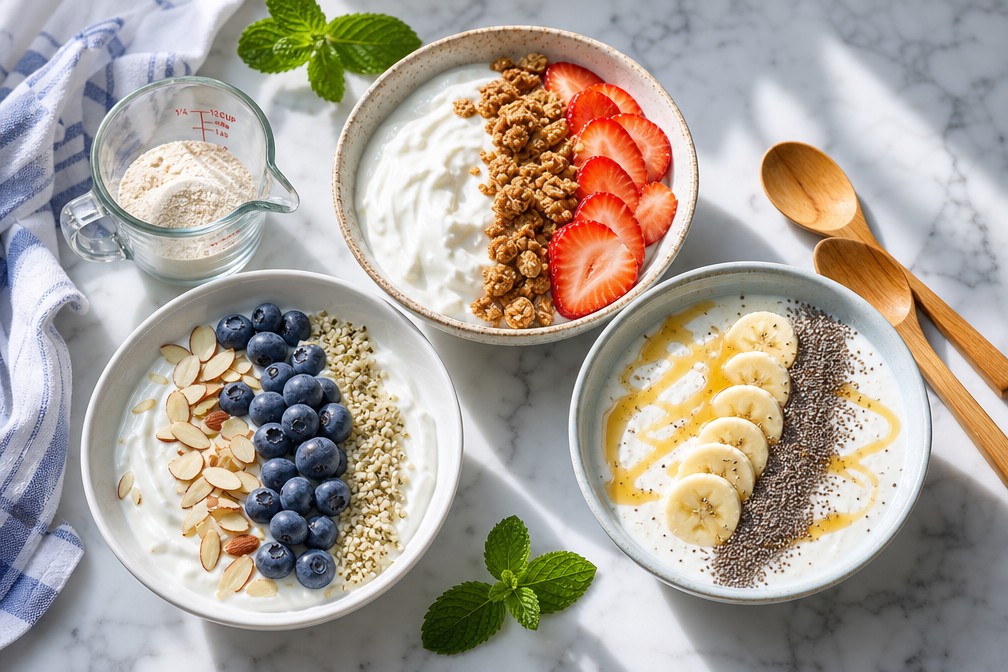
Boost yogurt bowl protein to 25-35 grams per serving by starting with Greek yogurt or skyr (15-20g), adding 1-2 tablespoons of nuts or seeds (3-5g), mixing in a scoop of unflavored protein powder (15-20g), and topping with high-protein ingredients like hemp hearts or nut butter.
High-protein yogurt bowl formula:
Base (15-20g protein):
- 1 cup Greek yogurt (17-20g)
- 1 cup Icelandic skyr (15-18g)
- 3/4 cup Australian-style yogurt (15g)
Protein boosters (choose 2-3):
- 1 scoop unflavored whey or plant protein powder (15-20g)
- 2 tablespoons hemp hearts (6g)
- 2 tablespoons almond or peanut butter (7-8g)
- 1/4 cup cottage cheese mixed in (7g)
- 2 tablespoons chia seeds (4g)
- 1/4 cup granola with added protein (5-8g)
- 2 tablespoons pumpkin seeds (5g)
Sample 30g protein bowl:
- 1 cup Greek yogurt (20g)
- 1 tablespoon almond butter (4g)
- 2 tablespoons hemp hearts (6g)
- 1/4 cup berries
- Drizzle of honey
- Total: 30g protein
Protein powder tips:
- Use unflavored or vanilla to avoid artificial taste
- Mix powder with a small amount of yogurt first to prevent clumping
- Add liquid (milk or water) if mixture becomes too thick
- Collagen peptides dissolve easily but provide incomplete protein (missing tryptophan)
Texture and flavor balance:
- Add crunchy elements (nuts, seeds, granola) for contrast
- Include fresh or frozen fruit for natural sweetness
- Use cinnamon, vanilla extract, or cocoa powder for flavor without sugar
- Layer ingredients for visual appeal and varied bites
Meal prep strategy: Portion Greek yogurt into containers, add protein powder and seeds, then top with fresh fruit each morning. Pre-mixed bases last 3-4 days refrigerated.
For more protein-focused meal ideas, check out our guide on healthy chicken breast preparation.
Easy 2026 Fermented Food Recipes for Daily Meals
Quick Breakfast Kimchi Scramble
Ingredients:
- 3 eggs
- 1/4 cup chopped kimchi
- 1 tablespoon kimchi juice
- 1 teaspoon sesame oil
- Green onions for garnish
Instructions:
- Whisk eggs with kimchi juice
- Heat sesame oil in pan over medium heat
- Pour in eggs, let set 30 seconds
- Add chopped kimchi and scramble until just set
- Garnish with green onions
Protein: 20g | Time: 5 minutes
High-Protein Yogurt Bowl with Fermented Berries
Ingredients:
- 1 cup Greek yogurt
- 1/2 cup berries (ferment optional: toss with 1 tsp honey, leave 2 days at room temp)
- 2 tablespoons hemp hearts
- 1 tablespoon almond butter
- 1 tablespoon chia seeds
- Drizzle of honey
Instructions:
- Spoon yogurt into bowl
- Top with fermented or fresh berries
- Sprinkle hemp hearts and chia seeds
- Add dollop of almond butter
- Drizzle with honey
Protein: 32g | Time: 3 minutes
Fermented Veggie Rice Bowl
Ingredients:
- 1 cup cooked rice
- 1/2 cup sauerkraut or kimchi
- 1/2 cup cooked protein (chicken, tofu, or tempeh)
- 1 soft-boiled egg
- 1 tablespoon sesame seeds
- Soy sauce and sesame oil to taste
Instructions:
- Warm rice in bowl
- Arrange protein, fermented vegetables, and egg on top
- Sprinkle with sesame seeds
- Drizzle with soy sauce and sesame oil
Protein: 28g | Time: 10 minutes (with pre-cooked ingredients)
Miso-Glazed Vegetables
Ingredients:
- 2 cups mixed vegetables (broccoli, carrots, bell peppers)
- 2 tablespoons white miso paste
- 1 tablespoon rice vinegar
- 1 teaspoon honey
- 1 teaspoon sesame oil
Instructions:
- Roast vegetables at 425°F for 20 minutes
- Whisk together miso, vinegar, honey, and oil
- Toss roasted vegetables with miso glaze
- Serve warm or at room temperature
Time: 25 minutes
Fermented Egg Snack
Ingredients:
- 6 hard-boiled eggs, peeled
- 1/2 cup soy sauce
- 1/2 cup water
- 2 tablespoons rice vinegar
- 1 tablespoon honey
- 2 cloves garlic, sliced
- 1 teaspoon ginger, grated
Instructions:
- Combine all ingredients except eggs in jar
- Add eggs, ensuring they’re submerged
- Refrigerate 3-7 days
- Eggs develop savory, umami flavor and keep 2 weeks
Protein per egg: 6g | Fermentation time: 3-7 days
These recipes demonstrate how to incorporate fermented foods for gut health with easy 2026 recipes from kimchi to high-protein yogurt bowls into every meal without complicated preparation or exotic ingredients.
Frequently Asked Questions
Can I eat fermented foods every day? Yes, eating fermented foods daily is safe and beneficial for most people. Start with small amounts (1-2 tablespoons) and work up to 1/2 to 1 cup per day spread across meals for optimal gut health benefits.
Do fermented foods need to be refrigerated? Once fermented to your desired taste, refrigerate fermented foods to slow fermentation and maintain quality. Unrefrigerated ferments continue to sour and may become too acidic or develop off flavors within days.
Can I use store-bought yogurt as a starter? Yes, any plain yogurt labeled “live active cultures” works as a starter for homemade yogurt. Use 2 tablespoons per quart of milk and ensure the yogurt is fresh (not close to expiration date).
How do I know if my fermented food has gone bad? Discard fermented foods with visible mold (fuzzy growth), slimy texture throughout, foul odors distinctly different from normal fermented smell, or unusual colors like pink or brown. Normal fermentation produces tangy smells and may have white yeast (kahm) on the surface that can be skimmed off.
Can children eat fermented foods? Yes, children can safely eat fermented foods starting around 6-8 months when introducing solid foods. Begin with small amounts of plain yogurt, then gradually introduce other ferments as they grow. Avoid honey-containing ferments for children under 12 months.
Will cooking fermented foods kill the probiotics? Yes, heating fermented foods above 115°F kills most probiotic bacteria. Add fermented foods to dishes after cooking (kimchi on top of rice, miso stirred into soup after removing from heat) to preserve live cultures.
Can I ferment vegetables without salt? Salt is essential for safe vegetable fermentation because it inhibits harmful bacteria while allowing beneficial Lactobacillus to thrive. Use at least 2% salt by weight for safe fermentation; salt-free methods risk spoilage and foodborne illness.
How long does it take to see gut health benefits from fermented foods? Most people notice improved digestion within 1-2 weeks of eating fermented foods daily. Significant changes to gut bacteria diversity typically occur within 4-6 weeks of consistent consumption.
Can I freeze fermented foods? Yes, you can freeze most fermented foods for 3-6 months, though texture may soften after thawing. Freezing kills some but not all probiotics. Frozen ferments work best in cooked dishes rather than eaten raw.
Do fermented foods contain alcohol? Some fermented foods contain trace amounts of alcohol. Kombucha typically has 0.5-3% alcohol, while most other ferments like yogurt, kimchi, and sauerkraut contain negligible amounts (less than 0.5%).
Can I make fermented foods if I have a mold allergy? People with mold allergies should avoid mold-fermented foods like tempeh, miso, and aged cheeses but can usually tolerate bacteria-fermented foods like yogurt, kimchi, and sauerkraut. Consult your allergist before introducing new fermented foods.
What’s the white film on top of my fermented vegetables? White film (kahm yeast) is harmless but can cause off flavors. Skim it off and ensure vegetables stay submerged under brine. It’s not mold (which is fuzzy and colored) and doesn’t make the ferment unsafe.
Conclusion
Fermented foods for gut health with easy 2026 recipes from kimchi to high-protein yogurt bowls offer a practical, delicious way to support your digestive system, immune function, and overall wellness. By starting with simple ferments like sauerkraut or yogurt, gradually increasing your intake, and rotating between different probiotic-rich foods, you can build a diverse gut microbiome that supports long-term health.
Your next steps:
- Choose one fermented food to try this week – start with plain Greek yogurt if you’re completely new, or make a simple sauerkraut if you’re ready to ferment at home
- Start small – begin with 1-2 tablespoons daily and increase gradually over 2-3 weeks to avoid digestive discomfort
- Track your response – note any changes in digestion, energy, or mood in a simple food journal
- Experiment with recipes – try the high-protein yogurt bowl or kimchi scramble to make fermented foods a regular part of your meals
- Rotate your ferments – aim to eat 2-3 different types of fermented foods weekly for maximum probiotic diversity
Remember that fermented foods work best as part of an overall healthy diet rich in fiber, vegetables, and whole foods. The probiotics in fermented foods need prebiotics (fiber) to thrive, so pair your kimchi with whole grains and your yogurt with fruit for optimal gut health benefits.
Whether you’re making your first batch of sauerkraut or building the perfect high-protein yogurt bowl, these fermented foods for gut health with easy 2026 recipes from kimchi to high-protein yogurt bowls provide a foundation for better digestion and wellness that you can maintain for life.