
What’s the Best Way to Season Chicken Thighs: Pro Techniques and Flavorful Combinations
You want juicy, flavorful chicken thighs without guessing which spices or techniques actually work.
Focus on salt for depth, an acid or oil to carry flavors, and a quality blend of herbs and spices like paprika, garlic, black pepper, and thyme or rosemary to build complexity.
Use a dry rub for quick flavor or a simple marinade when you can plan ahead.
Season generously and let the seasoning penetrate for at least 30 minutes for basic rubs, or several hours for marinades.
This approach helps you get consistently seasoned chicken thighs with crisp skin and juicy meat.
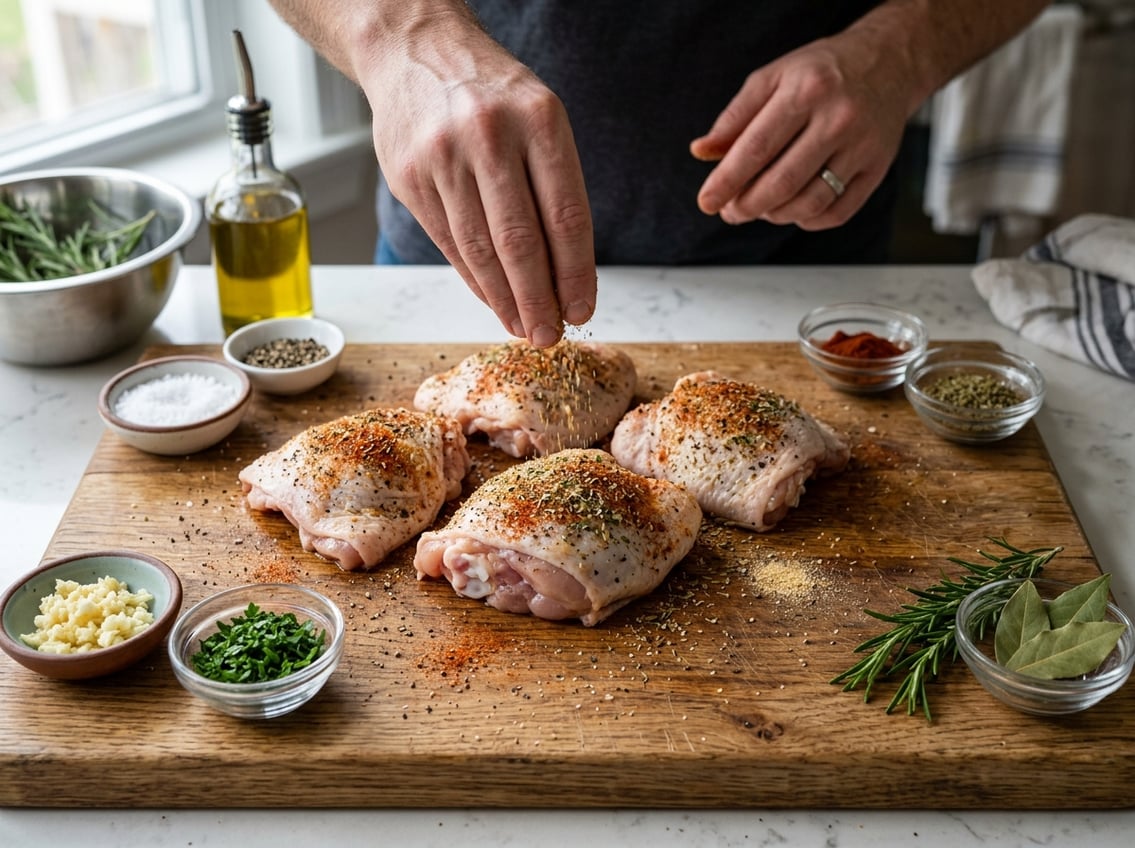
This guide explains what to use and how to apply it so your seasoned chicken thighs taste great on grills, in ovens, and in pans.
You’ll see how cut choice, heat management, and resting time affect seasonings and how to store or scale blends for future meals.
Essential Seasonings for Chicken Thighs
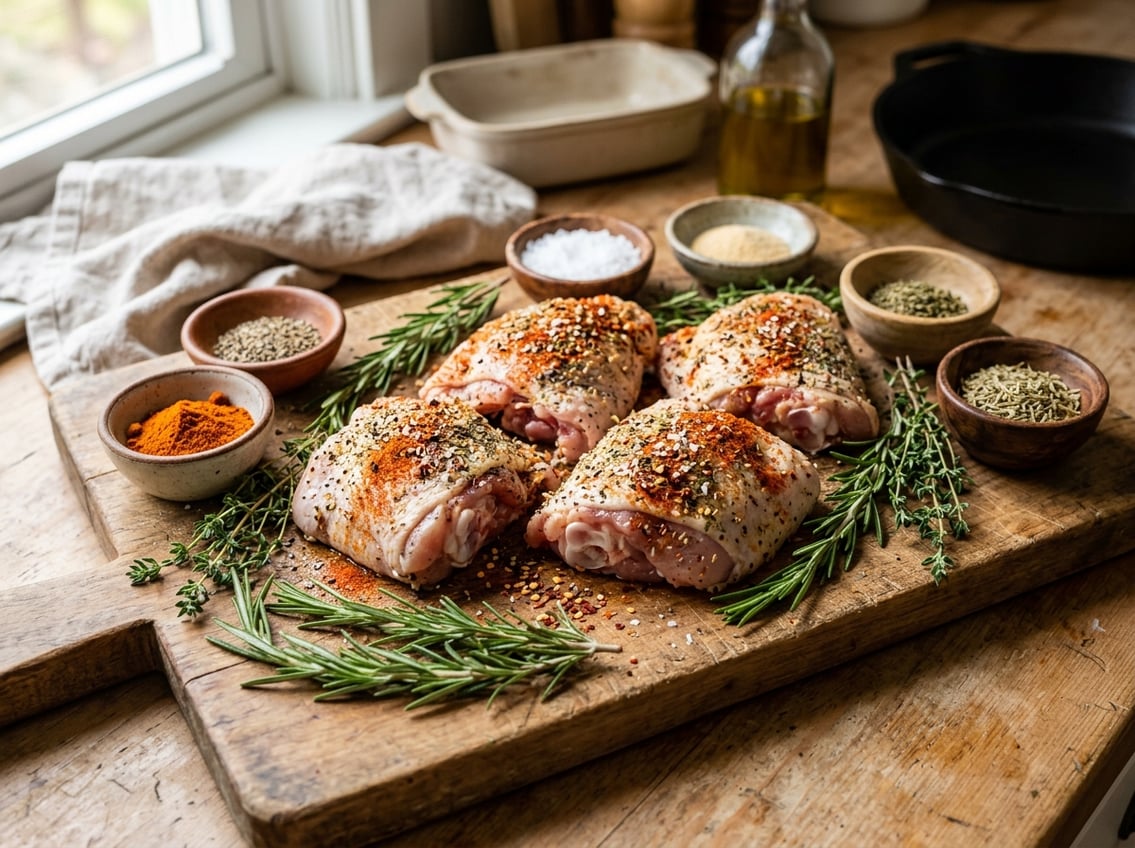
Start with salt and black pepper, then layer in aromatics, smoke, herbs, heat, or a touch of sweetness to match your cooking method.
Measure generously but taste intentionally.
Salt controls juiciness, spices add character, and a little sugar or acid balances the finish.
Must-Have Spices and Herbs
Salt is essential.
Use sea salt or kosher salt and season both under the skin and on the surface for even flavor.
Grind fresh black pepper for sharper aroma.
A light crack offers more flavor than pre-ground pepper.
Garlic powder and onion powder add savory depth without wetness, making them ideal for dry rubs.
Paprika brings color and mild sweetness.
Choose smoked paprika for a charred, smoky note.
Thyme and rosemary work well with roasted or baked thighs.
Add sprigs or dried leaves for earthy complexity.
Dried oregano and Italian seasoning suit Mediterranean dishes.
Use basil sparingly on high-heat finishes to avoid bitterness.
Popular Seasoning Combinations
For a classic roast, combine sea salt, black pepper, garlic powder, paprika, and a sprinkle of thyme.
This mix crisps skin and enhances pan juices.
For a smoky barbecue rub, use smoked paprika, brown sugar, chili powder, cumin, salt, and cayenne.
Balance the sugar with acid when serving.
For Italian-style, mix garlic powder, onion powder, dried oregano, basil, and a pinch of black pepper.
A simple weeknight mix uses equal parts salt, black pepper, paprika, and a little brown sugar for caramelization.
Store your seasoning mix in an airtight jar and label it to save time and avoid excess additives.
Customizing the Heat and Sweetness
Adjust heat with cayenne pepper or extra chili powder.
Start with 1/8 to 1/4 teaspoon per pound and scale up.
Use chili powder for smoky, layered heat and cayenne for sharper spice.
Brown sugar adds caramel notes and helps form a crust under high heat.
Use 1 to 2 teaspoons per thigh in a rub, or omit for savory dishes.
Balance spicy-sweet combos with acid like lemon juice or vinegar before serving to brighten flavors.
For complexity without extra sugar, increase cumin and smoked paprika.
If you prefer herb-forward thighs, use more rosemary and thyme and skip the sugar.
Techniques for Applying Seasonings
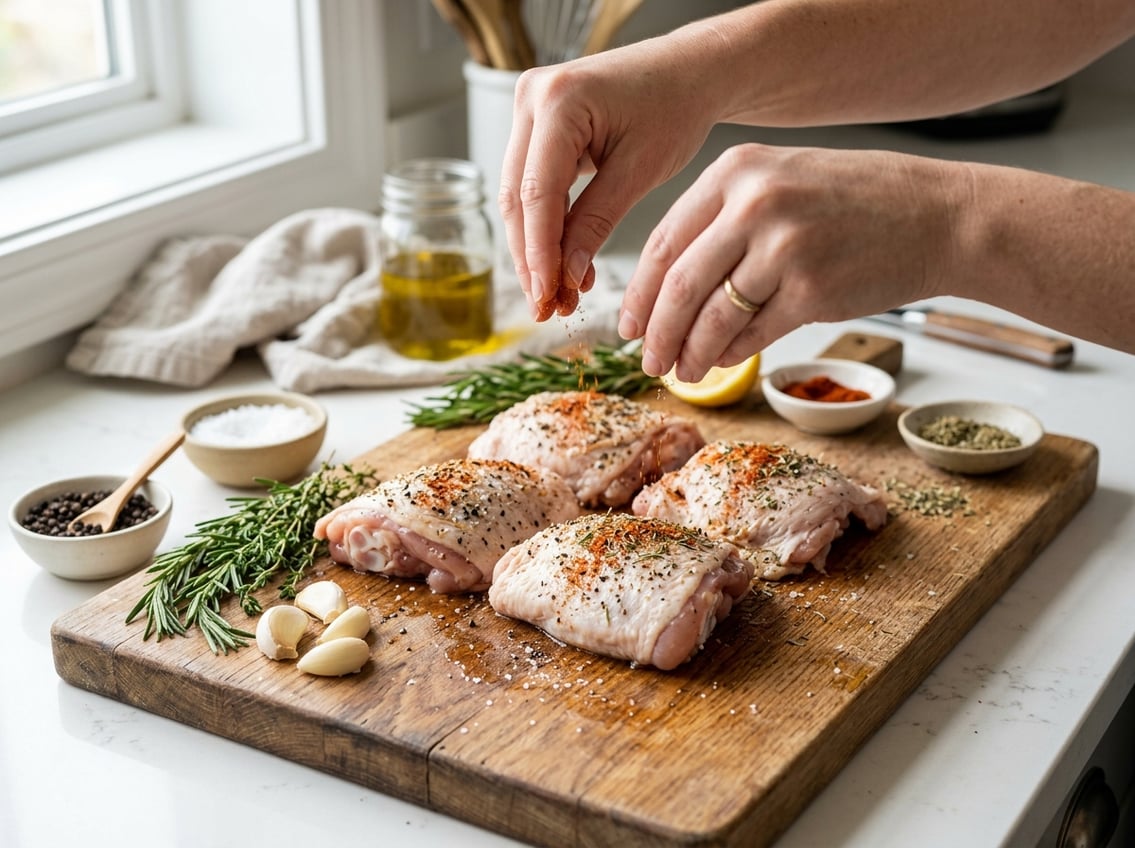
Season with intention.
Choose a seasoning format that matches your cooking method and available time.
Control salt, layer flavors, and pay attention to placement for the best texture and taste.
Dry Rubs for Maximum Flavor
Dry rubs put concentrated flavor directly on the skin and surface.
Mix kosher salt (3/4 to 1 teaspoon per pound), cracked black pepper, paprika, garlic powder, and a touch of brown sugar for caramelization.
Use about 1 to 2 tablespoons of rub per pound of chicken.
Pat thighs dry first so the rub sticks and the skin crisps.
Press the rub into both sides and let the seasoned thighs rest uncovered in the refrigerator for 30 minutes to overnight.
Longer rest increases penetration and skin dryness for better browning.
Apply rub just before grilling or roasting if you’re short on time, or up to 24 hours ahead for deeper flavor.
For even coverage, use your hands to massage the rub under any loose skin as well as on top.
Creating and Using Marinades
Marinades add moisture and infuse flavor more deeply than a dry rub when you include an acid and oil.
Use a basic ratio of 3 parts oil (olive oil) to 1 part acid (lemon juice or vinegar), plus aromatics like minced garlic, chopped herbs, and 1 teaspoon salt per pound.
Combine ingredients in a resealable bag, add the thighs, remove excess air, and chill.
Marinate for 30 minutes to 4 hours for boneless thighs.
Marinate bone-in thighs for 4 to 12 hours.
Avoid over-marinating acidic mixtures for more than 12 hours to prevent mealy texture.
Pat the thighs dry before cooking to promote browning.
Reserve a small portion of marinade before adding raw chicken if you want to baste while cooking.
Otherwise, discard used marinade or boil it before using as a sauce.
Proper Seasoning Under the Skin
Seasoning under the skin puts flavor and fat closest to the meat.
Gently loosen the skin with your fingers or a small spoon, starting at the edge near the cavity or thickest part.
Spread a thin layer of olive oil or softened butter under the skin, then sprinkle salt, minced garlic, herbs, and a pinch of pepper directly onto the meat.
Smooth the skin back down and rub a little more seasoning on the exterior.
This method keeps meat juicy and infuses direct garlic and herb notes.
Use it with a dry rub or a small amount of marinade.
The oil under the skin helps distribute flavors without washing them away.
Choosing and Preparing Chicken Thighs
Pick thighs that match your cooking plan.
Choose bone-in for deeper flavor and skin-on for crisping, or boneless/skinless for faster cooking and easier slicing.
Trim excess fat, pat thoroughly dry, and season under the skin or directly on the meat to maximize flavor penetration.
Bone-In vs. Boneless Cuts
Bone-in thighs deliver more flavor and stay juicier during long cooking because the bone conducts heat and protects the meat from drying.
Roast, braise, or grill bone-in thighs over medium heat.
They tolerate higher, longer temperatures without losing moisture.
Boneless thighs cook faster and are easier to portion and shred for salads, tacos, or stir-fries.
Use boneless thighs for quick weeknight meals or when you want uniform pieces for even searing.
Bone-in pieces benefit from a longer rest or marinade time so salt and aromatics reach deeper.
With boneless thighs, keep marinades shorter (30 to 90 minutes) to avoid mushy texture from acids.
Skin-On vs. Skinless Preparation
Skin-on thighs produce the crispiest, most flavorful exterior because the skin renders fat and browns under high heat.
Always pat skin dry and salt it generously to draw out moisture before roasting at 425°F (220°C) or searing in a hot pan.
Slip seasoning and a thin layer of fat (olive oil or softened butter) under the skin to flavor the meat without burning the surface.
Skinless thighs absorb rubs and marinades more directly.
Apply seasoning at least 15 minutes before cooking for immediate flavor or up to several hours for deeper taste.
Skinless thighs cook faster and work well for pan-frying and quick broils.
Adjust cooking time to prevent overcooking and drying.
Cooking Methods and Seasoning Impact
Different cooking methods change how seasoning behaves and what textures you can expect.
Pay attention to surface moisture, fat rendering, and direct or indirect heat when choosing salt levels, herbs, and basting fats.
Baking and Roasting Techniques
When you bake or roast chicken thighs or a whole chicken, dry heat over time concentrates flavors and renders fat slowly.
Pat the skin dry, season under the skin with a paste of salt, minced garlic, and softened butter or oil, and rub the exterior with salt and pepper.
Use a moderate oven (375 to 425°F / 190 to 220°C) for balanced browning and internal doneness.
Higher heat speeds skin browning but can dry the interior if overcooked.
Add aromatics like halved lemons, rosemary sprigs, or onion under the bird or around thighs to infuse flavor into the cavity and pan juices.
For baked chicken thighs on a sheet pan, give space between pieces so hot air circulates and salt sits on the surface rather than steaming into the meat.
Grilling for Smoky Flavor
Grilled chicken thighs take well to bold, oil-based rubs and marinades because direct flame and smoke intensify surface flavors quickly.
Salt the thighs 15 to 30 minutes before grilling to let moisture rise and reabsorb.
Marinate up to a few hours with acid (vinegar, citrus) plus oil and spices to tenderize and infuse flavor.
Use two heat zones on the grill.
Sear over high heat to char and caramelize sugars, then move to indirect heat to finish without burning.
Add wood chips or a smoker box for subtle smoke that pairs well with paprika, cumin, or chipotle in the rub.
Flip sparingly and watch for flare-ups if you’ve used a sugary glaze.
Move thighs away from direct flame to avoid bitter char.
Achieving Crispy Skin
Crispy skin depends on dryness, salt, and rendered fat more than complex spices.
Remove excess moisture with paper towels and salt the skin liberally.
A light dusting of baking powder blended with salt can help raise pH and promote browning.
For roasted or baked chicken thighs, start skin-side up and cook at higher temperatures or finish under a broiler for 3 to 5 minutes to crisp.
For grilled chicken thighs, crispness comes from initial high-heat searing and allowing fat to render.
Avoid flipping until the skin releases naturally.
Seasoning under the skin keeps the meat flavorful while the outer skin stays dry and crisp.
Best Practices for Seasoning Chicken Variations
Adjust salt, acid, and fat to match the cut’s thickness and cooking method.
Use a focused spice profile like garlic, paprika, and thyme, and change concentration and contact time for breasts, whole birds, or blends like poultry seasoning.
Seasoning Chicken Breasts
Chicken breasts are lean and cook quickly, so prioritize salt and a short marinate or dry rub.
Pat the breasts dry, then season with 3/4 to 1 teaspoon kosher salt per pound and 1/2 to 1 teaspoon black pepper.
Add garlic powder and smoked paprika for depth.
If using an acidic marinade like lemon, yogurt, or vinegar, limit marinating to 30 to 90 minutes to avoid a mealy texture.
Pound thicker breasts to uniform thickness or slice them for faster searing.
Finish with a little oil or butter in the pan to add fat and carry flavor.
Rest breasts 5 minutes before slicing to keep juices inside.
Whole Chicken and Other Cuts
Whole chickens and bone-in cuts tolerate longer seasoning time and stronger flavors.
For a whole bird, apply a dry brine of 1 to 1.5% salt by weight (about 1 to 1.5 teaspoons kosher salt per pound) under and over the skin and refrigerate uncovered for 12 to 24 hours.
Use poultry seasoning or a blend of sage, thyme, rosemary, and nutmeg sparingly with the salt for classic roast flavor.
For thighs and drumsticks, rub spices directly on skin and marinate 1 to 4 hours.
These cuts withstand more acid and longer cook times, so you can use bold marinades with vinegar or soy.
Tuck aromatics into the cavity of a whole chicken.
Baste or roast at high initial heat (425°F/220°C) to crisp skin, then lower to finish.
Tips for Storing and Using Seasoning Blends
Keep blends dry, labeled, and away from heat and light to preserve aroma and potency.
Measure salt separately when possible and portion mixes for quick use.
Mixing and Storing Homemade Blends
Mix spices in a clean, dry bowl. Grind any whole spices for a fresher flavor.
Use a ratio approach for blends. For example, try 3 parts paprika, 1 part garlic powder, 1 part onion powder, 1/2 part dried herbs, plus salt to taste.
Add salt and black pepper last so you can adjust per recipe.
Store blends in airtight glass jars or opaque tins to limit light exposure. Label each jar with contents and date.
Most dry blends stay good for 3 to 6 months for best flavor. Keep jars in a cool pantry, not above the stove.
Avoid moisture by using a dry spoon each time. Do not double-dip.
Freeze large batches in sealed bags for up to 6 months and thaw at room temperature before use.
For salt-free blends, add salt at cooking time so you can control sodium for different recipes.
How Much Seasoning to Use per Portion
Start with 1 teaspoon of dry seasoning blend for every 4–6 ounces (115–170 g) of chicken thigh when cooking immediately. If the blend contains salt, use 3/4 teaspoon per portion to prevent over-salting.
Increase to 1.5 teaspoons for bone-in, skin-on thighs because the bone reduces the seasoning’s impact. When marinating or rubbing ahead, use 1–1.5 tablespoons of blend per pound (450 g) of chicken thighs for stronger flavor after 1–24 hours.
If you use a salt-and-pepper mix, sprinkle 1/4 to 1/2 teaspoon kosher salt per pound before cooking. Add the pepper-forward blend to taste.
Adjust based on cooking method. Grilling and roasting can handle stronger rubs, while poaching and braising need lighter seasoning since the cooking liquid intensifies flavors.
Taste as you go. Start with less, then add more at plating if necessary.


