Olive Oil Cake Recipes and Modern Citrus Desserts for Spring and Summer
Last updated: June 30, 2026
Desserts are shifting toward lighter, more aromatic profiles in 2026, with olive oil cakes and citrus-forward treats replacing heavy butter-based classics. Olive oil cake recipes and modern citrus desserts for spring and summer combine Mediterranean ingredients with bright, seasonal flavors to create moist, dairy-free cakes that taste fresh rather than rich. These desserts work beautifully for warm-weather gatherings because they’re less dense than traditional cakes and pair naturally with fresh fruit, herbs, and floral notes.
Key Takeaways
- Olive oil creates a uniquely moist texture that stays fresh longer than butter cakes, making it ideal for make-ahead desserts
- Any mild to medium olive oil works for baking – you don’t need expensive extra virgin varieties that cost over $30 per bottle
- The olive oil flavor is subtle in finished cakes, adding fruity depth rather than a strong savory taste
- Citrus and olive oil are natural partners – lemon, blood orange, grapefruit, and Meyer lemon all complement the oil’s peppery notes
- These cakes are naturally dairy-free and can easily be made gluten-free, accommodating common dietary restrictions
- Dense, heavy results usually come from overmixing or using too much flour – gentle folding and proper measuring prevent this
- Make-ahead friendly – olive oil cakes actually improve in flavor after 24 hours and stay moist for up to 5 days
What Makes Olive Oil Cake Different from Regular Cake
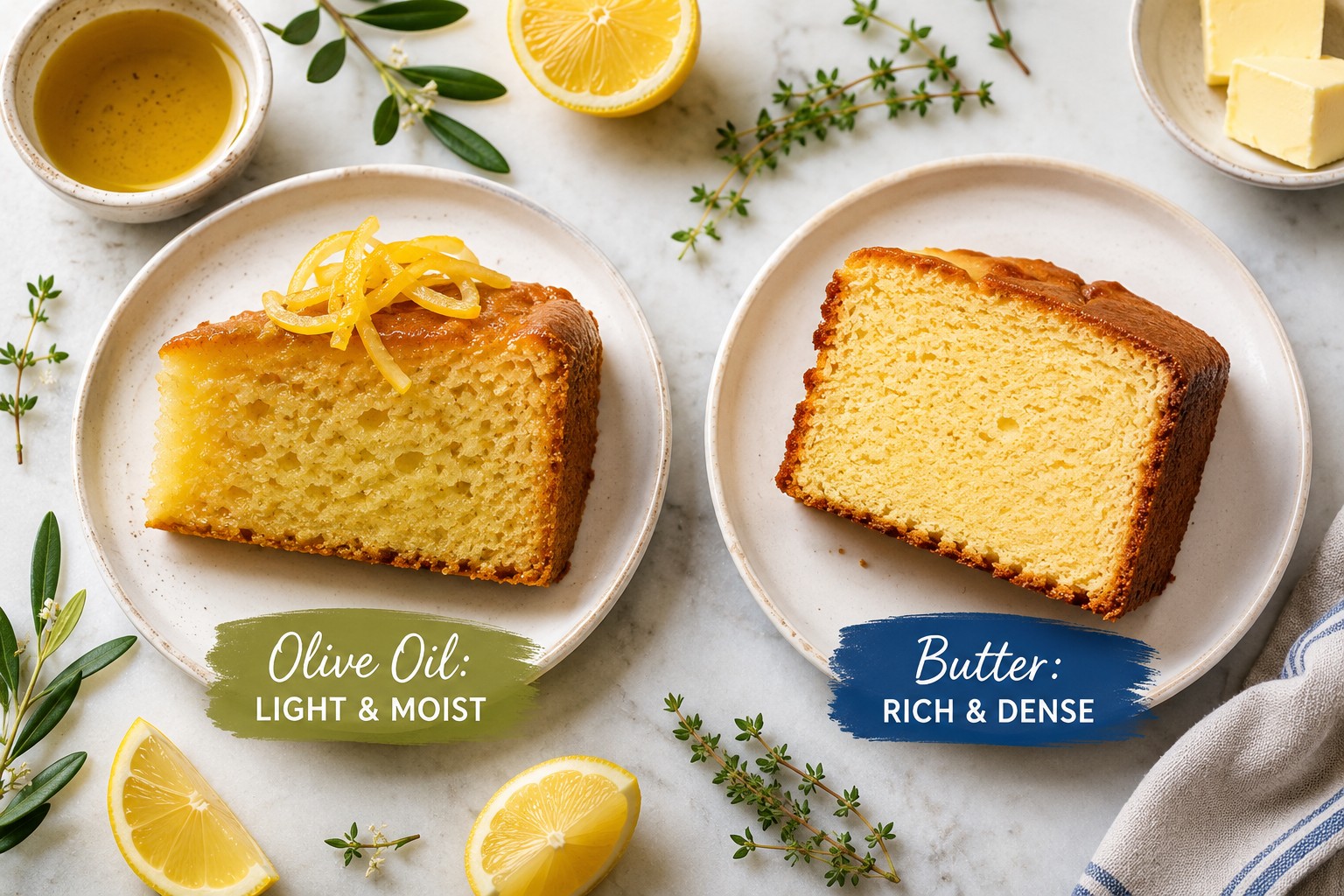
Olive oil cake uses liquid fat instead of solid butter, which fundamentally changes the cake’s texture and shelf life. The oil coats flour proteins differently than butter, creating a tender, almost pudding-like crumb that stays moist for days without refrigeration. Traditional butter cakes firm up as the butter solidifies at room temperature, but olive oil remains liquid, keeping the cake soft and fresh-tasting much longer.
Key structural differences:
- Fat distribution: Olive oil disperses more evenly through the batter, creating uniform moisture throughout
- Crumb texture: More compact and moist rather than fluffy and airy
- Flavor profile: Fruity, slightly peppery notes instead of rich dairy flavor
- Mixing method: Simple one-bowl whisking rather than creaming butter and sugar
- Storage: Improves over 24-48 hours as flavors meld, unlike butter cakes that peak on day one
Choose olive oil cake when you want a dessert that travels well, needs to be made ahead, or should accommodate dairy-free guests. Choose butter cake when you want a lighter, fluffier texture for layer cakes or when butter flavor is essential to the recipe.
Best Olive Oil to Use for Baking Cakes
Use a mild or medium-intensity olive oil labeled “pure olive oil” or “light olive oil” for baking, which typically costs $8-15 per bottle. These refined oils have a neutral enough flavor that won’t overpower your cake while still providing the characteristic moisture and subtle fruitiness. Extra virgin olive oil works too, but save your $30+ bottles for drizzling – the baking process diminishes the complex flavors you’re paying for.
Olive oil selection guide:
- Best choice: Pure olive oil or light olive oil (not extra virgin) – mild flavor, affordable
- Good choice: Mild extra virgin olive oil – adds more fruity notes if you prefer them
- Avoid: Robust or peppery extra virgin oils – can taste bitter or too savory in desserts
- Skip: Flavored olive oils unless specifically called for in the recipe
Common mistake: Buying expensive single-estate extra virgin olive oil for baking. The heat and other ingredients mask the subtle flavor differences you’re paying for. Reserve premium oils for finishing dishes or salad dressings where you can actually taste the quality difference.
For more guidance on baking temperatures and timing, check out how long to bake a cake at 180 degrees.
Olive Oil Cake vs Butter Cake: Texture and Taste
Olive oil cake has a denser, moister crumb with a slightly oily sheen, while butter cake is lighter and fluffier with a more delicate structure. The taste difference is equally distinct – olive oil adds fruity, sometimes peppery notes that complement citrus and herbs, whereas butter provides rich, creamy sweetness that pairs with chocolate and vanilla. Neither is better; they serve different dessert purposes.
Texture comparison:
| Characteristic | Olive Oil Cake | Butter Cake |
|---|---|---|
| Crumb density | Compact, moist, almost pudding-like | Light, airy, fluffy |
| Shelf life | 4-5 days at room temp | 2-3 days at room temp |
| Moisture level | Very moist, slightly oily | Tender but can dry out |
| Structure | Sturdy, slices cleanly | Delicate, can crumble |
| Best served | Room temperature or slightly warm | Room temperature |
Flavor comparison:
- Olive oil cake: Fruity, slightly savory undertones, less sweet overall, pairs with citrus, herbs, stone fruits
- Butter cake: Rich, creamy, sweet, pairs with chocolate, vanilla, berries, caramel
Choose olive oil for spring and summer desserts where you want brightness and freshness. Choose butter for fall and winter desserts where richness and comfort are the goal.
Easy Olive Oil Cake Recipe with Lemon for Beginners
A basic lemon olive oil cake requires just one bowl, eight ingredients, and about 10 minutes of active prep time. Whisk together eggs and sugar until pale, add olive oil and lemon zest, then fold in flour, baking powder, and salt. The simple mixing method makes it nearly foolproof for beginners – there’s no butter to cream, no temperature concerns, and minimal risk of overmixing.
Basic lemon olive oil cake (9-inch round pan):
- Preheat oven to 350°F (175°C) and grease your pan
- Whisk 3 large eggs with 1 cup sugar for 2-3 minutes until thick and pale
- Add ¾ cup olive oil, zest of 2 lemons, and ¼ cup lemon juice – whisk until combined
- Sift 1½ cups all-purpose flour, 2 teaspoons baking powder, and ½ teaspoon salt
- Fold dry ingredients into wet ingredients gently until just combined (some lumps are fine)
- Pour into prepared pan and bake 35-40 minutes until golden and a toothpick comes out clean
- Cool in pan 10 minutes, then turn out onto a wire rack
Beginner tips:
- Room temperature eggs incorporate more easily and create better volume
- Don’t skip the whisking time in step 2 – this creates structure and lift
- Fold gently with a spatula, not a whisk, once you add flour
- The cake is done when it springs back lightly when touched and pulls away from pan edges
For more baking fundamentals, see how many eggs go in a cake for ratio guidance.
How Much Does Fancy Olive Oil for Baking Cost
Premium extra virgin olive oil suitable for baking ranges from $15-30 per 500ml bottle, but you don’t need to spend that much for excellent results. Standard pure olive oil or light olive oil costs $8-12 per bottle and works perfectly well in cakes, where other ingredients moderate the oil’s flavor. The price difference reflects harvest methods, origin, and flavor complexity that largely disappear during baking.
Olive oil price tiers for baking:
- Budget ($6-8): Store-brand pure olive oil – perfectly adequate for most cake recipes
- Mid-range ($10-15): Name-brand pure or light olive oil – reliable quality, mild flavor
- Premium ($18-30): Mild extra virgin olive oil – adds subtle fruity notes, worth it for special occasions
- Luxury ($35+): Single-estate extra virgin – save for drizzling, not baking
Cost per cake: A typical olive oil cake uses ¾ cup (about 175ml) of oil. At $12 per 500ml bottle, that’s roughly $4.20 worth of oil per cake – comparable to the butter cost in a traditional cake recipe.
When to splurge: Use better olive oil when the cake is very simple (like a plain olive oil cake with just a dusting of powdered sugar) where the oil flavor is more prominent. For heavily spiced or citrus-forward cakes, mid-range oil is fine.
Why Did My Olive Oil Cake Turn Out Dense and Heavy
Dense, heavy olive oil cake usually results from overmixing the batter after adding flour, which develops too much gluten and creates a tough, compact texture. Using too much flour (from scooping directly from the bag rather than spooning and leveling) or not enough leavening also produces dense results. Unlike butter cakes that can handle more mixing, olive oil cakes need gentle folding to stay tender.
Common causes and fixes:
- Overmixing: Mix only until flour disappears (10-15 gentle folds). Some small lumps are fine
- Too much flour: Spoon flour into measuring cup and level with a knife – don’t pack or scoop
- Old leavening: Check that baking powder is fresh (under 6 months old) and still fizzes in water
- Wrong pan size: Using a smaller pan makes the cake thicker and denser – stick to recipe pan size
- Oven too cool: Baking below 325°F can cause the cake to collapse and become gummy
Texture troubleshooting:
- Dense but moist: Likely overmixed – reduce folding time next batch
- Dense and dry: Too much flour or overbaked – check measurements and reduce baking time by 5 minutes
- Gummy center: Underbaked or oven too cool – use an oven thermometer to verify temperature
If you’re struggling with baking basics, is baking the hardest form of cooking explores why precision matters more in baking.
Can I Substitute Vegetable Oil for Olive Oil in Cake
You can substitute vegetable oil, canola oil, or any neutral oil for olive oil in cake recipes with a 1:1 ratio, but you’ll lose the subtle fruity flavor and some of the cake’s character. Neutral oils produce a slightly lighter texture and completely neutral taste, which works well if you want the citrus or other flavors to be the only focus. The moisture level and shelf life remain similar regardless of which oil you use.
Oil substitution guide:
- Vegetable/canola oil: 1:1 substitution, neutral flavor, slightly lighter texture
- Avocado oil: 1:1 substitution, very mild flavor, works well for dairy-free baking
- Melted coconut oil: 1:1 substitution, adds subtle coconut flavor, solidifies when cold
- Grapeseed oil: 1:1 substitution, neutral and light, good for delicate flavors
When to substitute:
- You don’t have olive oil on hand
- You want a completely neutral base for strong flavors like espresso or chocolate
- You’re serving people who dislike any hint of olive flavor
- You’re making a cake where the olive oil’s fruitiness would clash with other ingredients
When to keep olive oil:
- The recipe specifically highlights olive oil as a flavor component
- You’re making a Mediterranean-style dessert where olive oil is traditional
- You want the characteristic moist, dense texture that olive oil provides best
Is Olive Oil Cake Good for People Who Are Dairy Free
Olive oil cake is naturally dairy-free since it uses oil instead of butter and typically contains no milk, making it an excellent dessert option for people with lactose intolerance or dairy allergies. Most traditional olive oil cake recipes are already vegan-friendly except for the eggs, which can be replaced with flax eggs or commercial egg replacers for fully plant-based versions. This makes olive oil cake one of the most accommodating desserts for mixed dietary needs.
Dairy-free advantages:
- No modifications needed – most recipes are already dairy-free as written
- No taste compromise – the cake doesn’t taste “alternative” or like a substitution
- Stays moist longer – oil doesn’t solidify like butter, maintaining texture
- Easy to make vegan – replace eggs with flax eggs (1 tablespoon ground flax + 3 tablespoons water per egg)
Watch out for:
- Glazes and frostings often contain butter or cream – use citrus glaze with just juice and powdered sugar instead
- Some recipes add yogurt or sour cream for tang – use dairy-free yogurt or increase lemon juice
- Whipped cream garnishes – substitute coconut whipped cream or serve with fresh fruit
Serving suggestions for dairy-free guests:
- Dust with powdered sugar instead of cream cheese frosting
- Serve with fresh berries and a citrus syrup
- Top with dairy-free vanilla ice cream or coconut whipped cream
- Drizzle with honey or maple syrup and toasted nuts
Modern Citrus Desserts That Are Light for Summer
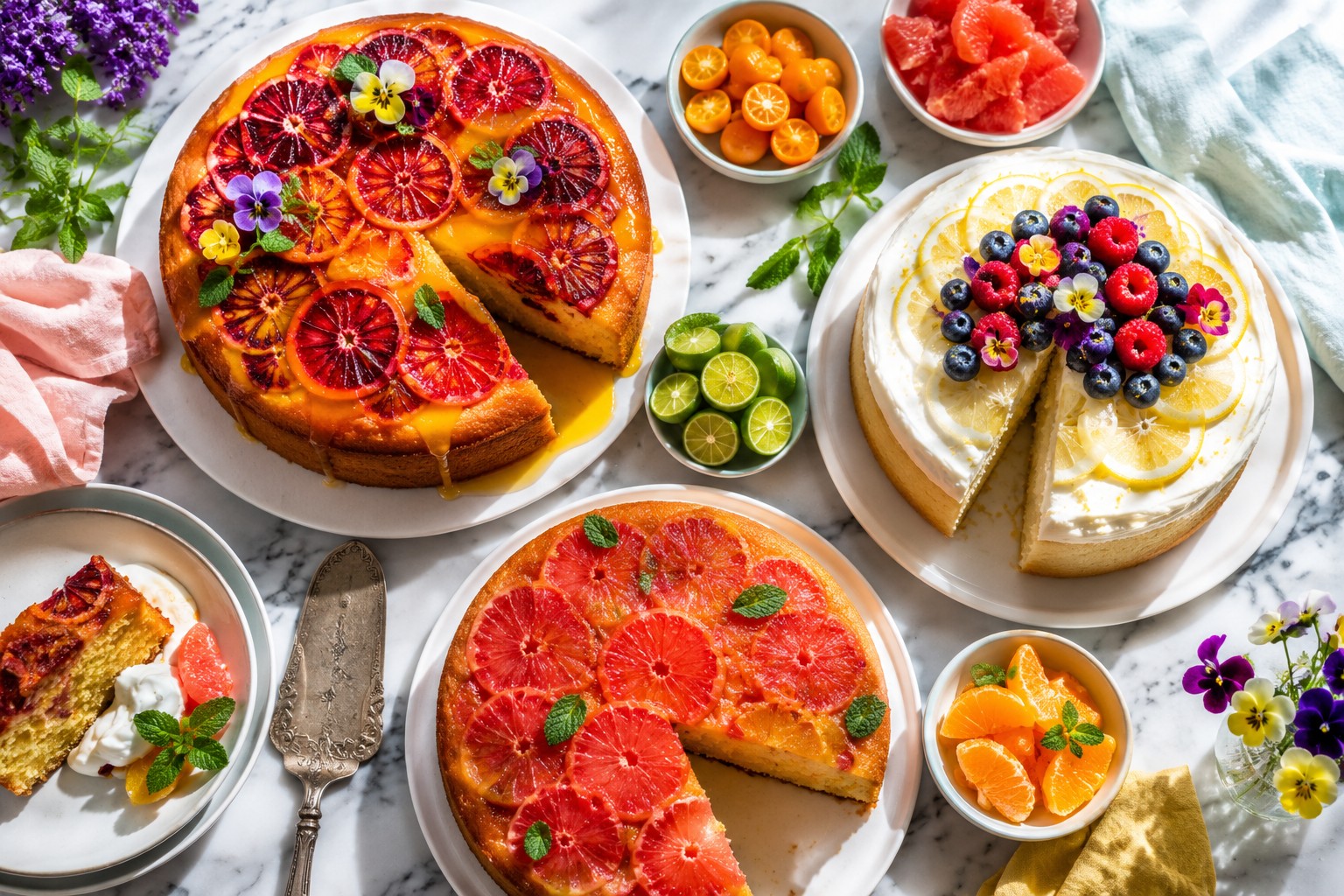
Modern citrus desserts for summer emphasize bright acidity, minimal sweetness, and lighter textures compared to traditional heavy cakes. Blood orange olive oil cake, Meyer lemon yogurt cake, grapefruit upside-down cake, and citrus olive oil bundt cakes all feature fresh juice and zest that cut through richness and feel refreshing rather than cloying. These desserts often incorporate herbs like basil or rosemary and floral notes like elderflower or lavender for complexity.
Trending light citrus desserts for 2026:
- Blood orange olive oil cake – dramatic color, sweet-tart flavor, pairs with pistachios
- Meyer lemon yogurt cake – tangy, moist, less sweet than traditional lemon cake
- Grapefruit and rosemary olive oil cake – savory-sweet balance, sophisticated flavor
- Kumquat upside-down cake – whole candied kumquats, beautiful presentation
- Citrus olive oil bundt with herb glaze – basil, thyme, or lavender-infused glazes
What makes them “modern”:
- Lower sugar content – letting natural citrus tartness shine through
- Herb and floral additions – basil, rosemary, thyme, lavender, elderflower
- Yogurt or olive oil base – lighter than butter, more moisture
- Minimal frosting – simple glazes or no topping at all
- Whole fruit garnishes – candied citrus slices, fresh segments, edible flowers
Serving style:
Serve these cakes at room temperature or slightly chilled with unsweetened whipped cream, Greek yogurt, or just fresh fruit. The goal is to let the citrus brightness be the star rather than masking it with heavy frostings or fillings.
Blood Orange Olive Oil Cake Recipe
Blood orange olive oil cake combines the fruity notes of olive oil with the sweet-tart flavor and dramatic pink-red color of blood oranges. Use the juice and zest of 2-3 blood oranges in place of regular oranges or lemons in a standard olive oil cake recipe, and add a simple blood orange glaze for extra visual impact. The cake tastes best during blood orange season (December through May) when the fruit is at peak sweetness and color.
Blood orange olive oil cake (9-inch springform pan):
- Whisk 3 eggs with 1 cup sugar until thick (3-4 minutes)
- Add ¾ cup olive oil, zest of 2 blood oranges, ½ cup blood orange juice, 1 teaspoon vanilla
- Fold in 1½ cups flour, 2 teaspoons baking powder, ½ teaspoon salt, ¼ teaspoon cardamom (optional)
- Bake at 350°F for 40-45 minutes until golden and set
- Make glaze: Whisk 1 cup powdered sugar with 2-3 tablespoons blood orange juice until pourable
- Pour glaze over cooled cake and garnish with candied blood orange slices
Flavor variations:
- Add ½ cup chopped pistachios to the batter for crunch and color contrast
- Replace cardamom with ½ teaspoon ground ginger for spice
- Fold in 2 tablespoons poppy seeds for texture
- Add 1 tablespoon orange liqueur (Grand Marnier or Cointreau) to the glaze
Presentation tips:
- Top with fresh blood orange segments and mint leaves
- Dust with powdered sugar through a stencil for patterns
- Serve with mascarpone whipped cream (or dairy-free alternative)
- Garnish with edible flowers like pansies or violas
Common Mistakes When Baking with Olive Oil
The most common mistake when baking with olive oil is using a strongly flavored, peppery extra virgin oil that tastes bitter or too savory in desserts. Other frequent errors include not whisking the eggs and sugar long enough to create structure, overmixing once flour is added, and using cold ingredients that don’t emulsify properly with the oil. These mistakes create dense, heavy, or oddly flavored cakes that don’t represent what olive oil baking should be.
Top mistakes and solutions:
1. Using the wrong olive oil
- Problem: Robust, peppery oil tastes bitter in cakes
- Solution: Use mild or light olive oil, not your best extra virgin
2. Insufficient egg whisking
- Problem: Cake lacks structure and rises poorly
- Solution: Whisk eggs and sugar for 3-4 minutes until thick, pale, and tripled in volume
3. Overmixing the batter
- Problem: Dense, tough texture from gluten development
- Solution: Fold flour in gently with a spatula, stop as soon as flour disappears
4. Cold ingredients
- Problem: Oil doesn’t emulsify properly, creating an oily texture
- Solution: Use room temperature eggs, juice, and other liquids
5. Wrong pan preparation
- Problem: Cake sticks or browns too much on edges
- Solution: Grease pan thoroughly and line bottom with parchment paper
6. Overbaking
- Problem: Dry cake that defeats the purpose of using oil
- Solution: Check 5 minutes before recipe time, remove when center barely jiggles
For more baking troubleshooting, see why is homemade baking better for quality control tips.
Do You Taste the Olive Oil in Olive Oil Cake
You taste a subtle fruity, slightly peppery undertone in olive oil cake, but it shouldn’t taste strongly of olives or be savory. When made with mild olive oil, the flavor reads as a pleasant depth and richness that enhances citrus and other flavors rather than competing with them. Most people who try olive oil cake for the first time are surprised by how delicate the olive oil flavor is – it’s more about texture and moisture than a dominant taste.
What the olive oil contributes:
- Subtle fruitiness – a background note that complements citrus and stone fruits
- Slight peppery finish – barely noticeable, adds complexity
- Moisture and richness – the primary contribution is textural, not flavor
- Longer finish – the cake’s flavor lingers slightly longer than butter cakes
Factors that affect olive oil taste:
- Oil quality and type: Mild oils are barely noticeable; robust oils can be too strong
- Other ingredients: Citrus, spices, and extracts moderate the oil flavor
- Freshness: Rancid oil tastes bitter and unpleasant – always use fresh oil
- Ratio: Recipes with more oil (like some Italian olive oil cakes) have more pronounced flavor
Making it more or less noticeable:
- Less noticeable: Use light olive oil, add more citrus zest, include vanilla extract
- More noticeable: Use mild extra virgin oil, reduce other flavors, serve plain with just powdered sugar
Most people find the olive oil flavor pleasant and interesting rather than off-putting, especially when paired with bright citrus notes.
Best Citrus Fruits to Pair with Olive Oil Desserts
Lemon, blood orange, and grapefruit are the best citrus fruits to pair with olive oil desserts because their acidity and aromatic oils complement the fruity, peppery notes in olive oil. Meyer lemons work especially well due to their sweeter, more floral flavor that doesn’t overpower the subtle olive oil taste. Avoid very sweet citrus like tangerines or mandarins, which lack the acidity needed to balance the oil’s richness.
Top citrus pairings ranked:
Excellent matches:
- Meyer lemon – sweet, floral, less acidic, perfect balance
- Blood orange – sweet-tart, beautiful color, mild enough to let olive oil shine
- Regular lemon – classic pairing, bright acidity cuts through richness
- Grapefruit – bitter-sweet complexity, sophisticated flavor
Good matches:
- Cara Cara orange – sweeter than blood orange, pretty pink color
- Bergamot – intensely floral, use sparingly in glazes
- Yuzu – complex, tart, trendy but expensive
- Key lime – more intense than regular lime, works in smaller amounts
Less ideal:
- Regular orange – too sweet, not enough acidity
- Tangerine/mandarin – too mild and sweet
- Lime – can be too sharp and clash with olive oil’s fruitiness
Flavor combination ideas:
- Lemon + rosemary + olive oil
- Blood orange + pistachio + olive oil
- Grapefruit + thyme + olive oil
- Meyer lemon + lavender + olive oil
Can Olive Oil Cake Be Made Ahead for a Party
Olive oil cake is ideal for making ahead because it actually improves in flavor and texture after 24-48 hours as the moisture distributes evenly and flavors meld. Bake the cake 1-2 days before your party, let it cool completely, wrap it tightly in plastic wrap, and store at room temperature. Add any glaze or toppings the day of serving to keep them fresh and glossy.
Make-ahead timeline:
2 days before:
- Bake the cake and let cool completely (at least 2 hours)
- Wrap tightly in plastic wrap, then aluminum foil
- Store at room temperature (not refrigerated, which dries it out)
1 day before:
- Check that cake is still moist and fresh
- Prepare any glazes or syrups and store separately in the fridge
- Prep garnishes (candied citrus, toasted nuts) and store in airtight containers
Day of party:
- Unwrap cake 1-2 hours before serving to come to room temperature
- Apply glaze or syrup
- Add fresh garnishes (fruit, herbs, flowers) just before serving
- Dust with powdered sugar right before presenting
Storage tips:
- Room temperature: 4-5 days wrapped tightly
- Refrigerated: Up to 7 days, but bring to room temperature before serving
- Frozen: Up to 3 months wrapped in plastic and foil, thaw overnight at room temperature
What NOT to do ahead:
- Don’t add fresh fruit garnishes more than 2 hours before serving (they weep moisture)
- Don’t dust with powdered sugar until just before serving (it absorbs and disappears)
- Don’t refrigerate unless necessary (it dries the cake out)
This make-ahead quality makes olive oil cake perfect for stress-free entertaining during spring and summer gatherings.
FAQ
How long does olive oil cake stay fresh? Olive oil cake stays fresh for 4-5 days at room temperature when wrapped tightly in plastic wrap. The oil keeps the cake moist much longer than butter cakes, which typically dry out after 2-3 days. For longer storage, refrigerate for up to 7 days or freeze for up to 3 months.
Can I use extra virgin olive oil in cake? Yes, you can use extra virgin olive oil in cake, but choose a mild variety rather than a robust, peppery one. The strong flavors in high-quality extra virgin oil can taste bitter or too savory in desserts. Light or pure olive oil works just as well and costs less.
Why is my olive oil cake oily on top? An oily top on olive oil cake usually means the oil separated during baking, often because ingredients were too cold or the batter wasn’t mixed enough to emulsify properly. Use room temperature eggs and liquids, and whisk the wet ingredients thoroughly before adding flour.
What does olive oil cake taste like? Olive oil cake tastes moist and tender with subtle fruity, slightly peppery undertones that complement citrus flavors. It’s less sweet than butter cake and has a more complex, sophisticated flavor profile. The olive oil taste is delicate, not strong or savory.
Can I make olive oil cake gluten-free? Yes, substitute the all-purpose flour with a 1:1 gluten-free baking flour blend that contains xanthan gum. The texture will be slightly denser but still moist and delicious. Almond flour also works well, creating a more rustic, Mediterranean-style cake.
Do I need to refrigerate olive oil cake? No, olive oil cake should be stored at room temperature, not refrigerated. The oil stays liquid at room temperature, keeping the cake moist, but refrigeration can dry it out. Only refrigerate if your kitchen is very warm or if the cake has perishable toppings like cream cheese frosting.
What’s the best pan for olive oil cake? A 9-inch round springform pan or regular cake pan works best for olive oil cake. The springform makes removal easier, but a regular pan lined with parchment paper works fine too. Bundt pans also work well and create an elegant presentation.
Can I reduce the sugar in olive oil cake? You can reduce sugar by up to 25% without significantly affecting texture, though the cake will be less sweet and may brown less. Olive oil cakes are already less sweet than butter cakes, so reducing sugar further creates a more sophisticated, European-style dessert.
Why did my olive oil cake sink in the middle? Olive oil cake sinks in the middle when underbaked, when the oven door is opened too early, or when too much leavening creates excessive rise that collapses. Bake until the center is fully set and springs back when touched, and avoid opening the oven before 30 minutes.
What’s the difference between Italian and American olive oil cake? Italian olive oil cake typically uses more olive oil, less sugar, and often includes almond flour or polenta for a denser, more rustic texture. American versions tend to be lighter, sweeter, and more cake-like, often with citrus and a fluffy crumb.
Can I add chocolate to olive oil cake? Yes, add ⅓ cup cocoa powder to the dry ingredients and reduce flour by ⅓ cup for chocolate olive oil cake. The olive oil’s fruitiness complements dark chocolate beautifully. Orange zest works especially well in chocolate olive oil cake.
How do I know when olive oil cake is done? Olive oil cake is done when a toothpick inserted in the center comes out with just a few moist crumbs, the edges pull away from the pan slightly, and the top springs back when lightly pressed. It should be golden brown and smell fragrant.
Conclusion
Olive oil cake recipes and modern citrus desserts for spring and summer represent a shift toward lighter, more aromatic baking that celebrates Mediterranean ingredients and seasonal brightness. These cakes offer practical advantages beyond their fresh flavor – they’re naturally dairy-free, stay moist for days, improve with time, and require minimal technique to master. The combination of fruity olive oil and bright citrus creates desserts that feel appropriate for warm weather without sacrificing richness or satisfaction.
Your next steps:
Start with a basic lemon olive oil cake using mild olive oil from your pantry – no need to buy expensive varieties for your first attempt. Master the simple whisking and folding technique, then experiment with different citrus fruits, herbs, and glazes to find your favorite combinations. Make the cake 1-2 days before you need it to experience how the flavor and texture improve with time.
For spring and summer entertaining in 2026, these desserts offer the perfect balance of impressive presentation and easy execution. The naturally dairy-free nature accommodates most dietary restrictions, the make-ahead quality reduces party stress, and the bright flavors feel seasonally appropriate without being heavy or overly sweet. Whether you’re serving a blood orange olive oil cake at a garden party or a simple Meyer lemon version for a weeknight dessert, these modern citrus desserts deliver sophistication without complexity.
SEO Meta Title: Olive Oil Cake Recipes and Citrus Desserts for Spring