
Will Chicken Thighs Shred? The Complete Guide to Shredding Chicken Thighs
You can easily shred chicken thighs when you pick the right cut and cook it the right way. Boneless or bone-in thighs become tender and pull apart into juicy strands if you use gentle, moist-heat methods or finish with a short rest.
Thighs naturally hold more fat than breasts, which helps keep the meat flavorful and forgiving during cooking. Properly cooked chicken thighs shred well and often yield juicier, more flavorful shredded chicken than breasts.
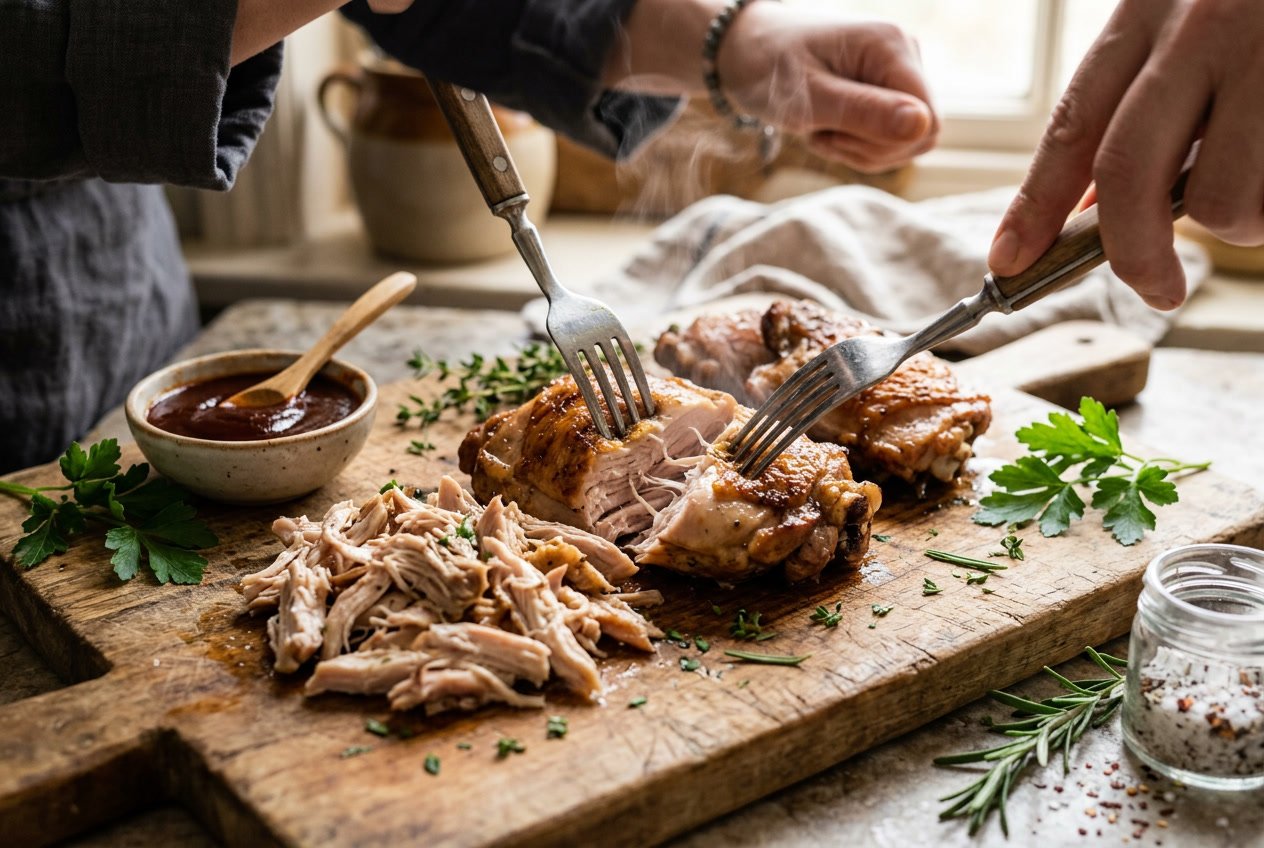
This guide shows which cooking methods reliably produce shreddable thighs. You’ll find simple shredding techniques and tips for keeping the meat moist and storing it for later.
Turn a package of thighs into versatile fillings for tacos, salads, soups, or meal-prep containers with clear, actionable steps.
Do Chicken Thighs Shred?
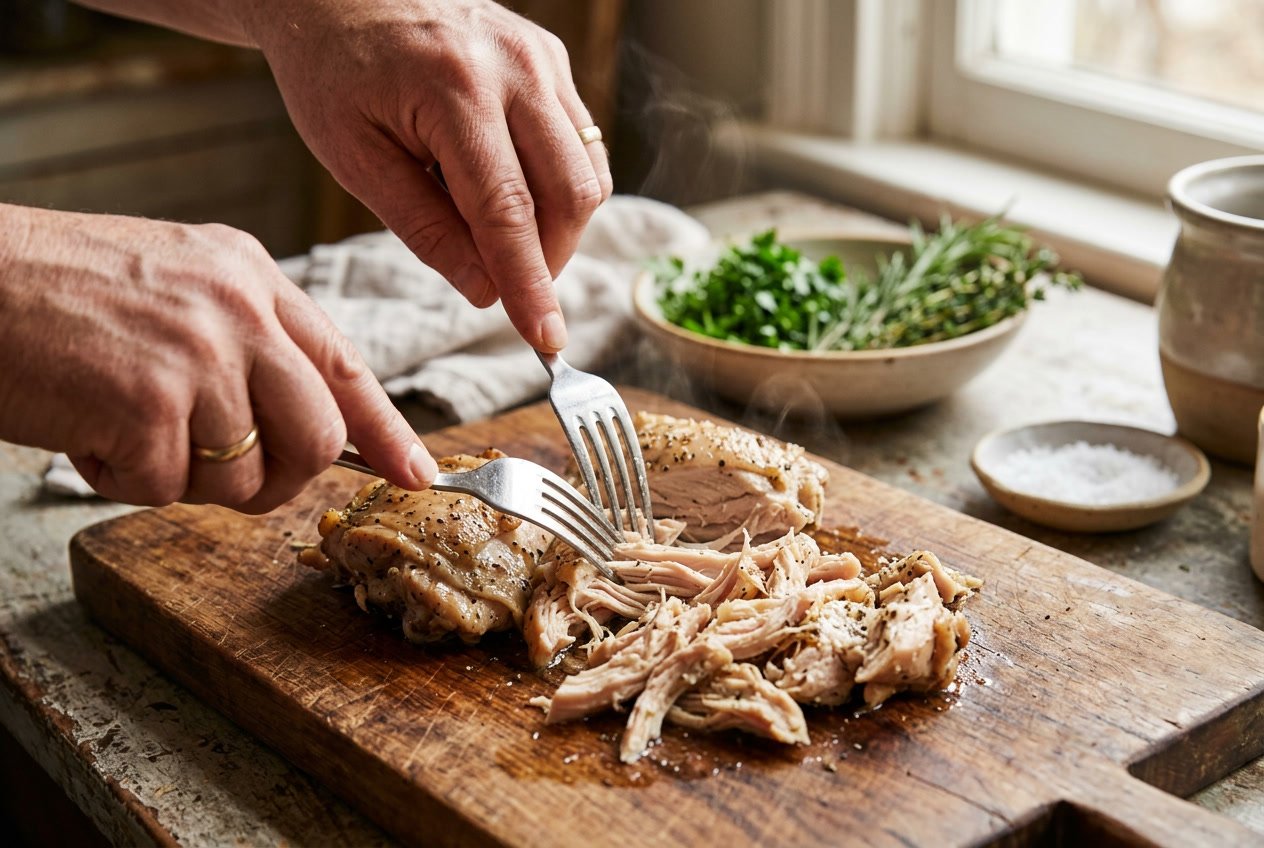
Chicken thighs yield tender, pull-apart meat when you cook them low and slow or under pressure. Their higher fat and connective tissue convert to gelatin as they cook, helping you get moist, flavorful shredded chicken thighs for tacos, sandwiches, or salads.
What Makes Chicken Thighs Suitable for Shredding
Thighs contain more intramuscular fat and collagen than breast meat. When you cook them to roughly 170–175°F (77–79°C) using braising, slow cooker, or pressure-cooking, the collagen melts into gelatin and the fat bastes the meat.
This creates juicy shredded chicken that resists drying even with extended cooking. Trim large pockets of excess fat before cooking to avoid greasy shreds.
Let thighs rest 5–10 minutes after cooking so the juices redistribute and the fibers separate more cleanly. Remove skin and bones before shredding or use boneless thighs; two forks or a stand mixer speed up the process without sacrificing texture.
Comparison With Chicken Breasts for Shredding
Breasts are leaner and can still shred, but they dry out faster and become stringy if overcooked. You need to stop breast cooking closer to 160–165°F and use moist methods or brines to retain juiciness.
Thighs give you more margin for higher holding temperatures that break down connective tissue without drying. For richer, more forgiving shredded chicken for pulled chicken sandwiches or tacos, choose thighs.
If you want a lighter texture for salads, breasts can work but require more careful timing. Mixing thighs and breasts (for example 70/30) balances flavor and shreddability.
Common Recipes Using Shredded Chicken Thighs
Shredded chicken thighs shine in dishes that benefit from bold flavor and moist texture. Use them in chicken tacos with lime, cilantro, and salsa; the fat carries spices and keeps fillings juicy.
Pulled chicken sandwiches get deeper flavor from thighs when braised in barbecue sauce or slow-cooked with onions. Other uses include hearty chicken enchiladas, creamy chicken salads, and soups where flavorful shredded chicken adds richness.
For meal prep, pack shredded chicken thighs with different sauces like BBQ, teriyaki, or mole to transform a single batch into multiple meals.
Best Cooking Methods for Shreddable Chicken Thighs
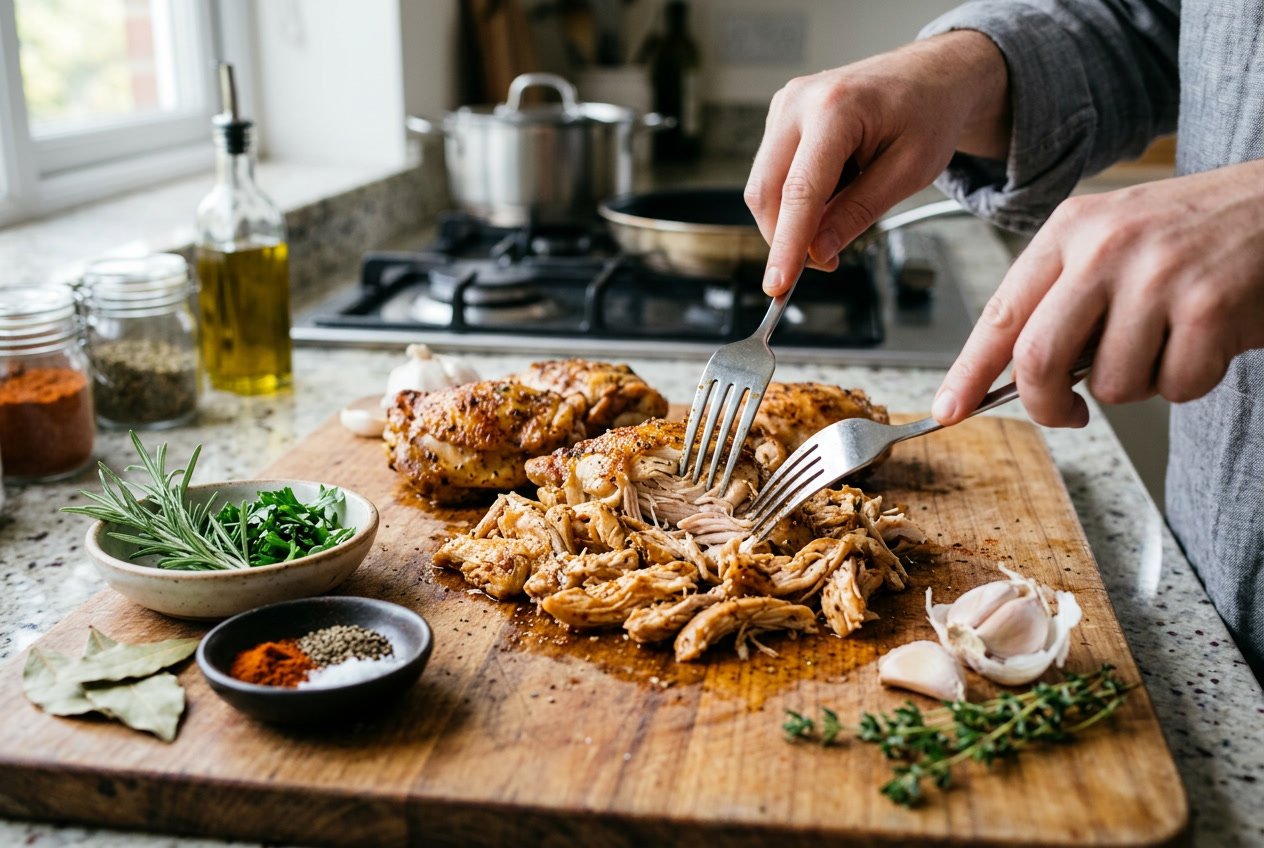
Use methods that gently break down connective tissue while keeping moisture. Choose poaching or slow, moist heat for the most forgiving results.
Baking works well when you add a short rest and a splash of cooking liquid before shredding.
Poaching and Boiling for Tender Texture
Poaching yields consistently moist, shreddable meat for both boneless skinless chicken and bone-in thighs. Place thighs in a single layer in a pot, cover with cold water or broth by 1–2 inches, add salt and aromatics, bring to a bare simmer, then reduce heat and maintain a gentle simmer.
For boneless skinless thighs, 10–12 minutes off-boil resting in the hot liquid usually reaches 165°F. Bone-in may need 15–20 minutes.
Remove and rest 5–10 minutes before shredding to let juices redistribute. Save 1/4 cup of poaching liquid per pound and mix back into shredded meat to prevent dryness.
Slow Cooking and Braising Techniques
Slow cooking and braising work well for shredding because low, long heat converts collagen to gelatin. Use a slow cooker, Dutch oven, or braising pan with 1–2 cups of flavorful liquid.
Brown boneless or bone-in thighs briefly if you want surface flavor, then cover and cook on low for 4–6 hours in a slow cooker or 1.5–2.5 hours at 300°F in the oven. Thighs should pull apart with little resistance.
Remove bones after cooking if used, and stir a few tablespoons of braising liquid into the meat to keep it juicy.
Baking and Roasting Chicken Thighs for Shredding
Baking gives concentrated flavor and works well for batch cooking, especially with bone-in chicken thighs. Preheat to 375°F, season thighs, and arrange skin-side up on a rimmed baking sheet or roasting pan.
Bake 25–35 minutes for boneless, 30–45 minutes for bone-in, until a thermometer reads 165°F. Let rest 5–10 minutes.
Remove skin and bones after resting, and toss meat with 2–4 tablespoons of reserved pan juices or broth. For extra tenderness, tent the pan with foil for 10 minutes after baking to retain steam before shredding.
Step-by-Step Guide: How to Shred Chicken Thighs
You have several dependable methods for turning cooked chicken thighs into moist, shreddable chicken. Each technique focuses on speed, texture control, and tools so you can choose the best fit for your recipe and kitchen setup.
Shredding With Two Forks
Use two forks when you want maximum control over shred size and texture. Let the cooked thighs rest 5–10 minutes so juices redistribute.
Place a thigh on a cutting board or in a shallow bowl. Hold the meat steady with one fork and pull across the grain with the other, working in short strokes.
Rotate the thigh to create uniform strands and stop when you reach the desired fineness. This method requires no special tools and produces rustic shreds ideal for tacos or salads.
Shredding With a Hand or Stand Mixer
A mixer speeds shredding for batch cooking while giving consistent, finely shredded chicken. Use this method for 2–6 thighs in a single batch.
Place warm thighs in the mixer bowl and attach the paddle. Run on low for 10–20 seconds, checking frequently.
Pulse in short bursts until you see even strands. Remove excess bone and skin before mixing.
Add 1–2 tablespoons of reserved cooking liquid if the meat looks dry. Stop early to avoid overly fine, pulpy texture.
Using a Food Processor or Blender
A food processor or high-speed blender works when you need very finely shredded chicken quickly. Use short pulses and low volume to prevent turning meat into paste.
Cut thighs into 1–2 inch pieces and chill slightly if very hot. Add a small splash of broth to help the blades move.
Pulse 5–10 times, scrape the bowl, and pulse again as needed. Small batches yield more control and better texture.
Shred Chicken By Hand
Shredding by hand gives complete control over chunk size and keeps fibers intact. This method works best if you prefer larger pieces or want to incorporate the chicken directly into a dish without additional tools.
Let the thighs cool until you can comfortably handle them. Use your fingers to pull meat along the grain into strips, discarding any excess fat or cartilage as you go.
If a thigh contains bone, remove it first with a small knife. Hand-shredding is ideal for maintaining juicy, shredable chicken for sandwiches or rustic stews.
Tips for Perfectly Moist and Flavorful Shredded Chicken
Use cooking liquid, timely resting, and targeted seasoning to lock in moisture and build flavor. Choose bone-in thighs for deeper taste or boneless skinless for faster prep, and adjust techniques accordingly.
Keeping Shredded Chicken Thighs Moist
After cooking, let thighs rest 5–10 minutes before shredding; this lets juices redistribute and reduces dry strands. If you poached or braised the thighs, reserve 1/4–1/2 cup of the cooking liquid per pound of chicken and stir it into the shredded meat to restore moisture.
Store shredded chicken in an airtight container with a thin layer of broth or pan juices on top to prevent drying during refrigeration. When reheating, use low heat and a splash of broth, covering the pan or dish to trap steam and avoid overcooking.
For immediate shredding, work while the meat is warm. If you must shred cold, briefly warm the chicken in the microwave with a damp paper towel to soften fibers.
Seasoning and Marinating for Extra Flavor
Season thighs before cooking with at least 1 tsp salt per pound; salt penetrates during cooking and enhances overall taste. Use a simple dry rub or a marinade of oil, acid, and aromatics for 30–120 minutes to tenderize and flavor the meat.
If you poach, flavor the poaching liquid with onion, garlic, bay leaf, and peppercorns to infuse the meat without added fat. For baked or seared thighs, brown briefly to develop flavor, then finish in a sauce or broth so the shredded meat retains those caramelized notes.
After shredding, toss the meat with a finishing sauce or sprinkle fresh herbs and acid to brighten flavors. Add a tablespoon of reserved cooking liquid per cup of shredded chicken to carry seasoning and keep texture succulent.
Choosing Between Bone-In and Boneless Thighs
Bone-in chicken thighs deliver richer flavor and slightly more gelatin, which improves mouthfeel in shredded dishes. Plan for an extra 10–15 minutes cooking time with bone-in pieces and remove bones before or after shredding based on your tool preference.
Boneless skinless chicken thighs speed up prep and make shredding straightforward. They absorb marinades faster and are easier to portion for recipes like tacos or salads.
They also release less fat, so add 1–2 tablespoons of butter or oil per pound when you want extra silkiness. For maximum flavor with minimal fuss, sear bone-in thighs to brown, then finish in broth and shred, returning a bit of cooking liquid to the meat.
If convenience and consistent texture matter most, use boneless skinless thighs and control moisture with reserved broth and a short rest.
How to Store and Freeze Shredded Chicken Thighs
Store cooled shredded chicken thighs in airtight packaging and label with date and portion size. Freeze flat for faster freezing and easier stacking, and keep raw and cooked meat stored separately.
Best Practices for Freezing Shredded Chicken
Portion shredded chicken thighs into meal-sized amounts before freezing to avoid thawing more than you need. Use heavy-duty freezer bags or vacuum-seal pouches; remove as much air as possible to reduce freezer burn.
Add 1–2 tablespoons of chicken broth or sauce per cup of shredded chicken to preserve moisture and improve reheating results. Lay bags flat on a baking sheet until fully frozen, then stack to save space and speed thawing later.
Label each package with the date. Cooked shredded chicken thighs keep best for 4–6 months at 0°F (-18°C).
For the best texture, avoid freezing shredded chicken that has been reheated once.
Reheating Methods to Maintain Moisture
Thaw frozen shredded chicken thighs overnight in the refrigerator when time allows. For direct reheating, use a skillet over medium-low heat with a splash of broth, stirring frequently until the chicken reaches 165°F (74°C).
You can reheat from frozen in the microwave or oven if needed. In the microwave, cover and heat in 1-minute intervals on medium power, stirring between intervals and adding a little liquid.
In the oven, place chicken in a covered baking dish at 325°F (160°C) with 2–3 tablespoons of liquid per cup of chicken, heating 15–25 minutes until hot. Always check internal temperature and discard if the chicken smells off.
Delicious Ways to Use Shredded Chicken Thighs
Shredded chicken thighs stay juicy and absorb sauces well. Use them to add rich flavor and moist texture where lean white meat can dry out.
Chicken Salad and Wraps
Finely shred the thighs and mix them with mayonnaise or Greek yogurt for a creamy chicken salad. Add diced celery, green apple, or grapes for crunch and brightness, and season with lemon juice, salt, and black pepper.
For a lighter option, use mashed avocado or a vinaigrette instead of mayo and serve the salad over mixed greens.
Spread the chicken salad on a whole-wheat tortilla, add romaine or butter lettuce, and a handful of herbs like dill or parsley. Roll the tortilla tightly and slice it; the thigh meat keeps the filling moist and holds up well for packed lunches.
Chicken Tacos and Burritos
Warm shredded thighs with taco seasoning, lime juice, and a splash of chicken broth to loosen the meat. Fill corn or flour tortillas with the chicken and top with chopped onion, cilantro, diced tomato, and crumbled queso fresco or shredded cheddar.
For burritos, combine the chicken with cooked rice, black beans, and a scoop of pico de gallo before wrapping.
Crisp the filled tortillas briefly in a hot skillet or under the broiler to boost texture. The thigh meat stays tender even after reheating and folding into tortillas.
Pulled Chicken Sandwiches and Sliders
Toss shredded thighs with your favorite barbecue sauce and warm gently until the sauce coats the meat. Serve on toasted brioche buns or slider rolls and top with tangy coleslaw.
For a regional twist, mix the chicken with a vinegar-based sauce and add pickle slices.
Bake assembled sliders briefly to melt cheese and blend flavors. Shredded thighs provide better mouthfeel than shredded breast, especially when you want a juicy, saucy sandwich.
Soups, Casseroles, and Other Meals
Add shredded thighs to soups like chicken noodle, tortilla, or white bean chili in the last 5–10 minutes of simmering. This heats the meat through without toughening it.
The meat enriches broths and keeps the final texture tender.
In casseroles such as pot pie or chicken tetrazzini, stir the shredded chicken into cream-based or tomato-based sauces. Top with cheese or breadcrumbs and bake until bubbly.
Use shredded thighs in fried rice, pasta salads, or stuffed sweet potatoes for quick weeknight dinners.
Their flavor pairs well with soy, sesame, curry spices, and smoky or spicy sauces. This makes them a versatile ingredient for many pantry-based meals.


