
Will Chicken Thighs Make You Fat? Nutrition & Health Facts
You won’t automatically gain weight from eating chicken thighs. Weight change depends on your total calories, portion sizes, and how you prepare them.
When you control portions and choose low-fat cooking methods, chicken thighs can fit into a balanced diet without causing weight gain.

This article explains how thigh meat compares with breasts, what its fat and protein numbers mean for your plate, and how frying versus baking changes the calorie impact. You’ll get practical tips to enjoy flavor without extra calories so you can make smarter choices at the grocery store and the stove.
Does Eating Chicken Thighs Make You Gain Weight?
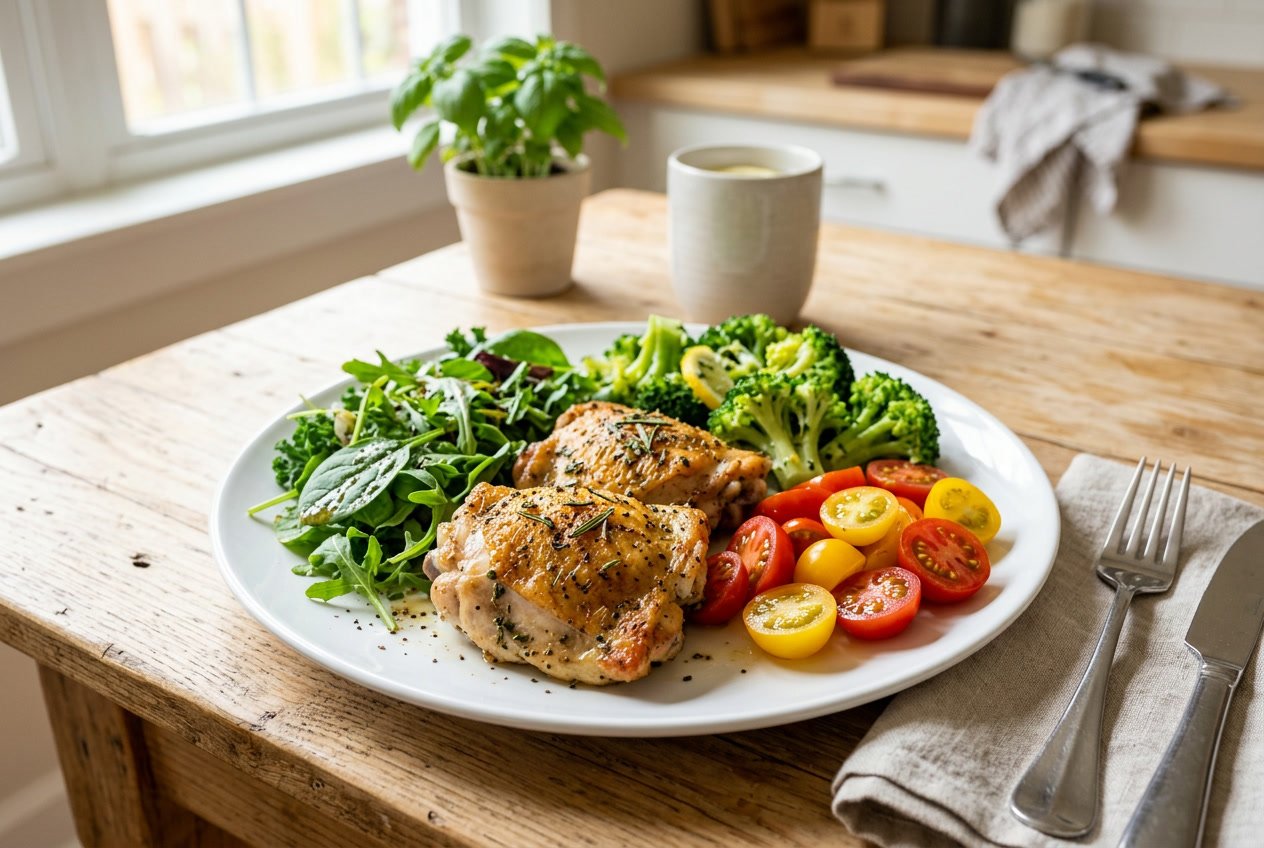
Chicken thighs can fit into a healthy diet. Calories, cooking method, and your total daily intake determine whether they contribute to weight gain.
Pay attention to serving size, how you prepare the meat, and the rest of your meals.
How Portion Size Affects Weight
Portion size controls the calorie impact of chicken thighs. A typical cooked 3-ounce (85 g) boneless thigh has roughly 140–170 calories and about 10–12 g of fat.
If you eat two thighs (6 ounces), you double that calorie and fat load, which matters when your daily calorie budget is limited.
Watch added ingredients. Marinades, sauces, and breading can add 50–300+ calories per serving.
Eating chicken thighs with calorie-dense sides like creamy mashed potatoes, large portions of rice, or sugary sauces raises the meal’s total energy and the chance of gaining weight.
Use a food scale or visual cues (palm-sized portion ≈ 3–4 ounces) to keep portions reasonable. If you track calories, log thighs cooked without skin or excess oil for the most accurate estimate.
Role of Overall Diet in Weight Gain
Your total daily and weekly energy balance determines weight change. If your calories in exceed calories out consistently, you’ll gain weight regardless of whether those calories come from chicken thighs, bread, or avocados.
Protein in chicken thighs helps satiety and preserves lean mass during weight loss. Thighs deliver more energy per gram than chicken breast due to higher fat content, so you must account for that extra energy in meal planning.
Pair thighs with high-fiber vegetables, whole grains in controlled portions, and minimal added fat to keep the meal nutrient-dense without excess calories. Adjust physical activity or other meals if you include larger portions of thighs.
Misconceptions About Dark Meat
People often label dark meat like chicken thighs as “fattening” because it contains more fat than white meat. That’s an oversimplification.
The fat in thighs provides flavor and some essential fatty acids, and moderate amounts do not automatically cause weight gain.
Skin increases saturated fat and calories substantially. A thigh with skin can add 50–100 extra calories versus a skinless thigh.
Remove the skin and use low-fat cooking methods like grilling, roasting on a rack, or braising to reduce added calories while retaining taste.
Thighs supply protein, B vitamins, iron, and selenium. If you want lower-calorie protein, choose skinless breast. If you prefer flavor and slightly higher fat, thighs can be a healthy choice when you control portions and prep methods.
Chicken Thigh Fat Content Explained

Chicken thighs contain more fat than breast meat, but much of that fat sits in the skin and you can remove it. Both saturated and unsaturated fats are present in thighs, and your choice of cut and cooking method strongly affect final fat and calorie counts.
Fat in Chicken Thighs vs. Other Cuts
A 100-gram cooked skinless chicken thigh typically contains about 7–9 grams of total fat and roughly 24–28 grams of protein.
A 100-gram skinless chicken breast has about 2–3 grams of fat and a similar protein amount.
Thighs deliver more calories from fat—often double or more per equal weight—so portion size matters if you track calories.
You still get comparable protein from thighs, which helps with satiety and muscle maintenance.
Choose boneless skinless chicken breasts for less fat but similar protein. Boneless skinless chicken thighs offer higher fat, richer taste, and easier cooking if you prefer flavor and tenderness.
Skin-On vs. Skinless Chicken Thighs
Keeping the skin roughly doubles the fat content of a thigh.
A 100-gram cooked thigh with skin can have around 15–18 grams of total fat, while the same weight skinless often drops to 7–9 grams.
The skin contains most of the saturated fat, so removing it reduces both total and saturated fat intake.
Roasting on a rack drains some fat, while frying or cooking in added oil increases the final fat and calorie totals.
If you eat thighs regularly and want to limit fat, choose boneless skinless chicken thighs and bake, grill, or poach them without added oils.
If you prioritize flavor, keep the skin occasionally and adjust portions elsewhere in your meal.
Types of Fat in Chicken Thighs
Chicken thigh fat includes saturated fat and unsaturated fats—monounsaturated (MUFA) and polyunsaturated (PUFA).
MUFAs and PUFAs make up a significant portion of the fat and can be heart-healthier than saturated fat when consumed in balance.
Per 100 grams, saturated fat in skinless thighs is typically around 1.5–3 grams. With skin it can rise to 4–6 grams.
Those saturated-fat numbers matter if you monitor cholesterol or follow heart-healthy guidelines.
You can manage the mix of fats you eat by trimming visible fat and choosing skinless chicken thighs or boneless skinless chicken thighs.
Cooking techniques that don’t add hydrogenated or excessive cooking fats help keep the fatty profile favorable.
Nutritional Profile of Chicken Thighs
A cooked chicken thigh provides protein, calories, and fat, plus several key minerals and B vitamins. Differences between skin-on and skinless, and between raw and cooked weights, affect portion planning and calorie targets.
Chicken Thigh Nutrition Facts
A 100 g serving of cooked, boneless, skinless chicken thigh typically contains about 200–210 calories, roughly 25–26 g of protein, and around 8–11 g of total fat.
If the skin is left on, calories and fat increase substantially—often by 30–50 kcal and 3–5 g of fat per 100 g.
Fat composition includes saturated, monounsaturated, and polyunsaturated fats. Saturated fat sits near 2–3 g per 100 g, so most of the fat is unsaturated.
Cholesterol runs near 90–100 mg per 100 g, so factor that into daily limits if you track cholesterol. Carbohydrates are essentially zero.
Boneless skinless chicken thighs give you high-quality protein with moderate fat, making them useful for satiety without excessive calories. Adjust portions or remove skin to lower energy density.
Vitamins and Minerals in Chicken Thighs
Chicken thighs supply several micronutrients needed for metabolism and recovery. Per 100 g cooked, you can expect meaningful amounts of niacin (B3), vitamin B6, selenium, phosphorus, zinc, and modest iron.
Niacin and B6 support energy metabolism. Selenium and zinc support immune and antioxidant functions.
Typical values: niacin ~6 mg, vitamin B6 ~0.4 mg, selenium ~20–30 µg, zinc ~2 mg, and iron ~1–1.5 mg per 100 g cooked.
These amounts vary by cooking method and whether the thigh is skin-on or bone-in. Skin removal mainly reduces fat and calories, not mineral content.
Boneless skinless chicken thighs can help meet daily B-vitamin and mineral needs while delivering complete protein. Use them for a balance of nutrient density and flavor without large increases in carbs.
Health Benefits of Chicken Thighs
Chicken thighs provide concentrated protein and several key micronutrients while delivering more fat and flavor than breast meat. You get muscle-supporting protein, iron-rich dark meat, and fats that can fit into a balanced diet when portioned and prepared sensibly.
Lean Protein Sources and Satiety
Chicken thighs deliver about 20–32 grams of protein per typical 3–4 ounce cooked serving, depending on whether the skin is removed.
That protein helps you preserve lean mass, supports recovery after exercise, and increases fullness, helping control total calorie intake across a meal or day.
Choose boneless, skinless thighs to cut added fat and calories while keeping the higher iron and zinc of dark meat.
Grilling, baking, or air-frying minimizes added oils. Pairing thighs with vegetables and whole grains creates a plate that sustains energy and reduces the urge to snack.
A 3-ounce skinless thigh (~164 kcal, ~20 g protein) will typically keep you fuller than the same-calorie carb-rich snack, which aids weight control when overall calories are monitored.
Essential Micronutrients in Dark Meat
Dark meat in chicken thighs contains higher amounts of iron, zinc, selenium, and B vitamins compared with white meat.
These nutrients support oxygen transport (iron), immune function and wound healing (zinc), antioxidant defenses (selenium), and energy metabolism (B12 and niacin).
If you have higher iron needs—such as menstruating individuals—or low dietary zinc, chicken thighs can help close nutrient gaps without relying on supplements.
The micronutrient density remains useful even when you remove the skin, though some fat-soluble vitamin content is higher with skin-on preparations.
Eat thighs with vitamin C–rich foods (citrus, peppers) to improve nonheme iron uptake. Avoid excessive calcium at the same meal if you’re targeting iron absorption.
The Impact of Cooking Methods on Chicken Thigh Calories
Cooking method changes how many calories end up on your plate and how much fat the thigh retains. Choices like breading, oil amount, and whether you remove the skin produce the biggest calorie differences.
Frying Chicken Thighs and Calorie Intake
Frying typically adds the most calories because the meat absorbs oil and breading adds starch.
A breaded, deep-fried thigh can gain 150–300+ calories compared with the same piece roasted, depending on oil quantity and frying time.
If you leave the skin on before frying, expect another sizeable calorie jump from the skin’s fat.
That skin crisps but contributes roughly 30% more fat than the meat alone.
Oil type and reuse matter. Oils high in saturated fat increase calorie density per gram and can alter flavor.
To cut calories when frying, skip breading, pat thighs dry, use a shallow amount of high-smoke-point oil, or finish in the oven after a quick pan-sear.
Grilled, Baked, and Roasted Chicken Thighs
Grilling and roasting use dry heat that lets fat render away, typically lowering final calorie content versus frying.
A skinless thigh grilled on an open grate will shed more fat than a pan-fried, skin-on piece.
A 6-ounce grilled thigh often measures hundreds fewer calories than its fried counterpart.
Baking offers similar benefits for batch cooking and better control over added fats.
Light oil brushing or a simple herb rub adds minimal calories compared with creamy sauces or sugary glazes.
Use temperature and timing strategically. Higher heat can render fat faster and create flavor without extra oil.
Remove skin before cooking to cut about one-third of the fat calories.
Making Healthier Choices with Chicken Thighs
Control portions, pick leaner preparations, and favor higher-welfare sources to reduce excess calories and improve nutrient quality.
Simple swaps—skin removal, baking instead of frying, and weighing servings—give you predictable calories without sacrificing flavor.
Portion Control Strategies
Weigh cooked portions to track calories accurately. A cooked 4‑oz (about 113 g) boneless, skinless thigh contains roughly 25–30 g protein and ~165–190 kcal depending on method.
If you aim for a 400–600 kcal main dish, plan on 4–6 oz cooked thighs and add low‑calorie sides like vegetables or a 1/2 cup of whole grains.
A 3‑oz cooked thigh roughly equals a deck of cards. Plate protein first, then add fiber-rich vegetables to fill volume and reduce the chance of overserving.
When eating out, request thighs without skin and ask how they’re cooked. Avoid battered or heavily sauced preparations that add 100–300+ kcal per portion.
Choosing Free-Range Chicken Thighs
Free-range chicken thighs come from birds with access to outdoor space. This access can affect texture and sometimes fat distribution.
Choose boneless, skinless cuts if you want to control calories. Free-range labeling often means fewer additives and a shorter ingredient list.
Check packaging for specific claims like “free-range” or “no antibiotics ever.” When possible, buy from trusted suppliers or farmers’ markets so you can ask about feed and living conditions.
Free-range thighs may cost more, so use them for meals where you value flavor or sourcing. For everyday cooking, focus on portion size and cooking method to control calories.


