
Will Chicken Thighs Defrost in the Fridge? Safe & Fast Thawing Tips
Chicken thighs defrost safely in the fridge if you plan ahead and keep the temperature at or below 40°F (4°C).
Expect small batches (one or two thighs) to take roughly 12–24 hours and larger amounts up to 24–48 hours. Place them on a tray on the bottom shelf to prevent drips and cross-contamination.
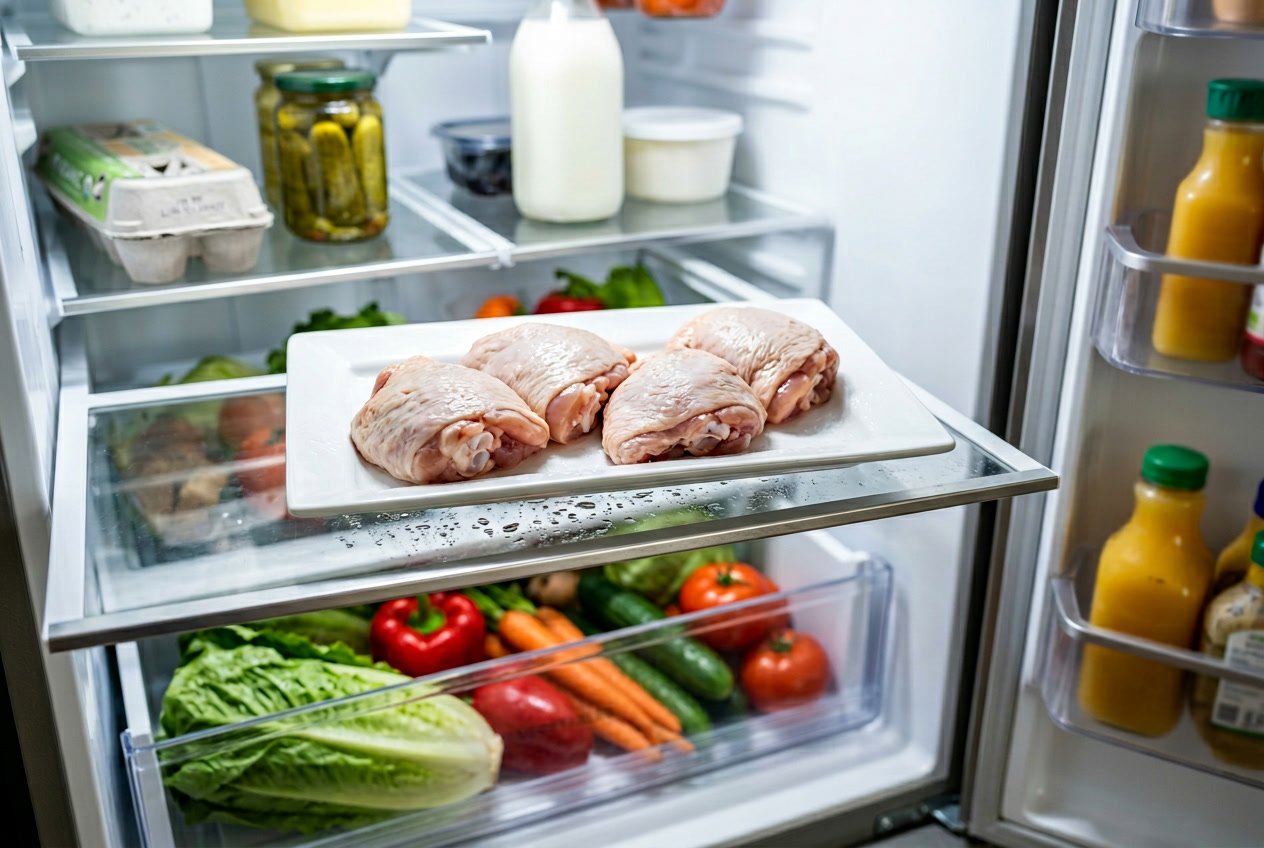
This article provides a step-by-step approach to check readiness, speed thawing safely, and avoid common mistakes that lead to uneven cooking or bacterial risk.
You’ll also find practical tips on handling, storage after thawing, and when it’s okay to cook from frozen.
Will Chicken Thighs Defrost in the Fridge?
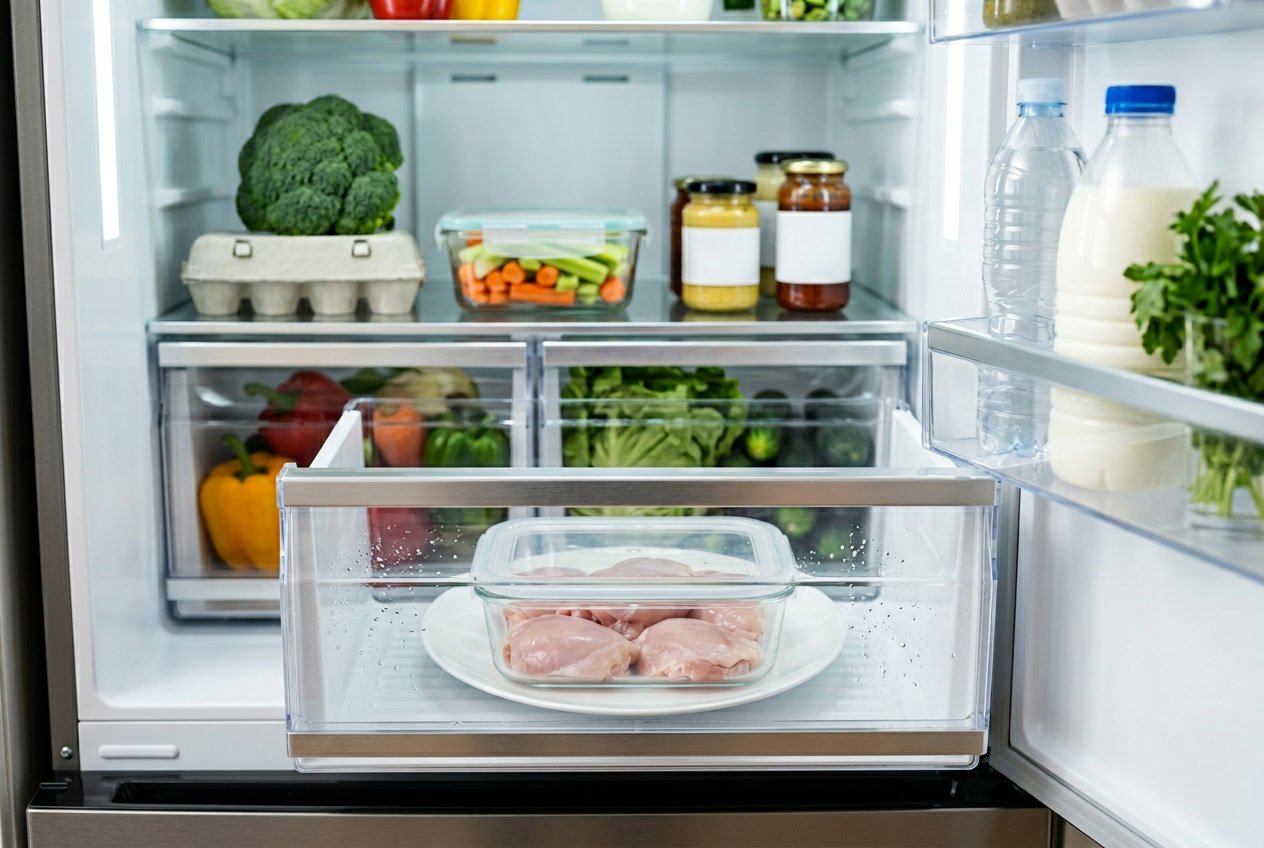
Refrigerated thawing reliably defrosts chicken thighs while keeping them in a safe temperature range.
You trade speed for food safety and better texture compared with room-temperature or hot-water methods.
How Long It Takes to Thaw Chicken Thighs in the Fridge
Thaw 1–2 pounds (450g–1kg) of chicken thighs in about 12–24 hours, and larger batches or thicker pieces in up to 24–48 hours.
A single layer of average-sized thighs often reaches full thaw within a day.
Place thighs on the bottom shelf in a shallow dish to catch drips and keep the fridge temperature at or below 40°F (4°C).
If pieces are stacked or vacuum-sealed tightly, allow extra thaw time because cold air can’t circulate as well around the meat.
If you need them sooner, use the cold-water method and cook the chicken immediately after that faster thaw.
Factors Affecting Defrosting Time
Thicker thighs and larger quantities take longer to thaw because heat transfer through meat is slow.
Separated, flat-packed pieces thaw faster than a clumped bag.
Packaging affects speed. Vacuum-sealed or tightly wrapped thighs thaw slower than loose bags because air can’t circulate.
Transfer to a leakproof resealable bag or shallow tray to improve airflow and safety.
Fridge performance and placement change timing. A fridge at 37–40°F (3–4°C) thaws slower but safely.
Placing meat on the bottom shelf prevents cross-contamination and keeps temperatures stable.
Monitor with a fridge thermometer if you defrost often.
Signs Chicken Thighs Are Fully Defrosted
Check flexibility: a fully thawed thigh bends easily and feels pliable with no icy center.
Press the thickest part; it should yield to gentle pressure and feel uniformly cold, not hard.
Look for the absence of ice crystals on the surface or inside the package.
If you see frost or rigid spots, return the thighs to the fridge to finish thawing.
Avoid cutting into partially frozen meat; it cooks unevenly.
Cook thawed chicken within 1–2 days.
Never refreeze raw thighs that thawed in the fridge unless you cook them first.
Step-by-Step Guide to Defrosting Chicken Thighs in the Fridge
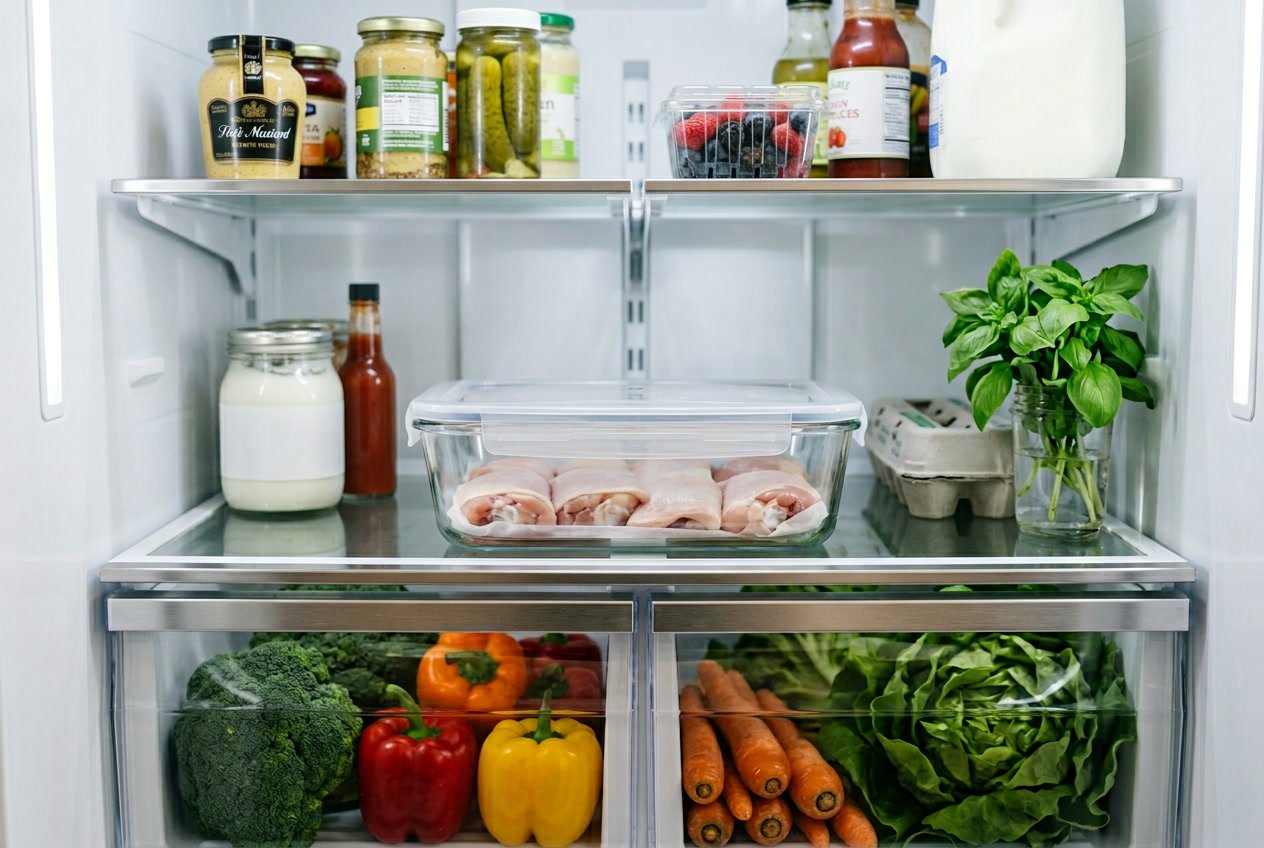
Plan ahead, keep the chicken cold, and prevent juices from contacting other foods.
Use a tray or shallow container, place the thighs on the bottom shelf, and allow sufficient time based on weight and thickness.
Proper Preparation and Placement
Remove the frozen package from the freezer and keep it sealed or place the thighs in a leak-proof plastic bag.
Put the bag or original packaging on a rimmed tray or shallow pan to catch drips; this protects the fridge and reduces cleanup.
Place the tray on the lowest shelf or in a designated meat drawer where the temperature stays most consistent.
Set your refrigerator to 40°F (4°C) or below; use a fridge thermometer to check this if needed.
Allow roughly 12–24 hours for one to two thighs (~0.5 lb), about 24 hours per pound, and 24–48 hours for 2 pounds.
Thicker bone-in thighs can need the full upper range.
Plan meals around these times so you don’t rush to use faster methods.
Preventing Cross-Contamination During Thawing
Keep raw chicken separate from ready-to-eat foods.
Store the tray on the bottom shelf so juices cannot drip onto other items.
Never use the fridge door for thawing because temperatures fluctuate there.
After moving thawed chicken to a cooking area, clean and sanitize any surfaces, containers, or utensils that contacted the raw meat or its packaging.
Wash hands with soap and warm water for at least 20 seconds before and after handling.
If you transfer thawed thighs to another container, use a clean, sealed container and label it with the thaw date.
Use defrosted chicken within 1–2 days.
If you won’t use it, cook it and then freeze the cooked meat instead.
Best Practices for Defrosting Chicken Thighs
Check the thighs before cooking by pressing the thickest part; they should feel soft, cold, and free of ice crystals in the center.
If ice remains, allow additional time in the fridge rather than using warm water or room temperature.
Avoid rinsing thawed chicken; rinsing spreads bacteria via splashes.
Pat dry with paper towels and discard the towels immediately.
Use a meat thermometer to ensure cooked thighs reach 165°F (75°C) before serving.
If you need to speed thawing, use the cold-water method in a sealed bag or microwave defrost and cook immediately.
Never refreeze chicken thawed by cold water or microwave unless you cook it first.
Food Safety and Bacteria Risks
Defrosting chicken thighs in the fridge slows bacterial growth and keeps the meat below unsafe temperatures.
Proper handling, storage location, and timing affect whether the thighs stay safe to cook and eat.
Why Safe Thawing Matters
When you defrost chicken thighs safely in the refrigerator, you keep the meat at or below 40°F (4°C).
This greatly reduces bacterial replication.
Slow, controlled thawing preserves texture and prevents outer layers from warming enough to let bacteria multiply while the center remains frozen.
Place frozen thighs on a tray or in a sealed container on the bottom shelf to stop juices from dripping onto other foods.
Plan ahead: a small batch may thaw overnight, while several pounds often require 24–48 hours.
Label packages with the thaw date and cook within 1–2 days after they finish thawing.
Risks of Salmonella and Campylobacter
Raw poultry often carries Salmonella and Campylobacter.
These bacteria can cause fever, abdominal cramps, and diarrhea within 6–72 hours of exposure.
Even if the chicken looks and smells normal, contaminated meat can still cause illness.
Handling raw thighs transfers bacteria to hands, utensils, and surfaces.
Wash hands with soap for 20 seconds after contact.
Use separate cutting boards for raw poultry and ready-to-eat foods.
Sanitize counters and utensils with a bleach solution or dishwasher-safe cycle to remove contamination.
Avoiding the Danger Zone
The “danger zone” means temperatures between 40°F and 140°F (4°C–60°C), where bacteria grow rapidly.
Do not leave chicken thighs at room temperature to thaw; the outer surface can reach the danger zone long before the interior thaws.
That increases risk from Salmonella and Campylobacter.
If you use a faster method, thaw sealed thighs in cold water changed every 30 minutes or use the microwave’s defrost setting, and cook immediately afterward.
Always verify doneness by cooking to an internal temperature of 165°F (74°C) measured at the thickest part with a probe thermometer.
Alternative Defrosting Methods
You can thaw chicken thighs quickly without using the fridge by choosing a method that fits your time and safety needs.
Each option below explains the fastest steps, risks, and immediate actions required after thawing.
Cold Water Method for Thawing Chicken Thighs
Place the thighs in a leak-proof zip-top bag and squeeze out excess air to prevent water contact with the meat.
Submerge the sealed bag in a bowl or sink filled with cold water and weigh it down so the bag stays fully submerged.
Change the water every 30 minutes to keep it cold.
This prevents the surface from warming into the bacterial danger zone.
Expect individual thighs to thaw in about 30–90 minutes depending on thickness and whether pieces are separate or clumped.
Cook the chicken immediately after thawing.
This method preserves texture better than microwave defrosting and is safe when you monitor water temperature and timing.
Microwave Defrosting for Chicken Thighs
Use the microwave’s defrost setting or set power to 30% to 50% to avoid cooking edges.
Arrange thighs in a single layer on a microwave-safe plate and rotate or flip every 30–60 seconds if your microwave lacks an automatic turntable.
Microwaves thaw unevenly; parts may start to cook while the center stays frozen.
Because microwave heat can push surface temps into the danger zone, cook the thighs immediately after thawing.
If pieces begin to cook, stop defrosting and start cooking right away.
Microwave defrosting is fastest, but it requires close attention to prevent texture loss and food-safety risk.
When Not to Use Room Temperature Thawing
Do not leave frozen chicken thighs on the counter to thaw at room temperature.
Surface temperatures can climb into the bacterial danger zone (40–140°F / 4–60°C) long before the interior thaws.
Avoid warm or hot water baths for thawing, since they can partially cook the meat and encourage bacterial growth.
If you lack time, choose microwave defrosting or the cold water method instead, and always cook immediately after fast thawing.
Post-Defrost Storage and Cooking Tips
Keep defrosted thighs cold and use them quickly.
Store them covered on the bottom shelf to avoid drips, and plan cooking or refreezing within the safe time window.
How Long to Store Defrosted Chicken Thighs
Store defrosted chicken thighs in their original packaging or in an airtight container on the refrigerator’s bottom shelf at 40°F (4°C) or below.
Use them within 1 to 2 days; beyond that, bacterial risk and quality decline increase.
If you plan to refreeze, do so only if the thighs were thawed in the fridge and remained at refrigerator temperature the whole time.
Refreezing reduces texture and moisture; label with the date and use frozen thighs within 3–9 months for best quality.
Avoid keeping defrosted thighs in the fridge door or at room temperature.
Always discard meat that smells off, is tacky, or shows unusual color.
Cooking Chicken Thighs After Thawing
Pat thighs dry with paper towels to promote even browning and season as desired before cooking.
Cook to an internal temperature of 165°F (75°C) measured at the thickest part without touching bone.
Use common methods like pan-searing followed by oven finishing, roasting at 400°F (200°C) for 25–35 minutes depending on size, or grilling over medium heat until juices run clear.
If you marinated during thawing, discard any used marinade unless you boil it first.
If you’ve refrozen and rethawed, cook sooner and check texture; expect slightly drier results.
Clean surfaces and utensils after contact with raw defrosted chicken to prevent cross-contamination.
Cooking Chicken Thighs Directly from Frozen
You can cook chicken thighs from frozen, but increase cooking time by about 50% versus thawed meat.
Oven roasting at 375–400°F (190–200°C) works well; expect roughly 45–60 minutes for individual thighs depending on thickness.
Use methods that avoid long cold centers: bake, braise, or simmer from frozen rather than searing only.
If using a skillet, cover and cook on moderate heat to allow heat to penetrate.
Always verify a 165°F (75°C) internal temperature in the thickest part.
Do not refreeze thighs that were cooked from frozen unless you cool them quickly and store within two hours.
Label cooked-from-frozen items and eat within 3–4 days.
Thawing Chicken Thighs: Additional Tips and Common Mistakes
Keep chicken contained, cold, and on the lowest shelf to avoid drips and uneven thawing.
Check packaging and portioning to speed thaw time and reduce spoilage risk.
Best Places in the Fridge to Thaw Chicken
Place packages on the bottom shelf at the back of the fridge where temperatures stay most consistent (usually 34–40°F / 1–4°C).
Use a shallow tray or rimmed baking sheet under the package to catch any juices and prevent cross-contamination with ready-to-eat foods below.
Avoid the door, deli drawer, or top shelves; those areas see frequent temperature changes.
If your fridge has a deli drawer that stays colder than the door, it can work for smaller packages, but still keep the chicken on a tray.
Keep packages spaced so air can circulate.
Crowded shelves slow refrigerator thawing and can leave icy spots.
Portion Size and Packaging Considerations
Smaller, single-layer packages thaw faster and more evenly than large, vacuum-sealed blocks.
If you freeze thighs in a tight clump, partially separate pieces while still frozen. Tap or flex them to break apart so cold air reaches each piece.
Refrigerator thawing completes within about 24 hours for a typical package.
Keep chicken in its original sealed packaging or transfer it to a leak-proof bag or airtight container.
Remove excess air from bags to improve contact with cold air and shorten thaw time.
If you must refreeze, only do so when thawing occurs entirely in the refrigerator and the chicken has not been above 40°F for more than two hours.


