
Why Were My Chicken Thighs Rubbery? Causes and Solutions
You likely made one of a few common mistakes: overcooking, uneven thickness, or using very lean or poor-quality thighs.
Most often, heat and timing errors denature proteins and squeeze out moisture. Cook to the right internal temperature, use even thickness, and manage moisture to avoid a rubbery texture.
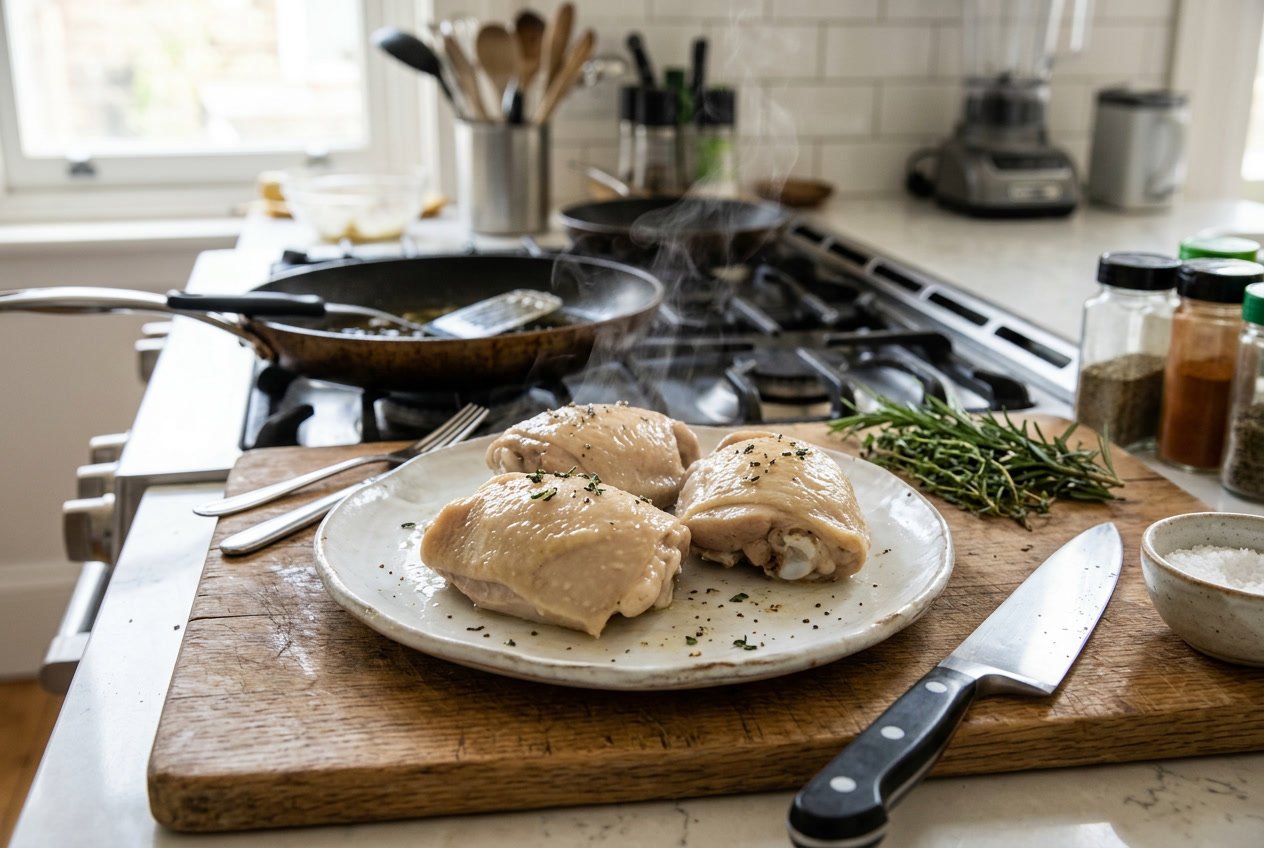
This post will show why anatomy and chicken quality matter. You’ll see which cooking mistakes to avoid and learn simple prep and cooking techniques for consistently tender thighs.
Follow the practical tips ahead and you’ll turn worried bites into juicy, reliable results.
What Causes Rubbery Chicken Thighs?
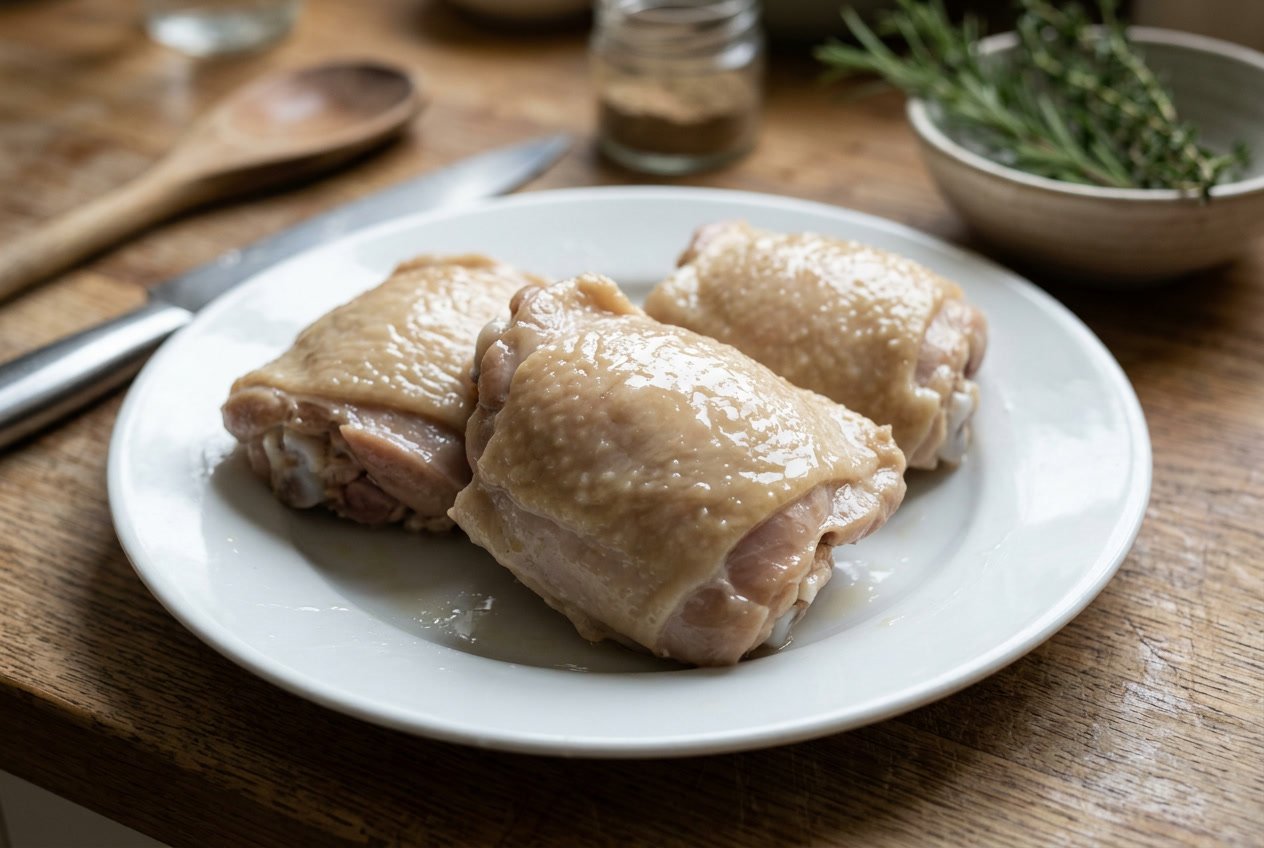
Several predictable mistakes make chicken thighs turn rubbery. Extreme temperatures tighten proteins, uneven heat leaves sections underdone, and using the wrong cooking method for the cut can cause problems.
Each cause affects moisture and collagen differently. The fix depends on the specific problem.
Overcooked Chicken
When you overcook thighs, the muscle proteins contract and expel juices. This leaves dry, tight fibers that feel rubbery.
Thighs tolerate higher temperatures than breasts, but they still become tough if you cook them too long or at too high heat.
Watch visual cues and use a meat thermometer. Pull thighs when they reach about 175°F (79°C) for bone-in or 170–175°F (77–79°C) for boneless, then rest 5–10 minutes.
High, direct heat that chars the outside while overcooking the inside will amplify the rubbery texture. Shorten cooking time by trimming excess fat and using moderate heat.
If you need higher heat for color, sear briefly and finish in a cooler oven or on indirect grill heat to protect moisture.
Undercooked Chicken
Undercooked thighs can feel rubbery because proteins haven’t fully denatured and connective tissue hasn’t softened. The result can be sticky, springy meat that resists chewing, and it’s a food-safety issue if temps stay below 165°F (74°C).
Use an instant-read meat thermometer inserted into the thickest part, avoiding bone, to verify doneness. For thighs, aim for 165–175°F depending on your preferred texture.
If you find rubbery spots after slicing, return pieces to gentle heat in a covered pan with a little liquid to finish cooking evenly. Avoid relying on color alone since thighs can look done outside while remaining underdone inside.
Improper Cooking Methods
Choosing the wrong method for thighs creates texture problems. High, fast methods like intense pan-searing or quick grilling can dry and tighten thigh meat if you use them for large, bone-in pieces.
Methods meant for lean breasts, like quick searing or minimal moisture, don’t suit thighs’ collagen-rich structure. Match your method to the cut: braise, slow-roast, or cook low-and-slow to convert collagen into gelatin and produce tender thighs.
For quick-cook applications, cut thighs into uniform pieces so they cook evenly and avoid rubbery edges. Use two-zone grilling or finish in the oven after a brief sear for even results.
Brining or a short buttermilk soak also helps retain moisture. Select technique and prep based on thickness, bone presence, and the final texture you want.
Internal Temperature Issues
Temperature control prevents rubbery chicken thighs. Rapid swings, like very high surface heat with an undercooked core, cause uneven protein behavior and mixed textures.
Carryover cooking can raise internal temp several degrees after you remove the meat. Calibrate and use an instant-read meat thermometer for every cook.
Insert it into the thickest part near the bone without touching bone to get true readings. Target ranges: 165°F (74°C) minimum for safety, 170–180°F (77–82°C) for more gelatinized, fork-tender thighs.
If you hit a higher temp than intended, slice and simmer in broth or add the meat to saucy dishes. If temps are low, finish gently in a covered pan with a splash of liquid to safely raise internal temperature.
The Role of Chicken Quality and Anatomy
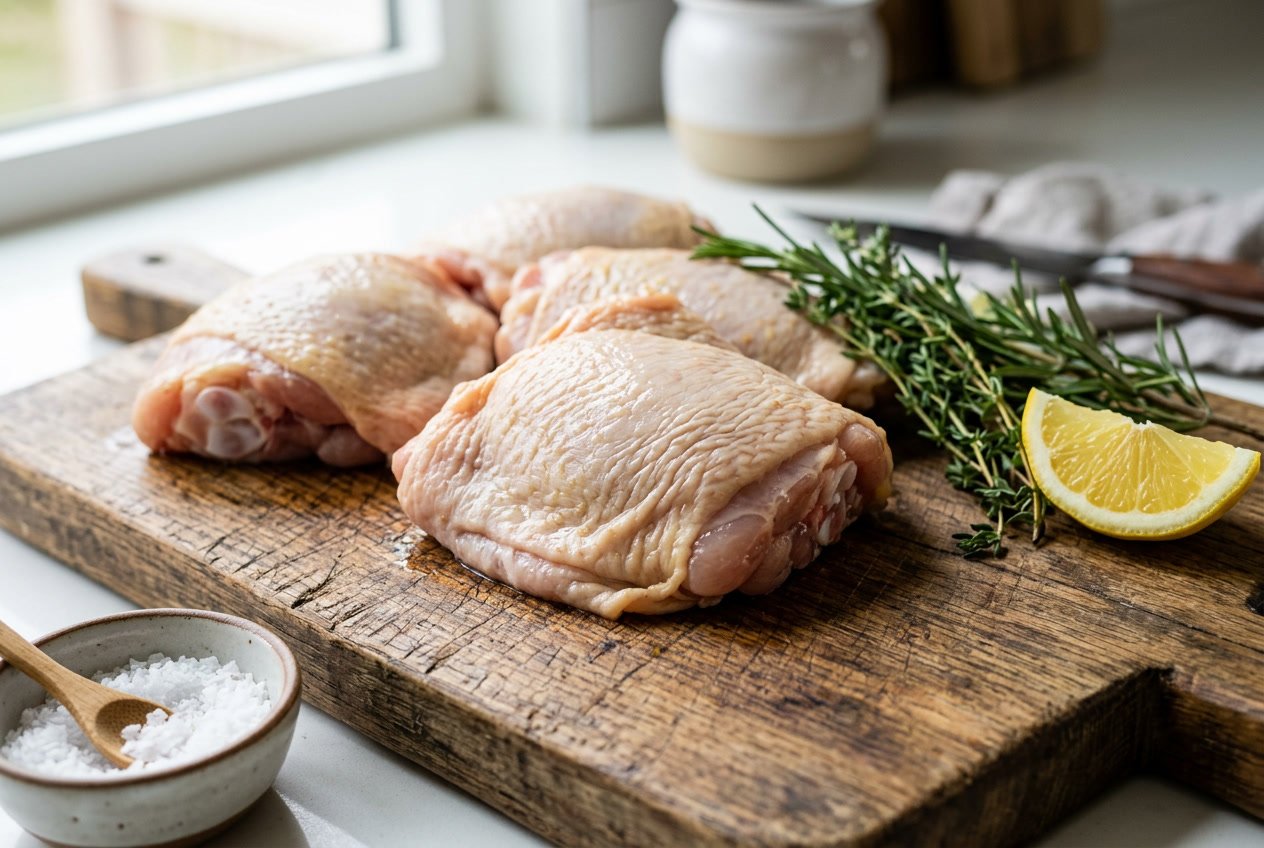
Quality of the bird and the structure of thigh meat affect texture. Pay attention to age, breed, processing, and visible muscle or connective-tissue issues when you buy or prep chicken.
Chicken Age and Breed
Older birds give firmer, sometimes chewier meat. Mature or spent hens have more cross-linked collagen and denser muscle fibers, so thighs require longer, gentler cooking to soften connective tissue.
Breed matters too. Fast-growing commercial broilers develop different muscle structure than heritage breeds.
Broilers often cook tender quickly but can be prone to uneven texture. Heritage or free-range birds may have more developed muscles and show firmer texture that benefits from moist heat methods.
Check labeling: organic and air-chilled chickens often retain firmer, cleaner flavor because of different handling. Air-chilled birds lose less surface water, so they sear better and are less likely to steam in the pan.
Woody Chicken Breast and White Striping
Woody breast and white striping are muscle quality defects mostly seen in breasts, but they signal overall flock conditions. If you spot white-striping or pale, hardened areas in breast meat, the flock was likely bred for rapid growth; thigh muscles can also show uneven texture as a result.
Woody breast presents as rigid, dry sections that don’t break down with normal cooking. White striping is fat deposition along muscle fibers; it changes mouthfeel and can make slices seem stringy or oddly firm.
These conditions don’t always make thighs rubbery, but they indicate the bird’s muscle composition may produce inconsistent thigh texture. When buying, choose pieces without visible hardened areas or excessive striping.
If you suspect woody traits, use slow, moist cooking or a marinade with enzymatic or acidic components to help tenderize.
Connective Tissue in Thighs
Thighs contain more collagen and elastin than breast meat. Collagen starts to gelatinize only after sustained, moderate heat.
If you cook thighs quickly at high heat and overshoot internal temperature, proteins tighten and the meat turns rubbery instead of melting into tender gelatin. Look for visible silver skin and seams of connective tissue.
Trim those or cook long enough at 275–325°F (130–160°C) in a covered pan to break them down. Braising, slow roasting, or sous-vide allow collagen to convert to gelatin without over-drying the muscle fibers.
For a quick remedy, brine or marinate with salt and mild acid for 30–90 minutes. That helps hydrate fibers and begins to loosen connective tissue so the thigh stays juicy.
Common Cooking Mistakes That Lead to Rubbery Texture
You can prevent rubbery chicken thighs by controlling heat, handling frozen meat correctly, and letting juices redistribute after cooking.
Small adjustments like lower temperature, proper thawing, and a short rest fix most texture problems.
Using High or Uneven Heat
High heat can quickly seize muscle fibers and leave thighs tough even if the interior reaches safe temperature. Searing briefly to develop color is fine, but avoid cooking the whole thigh over very high direct heat.
Use medium-high for browning, then lower the heat or move to indirect heat to finish. Uneven heat from crowded pans or hot spots causes parts to overcook while other parts remain underdone.
Give thighs space in the pan or on the grill, and rotate or reposition pieces for even cooking. If roasting, use an oven thermometer and position thighs on a middle rack for consistent heat.
Aim for target internal temperatures: 165°F for safety, 170–175°F for braised or slow-cooked thighs. Use a probe thermometer and remove thighs when they reach a few degrees below your target since carryover cooking raises temperature.
Improper Thawing and Reheating
Cooking thighs from partially frozen can produce a rubbery exterior and undercooked center. Thaw fully in the refrigerator overnight or use a sealed bag in cold water for faster thawing.
Never cook large frozen pieces straight on high heat. Reheating too aggressively dries and toughens meat.
Reheat low and slow: oven at 275–300°F, covered with foil and a splash of broth, or use a steamer to add moisture. Microwave reheating can work for small pieces, but use short bursts and let the meat rest between intervals.
If you refrigerate cooked thighs, slice or pull them before reheating to reduce reheating time. Adding a little sauce or fat during reheating helps restore tenderness and prevents the meat from tightening up.
Insufficient Resting After Cooking
Cutting into thighs immediately after cooking lets juices run out and fibers contract, which increases perceived rubberiness. Rest cooked thighs for 5–10 minutes on a warm plate or cutting board.
Tent loosely with foil to retain heat without steaming the skin. Resting lets residual heat equalize and carryover cooking finish the interior.
If you plan to slice, let thighs rest until they are cool enough to handle. Then carve against the grain to shorten muscle fibers and make each bite feel more tender.
Preparation Techniques to Avoid Rubbery Chicken
Control moisture and protein structure before cooking. Use salt and acid to help the meat retain juices, and even out thickness so the thighs cook uniformly.
Brining Chicken Thighs
Brining adds moisture and seasons the meat internally, which helps prevent rubbery, dry thighs. Use a simple brine: 1/4 cup kosher salt per quart (4 cups) of cold water.
You can add 2 tablespoons sugar per quart to aid browning. Submerge the thighs fully in the solution in the refrigerator.
Timing matters. Boneless thighs need about 30 minutes to 2 hours; bone-in thighs benefit from 2 to 6 hours.
Avoid over-brining (more than 8–12 hours) to prevent a mushy texture. Rinse briefly after brining and pat dry to promote proper browning.
Brined chicken cooks slightly faster and may reach target temperature sooner, so check internal temperature early. Use a meat thermometer inserted into the thickest part and pull thighs at 160°F if you plan to rest them to 165°F.
Marinating for Tenderness
Marinades with acid or enzymatic tenderizers break down surface proteins and add flavor without causing toughness. For thighs, use a balanced marinade: 2–3 tablespoons acid (lemon juice, vinegar, or yogurt) per cup of marinade, plus oil and seasonings.
Limit marinating time: 30 minutes to 2 hours for acidic mixtures; up to 6–8 hours for milder, oil-based marinades. Avoid leaving thighs in strong acids or pineapple/papaya enzymes for too long; these can over-tenderize and create a mushy texture.
Always marinate in the refrigerator and discard used marinade that contacted raw meat, or boil it before using as a sauce. Pat the thighs dry before cooking to ensure a good sear and prevent steaming.
Pounding and Tenderizing
Even thickness ensures even cooking and reduces the risk of overcooking thin spots into rubbery pieces. If a thigh has notably uneven muscle, use a meat mallet or heavy skillet to gently flatten thicker areas to roughly uniform thickness.
For boneless thighs, aim for an even 1/2–3/4 inch thickness. Work between plastic wrap to avoid tearing.
You can also use a fork or a coarse blade to break connective tissue on very thick sections. Don’t overwork the meat—excessive pounding can damage texture and make it chewy.
Combine pounding with brining or a short marinade for best results. After tenderizing, season and cook immediately or refrigerate briefly.
Keeping pieces uniform lets you hit the correct internal temperature without overshooting and creating rubbery chicken.
Best Cooking Methods for Tender Chicken Thighs
Use controlled time and temperature, a reliable meat thermometer, and moisture during cooking to prevent rubbery chicken.
Focus on cooking low enough and long enough for connective tissue to break down. Verify doneness with an instant-read thermometer, and add liquid when appropriate.
Low and Slow Techniques
Cook bone-in thighs at 300–325°F (150–160°C) for 45–75 minutes in the oven. This temperature range keeps muscle proteins from seizing up while giving connective tissue time to soften.
Finish skin-on thighs at 425°F for 5–10 minutes to crisp the skin without overcooking the interior.
Use a braiser or covered roasting pan to maintain steady, even heat. If you use a slow cooker, set it for 4–6 hours on low or 2–3 hours on high, and check with a meat thermometer near the bone.
Set sous vide to 165°F (74°C) for 1–4 hours for precise tenderness without risking rubberiness.
Checking Internal Temperature
Use an instant-read meat thermometer and rely on temperature, not time, to avoid rubbery chicken. For tender thighs, aim for 170–175°F (77–79°C) for dark meat to ensure connective tissue has softened while keeping meat juicy.
Insert the probe into the thickest part, avoiding bone. If you reach 165°F (74°C) and the thigh feels tight, continue cooking briefly and check every 3–5 minutes.
Let meat rest 5–10 minutes after cooking so juices redistribute. Resting often reduces the sensation of rubbery texture.
Cooking with Moisture
Add liquid when braising, stewing, or baking covered to prevent surface drying and to help collagen break down. Use broth, wine, or a seasoned pan sauce that reaches at least 1/3 up the thighs.
Simmer gently instead of boiling aggressively. Steam and trapped moisture help break down connective tissue without toughening proteins.
Marinades or brines (30 minutes to overnight) add moisture and can tenderize slightly. Include salt or an acid like yogurt or vinegar for best effect.
Avoid overcrowding the pan. Crowded pieces create steam, make skin soggy, and can cause uneven cooking that leads to rubbery centers.
Tips for Selecting and Handling Chicken Thighs
Choose thighs with visible marbling, intact skin, and a fresh smell. Store and thaw them safely, and prep with simple steps like drying, scoring, or brining to prevent rubbery results and improve flavor.
Choosing High-Quality Chicken
Look for thighs that feel slightly springy, have pale-pink flesh, and show thin veins of fat running through the meat. Marbling keeps thighs juicy, so avoid very lean pieces if you want tender results.
Buy air-chilled or organic chicken when possible. Air-chilled thighs lose less water during processing and often yield better texture when cooked.
Check packaging dates and source. Choose pieces with a sell-by date that gives you several days of safe use, or select frozen thighs with solid, frost-free packaging.
For recipes that need crisp skin, pick thighs with the skin on.
Proper Storage and Thawing
Refrigerate raw thighs at 40°F (4°C) or lower and use within 1–2 days for best texture. For longer storage, freeze at 0°F (-18°C), label packages with the purchase date, and use within 6 months for optimal quality.
Thaw in the refrigerator overnight for even defrosting. For faster thawing, submerge sealed thighs in cold water and change the water every 30 minutes until pliable.
Cook immediately after cold-water thawing. Avoid thawing at room temperature or using hot water, as both can partially cook or unevenly loosen proteins and increase the chance of rubbery texture.
If you thaw in the microwave, plan to cook right away and expect some change in texture.
Preparing Chicken for Cooking
Pat thighs dry with paper towels to remove surface moisture. This helps achieve better browning and proper fat rendering.
For skin-on thighs, lightly score the skin or prick around the fat pockets. This helps fat render and crisp during searing or roasting.
Brine the chicken using 1/4 cup kosher salt and 4 cups water for 1–2 hours to boost moisture retention and flavor. Rinse and dry the chicken after brining to avoid overly salty crusts.
Let thighs sit at room temperature for 15–20 minutes before cooking. This reduces cook-time extremes that tighten proteins.
Season just before cooking. Use a meat thermometer to check for a temperature of 165°F (74°C).
Let the meat rest for 5–10 minutes so juices redistribute and the meat stays tender.


