
Why Do Chicken Thighs Taste Weird? Reasons & Expert Solutions
You might notice chicken thighs sometimes taste stronger, metallic, or slightly gamey compared with breasts.
That flavor usually comes from a mix of dark-meat chemistry, fat content, how the bird was raised and fed, and the way the meat was processed or stored. Most of those causes are fixable or avoidable when you know what to look for.
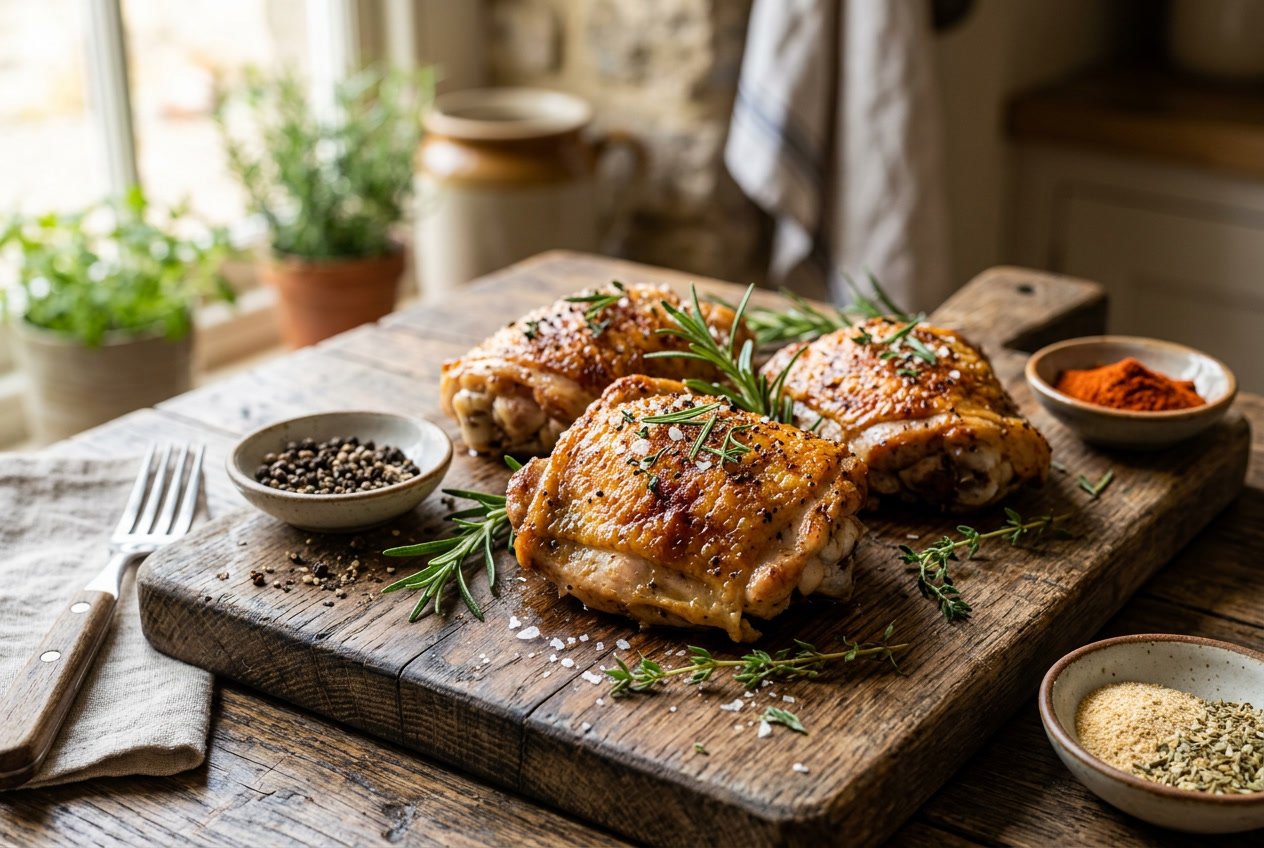
Factors like breed and feed, ageing and storage, or cooking technique often change the taste.
You can spot higher-quality thighs at the store and take practical steps to reduce off-flavors and make thighs taste cleaner and more appealing.
What Makes Chicken Thighs Taste Different
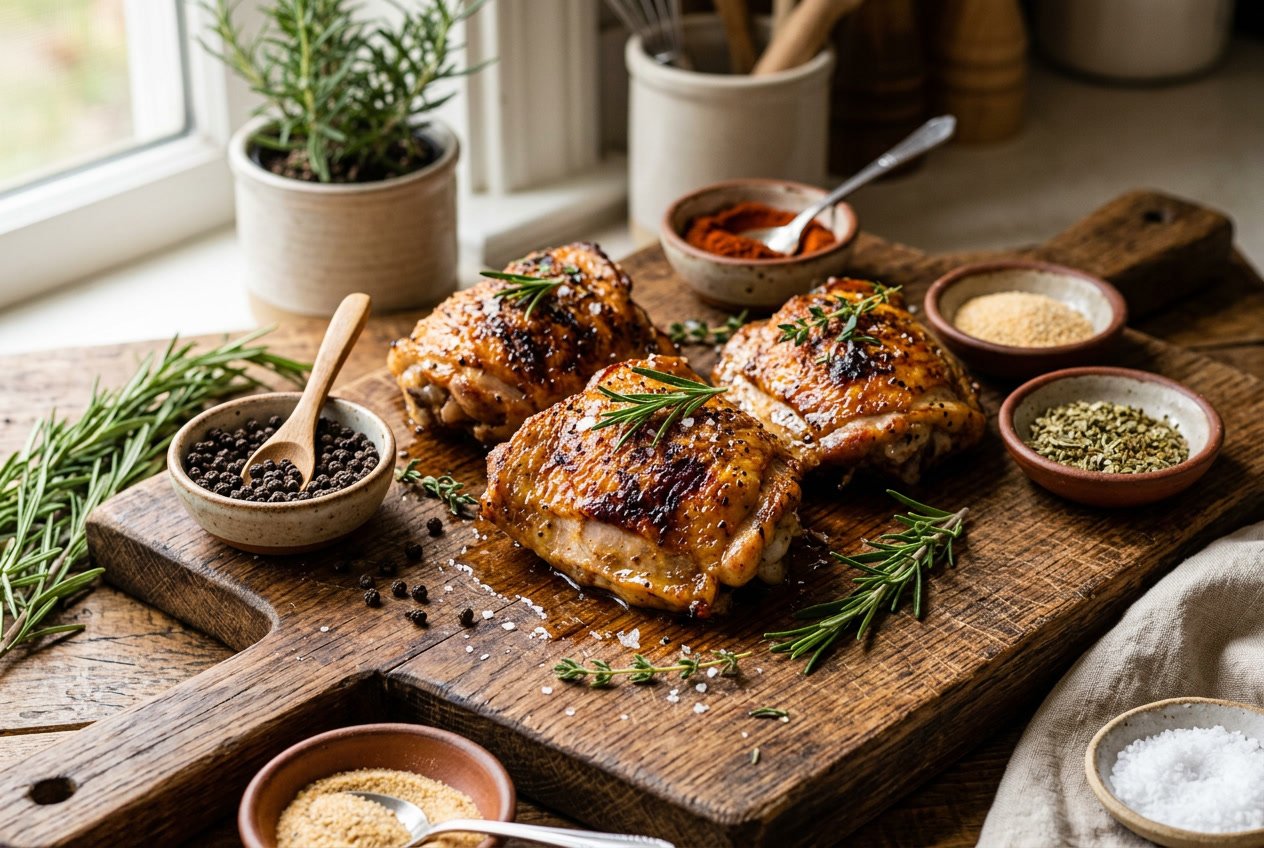
Thighs taste richer, slightly meatier, and sometimes gamier than breasts.
Those differences come from fat distribution, muscle type, and whether the cut includes bone or skin.
Higher Fat Content in Thighs
Thighs contain more intramuscular and subcutaneous fat than breasts, which directly affects flavor and mouthfeel.
Fat carries and concentrates flavor compounds, so when fat renders during cooking it amplifies savory and umami notes that might seem unfamiliar if you usually eat lean breast meat.
That extra fat also changes texture.
Thighs stay juicier during cooking, but overcooking the skin or burning rendered fat can create bitter or oily off-flavors.
To control taste, remove skin, trim excess fat, or use acidic marinades like lemon, vinegar, or yogurt to cut richness.
Thighs typically have several times the fat grams per 100 g compared with breasts.
Keep heat moderate and allow fat to render to avoid unpleasant compounds from burning.
Dark Meat vs. White Meat
Dark meat like thighs has more myoglobin and connective tissue than white breast meat.
Myoglobin provides a deeper, red-tinged color and a stronger, meatier flavor, while connective tissue breaks down into gelatin, adding mouth-coating richness when cooked low and slow.
These biochemical differences make thighs taste “gamey” to some people while breasts taste mild and clean.
If you prefer a neutral profile, choose breasts.
If you want depth and succulence, thighs deliver.
Quick high heat suits breasts.
Braising or roasting at moderate temperatures highlights the strengths of thighs.
Bone-In Versus Boneless Cuts
Bones and marrow contribute flavor by slowly releasing minerals and amino acids during cooking.
Bone-in thighs often taste fuller and more complex because the bone transfers subtle savory notes and helps retain moisture around the meat.
Boneless thighs cook faster and can taste flatter if not seasoned or paired with a sauce.
Simmer bone-in thighs in stock or use them in stews to get the bone’s impact.
For quick pan-searing, brine or marinate boneless thighs to boost flavor.
Top Causes of Weird-Tasting Chicken Thighs
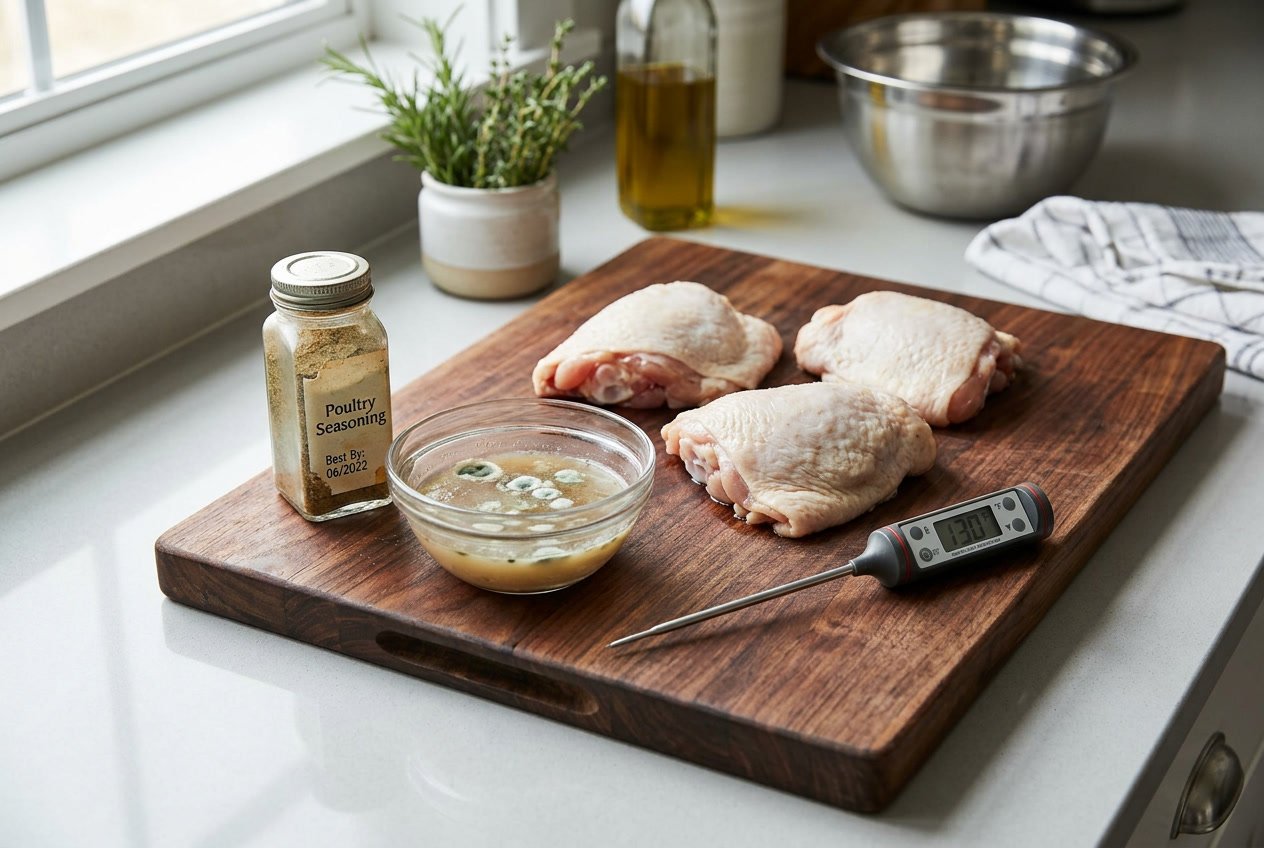
Most off flavors come from cooking mistakes, bacterial changes in storage, or chemical changes after reheating.
Each cause affects taste and texture differently and has distinct fixes you can apply.
Overcooked Chicken Problems
Overcooking dark meat dries it out and concentrates off flavors even though thighs tolerate heat better than breast.
If you cook thighs past the moment of optimal juiciness—often well beyond 165°F (74°C) for the thickest part—the muscle fibers tighten, squeezing out flavorful juices and leaving a chalky or bitter impression.
High, prolonged heat breaks down fats unevenly.
Rendered fat can taste stale or metallic when it overheats.
Monitor internal temperature with a probe, remove thighs a few degrees before 165°F if carryover cooking will finish them, and use lower, gentler methods like braising or oven-roasting at moderate temperatures.
Spoilage and Improper Storage
Bacterial growth and chemical changes during poor storage cause sour, ammonia-like, or “stale” notes.
Keep fresh thighs at 40°F (4°C) or below and use within 1–2 days, or freeze if you won’t cook them quickly.
When you freeze, wrap tightly or use vacuum seal to prevent freezer burn and off odors.
Signs of spoilage include slimy texture, off color, or an ammonia or chemical smell.
Even without a strong odor, oxidation of fats can produce a metallic or rancid taste.
Thaw in the refrigerator, not at room temperature, to limit bacterial growth and preserve natural flavor.
Warmed-Over Flavor After Reheating
Warmed-over flavor (WOF) happens when cooked meat is cooled then reheated, producing dull, metallic, or cardboard-like notes.
Lipid oxidation and protein breakdown during cooling create volatile compounds that intensify on reheating.
Thighs with higher fat content are especially prone to WOF.
Reheat once only, using gentle methods like steaming or a low oven instead of harsh microwave bursts.
Store cooked thighs in airtight containers in the fridge for no more than 3–4 days, or freeze portions immediately after cooling.
Adding an acidic element like lemon or vinegar or reheating with fresh herbs can mask mild WOF, but prevention works best.
The Role of Chicken Quality and Source
Your choice of chicken—how it was raised, what it ate, and which breed it comes from—directly affects flavor and texture.
Pay attention to labels, where you buy it, and whether the chicken was air- or water-chilled to avoid unexpected tastes.
Impact of Factory-Farmed Chicken
Factory-farmed chickens are fast-growing broilers fed a corn- and soybean-based diet to maximize weight and yield.
That diet, combined with high-density housing and routine processing practices like water-chilling or plumping with saline, often leads to a blander taste and a wetter, sometimes rubbery texture.
You may notice occasional metallic, chemical, or “stale” notes when chickens absorb processing water or additives.
Packaging can mask subtle spoilage, so check sell-by dates and look for sliminess or dull color before you buy.
Factory-farmed chicken delivers consistent price and availability, but expect trade-offs in concentrated chicken flavor and sometimes in mouthfeel.
Benefits of Pasture-Raised and Organic Chicken
Pasture-raised chickens forage on grasses, insects, and a more varied diet, which tends to produce meat with fuller, more complex flavor.
Organic chickens receive feed free of synthetic pesticides and antibiotics, which can reduce off-flavors tied to certain additives.
You’ll often notice firmer texture and less water retention in pasture-raised or organic birds, especially if they’re air-chilled.
This concentrates flavor and gives crisper skin when cooked.
Look for clear labels: “pasture-raised” or certified organic plus details about air-chilling or no added solutions.
Paying more usually yields a taste difference that shows in simple preparations like roasting or pan-searing.
Heritage Breed Flavor Profiles
Heritage breeds grow slower and develop more muscle and intramuscular fat than commercial broilers, which creates a deeper, richer taste.
Thigh meat from heritage birds often has a stronger, more savory character and a firmer bite that holds up to bold seasonings and longer cooking.
Because heritage birds are rarer, you’ll likely buy them from specialty butchers, farmers’ markets, or online retailers.
Expect higher prices but noticeable flavor payoff.
If you want to explore distinct profiles, sample different breeds like Jersey Giant, Delaware, or Rhode Island Red and note variations in fat content, color, and texture to match your preferred cooking methods.
Feed, Breed, and Processing Methods
A chicken’s feed, breed, and the plant’s processing steps change taste, texture, and what you should check when buying chicken.
Diet and Its Influence on Chicken Flavor
What chickens eat alters their meat’s oils and aroma.
Corn- and soy-based feed produces a milder, more uniform chicken flavor.
Diets that include pasture plants, insects, or higher-omega ingredients increase fatty-acid variety and often yield a richer, more complex taste.
Feed also affects susceptibility to warmed-over flavor.
Birds with more polyunsaturated fatty acids (PUFAs) in their cell membranes—common when diets include certain oils or fishmeal—oxidize faster after cooking, creating stale or metallic notes when reheated.
Vitamin E in feed can slow oxidation, but it isn’t a complete solution.
When buying chicken, check labels for “pasture-raised,” “heritage breed,” or feed details if flavor matters to you.
Small producers often list feed composition.
Large brands rarely do.
Water-Chilled vs. Air-Chilled Chicken
How a processor chills carcasses directly affects taste and juice retention.
Water-chilled chicken is submerged in cold baths, causing some absorption of water and brine, which dilutes natural flavor and can make meat taste flat or slightly salty if plumped.
Water chilling shortens processing time and lowers cost, but it can reduce perceived richness.
Air-chilled chickens cool by cold air blowers, losing less moisture and keeping more of the original juices and volatile flavor compounds.
That often results in a cleaner, stronger chicken flavor and firmer texture.
If flavor is a priority when buying chicken, look for “air-chilled” on the package or ask your butcher.
Effects of Additives and Chemical Washes
Processors use additives and washes to control bacteria and appearance, and those treatments can change flavor.
Plumping injects saltwater or phosphate solutions to boost weight and juiciness.
It can result in a rubbery texture and muted chicken flavor if overused.
Check ingredient lists for added water, salt, or phosphates.
Chemical washes like chlorine reduce pathogens but may leave faint off-notes when misapplied.
Some brands avoid chemical baths and advertise “no chlorine wash”; others use air-chill plus minimal processing.
If you’re sensitive to odd tastes, prioritize labels that state minimal additives or buy from local farms that describe their processing methods.
Cooking Techniques That Affect Chicken Thigh Taste
Different handling and cooking choices quickly change flavor and texture.
Temperature control, salt or sugar in a brine, and whether you grill, bake, or fry all influence thigh meat taste.
Proper Temperature and Doneness
Cook thigh meat to 165°F (74°C) in the thickest part to ensure safety and avoid off flavors from undercooking.
Use an instant-read probe and insert it without touching bone for an accurate reading.
Overcooking dark meat drives out juices and concentrates fat, which can taste greasy or “weird.”
Pull thighs from heat at 160°F and rest 5–10 minutes; carryover will bring them to 165°F while preserving juiciness.
Uneven cooking—cold spots near the bone—can leave a faintly sour or metallic note.
Flatten thicker areas or allow thighs to sit at room temperature 20–30 minutes before cooking for a more even finish.
Brining and Seasoning Influence
A simple brine (1 cup salt per gallon water for 1–4 hours) seasons thighs through and reduces the chance of blandness or structural toughness.
Brining also changes how proteins bind water, improving succulence and reducing that mealy mouthfeel some people describe as weird.
Use sugar or baking soda in small amounts to round flavors and tenderize.
Avoid excessive sugar that can burn and create bitter char.
Pat thighs dry after brining to get proper browning.
Wet surfaces steam instead of crisp.
Season close to cooking time if you used a salty brine.
For layered flavor, apply a rub with garlic powder, smoked paprika, and black pepper right before searing or roasting.
Impact of Cooking Method: Grilling, Baking, Frying
Grilling adds smoky, charred compounds that mask mild off flavors but can accentuate metallic notes if flare-ups char fat.
Cook over medium heat and manage flare-ups.
Direct high flames can create bitter burnt flavors.
Baking at 375–425°F gives steady heat for consistent doneness and renders fat slowly, producing a clean, roasted taste.
Use a wire rack to let air circulate so skin crisps and fat drains away, preventing greasy mouthfeel.
Frying gives rapid Maillard browning and a crunchy exterior that distracts from subtle off tastes.
Maintain oil at 350–375°F.
Too-cool oil soaks the crust in oil and tastes heavy, while too-hot oil burns the coating and tastes acrid.
Texture, Freshness, and Other Factors
Texture, storage, and small biological differences often explain a “weird” chicken taste more than additives.
Pay attention to muscle condition, how long the meat sat before cooking, and whether your palate prefers mild or stronger flavors.
Woody Chicken and Muscle Conditions
Woody chicken describes thighs that feel dry, stringy, or unusually firm after cooking. Older birds, heavy exercise, or muscle disorders like woody breast in poultry often cause this condition by changing muscle fiber structure and water retention.
These altered fibers push out moisture during cooking. As a result, the meat becomes dense and dry, with concentrated flavors that many find off or “funny.”
Processing and storage also intensify the effect. Storing chicken too long in the refrigerator or repeatedly freezing and thawing it breaks down cell membranes.
When you reheat this chicken, it often develops a stronger, sometimes metallic or warmed-over flavor. To minimize these issues, buy fresher cuts and avoid keeping chicken in the freezer for extended periods.
Cook chicken to 165°F and let it rest briefly to help retain juices.
Personal Taste Preferences
Your genetics and past exposure influence whether you find chicken mild, bland, or odd. Some people have heightened sensitivity to metallic, bitter, or sulfurous notes due to variations in taste receptors.
Cooking choices also play a role. Overcooking can concentrate unpleasant compounds, while underseasoning leaves the raw meat’s base notes more noticeable.
If you dislike the baseline flavor, try techniques that alter texture and taste. Brining adds juiciness, acidic marinades cut through richness, and bold spice blends or sauces can mask warmed-over notes.
Experiment with air-chilled chicken or heritage breeds if you want a different flavor profile.
Cultural and Regional Flavor Expectations
Your expectations for chicken flavor depend on the culinary norms where you grew up.
Some regions prize chicken for a clean, neutral flavor that carries spices.
Others prefer a gamier, more pronounced taste, often from pasture access or older birds.
When your expectations don’t match the product, you’ll likely label it weird.
Processing methods also shape regional differences.
Water-chilled, plumped, or salt-injected chicken often tastes blander or slightly chemical to those used to air-chilled or minimally processed poultry.
Choose suppliers and labels that match your regional taste standard.
Options like pasture-raised, air-chilled, or heritage breed can help align the bird’s flavor with your expectations.


