
Why Do Chicken Thighs Stay Pink? The Science and Food Safety Guide
You might notice pink in cooked chicken thighs and wonder if something went wrong. If the thighs reach a safe internal temperature (165°F / 74°C), a pink tint alone does not mean they are unsafe. Myoglobin, bone marrow, smoking, brines, and cooking methods often cause that color.
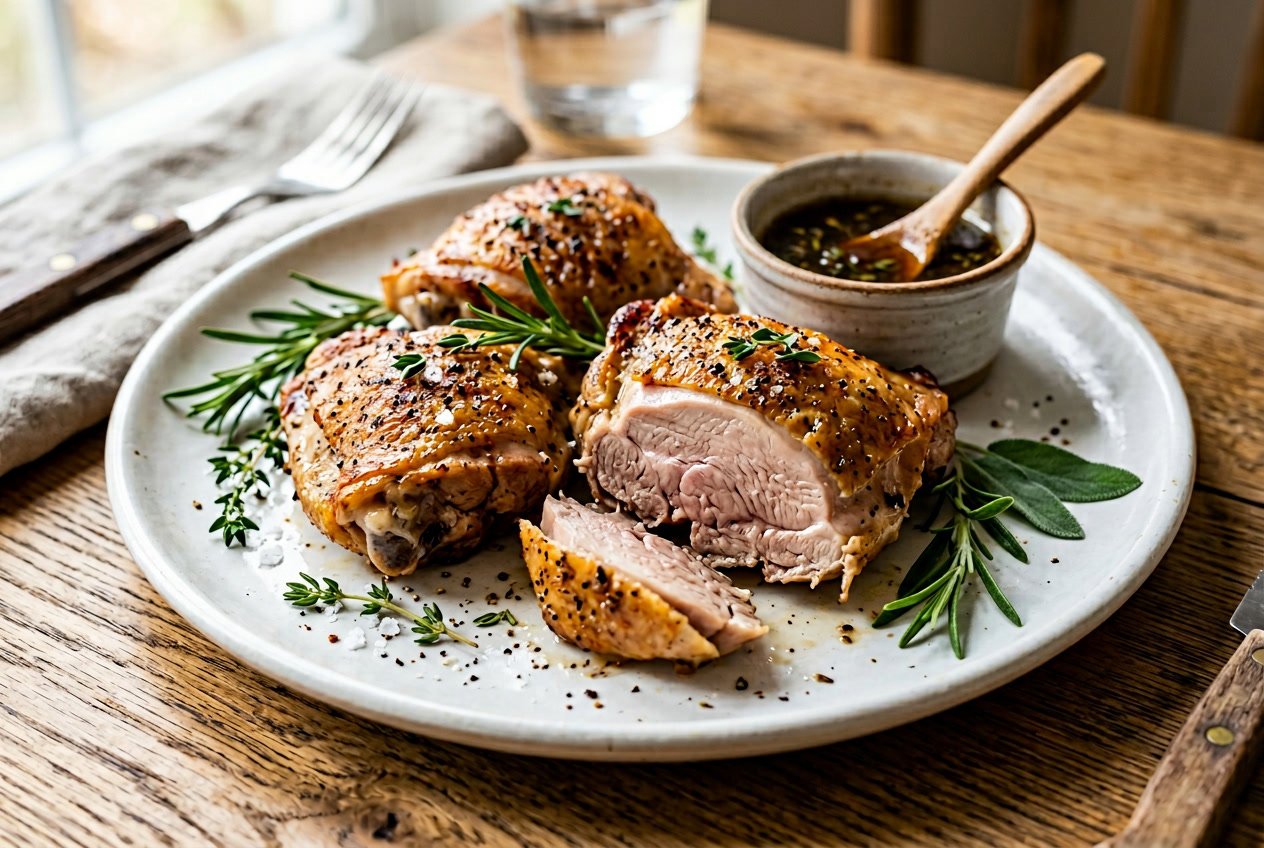
This article explains the science behind the pink color and the factors that make thighs stay pink. You’ll also learn how to verify doneness reliably with a thermometer.
You’ll get practical cooking tips and safety steps to keep your meals both tasty and risk-free.
The Science Behind Pink Chicken Thighs
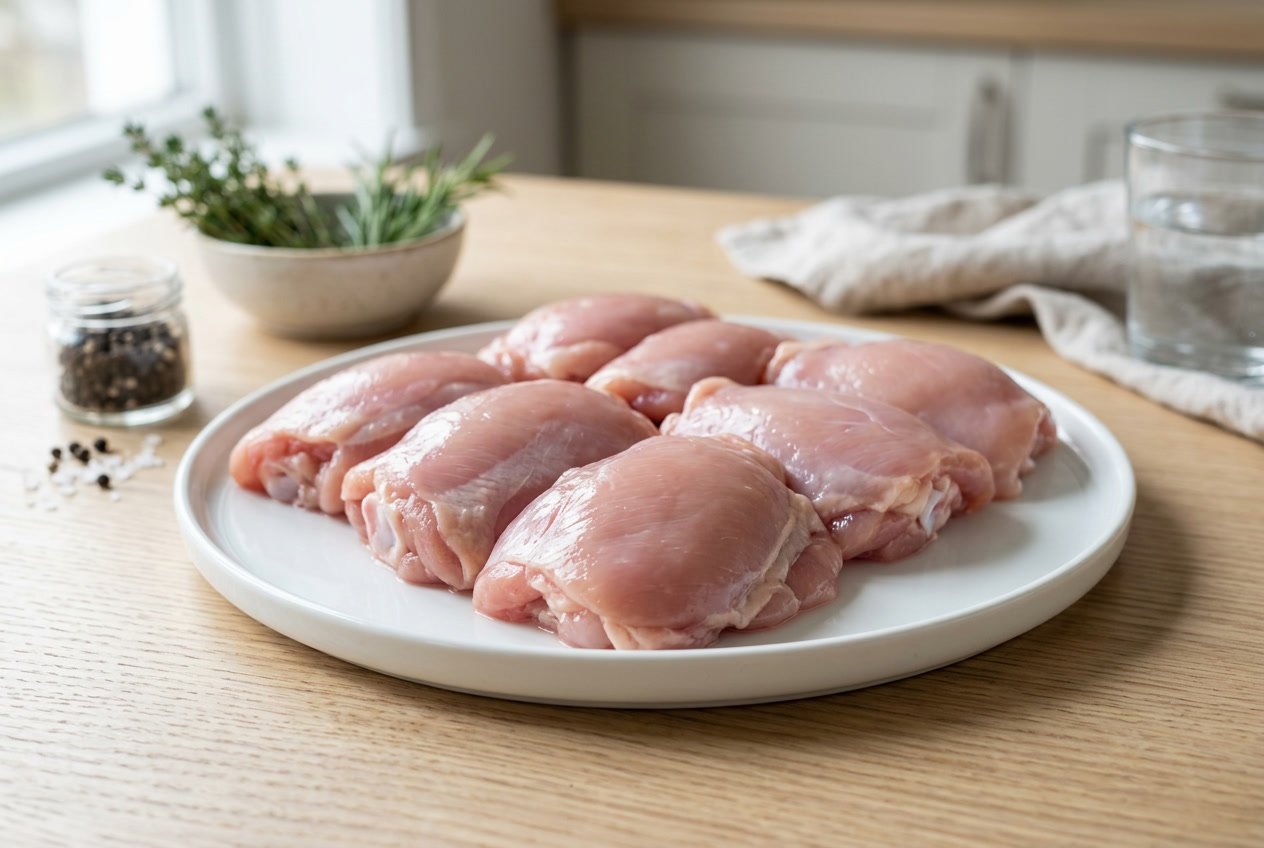
You will see pink in cooked chicken thighs for specific chemical and physical reasons. These involve a muscle pigment and pigments near the bone that can persist even after safe cooking.
Role of Myoglobin in Dark Meat
Myoglobin, the oxygen-binding protein, concentrates in chicken thighs. Since thighs are dark meat, they contain more myoglobin than breasts.
When heat denatures myoglobin, it usually turns from reddish to brown or tan. Sometimes, shorter exposure to heat, lower cooking temperatures, or certain compounds allow myoglobin to remain pink or form stable pink complexes.
A thigh that reaches 165°F (74°C) can still show pink because myoglobin chemistry, not undercooking, determines the visible color. Use a thermometer to judge safety, not color.
How Cooking Affects Meat Color
Cooking method and temperature change how pigments behave. High, direct heat browns surfaces through Maillard reactions.
Slower or lower-heat methods may not fully convert internal pigments, leaving a pink tint. Smoking introduces nitric oxide from smoke, which binds myoglobin and creates a pink smoke ring.
Vacuum packaging and freezing can also affect pigment stability. Carbon monoxide or altered cell structure lets pigments persist after cooking.
The same thigh can look different when roasted, grilled, smoked, or cooked sous-vide even at safe internal temperatures.
Bone and Blood Pigments Influence
Meat near the bone often appears pinker than the surrounding muscle. Bones conduct heat differently, so the area next to the bone heats more slowly during cooking.
Bone marrow and residual hemoglobin can leach pigments into adjacent tissue. Younger birds with more porous bones amplify this effect and produce a pink halo around the bone even when the meat reaches safe temperature.
When you probe for doneness, avoid touching bone with the thermometer to prevent misleading readings.
Factors That Cause Chicken Thighs to Stay Pink
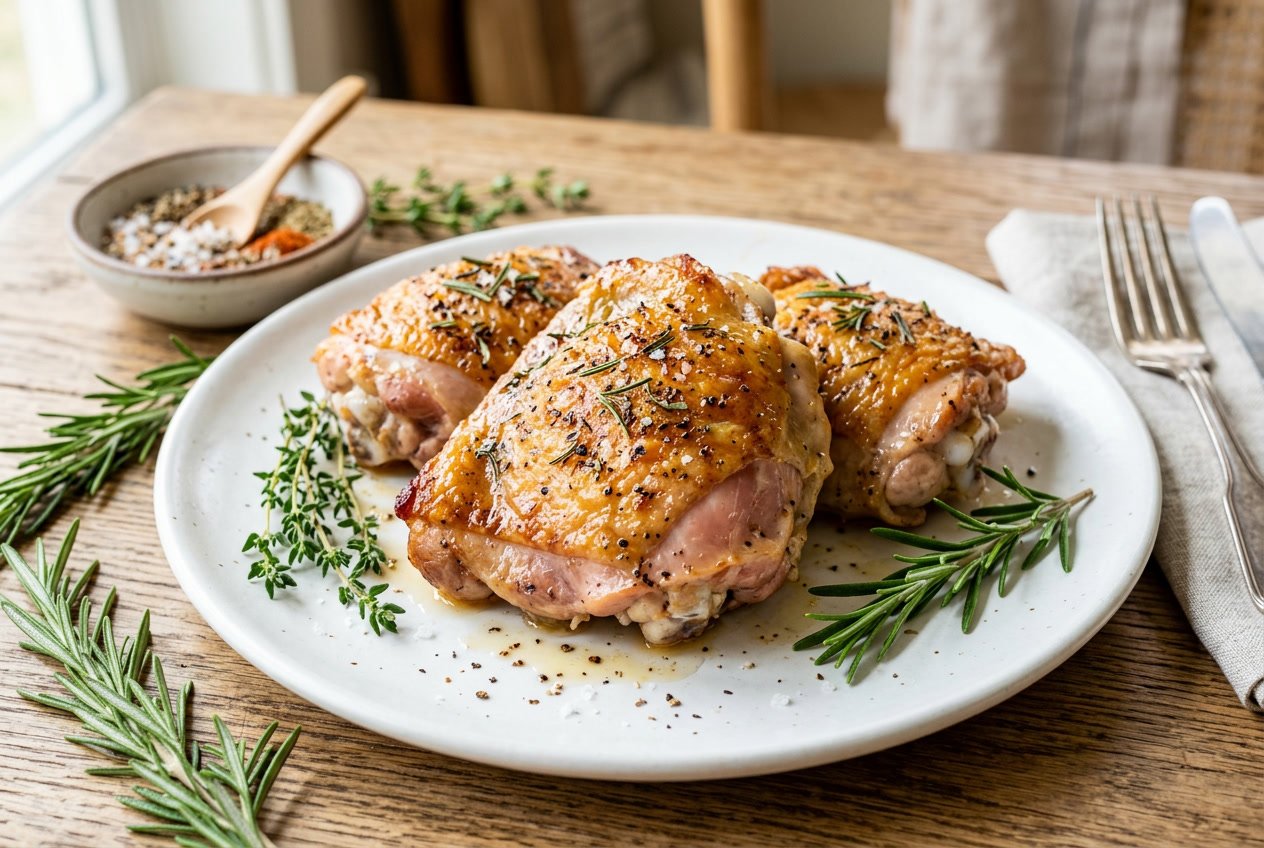
Several specific factors influence why thigh meat can remain pink after cooking. Muscle myoglobin, cooking method and equipment, smoke chemistry, and salt or acid in brines and marinades all play a role.
Each factor changes how pigments react to heat or how color transfers from bone and smoke.
Cooking Methods and Equipment
Different methods change how heat penetrates thigh meat. High direct heat like searing or broiling browns the surface fast while leaving the interior pink if you rely on time rather than temperature.
Slow cooking and braising apply gentle, low heat for longer, which breaks down collagen and yields opaque, uniformly colored meat more often. A rosy tint can still remain near the bone.
Equipment matters. Thin or poorly calibrated ovens, crowded pans, and uneven stovetop burners create cold spots.
Use a meat thermometer to check doneness. Insert it into the thickest part, avoiding bone, and confirm 165°F (74°C) for safety.
If you use sous-vide, you’ll cook to a lower pasteurization temperature over time, which can produce fully safe but still pink-looking thighs.
Effects of Smoking and Grilling
Smoke and char affect color through chemical reactions rather than doneness. When you smoke chicken, nitric compounds in wood smoke react with myoglobin to form stable pink pigments.
This creates a visible smoke ring and can make thighs look rosy even after reaching safe temperature. Grilling with high heat can also cause surface browning while deeper muscle remains pink because of rapid exterior cooking.
If you see pink with a grayish or brown crust, check temperature, not color. For smoked chicken, the pink ring near the surface is normal and cosmetic.
For both smoking and grilling, maintain consistent airflow, monitor grill temperature, and use a thermometer to avoid undercooking while accepting the cosmetic pink produced by smoke chemistry.
Impact of Brining and Marinating
Salt and acidic ingredients change protein behavior and color retention. Brining penetrates muscle and increases water retention.
The added salt can stabilize myoglobin so meat looks pinker after cooking. Nitrates or nitrites in some commercial brines or cured marinades chemically fix a pink color similarly to smoked meats.
Acidic marinades like vinegar or citrus denature proteins before cooking and can alter how the meat browns, sometimes leaving a deeper internal hue.
If you marinate overnight, expect more intense color changes. To avoid confusion, rely on internal temperature.
If you use store-bought brines, check labels for curing agents. Those that list sodium nitrite or cure mixes will most likely preserve a pink color regardless of doneness.
Importance of Safe Internal Temperature
Reaching the correct internal temperature prevents foodborne illness and clarifies doneness when color is unreliable. Use a thermometer rather than visual cues to confirm safety and quality.
Why 165°F (74°C) Matters
You must bring the thickest part of chicken thighs to at least 165°F (74°C) because that temperature reliably inactivates common pathogens like Salmonella and Campylobacter.
Food-safety authorities recommend this guideline because it reflects the thermal death point for these bacteria in poultry tissue.
Surface browning can occur well before the center reaches 165°F, and dark meat may retain pink pigments even after the center is safe. Measure the thickest part of the thigh away from bone.
After you hit 165°F, let the meat rest briefly. Carryover heat often raises the internal temperature slightly and redistributes juices.
How to Use a Meat Thermometer
Use a calibrated digital probe thermometer for consistent results. Insert the probe into the thickest part of the thigh, avoiding contact with bone, cartilage, or fat.
Angle the probe toward the center of the muscle for the most accurate reading. Wait until the displayed temperature stabilizes for a few seconds before recording.
If you cook multiple thighs, check at least two pieces in different parts of the pan or grill. Clean the probe with hot, soapy water between checks to avoid cross-contamination.
If your thermometer reads below 165°F, return the thighs to the heat and recheck after a few minutes.
Food Safety and Potential Risks
Focus on internal temperature, visible signs, and safe handling to avoid illness. Proper cooking and hygiene prevent most risks associated with pink thighs.
Understanding Foodborne Illness Risks
You can get sick from poultry contaminated with Salmonella or Campylobacter if the meat isn’t heated to a safe temperature. These bacteria can be present throughout chicken muscle.
Use a calibrated instant-read thermometer and check the thickest part of the thigh away from bone. The USDA recommends 165°F (74°C) for immediate safety.
Symptoms of infection include nausea, diarrhea, abdominal pain, and fever. In vulnerable people, illness can lead to hospitalization.
Prompt medical care helps if you develop severe symptoms such as persistent vomiting, bloody diarrhea, or high fever.
Difference Between Undercooked and Pink Chicken
Pink meat does not always mean undercooked. Myoglobin and bones can keep thighs pink even at safe temperatures.
Undercooked chicken will have a lower internal temperature, loose or gelatinous texture near the bone, and juices that may appear cloudy or blood-tinged.
Always rely on temperature, not color. If your thermometer reads below 165°F (74°C), continue cooking until it reaches that point.
For visual checks, look for meat that pulls cleanly from the bone and clear juices as secondary signs. Treat them as supplements to thermometer readings, not replacements.
Safe Handling Practices
Prevent cross-contamination by using separate cutting boards and utensils for raw chicken and ready-to-eat foods. Wash hands, surfaces, and tools with hot soapy water after contact with raw poultry.
A 20-second hand wash reduces transfer risk. Thaw chicken in the refrigerator or under cold running water, not on the counter.
Cook immediately after marinating and refrigerate leftovers within two hours (one hour if ambient temperature exceeds 90°F/32°C). If you suspect undercooking, reheat to 165°F before serving.
Common Myths and Misconceptions
Pink meat in thighs does not automatically mean unsafe. Visual cues can mislead you about doneness.
Rely on internal temperature and proper technique rather than color alone to judge safety and quality.
Color Versus Doneness
Do not use color alone to decide whether chicken thighs are cooked. Dark meat contains more myoglobin than breast meat, and myoglobin can remain pink at safe temperatures.
Smoking, brining, or young birds can also produce a persistent pink hue near the bone even after the meat reaches 165°F (74°C).
Use a probe thermometer and insert it into the thickest part of the thigh without touching bone. The USDA minimum safe temperature is 165°F (74°C).
Once you reach that, the chicken is safe to eat regardless of pinkness. Trust the thermometer over sight.
Juices Running Clear
Many cooks expect juices to run clear as proof of doneness, but that rule can be misleading. Clear juices are a helpful sign, but dark meat may still display slightly pinkish juices because of dissolved myoglobin and cooking method.
Juices can appear clear while the internal temperature is still below safe levels, or look slightly pink when the meat is already cooked.
If you test by cutting, look at internal color and feel in combination with temperature. A quick checklist: thermometer reads 165°F (74°C); no excessively bloody or gelatinous areas near the bone; texture feels firm but not rubbery.
Meeting those conditions is more reliable than relying on juice color alone.
Carryover Cooking Explained
Carryover cooking raises internal temperature after you remove the chicken from heat, and it can affect color. For large bone-in thighs, expect a 5–10°F (3–6°C) rise during resting.
That extra heat can finish cooking tissues near the bone and reduce the appearance of pinkness without overcooking the surface.
Remove thighs when the thermometer reads a few degrees below your target if you prefer less drying. Rest thighs 5–10 minutes under loose foil so juices redistribute.
This improves texture and allows final temperature equilibration. Always verify final doneness with a thermometer rather than guessing from color changes during resting.
Practical Tips for Cooking Chicken Thighs
Cook to a safe internal temperature while preserving juiciness. Manage surface color without overcooking and choose methods that suit bone-in or boneless thighs and your flavor goals.
Preventing Overcooking While Ensuring Safety
Use a digital meat thermometer and insert it into the thickest part of the thigh, avoiding the bone. Aim for 165°F (74°C) as the minimum safe temperature.
Remove thighs at 160–162°F and rest 5–10 minutes to reach 165°F while retaining moisture. If you roast or bake, set oven to 400°F (205°C) for bone-in thighs to crisp skin without long low-heat exposure.
For boneless thighs, 425°F (218°C) for 18–22 minutes often yields a good balance of crust and juiciness. Sear on medium-high heat for 3–5 minutes per side before finishing in the oven to shorten oven time.
Brining (30 minutes to overnight in 5–8% salt solution) improves moisture retention and can slightly alter cooked color but does not change safety.
Calibrate your thermometer regularly. Visual cues like pinkness or clear juices are unreliable on thighs.
Comparing Thighs Versus Breasts
Thighs are dark meat with higher myoglobin than breasts, which explains the occasional pink color even when fully cooked. You must treat thighs and breasts differently because thighs tolerate higher final temperatures before drying out.
If you cook breasts and thighs together, remove breasts earlier (at 160–162°F) and let thighs finish to 165°F. For even results, cook breasts separately or use bone-in, skin-on thighs for longer, slower methods like braising.
Boneless breasts need gentler, shorter cooking. Thighs accept searing, roasting, or braising without turning rubbery as quickly.
Texture expectations differ. Breasts stay tender when barely past 165°F, while thighs stay juicy up to 175–185°F in some recipes.
Use the thermometer, not color, to judge doneness across cuts.
Fan-Favorite Recipe Approaches
Roasting: Pat the skin dry and season the thighs. Roast bone-in thighs at 400°F (205°C) for 35–45 minutes until a thermometer reads 165°F in the thickest spot.
Let the thighs rest for 5–10 minutes before serving.
Pan-searing + oven finish: Sear skin-side down for 4–6 minutes until golden. Flip the thighs and transfer to a 425°F (218°C) oven for 10–15 minutes for boneless, or 15–25 minutes for bone-in.
This method creates crisp skin and reduces oven time.
Braising: Brown the thighs, then simmer them in 1–2 cups of liquid at low heat for 25–40 minutes. Braising ensures the meat cooks evenly and stays safe to eat if it reaches 165°F.
Brined thighs: Brine the thighs for 1–12 hours depending on size, then rinse and dry them. Cook the thighs using any of the above methods.
Brining improves juiciness and seasoning absorption. Reduce oven time slightly because brined meat heats faster.


