
Why Brine Chicken Thighs: The Science, Techniques, and Recipes
Brining chicken thighs gives you juicier, more evenly seasoned meat with minimal extra effort.
A short wet brine of 30–60 minutes or a 2-hour dry brine noticeably boosts tenderness and flavor without making the meat overly salty.
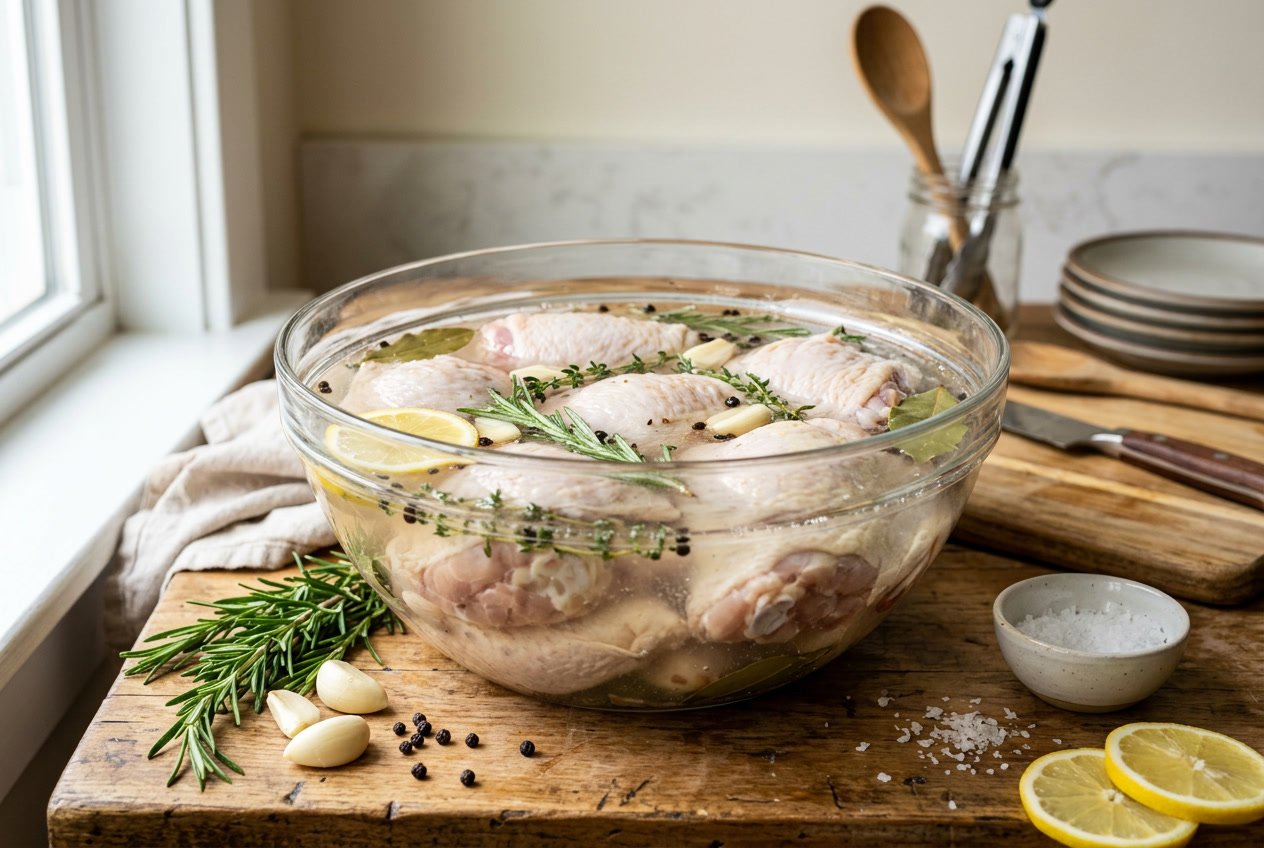
You’ll learn why salt changes the meat’s texture and how different brining methods affect taste.
You’ll also see which timing fits your schedule and cooking method.
Expect practical brine recipes and clear step-by-step instructions.
Simple tips for cooking brined thighs will help your next meal turn out reliably succulent.
Why Brine Chicken Thighs

Brining helps thigh meat hold more moisture, takes seasoning deeper than a surface rub, and softens connective tissue so the meat feels tender rather than chewy.
You gain juicier results and better texture control with predictable timing.
Moisture Retention and Juiciness
When you brine chicken thighs, salt and water move into the muscle fibers by diffusion and osmosis.
This increases the muscle’s ability to retain liquid during cooking, so your thighs lose less juice when exposed to high heat.
Use a common ratio like 1/4 cup kosher salt per 4 cups (1 quart) of water or about 1 cup per gallon for larger batches.
Brine thighs for roughly 1–4 hours; shorter for boneless pieces, longer for bone-in.
After brining, rinse briefly and pat dry to avoid an overly salty surface and to promote crisp skin.
Flavor Enhancement Through Brining
Brining seasons beyond the surface.
Salt penetrates into the meat, carrying dissolved aromatics like sugar, peppercorns, garlic, and herbs so the flavor profile becomes integrated.
Adjust additions to match the cooking method.
Citrus zest and bay leaves brighten roasted thighs, while garlic, soy, or ginger suit pan-fried or Asian-style recipes.
Reduce added salt in marinades or sauces afterward because brined thighs already carry internal seasoning.
Texture Improvement
Salt in the brine alters muscle proteins, causing them to unwind slightly and hold more water.
That structural change keeps fibers more tender after cooking.
For dark meat like thighs, this effect reduces perceived toughness and prevents the rubbery bite sometimes produced by quick, high-heat cooking.
Over-brining can produce a mushy texture or excessive saltiness.
Avoid exceeding about 8–12 hours for most thigh cuts.
Choose non-reactive containers, keep the brine cold, and follow recommended times to get consistently tender, well-textured brined chicken thighs.
How Brining Works
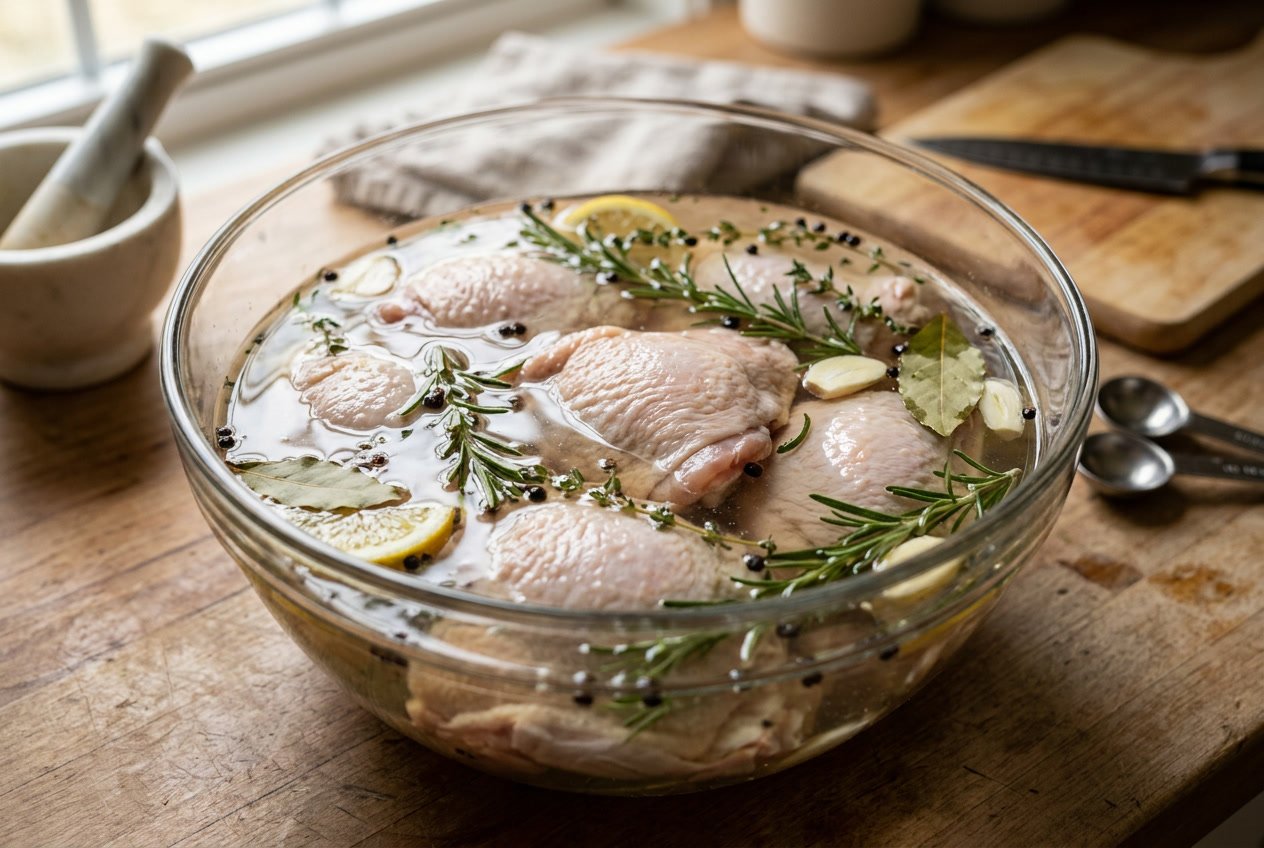
Brining uses salt and liquid to change how meat holds moisture, season it through, and alter texture at the molecular level.
You’ll encounter three main effects: movement of water and salt into the meat, changes to muscle proteins that trap moisture, and different responses depending on dark or white meat.
Osmosis and Protein Modification
Salt in the brine creates a concentration gradient that draws water and dissolved flavors into the tissue by osmosis.
As salt moves into muscle fibers, some water follows, increasing the meat’s internal moisture before cooking.
Salt also interacts with muscle proteins, especially myosin and actin.
It weakens some protein bonds and causes partial denaturation, which increases the proteins’ ability to hold onto water during heating.
Consider time and temperature.
Shorter brines lightly season and add moisture, while longer brines drive deeper salt penetration and more protein modification.
Keep the brine cold and within recommended durations to avoid over-tenderizing.
Salt Concentration Effects
Salt concentration controls how quickly and how much the brine alters the meat.
Typical wet brines use about 5–8% salt by weight in the liquid.
Lower concentrations give milder seasoning and slower uptake.
Higher concentrations speed penetration but risk making the meat too salty and changing texture too much.
A moderate salt level balances flavor and moisture retention.
If you use kosher salt, adjust volume versus table salt because crystal size changes saltiness.
Sugar is optional.
It adds flavor and can enhance browning without affecting protein chemistry significantly.
If you over-brine, proteins can break down excessively, causing a mealy or “deli-like” texture.
Follow measured recipes or weight-based ratios to control salt effects on your chicken thighs.
Differences Between Dark and White Meat
Dark meat (thighs) contains more fat and connective tissue than white meat (breasts), so it responds differently to brining.
Your thighs benefit from brining primarily through moisture retention and improved texture, but they tolerate longer brine times than breasts without becoming dry or stringy.
Connective tissue in thighs contains collagen that softens during cooking.
Brining doesn’t directly dissolve collagen, but by improving moisture and seasoning, it complements slow-roasting or braising where collagen breaks down to tender gelatin.
White meat absorbs salt faster and can become overly salty or mushy if brined too long.
Adjust brine time and salt concentration for your cuts.
Brining Methods for Chicken Thighs
Brining boosts moisture and seasons meat through salt penetration, whether you use a wet soak, a dry salt rub, or a spiced solution.
Each method affects texture, cooking time, and flavor concentration differently.
Basic Wet Brine Technique
A basic wet brine uses a saltwater ratio of about 1/4 cup kosher salt per 4 cups (1 quart) of water.
Dissolve salt (and 2 tablespoons sugar if desired) in warm water, chill thoroughly, then submerge skin-on or skinless thighs so they’re fully covered.
Refrigerate for 1–4 hours for bone-in thighs.
30–90 minutes works for smaller boneless pieces.
Use a non-reactive container and weight the chicken if it floats.
After brining, rinse briefly under cold water and pat completely dry to aid skin crisping.
Avoid over-brining (more than 6–8 hours) to prevent a mushy texture and overly salty meat.
How to Dry Brine
Dry brine involves rubbing kosher salt directly on the surface and letting the thighs rest uncovered in the fridge.
Use about 1/2 to 3/4 teaspoon kosher salt per thigh (adjust if using fine table salt).
Apply evenly under and over the skin for best penetration.
Rest time ranges from 1 hour up to 24 hours depending on seasoning depth you want.
Shorter times season lightly.
Overnight yields more uniform seasoning and slightly firmer, well-flavored meat.
Pat any moisture dry before cooking to help the skin crisp and brown.
Dry brining is low-mess and concentrates flavor without diluting surface seasoning.
It also reduces the need to rinse, so you preserve more seasoning on the skin.
Spicy Brine and Flavor Variations
To make a spicy brine, add aromatics and heat agents to either a wet or dry brine.
For wet brine, include 2–3 crushed garlic cloves, 1–2 tablespoons brown sugar, 1–2 sliced jalapeños, 1 teaspoon smoked paprika, and 1 teaspoon black pepper per quart of brine.
Simmer briefly to meld flavors, cool, then brine as usual.
For a spicy dry brine, mix kosher salt with 1 teaspoon cayenne or red pepper flakes, 1 teaspoon smoked paprika, and 1 teaspoon sugar per pound of chicken.
Rub under skin and over surface, then refrigerate 4–24 hours.
Adjust heat and aromatics to taste.
Remember strong flavors like soy or citrus can alter salt balance.
Reduce added salt if you include soy sauce.
Rinse only if the brine tasted overly salty.
Otherwise pat dry and cook to maximize crust and flavor.
Step-by-Step: How to Brine Chicken Thighs
Brining adds controlled salt and, for wet brines, extra moisture to the meat so your thighs stay juicy and well seasoned.
You’ll need a few tools, a clear salt ratio, and attention to time and refrigeration to avoid over-salting.
Brining Equipment and Safety
Use a nonreactive container: glass, food‑grade plastic, or a stainless steel bowl or bag.
Choose a container large enough for thighs to lie flat and be fully submerged without crowding.
Have a kitchen scale or measuring spoons and a measuring cup to get salt proportions right.
Use the correct salt type—Morton kosher, Diamond Crystal, or fine table salt—because granule size changes the volume you measure.
Keep food safety in mind.
If brining longer than 30 minutes, refrigerate at or below 40°F (4°C).
Always discard used brine.
Pat thighs dry before cooking and do not rinse them, which only spreads bacteria.
Clean and sanitize any surfaces or utensils that touched raw chicken or brine.
Step-By-Step Wet Brining Guide
Prepare a basic brine: dissolve salt in cold water using roughly 4 cups (1 liter) water with 4½ tablespoons Morton kosher salt (adjust if using a different salt).
Add 1 tablespoon sugar or garlic granules only if you want extra flavor.
Stir until mostly dissolved.
Submerge 1.5–2 pounds of chicken thighs in the brine in a zipper bag or bowl.
Ensure thighs are fully covered.
Weigh them down if needed with a plate.
For chicken thighs, aim for 30–60 minutes for balanced seasoning and moisture.
Two hours can work but risks extra saltiness.
Avoid more than 4 hours to prevent a deli‑like texture.
If brining under 30 minutes, keep at room temperature; otherwise refrigerate.
When ready, remove thighs, discard brine, and pat dry with paper towels.
Do not add additional salt in your recipe.
Cook immediately or refrigerate up to 3 days.
Step-By-Step Dry Brining Guide
Sprinkle salt evenly over thighs using about 1/2 to 3/4 teaspoon of Morton kosher salt per thigh (adjust for salt type).
Rub the salt into flesh and under the skin where possible for bone‑in thighs.
Add a light dusting of garlic powder or black pepper if desired.
Place thighs on a tray or rack uncovered or loosely covered and refrigerate.
Two hours is an effective target for dry brining thighs.
Overnight (up to 24 hours) increases flavor penetration and skin drying for crispier results.
Before cooking, pat the thighs dry—no rinsing.
If skin feels damp after long dry brine, leave uncovered in the fridge for another hour to crisp.
Reduce or omit recipe salt because the meat is already salted from the dry brine.
Brine Recipes and Ingredient Ideas
Brining centers on a balance of salt, water, and optional sugar, then layering aromatics for flavor.
You’ll learn which salts and ratios work, a dependable classic recipe with measurements, and ideas to customize taste with herbs, spices, and global twists.
Essential Brine Ingredients
Salt is the active ingredient that seasons and helps meat retain moisture.
Use kosher salt (coarser flakes) or sea salt.
If you use table salt, reduce the amount by about half because it’s denser.
A practical ratio is 1/4 cup kosher salt per 4 cups (1 quart) of water for chicken thighs.
Water must be cold when you add raw chicken.
Warm brine can start to cook or promote bacteria.
Sugar (white, brown, or honey) is optional—1–2 tablespoons per quart adds mild sweetness and improves browning.
Always chill the brine before submerging meat.
Use nonreactive containers (glass, stainless steel, or food-safe plastic).
Plan brining time: 1–4 hours for bone-in thighs; avoid exceeding 12 hours to prevent mushy texture.
Rinse briefly and pat dry before cooking for best surface browning.
Classic Brine Recipe
This classic wet brine yields reliably juicy, mildly seasoned thighs.
-
Ingredients:
- 4 cups (1 quart) cold water
- 1/4 cup kosher salt
- 2 tablespoons brown sugar (optional)
- 4 garlic cloves, crushed
- 1 bay leaf
- 1 teaspoon black peppercorns
-
Method:
- Dissolve salt and sugar in 1 cup hot water; add remaining cold water to cool to refrigerator temperature.
- Add garlic, bay leaf, and peppercorns.
- Submerge 4 bone-in, skin-on chicken thighs; refrigerate 2–4 hours.
- Rinse briefly under cold water and pat dry before cooking.
Adjust salt proportionally if you scale the recipe.
Reduce or omit sugar for savory dishes.
This base works well for grilling, roasting, or pan-searing.
Creative Flavor Additions
Add aromatics to the classic brine to match your recipe. For citrus notes, add zest and 1/2 cup orange or lemon juice for brightness. Omit extra salt if you use salty liquids like soy.
Rosemary, thyme, and parsley pair well for herb-forward flavors. Tie sprigs or bruise leaves to release their oils.
Crushed red pepper or smoked paprika adds heat and color. For an Asian twist, use 1/4 cup low-sodium soy sauce (reduce salt by half), sliced ginger, and a few star anise pods.
Try 2 tablespoons maple syrup and a cinnamon stick for sweet-spicy notes. For smoky, savory profiles, add a few drops of liquid smoke or use smoked salt sparingly.
Choose strong aromatics for grilling, as they stand up to high heat. Use delicate herbs for roasting, where their flavors shine.
Brining Time and Best Practices
Control salt concentration, temperature, and time to improve juiciness and seasoning. Use a 4–6% salt solution for wet brines or a light, even coating for dry brines.
Always keep the chicken refrigerated during brining.
Optimal Brining Time
Brine bone-in chicken thighs in a wet brine for 30 minutes to 1 hour to balance seasoning and moisture. A 4–6% salt-to-water ratio (about 4½ tablespoons kosher salt per 4 cups water) gently seasons the meat.
For a dry brine, salt evenly and refrigerate uncovered for about 2 hours. This firms the skin and concentrates flavor.
Avoid wet brines longer than 2 hours or dry brines past 3–4 hours for thighs. Prolonged brining can yield overly salty or mushy texture.
Chill the brine and keep chicken fully submerged for wet brines. For dry brines, keep pieces uncovered on a rack for best airflow.
Brining Time for Chicken Thighs
Brine bone-in, skin-on thighs for 30–60 minutes in a wet brine when grilling or roasting. This method produces juiciness and even seasoning.
If you cook at lower temperatures or plan to braise, brine for up to 90–120 minutes but monitor salt levels. Boneless thighs absorb salt faster; reduce wet-brine time to 20–45 minutes.
For dry brining boneless pieces, 1.5–2 hours is usually enough. Treat added aromatics like garlic, peppercorns, or citrus peel as flavor accents.
Rinse only if surface salt concerns you, then pat dry for crispness when searing or roasting.
Can I Brine Frozen Chicken Thighs
Do not brine frozen chicken thighs. Salt cannot penetrate frozen tissue effectively, so brining while frozen leads to uneven seasoning and minimal moisture improvement.
Thaw chicken fully in the refrigerator before starting any brine. Once thawed, pat the thighs dry and continue with your chosen wet or dry brine.
If you are pressed for time, use a short wet brine (20–30 minutes for boneless, 30–60 for bone-in) after thawing. This method provides rapid seasoning and moisture benefits.
Preparing and Cooking Brined Chicken Thighs
After brining, rinse, dry, and bring the thighs close to refrigerator temperature before cooking. Proper drying and seasoning give crisp skin and balanced flavor whether you grill or roast.
Preparing Chicken Thighs After Brining
Remove thighs from the brine and rinse briefly under cold water to wash off surface salt. Pat each piece completely dry with paper towels.
If you brined with aromatic solids, discard them and trim any excess fat or loose skin. Rest the thighs uncovered in the fridge for 30–60 minutes to further dry the skin and tighten the surface.
Season lightly after drying. Use 1/2 to 1 teaspoon kosher salt per pound only if you didn’t rinse. Otherwise, season with pepper, smoked paprika, or herbs.
Bring bone-in thighs toward room temperature for 15–20 minutes before cooking to promote even internal cooking.
Grilling Brined Chicken Thighs
Preheat the grill to medium-high (about 400–450°F / 200–230°C) and oil the grates to prevent sticking. Sear skin-on bone-in thighs skin-side down over direct heat for 3–5 minutes until golden brown.
Move the thighs to indirect heat to finish cooking. Cook to an internal temperature of 165°F (74°C) at the thickest point, using a probe thermometer.
Expect a total grilling time of 18–25 minutes for bone-in thighs. Boneless thighs will cook faster, in about 10–15 minutes.
Flip only once or twice to preserve the crust. If you want glaze, brush it on during the last 3–5 minutes of cooking to prevent burning.
Let thighs rest 5–7 minutes before serving to allow juices to redistribute.
Roasted Chicken Thighs After Brining
Preheat the oven to 425°F (220°C) for crispy skin and quick fat rendering.
Arrange the chicken skin-side up on a wire rack over a rimmed baking sheet to let air circulate and brown the skin evenly.
Pat the skin dry if needed. Lightly brush the chicken with oil.
Roast bone-in thighs for 30–40 minutes, and boneless for 20–30 minutes, until the internal temperature reaches 165°F (74°C).
For extra crispness, broil on high for 1–2 minutes at the end and watch closely.
Let the thighs rest for 5 minutes after roasting.
Carve by cutting along the bone for bone-in pieces. Slice boneless thighs against the grain for tender bites.


