
Why Boneless Chicken Thighs: The Benefits, Uses, and Nutrition
You want a cut that stays juicy, tolerates a mistake in timing, and packs more flavor than breast. Boneless skinless chicken thighs deliver on all three while still fitting weeknight schedules and budgets.
They cook faster than bone-in pieces, handle high-heat and slow-cooking methods equally well, and often cost less per usable ounce than whole birds or trimmed breasts. This makes them a practical choice for everyday meals.
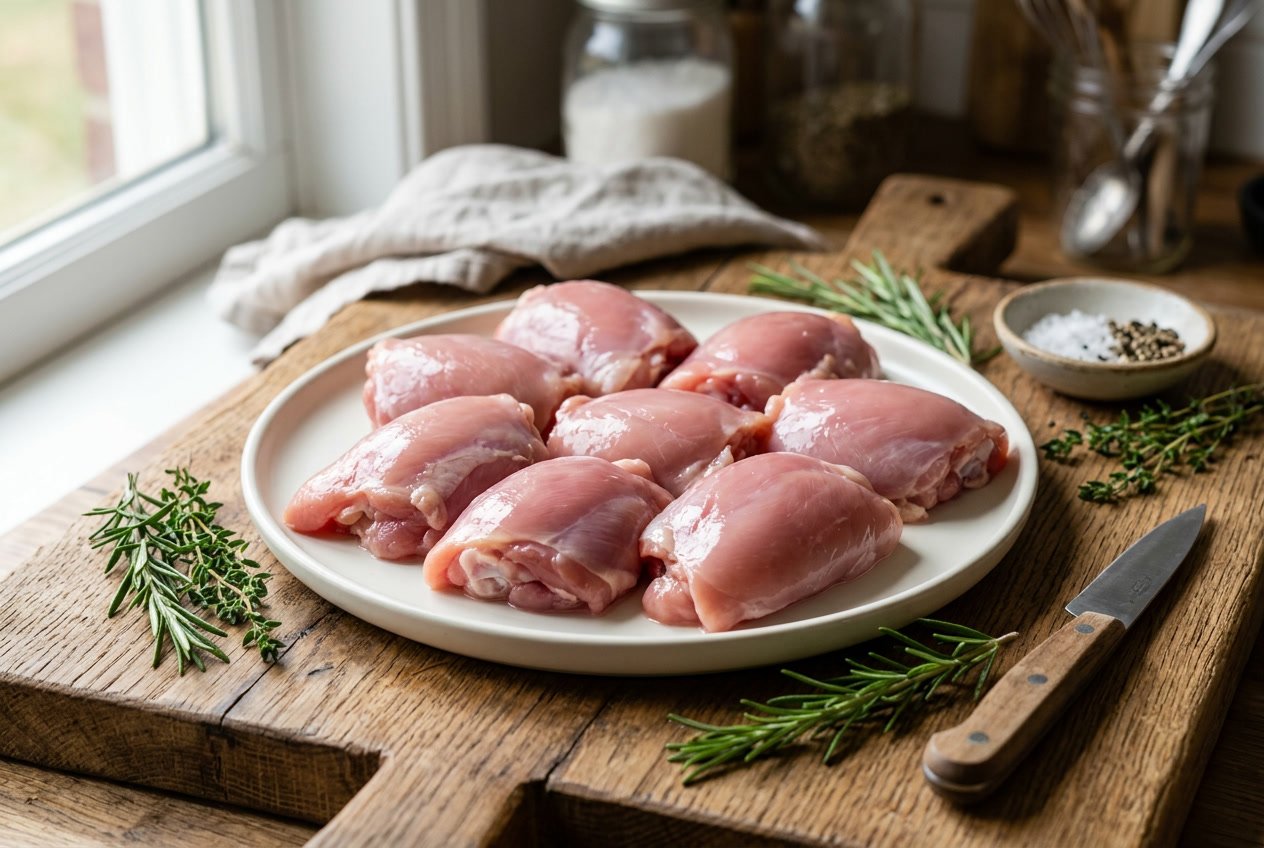
You can use boneless thighs in quick sautés, braises, and grills. Learn how to choose, prepare, and cook them for predictable, delicious meals.
What Are Boneless Chicken Thighs?
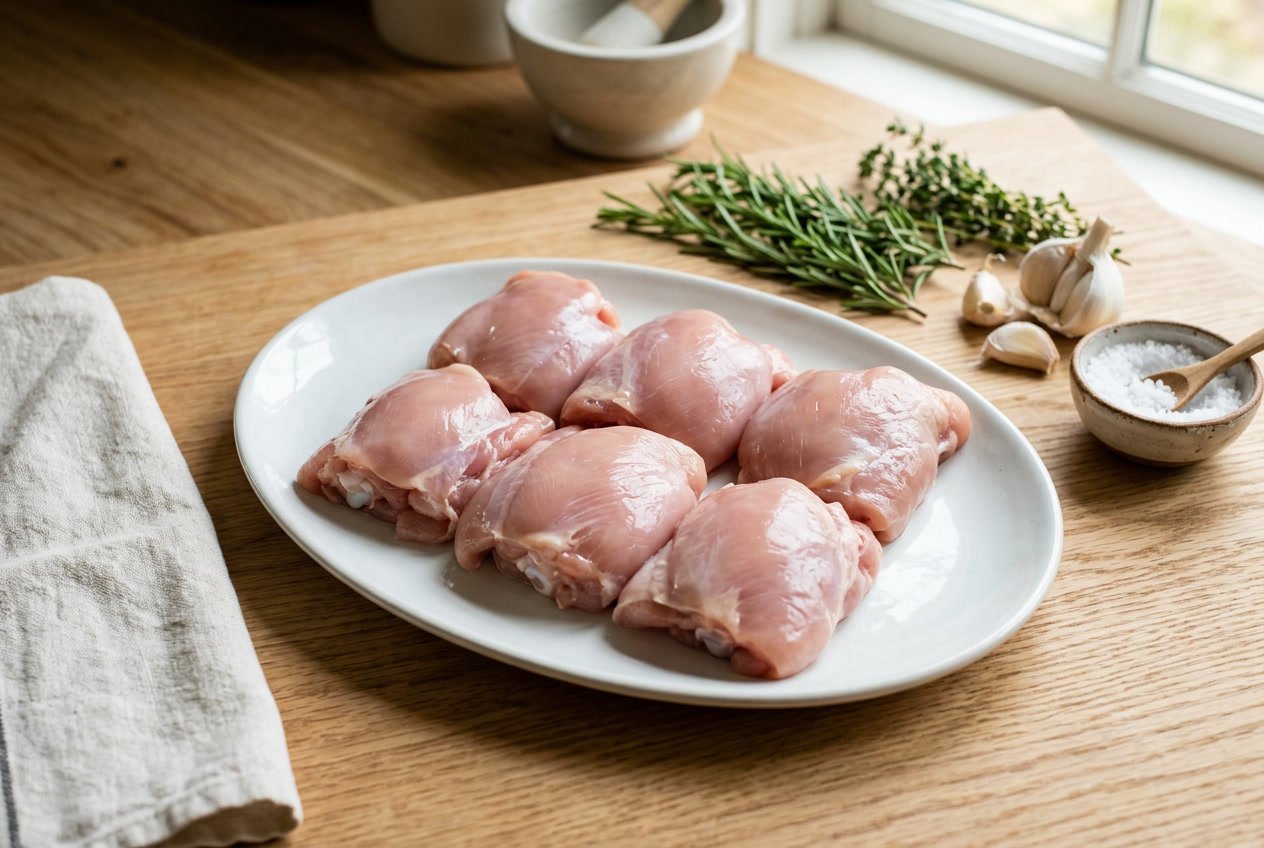
Butchers remove the bone from the upper leg to make boneless chicken thighs, which are sold with or without skin. You get richer flavor and higher fat than breast meat, plus faster, more even cooking without the bone.
Differences Between Bone-In and Boneless Thighs
Bone-in chicken thighs include the femur and joint, while boneless thighs have that bone removed. The bone slows heat transfer, so bone-in pieces take longer to cook and retain moisture differently.
Allow about 5–10 extra minutes of cooking for bone-in pieces in the oven or on the grill. Flavor and texture differ because dark-meat thighs contain more fat and connective tissue than breasts.
Bone-in thighs can taste slightly more intense because the bone and marrow affect juices during cooking. Boneless thighs cook more predictably, cut uniformly, and work better for quick pan-searing, stir-fries, and shredding.
The Role of Skin: Skin-On vs. Skinless
Skin-on chicken thighs keep moisture and develop a crisp, flavorful exterior when roasted, fried, or grilled. For a crispy finish, cook skin-on thighs skin-side down first and render fat slowly to prevent dryness.
Skinless chicken thighs reduce fat and absorb marinades faster, which speeds cooking and suits saucy dishes. Boneless, skinless chicken thighs work well for fast weeknight recipes, skewers, and breaded preparations where even cooking and easy portioning matter.
How Boneless, Skinless Chicken Thighs Are Processed
Processors start with whole thighs, remove the bone, and trim excess fat and cartilage by hand or machine. If you buy vacuum-sealed packages, you get consistent portion sizes and a shelf life of a couple of days refrigerated or several months frozen.
Some retail thighs come trimmed to “fast-cook” thickness or flattened for uniformity. Check labels for terms like “trimmed” or “ready-to-cook” for additional processing, and note that “fresh” versus “frozen” affects texture and thawing time.
Nutritional Advantages of Boneless Chicken Thighs
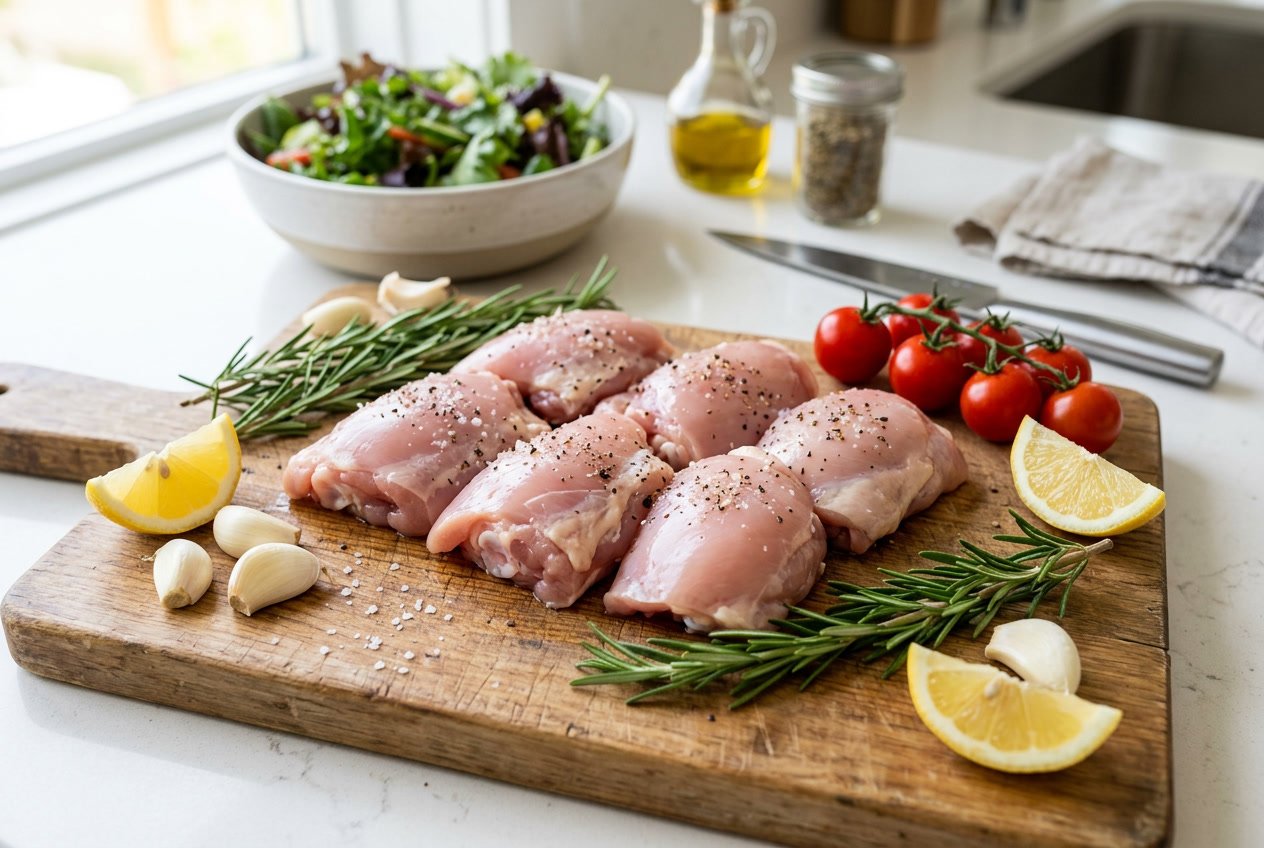
Boneless skinless chicken thighs give you a concentrated source of protein and several micronutrients. They deliver more iron and zinc per serving than many white-meat cuts and tend to stay juicier during preparation.
Macronutrients and Caloric Value
A 100 g cooked serving of boneless skinless thighs usually provides about 170–210 calories, with roughly 25–28 g of protein and 8–11 g of total fat. You get a high-protein portion that supports muscle repair and satiety without carbohydrates.
Fat content is higher than in breast meat; expect 2–3 g of saturated fat within the total fat. Most of the remaining fat is unsaturated, which helps with nutrient absorption and adds flavor.
Watch portion sizes if you track calories. Using boneless skinless thighs lets you obtain similar protein to breast meat with fewer preparation losses from drying.
Vitamins and Minerals Profile
Boneless skinless chicken thighs contain notable amounts of iron and zinc compared with white meat. A single cooked thigh commonly supplies around 1–1.5 mg iron and 1.5–2 mg zinc, useful for oxygen transport and immune function.
Thighs also provide B vitamins—especially niacin (B3), vitamin B6, and modest B12—which support energy metabolism and nervous system maintenance. Selenium and phosphorus appear in meaningful amounts, contributing to antioxidant defenses and bone health.
If you rely on meat for certain micronutrients, choosing boneless skinless thighs gives you more of these minerals per serving than an equivalent weight of breast. Freezing or basic cooking methods preserve most of these vitamins and minerals.
Dark Meat vs. White Meat: Key Differences
Dark meat (thighs) contains more myoglobin than white meat, which increases iron content and gives a deeper color and richer flavor. You should expect higher fat and calories per 100 g compared with chicken breast, but also greater mineral density.
Protein per serving is slightly lower in thighs than in breasts when compared ounce-for-ounce, yet thighs remain a substantial protein source. The extra intramuscular fat in boneless skinless thighs helps prevent drying during roasting, braising, or grilling.
Choose thighs for richer flavor, increased iron and zinc, and a forgiving cut for varied cooking techniques. Choose breast when your priority is the lowest possible fat and highest protein per gram.
Why Choose Boneless Chicken Thighs Over Other Cuts?
Boneless skinless chicken thighs give you richer flavor, forgiving cooking, and faster prep than many other cuts. They work well for pan-searing, shredding for tacos, or quick weeknight stir-fries while keeping moisture and mouthfeel.
Flavor and Juiciness
You get deeper, more concentrated chicken flavor from boneless chicken thighs because dark meat contains more intramuscular fat than breast. That fat keeps the meat juicy during high-heat sears and oven bakes, so you’ll notice less dryness even if cooking runs slightly long.
Seasonings cling well to the slightly fattier surface of boneless skinless chicken thighs. Whether you marinate in citrus and soy or use a dry spice rub, the taste penetrates and the thigh’s natural richness balances bold flavors.
For sauces and braises, the thighs release more savory juices into the dish, improving overall mouthfeel.
Convenience and Preparation
Boneless thighs cut prep time. Buying them pre-trimmed saves you the step of deboning or crisping skin, which speeds assembly for weeknight meals.
They also take up less storage space and pack flat for even refrigeration or freezing. Uniform pieces make portion control and plating simpler.
You can slice, cube, or shred boneless skinless chicken thigh quickly. If you brine, marinate, or butterfly them, the absence of bone makes flavor uptake and heat transfer more consistent across pieces.
Comparison: Boneless Thighs vs. Breasts
Choose thighs when you want fail-safe juiciness and flavor. Choose breasts for lower fat and a milder profile.
A boneless chicken thigh contains more fat and connective tissue than a breast, which yields better texture in slow-cooked or high-heat preparations. Breasts can dry out if overcooked; boneless skinless chicken thighs remain tender over a broader range of temperatures.
For shredded applications like pulled chicken or tacos, thighs shred more naturally and stay moist. For calorie-sensitive or very lean recipes, breasts may fit better, but you’ll trade off some flavor and resilience.
Texture and Cookability
Boneless thighs have a looser grain and small amounts of connective tissue that break down into silky mouthfeel with moderate cooking. You can cook them at medium-high heat for a quick crust or slow-simmer them until they fall apart for stews and curries.
They tolerate a wide range of methods—pan-frying, grilling, baking, stir-frying, and slow-cooking—without becoming tough. If you want a crispy exterior, briefly pat dry and sear in a hot pan; the interior will stay moist.
If you want shreddable meat, braise or slow-cook until fibers separate easily.
Health Considerations and Dietary Impact
You get a protein-rich cut that’s higher in fat than breast meat but still fits into many healthy eating patterns. Cooking method, portion size, and whether you remove the skin determine how thighs affect your calories, fat, and heart risk.
Fat Content: Myths and Facts
Skinless, boneless chicken thighs contain more total and saturated fat than chicken breast, but the difference is modest when you remove the skin. A typical 3-ounce cooked serving of skinless thigh has about 9 g total fat and ~2 g saturated fat, versus roughly 3 g total fat in breast meat.
Fat contributes flavor and satiety, so thighs can help you feel full on smaller portions. If you’re limiting saturated fat, trim visible fat and choose skinless options, or cook with low-fat methods such as grilling, roasting, or braising.
Quick reference:
- Skinless boneless thigh (3 oz): ~164 kcal, ~20 g protein, ~9 g fat.
- Skin-on thigh (3 oz): substantially higher calories and saturated fat.
Use this to adjust portions and cooking choices to match your dietary goals.
Protein for Muscle Growth
Boneless, skinless chicken thighs provide about 18–20 grams of high-quality protein per 3-ounce serving, supplying all essential amino acids you need for muscle repair and growth. That makes them a practical choice for post-workout meals or daily protein targets.
Because thighs are slightly higher in fat than breast, they deliver more calories per serving, which can be helpful if you need extra energy for strength training. Pair a 3–4 ounce thigh with a source of carbohydrates such as rice, potatoes, or whole grains to optimize muscle glycogen replenishment and recovery.
If you track protein intake, count a 3–4 ounce skinless thigh as roughly 20–25 grams of protein when planning meals across the day.
Managing Calorie Intake
Portion control matters more than the cut when you aim to manage calories. A skinless boneless thigh typically delivers ~160–210 calories per 3–4 ounce cooked portion, depending on cooking method and whether you keep the skin.
To lower calories:
- Remove skin before cooking or serve skinless.
- Use dry-heat methods (grill, roast) or cook in broth rather than frying.
- Bulk meals with non-starchy vegetables and whole grains to increase volume without many extra calories.
If you’re tracking daily energy intake, two 3-ounce skinless thighs equal roughly 320–420 calories. Adjust side dishes accordingly to stay within your target.
Role in Heart Health
Choose skinless, boneless chicken thighs and limit added saturated fat and sodium to keep them compatible with heart-healthy diets. Thighs contain modest amounts of saturated fat, so removing skin and avoiding heavy sauces lowers cardiovascular risk factors tied to saturated fat intake.
Watch sodium: many prepared or marinated thighs contain added salt. Aim for fresh, unprocessed thighs and season with herbs, citrus, and spices instead of salt-heavy marinades.
When you balance them with vegetables, whole grains, and healthy fats such as olive oil or nuts, skinless thighs can fit within dietary patterns that support heart health.
Cooking Versatility and Recipe Ideas
Boneless, skinless chicken thighs cook quickly, stay moist, and accept bold flavors. You can grill, pan-sear, bake, or braise them and use simple marinades or hearty sauces to change cuisine and texture.
Best Cooking Methods for Boneless Thighs
Pan-searing gives a fast, caramelized crust while keeping the interior juicy. Heat a heavy skillet until hot, add oil with a high smoke point, and sear thighs 3–4 minutes per side before finishing in the oven if needed.
Grilling works well when you set up two zones: direct high heat for searing and indirect medium heat to finish to 165°F (74°C). Watch for flare-ups if you’ve used sugary glazes.
Bake at 400°F (200°C) on a wire rack to create even heat and slight crisping without drying. Slow-cooking or braising at low temperature yields pull-apart texture for stews, tacos, or shredded preparations.
Air-frying offers fast, consistent results for breaded or plain thighs; set 375°F and check at 15–20 minutes. For stir-fries, slice into bite-sized pieces and cook over very high heat to preserve moisture and achieve browning.
Marinade and Seasoning Tips
Marinate chicken thighs for 30 minutes to 4 hours to let flavors penetrate. Avoid highly acidic mixes for more than 6–8 hours to prevent a mushy texture.
Use oil to carry fat-soluble spices and acid like vinegar, citrus, or yogurt in controlled amounts to tenderize. Try a savory marinade with 1/4 cup olive oil, 2 tbsp soy sauce, 1 tbsp lemon juice, 3 minced garlic cloves, and 1 tsp smoked paprika.
For yogurt-based marinades, use plain Greek yogurt plus spices to tenderize without too much acidity. Pat skinless chicken thighs dry before searing or roasting to get better browning.
Season liberally with salt at least 15 minutes in advance. You can also brine for 30–60 minutes using 1 tbsp salt per cup of water for extra juiciness.
Finish grilled or baked thighs with a glaze in the last 2–3 minutes to avoid burning.
Common Culinary Uses
Boneless skinless chicken thighs work well in stir-fries, curries, tacos, sandwiches, and sheet-pan dinners. Their higher fat content gives a richer flavor than breasts and helps them stay juicy with robust sauces.
Use whole thighs for pan-roasted dishes or cut them into cubes for kebabs. Shred cooked thighs for enchiladas, sandwiches, or to mix into salads and grain bowls.
Dice and brown chicken thighs for quick pasta sauces or fried rice. They fit well in international recipes like Indian butter chicken, Korean BBQ, Mediterranean stews, and Mexican adobo.
Portioning and Meal Prep
Buy thighs in bulk and portion them into 4–6 oz (115–170 g) servings for even cooking and nutrition control. Freeze individual portions flat in freezer bags for quick thawing.
Cook large batches by baking or slow-cooking, then refrigerate in airtight containers for up to 3–4 days. Use shredded or sliced thighs in ready-to-heat meals such as grain bowls, wraps, and soups.
Label containers with the date and intended use to keep meals organized. For meal prep with marinades, combine thighs and marinade in resealable bags and freeze.
Thaw in the fridge overnight before cooking for flavorful chicken when you need it.
Availability, Cost, and Buying Tips
Boneless chicken thighs often give more usable meat per package and cook faster than bone-in cuts. They fit a wide range of recipes.
Prices and availability vary by cut, store, and region. Knowing how to compare types and select quality can help you save money and reduce waste.
Price Comparison by Type
Boneless, skinless chicken thighs usually cost more per pound than bone-in, skin-on thighs because processing removes bone and skin. Mainstream grocery prices often range from $2.99–$3.99 per pound for boneless, skinless thighs.
Bone-in, skin-on thighs usually cost less and have slightly higher fat content. For quick meals or meal prep, boneless, skinless thighs save time and may be worth the higher price.
Compare unit prices on the label instead of just the package price. Look for sales, bulk packs, and store-brand options to lower the cost.
Frozen boneless thighs can be less expensive when bought in family packs and frozen at home.
Availability in Different Markets
Large supermarkets usually stock boneless, skinless chicken thighs regularly. Smaller stores or certain regions may carry more bone-in varieties.
Check early in the day for freshly trimmed packages if your local store rotates stock. Farmers’ markets and specialty butchers may sell whole thighs and can debone them on request, but prices and supply may vary.
If you can’t find fresh boneless thighs, buy bone-in and ask the butcher to debone them, or choose frozen boneless packs. Ethnic grocery stores often carry thigh cuts used in regional cuisines and can be a reliable source.
Selecting Quality Thighs
Choose packages with a consistent pink color and no gray or green spots. Avoid packs with excessive liquid, which can signal older meat or poor handling.
Look for boneless, skinless thighs with uniform thickness for even cooking. Check the sell-by date and use fresh thighs soon or freeze them within two days.
If labels list added solutions or marinades, check the sodium content. These products may weigh more and cost more per edible ounce.
For the cleanest product, look for labels that say “no added water” or “minimally processed.”
Budget-Friendly Meal Planning
Stretch boneless chicken thighs by using them in stews, casseroles, and shredded preparations where small differences in portion size disappear.
Cook large batches, shred the meat, and portion into four to six meals before freezing to lock in value and reduce waste.
Combine thighs with inexpensive ingredients like rice, beans, root vegetables, and legumes to make filling dinners that keep per-plate costs low.
When you find thighs on sale, buy extra and freeze raw thighs on a tray before bagging. This keeps portions separate and reduces thaw time.
Use bone-in thighs for slow-cooked dishes to get maximum value. After cooking, debone them for shredded recipes and use the bones for stock to further lower food costs.


