
Why Are There No Chicken Thighs? Understanding the Shortage and Its Causes
You walk into the grocery store and find empty space where chicken thighs usually sit. The shortage of chicken thighs comes from a mix of production and processing bottlenecks, shifting consumer demand, and occasional disease outbreaks that reduce supply. Several linked problems cause this situation.

Processing choices, regional demand differences, supply-chain disruptions, and industry economics all shape what ends up on your local shelf. Outbreaks such as avian influenza can suddenly tighten supply, which explains why availability can vary by store and region.
Overview Of The Chicken Thigh Shortage
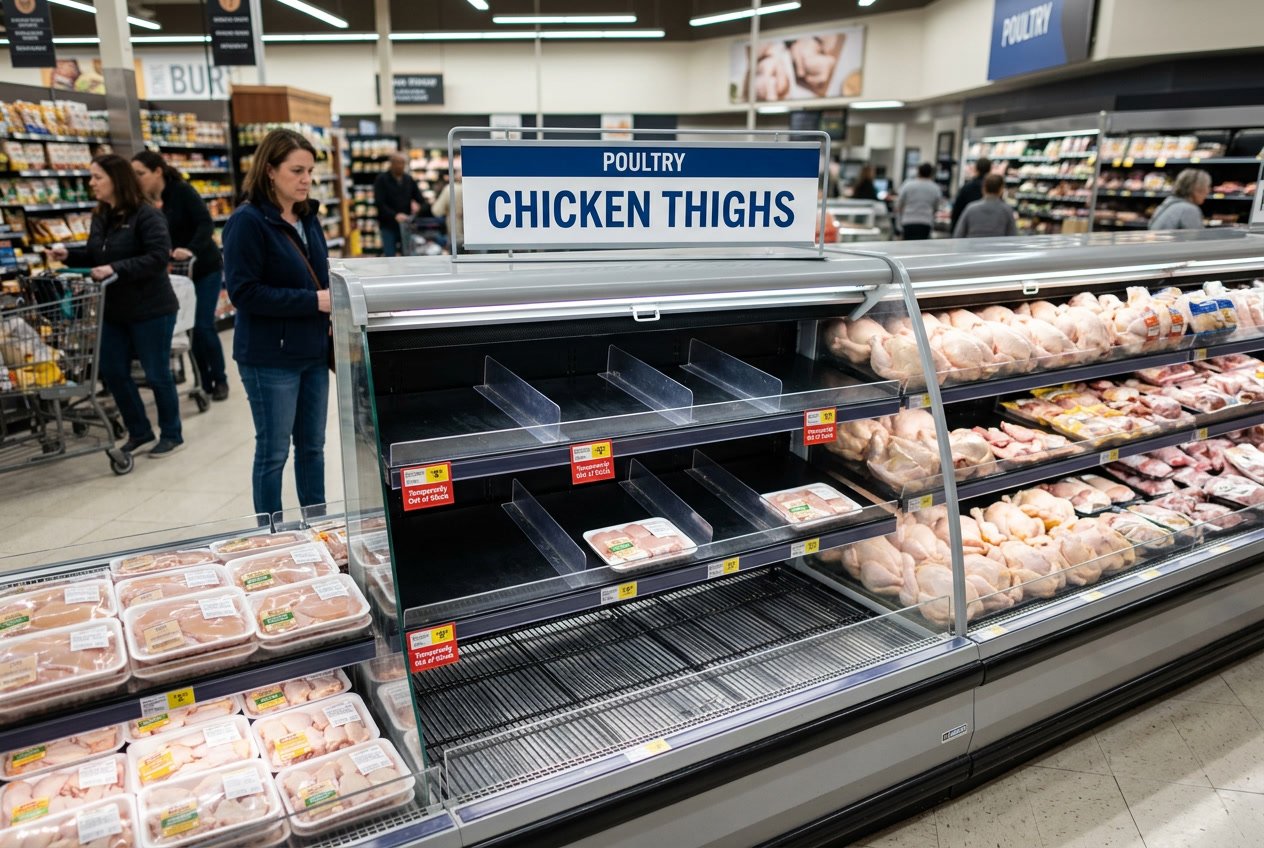
You face tighter aisle shelves and spotty deliveries of chicken thighs because processing, disease losses, and shifting demand concentrate scarcity on specific cuts. Thigh availability has changed recently, and thighs move differently through the supply chain than breasts or wings.
Recent Patterns In Chicken Thigh Availability
Since late 2022, many U.S. and UK retailers have reported intermittent shortages of thighs in grocery cases and restaurant supply lines. Outbreaks of highly pathogenic avian influenza removed millions of birds from production, and processors prioritized high-margin cuts, often breasts and tenders, when line capacity tightened.
You’ll also see regional variation: some stores run out for weeks, while others maintain steady stock depending on suppliers and contracts. Rising feed and transport costs reduced overall flock sizes in 2023–24, slowing the pace of replenishment.
When processors face labor or equipment bottlenecks, they allocate available carcasses to the most profitable or highest-demand products, which can leave thighs scarcer. Retail promotions and fast-food sandwich campaigns quickly pull specific cuts from distribution, producing short-term flare-ups in thigh shortages.
Chicken Thighs Compared To Other Poultry Cuts
Thighs are dark meat and often priced lower per pound than breasts, so you might assume they’d be abundant. In practice, they behave differently in the market.
Processors break down a broiler into fixed yields: each bird gives a set number of breasts, thighs, wings, and legs. When overall bird numbers fall, the proportional reduction hits all cuts, but buyers’ purchasing choices shift which cuts vanish first.
Restaurants and foodservice often favor breasts and tenders for menu items and margins, creating steady demand that competes with retail. Export markets and bulk processors sometimes buy thighs in large lots, removing them from domestic retail channels.
You’ll notice price spikes and scarcity for thighs when supply tightens because they’re less flexible to substitute in certain restaurant recipes. Distribution contracts can divert available thighs away from your grocery store.
Production And Processing Challenges
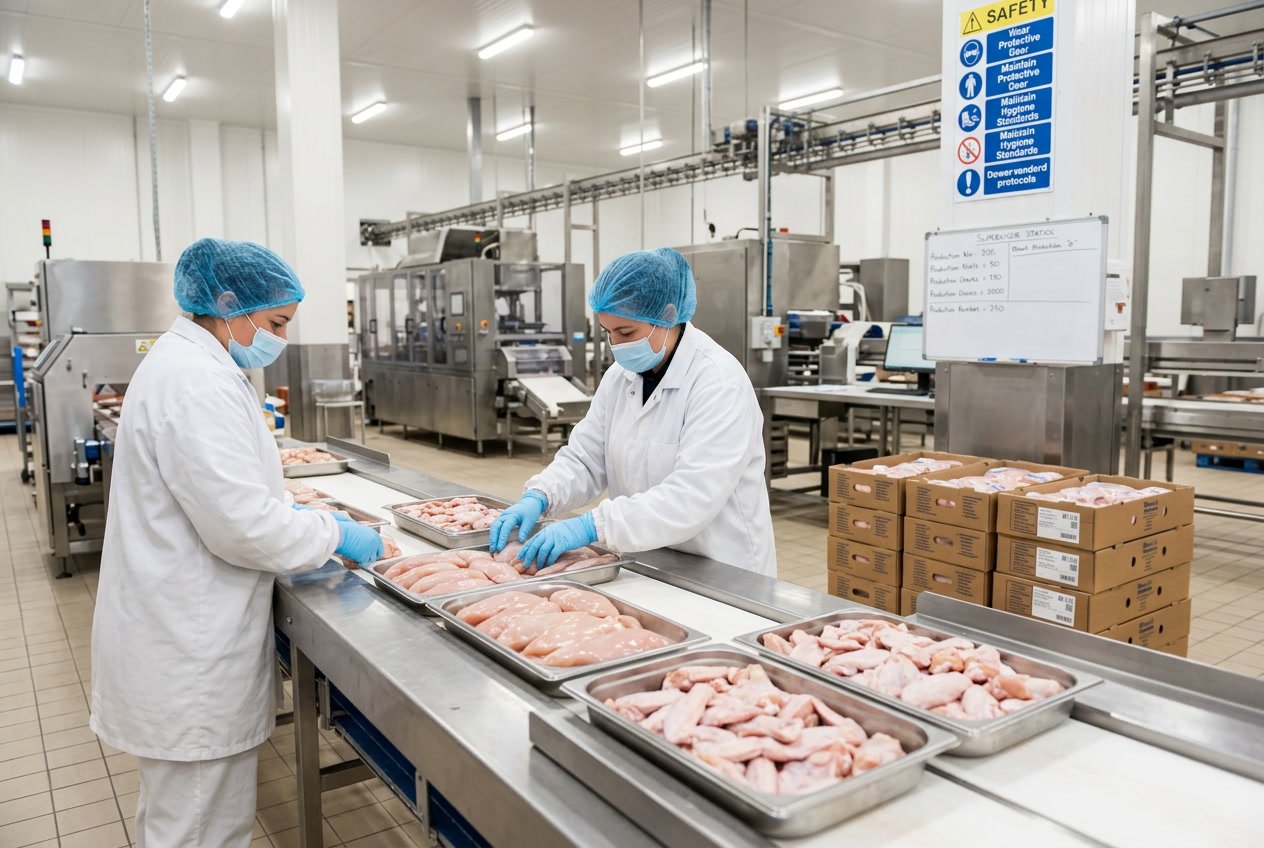
Processing boneless and skin-on chicken thighs involves practical hurdles that affect availability and cost. Labor, equipment limits, and packaging choices influence whether thighs reach retailers as boneless, skinless pieces or remain bone-in and skin-on.
Deboning And Skin Retention Difficulties
Deboning thighs requires precise cuts around irregular joints and variable bone shapes. Skilled workers must avoid trimming away meat or leaving bone fragments, which raises labor costs and slows throughput.
Thighs also vary in size and fat content, complicating uniform portioning. If processors trim too aggressively to protect yield, you end up with undersized pieces that sell poorly.
If they under-trim, the product risks contamination or customer complaints. Keeping skin intact during deboning adds another layer of difficulty.
Skin tears easily, so maintaining attractive, intact skin for skin-on thighs requires gentler handling and different tooling than for boneless production.
Automated Versus Hand Processing Of Chicken
Automation works well with uniform cuts like breasts, but thighs’ irregular anatomy defeats many machines. Vision-guided robotics are improving, yet they still struggle to match human dexterity on variable shapes.
Plants choose manual deboning when quality and yield matter more than speed. Manual lines cost more in wages and training, which pushes processors to favor bone-in or breast products that fit automated lines.
Some facilities use hybrid approaches, with mechanical pre-cuts followed by hand finish, to balance speed and quality. That compromise still raises processing time per thigh compared with fully automated cuts, affecting supply and price.
Impact On Skin-On Chicken Thighs
Skin-on thighs survive processing with fewer handling steps, making them cheaper and more available in many markets. You often find these more consistently because they skip the labor-intensive deboning stage.
However, skin-on products require different packaging to prevent moisture loss and discoloration. Processors must invest in vacuum or modified-atmosphere packaging to extend shelf life, which raises costs for retailers and consumers.
Retailers prioritize stocking items with predictable demand and margin. Since bone-in, skin-on thighs fit both criteria more often than boneless, skinless thighs, they dominate shelf space in many parts of the supply chain.
Consumer Demand And Market Trends
You face a market where demand for chicken overall is high, but specific preferences and retail economics shape which parts appear on store shelves. Price sensitivity, convenience, and how restaurants order cuts all affect availability of thighs.
Preference For Boneless, Skinless Thighs
Most consumer growth is in boneless, skinless cuts because they save prep time for home cooks and foodservice buyers. Retail sales data and industry reports show shoppers prefer ready-to-cook pieces that fit air-fryers, sheet-pan dinners, and meal kits.
Processors favor producing boneless, skinless thighs when retailers request consistent portion weights for pricing and labeling. That focus can reduce supply of bone-in or skin-on thighs despite steady demand for thigh meat overall.
If you want bone-in thighs, expect them to be pricier or limited at times. Trimming, deboning, and repackaging decisions by plants direct what reaches your grocer.
Your choice at the store—convenience versus traditional cuts—drives what processors prioritize.
Convenience Versus Culinary Preferences
You care about flavor and texture, and many chefs still prefer thighs for succulence and dark-meat cooking. Large segments of consumers prioritize convenience and perceived health traits, which pushes retailers to stock lean breast products and processed thigh forms instead.
Fast-casual chains and retailers amplify this by ordering uniform portions for menus and pre-cooked items. That creates steady demand for portion-controlled thigh meat while reducing shelf space for loose, bone-in thighs.
When supply chains tighten, retailers trim slower-moving SKUs first. Your ability to buy whole, bone-in thighs depends on local store strategy, supplier contracts, and whether your community values traditional thigh preparations enough to sustain shelf space.
Supply Chain And Retail Factors
Retail stocking decisions and distribution constraints directly shape which chicken cuts reach your store. Limited shelf space, packaging formats, and route planning often prioritize high-turn items, which can leave thighs scarce even when overall chicken supply improves.
Retailer Shelf Space Limitations
Retailers optimize shelf space for products that sell fastest and deliver the highest margins. National chains and regional supermarkets allocate fixed display and cooler cubic feet to breasts, tenders, and value-added items because those SKUs turn over quickly.
That leaves thighs competing for much smaller allocations. You feel the result at the meat counter: inconsistent thigh availability and short refill windows.
When shipments are constrained, retail buyers fulfill steady sellers first. Promotions, planograms, and category targets also push buyers to favor prepackaged breast packs and ready-to-cook items over loose or value-pack thighs.
Smaller independents may carry thighs more often, but they receive smaller, less frequent deliveries. If avian flu or processing bottlenecks reduce total throughput, chains with tight inventory models will reduce thigh allocations first to protect top-selling SKUs.
Distribution And Packaging Issues
Distribution centers and packers shape what arrives at your store through case sizes, cut mixes, and pallet configurations. Many processors sell thighs in bulk cases or as part of mixed-cut pallets designed for foodservice, not retail.
That mismatch forces retailers to either repackage (labor cost) or decline those SKUs. Cold-chain planning further complicates supply.
Trucks are routed to maximize throughput, and carriers prioritize high-margin, pre-sold pallets. If thigh cases must ride with mixed-product pallets, they often get deprioritized on constrained trailers during peak demand.
Packaging choices matter to your shopping experience. Breathable overwrap, vacuum packs, and value-ready trays have different shelf lives and labor profiles.
Retailers facing labor shortages and tight distribution windows choose packaging that minimizes handling, which can reduce the number of thigh SKUs offered on the floor.
Industry And Economic Influences
You face direct cost pressures from what farmers pay for grain and from how many workers remain on processing lines. Those two factors drive why thigh supply tightens and retail chicken prices shift.
Feed Costs And Grain Prices
Rising prices for corn and soy increase the cost to grow each chicken, because feed accounts for roughly 60–70% of production expense. When corn or soybean meal spikes, producers either raise flock prices or cut margins, which pushes wholesale chicken prices higher and can make producers prioritize high-yield cuts like breast to maximize returns.
You also see regional differences. Drought in a Midwest growing region or a global commodity shock can make feed notably more expensive in certain states, reducing the number of birds raised there in a season.
That reduction lowers total thigh availability at processors, which can make thigh packs scarce or relatively pricier at retail.
Labor Shortages In Poultry Production
You encounter bottlenecks when plants operate below capacity because of hiring gaps, illness, or turnover. Processing requires skilled line workers to debone and trim thighs.
Without enough staff, plants slow throughput and may favor simpler cut runs—often whole birds or breasts—over time-consuming thigh deboning. Labor costs also affect final pricing.
Higher wages to retain workers raise per-bird processing costs, which feed into wholesale and retail chicken prices. When plants allocate limited labor to the highest-margin products, thigh yields and retail supply can drop, making thighs harder to find and more expensive relative to breasts.
Impact Of Avian Influenza And Disease
Avian influenza and other poultry diseases reduce available meat cuts, disrupt processing, and extend the time before producers can supply standard retail pieces like thighs. Outbreaks start quickly, culling removes large percentages of birds, and rebuilding flocks to normal production levels takes time.
Avian Influenza Outbreaks In Poultry
When avian influenza appears on a farm, the disease spreads rapidly among birds, especially in turkeys and ducks, but chickens can also be infected. High-path H5 strains cause sudden mortality and production losses in layers and broilers.
Infected flocks often show sharp drops in feed conversion and growth rates within days. Wild-bird introductions and multi-farm transmission via people, equipment, and transport drive outbreaks.
Surveillance data and sequencing increasingly show multiple introductions rather than a single source, which makes containment harder. Movement restrictions and mandatory confinement orders follow confirmed cases and can halt processing of birds from whole regions.
You may lose entire grow-out cohorts that were due for slaughter in a given week, removing a predictable volume of thighs and other cuts from the market. That creates immediate local shortages and contributes to price volatility at retail.
Effects Of Culling And Flock Reduction
Culling removes infected and at-risk birds to stop spread. You will usually see whole barns depopulated rather than individual birds.
Compensation and biosecurity costs partially offset losses, but farmers lose the production capacity tied to each bird, often measured in kilograms of meat and number of thighs per 1,000 birds. Culling timelines matter.
A single infected barn of 20,000 broilers can translate to roughly 40,000 thighs removed from the supply chain in one action. Repeated outbreaks multiply that effect across regions.
Processing plants also slow or pause when they lose contracted flocks, creating downstream bottlenecks that reduce availability of specific cuts even if total slaughter volumes recover later. You should expect logistical disruptions as well.
Extra time for cleaning, disposal, regulatory inspections, and movement bans keeps meat off shelves weeks longer than the depopulation event itself. That delay concentrates losses into specific product types that processors prioritize or deprioritize.
Time Needed To Replenish Chicken Flocks
You must plan for biological and logistical constraints when rebuilding a commercial broiler flock. Chick placement to harvest takes about 6 to 8 weeks under standard production cycles for fast-growing broilers.
If you depopulate a farm, you need to add 1 to 2 weeks for cleaning, disinfection, and regulatory clearance before restocking. Breeder and hatchery capacity also play a role in the timeline.
If many farms in a region are affected, hatcheries may not have enough capacity to supply all the needed day-old chicks right away. This shortage can extend recovery by several weeks or even months.
Replenishing layers and slower-growing specialty birds can take 16 to 26 weeks or longer. Local market supply of thighs depends on coordinated restocking across farms and processors.


