
Why Are My Chicken Thighs Rubbery? Causes & Expert Solutions
You want juicy, tender chicken thighs, not rubbery, chewy bites that make you wince.
Rubbery thighs usually come from one of three things: improper cooking temperature or time, poor meat quality, or missed moisture steps such as brining or marinating.
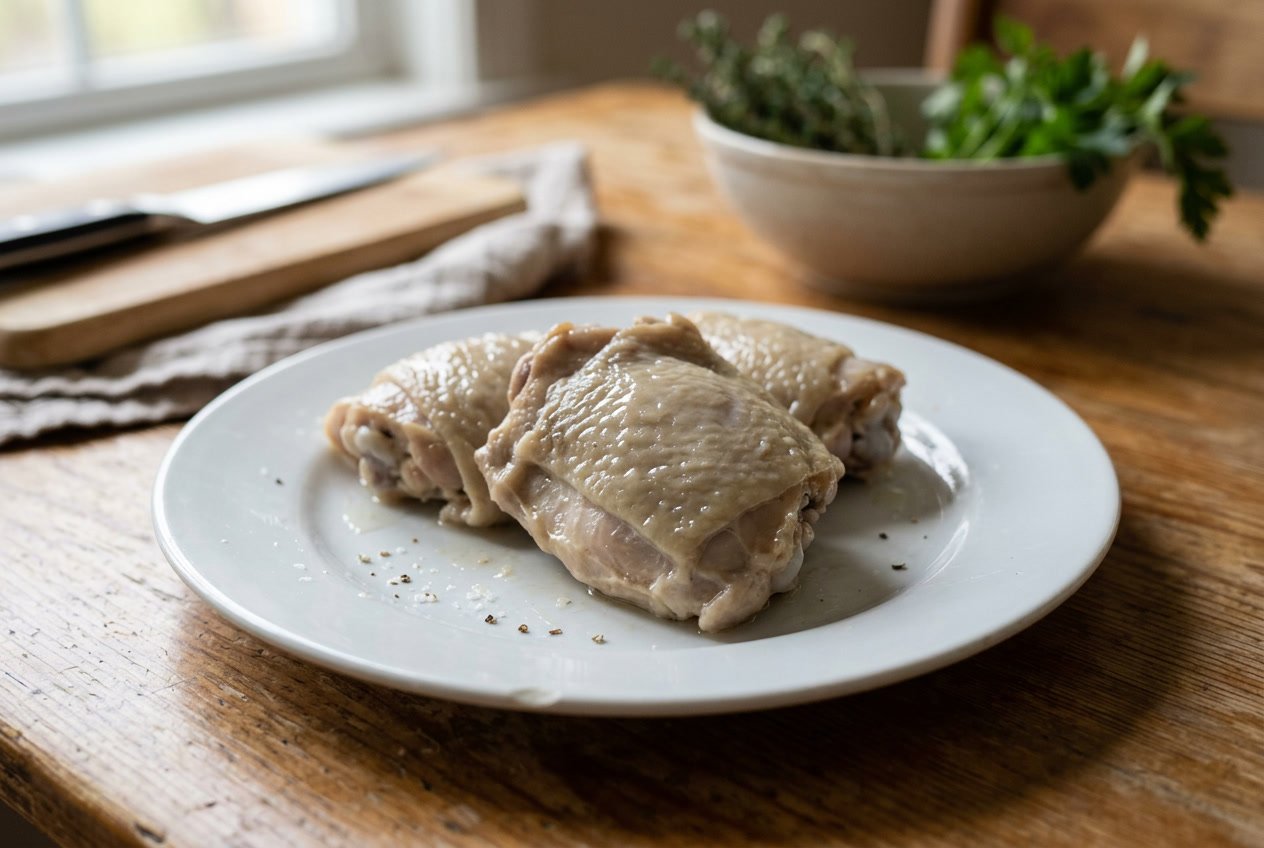
Temperature, meat quality, and moisture steps play a big role in texture.
Using a thermometer, simple brines, and better heat control can help you get reliably tender results.
What Makes Chicken Thighs Rubbery?
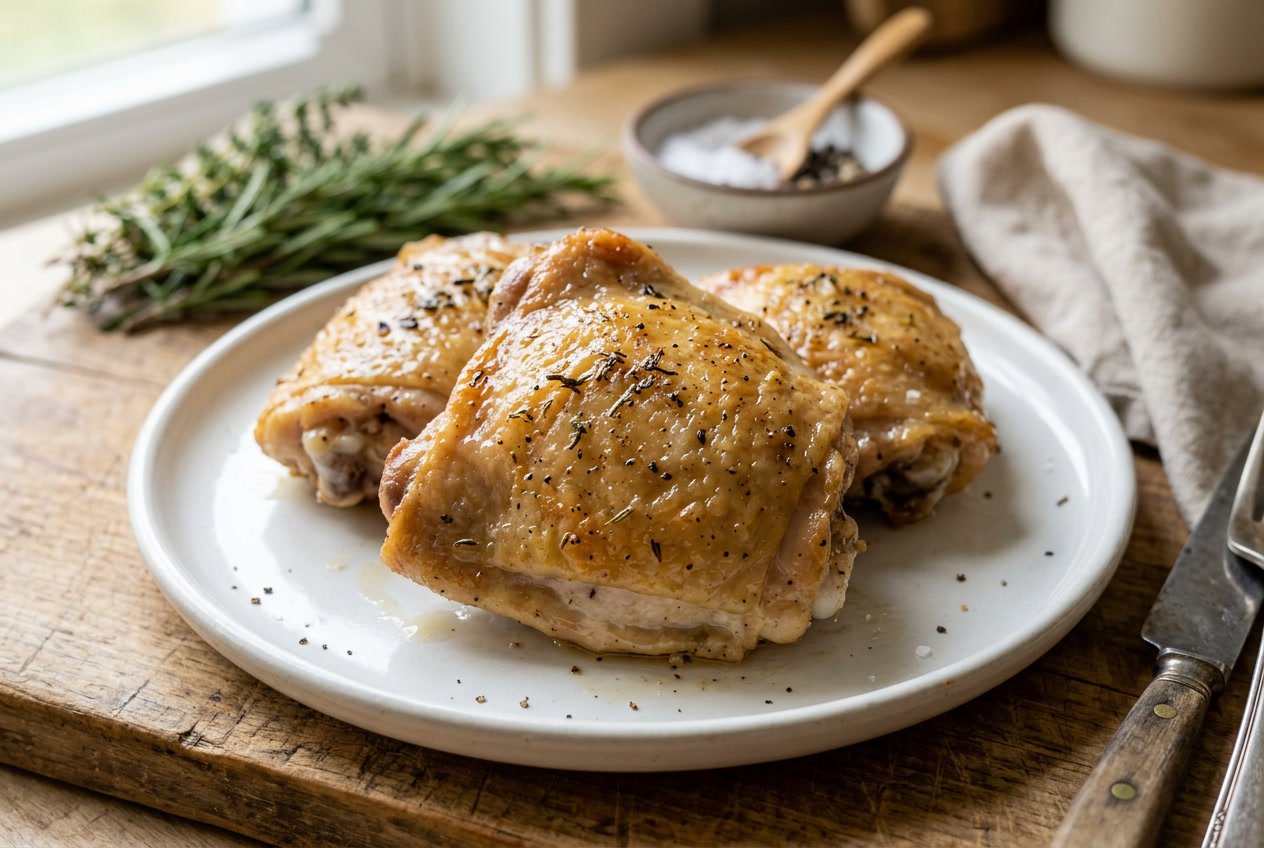
Rubbery chicken thighs result from protein tightening from improper temperature or time, unbroken connective tissue, and handling or storage that alters muscle structure.
Once you know what each issue looks and feels like, you can fix them.
Identifying Rubbery Chicken Texture
Rubbery chicken feels springy and resists biting.
The muscle fibers don’t break cleanly and give a gummy chew.
You’ll notice this most when you cook the meat too quickly at high heat or when it has oscillated between freezing and thawing.
Check the surface and interior.
Slick, tight skin or a glossy, slightly translucent interior often comes with a rubbery texture.
Use a thermometer.
If the outside is overbrowned while the center barely reached 165°F (74°C), uneven cooking likely caused the rubberiness.
Differences Between Rubbery and Tender Chicken
Tender thighs yield easily to a fork and release clear juices.
Fibers separate into short, soft strands.
Rubbery thighs require more bite force and the strands stay long and elastic.
Tenderness comes from properly broken-down collagen and retained moisture.
Rubbery texture means proteins have contracted excessively or connective tissue remains intact.
Longer, lower-heat cooking methods can dissolve collagen without drying the meat.
Texture Issues in Chicken Thighs vs. Other Cuts
Thighs are darker meat with more connective tissue and intramuscular fat than breasts.
They tolerate slow, moist heat better.
That same collagen makes thighs turn rubbery if you cook too hot or for too short a time.
Breasts usually dry out instead.
When buying or prepping, account for thighs’ tougher connective network.
Choose braising, low roasting, or sous-vide to convert collagen into gelatin and avoid the rubbery feel.
Primary Causes of Rubbery Chicken Thighs
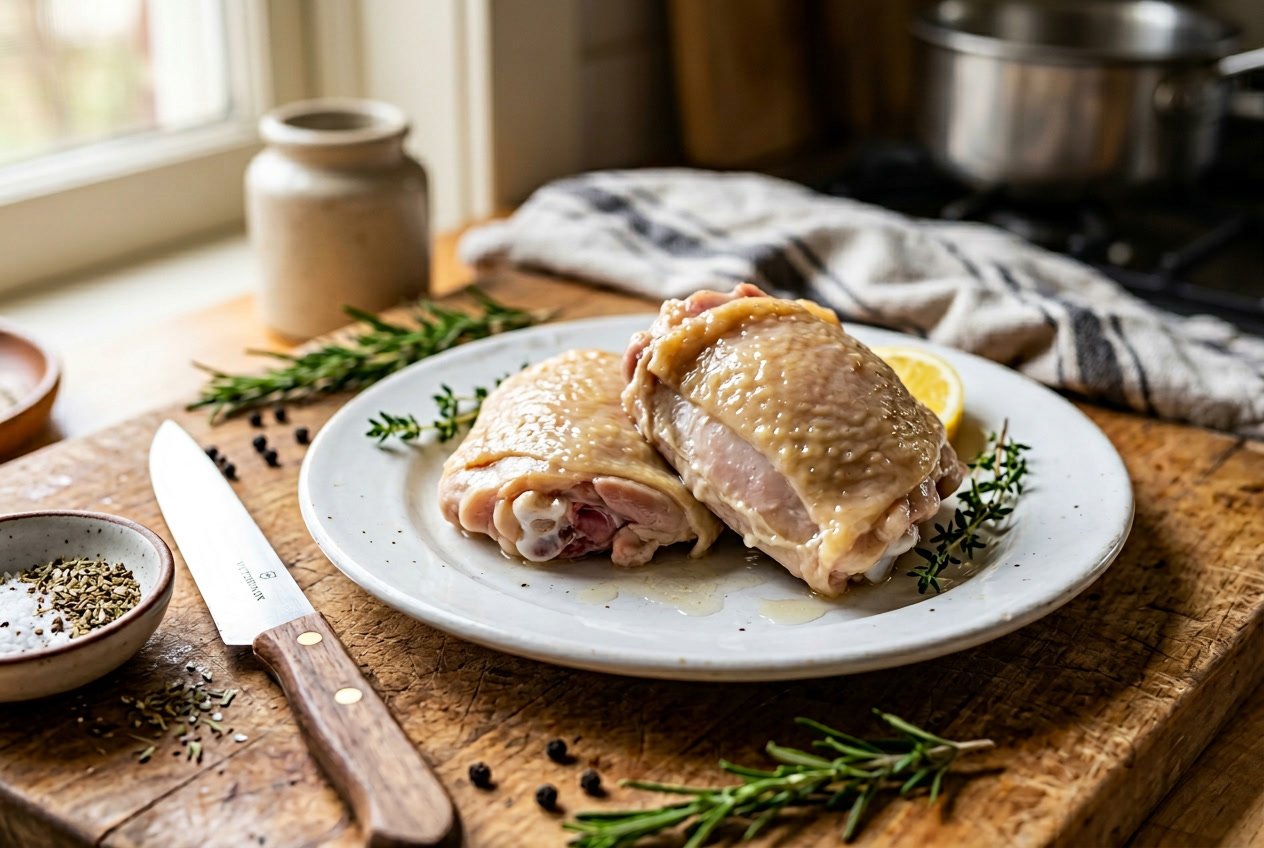
How long and how hot you cook the thighs, plus what happened before cooking, usually determine the texture.
Timing, internal temperature, and storage habits affect whether the meat stays tender or turns rubbery.
Overcooked Chicken Thighs
When thigh meat exceeds the optimal temperature range, muscle fibers contract and expel moisture.
This leaves you with dry, tight tissue.
Thighs tolerate higher temps than breasts, but pushing them past about 190°F (88°C) for too long turns connective tissue into stringy, chewy protein.
You can overcook by roasting, grilling, or pan-searing.
Common mistakes include relying on time alone, using only visual cues, or finishing on a hot grill without checking internal temp.
Use an instant-read thermometer and pull thighs when they reach roughly 175–185°F (79–85°C) for juicy results.
Carryover heat will raise the temp slightly while they rest.
Brining and proper resting help prevent overcooking by improving moisture retention and allowing temperature to equalize.
If you salt and rest or use a short wet brine, the meat tolerates heat better and the fibers remain more tender.
Undercooked Chicken Thighs
Undercooking creates a different problem.
Partially set proteins can feel oddly rubbery or gummy, especially near the bone.
Raw collagen and muscle fibers haven’t broken down, so the meat resists chewing and has a rubbery bite even if the center reaches a borderline safe temperature.
Surface color can mislead you, because bone marrow and hemoglobin can cause persistent pinkness in fully cooked thighs.
Check the thickest point with a thermometer.
Thighs should reach at least 165°F (74°C) for safety, but aiming for 175–185°F (79–85°C) ensures collagen breakdown and a tender texture.
If the outside is done but the interior is still undercooked, finish in a low oven or turn to indirect heat on the grill to avoid overcooking the exterior.
High Heat and Rapid Cooking
Very high heat for a short time can sear the outside while leaving internal proteins tense and dry.
Rapid cooking causes the outer proteins to toughen and tighten before connective tissue has time to soften.
This produces a rubbery mouthfeel even when you achieve the correct internal temperature.
High, direct heat suits thin cuts or skin-on pieces if you manage timing carefully.
For bone-in thighs, use two-stage cooking.
Sear over high heat for browning, then move to a moderate oven or cooler part of the grill to finish.
This preserves crust and allows internal collagen to convert to gelatin, making thighs tender.
Improper Thawing and Storage
Freezer burn and hasty thawing change cell structure, producing dry, spongy areas that cook up rubbery.
Ice crystals formed during slow or improper freezing puncture muscle cells.
When you cook those fibers, they release moisture unevenly and feel tough.
Thaw chicken thighs in the refrigerator overnight or in sealed bags submerged in cold water, changing the water every 30 minutes.
Avoid the microwave unless you plan to cook immediately and account for uneven warming.
Store raw thighs in airtight packaging and use within recommended freezer times.
Long-term frozen meat is more likely to suffer texture damage.
Chicken Quality and Its Impact on Texture
Chicken quality affects whether thighs turn tender or rubbery.
Factors like bird age, how it was raised, and muscle condition change connective tissue, fat distribution, and overall chewiness.
Low-Quality and Woody Chicken
Low-quality birds, often older or stressed before slaughter, develop dense, fibrous muscle.
You’ll notice a “woody” texture when cooked.
That woody texture appears most commonly in breast meat but can affect thighs if the bird was poorly fed or exercised excessively.
Woody muscle resists moisture and heat penetration, so even correct cooking can leave the meat chewy.
When you buy chicken, check the sell-by date, smell, and color.
Pale grey or strong odor indicate poor handling.
Prefer freshly chilled or properly frozen packages.
Avoid meat with excess liquid in the tray, which signals degradation.
White Striping and Aging
White striping shows as pale lines of fat and connective tissue running parallel to the muscle fibers.
It’s more common in fast-grown commercial chickens and can alter mouthfeel and moisture retention in both breasts and thighs.
White-striped meat tends to be fattier but structurally uneven.
The altered fiber pattern can make some bites feel firmer or slightly rubbery after cooking.
If you see pronounced striping, expect variations in texture and consider moist cooking methods like braising, slow roasting, or sous-vide.
Organic and High-Quality Chicken
Organic and higher-grade chickens usually give you more consistent, tender thighs.
Birds raised on varied feed and with lower stocking density develop less brittle muscle and healthier fat distribution.
This improves juiciness and reduces rubberiness.
Look for labels such as “air-chilled,” “organic,” and verified welfare certifications.
Air-chilled processing reduces water uptake, so the meat won’t become waterlogged and rubbery when cooked.
If you want predictable texture, invest in high-quality thighs from a trusted supplier.
Connective Tissue in Chicken Thighs
Thighs contain more connective tissue (collagen and elastin) than breasts.
Collagen converts to gelatin when cooked low and slow, yielding tender, moist meat.
Elastin does not break down and remains tough unless removed mechanically.
To manage connective tissue, use braising, slow-cooking, or sous-vide to convert collagen into gelatin.
Cut against the grain and trim obvious silverskin.
If your thighs feel rubbery after quick, high-heat cooking, the connective tissue likely didn’t have time to convert.
Lower the heat or extend cooking time next time.
How Cooking Methods Affect Chicken Thighs
Different cooking methods change how collagen, fat, and muscle fibers react to heat.
This directly affects whether your chicken thighs become tender or rubbery.
Choose the right combination of temperature, time, and moisture to control protein contraction and collagen breakdown.
Dry Heat vs. Moist Heat Cooking
Dry-heat methods like roasting, grilling, and pan-searing expose thigh surfaces to high temperatures that create browning and flavor.
That crust helps lock juices, but if you cook too hot or too long the muscle proteins tighten and squeeze out moisture, producing rubbery, dry meat.
Avoid overcrowding the pan.
Crowded pieces steam instead of sear.
Use a thermometer and remove thighs at 160–163°F (71–73°C), then rest to reach 165°F (74°C) without overcooking.
For thicker thighs, finish in a moderate oven (350°F/175°C) after a quick sear to ensure even cooking.
Moist-heat methods like steaming and poaching keep the environment wet and limit surface browning.
They can leave skin soft and sometimes rubbery if temperatures are low and collagen doesn’t convert properly.
Maintain a gentle simmer rather than a rolling boil to prevent toughening from aggressive agitation.
Braising, Slow Cooking, and Sous Vide
Braising and slow cooking use low, wet heat to convert collagen into gelatin over time.
This yields tender chicken thighs that pull apart easily.
Brown the thighs first to develop flavor, then simmer in a liquid (stock, wine, sauce) at 180–200°F (82–93°C) for 60–90 minutes depending on size.
Slow cookers maintain steady low temperatures and turn tough connective tissue into tender meat.
Avoid cooking on the highest setting for too long.
Extended high heat can still dry out meat in thin cuts.
Sous vide gives the most precise control.
Seal thighs and cook at 165°F (74°C) for 1–2 hours for traditional texture, or 140–150°F (60–66°C) for 2–4 hours for very tender, slightly pink meat.
Finish with a hot pan or broiler for crisp skin.
Sous vide prevents protein over-contraction, so you avoid rubbery chicken while preserving juiciness.
Resting Chicken After Cooking
Resting lets internal juices redistribute and carryover cooking finish the center.
This prevents the dry, rubbery edge that occurs when you slice immediately.
For individual thighs, rest 5–10 minutes under loose foil.
For a large batch, rest 10–15 minutes.
During rest the temperature can rise a few degrees.
Remove thighs slightly under your target to avoid overshoot.
Rest also allows collagen gelatin to reabsorb moisture, helping results feel tender.
The Role of Marinades and Brines
Marinades use acid, enzymes, oil, and seasonings to add flavor and slightly change surface texture.
Brines use salt, often with sugar and aromatics, to increase moisture retention and seasoning through the meat.
How to Marinate Chicken Thighs Effectively
Choose an acid and an oil ratio that coats without cooking the surface.
Use about 1 part acid (vinegar, lemon juice, or yogurt) to 3 parts oil.
Add aromatics like garlic, ginger, and herbs, plus salt or soy sauce for seasoning.
Place thighs in a resealable bag or shallow dish, remove air, and ensure the marinade touches all surfaces.
Marinate in the fridge.
Thirty minutes to 2 hours gives noticeable flavor without breaking down texture too much for boneless thighs.
For tougher, bone-in thighs you can extend to 4–6 hours.
Avoid overnight with strong acids because they can make the surface mushy.
Pat thighs dry before searing to get a crisp skin and use a thermometer to avoid overcooking.
Benefits and Risks of Brining Chicken
A basic brine is water plus 5–8% kosher salt by weight.
Add 1–2% sugar and aromatics if desired.
Brining increases the meat’s ability to retain moisture when cooked, reducing the chance of drying and rubbery texture.
Brine penetrates more deeply than a marinade, seasoning throughout the thigh rather than only the surface.
That improves juiciness for grilling, roasting, or frying.
Over-brining causes the meat to taste too salty and can produce a softened, slightly spongy texture if left too long.
Avoid brining for more than 12–24 hours for whole thighs.
Bone-in pieces generally need less time than boneless.
Avoiding Over-Marination
Strong acids or proteolytic enzymes like pineapple, papaya, and commercial tenderizers break down proteins too far and create a mushy or mealy texture. Use enzyme-based marinades for short periods, 15–30 minutes at most for tenderizing, or dilute the fruit juice with oil and water.
Track both time and strength. You can use mild marinades such as herbs, oil, and light vinegar for up to 6 hours for bone-in pieces, while strong acids work best for 30 minutes to 2 hours.
Rinse chicken only if a marinade is extremely salty or contains raw meat juices. Otherwise, pat the meat dry to keep surface seasoning.
First brine for moisture, then briefly marinate for surface flavor if you combine both methods. Dry the skin before high-heat cooking to avoid steaming and rubbery skin.
Prevention
Focus on temperature control, even heat, and proper handling. Small changes like using a thermometer, prepping consistently, and storing correctly help keep thighs juicy.
Using a Meat Thermometer
Check the thickest part of the thigh with an instant-read thermometer, avoiding the bone. Pull the chicken when the internal temperature reaches 160–163°F (71–72°C) for dark meat, as carryover heat will bring it to a safe 165°F (74°C).
Insert the probe toward the bone but avoid touching it, and check multiple pieces when cooking several. A thermometer gives repeatable results and helps prevent the protein-tightening that makes meat rubbery.
If you roast or braise, check the temperature near the end of cooking, not just at the surface. For sous-vide, set the bath between 150–165°F depending on your preferred texture and finish quickly with a sear to avoid drying.
Proper Preparation and Even Cooking
Pat thighs dry and let them sit at near-room temperature for 20–30 minutes before cooking to promote even doneness. Salt them 30–60 minutes ahead or brine for 30–120 minutes to season and help retain moisture.
Leave space between pieces in the pan so each one browns instead of steaming. Sear skin-side down first at high heat until crisp, then lower the heat or finish in the oven at 350°F.
For low-and-slow methods, braise in a flavorful liquid at a gentle simmer to break down connective tissue without tightening proteins. Trim or butterfly thicker thighs so all pieces cook evenly.
Rest cooked thighs for 5–10 minutes under loose foil to let juices redistribute and prevent dryness.
Handling and Storing Chicken
Keep raw thighs refrigerated at 40°F (4°C) or below and use within 1–2 days. Freeze for longer storage if needed.
Thaw frozen thighs in the refrigerator or in cold water changed every 30 minutes. Never thaw at room temperature to avoid texture damage and bacterial growth.
Avoid repeated freeze-thaw cycles, since ice crystals can rupture fibers and lead to a mealy or rubbery feel. Marinate chicken in the fridge and discard any marinade that contacted raw chicken, or boil it before using as a sauce.
Handle meat gently when prepping. Avoid excessive pounding unless you are following a specific tenderizing step, as overworking fibers can create an uneven, tough texture.
Food Safety and Edibility Concerns
Rubbery texture does not always mean the chicken is unsafe, but it can signal problems with cooking or handling that affect safety and quality. Pay attention to internal temperature, appearance, and storage or thawing methods.
Is Rubbery Chicken Safe to Eat?
Chicken with a rubbery texture that reaches a safe internal temperature is generally safe to eat. Use an instant-read thermometer to confirm thighs reach 165°F (74°C) near the bone, which kills Salmonella and most pathogens.
Texture changes from overcooking or protein contraction are unpleasant but not dangerous. If the meat smells sour, feels slimy, or shows greenish discoloration, discard it regardless of temperature. Those signs point to spoilage, which can cause foodborne illness even if you cook it. If you are unsure, throw it out.
Dangers of Undercooked Chicken
Undercooked chicken can cause foodborne illness. Bacteria such as Salmonella and Campylobacter survive if internal temperatures don’t reach 165°F (74°C).
You may experience nausea, vomiting, diarrhea, fever, or abdominal cramps. Sometimes, these symptoms require medical care.
Avoid these mistakes:
- Leaving thighs pink near the bone and thinking color alone shows doneness.
- Thawing chicken partially in warm water or on the counter, which allows bacteria to grow.
- Using only cooking time estimates without checking the temperature.
If you suspect undercooking, heat the chicken again and check the temperature with a thermometer. Store leftovers in the refrigerator within two hours in shallow containers to slow bacterial growth.


