
Why Are Chicken Thighs So Tender? Science, Cooking Tips, and Secrets
You’ve probably noticed thighs stay juicier and feel more forgiving than breasts. That comes down to muscle use and fat: thigh meat contains more fat and connective tissue, so it holds moisture and becomes tender when cooked properly.
That extra fat and collagen melt into gelatin during slow or gentle cooking, giving thighs their rich, pull-apart texture.
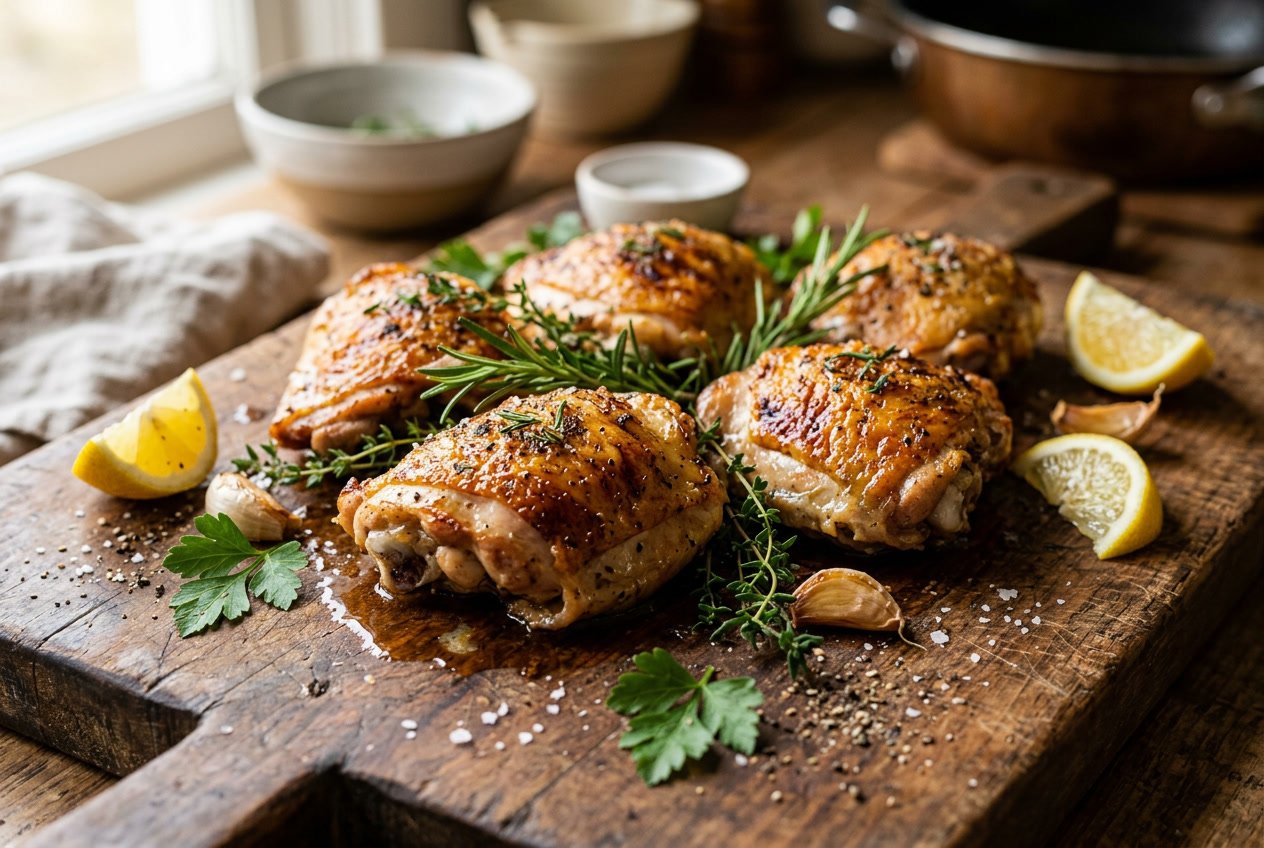
You’ll learn the science behind that transformation and how to pick the best cuts. Techniques like braising, low-and-slow roasting, indirect grilling, or sous vide turn collagen into silky tenderness without drying the meat.
You’ll get practical tips on timing, temperature, and seasonings that help you achieve juicy results every time.
What Makes Chicken Thighs So Tender
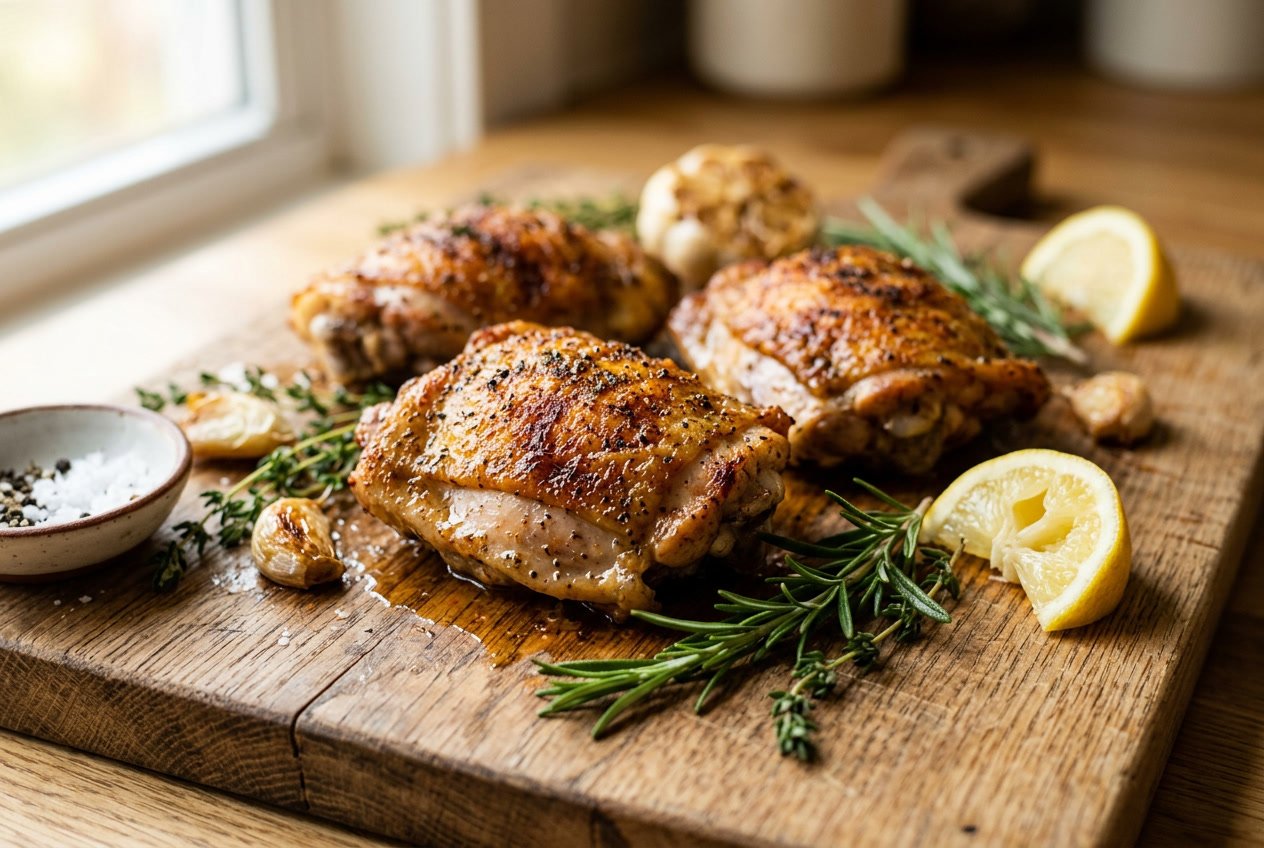
Thighs stay juicier and more forgiving than breasts because of higher fat, different muscle structure, and connective tissue that turns into gelatin when cooked slowly.
These factors work together during cooking to produce tender, flavorful results.
Higher Fat Content vs. Chicken Breasts
Chicken thighs contain more intramuscular fat than breasts. That fat melts during cooking and bathes the muscle fibers, which helps prevent the dry, stringy texture you can get with lean breast meat.
Fat also carries and amplifies flavor. When you sear or roast thighs, rendered fat browns and creates taste compounds that coat the meat.
This makes chicken thighs taste richer even if internal temperature rises above 165°F.
If you want crisp skin and moist meat, render the fat slowly at lower temperatures, then finish with a burst of high heat to crisp the exterior.
Dark Meat Composition and Muscle Structure
Thighs are dark meat because those leg muscles work continuously during the bird’s life. That activity builds more mitochondria and myoglobin, which store oxygen and make the tissue darker and more flavorful.
The muscle fibers in thighs are coarser and shorter than in breasts. They tolerate longer cooking without becoming tough.
You don’t need to fear temperatures above 165°F for thighs; the extra structure and fat keep them forgiving.
Bone-in thighs often taste juicier because the bone slows heat transfer and helps retain moisture around the meat.
Role of Connective Tissue and Collagen Breakdown
Thighs have more connective tissue—collagen—than breast meat. Collagen is tough when raw but converts to gelatin as it heats and breaks down slowly between roughly 160°F and 190°F.
Gelatin lubricates and separates muscle fibers, producing the “fall-apart” tenderness associated with well-cooked thighs.
Slow methods like braising, low roasting, indirect grilling, or long sous-vide baths keep the meat in the collagen-conversion range long enough to transform texture without drying the muscle.
If you’re short on time, aim for an internal temperature around 175°F for a good balance of rendered fat and softened collagen. For maximum pull-apart tenderness, target 185–195°F using gentle heat and moisture.
The Science Behind Chicken Thigh Tenderness
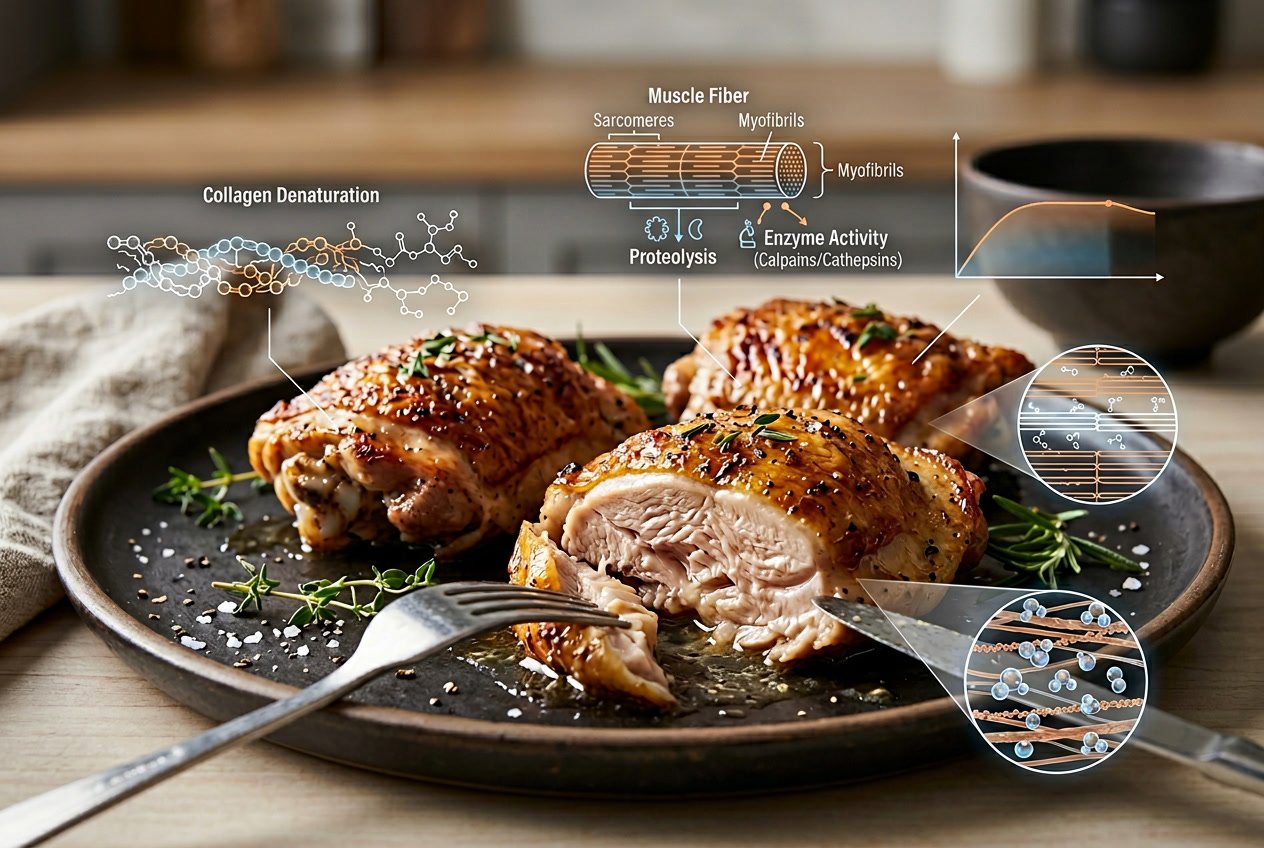
Thighs owe tenderness to higher fat, connective tissue, and collagen that respond well to moist heat and controlled temperatures.
Using a meat thermometer and gentle heat helps you convert tough proteins into a soft, juicy texture without drying the meat.
How Collagen Turns Into Gelatin
Collagen in thigh connective tissue begins to denature at about 140°F (60°C) and steadily converts to gelatin as temperature and time increase.
Gelatin dissolves into the cooking juices, lubricating muscle fibers and creating a silky mouthfeel.
This process requires both heat and time. Rapid high heat can shrink muscle fibers and squeeze out moisture before collagen fully breaks down.
Use moist methods like braising, stewing, or slow cooking, or add a small amount of liquid when roasting.
A meat thermometer helps: target internal temperatures above the collagen-denaturation range while monitoring time to avoid excessive moisture loss.
Why Dark Meat Gets More Tender With Longer Cooking
Dark meat contains more intramuscular fat and connective tissue than breast meat. It benefits from extended cooking that lets collagen become gelatin.
The extra fat melts and bastes the meat internally, preserving juiciness during long cooks.
You’ll see tenderness improve when thighs reach and hold temperatures in the 160–185°F (71–85°C) window for sufficient time.
Within that window, collagen conversion accelerates and muscle fibers relax, producing a tender, shreddable texture.
If you push cooking too long at high dry heat, evaporation outpaces fat rendering and the meat can become stringy.
Use low-and-slow techniques or controlled oven temperatures to balance collagen breakdown and moisture retention.
Optimal Temperature Range for Tender Results
Aim for an internal temperature between 160–185°F (71–85°C) depending on your target texture.
For juicy, sliceable thighs, pull around 160–165°F (71–74°C) then rest. For shreddable, braised meat, hold 175–185°F (79–85°C) until tender.
Use a reliable meat thermometer inserted into the thickest part without touching bone.
Check earlier in the cook to avoid overshoot, then allow a 5–10 minute rest so carryover cooking equalizes temperature and juices redistribute.
If you’re slow-cooking, keep the pot between 185–200°F (85–93°C) and monitor with a thermometer probe.
That low steady heat converts collagen without aggressive muscle contraction, giving you consistently tender chicken thighs.
Choosing the Right Chicken Thighs
Pick thighs that match your cooking method, flavor goals, and time.
Focus on whether the piece is bone-in or boneless, whether the skin is intact, and the bird’s size and source.
Bone-In vs. Boneless
Bone-in chicken thighs keep heat more evenly and help the meat stay moist during long cooking times.
The bone slows heat transfer, which reduces surface drying and lets connective tissue convert to gelatin without the meat tightening too fast.
Choose bone-in for braises, roasts, or low-and-slow smoking when you want deeper flavor and extra juiciness.
Boneless thighs cook faster and are easier to portion for quick pan-searing or sautés.
They lack the bone’s insulating effect, so watch temperature and cook time closely to avoid drying.
If you prefer short, high-heat methods, pick boneless but plan for slightly lower peak temperatures and shorter rests.
Skin-On Chicken Thighs Benefits
Skin-on chicken thighs deliver added fat that renders during cooking and bastes the meat from above.
Rendered fat increases juiciness and creates a barrier against moisture loss, especially when roasting or grilling.
The skin also crisps and adds texture contrast when you sear skin-side down first.
If you want pronounced flavor and a crisp finish, buy skin-on thighs and start them skin-side down in a hot pan or oven.
If you need a lower-fat option, remove skin after cooking to preserve moisture but cut calories.
For recipes requiring long braising, keeping skin on adds collagen and mouthfeel; trim excess fat if the dish might become greasy.
Quality, Size, and Sourcing Considerations
Select thighs of consistent size so they cook evenly; 4–6 ounces per thigh is typical for most recipes.
Smaller thighs finish faster and suit quick sautés. Larger thighs benefit from slow roasting or braising where collagen needs time to break down.
Weigh or eyeball pieces and group like sizes on the tray.
Check labels for farming method and sell-by dates. Pasture-raised or air-chilled birds often taste cleaner and may yield firmer but still tender meat after proper cooking.
Avoid thighs with large dark spots or off-odors.
If possible, buy from a butcher or trusted brand and ask whether the thighs are bone-in or boneless and whether skin is intact to match your cooking plan.
Essential Techniques for Tender Chicken Thighs
Improve tenderness by controlling moisture, breaking down connective tissue, and avoiding overcooking.
Use a saltwater brine for moisture, targeted marinades for flavor and enzyme action, proper thermometer use for correct doneness, and resting plus slicing to preserve juices.
Brining With Saltwater
A basic saltwater brine is 4–6% salt by weight in water (about 4–6 tablespoons kosher salt per quart).
Submerge bone-in, skin-on thighs in the brine for 1–6 hours in the refrigerator. Use less time for boneless pieces, more for larger bone-in pieces.
Brining increases the meat’s moisture-holding capacity through osmosis and protein modification, so cooked thighs lose less juice.
Add a tablespoon of sugar per quart to balance flavor and promote browning, and include aromatics like bay leaf or crushed garlic if desired.
Rinse the thighs briefly and pat dry after brining to ensure the skin crisps when seared or roasted.
Skip excessive salt on the surface since the brine already seasons the meat internally.
Effective Marinating Approaches
Marinades can add flavor and, when acidic or enzymatic, tenderize surface fibers.
Use yogurt, buttermilk, or a citrus-based marinade for 1–4 hours to gently break down proteins.
Limit very acidic marinades (strong vinegar or lemon) to under 2 hours to avoid mushy texture.
Include oil and salt in your marinade to help carry aromatics into the meat and maintain moisture during cooking.
For deeper penetration, combine a short brine first, then marinate for flavor only.
Most tenderness comes from fat and connective tissue breakdown during cooking, not from brief marinades.
Using a Meat Thermometer Correctly
Insert an instant-read thermometer into the thickest part of the thigh without touching bone.
Aim for an internal temperature between 170°F and 185°F for best tenderness: connective tissues soften in that range, producing juicier results than stopping at 165°F.
Check temperature toward the end of cooking rather than mid-cycle to avoid repeated heat loss.
For oven or pan-roast methods, confirm several pieces reach the target temp.
Calibrate your thermometer periodically by testing it in boiling water (should read roughly 212°F at sea level) or an ice bath (32°F).
Accurate readings prevent both undercooking and drying.
Resting and Slicing Techniques
Let cooked thighs rest uncovered or tented loosely with foil for 5–10 minutes before slicing.
Resting lets muscle fibers reabsorb some juices and equalizes internal temperature.
When slicing, cut against the grain to shorten muscle fibers and make each bite feel more tender.
For bone-in thighs, remove the bone after resting if you prefer easier slicing; the bone helps retain moisture during cooking but can be a barrier to even slicing.
Serve promptly after slicing to preserve temperature and juice.
Best Cooking Methods for Juicy Chicken Thighs
Use gentle, sustained heat to dissolve connective tissue into gelatin. Finish with high heat when you want crisp skin.
Target internal temperatures between 175°F and 195°F for tender, moist thighs, and always measure at the thickest point away from bone.
Slow Cooking and Braising
Braising locks in moisture and converts collagen into gelatin.
Brown skin-side down in a hot pan first for color, then add aromatics and a cup or two of liquid (stock, wine, or tomatoes).
Cook covered at low heat—oven at 300°F or on the stovetop at a gentle simmer—until the meat reaches 185–195°F and pulls easily from the bone.
Use a heavy pot or Dutch oven to keep heat even. Check liquid level partway through and baste if needed.
The sauce will thicken from rendered fat and gelatin.
Braised thighs work well shredded for tacos or plated whole with the reduced sauce.
Pan-Searing and Oven-Roasting
Start by patting thighs dry and seasoning generously; a dry surface gives the best crisp.
Sear skin-side down in a hot ovenproof skillet until deeply browned, 6–8 minutes, then transfer to a 400°F oven to finish.
For bone-in, skin-on thighs, roast 20–35 minutes depending on size.
Use a probe thermometer and remove at 175–185°F for juicy, slightly firm meat, or 185–195°F if you want fall-off-the-bone texture.
If skin softens during roasting, use the broiler or sear briefly in a hot pan to re-crisp.
Grilling With Indirect Heat
Set up two-zone heat: coals banked to one side or gas burners off on the cool side.
Sear thighs over direct heat to render fat and get grill marks, then move them to indirect heat with the lid closed to finish slowly.
Cook until internal temperature reaches 175–190°F, flipping occasionally for even cooking.
Use a drip pan or a light oil rub to minimize flare-ups.
Indirect grilling gives you smoky flavor and tender meat without charring the exterior.
Finish over direct heat for 1–2 minutes if you want crisp skin.
Sous Vide and Other Modern Methods
Sous vide allows you to control temperature precisely. Vacuum-seal thighs with aromatics and cook at 165–170°F for 1.5–4 hours for consistent juiciness.
For more rendered collagen and a shreddable texture, use 170–185°F. After sous vide, pat the thighs dry and sear the skin in a hot skillet or use a blowtorch to crisp it.
You can also use high-quality electric slow cookers or steam ovens. Always use an instant-read thermometer and finish with high, dry heat for crisp skin.
These methods help you avoid overcooking and produce juicy chicken thighs.
Flavor Boosters and Seasonings
Start with salt to build flavor and help the thighs retain moisture. Acid, such as lemon or vinegar, brightens the meat.
Fat or oil carries aromatics across the skin and into the surface flesh.
Paprika, Thyme, and Classic Herbs
Paprika adds color and a mild sweet-smokiness to chicken thighs. Use 1–2 teaspoons per pound of meat.
Smoked paprika works well for grilled or roasted thighs, while sweet paprika suits pan-seared versions. Thyme pairs especially well with the fatty, dark meat of thighs.
Add fresh sprigs to the roasting pan or use 1 teaspoon dried thyme in a spice rub. Thyme’s savory, slightly lemony notes cut through fat without overpowering.
Combine paprika and thyme with salt, black pepper, and a touch of brown sugar for a balanced rub. Pat the thighs dry, apply the rub under and over the skin, and let them rest 30–60 minutes.
Garlic Powder, Onion Powder, and Cumin
Garlic powder and onion powder provide concentrated aromatics that brown well during cooking. Use 1 teaspoon each per pound for savory depth.
These powders work well when you want consistent flavor without fresh produce. Cumin adds a warm, earthy edge and works best in small amounts—1/4 to 1/2 teaspoon per pound.
Cumin pairs particularly well with paprika for a smoky, slightly nutty profile. This combination suits baking, pan-searing, or slow-cooking.
For a quick blended seasoning, mix garlic powder, onion powder, cumin, salt, and black pepper. Rub the thighs and let them sit at least 30 minutes or overnight in the fridge.
Finish with high heat to crisp the skin and concentrate the aromatics.
Honey Garlic Chicken and Signature Recipes
Honey garlic chicken shows how simple sweet-and-savory combinations enhance thighs. Use 2–3 tablespoons honey, 2 cloves minced garlic (or 1 teaspoon garlic powder), 1 tablespoon soy or tamari, and 1 teaspoon vinegar per pound.
Sear the chicken skin-side down. Glaze it in the final minutes to avoid burning the sugar.
Many signature chicken thigh recipes use a similar approach. Start with a dry rub such as paprika, thyme, and garlic or onion powder.
Let the chicken rest briefly. Sear it over high heat for color, then finish with a sauce or glaze.
For braises and slow-cooked dishes, replace honey with tomato or wine-based liquids. Add thyme for more flavor.
When adapting recipes, adjust sugar and acid to taste. Protect the skin during glazing for the best results.


