
Why Are Chicken Thighs So Cheap? The Real Reasons Explained
You probably noticed thighs cost less than breasts and wondered why your grocery bill tips that way.
Chicken thighs cost less mainly because most consumers prefer breasts, production and processing create a surplus of thighs, and many shoppers value convenience and perceived healthiness over flavor, so retailers discount thighs.
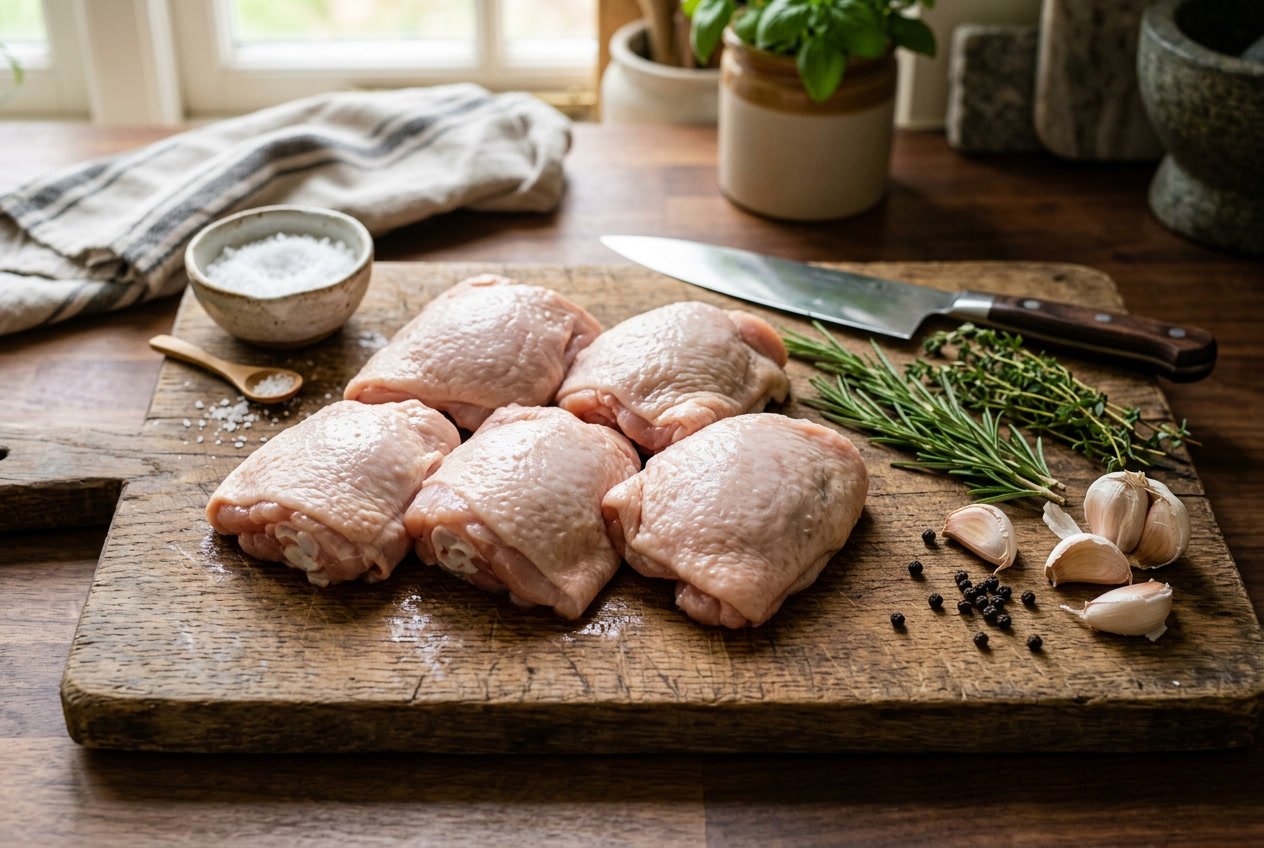
This post explains how different chicken cuts and pricing work, how farms and processing shape supply, and how markets and regional tastes affect what ends up on the shelf.
You’ll also find practical notes on thigh varieties, cooking benefits, and nutrition.
Understanding Chicken Cuts and Pricing
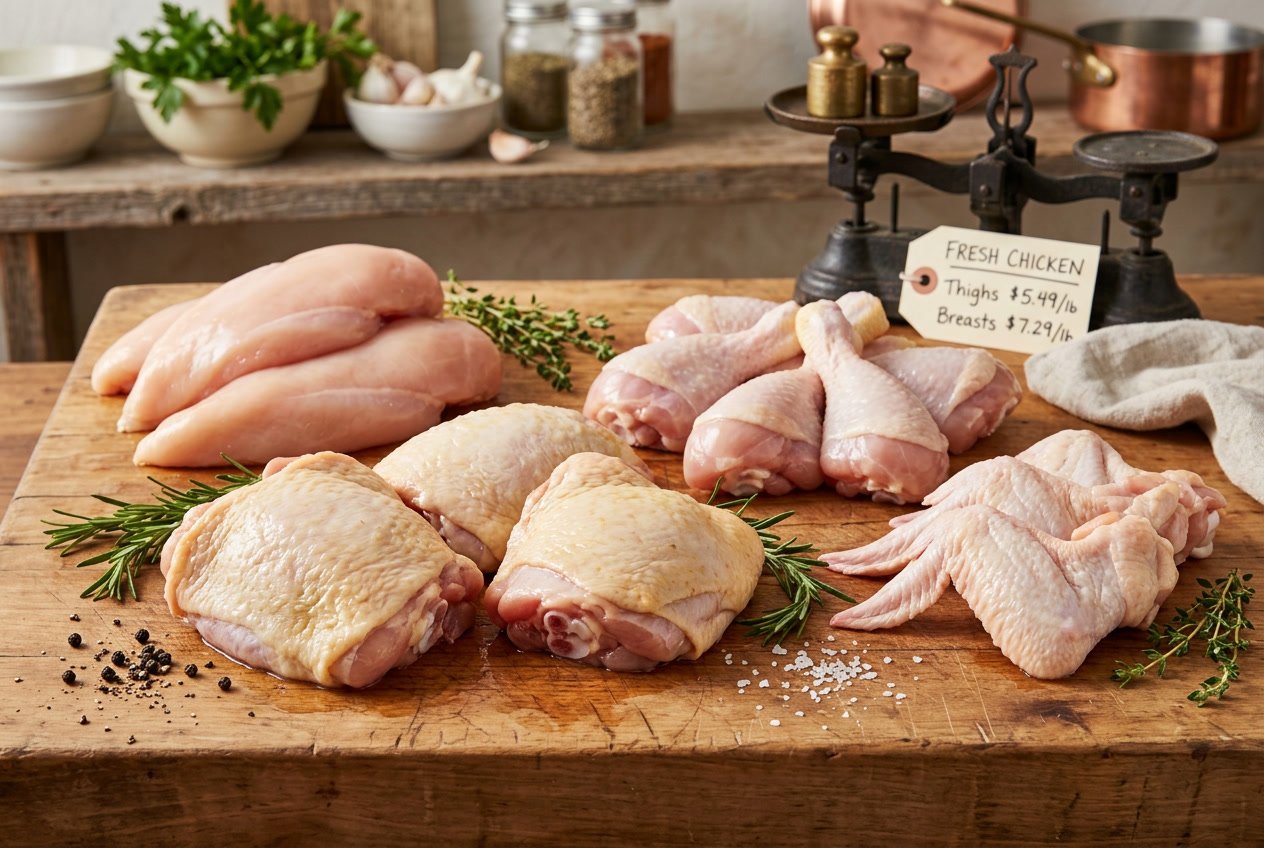
Muscle type, consumer demand, and yield influence price.
The following sections cover dark vs. white meat, how many thighs and breasts come from each bird, and how wings and whole birds affect cost differences.
Difference Between Dark Meat and White Meat
Dark meat comes from muscles used more often, like thighs and drumsticks, and contains more myoglobin and fat.
That higher fat content gives you more flavor and juiciness, but it also changes cooking time and perceived healthiness compared with white meat from the breast.
Retail buyers often view dark meat as less desirable because breasts are leaner and easier to portion for quick meals.
That demand gap leads retailers to discount thighs to move inventory, especially when consumers prefer lean protein for dieting or meal prep.
Nutrition-wise, thighs contain slightly more calories and iron per ounce, while breasts offer less fat and more protein per ounce.
Chicken Thighs vs. Chicken Breasts
A single bird yields two breasts and two thighs, but breast meat makes up a larger proportion of boneless, skinless cuts sold individually.
Processors charge more for boneless, skinless breasts because they remove bone and skin and market them as convenient, lean cuts.
Thighs usually cost less because they’re often sold bone-in or with skin, require more trimming to be boneless, and face lower retail demand.
When thighs are sold boneless/skinless or as organic/free-range, their price can approach or exceed breast prices.
For home cooks, thighs offer more forgiving cooking and stronger flavor, which affects perceived value differently than supermarket pricing.
Role of Chicken Wings and Other Cuts
Wings, drumsticks, and whole chickens influence thigh pricing through supply-and-demand balance.
Wings can command high prices during sports seasons, raising the overall value of certain parts and affecting how processors allocate meat during cutting and packaging.
Whole-chicken sales also matter.
If you buy a whole chicken, thighs are part of the bundle and effectively priced by overall carcass yield.
Processors decide whether to sell whole birds or break them into parts.
Regions that prefer cooking whole birds keep thigh prices stable, while markets that demand boneless breast elevate breast prices.
Seasonal and regional trends—holiday demand, wing-driven spikes, and local preferences—all change what you’ll pay for thighs.
Why Are Chicken Thighs So Cheap?
You pay less for thighs because buying patterns, meat characteristics, and health perceptions push demand and pricing in specific directions.
These forces shape how retailers price thighs compared with breasts and other cuts.
Consumer Preferences and Market Demand
Retailers set prices based on what shoppers choose.
In many markets, shoppers have historically chosen boneless, skinless chicken breasts for quick cooking and convenience.
When demand skews toward breasts, surplus thigh supply puts downward pressure on thigh prices.
Foodservice trends matter too.
Fast-food chains and processed products have favored breast meat for decades, increasing wholesale demand and raising breast prices.
Where home cooking or regional cuisines favor darker meat, thigh prices rise.
But in places where breasts dominate, thighs remain more affordable and are often sold at discounts or in value packs.
Flavor Profile and Texture
Thighs contain more fat and connective tissue than breasts, making them juicier and more flavorful after longer cooking.
That richness benefits stews, braises, and high-heat roasting, but thighs take longer to cook safely and don’t fit every quick recipe.
Chefs prize thighs for depth of flavor, while many shoppers choose breasts for leaner, faster meals.
That difference in typical use helps explain a persistent price gap between the two cuts.
Perceptions of Health and Nutrition
Many shoppers view white meat as the healthier choice because breasts are lower in fat and calories.
Those perceptions influence buying decisions and, by extension, prices.
When shoppers prioritize low-fat options, retailers allocate supply and promotional efforts to breasts, supporting higher prices for that cut.
Nutritionally, thighs offer more iron, zinc, and slightly higher fat-soluble vitamins than breasts.
Still, public messaging about lean protein keeps demand for breasts high, leaving thighs relatively more affordable despite their nutritional benefits.
Production, Processing, and Supply Chain Factors
Chicken thighs cost less because lower per-unit production and processing expenses combine with high-volume supply chains that favor darker meat economics.
Production Costs in the Poultry Industry
You pay for the inputs that go into chicken production: chicks, housing, veterinary care, and feed.
Producers select fast-growing broiler breeds to maximize weight gain on less feed, which lowers the cost per pound of thigh meat.
Poultry production spreads fixed costs—barns, equipment, utilities—across millions of birds.
Those overheads lead to a smaller markup per thigh than per breast because thighs often require less trimming and value-adding.
Regulatory compliance and waste disposal add costs, but large operations spread these expenses more efficiently across total bird output.
Feed and Labor Costs
Feed is the single largest variable cost in poultry production, dominated by corn and soybean meal prices.
Thigh prices respond when corn or soy spikes because feed efficiency directly affects how much it costs to produce each pound of dark meat.
Labor also affects costs at both farm and processing levels.
Deboning and filleting impact breast prices more heavily.
Because bone-in, skin-on thighs require less manual processing, labor-related costs per thigh are typically lower than for boneless breasts.
Processing and Packaging Methods
Processing choices change unit costs and final retail price.
Bone-in, skin-on thighs skip deboning lines and avoid extra slicing, trimming, and packaging steps that boneless breast meat requires.
That reduces processing costs and shortens time on expensive automated lines.
Packaging matters too.
Bulk, tray-pack, and vacuum-sealed products carry different material and labor costs.
Pre-marinated or boneless thighs cost more because added processing and packaging steps increase cost.
Restaurant and export channels often buy thighs in large, minimally processed lots, keeping wholesale prices down.
Economies of Scale in Poultry Production
Scale drives the chicken industry’s pricing power.
Large integrators coordinate breeding, feed supply, processing, and distribution, squeezing unit costs at every stage.
Processors who handle millions of birds weekly achieve small per-bird savings on feed, labor, and processing that add up to substantial price advantages for thighs.
Wholesalers and retailers pass some of those savings on to consumers.
High throughput enables more consistent supply to export markets and foodservice accounts, stabilizing demand for thighs and preventing the price volatility that smaller-scale producers face.
Market Dynamics and Regional Influences
You’ll see price differences based on how much product moves, where it moves to, and when demand peaks.
Supply versus demand, exports, and seasonal shifts shape the retail price you pay for thighs.
Supply and Demand Trends
Local supply gluts lower retail prices for thighs.
When processors finish whole birds, leg quarters and thighs become abundant, pushing wholesale prices down and passing savings to you.
Demand patterns matter too.
If consumers in your market prefer boneless breast meat, thighs attract less premium and stay cheaper.
Production costs set a floor.
Feed, labor, and processing efficiency affect how low suppliers can price thighs without losing margin.
Large-scale processors use economies of scale, often keeping thigh prices below breast prices in supermarket aisles.
Export Markets and Global Preferences
Export demand can raise or lower domestic thigh prices depending on volumes.
When countries like Mexico, China, or parts of Southeast Asia import large quantities of dark meat, U.S. exporters send thighs offshore, tightening domestic supply and nudging prices upward.
Weak export demand leaves more thighs available at home.
Your regional price reflects that balance.
Trade policies, tariffs, or sudden import bans can quickly change the direction, so markets that rely heavily on exports show more price volatility.
Cultural preferences influence which cuts export most.
In markets that favor darker meat, exporters secure higher prices for thighs, while regions preferring white meat keep domestic thigh supplies plentiful and cheap.
Seasonality and Pricing
Seasonal demand swings affect thigh pricing on a predictable cycle.
Holidays, grilling season, and specific cultural festivals spike local demand for certain cuts.
Barbecue season raises overall poultry demand, but breasts are often more popular for grilling, so thigh prices can remain lower.
Production timing matters too.
Broiler growth cycles and processing schedules create periodic surpluses.
During peak processing months, you’ll often find lower advertised thigh prices and bulk promotions.
Weather and feed crop yields change costs as well.
Poor corn or soybean harvests raise feed costs, lifting wholesale prices and eventually retail prices.
Thigh prices move with these seasonal supply-cost signals more than with long-term demand shifts.
Types of Chicken Thighs and Farming Methods
You’ll find thighs sold in different cuts and raised under varied farming systems.
Price, flavor, and cooking behavior change depending on whether the thigh is bone-in or boneless and whether it comes from conventional, free-range, or organic production.
Bone-In vs. Boneless Thighs
Bone-in thighs include the femur and often the skin.
They cost less per pound than boneless cuts because deboning adds labor and yield loss.
The bone also improves flavor and moisture during cooking, so bone-in thighs handle longer, slower methods without drying out.
Boneless, skinless thighs save prep time and take marinades faster, which helps for quick meals or portion-controlled pieces.
Expect a higher retail price and slightly lower weight-per-piece because some meat is removed during processing.
For braising, roasting, or slow cooking, bone-in thighs offer the best value.
If you want convenience and uniform portions for stir-fries or kebabs, choose boneless.
Free-Range and Organic Chicken Thighs
Free-range thighs come from birds that had some outdoor access.
These thighs typically cost more because farmers need more land, manage lower bird density, and track compliance with animal welfare standards.
Flavor differences are subtle, but some cooks prefer the firmer texture and slightly stronger taste of free-range chicken thighs.
Organic thighs follow stricter rules: organic feed, no routine antibiotics, and certified welfare practices.
That raises production costs and retail price.
If you value reduced chemical inputs or specific welfare standards, organic or certified free-range thighs deliver that guarantee.
Otherwise, conventional thighs usually offer the lowest price per pound.
Culinary Uses and Cooking Benefits
Chicken thighs give you rich flavor, forgiving texture, and versatile cooking options across grills, stovetops, ovens, and commercial kitchens.
Their higher fat content keeps meat moist during longer cooking, and bone-in pieces add depth to sauces and stocks.
Grilling and Braising Chicken Thighs
When you grill thighs, the skin and fat render and crisp, producing concentrated savory flavors you won’t get from breast meat.
Use bone-in, skin-on thighs for direct heat char and finish over a cooler zone to avoid flare-ups.
Cook to an internal 165°F (74°C) and rest briefly for carryover juiciness.
For braising, sear thighs first to build fond, then simmer in a flavorful liquid—stock, wine, or tomato-based sauce—at low heat until collagen breaks down.
Braised thighs tolerate longer cook times, becoming tender while enriching the braising liquid for sauces or serving over grains.
Chicken Thighs in Restaurants and Culinary Trends
You’ll find thighs on many restaurant menus because they balance cost and flavor, letting chefs deliver bold-tasting, profitable dishes.
Restaurants often use thighs in braises, rotisseries, and grilled plates where fat content yields consistent results.
Chefs highlight thighs in global preparations like Korean, Middle Eastern, and Southern U.S. styles, and diners now expect richer, well-seasoned profiles.
That trend helps kitchens rotate thighs into specials and value dishes without sacrificing quality.
Role in Fried Chicken and Popular Dishes
Thighs play a central role in fried chicken because the extra fat resists drying during high-heat frying. This gives you a moist interior and crisp crust.
Brining, dredging with seasoned flour, or using a buttermilk batter all work well because thighs remain forgiving if frying times vary.
Popular dishes featuring thighs include stews, curries, chicken marsala, and grilled skewers. You can substitute thighs for breasts in many recipes, but adjust cook time and seasoning.
Thighs contribute deeper flavor and better texture in each application.
Nutritional Content and Health Considerations
Chicken thighs provide more fat and iron than breasts. They offer higher myoglobin levels that influence flavor and color.
Food-safety and animal-welfare considerations can affect your choices and cooking methods.
Myoglobin and Iron Content in Dark Meat
Thighs contain more myoglobin, the oxygen-binding pigment that gives the meat its darker color and richer flavor.
Higher myoglobin correlates with higher heme iron levels. A typical 3-ounce cooked thigh delivers more iron than the same portion of breast.
If you rely on dietary iron, thighs are a practical option because heme iron absorbs better than non-heme iron from plant sources.
Keep portion sizes and total saturated-fat intake in mind. Thighs contain more fat than breasts, so balance them with vegetables and whole grains.
Health Benefits and Food Safety
Thighs supply protein, B vitamins (notably B12 and niacin), zinc, and heme iron. These nutrients support muscle maintenance and red blood cell production.
The higher fat content can improve satiety and carry fat-soluble flavors and nutrients during cooking.
Cook thighs to an internal temperature of 165°F (74°C) measured in the thickest part to kill pathogens like Salmonella.
Use separate cutting boards for raw poultry to avoid cross-contamination. Refrigerate within two hours and store at 40°F (4°C) or below to limit bacterial growth.
Animal Welfare and Sustainability
Production methods influence both the price and ethical footprint of thighs.
Conventional intensive systems often lower cost. These systems raise concerns about stocking density, enrichment, and antibiotic use, which affect animal welfare and potentially your health.
If you prioritize welfare or lower environmental impact, look for labels such as “pasture-raised,” “certified humane,” or third-party audited welfare standards.
Sustainability depends on feed efficiency, land use, and transport. Raised-for-meat broilers usually have lower greenhouse-gas intensity per pound of protein than many red meats. Buying local, higher-welfare options may raise cost while improving welfare and traceability.


