
Why Are Chicken Thighs Juicy? Cooking Science & Pro Tips
You want chicken that stays juicy no matter the cooking method.
Chicken thighs stay moist because they contain more fat and connective tissue than breasts. When you cook them slowly, those tissues break down into gelatin, which keeps the meat tender and flavorful.
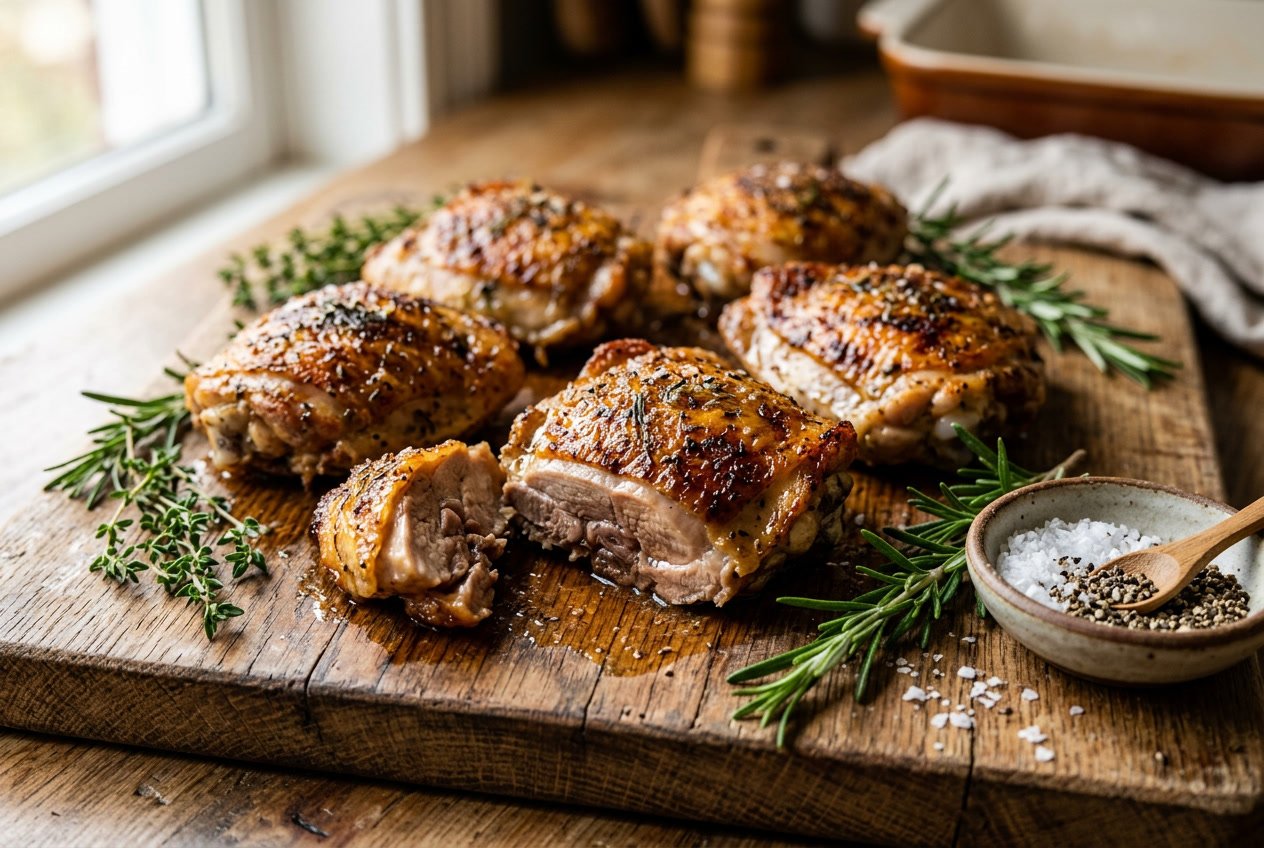
You’ll learn the science behind that melt-in-your-mouth texture. You’ll also see how bone-in or skin-on choices affect juiciness and which techniques—low-and-slow roasting, braising, grilling with indirect heat, or sous-vide—deliver consistent results.
Expect practical tips on timing, temperatures, and flavor boosters so your next batch of thighs comes out succulent every time.
The Science Behind Juicy Chicken Thighs
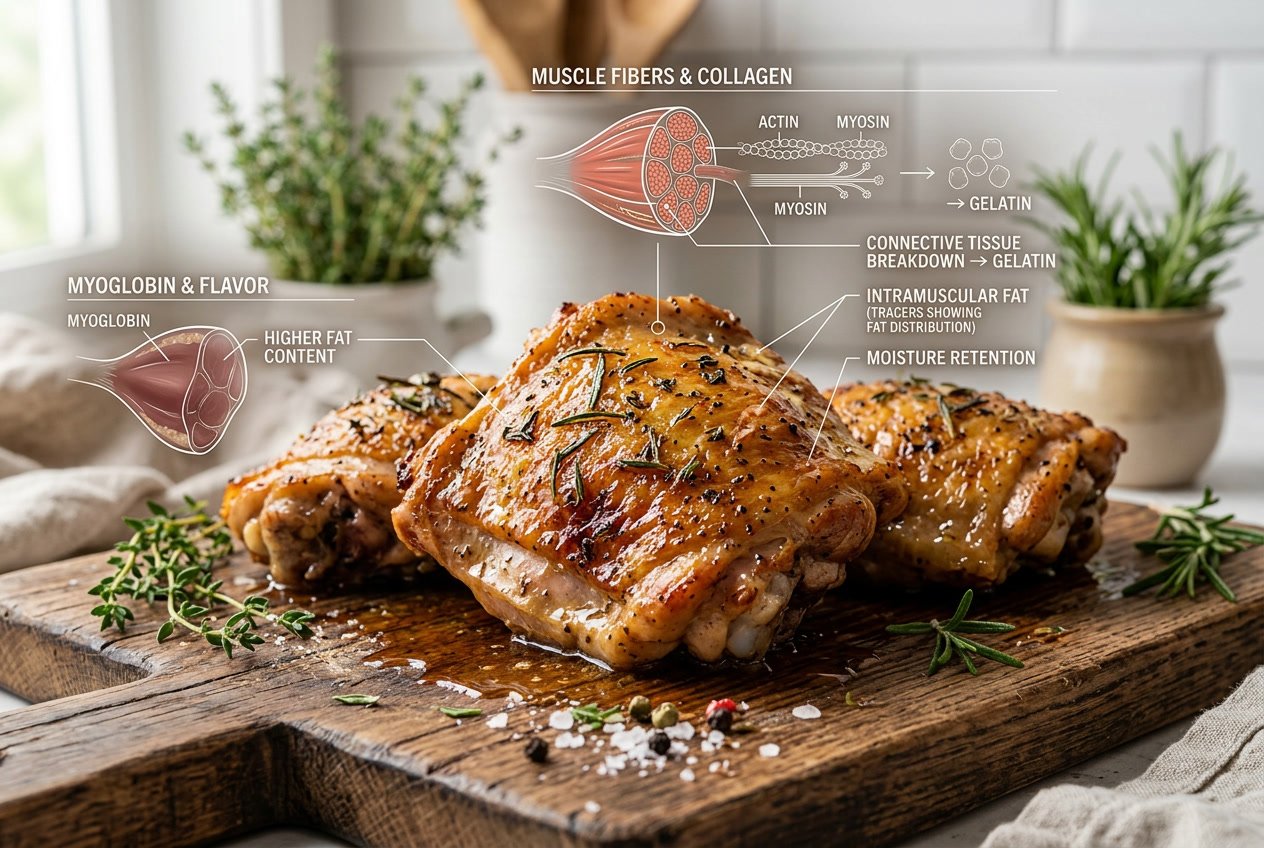
Three main physical reasons keep thighs juicy: higher intramuscular fat, more connective tissue that converts to gelatin with heat, and a different muscle structure than breast meat.
Each factor contributes to tenderness and resilience during cooking.
Higher Fat Content and Its Role
Chicken thighs contain substantially more intramuscular fat than breasts. That fat melts during cooking and lubricates muscle fibers, reducing moisture loss and carrying flavor into the meat.
Fat insulates muscle from direct heat. When you roast or grill thighs, the melting fat slows moisture evaporation from the interior, so the meat tolerates higher final temperatures without drying out.
Fat-soluble flavor compounds concentrate in the rendered fat, enhancing perceived juiciness. For practical cooking, leave skin on for more protection and render fat slowly at moderate heat.
That preserves mouthfeel and prevents the leathery texture that comes when lean meat dries out.
Connective Tissue, Collagen, and Gelatin
Thighs have more connective tissue and collagen than breasts. Collagen breaks down into gelatin at sustained temperatures above roughly 160–170°F (71–77°C), given enough time.
Gelatin binds water and gives a silky texture as it dissolves into the cooking juices. Slow, moist methods—braises, stews, or low-and-slow roasting—convert collagen to gelatin without over-tightening muscle fibers.
If you cook thighs quickly at very high heat, you get some gelatin from the skin and fat but less collagen conversion inside. Pick your method to match the texture you want.
Dark Meat vs. White Meat Structure
Dark meat muscles in thighs are built for sustained activity. They contain more myoglobin, mitochondria, and smaller muscle fibers than breast meat.
That cellular structure holds more water and resists the rapid protein tightening that dries out white meat. Myoglobin adds color and supports oxygen use in the muscle, which correlates with those structural differences.
When proteins in white breast meat tighten around 150–165°F (65–74°C), they expel water quickly. Thigh fibers tighten more slowly and are cushioned by fat and gelatin as you cook.
Thighs give a larger margin for error in temperature and timing. They remain juicy across a wider range of cooking methods, making dark meat a reliable choice when moisture matters.
Bone-In vs. Boneless Chicken Thighs
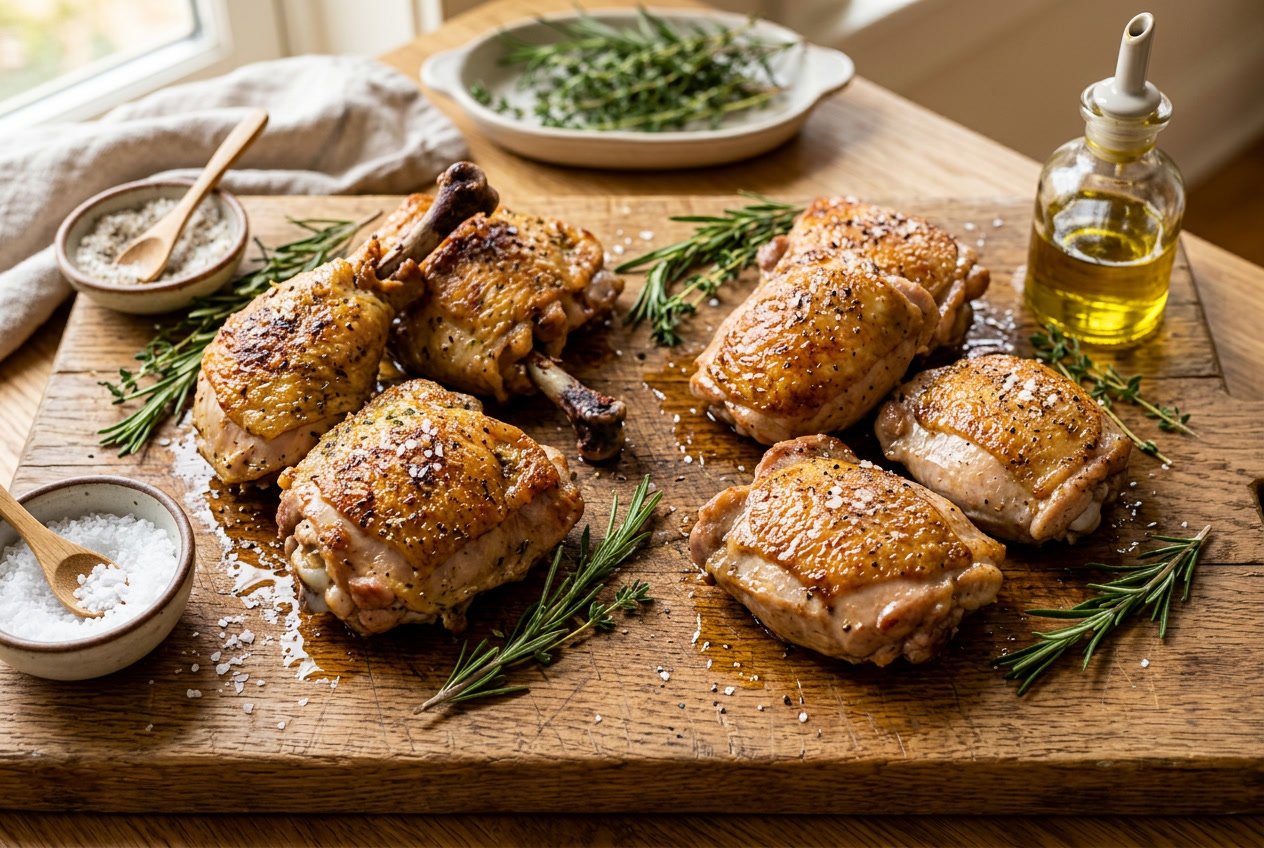
Bone-in thighs usually hold more moisture and develop deeper flavor. Boneless thighs cook faster and behave more predictably.
Skin presence, cooking method, and temperature control all determine how juicy the finished thigh will be.
Moisture Retention in Bone-In Thighs
Bone-in chicken thighs retain heat differently because the bone slows heat transfer through the meat. That slower, uneven heating helps connective tissue break down gradually, which releases gelatin and keeps the flesh succulent.
If the skin remains, it protects the meat from direct heat and reduces surface evaporation. Even skinless bone-in thighs benefit from the bone’s thermal mass.
You’ll notice less drying at moderate oven or grill temperatures compared with similarly cooked boneless pieces. For best results, cook bone-in thighs to 165–175°F (74–79°C) and allow a short rest.
Resting lets juices redistribute, so when you cut into the meat it stays moist.
Cooking Differences for Boneless Thighs
Boneless chicken thighs lack the bone’s heat-buffering effect, so they reach target temperature faster and are more prone to overcooking. Shorten cook times or use lower heat to preserve juiciness.
Boneless, skinless chicken thighs respond well to quick, high-heat methods like pan-searing followed by a brief oven finish, or to braising and saucing where moisture is maintained.
They allow even seasoning penetration and faster marinade uptake because there’s no bone barrier. Monitor internal temperature closely and pull boneless thighs at about 160–165°F (71–74°C); carryover will finish the cook.
Use a thermometer and rest briefly to keep the meat tender and prevent the dry, stringy texture that overcooking produces.
Skin-On vs. Skinless: Impact on Juiciness
Skin-on thighs trap fat and protect the meat from direct heat, which helps retain moisture and adds flavor. Skinless thighs require technique to keep them from drying out, but they can still be very juicy when cooked correctly.
Benefits of Skin-On Thighs
Keeping the skin on gives you a built-in fat layer that renders during cooking and bastes the meat. That rendered fat prevents the outer proteins from tightening too quickly, so the interior stays tender and moist.
Crisping the skin concentrates flavor and creates a barrier that slows evaporation. If you roast at 425°F (220°C) or sear skin-side down in a hot skillet, you get golden, crunchy skin and meat that stays succulent beneath it.
Bones paired with skin further improve juiciness. The bone moderates heat transfer and the connective tissue around it breaks down into gelatin, which boosts perceived moisture and mouthfeel.
Techniques for Skinless Thighs
When you remove the skin, add moisture and reduce direct drying. Brine in a 3–5% salt solution for 30 minutes to 2 hours to increase water retention and seasoning through the meat.
Use wet cooking methods like braising, poaching, or cooking in a sauce to keep the muscle fibers hydrated. If roasting or pan-searing, start with a quick hot sear and finish at moderate heat, or baste frequently with butter, oil, or pan juices.
Apply a light coating of oil and a simple dry brine (salt or salt with sugar) and rest the thighs uncovered in the fridge for a few hours to improve texture. Use a meat thermometer and pull thighs at 165–170°F (74–77°C) for juicy results without safety risk.
Key Cooking Techniques for Juicy Chicken Thighs
Use controlled heat, measure internal temperature, and let the thighs rest so connective tissue becomes gelatin and juices redistribute. These steps help you cook chicken thighs that are tender, moist, and reliably safe.
Best Internal Temperature Range
Aim for a higher internal temperature than you might for breast meat. Cook bone-in, skin-on thighs to 185–195°F (85–90°C) when you want fall-apart tenderness.
175°F (79°C) gives a firmer but still juicy bite. Higher temps break down collagen into gelatin, which moistens the meat.
If you prefer a sliceable texture, target 170–175°F and finish with a brief high-heat sear to crisp skin without over-drying the interior. For quick weeknight cooking, roast at 400°F and pull at 175–180°F, then rest.
For braising or slow-roasting, use 300–325°F and allow the thighs to reach the higher end of the range gradually.
Importance of Resting and Carryover Heat
Resting is not optional. Carryover heat raises the internal temperature by 5–10°F after you remove thighs from heat.
That increase finishes collagen breakdown and evens out temperature gradients from skin to bone. Rest on a warm plate or cutting board for 8–10 minutes for individual thighs, 12–15 minutes for a larger batch.
Tent loosely with foil to retain heat but avoid sealing; trapped steam softens skin and undermines crispness. If you plan to crisp skin after resting, do a short blast under a hot broiler or a quick skillet sear.
That order preserves moistness while delivering a crunchy exterior.
Using a Meat Thermometer
Use a probe or instant-read thermometer and insert it into the thickest part of the thigh, avoiding contact with bone. Bone gives falsely high readings.
Place the probe parallel to the bone shaft for best accuracy. Check temperature near the end of cooking rather than continuously, to avoid heat loss.
For oven or grill cooking, leave the probe in during final minutes if the device allows. For sous-vide, set target temperature to the desired doneness and finish with a sear.
Calibrate or compare your thermometer occasionally against boiling water or an ice bath. Consistent thermometer use removes guesswork and helps you reliably cook chicken thighs that are both safe and juicy.
Best Methods: Baking, Grilling, and Slow Cooking
You’ll get juicy thighs by controlling heat, moisture, and resting time. Use a rimmed baking sheet for oven work, indirect heat for grill cooking, and low-and-slow moisture in a slow cooker to break down collagen.
Baked Chicken Thighs on a Rimmed Baking Sheet
Preheat the oven to 400°F for skin-on thighs or 375°F for bone-in to balance crisping and internal cooking. Pat the skin dry, season, and space thighs on a rimmed baking sheet so air circulates and moisture doesn’t collect beneath them.
Line the sheet with foil or parchment for easy cleanup and place a wire rack on the sheet if you want maximum crispness. The rack elevates thighs so hot air crisps the skin evenly.
Bake until the thickest part reaches 175–185°F for tender meat with rendered fat. Rest the thighs 5–10 minutes on the sheet after removing from the oven so juices redistribute.
Grilling for Maximum Juiciness
Set up two-zone heat on the grill: medium-high direct heat for searing and cooler indirect heat for finishing. Sear skin-side down 3–5 minutes to render fat and create color, then move thighs to the cooler zone and close the lid to raise internal temp slowly.
Cook to 175–190°F depending on how fall-apart you want the meat. Aim higher if you plan to shred for tacos or sandwiches.
Keep the lid closed as much as possible to maintain steady heat. Use a probe thermometer through the thickest part (avoid bone) and rest the grilled thighs 5 minutes before serving.
Slow Cooker and Pulled Chicken Techniques
Brown the thighs briefly in a skillet first if you want better flavor and less greasy finish. Then transfer to a slow cooker with ½–1 cup of liquid (broth, salsa, or barbecue sauce).
Cook on low 4–6 hours or high 2–3 hours until the meat reaches 190–200°F and pulls apart easily. The long, moist cook time converts collagen to gelatin, giving you silky, juicy pulled chicken perfect for sandwiches or enchiladas.
Shred with two forks in the cooking liquid to retain moisture, then briefly simmer shredded meat in sauce to concentrate flavor.
Seasoning, Marinades, and Other Flavor Boosters
Salt, acid, fat, and aromatics work together to enhance tenderness, lock in juices, and build flavor. Use measured amounts and timed applications so your thighs stay moist and taste distinct.
Effective Marinades for Moisture
Use a balance of acid, oil, and salt to both tenderize and preserve juiciness. Aim for a ratio near 1 part acid (lemon, vinegar, yogurt) to 3 parts oil, plus 1–2% salt by weight of the chicken for brine-like effects.
Marinade times: 30 minutes for thin pieces, 2–6 hours for bone-in thighs, and up to 12 hours for intense flavor. Avoid overnight acidic marinades to prevent mushy texture.
Include enzymes (pineapple, papaya) sparingly—30–90 minutes—because they act fast. Always marinate in the fridge and use a zipper bag or shallow container to ensure even contact.
Pat thighs dry before searing or roasting to encourage browning while keeping interior moist. Reserve some marinade (boil before using) if you plan to glaze during cooking.
Seasoned Chicken Thighs Preparation
Season in layers: first brine or salt the meat, then apply a spice rub, and finish with a light oil coating before cooking. If you dry-brine, sprinkle kosher salt 30–60 minutes ahead for deeper seasoning and better protein interaction that improves moisture retention.
Build a rub with garlic powder, smoked paprika, onion powder, and black pepper for versatile results. Apply 1–2 teaspoons of rub per pound of thighs, massaging into the skin and under it where possible.
For skinless thighs, a brief rest after seasoning lets flavors penetrate. When cooking, use medium-high heat to render fat and crisp skin without overcooking the interior.
Monitor internal temperature (165–170°F / 74–77°C for thighs) to avoid drying.
Essential Ingredients That Help Juiciness
Salt is critical for moisture through osmosis and protein modification. Use kosher salt and measure 1–2% of meat weight for brines or ½–1 tsp per pound for quick seasoning.
Lemon, vinegar, yogurt, or buttermilk tenderize and add brightness. Limit contact time to prevent breakdown; dairy is gentler and can be used longer for buttermilk marinades.
Olive, avocado, or sesame oil carries fat-soluble flavors and helps conduct heat. Use 1–3 tbsp per pound in marinades or brush on before roasting.
Garlic, rosemary, thyme, and cilantro add layered flavor without affecting moisture. Add delicate herbs late to maintain freshness.


