
Who to Cook Chicken Thighs: Best Methods, Tips, and Recipes
You want chicken thighs that stay juicy and deliver bold flavor every time, whether you’re grilling, baking, pan-searing, or using a pressure cooker.
Aim for a slightly higher finish temperature on bone-in thighs (around 175°F–185°F) to convert collagen into gelatin for silkier, more tender dark meat. Pat the skin dry and salt ahead of time for crisp, flavorful skin.
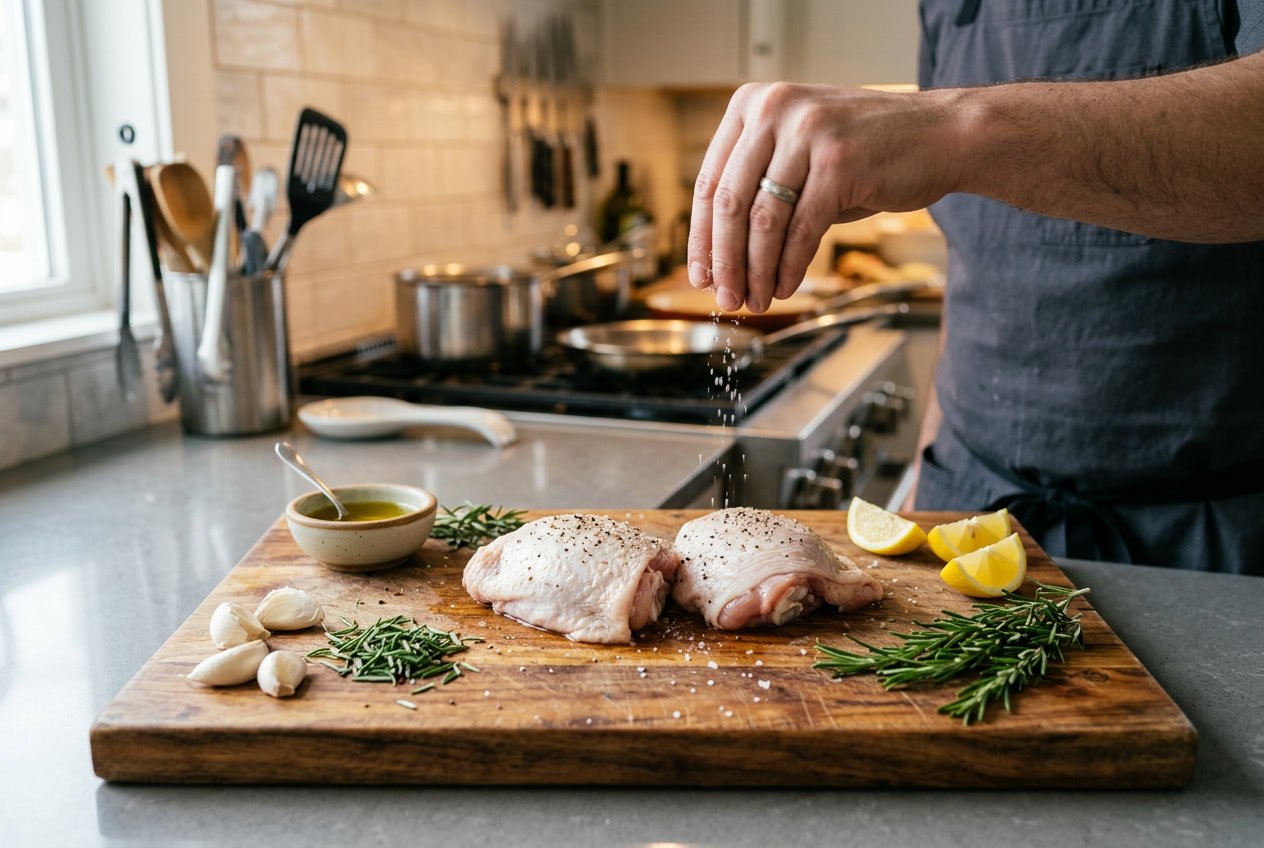
This guide explains the types of chicken thighs, essential prep, and the best cooking methods. You can choose oven, broil, grill, skillet, or slow- and pressure-cooker techniques.
You’ll also find practical seasoning and flavor-pairing ideas to match each method, making dinner faster and more reliable.
Types of Chicken Thighs
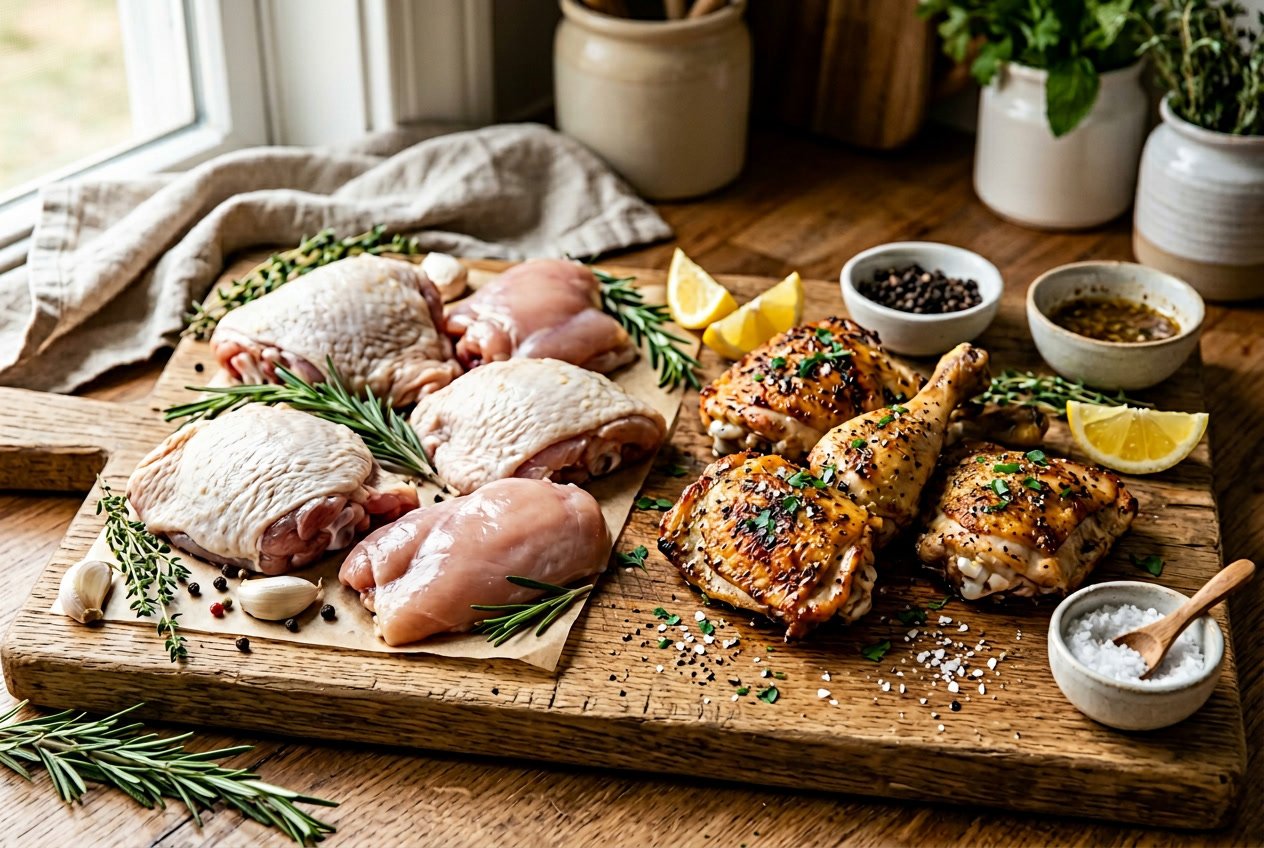
Choose thighs based on texture goals, cooking method, and how much hands-on time you want. Fat content and bone presence change cooking time, mouthfeel, and how the meat responds to high heat or long braises.
Bone-In Skin-On Chicken Thighs
Bone-in, skin-on chicken thighs give you the most flavor and a forgiving texture. The bone slows heat transfer, so these take longer to reach target internal temperature; plan for 35–45 minutes at 400°F in the oven.
The skin and subcutaneous fat render during cooking and baste the meat, which helps convert collagen into gelatin between 175°F–185°F. This produces a silkier, more succulent bite than pulling at 165°F.
For crisp skin, pat dry, salt ahead, and use high heat or a broil finish. Use a wire rack over a sheet pan or a two-zone grill to avoid flare-ups.
These thighs work best for roasting, grilling, braising, and long-pressure-cooker recipes where you want depth of flavor.
Boneless Skinless Chicken Thighs
Boneless, skinless chicken thighs cook faster and give you leaner, more uniform pieces. Because they lack the protective bone and skin, aim for lower pull temperatures—165°F is ideal—to avoid drying the meat.
Boneless thighs take roughly 16–25 minutes in an air fryer or 20–25 minutes at 400°F in the oven, depending on thickness. They absorb marinades quickly and shred easily after short braises or pressure cooking.
Use high heat sears for quick dinners or toss in sauces after cooking. These are best when you need fast, tender meat for tacos, stir-fries, or weeknight bowls.
Bone-In Skinless Chicken Thighs
Bone-in skinless chicken thighs sit between the two extremes: they keep some of the bone’s heat regulation and flavor boost while omitting the skin’s fat and crisp factor. Expect cooking times close to bone-in, skin-on pieces but watch for drier edges since there’s no skin to protect the surface.
Pulling to 175°F gives connective tissue time to break down, yielding tender meat without excess chew. Use braising, slow cooking, or covered roasting to retain moisture.
These thighs shine in stews, curries, and sauces where the bone enriches the cooking liquid and you don’t need crispy skin. Trim excess fat if you prefer a leaner final dish.
Essential Prep for Chicken Thighs
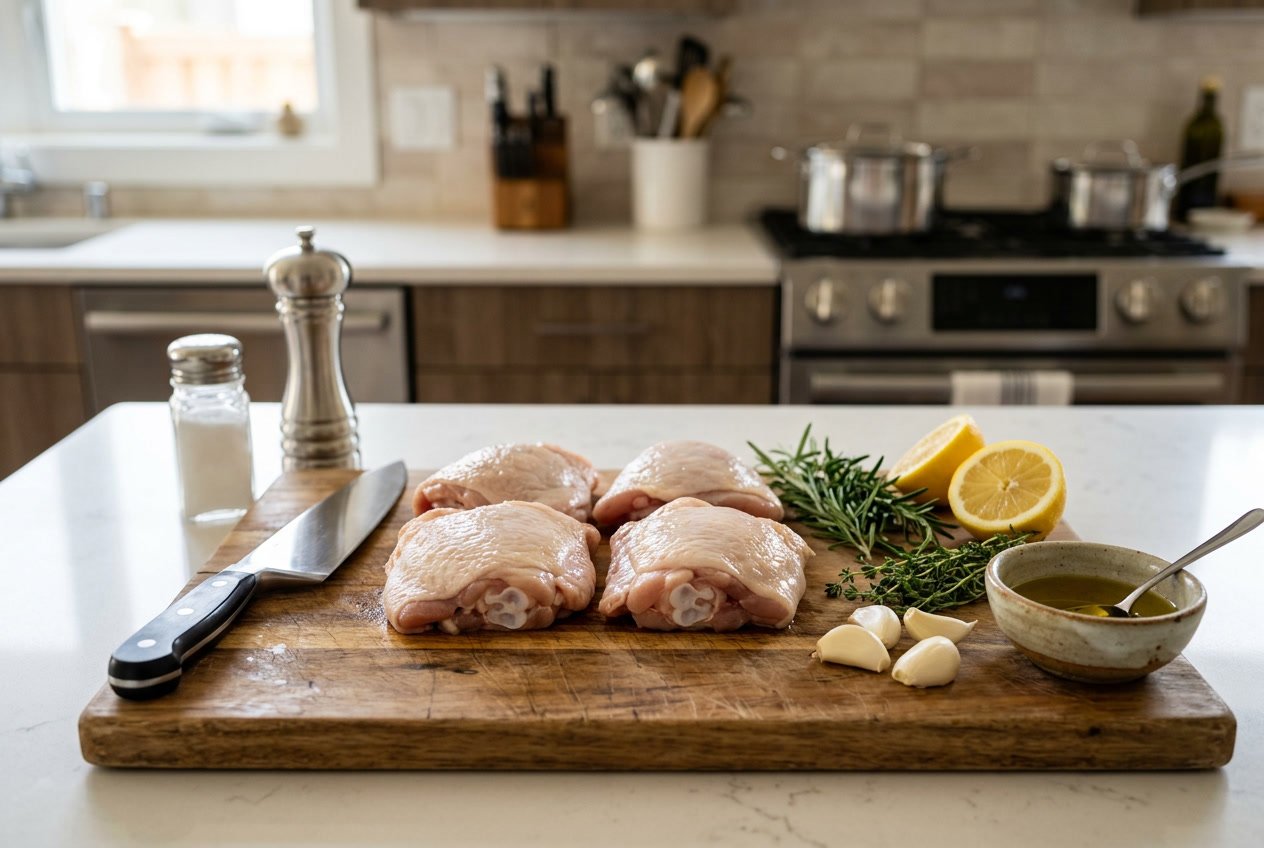
Trim excess fat, decide whether to keep the skin, choose a marinade or dry seasoning, and make sure the surface is dry for proper browning and crisping. These steps take 10–30 minutes and directly affect texture and flavor.
Trimming and Removing Skin
Trim visible pockets of fat and loose flaps of skin with kitchen shears or a sharp knife. Remove the thin white membrane and any hard bits near the bone; they can char and give a chewy texture.
If you want less fat, remove the skin entirely, but expect a drier exterior—plan for a sauce or extra oil when cooking. Keep skin on for maximum moisture and crisping; trim only ragged edges so the skin lies flat.
For bone-in thighs, trim the small “oyster” flap if it interferes with even cooking. Always work on a clean cutting board and pat trimmed pieces dry before seasoning.
Marinating and Flavor Infusion
Choose a marinade that balances oil, acid, salt, and aromatics. A basic mix: 2 tbsp olive oil, 1 tbsp lemon or vinegar, 1 tsp salt per pound, 1 tsp garlic powder, 1 tsp onion powder, and 1 tsp paprika.
Add fresh herbs, soy sauce, or yogurt depending on the cuisine. Marinate in a sealed container or zip-top bag for 30 minutes to 24 hours.
Short rests (30–60 minutes) boost surface flavor; overnight softens and penetrates deeper. If you prefer a dry rub, apply spices directly after patting dry so the blend adheres well.
Patting Dry for Crispiness
Pat the thighs thoroughly with paper towels right before oil and seasoning. Moisture on the surface creates steam that prevents skin from crisping and inhibits browning.
Use a second round of towels if needed until the skin or meat surface feels dry. After drying, lightly brush skin with olive oil to help spices adhere and to promote even browning.
Season immediately with garlic powder, onion powder, paprika, salt, and pepper; press the rub into the surface for a better crust. Let the thighs sit 15–20 minutes at room temperature after seasoning for more even cooking if you’ll bake or sear.
How to Bake Chicken Thighs
Season simply, set the oven temperature based on whether the thighs are bone-in or boneless, and use an instant-read thermometer to confirm doneness. Timing, skin contact with the pan, and a brief broil at the end determine juicy meat and crisp skin.
Baking Bone-In Chicken Thighs
Pat the thighs dry and season both sides with salt, pepper, garlic powder, and a bit of oil. Arrange bone-side down in a single layer on a rimmed baking sheet or shallow roasting pan so the skin faces up and air circulates around each piece.
Preheat the oven to 375–400°F (190–200°C). Bake bone-in, skin-on thighs about 35–45 minutes depending on size; start checking at 30 minutes.
Use an instant-read thermometer inserted near the bone and target 165°F (74°C) for safety. Remove and let rest 5–10 minutes.
If pan juices accumulate, spoon them over the thighs during resting for extra flavor. For gravy, reserve drippings, skim fat if desired, and deglaze the pan with stock or wine.
Baking Boneless Chicken Thighs
Trim excess fat and pat thighs dry to promote even browning. Cut thicker pieces to uniform thickness or pound gently so all pieces cook at the same rate.
Preheat oven to 400–425°F (200–220°C) for quicker cooking and better sear. Boneless, skinless thighs typically take 18–25 minutes depending on thickness.
Check internal temperature in the thickest part and remove at 165°F (74°C). Let rest 3–5 minutes before slicing to keep juices locked in.
Consider baking boneless thighs in a shallow dish with a light sauce or marinade. Because they lack skin, finish under the broiler briefly or baste with butter to add surface richness.
Achieving Crispy Baked Chicken Thighs
Start with very dry skin; pat thoroughly with paper towels and let sit uncovered in the fridge for 30–60 minutes if time allows. Dry skin crisps more reliably in the oven.
Use high, steady heat: 400°F (200°C) or slightly higher for better skin crisping. Place thighs on a wire rack set over a baking sheet so hot air surrounds the skin.
Brush or rub a small amount of oil on the skin and season just before baking. If skin isn’t crisp enough after the main bake, switch the oven to broil for 2–4 minutes while watching closely.
Aim for an internal temperature of 165°F (74°C) while achieving a brown, crackly skin.
Oven and Broil Methods
You can choose a slower, even roast for fall-apart texture or a fast, high-heat broil for crispy skin and char. Both methods work well with bone-in or boneless thighs.
Oven Roasted Chicken Thighs
Preheat the oven to 400–425°F (200–220°C). Pat thighs dry, season or rub with oil and herbs, and arrange skin-side up on a rimmed baking sheet or in a roasting pan with a wire rack.
Roast bone-in, skin-on thighs 30–40 minutes until the internal temperature reaches 165°F (74°C) and juices run clear. Boneless thighs typically finish in 20–25 minutes.
Check near the minimum time to avoid overcooking. Rest 5 minutes before serving to let juices redistribute.
Rotate the pan halfway through for even browning and avoid overcrowding. Use a thermometer and tent loosely with foil only if the skin is browning too quickly.
Broiled Chicken Thighs
Set your oven to broil and position the rack 4–6 inches from the heating element. Use a broiler pan or a wire rack over a baking sheet to catch drippings and promote airflow under the skin.
Brush thighs lightly with a high-smoke-point oil and season. Broil skin-side up 5–8 minutes until the skin crisps and browns, then flip and broil an additional 5–8 minutes until the internal temperature reads 165°F (74°C).
Watch closely; broiling can go from browned to burnt in minutes. If thighs are thick, start them on a lower oven temperature (375°F / 190°C) for 10–12 minutes, then finish under the broiler for 3–6 minutes to crisp the surface without drying the interior.
How to Grill Chicken Thighs
Grill the thighs over a hot sear to crisp the skin, then finish them away from direct flame to cook through without charring. Use a meat thermometer and rest the thighs briefly before serving.
Direct and Indirect Grilling Techniques
Preheat your gas grill to medium-high (about 375–400°F). Oil the grates lightly to prevent sticking.
Place skin-side down over direct heat for 4–6 minutes to render fat and develop a golden crust. Avoid flipping too often; let the skin set.
After searing, move the thighs to the cooler side for indirect heat. Close the lid and cook until the internal temperature approaches 160–165°F.
This two-zone method—direct for sear, indirect for finish—gives crisp skin without burning and prevents the interior from drying. If you use boneless thighs, reduce sear time by a minute or two and watch for flare-ups.
For bone-in thighs, allow extra time over indirect heat because the bone slows cooking.
Timing and Doneness on the Grill
Aim for a final internal temperature of 165°F (74°C) measured in the thickest part without touching bone. Expect total cook time of roughly 20–25 minutes: about 8–10 minutes searing, then 12–17 minutes over indirect heat depending on thickness.
Check doneness with an instant-read thermometer rather than by color. If thighs reach 160°F, remove them and rest 5 minutes; carryover heat will bring them to 165°F.
If you use a sugary sauce, apply it during the last 3–5 minutes of cooking to avoid burning. Keep spacing between pieces on the grill for even air circulation and consistent cooking.
Other Cooking Methods for Chicken Thighs
These techniques prioritize texture and timing. Use high, dry heat for crisp skin, hot oil for a crunchy crust, and low, moist heat for tender, falling-apart meat.
Air Fryer Chicken Thighs
Pat thighs very dry and season well; moisture prevents crisping. Preheat the air fryer to 400°F.
Arrange thighs skin-side up in a single layer with at least 1 inch between pieces so air can circulate. Cook times: bone-in skin-on 22–28 minutes, boneless 16–20 minutes, flipping once at about two-thirds time for even browning.
Use an instant-read thermometer: boneless can be pulled at 165°F; bone-in tastes best at 175°F. Don’t overcrowd and work in batches if needed.
For extra-crispy skin, salt the thighs and refrigerate uncovered for an hour before cooking. Finish with a 2–3 minute blast at the highest setting if needed.
Frying Chicken Thighs
Choose a neutral oil with a high smoke point, such as peanut, canola, or vegetable. Heat the oil to 350–365°F and keep it at that range to prevent a greasy crust.
Dredge thighs in seasoned flour or batter. Fry bone-in pieces for 12–15 minutes and boneless for 8–10, turning once.
Drain the chicken on a wire rack to keep the crust crisp.
For a tender interior with a crisp exterior, quickly shallow-fry the thighs to add color, then finish them in a 350°F oven until the internal temperature reaches 175°F for bone-in or 165°F for boneless.
Braised Chicken Thighs
Braising uses low heat, liquid, and time to turn collagen into gelatin for tender meat. Brown thighs skin-side down to build flavor, then remove excess fat and add aromatics like onions, garlic, and herbs.
Deglaze the pan with wine, stock, or both until the liquid comes one-third to halfway up the thighs. Cover and simmer gently on the stove or in a 325°F oven for 35–50 minutes, depending on size.
Reduce the braising liquid to concentrate flavor and spoon it over the thighs. Cook toward the upper end of the time range and test with a fork for fall-apart tenderness.
Slow Cooker and Instant Pot Chicken Thighs
Use a slow cooker for hands-off cooking. Place bone-in thighs with aromatics and ½–1 cup liquid.
Cook on low for 6–7 hours or high for 3–4 hours. The meat will shred easily and stay moist.
For faster results, use an Instant Pot. Cook on high pressure for 10–12 minutes with a natural release for tender thighs.
Add ¾ cup stock or sauce and avoid overfilling. Brown the skin first in sauté mode if you want color, then pressure-cook and briefly broil to crisp the skin.
If you want texture on the outside, finish the thighs under a broiler or in a hot pan.
Best Seasonings and Flavor Pairings
Select seasonings that complement the richness of chicken thighs. Use savory herbs, warm spices, and an acid or fat for balance.
Match the intensity of your spice mix to the cooking method so flavors develop without burning.
Classic Herb and Spice Blends
Use blends that layer well and don’t overpower the meat. For a basic roast, mix 1 tsp smoked paprika, 1 tsp garlic powder, ½ tsp onion powder, ½ tsp ground cumin, and 1 tsp kosher salt per pound of thighs.
Add ½ tsp black pepper and a pinch of cayenne for heat.
For Mediterranean flavors, combine 1 tbsp dried oregano, 1 tsp dried thyme, 1 tsp lemon zest, and 1 tsp sea salt. Rub under the skin to infuse the meat during roasting.
For a quick pan-seared option, toss thighs with 1 tsp coriander, ½ tsp turmeric, and 1 tsp salt. Sear skin-side down to crisp and release aromatics.
Store blends in airtight jars. Label with the date and use within 6 months for best flavor.
Popular Chicken Thigh Marinades
Marinades tenderize and add depth. Always include acid, oil, and seasoning.
For a yogurt-curry marinade, combine 1 cup plain yogurt, 2 tsp curry powder, 1 tbsp grated ginger, 2 cloves minced garlic, and 1 tsp salt. Marinate 2–8 hours in the fridge, then roast or grill.
For a citrus-herb marinade, mix ¼ cup olive oil, 2 tbsp lemon juice, 1 tbsp chopped rosemary, 1 tsp thyme, 2 cloves garlic, and 1 tsp salt. Marinate 30–60 minutes for a bright flavor that works well with pan-roasting.
For a quick Asian-style glaze, mix 3 tbsp soy sauce, 1 tbsp honey, 1 tsp grated ginger, and 1 tsp sesame oil. Brush during the last 5 minutes of cooking to avoid burning.
Serving Suggestions and Sides
Pair bold thighs with milder, textured sides. Serve roasted or grilled thighs over creamy mashed potatoes to absorb juices. Add chopped chives to the potatoes for a fresh lift.
For lighter meals, serve citrus-herb thighs with a simple arugula salad dressed with olive oil and lemon. The peppery greens cut the fat.
Try cumin- or paprika-spiced thighs with charred vegetables such as bell peppers, zucchini, and red onion. Roast the vegetables at 425°F for 20 to 25 minutes.
For comfort-food dinners, place pan-fried thighs atop buttery mashed potatoes. Spoon pan sauce over both for extra flavor.


