
How Long to Cook Chicken Thighs: Times, Tips, and Proven Methods
Want perfectly cooked chicken thighs without guessing? Aim for an internal temperature of 165°F (74°C).
Bake boneless, skinless thighs about 25–30 minutes and bone-in, skin-on thighs about 35–45 minutes at 375°F (190°C).
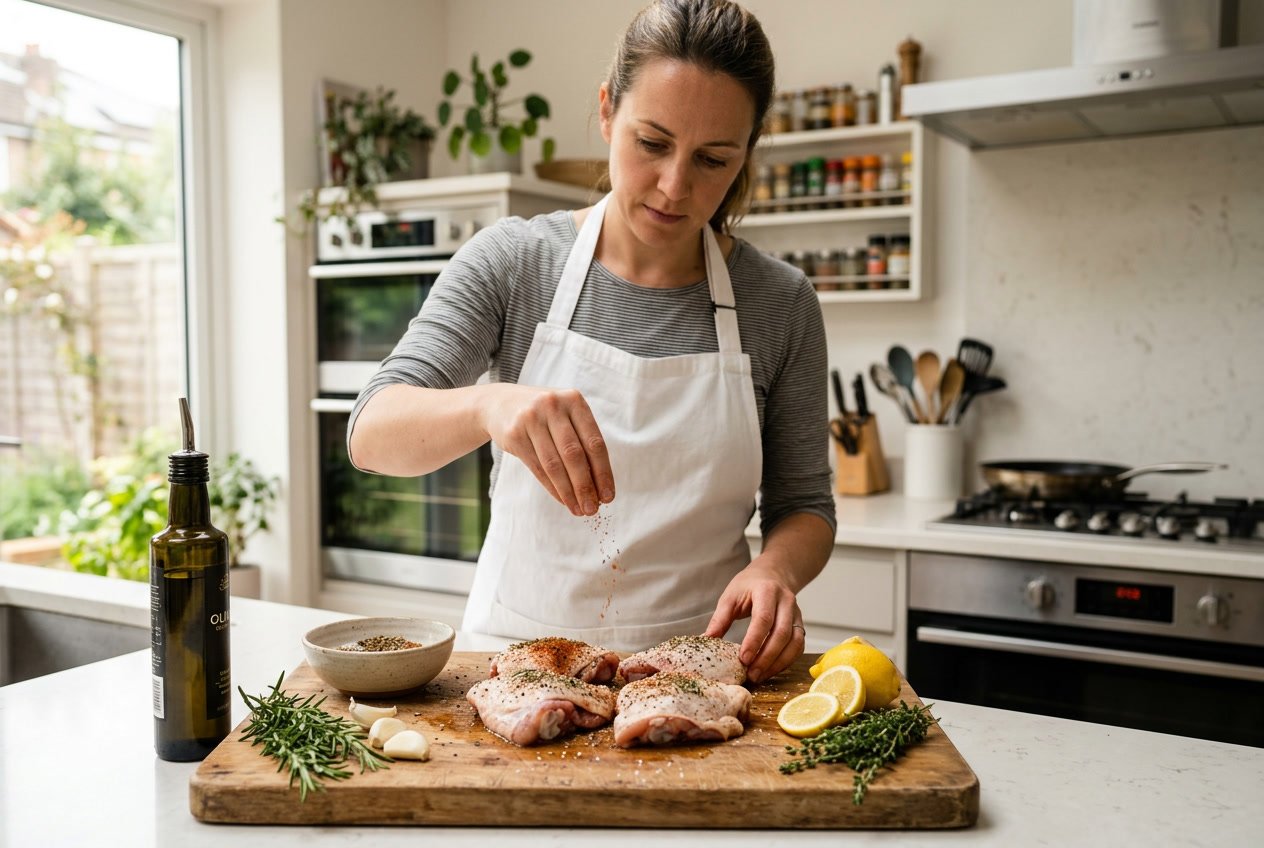
Temperature, bone presence, and thickness change those times. Use simple techniques to get juicy meat and crispy skin.
Follow practical tips for oven roasting and alternative methods. Learn how to finish and use leftovers so your next batch comes out right every time.
Key Time and Temperature Guidelines
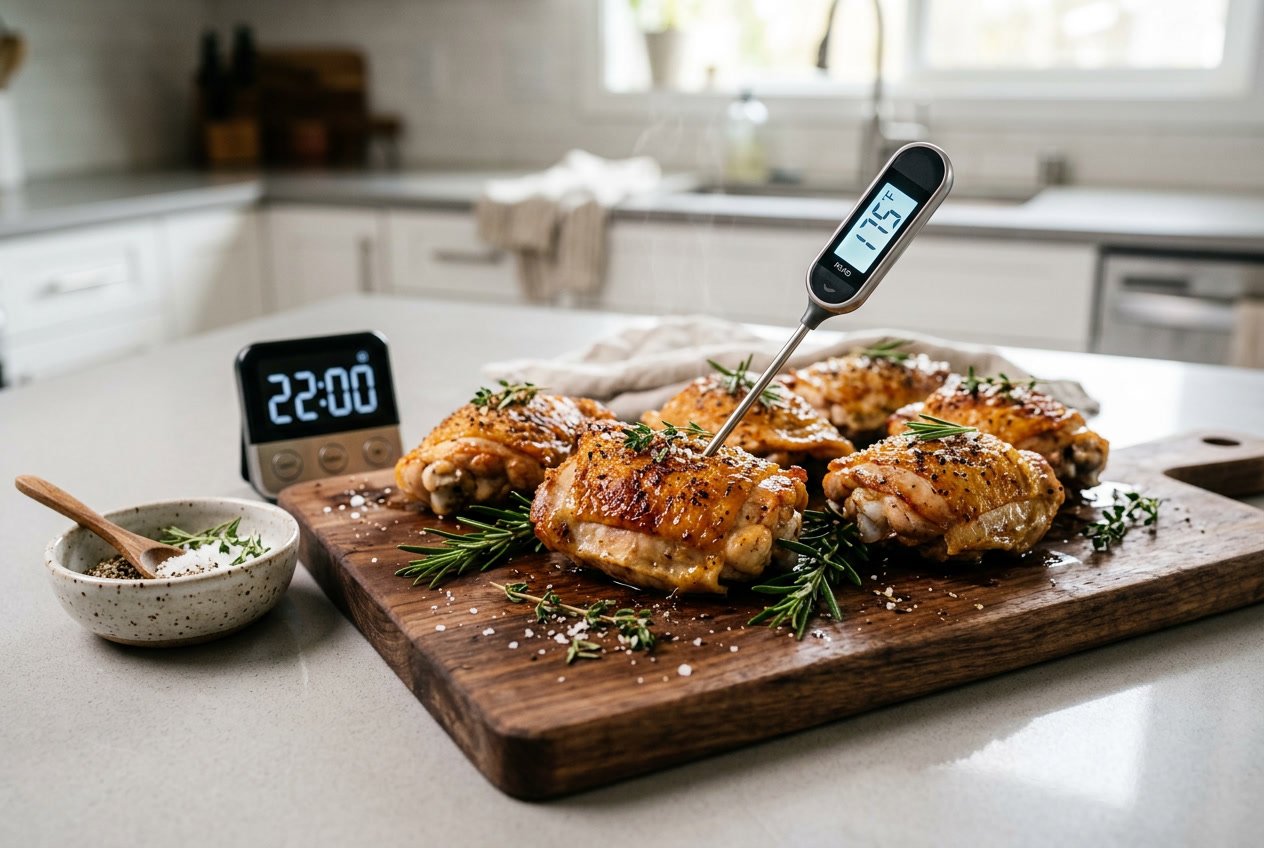
Aim for an internal temperature of 165°F (74°C). Choose oven temps between 350–400°F to balance crisp skin and juicy meat.
Bone-in, skin-on pieces need more time than boneless. Check with a thermometer instead of relying on the clock.
How Long to Bake Chicken Thighs in the Oven
Bake at 400°F (204°C) for the quickest crisp skin and reliable juiciness.
- Bone-in, skin-on: 35–45 minutes.
- Boneless, skinless: 20–30 minutes.
If you prefer gentler roasting, set the oven to 350–375°F (177–190°C).
- Bone-in, skin-on: 40–55 minutes at these lower temps.
- Boneless, skinless: 25–40 minutes.
Arrange thighs skin-side up and avoid overcrowding the pan. Use a wire rack on the baking sheet for air circulation.
Start checking temperature at the low end of the time range to prevent overcooking.
Boneless vs Bone-In Cooking Times
Boneless, skinless chicken thighs cook faster because heat penetrates without bone mass. Expect roughly 20–30 minutes at 400°F or 25–40 minutes at 350–375°F.
Bone-in, skin-on thighs need 35–55 minutes depending on oven temp and thigh size. The bone slows heat transfer but helps retain moisture and flavor.
Bake skin-side up at higher heat and finish 1–3 minutes under the broiler for crispy skin if needed. Adjust time for very large thighs or if baking from partially frozen.
Safe Internal Temperature for Chicken Thighs
Use a thermometer in the thickest part, avoiding contact with bone. The USDA minimum safe internal temperature is 165°F (74°C).
- Insert probe into thickest meat near the bone for bone-in thighs.
- For boneless thighs, probe the center.
After removing from the oven, rest thighs 5–10 minutes. Carryover heat evens temperature and redistributes juices.
If juices run pink or temperature is below 165°F, return to the oven and recheck every 5 minutes.
Factors Influencing Chicken Thigh Cooking Time
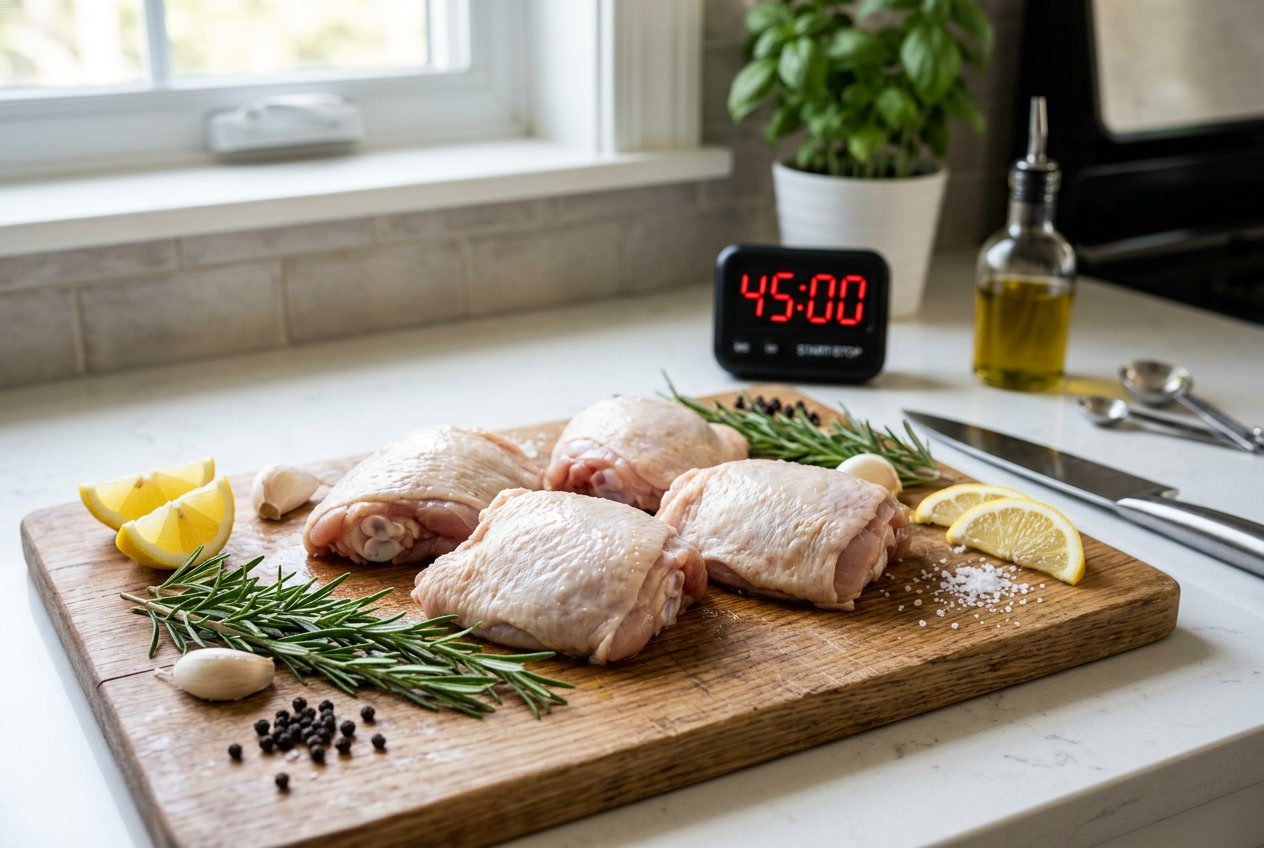
Several variables change how long your chicken thighs need in the oven: bone or skin, thickness, and starting temperature. Each factor alters heat transfer and moisture retention, so adjust time and temperature as needed.
Bone-In and Boneless Differences
Bone-in chicken thighs take longer to reach a safe internal temperature because the bone slows heat penetration. Expect bone-in, skin-on thighs to need roughly 40–55 minutes at 350°F (177°C), depending on size.
Boneless chicken thighs heat through faster because there’s no bone to insulate the center. Boneless pieces commonly finish in 25–40 minutes at 350–425°F depending on oven temp and thickness.
Pick thighs of similar weight for consistent results. When swapping bone-in for boneless in a recipe, reduce cook time and monitor internal temperature closely.
Skin-On and Skinless Considerations
Skin-on chicken thighs take longer to reach doneness when you want crispy skin. Skin traps moisture and adds insulation, so baking at higher initial temperatures (400–425°F) for 10–15 minutes, then lowering to finish, helps crisp without overcooking the meat.
Skinless thighs cook slightly faster and will not develop a crisp barrier. To keep skinless thighs juicy, use a lower temperature (350–375°F), consider a short marinade or brine, and pull them as soon as the thermometer hits 165°F.
If crisp skin matters, use higher heat and allow resting time. For skinless, focus on even cooking and moisture-retention techniques like brining or finishing with a sauce.
Thigh Size and Thickness
Thickness matters more than weight for cooking time. A thin 4-ounce thigh will finish much sooner than a thick 6–8 ounce thigh.
Measure thickness at the thickest point. Each additional 1/4 inch of meat can add several minutes of cooking time.
Group pieces by similar thickness on the pan so smaller pieces don’t overcook while you wait for larger ones. You can also flatten very thick thighs slightly with a meat mallet for more even cooking.
Use an instant-read thermometer rather than relying on time alone. Target 165°F (74°C) in the thickest portion.
Starting Chicken Temperature
Starting temperature—refrigerator-cold versus room temperature—affects total oven time. Cold thighs straight from the fridge commonly add 8–15 minutes of cook time compared with thighs rested 20–30 minutes at room temperature.
Let thighs sit at room temperature briefly to even the internal temperature. For food safety, don’t leave poultry out more than 30–60 minutes.
If you must cook from cold or frozen, increase the time and always use a thermometer to confirm doneness.
How to Bake Chicken Thighs for Tender, Juicy Results
Follow a clear temperature strategy, arrange thighs for air circulation, and rest the meat to lock in juices.
Oven Temperature Recommendations
Set your oven between 400°F and 425°F (205–220°C) for the best balance of tender meat and crispy skin.
At 425°F, bone-in, skin-on thighs usually take about 35–45 minutes. At 400°F expect 40–45 minutes.
For boneless, skinless thighs, 20–25 minutes at 425°F gives juicy results.
Always use an instant-read thermometer. Pull thighs at 165°F (74°C) for safety, but for extra tenderness in dark meat, aim for 175–185°F (79–85°C).
For crisper skin, finish under the broiler for 1–3 minutes while watching closely.
Apply a small amount of oil or melted butter and season before baking. Oil helps the skin brown; salt enhances moisture retention and flavor.
Arranging Thighs for Even Cooking
Place thighs skin-side up on a rimmed baking sheet or in a shallow roasting pan. Space them at least 1 inch apart to allow heat circulation.
Use a wire rack set inside a rimmed sheet for even air flow and extra-crispy oven baked chicken thighs. If you bake with vegetables, put sturdier vegetables (carrots, potatoes) on the sheet and arrange thighs above or on a rack.
If pieces vary in size, position larger ones toward the oven’s hotter zone (usually the back or top) and rotate the pan halfway through cooking. This evens out doneness without overcooking small pieces.
Resting After Baking
Let the thighs rest 5–10 minutes on a cutting board after removing them from the oven. Resting lets juices redistribute.
Cover loosely with foil to maintain temperature without steaming the skin. For crisp skin, avoid tight covering; for extra-warm meat, tent lightly.
After resting, check internal temperature once more in the thickest part. Serve immediately for best texture.
Alternative Cooking Methods for Chicken Thighs
These methods focus on crisp skin, even cooking, and the right internal temperature for juicy meat. Each technique lists time, temperature, and brief tips.
How to Air Fry Chicken Thighs
Pat thighs completely dry and season well. Arrange skin-side up in a single layer with at least ½–1 inch between pieces so hot air circulates.
Cook at 400°F.
Cook times:
- Bone-in, skin-on: 22–28 minutes
- Boneless, skin-on: 16–20 minutes
Flip once about two-thirds through if your air fryer’s heat is uneven. Use an instant-read thermometer: pull boneless at 165°F, bone-in at 175°F.
For extra crisp, spray a light coat of oil on the skin before cooking. Do not overcrowd; work in batches for consistent results.
How to Grill Chicken Thighs
Preheat to create a two-zone fire: direct high heat for searing and indirect medium heat for finishing.
For bone-in, start skin-side down over direct heat 5–6 minutes to develop char, then move to indirect heat and cook covered.
Target internal temps:
- Bone-in, skin-on: 175°F–185°F (use indirect finish)
- Boneless: 160°F–165°F (direct heat works fine)
Do not press the thighs; that squeezes juices out and causes flare-ups. Watch for dripping fat and move pieces if flames flare.
Finish with a 3–4 minute rest to let juices redistribute. Brush with sauce in the last few minutes only to prevent burning.
How to Sauté or Pan-Fry Chicken Thighs
Use a heavy skillet (cast iron preferred) and start with a cold pan for skin-on thighs to slowly render fat. Place thighs skin-side down, then heat to medium-high and leave undisturbed until the skin is deeply browned—about 7–10 minutes.
After browning, flip and finish in the oven at 400°F if pieces are thick.
- Boneless finish: 6–10 minutes in oven or 5–7 minutes on stovetop per side
- Bone-in finish: 15–20 minutes in oven after sear
Check internal temp: boneless 165°F, bone-in 175°F. Avoid overcrowding; remove excess fat as needed.
Deglaze the pan with stock, wine, or lemon and spoon over the thighs for extra flavor.
How to Achieve Crispy Skin on Baked Chicken Thighs
Dry the skin thoroughly and salt it well ahead of time. Use high heat during baking and consider a quick blast under the broiler or other finishing step to deepen color and crunch.
Preparation Tips for Crispy Results
Pat each skin-on chicken thigh dry with paper towels until the skin feels almost tack-free. Moisture is the main enemy of crispiness.
Salt the skin generously. Use about 1/2 teaspoon kosher salt per thigh and let the thighs rest uncovered in the fridge for a few hours or overnight (dry brine).
Trim excess fat and loose skin, then season with pepper or your chosen spices. A light brush of neutral oil can help promote even browning, but it’s optional.
Best Oven Temperatures for Crispiness
Preheat your oven to 425–450°F (220–230°C) for bone-in, skin-on chicken thighs. This range renders fat quickly and browns the skin without drying the meat.
Place thighs skin-side up on a rimmed sheet pan set on the middle rack. Use a wire rack on the pan if you want crisper undersides.
Check internal temperature with an instant-read thermometer. Pull thighs at 165–170°F (74–77°C).
Thickness and bone presence affect time, but 25–35 minutes is typical at 450°F for 8-oz bone-in thighs. Rest for 5 minutes before serving.
Finishing Options: Broiler and More
If skin isn’t as crisp as you want, switch the oven to broil for 1–3 minutes with the thighs moved to the top rack. Watch constantly as broilers can go from golden to burnt in seconds.
You can use a high-heat blast from an air fryer for 2–4 minutes, or torch the skin briefly for targeted browning.
For an even crisper crust, poke a few small holes in the skin with a skewer before cooking to help fat render faster. Use finishing techniques sparingly to maintain moist, juicy chicken while achieving crispy skin.
Serving, Pairing, and Using Leftover Chicken Thighs
Serve hot thighs with simple, bold sides that balance the meat’s richness. Choose sides that make weeknight dinners feel complete.
Store and reheat properly to keep the chicken juicy. Use leftover thigh meat in quick recipes that turn scraps into new meals.
Serving Suggestions and Side Dishes
Pair BBQ chicken thighs with mashed potatoes or roasted sweet potatoes for a classic, hearty plate. The starch soaks up sauce and keeps meals satisfying.
For lighter meals, serve herb-roasted or pan-seared thighs over mixed greens, quinoa, or warm couscous. Add a bright component like lemon wedges, pickled onions, or a cucumber-tomato salad to cut the fat.
Vegetable pairings such as steamed green beans, sautéed spinach with garlic, or charred broccoli add texture and color. Place thighs atop creamy mashed potatoes and spoon pan juices or gravy over everything for comfort food.
Storing and Reheating Leftover Chicken Thighs
Cool cooked thighs to room temperature within 2 hours, then refrigerate them in an airtight container. Use within 3–4 days for safety and best flavor, or freeze for up to 3 months in a sealed bag with excess air removed.
Reheat gently to keep the meat moist. Warm in a 325°F oven for 10–15 minutes covered, or in a skillet over low heat with a splash of broth.
Avoid microwaving at high power. If you must microwave, cover and use short intervals, turning the thighs to heat evenly.
When reheating from frozen, thaw overnight in the fridge. Check that the internal temperature reaches 165°F before serving.
If the meat seems dry, add sauce, pan juices, or a pat of butter to bring back richness.
Creative Ways to Use Leftover Thigh Meat
Shred or dice leftover chicken thighs for fast, versatile meals. Toss them with mayo, lemon, celery, and herbs for a chicken salad sandwich or pita filling.
Add shredded thighs to soups and stews for extra body. Fold them into Alfredo pasta for a quick, creamy dinner that elevates plain fettuccine.
Turn diced thigh meat into quesadillas or taco-style bowls with rice and salsa for easy weeknight dinners. Use chopped thighs in fried rice with eggs and scallions.
Layer chopped thighs into a rice casserole with cheese and vegetables for a one-dish bake. Slice leftover BBQ thighs thin and use them as pizza toppings with red onion and cilantro for a smoky twist.


