
How Long to Bake Chicken Thighs: The Complete Oven Guide
You want juicy, safe chicken without guessing at the oven clock. For bone-in, skin-on thighs, bake at 375–425°F for about 35–50 minutes. For boneless, skinless thighs, bake at 375–400°F for about 18–25 minutes. Always confirm doneness with a meat thermometer (165°F minimum, 175–180°F for more tender results).

This guide explains how temperature, bone, and skin affect timing and texture. You’ll also find tips for crisp skin, reliable internal temps, seasoning ideas, and reheating or meal-prep options.
How Long to Bake Chicken Thighs
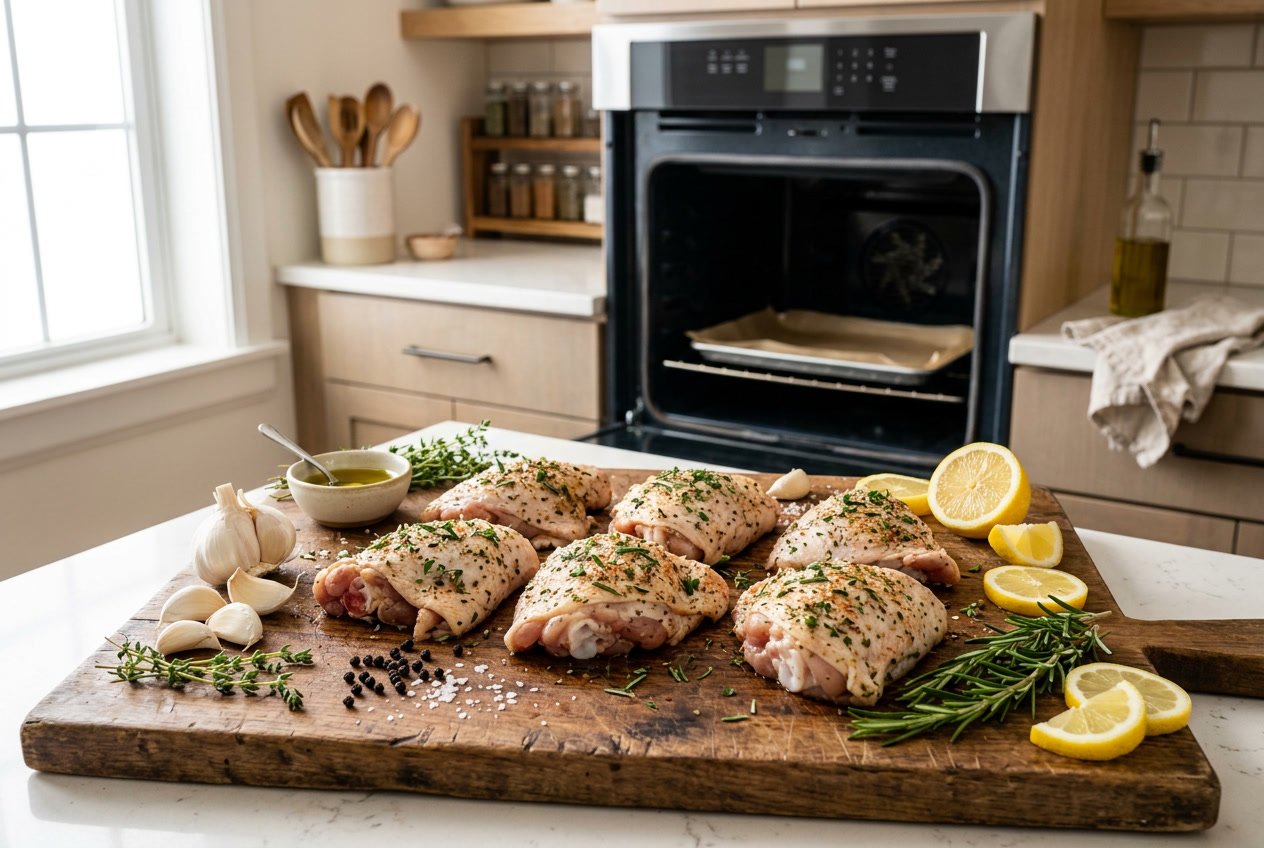
Bake times depend on oven temperature, whether thighs are bone-in or boneless, and their size. Use a meat thermometer to confirm doneness and aim for juicy chicken thighs.
Baking Time by Temperature
Higher oven temperatures shorten cook time and crisp skin faster. At 425°F (218°C), bone-in, skin-on thighs take about 35–45 minutes. Boneless, skinless thighs take 18–22 minutes.
At 400°F (204°C), bone-in thighs need 40–45 minutes and boneless thighs need 20–25 minutes. At 350°F (175°C), bone-in thighs need 50–55 minutes and boneless require 25–30 minutes.
Always check the thickest part with an instant-read thermometer. The minimum safe temperature is 165°F (74°C), but many cooks pull thighs at 175–180°F (80–82°C) for more tender, juicy chicken.
Impact of Thigh Size and Thickness
Smaller or thinner thighs cook faster. Larger or thicker pieces take longer.
Arrange similar-sized pieces together or remove smaller ones early to prevent drying. Bone presence slows heat transfer, so the flesh near the bone takes longer to reach temperature.
If you butterfly or pound boneless thighs, reduce bake time and watch the internal temp to keep them juicy.
How Oven Type Affects Bake Time
Convection ovens circulate hot air and reduce bake time by about 10–20%. They also improve crisping.
If your recipe lists conventional oven times, lower the time or drop the temperature by 25°F (14°C) for convection. Gas ovens can heat unevenly, so rotate the pan halfway through baking.
Electric ovens often provide steadier, even heat. Use the oven’s center rack for balanced browning. Always verify doneness with a thermometer.
Bone-In vs. Boneless Chicken Thighs

Bone-in thighs take a bit longer and yield more flavor and juiciness because the bone and skin slow heat transfer and protect the meat. Boneless thighs cook faster and are easier to slice for salads or sandwiches, but they require careful timing to avoid drying out.
Bone-In Chicken Thighs Baking Times
Bone-in, skin-on chicken thighs finish between 35 and 50 minutes depending on oven temp and thigh size. At 350°F (175°C), bake for about 40–50 minutes for 4–8 oz pieces. At 400°F (200°C), expect 35–45 minutes. At 425°F (220°C), they often take about 30 minutes.
Use an instant-read thermometer and remove when the thickest part reaches 165°F (74°C).
Start skin-side up on a preheated sheet or in a hot pan to encourage browning. Avoid touching the bone with the thermometer for accurate temp.
Let rest 5–10 minutes so juices redistribute.
Boneless Chicken Thighs Baking Times
Boneless, skinless thighs bake faster—about 20–30 minutes at 400–425°F (200–220°C). At 425°F, aim for 20–25 minutes for average-thickness pieces. At 400°F, expect 25–30 minutes.
Target an internal temperature of 165°F (74°C). Marinate or brush with oil to protect surface moisture.
Use higher heat for shorter time to seal juices, or cover with foil at lower temps if cooking longer. Use an instant-read thermometer to avoid overcooking.
Skin-On vs. Skinless Chicken Thighs
Skin-on thighs give you crispy, flavorful skin and better moisture retention. Skinless thighs cook faster and absorb marinades more directly.
Choose skin-on for roast or high-heat methods where a crisp exterior matters. Choose skinless for quicker bakes or recipes where you want the meat to carry the flavor.
Baking Skin-On Chicken Thighs
Skin-on thighs need heat and time to render fat and crisp the skin. Roast at 425–450°F (218–232°C) to get a golden, crackling exterior. Expect about 30–40 minutes for average bone-in, skin-on thighs.
Use a rimmed baking sheet or a wire rack so hot air circulates under the skin. Pat the skin dry and season well with salt. A light brush of oil helps browning.
Insert an instant-read thermometer into the thickest portion without touching bone. Remove at 165°F (74°C) and rest 5–10 minutes so juices redistribute.
If the skin isn’t crisp enough, finish 2–4 minutes under a hot broiler while watching closely.
Baking Skinless Chicken Thighs
Skinless thighs cook faster and more evenly. Bake them at 400–425°F (200–218°C) for about 20–30 minutes for boneless pieces.
Thicker or bone-in skinless thighs may need a few extra minutes. Arrange thighs in a single layer on a baking sheet and avoid overcrowding.
Marinate or oil and season before baking to lock in moisture. Check doneness with an instant-read thermometer—165°F (74°C) at the thickest point—and let the meat rest briefly.
For a browned surface, finish at high heat for the last 3–5 minutes or use a quick broil.
How to Bake Chicken Thighs for the Best Results
You’ll get juicy meat and crisp skin by controlling temperature, placement, and simple prep. Focus on drying the skin, using a hot oven or high heat finish, and choosing the right pan and rack.
Preparing Chicken Thighs for Baking
Pat each thigh dry with paper towels to remove surface moisture. Trim excess fat and, if using bone-in thighs, rub oil and salt under and over the skin.
If you marinate, limit acidic marinades (lemon, vinegar) to 30–60 minutes to avoid mushy texture. For quick flavor, use a dry rub of salt, pepper, garlic powder, and smoked paprika.
Apply seasoning at least 15–30 minutes before baking or overnight for deeper flavor. Bring thighs to near room temperature for 15–20 minutes before baking.
Insert an instant-read thermometer into the thickest part (avoiding bone) for safe, juicy results.
Best Oven Positions and Bakeware
Preheat the oven properly. For boneless thighs, use 400–425°F. For bone-in, skin-on, aim for 425–450°F or start hotter and reduce.
Higher heat promotes browning while shorter cook times reduce moisture loss. Use a rimmed baking sheet lined with foil for easy cleanup.
Place thighs on a wire rack set over the sheet for maximum air circulation and crisp skin. If cooking with vegetables, arrange thighs skin-side up and leave space between pieces.
Position the rack in the upper third of the oven for rapid skin browning. Rotate the pan halfway through for even cooking and avoid overcrowding.
Essential Bake Techniques for Juicy and Crispy Results
Start hot and finish hot. For bone-in, skin-on thighs, roast at 425°F for 25–35 minutes depending on size. Or preheat a baking sheet to 500°F, add thighs skin-side up, then reduce to 425°F.
For boneless thighs, 400–425°F for 20–30 minutes yields tender, cooked-through meat. Use an instant-read thermometer to check doneness at 165°F.
If the skin isn’t crisp enough, broil on high for 1–3 minutes while watching closely. Rest cooked thighs 5–10 minutes before serving.
Avoid covering the pan until after baking unless you want soft skin. For extra crispiness, pat dry, oil lightly, and dust with a small amount of baking powder mixed into the seasoning.
Internal Temperature and Doneness
You need a precise target temperature and a reliable way to measure it. Focus on the thermometer reading and where you insert the probe.
Safe Internal Temperatures
Cook chicken thighs to a minimum internal temperature of 165°F (74°C). Insert the thermometer into the thickest part of the thigh, avoiding bone contact.
For bone-in thighs, you may prefer a slightly higher finish—170–175°F (77–80°C)—to break down connective tissue and yield more tender meat. Boneless, skinless thighs often taste best right around 165–170°F.
If you plan to crisp the skin, finish at a higher oven temperature (400–425°F) for the last 5–10 minutes while monitoring internal temp. Always rest thighs 5–10 minutes after removing them from the oven.
How to Check Chicken Thighs for Doneness
Use an instant-read meat thermometer for the fastest, most accurate check. Insert the probe into the thickest part of the thigh perpendicular to the bone.
Visual cues help but don’t replace temperature checks. Properly cooked thighs will have juices that run clear and meat that separates easily from the bone.
For boneless thighs, check that the center is opaque and slightly springy to the touch. If you don’t have a thermometer, slice into the thickest part and inspect color and moisture.
Regularly calibrate or test your thermometer in ice water (32°F) to confirm accuracy before use.
Seasoning and Flavor Ideas
Choose seasonings that build flavor through salt, fat, and aromatics. Focus on a balanced base—salt, pepper, and a fat like olive oil or butter—then add herbs, spices, or acids to match the cooking time and desired crispness.
Popular Chicken Thigh Seasonings
Start with kosher salt and freshly ground black pepper. Add garlic powder and onion powder for savory depth.
Paprika (smoked or sweet) gives color and mild smokiness. Use 1–2 tsp per pound of thighs depending on preference.
Herbs work well: dried thyme, oregano, or rosemary pair with roasted vegetables and potatoes. For a bright finish, sprinkle chopped fresh parsley or cilantro after baking.
For a simple rub, mix 1 tbsp olive oil, 1 tsp salt, 1/2 tsp pepper, 1 tsp paprika, 1/2 tsp garlic powder, and 1/2 tsp onion powder. Pat skin dry first, then rub to help seasoning adhere and promote crisp skin.
Flavor Variations and Marinades
For Mediterranean flavor, combine lemon zest, oregano, garlic, and olive oil. Marinate 30 minutes to 2 hours.
For Asian-inspired thighs, use soy sauce, sesame oil, ginger, garlic, and a touch of honey or brown sugar. Apply as a marinade or brush on during final 10 minutes of baking.
For a spicy BBQ profile, mix smoked paprika, cumin, chili powder, brown sugar, and a splash of apple cider vinegar. Rub under and over the skin for deeper flavor.
If you prefer a quick brine, dissolve 2 tbsp salt and 1 tbsp sugar in 4 cups water. Submerge thighs 30–60 minutes, rinse, pat dry, then season.
Storing and Reheating Baked Chicken Thighs
Cool cooked thighs quickly, store them in airtight containers, and always reheat to 165°F (75°C) to maintain texture and food safety.
Proper Storage Methods
Let chicken thighs cool to room temperature for no more than 2 hours after cooking, then refrigerate right away.
Use shallow, airtight containers or resealable bags to limit air exposure and help the chicken cool evenly.
Label containers with the date and eat refrigerated chicken within 3–4 days.
For longer storage, freeze thighs in a single layer on a tray until firm, then move them to heavy-duty freezer bags or vacuum-seal.
Frozen thighs keep best for up to 4 months.
To thaw, transfer frozen thighs to the refrigerator for 24 hours before reheating.
Keep thawed chicken out of the danger zone by avoiding room temperature thawing.
How to Reheat for Juicy Chicken
Preheat the oven to 325–350°F (160–175°C). Place thighs in a baking dish, add 2–4 tablespoons of chicken broth or water per pound, and cover tightly with foil.
Heat for 15–25 minutes, depending on size, and check the internal temperature with a probe thermometer to ensure it reaches 165°F (75°C).
Remove the foil for the last 5 minutes if you want crispier skin.
You can also use an air fryer at 350°F (175°C) for 5–8 minutes to restore crispness, flipping once.
For boneless pieces, reheat in a skillet with a splash of broth and a lid over medium heat for 5–8 minutes.
If you use a microwave, cover the chicken, add a tablespoon of liquid, and reheat in short intervals, checking the temperature often.
Alternative Methods
Air frying quickly crisps the skin while keeping thighs juicy.
Baking a batch helps with fast lunches and dinners throughout the week.
Both methods let you control seasoning, internal temperature, and texture.
Air Fryer Chicken Thighs
Set the air fryer to 375–400°F (190–200°C). Cook boneless, skin-on thighs for 15–20 minutes, flipping once halfway.
For bone-in, skin-on thighs, cook for 22–30 minutes and check at 20 minutes with an instant-read thermometer.
Pat the skin dry and rub with 1 teaspoon of oil per pound to help browning.
Arrange thighs in a single layer with space between pieces for better crispiness.
Aim for an internal temperature of 165°F (74°C), or remove at 160°F (71°C) and let rest 5 minutes for carryover cooking.
If using frozen thighs, add 8–12 minutes to the cook time and season after partial thaw.
Spray the basket lightly or use perforated parchment for easier cleanup.
Meal Prep Tips Using Baked Chicken Thighs
Bake boneless, skinless thighs at 400°F (200°C) for 15–20 minutes. Bake bone-in thighs for 25–30 minutes, until they reach 165°F (74°C).
Roast on a rimmed sheet to collect juices for sauces or to crisp the edges.
Let chicken cool to room temperature for no more than 2 hours. Store it in airtight containers.
Refrigerate for up to 3–4 days or freeze for up to 3 months. Slice or shred before storing to make reheating and portioning easier.
Reheat in a 350°F (175°C) oven or a 375°F air fryer for 6–8 minutes to restore texture. For salads and bowls, keep dressing separate and use 4–6 oz cooked thigh per serving.


