
Which Temperature to Bake Chicken Thighs: The Essential Guide
You want juicy, safe chicken thighs with crisp skin and predictable timing. Bake boneless thighs at about 425°F for roughly 25–30 minutes and bone-in, skin-on thighs at 400–450°F for about 30–40 minutes. Check that the internal temperature reaches 165°F.
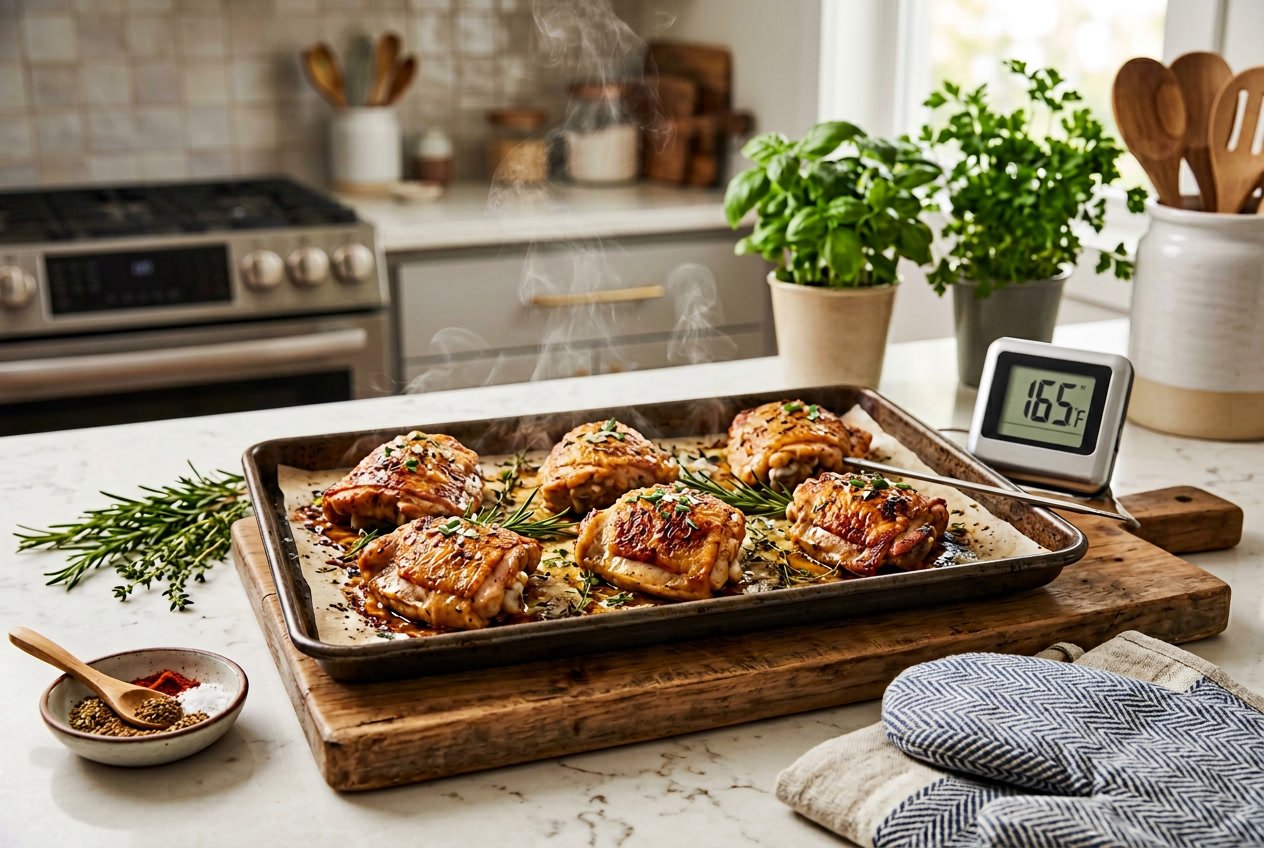
These guidelines help you choose the right temperature for juicy chicken thighs. You’ll also find tips for adjusting time based on thigh size, oven differences, and your preferred doneness.
Optimal Oven Temperature for Baking Chicken Thighs
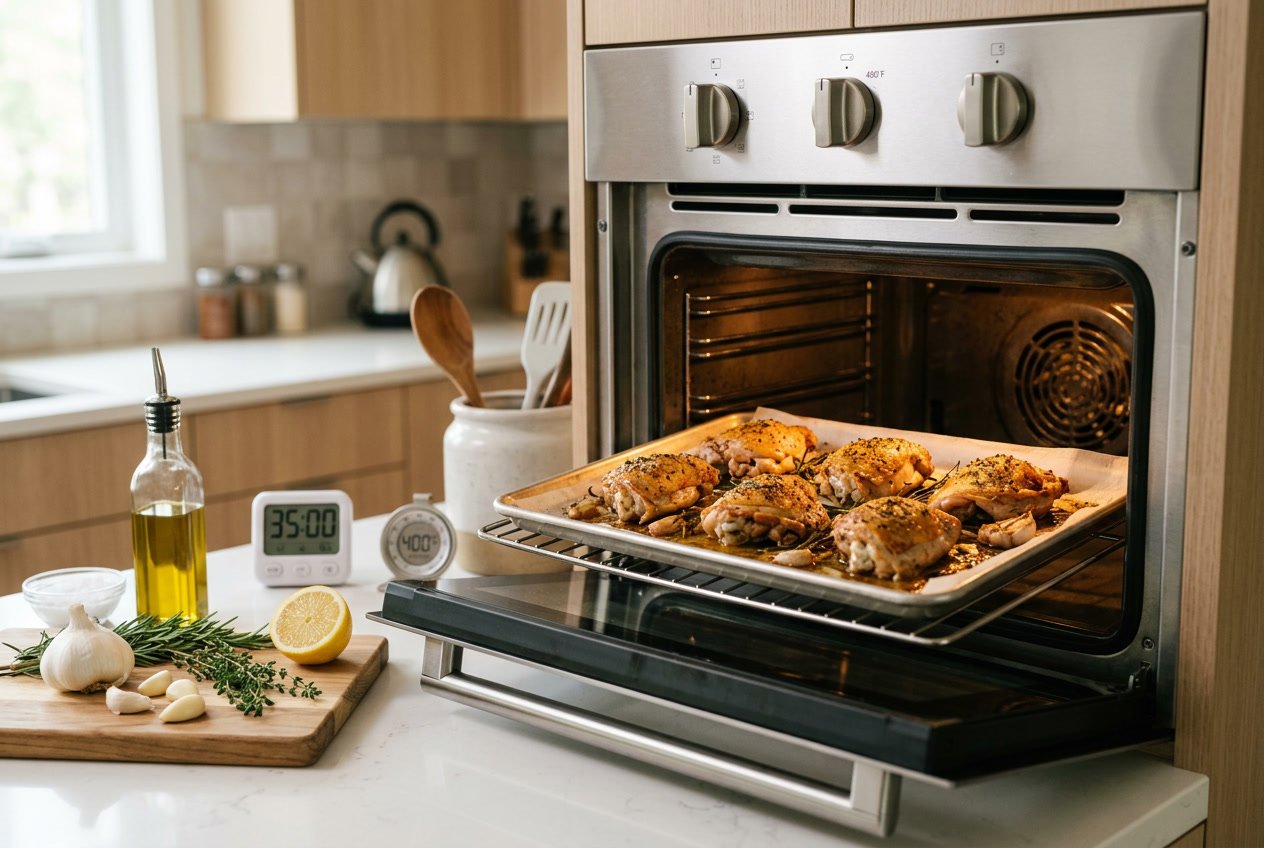
Pick your oven temperature based on whether you want faster cooking, more rendered fat, or crispier skin. Baking at 375°F (190°C) gives even cooking. Baking at 400–450°F (204–232°C) speeds browning and crisping but requires more attention.
Recommended Oven Temperatures
Bake bone-in, skin-on thighs at 375°F (190°C) for even cooking. This temperature lets connective tissue soften without overbrowning. Expect about 40–50 minutes depending on thigh size. Check for 175°F (80°C) in the thickest part for traditional doneness, or 165°F (74°C) if you prefer a leaner result.
Bake boneless, skinless thighs at 400°F (204°C) for 20–30 minutes. Higher temps shorten cooking time and help sear the exterior. For the crispiest skin on bone-in pieces, bake at 425–450°F (218–232°C) for 30–40 minutes and watch closely to prevent drying.
Use an instant-read thermometer and adjust time for crowded pans or frozen thighs.
Effects of Different Oven Settings
Conventional ovens provide steady radiant heat and create even color across a tray. Convection ovens circulate air and lower bake time by about 10–20%. If you use convection, reduce temperature by about 25°F (15°C) or shorten time and monitor internal temperature.
High heat (425–450°F) crisps skin and renders fat faster. That speed can leave larger thighs underdone if you only check the surface. Lower heat (350–375°F) promotes even cooking and breaks down collagen for tender meat. Space pieces apart and preheat the rack and pan for best results.
Selecting the Best Temperature for Crispy Skin
For crispy chicken thighs, start at 425°F (218°C) for 10–15 minutes to brown the skin, then lower to 375°F (190°C) to finish cooking. This approach helps render fat and keeps the meat juicy.
If you want a one-temperature method, 400°F (204°C) gives a balance of crisp skin and moist meat. Pat the skin dry, season, and use a light oil or baking powder coating to help browning. Rest thighs 5 minutes after baking so juices redistribute and the skin stays crisp.
Internal Temperature for Safe and Juicy Chicken Thighs
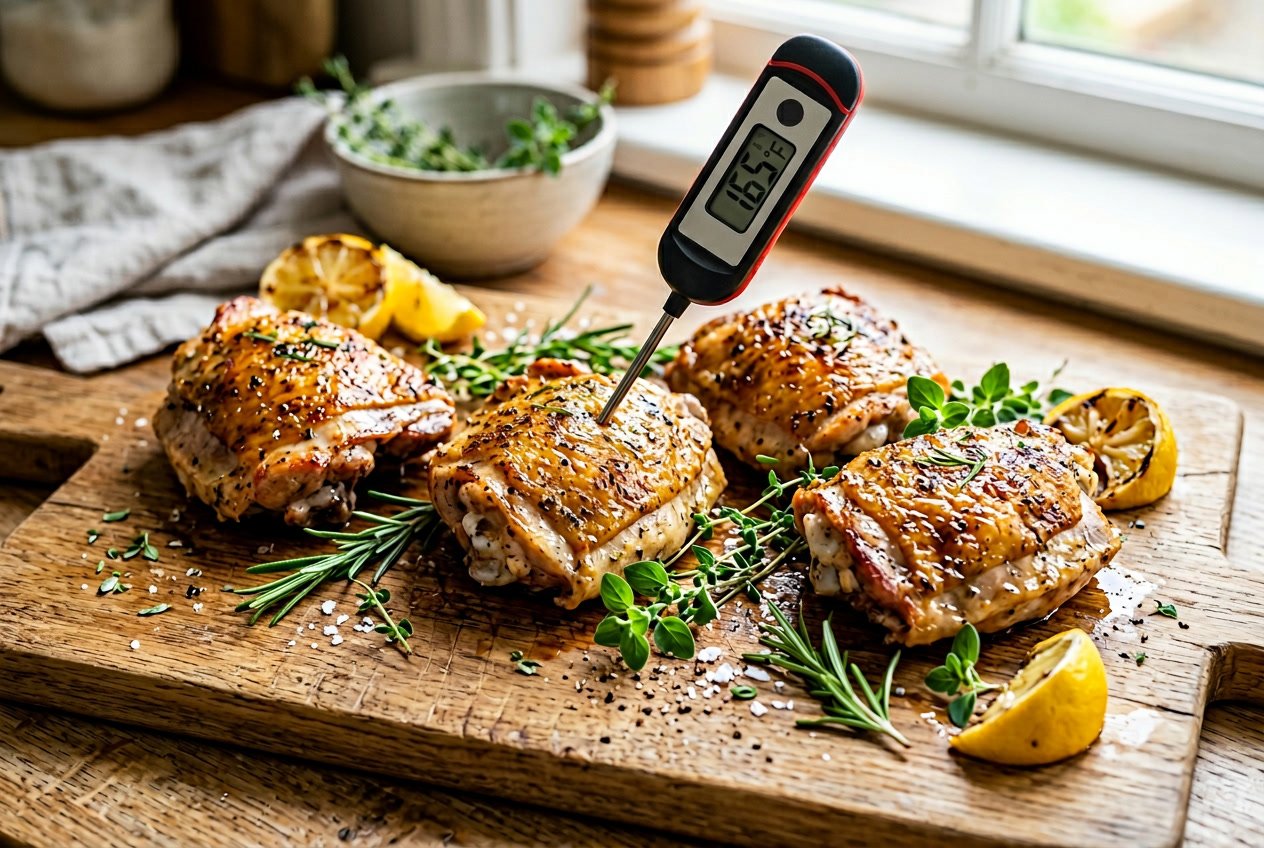
Aim for a safe internal temperature and enough time for connective tissue to soften. Use a good instant-read thermometer and pick a temperature that matches your texture goal.
USDA Guidelines for Chicken Thighs
The USDA recommends a minimum internal temperature of 165°F (74°C) for all poultry. Check the thickest part of the thigh to ensure safety. Avoid touching the bone for an accurate reading.
Measuring Internal Temperature Accurately
Insert an instant-read meat thermometer into the thickest part of the thigh, at least 1/4 inch from the bone. Digital thermometers give fast, precise readings. Let the display stabilize before recording the temperature.
Probe bone-in thighs from the side into the center of the meat. Lift the skin slightly to reach the meat if needed. Calibrate your thermometer occasionally against boiling water (212°F/100°C at sea level).
Ideal Temperature Range for Texture and Flavor
For juicy, tender chicken thighs, aim for a slightly higher temperature than 165°F. Temperatures around 175°F yield tender meat that clings to the bone. For fall-off-the-bone texture, pull thighs at 190–195°F when collagen has turned to gelatin.
Choose 165°F for safety and juiciness. Use 175–195°F for extra tenderness and improved mouthfeel. Adjust based on whether you’re baking quickly at high heat or slow-roasting.
Baking Times Based on Chicken Thigh Types
Pick your oven temperature based on whether thighs are bone-in or boneless and whether they have skin. Higher heat crisps skin faster. Lower heat gives more even cooking. Always use a thermometer to confirm doneness.
Bone-In Chicken Thighs
Bone-in thighs take longer because the bone slows heat penetration. At 375°F (190°C), bake for about 45–50 minutes. At 400°F (200°C), bake for 40–45 minutes. These times assume medium-size thighs (about 5–7 oz each).
Check the thickest part near the bone with a thermometer. Many cooks pull bone-in thighs at 175–180°F (80–82°C) for more tender, shreddable meat. Rest for 5–10 minutes after baking to let juices redistribute.
Boneless Chicken Thighs
Boneless thighs cook faster and can overcook if the oven is too hot. At 400°F (200°C), bake for 20–25 minutes. At 425°F (218°C), reduce time to 18–22 minutes depending on thickness.
Aim for 165°F (74°C) internal temperature, then rest for 5 minutes. Slice one to check for clear juices and no pink before serving. Thinner pieces may finish in under 20 minutes, so monitor near the end.
Skin-On vs Skinless Chicken Thighs
Skin-on thighs benefit from higher heat to render fat and create crisp skin. Bake skin-on, bone-in thighs at 400–425°F for best crisping. Expect 35–45 minutes depending on size. Place the pan on the upper-middle rack for better browning.
Skinless thighs lose moisture faster and do better at lower temps. Bake skinless boneless thighs at 375–400°F for 20–30 minutes. Pat skinless thighs dry and let them rest under foil briefly to keep them juicy.
Baking from Frozen
When you bake frozen thighs, you need more time and risk uneven cooking. Thaw in the refrigerator if possible for best results. If baking from frozen, preheat the oven to 375°F (190°C) and add about 50% more time. Bone-in may take 70–80 minutes; boneless about 30–40 minutes.
Check the thickest part with a thermometer. Cover with foil for the first half to prevent excessive browning, then uncover to crisp the outside and finish to at least 165°F (74°C).
Factors Affecting Baking Temperature and Time
Oven temperature and cooking time depend on thigh size, oven accuracy, and whether you use a rack or sheet pan. These factors change how heat reaches the meat and how long it takes to reach a safe temperature.
Thigh Size and Thickness
Thicker, bone-in thighs need more time and often a lower or moderate oven temperature to cook through without drying out. If a thigh measures 1 to 1.5 inches at its thickest point, bake bone-in thighs for 35–50 minutes at 375–400°F. Boneless thighs of similar thickness usually finish in 20–30 minutes at 400°F.
Use a thermometer and target at least 165°F in the thickest part near the bone. For more tender results, remove from oven at 165°F and rest. Many cooks prefer 175–180°F for extra tenderness. Adjust times upward for larger thighs and downward for smaller pieces.
Oven Variability
Home ovens often run hotter or cooler than the set temperature by 10–30°F. Calibrate your oven with an oven thermometer placed on the center rack. Adjust the set point as needed.
Convection settings circulate air and shorten bake times by about 10–25% while promoting crisper skin. If using convection, reduce temperature by 25°F or cut time by about a quarter. Rack position also matters: the top third gives more radiant heat for browning, while the middle offers more even cooking.
Using Racks and Baking Sheets
Use a wire rack on a sheet pan to elevate thighs and allow hot air to circulate underneath. This creates crisper skin and more even cooking. Place thighs skin-side up on a rack for best airflow. Without a rack, flip or rotate the pan halfway through to reduce hot spots.
Pick a rimmed sheet pan for bone-in thighs to catch drippings. Line it with foil for easier cleanup. Dark, nonstick pans absorb more heat and can brown faster. Lower the oven by 10–15°F if using a dark pan. If you roast thighs with vegetables, pick vegetables that finish in the same time or cut them smaller and arrange them around the thighs for airflow.
Techniques to Enhance Flavor and Texture
Focus on flavor penetration before cooking, skin crisping during baking, and proper resting to retain juices. Use simple steps and clear targets to improve your baked chicken thighs.
Marinating Chicken Thighs
Marinades boost flavor and help keep chicken thighs tender. Use an acid (2–3 tbsp lemon juice or vinegar per 1 lb), oil (2 tbsp), salt (1 tsp kosher salt per pound), and flavorings like garlic, smoked paprika, soy sauce, or herbs. Combine and coat thighs in a zip-top bag. Refrigerate 2–12 hours.
For quick prep, marinate boneless thighs for 30–60 minutes at room temperature. Longer times (up to 12 hours) work best for bone-in to let flavors reach the bone.
Pat thighs dry before baking to avoid steaming and promote crispy skin. Only use reserved marinade for basting if you boil it first.
Achieving Crispy Skin
Crisp skin depends on a dry surface, high heat, and good airflow. Pat skin thoroughly with paper towels. Salt it at least 30 minutes before baking or just before roasting. Salt draws moisture out and seasons the meat.
Bake skin-side up on a wire rack set over a rimmed sheet pan at 400–425°F (200–218°C). Use 400°F for a balance of browning and juiciness. Use 425°F for the crispiest skin if pieces are not too small.
Avoid overcrowding the pan. Space thighs so hot air can circulate. Finish under the broiler for 1–2 minutes if needed, watching closely to prevent burning.
Resting Chicken Thighs After Baking
Resting lets juices redistribute and improves tenderness. Remove thighs from the oven when the thickest part reaches 165°F (74°C). Many prefer 175–180°F (80–82°C) for extra tenderness.
Tent loosely with foil and rest 5–10 minutes for small boneless pieces, or 10–15 minutes for bone-in thighs. Slice after resting to check juices. They should run clear and the meat will be juicier.
Do not stack thighs while resting. Give them space so residual heat doesn’t create steam that softens the skin.
Flavor Variations and Recipe Ideas
Try different seasoning blends, cooking approaches, and side pairings to match your texture and taste preferences. Use these temperature and timing guidelines for crispy skin and tender meat.
Oven-Baked Chicken Thigh Recipes
Set your oven to 400°F (200°C) for bone-in, skin-on thighs. Bake them for about 35 to 40 minutes until the internal temperature reaches 165°F (74°C).
Pat the thighs dry and rub them with 1 tablespoon of oil. Season them with the following mix:
- 1 teaspoon kosher salt, ½ teaspoon black pepper
- 1 teaspoon smoked paprika, ½ teaspoon garlic powder
- Optional: ½ teaspoon dried thyme or oregano
Arrange the thighs skin-side up on a wire rack over a sheet pan. This setup helps air circulate and crisps the skin.
Broil for 2 to 3 minutes at the end for extra browning. If you use boneless thighs, reduce the bake time to 20 to 25 minutes and check the temperature early.
BBQ Chicken Thighs
To make BBQ-style thighs, marinate or brush with sauce in two stages to prevent burning. Cook the thighs at 375°F (190°C) for 25 to 30 minutes.
Brush with sauce and bake for another 5 to 10 minutes until the chicken reaches 165°F (74°C). Broil for 1 to 2 minutes if you want caramelized edges.
For a simple BBQ approach, season with salt, pepper, and smoked paprika. Bake until nearly done.
Brush with your favorite BBQ sauce, then return to the oven to set the glaze.
If you use bone-in thighs, add 5 to 10 minutes to the initial bake time. Check with a thermometer; 175 to 180°F (79 to 82°C) gives you more tender, fall-apart meat if you prefer that texture.
Pairing With Side Dishes
Match texture and temperature. Crisp-skinned thighs go well with creamy sides. Saucy BBQ thighs suit tangy, acidic sides.
Choose two contrasting elements on the plate.
Good pairings:
-
Crispy baked thighs: roasted baby potatoes and sautéed green beans.
-
Herb or garlic thighs: lemony couscous and a chopped cucumber salad.
-
BBQ thighs: coleslaw and grilled corn with a squeeze of lime.
Start sides that need longer, like roasted potatoes at 400°F, before you cook the chicken. Finish quick-cook items such as greens and salads while the chicken rests.


