
Which Part Is Chicken Thigh: Anatomy, Cuts, and Culinary Guide
You find the chicken thigh on the upper part of the bird’s leg, just above the drumstick and attached at the hip joint.
The thigh is the dark, meaty section between the body and the lower leg. It has a richer flavor and juicier texture compared with the breast.

Knowing where the thigh sits helps you tell it apart from the drumstick and select the right cut at the market.
You can also choose the best cooking method for a tender result.
Where Is the Chicken Thigh Located?
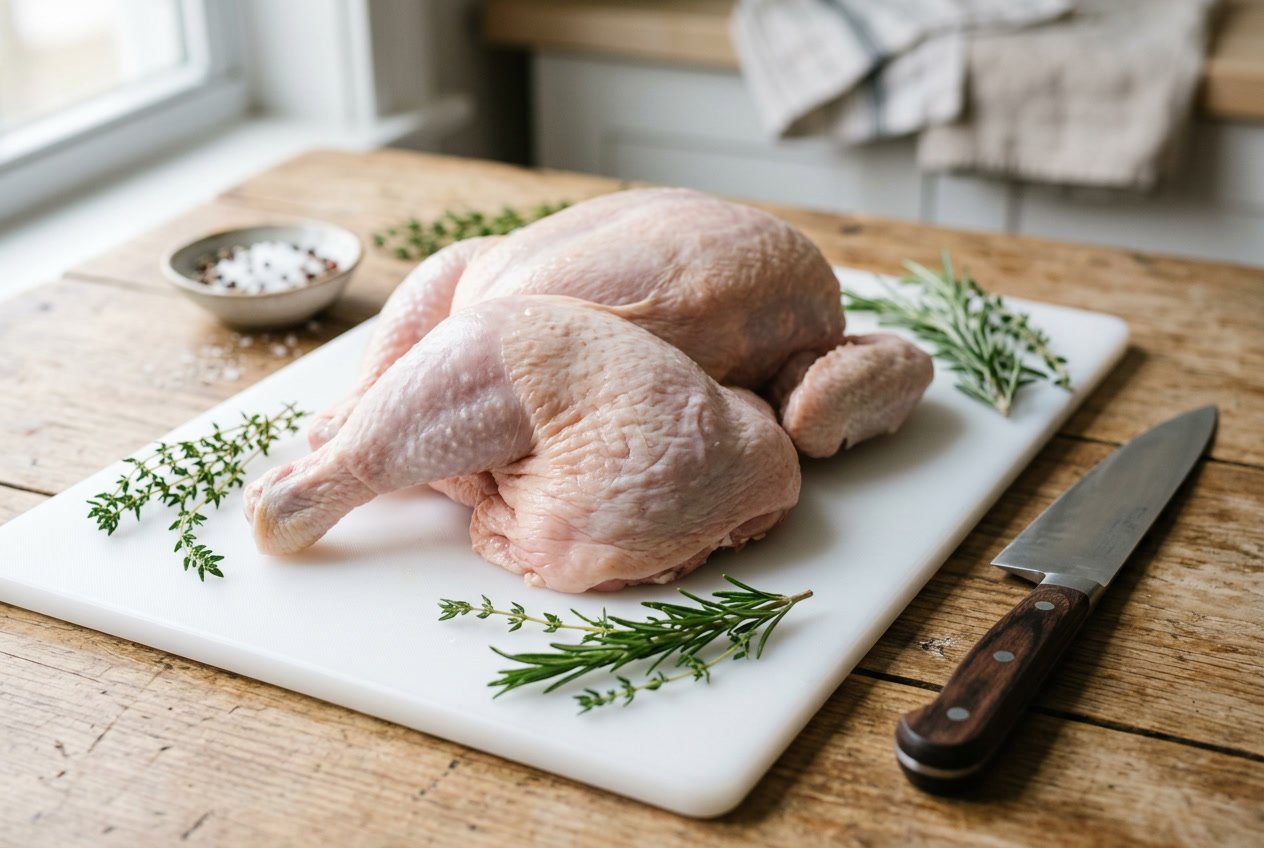
The thigh sits on the upper portion of the chicken’s leg, between the hip joint and the knee joint.
You’ll notice differences in color, bone structure, and attachment that separate it from other chicken parts.
Identifying the Thigh on a Whole Chicken
On a whole chicken, look at the leg where it meets the body.
The thigh is the thicker, meatier section closest to the body cavity; it connects at the hip joint and ends at the knee joint.
If you hold the leg, the thigh is above the bend you use to pull the leg away.
When you cut through the hip joint to separate leg quarters, the thigh remains the upper half.
For bone-in chicken thighs, the femur runs through the center and is shorter and thicker than the drumstick bone.
Relationship to Drumstick and Leg
The leg consists of two main parts: the thigh (upper leg) and the drumstick (lower leg).
The knee joint marks the separation; the drumstick extends from that joint to the ankle or hock.
When you buy pre-cut pieces, a label reading “chicken leg” may include both thigh and drumstick together as leg quarters.
If you want boneless or skin-on chicken thighs specifically, look for a single, meatier piece that lacks the long drumstick bone and has darker meat than the drumstick or breast.
Visual Features of Chicken Thighs
Thighs are darker in color than breast meat because they contain more myoglobin and fat.
Skin-on chicken thighs show a broad flap of skin over the top; when cooked, this skin renders fat and crisps well.
Bone-in chicken thighs have a visible, rounded femur and a curved silhouette.
Boneless thighs are flatter and more uniform but still darker and thicker than breast slices.
When shopping, pick thighs that are plump, with skin that is intact and pale.
Avoid pieces with an odd smell or excessive sliminess.
Chicken Leg Anatomy: Thigh Versus Drumstick
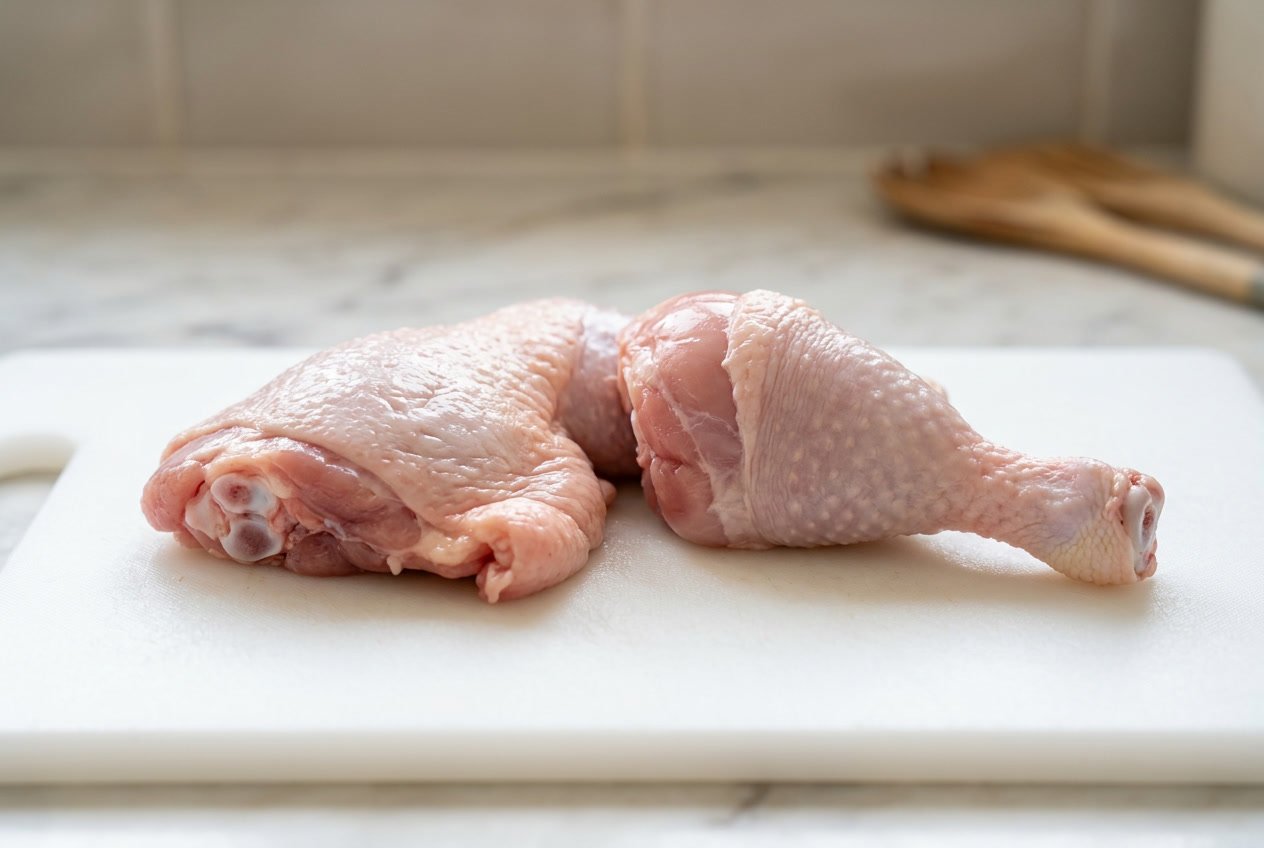
The chicken leg has two distinct portions with different textures, bones, and best cooking methods.
You can identify which part is the thigh and how it differs from the drumstick.
Thigh and Drumstick Differences
The thigh is the upper portion of the leg that attaches to the body at the hip joint.
It contains more muscle mass and intramuscular fat, which gives thighs richer flavor and juicier texture. Thighs are classified as dark meat.
Thighs are typically broader and flatter than drumsticks and may be sold bone-in or boneless.
The drumstick is the lower leg below the knee joint.
It surrounds a single long bone (tibia) and has a tapered shape that makes it easy to hold and eat.
Drumsticks are also dark meat but usually leaner than thighs and often cook faster per piece because of their smaller, denser shape.
Retail labeling sometimes calls either cut a “leg,” so inspect the piece: if it’s round and single-boned it’s a drumstick; if it’s thicker and connected to the body it’s a thigh.
Choose thighs for braising or slow roasting and drumsticks for grilling, baking, or frying.
Role of Joints and Bones
A clear joint separates the thigh from the drumstick: the knee joint (also called the hock in poultry).
You can separate the cuts by cutting through that joint rather than through bone.
The thigh contains the femur bone; the drumstick contains the tibia and fibula bundled in one main shaft.
Bone structure affects cook time and heat transfer.
The femur in the thigh is thicker and surrounded by more muscle, so heat penetrates slower and benefits from lower, longer cooking.
The drumstick’s single long bone conducts heat along its length, which can speed internal cooking near the bone but still requires attention to avoid dryness at the tip.
Joints add flavor during slow cooking because cartilage and connective tissue break down into gelatin.
That’s why thighs and drumsticks both excel in braises and stews where joint tissue enhances mouthfeel and sauce body.
Comparison with Chicken Breast
Chicken breast is white meat from the bird’s chest and differs sharply from thighs and drumsticks.
Breasts have large single muscles with low fat and little connective tissue, so they cook quickly and dry out if overcooked.
Use higher heat for shorter times or brining to retain moisture when cooking breasts.
Thighs and drumsticks contain more myoglobin and fat, giving them deeper flavor and forgivingness during longer cooks.
Choose thighs or drumsticks for tender, flavorful meat that tolerates slow roasting.
If you need lean, mild protein for quick searing or slicing, pick chicken breast.
Quick reference:
-
Thigh: dark meat, femur bone, fattier, slow-cook friendly.
-
Drumstick: dark meat, single long bone (tibia), handy for grilling or frying.
-
Breast: white meat, lean, fast-cook, milder flavor.
Chicken Thigh Cuts and Variations
Chicken thighs vary by bone, skin, and how they’re separated from the leg.
Knowing the differences helps you choose the right cut for roasting, braising, or quick stir-fries.
Bone-In and Boneless Thighs
Bone-in chicken thigh includes the thigh bone and often a small portion of the leg bone.
The bone adds flavor and helps the meat retain moisture during long, low-heat cooking like braises or oven roasting.
Expect slightly longer cook times and the need to check temperature near the bone.
Boneless chicken thigh has the bone removed and may be trimmed of connective tissue.
It cooks faster and slices cleanly for kebabs, stir-fries, and pan-searing.
If you want uniform pieces for even cooking, choose boneless thighs; they also absorb marinades more quickly because more surface area is exposed.
Skin-On and Skinless Thighs
Skin-on thighs retain the skin layer that crisps during high-heat roasting or frying.
The skin renders fat and produces a brown, flavorful crust.
Keep the skin if you want crisp texture and richer pan juices.
Start skin-side down to properly render fat and prevent sogginess.
Skinless thighs remove that layer for lower fat content and quicker marinade penetration.
Use skinless chicken thighs when you want leaner results or need meat to cook uniformly in a skillet or stew.
Compared to skinless chicken breast, skinless thighs still offer more fat and flavor, so they stay juicier in fast cooking methods.
Leg Quarter and Thigh Separation
A leg quarter consists of the thigh and the drumstick with the connecting portion of the carcass intact.
When sold whole, leg quarters give you both the thigh muscle and lower leg meat, useful for roasting whole birds or grilling large pieces.
They take longer to cook evenly because the drumstick and thigh differ in thickness.
Thigh separation means cutting the thigh away from the drumstick at the knee joint or removing the entire hindquarter from the backbone.
Separated thighs provide consistent thickness and cook more predictably than attached leg quarters.
If a recipe calls for uniform pieces or boneless cuts, use thighs separated and trimmed before cooking.
Chicken Anatomy and How Thighs Fit In
The thigh is the meaty upper portion of the leg that connects to the body at the hip joint.
It sits above the drumstick and contributes dark, flavorful meat to many recipes.
Basic Chicken Anatomy Overview
Think of the bird in three main vertical zones: the front (breast and neck), the middle (back and wings), and the lower rear (legs and thighs).
The thigh is part of the hindquarter, directly above the drumstick and attached to the pelvis at the hip.
It contains dark muscle with more myoglobin and fat than the breast, which gives it richer flavor and more moisture when cooked.
You can identify the thigh on a whole chicken by locating the joint where the leg meets the body; the thigh is the chunkier section between that joint and the drumstick.
If you remove skin and bone, chicken tenders remain with the breast, not the thigh.
The thigh often stays bone-in and skin-on in retail cuts, but you can buy boneless, skinless thighs too.
Other Chicken Parts and Their Locations
The breast sits on the bird’s front and contains white meat.
Chicken tenders are small strips of tenderloin beneath the breast.
Wings attach to the upper chest and break down into three parts: the drumette (thicker, like a mini drumstick), the wingette (flat middle section), and the wingtip (pointed end).
The back runs along the spine and is usually used for stock rather than plated meat.
Necks and giblets (heart, liver, gizzard) are often sold with whole chickens; the liver is a common ingredient in pâtés.
You’ll find chicken necks tucked into the cavity or sold separately for broth.
Knowing each part’s location helps you carve cleanly and choose cuts for roasting, grilling, braising, or making stock.
Culinary Benefits and Uses of Chicken Thighs
Chicken thighs give you rich flavor, forgiving texture, and flexible cooking options that work in both quick and slow recipes.
You can crisp the skin, braise for shreddable meat, or simmer thighs into broth for deep, savory stock.
Flavor and Texture Advantages
Thighs have higher fat and myoglobin than breast meat, which yields a deeper, more savory taste and a darker color.
That extra fat keeps the meat moist during high-heat cooking and long braises, so you avoid dry results when roasting or frying.
The connective tissue in thighs breaks down with slow cooking, producing tender, pull-apart meat ideal for stews, curries, and shredded fillings.
Bone-in, skin-on thighs add gelatin and flavor to stock and soups, improving mouthfeel and body.
If you want crisp skin, sear over high heat or roast at 400–425°F (200–220°C); the interior stays juicy while the exterior browns.
For maximum flavor, season under the skin or marinate with acid (lemon, yogurt) and aromatics.
Popular Cooking Methods
Roasting: Roast bone-in, skin-on thighs at 400–425°F for 30–40 minutes for crispy skin and juicy meat.
Use a rack to allow fat to render evenly.
Frying: For fried chicken thighs, double-coat and maintain oil at 325–350°F for the first fry, 375°F for finishing.
Thighs tolerate higher heat and stay juicy inside when cooked properly.
Braising and Stewing: Brown thighs, then simmer in stock, wine, or tomato sauce for 45–90 minutes.
This converts collagen to gelatin, perfect for tagines, curries, and pulled-chicken tacos.
Grilling: Grill over medium heat; watch for flare-ups from rendered fat.
Bone-in thighs take longer than breasts but gain smoky char without drying.
Soup and Stock: Use whole thighs or bones to make chicken stock.
Simmer 2–4 hours with mirepoix and aromatics to extract collagen and deepen flavor for ramen, noodle soups, or casseroles.
Nutritional Aspects
A 3.5-ounce (100 g) cooked thigh with skin contains more fat and slightly more calories than breast, but also supplies iron, zinc, and B vitamins like B6 and niacin.
These nutrients support energy metabolism and immune function.
You can reduce calories by removing the skin or trimming visible fat.
Baking or grilling avoids added oil from frying.
Using thighs to make stock transfers some nutrients and collagen into the broth, giving you nutrient-dense liquid for soups and sauces.
If you monitor saturated fat, choose skinless thighs and portion sizes accordingly.
For balanced meals, pair thighs with vegetables, whole grains, or legumes to spread protein and micronutrients across the plate.
Buying, Storing, and Substituting Chicken Thighs
Choose thighs with firm, pinkish flesh and minimal odor.
Store them promptly and separate from ready-to-eat foods to prevent cross-contamination.
How to Choose and Store Chicken Thighs
Check the sell-by date when you buy chicken thighs. Buy from a refrigerated display.
Look for thighs that are evenly colored and moist but not slimy. Avoid packages with excess liquid, which can signal that the product was thawed and refrozen.
At home, refrigerate raw thighs at 40°F (4°C) or below. Use them within 1–2 days.
For longer storage, freeze thighs at 0°F (-18°C) in airtight bags or vacuum-seal them. Label with the date and use within 6–8 months for best quality.
Thaw in the refrigerator overnight or in a sealed bag under cold running water. If you use the microwave or thaw in cold water, cook the chicken immediately.
Store raw thighs on the bottom shelf to prevent drips onto other foods. Wash hands and surfaces after handling.
Using Thighs in Place of Other Cuts
You can substitute thighs for breasts in many recipes, but expect differences in cooking time, flavor, and fat content.
Thighs tolerate longer, slower cooking and stay juicy in braises, stews, and on the grill.
Reduce oven temperature or extend cook time when you swap thighs into recipes written for breasts. This gives connective tissue time to break down.
If you use thighs in quick-cook methods like stir-fry or pan-sear, cut them into uniform pieces. Watch for slightly shorter cook times per piece because of the higher fat content.
For calorie or fat-conscious swaps, use skinless thighs or trim visible fat. The texture and flavor will still be richer than breast meat.
When buying for substitution, pick boneless thighs for easier use and consistent portioning.


