
Which Is Healthier: Chicken Thighs or Breasts? Full Nutrition Guide
You want a quick, practical answer: choose chicken breast if you prioritize lower calories and less fat. Choose thigh if you prefer richer flavor and slightly more iron and zinc.
For most weight- or heart-health goals, skinless chicken breast is the healthier pick. For taste, satiety, or certain micronutrients, thighs can be a reasonable choice.

This post compares calories, protein, and fats, shows how cooking and skin change nutrition, and helps you match each cut to specific goals like muscle building, weight loss, or better flavor. Decide what matters most to your diet, and you’ll know which cut to buy and how to cook it for healthier meals.
Core Nutritional Comparison
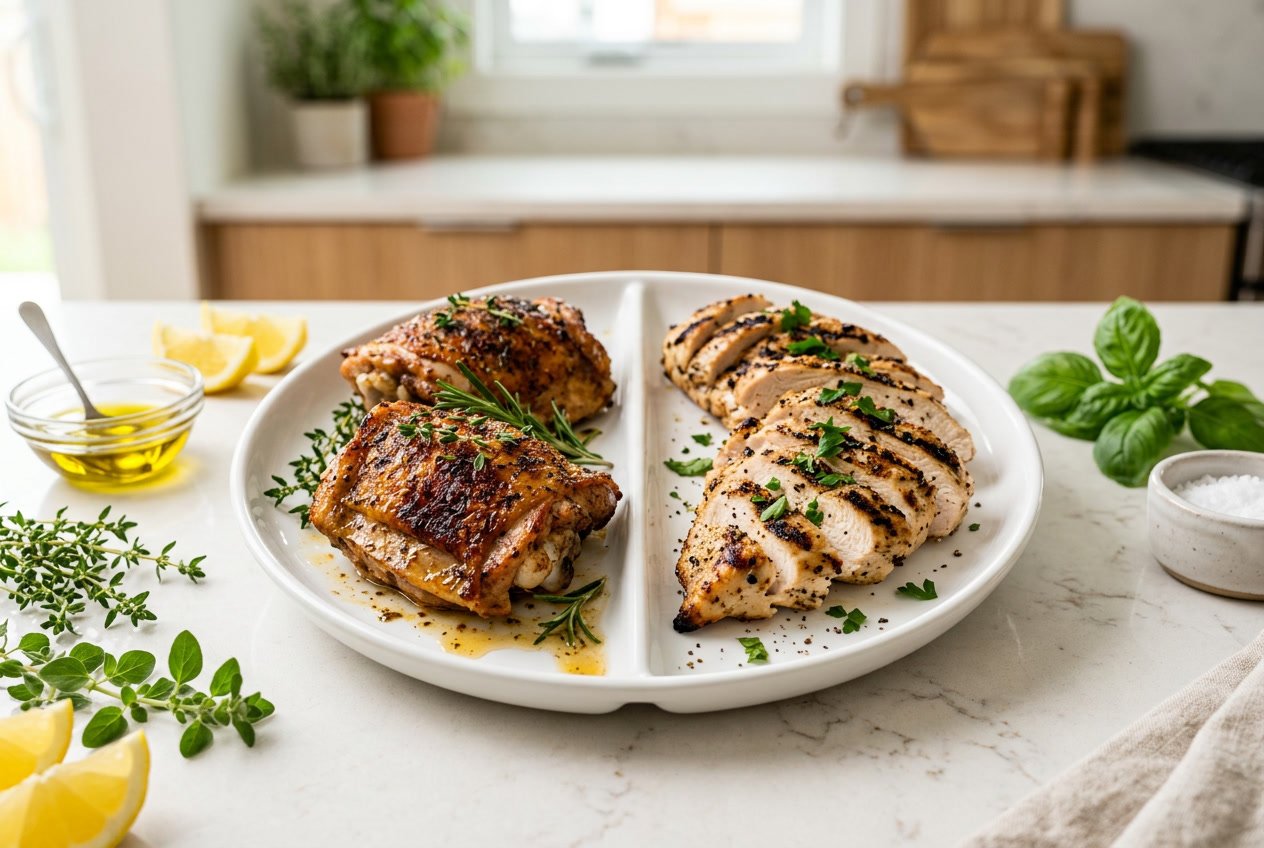
You’ll see clear differences in calories, fat, protein, and key micronutrients between chicken breast and chicken thigh. These differences affect portion planning and cooking choices.
Calories and Fat Content
Chicken thighs contain more calories and total fat than chicken breasts when both are skinless and cooked. For a 100 g serving of roasted, skinless meat, expect roughly 165 kcal for breast and about 179 kcal for thigh; fat is about 3.6 g in breast versus 8.1 g in thigh.
If you leave the skin on, calories and fat rise substantially because the skin adds saturated and total fat.
Use cooking method to control calories. Grilling, baking, or roasting on a rack reduces added fat. Frying or breading increases it.
Removing skin before eating cuts a meaningful portion of the thigh’s extra fat while retaining much of the protein.
Protein Per Serving
Chicken breast provides more protein per gram than chicken thigh. In a 100 g cooked, skinless serving, breast gives about 31 g protein while thigh gives roughly 24–25 g.
That difference matters when you track protein per meal or aim to meet daily targets.
Choose breast when you want a lean, high-protein option for meals like salads or protein-focused plates. Choose thigh if you prioritize flavor and don’t need the maximum protein density.
Vitamin and Mineral Highlights
Thighs and breasts differ in some micronutrients. Thighs tend to contain slightly more iron, zinc, and vitamin B12, which supports red blood cell production and immune function.
Breasts often have a bit more vitamin B6 and choline, which help metabolism and brain health. Selenium levels are similar between the two cuts.
If you need more iron or zinc, a thigh can be a small but consistent boost. If you need higher protein with lower fat, breast gives more protein per serving with modest amounts of B vitamins.
Check packaged products for added sodium or marinades. Processing can change the micronutrient and sodium profile substantially.
Lean Protein and Health Benefits
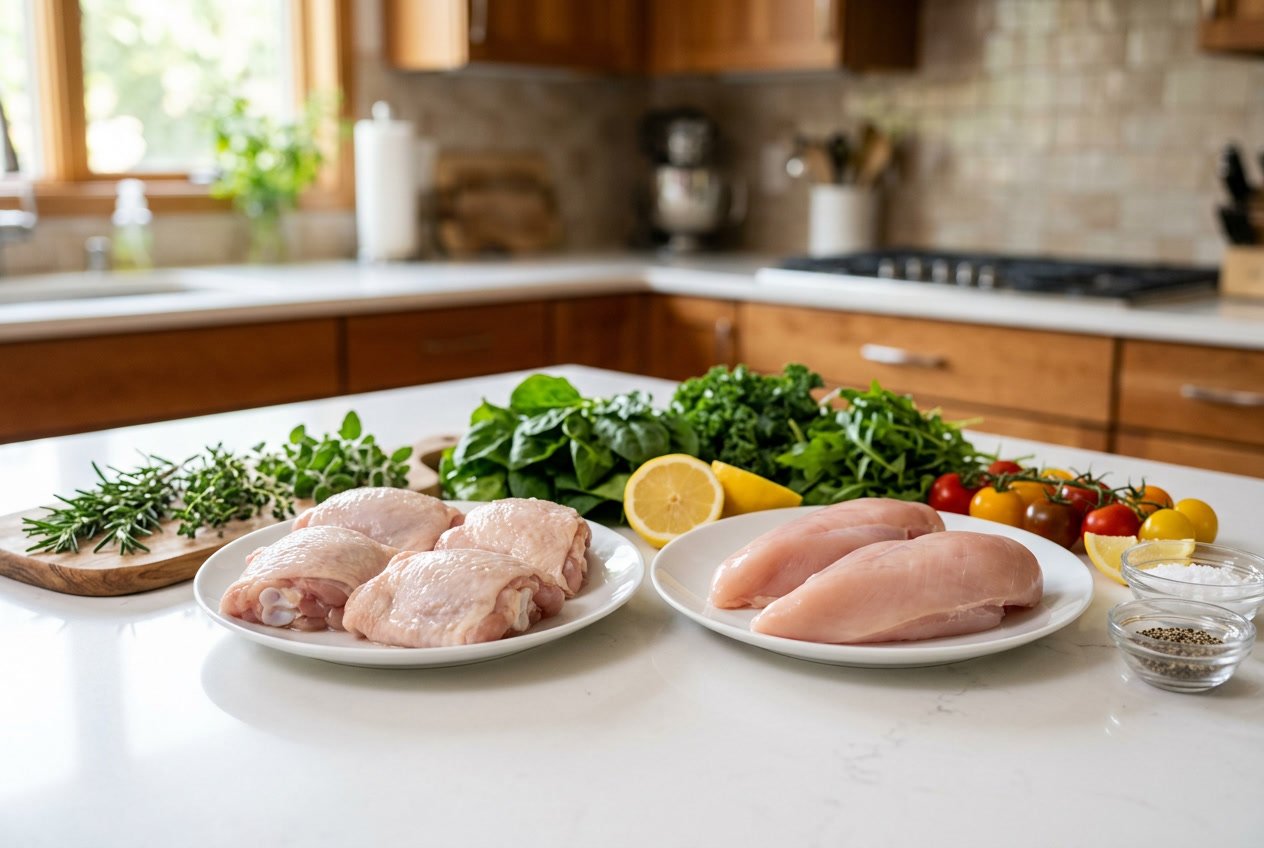
Chicken provides concentrated protein with different trade-offs in calories, fat, and micronutrients. Choose the cut that matches your calorie target, satiety needs, and nutrient priorities.
Benefits of Chicken Breasts
Chicken breast delivers high protein with minimal fat. You get about 22–25 g of protein per 100 g while keeping calories and saturated fat low.
That makes it useful when you need to meet specific protein goals without overshooting daily calories. It works well for weight loss, muscle maintenance, or post-workout meals.
You also get substantial B vitamins, especially niacin (B3) and vitamin B6, which support energy metabolism and amino acid processing.
The low fat content lets you control added fats and dressings, which helps if you track macros or heart-health metrics like LDL cholesterol.
Because breast meat cooks quickly and is mild in flavor, it suits meal prep and portion-controlled dishes. Add some dietary fat elsewhere if a meal contains fat-soluble vitamins or if you want longer-lasting satiety.
Benefits of Chicken Thighs
Chicken thighs contain more fat and slightly less protein per ounce than breasts, giving roughly 18–19 g of protein per 100 g and higher calorie density. The extra fat slows digestion, so thighs often keep you fuller longer and reduce hunger-driven snacking.
Thighs provide more iron and zinc compared with breasts, which can matter if you’re addressing low iron or supporting immune function. The natural juices and myoglobin in thigh meat also make it easier to cook without drying.
If you’re not restricting calories tightly, thighs add flavor and help absorb fat-soluble vitamins in mixed meals. Be mindful of portion size and skin removal if you need to limit saturated fat for cardiovascular reasons.
Downsides and Considerations
Both cuts have trade-offs you should weigh based on calories, fat, nutrient needs, taste, and how you plan to cook them. Consider portion size, cooking method, and whether you typically eat the skin.
Potential Disadvantages of Chicken Breasts
Chicken breasts are very lean, which lowers calories but can reduce satiety. If you rely on breasts for most meals, you may feel hungry sooner and snack more, especially if your meals lack added healthy fats like olive oil or avocado.
Because breasts are low in fat, they don’t carry fat-soluble vitamins as well when paired with low-fat sides. They also dry out easily with high heat or long cooking, increasing the chance you’ll overcook and lose both texture and flavor.
If you remove the skin and eat breasts exclusively, you may miss small amounts of iron, zinc, and other nutrients found at higher levels in darker cuts.
Potential Disadvantages of Chicken Thighs
Chicken thighs are higher in total fat and calories than breasts, which can matter if you track energy intake closely. A typical 100 g serving of boneless, skinless thigh has noticeably more calories and fat than the same amount of breast.
Thighs contain more saturated fat, particularly with the skin on, which can raise LDL cholesterol if you eat them very frequently and in large portions. That makes portion control important when you choose thighs regularly.
Thighs also vary more in nutrient density. They provide more iron and zinc but can push daily saturated fat limits if prepared with added oils or fried. Choose baking, grilling, or broiling to minimize added fats and keep portions aligned with your goals.
Cooking Methods for Healthier Chicken
Choose cooking methods that limit added fats, prevent charring, and preserve moisture so your chicken stays tender without extra calories. Focus on temperature control, minimal oil, and simple seasonings to keep nutrients intact and reduce harmful compounds.
Baked Chicken
Baking lets you cook both breasts and thighs with little added fat. Use a rimmed baking sheet or a roasting pan on a wire rack so fat drains away and the skin crisps without sitting in grease.
Cook skinless breasts at 375°F (190°C) for 18–22 minutes depending on thickness. Thighs need 20–30 minutes.
Always check internal temperature: 165°F (74°C) for safe doneness. Rest meat 5 minutes before slicing to retain juices.
Season simply with salt, pepper, garlic powder, and lemon. Add herbs like rosemary or thyme.
For extra moisture without oil, baste with a spoonful of low-sodium broth or a light yogurt-based sauce before finishing. Avoid breading and heavy sauces that add calories.
Grilled Chicken
Grilling adds flavor with minimal fat if you manage flare-ups and cook at moderate heat. Preheat the grill to medium (about 350–400°F), oil the grates lightly, and pat chicken dry to reduce sticking.
Use direct heat for thin cuts and indirect heat for thicker pieces. Flip once or twice and avoid prolonged charring.
Marinate skinless pieces for 30–120 minutes to improve moisture retention and reduce the need for added fats while grilling.
Use a meat thermometer to reach 165°F for breasts and ensure thighs also reach safe temperature. Trim visible fat and remove skin after cooking if you want the grilled flavor with less fat.
Low-Fat Marinade Tips
Marinades add flavor and help retain moisture without adding much fat if you choose ingredients carefully. Use an acid plus oil plus aromatics formula: 2 parts acid (lemon juice, vinegar) to 1 part oil, but aim for less than 1 tablespoon oil per cup of marinade to keep it low-fat.
Flavor with minced garlic, grated ginger, smoked paprika, fresh herbs, mustard, or low-sodium soy sauce. Add a spoonful of plain yogurt or buttermilk for tenderizing.
Marinate in the refrigerator: 30 minutes for breasts, up to 6 hours for thighs. Discard used marinade or boil it before using as a sauce.
To further cut calories, brush with marinade sparingly during cooking rather than soaking the meat in high-fat mixtures.
Skinless Options: Breasts vs. Thighs
Skinless cuts reduce fat and calories compared with skin-on pieces. They change cooking needs and final texture, and nutrient differences between breast and thigh become clearer once the skin is removed.
Skinless Chicken Breast
Skinless chicken breast is the leanest common cut. A typical 3-ounce (85 g) cooked serving gives you roughly 25–31 g protein and about 120–165 calories depending on cooking method.
Fat content is low, usually 2–4 g per serving, so it fits well if you track calories or saturated fat.
You will notice it dries faster than dark meat. Cook at moderate heat, avoid overcooking, and consider brining or quick marinades to keep it tender.
Use grilling, baking, or poaching to preserve the low-fat profile.
Micronutrients include B vitamins (notably B6) and selenium. If you need higher iron or zinc, breast provides less than thigh, so plan other foods accordingly.
Skinless Chicken Thighs
Skinless chicken thighs are higher in fat and calories than breast even without skin. A 3-ounce cooked serving typically supplies about 170–200 calories and 8–10 g fat, with about 20–24 g protein.
The extra fat yields more moisture and flavor during cooking. Because thighs retain juiciness, you can cook them longer or at higher temperatures without the same risk of drying.
They suit braises, higher-heat roasting, and dishes where richness matters.
Thighs provide more iron and zinc per serving than breast, which can help if you’re managing iron intake. If you limit calories or saturated fat, trim portion size or pair thighs with vegetables and whole grains to balance your meal.
Choosing Based on Health Goals and Preferences
Pick the cut that matches your calorie targets, fat tolerance, and mealtime needs. Consider protein per serving, fat content, and how satisfaction or flavor affects what you actually eat over time.
Weight Loss and Muscle Gain
For weight loss, choose chicken breast for lower calories and fat. A 100 g serving of boneless, skinless breast provides about 106 kcal and ~22.5 g protein.
That higher protein-to-calorie ratio helps preserve lean mass while letting you stay in a calorie deficit.
If you struggle to feel full on very lean meals, rotate in chicken thighs. Thighs deliver more fat and slightly less protein per 100 g (about 144 kcal and ~18.6 g protein), which slows digestion and increases satiety.
Use thighs in controlled portions if you track calories.
For muscle gain, prioritize total daily protein. Both cuts support hypertrophy if you meet your protein target.
Choose breast around workouts for quick, lean protein. Use thighs when you want added calories or to make higher-fat meals more satisfying.
Taste, Texture, and Cooking Versatility
You’ll notice breast meat is mild and can dry quickly if overcooked. It suits fast cooking methods like grilling, stir-fry, or poaching where precise timing keeps it tender and lean.
Thighs stay moist and tolerate longer, higher-heat methods like braising, roasting, and pan-frying. Their higher fat content adds flavor and browning, which can reduce the need for added sauces or fats.
Mix cuts in dishes for balanced texture and flavor. For example, use breast in salads for lean protein and shredded thighs in tacos for richness.
Adjust seasonings and cook times to each cut’s needs to get the best result.
Cost and Accessibility
Chicken breasts usually cost slightly more per pound than thighs, but prices change depending on region and sales.
Thighs often cost less and give you more calories per dollar, which helps if you plan family meals or meal prep.
Boneless, skinless cuts increase the price. Bone-in cuts cost less and add flavor when you roast or braise them.
You can find frozen breasts and thighs in most stores, and they store well, so you can buy in bulk during sales.
Read labels to spot added sodium or brines. These can increase sodium content and affect both health and price.
Pick plain cuts if you want predictable nutrition and control over seasoning.


