
Which Is Better: Chicken Thigh or Breast? A Complete Comparison
You want a clear answer fast: pick chicken breast when you need a lean, higher-protein option. Pick chicken thigh when you want richer flavor and more iron, zinc, and B12.
Both can fit a healthy diet depending on your goals and cooking method. How you prepare the cut, your portion size, and whether you remove the skin or add heavy sauces matter more than your choice of cut.

This post shows practical nutrition differences, health benefits, risks to watch for, and which cooking methods suit each cut. You can choose the right one for weight control, muscle building, flavor, or budget.
If you want lower calories and higher protein per serving, choose breast. If you want juiciness, tenderness, and slightly more micronutrients, choose thigh.
Key Differences Between Chicken Thigh and Breast
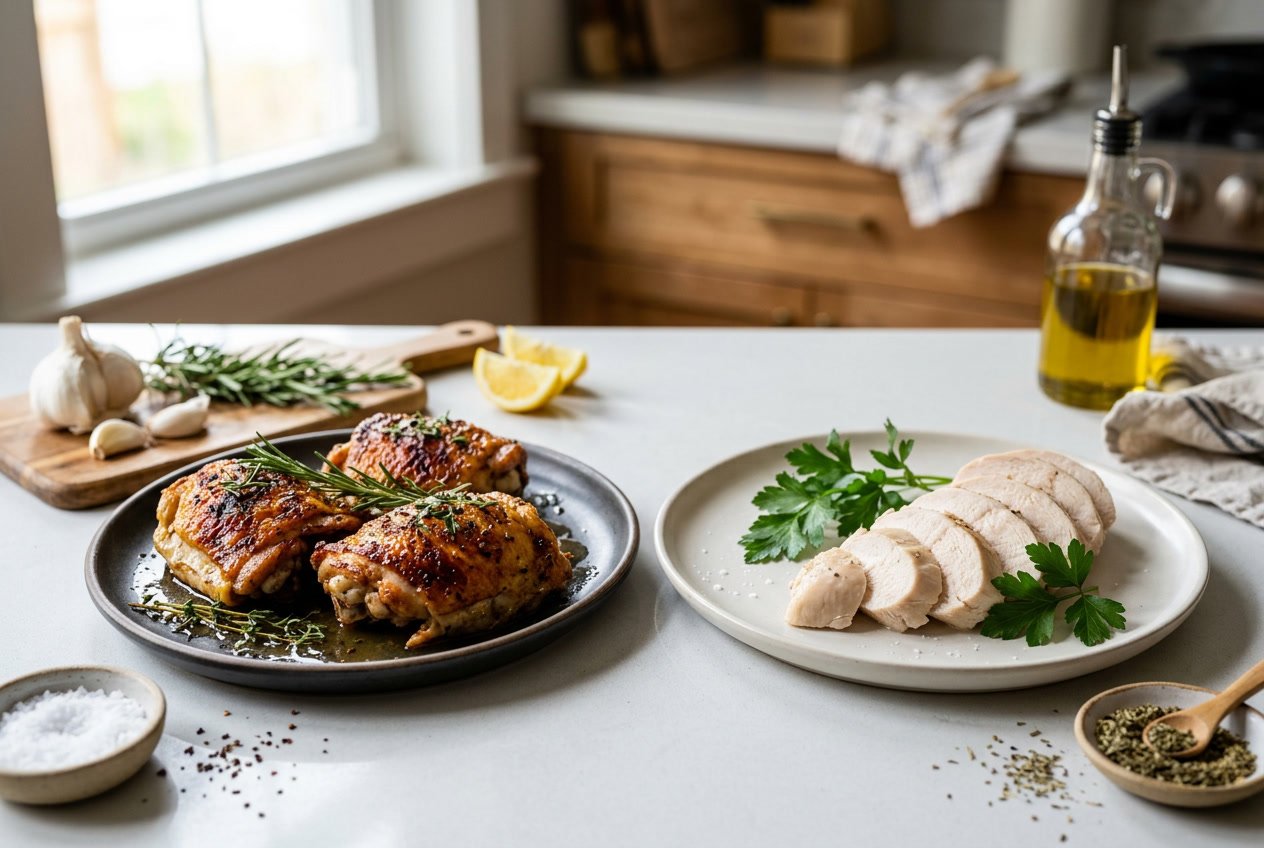
You’ll find clear differences in where each cut comes from and how the muscle behaves. These differences affect calories, cooking methods, and how you might use each cut in recipes.
Cut Location and Meat Type
Chicken breast comes from the chest muscles of the bird. Chicken thighs come from the upper leg.
The breast muscles support short bursts of activity, so they are leaner and contain less connective tissue. Thigh muscles work continually to support walking, so they include more fat and connective tissue.
Thighs contain more intramuscular fat and collagen, so they stay moist during longer cooking and tolerate higher-heat, slower methods like braising and roasting. Breasts dry out more easily, so you often need shorter cooking times, brining, or higher-heat, quick methods like grilling or pan-searing to keep them tender.
Choose breasts when you want lean, high-protein pieces that cook quickly. Choose thighs when you need juicier meat that holds up to stews, curries, or repeated reheating.
White Meat vs Dark Meat
Breasts are white meat. Thighs are dark meat.
White meat has less fat and fewer calories per ounce, which matters if you track energy intake closely. Dark meat contains more saturated and unsaturated fats, giving thighs a higher calorie density and richer mouthfeel.
Thighs tend to provide slightly higher amounts of iron, zinc, and vitamin B12 per serving, while breasts often supply more protein per 100 grams. If your priority is lowering total fat or calories, breast usually fits better. If you prioritize micronutrients or flavor, thigh often offers advantages.
For cooking and meal planning, think in terms of texture and nutrition. Use breasts in lean-protein salads and quick sautés. Use thighs in dishes that benefit from fat for flavor and a tender bite.
Myoglobin and Color Differences
Myoglobin is the oxygen-carrying protein that gives meat its color. Thighs have higher myoglobin levels because leg muscles need more oxygen for sustained activity, so the meat appears darker and deeper in color.
Breasts have low myoglobin, resulting in pale, white meat. Myoglobin also influences flavor; higher myoglobin correlates with a more pronounced, savory taste.
Myoglobin affects cooking appearance and how you judge doneness. Dark meat remains pinker at safe internal temperatures compared with white meat, which turns opaque and whitish when cooked through.
Remember that color differences don’t indicate spoilage. Use a thermometer for safety: cook breasts to 165°F (74°C) and thighs to at least 165°F (74°C). Thighs can stay pinker while still safe and fully cooked.
Nutrition Comparison: Chicken Thigh vs Breast
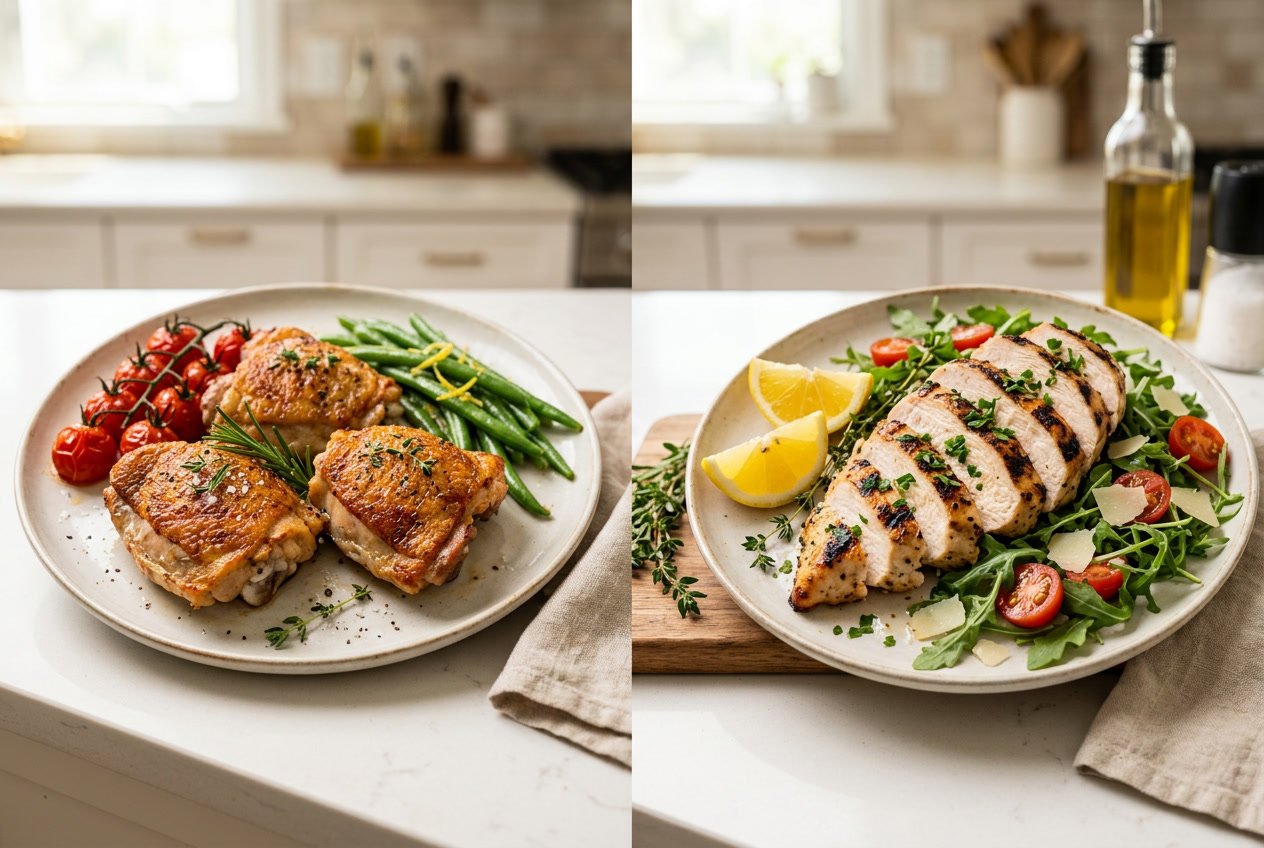
Chicken breast and thigh differ mainly in calories, fat, and protein density. One cut is leaner and higher in protein per gram, while the other provides more fat and richer flavor.
Choose based on your calorie, protein, and texture goals.
Calories and Macronutrients
Skinless chicken breast typically contains about 110–130 kcal and 22–25 g protein per 100 g cooked serving. It is one of the leanest protein sources you can choose, with very little saturated fat.
If you want to maximize protein while keeping calories low, breast gives you more grams of protein per calorie.
Skinless chicken thigh runs higher in calories—roughly 180–220 kcal per 100 g cooked—and has about 17–20 g protein. The extra calories come from higher total fat, including more monounsaturated and saturated fat.
That fat makes thighs juicier and more calorie-dense, so they suit higher-energy needs (muscle gain, keto) or when you prefer richer texture.
If you eat chicken with skin, expect a significant calorie and saturated-fat increase for both cuts. Adjust portion sizes: a larger thigh portion equals the protein in a smaller breast portion.
Vitamins and Minerals
Chicken breast and thigh provide similar cores of B vitamins and minerals, but amounts vary by cut. Skinless breast tends to be higher in vitamin B6, selenium, and phosphorus per 100 g, which supports energy metabolism and bone health.
Thigh meat contains more iron, zinc, and niacin in some measures and can supply slightly higher amounts of certain trace minerals. The additional fat in thighs can also aid absorption of fat-soluble nutrients from the meal you serve with it.
If you rely on chicken as a regular protein source, rotating breast and thigh helps you cover a broader micronutrient range.
Health Benefits of Chicken Breast
Skinless chicken breast delivers concentrated, lean nutrition with minimal saturated fat. You get high-quality protein that supports muscle, bone health, and appetite control while providing useful micronutrients in modest amounts.
Lean Protein Profile
Skinless chicken breast is one of the densest lean protein sources you can buy. A typical 3.5-ounce (100 g) cooked portion supplies about 25–31 g of complete protein with only 2–4 g of total fat, depending on cooking method.
That protein contains all essential amino acids, which helps repair muscle tissue and supports immune function.
Choosing skinless chicken breasts reduces added fat and calories compared with skin-on cuts. For meal planning, chicken breast gives a high protein yield per calorie, making it efficient for meeting daily protein targets without excess energy intake.
Benefits for Weight Management
When you control portions and cooking fats, chicken breast helps you create low-calorie, high-satiety meals. Protein slows gastric emptying and increases post-meal fullness, which can reduce overall calorie intake across the day.
Replacing higher-fat protein sources with skinless chicken breast can lower daily saturated fat and calorie totals while preserving protein intake.
Practical choices include grilling, poaching, or baking with minimal oil. Pair the breast with vegetables and whole grains.
These combinations extend fullness, stabilize blood sugar, and fit well into calorie-controlled or high-protein diets aimed at fat loss or lean mass maintenance.
Key Micronutrients in Breast
Chicken breast provides useful amounts of phosphorus and potassium, nutrients important for bone structure and cellular function. A 100 g serving typically supplies roughly 200–250 mg phosphorus and 300–400 mg potassium, depending on cut and preparation.
It also contains modest niacin (vitamin B3) and B6, which support energy metabolism and nervous-system health.
Although iron and zinc are lower in breast than in darker cuts, chicken breast still contributes to overall micronutrient intake when consumed regularly.
Balancing your meals with other iron- and zinc-rich foods (legumes, red meat, nuts) ensures you meet recommendations without sacrificing the lean-protein advantages of chicken breasts.
Health Benefits of Chicken Thigh
Chicken thighs deliver higher fats, iron, zinc, and flavor compared with leaner cuts. They provide sustained energy and satiety, plus flexible cooking options that help you include diverse nutrients without sacrificing taste.
Nutrient Density
Chicken thighs contain more calories from fat than breast, but that fat carries important micronutrients you may miss with only lean cuts. Per 100 g of boneless, skinless chicken thigh you get roughly 8 g fat, nearly twice the iron and zinc found in the same amount of breast, and only modestly less protein.
Iron and zinc support oxygen transport, immune response, and metabolic processes. Those minerals are more concentrated in thigh meat because of higher myoglobin content.
You also get fat-soluble nutrients in greater proportion, which helps if your meals include vitamins A, D, E, or K. Choosing skinless chicken thigh reduces saturated fat while keeping the mineral advantage.
Satiety and Fullness
The higher fat content in chicken thighs slows gastric emptying and increases meal satisfaction compared with very lean protein sources. You’ll likely feel fuller longer after a thigh-based meal than after the same-calorie portion of chicken breast.
If you aim to control snacking or steady energy between meals, incorporating skinless chicken thigh can be practical. Balance portion sizes with your calorie goals: a slightly smaller thigh portion yields similar satiety to a larger breast portion because of the fats that promote fullness.
Flavor and Culinary Versatility
Chicken thighs offer richer flavor and greater forgivingness in cooking. You can prepare diverse dishes without drying the meat out.
Thighs hold up well to braising, grilling, roasting, and slow-cooking. They absorb marinades and spices more readily than breast.
Because they remain moist at higher temperatures, you can use thighs in one-pan meals, stews, and international recipes where longer cook times or bold seasonings are common.
That culinary flexibility makes it easier to use thighs as a regular protein source.
Potential Downsides and Considerations
You should weigh differences in calories, fat type, and portion control, along with how added sodium or processing affects nutrition. Also consider whether you choose skin-on or skinless cuts, since the skin changes calorie, fat, and cooking outcomes.
Fat Content and Calories
Chicken thighs contain more total fat and saturated fat than chicken breasts. Per 100 g, boneless skinless thighs typically provide roughly 8 g fat and about 144 kcal, while boneless skinless breasts provide about 2 g fat and 106 kcal.
That higher fat raises calories and can matter if you track daily energy intake or limit saturated fat for heart health.
Fat also affects satiety and cooking. Thighs keep moisture and flavor better, which can reduce overeating from dry lean meat.
Breasts give more protein per calorie, useful around workouts or if you need a leaner meal. Pay attention to portion size: a larger thigh can equal the calories of a smaller breast.
Sodium and Additives
Processed chicken products often contain brine, flavorings, or seasoning blends that increase sodium. You should read labels: some retail breasts and thighs are injected with up to 10%–20% solution, adding several hundred milligrams of sodium per serving.
That matters if you monitor blood pressure or total daily sodium (often recommended under 2,300 mg/day).
Buying plain, skinless fresh cuts or removing visible salt-based marinades reduces added sodium. When you purchase pre-marinated skin-on chicken, expect higher sodium and sometimes added sugars or preservatives.
Cooking from unprocessed cuts gives you control over salt, oil, and other additives.
Skin-On vs Skinless Options
Keeping the skin adds about 70–100 calories and several grams of fat per standard serving, depending on cut. If you eat skin-on thighs, your saturated fat and total calories climb more than with skin-on breasts because thighs already contain more fat.
Removing skin cuts calories and saturated fat substantially. The skin can protect meat during cooking and improve flavor and juiciness, which may help you enjoy smaller portions.
If you want crisp skin but lower intake, you can remove skin after roasting. Much surface fat remains with the skin.
For strict calorie or saturated-fat limits, choose skinless breasts or thighs and use healthy cooking fats in controlled amounts.
Cooking Methods and Best Uses
Choose cuts based on cooking time, fat content, and the final texture you want. Thighs tolerate longer, higher-heat cooking and stay moist. Breasts cook faster and shine when protected from overcooking.
Grilled Chicken: Thighs vs Breasts
Grilling favors thighs when you want a forgiving, juicy result. Thighs’ higher fat content resists drying and develops crisp, caramelized edges over direct heat.
Cook bone-in thighs 20–30 minutes over medium-high heat, turning every 5–7 minutes. Aim for 165–175°F (use a probe thermometer).
Breasts work best with quick, high-heat sear or indirect grilling to avoid toughness. Pound or butterfly thicker breasts for even thickness.
Grill boneless breasts 6–10 minutes total over medium-high heat, flipping once. Remove at 160–162°F and rest to reach safe temperature.
Tips:
- Brine or oil and salt for breasts to improve juiciness.
- Marinades with acid help flavor but shorten grill time.
Baked Chicken
Baking lets you control internal temperature. It works well for sheet-pan meals.
Thighs handle higher oven temperatures and longer bake times without drying out. Roast them at 375–425°F for 25–40 minutes, depending on size and whether they are bone-in or boneless.
Bake breasts at 350–400°F and use shorter times, about 18–28 minutes for boneless pieces. Cover breasts with foil or bake them in sauce to keep them moist.
Check doneness with a thermometer. Remove breasts at 160–162°F and thighs at 170–175°F.
For crisp skin, use a rimmed sheet with a roasting rack. Add vegetables that match the cooking time, like carrots and potatoes with thighs or quick-cooking greens with breasts.
Recipe Flexibility and Meal Ideas
Use thighs for long-simmering recipes and flavor-forward dishes. Use breasts for lighter, faster meals.
Try braised thighs with tomatoes, slow-cooker coq au vin, or skewered grilled thighs for tacos. Thighs add flavor and richness as their fat and connective tissue melt into the sauce.
Slice chicken breast for salads, make chicken piccata, or prepare quick stir-fries. These dishes highlight the lean texture and mild flavor of chicken breast.
Swap thighs for breasts when you want extra juiciness and longer cook times. Increase seasoning and lower direct high heat for breasts if you substitute them.
Adjust cook times since thighs usually need 5 to 15 minutes longer than breasts, depending on the method.


