
Which Chicken Thigh Recipe: The Ultimate Guide to Juicy, Flavorful Dishes
You want a reliable answer and a clear way to pick the right chicken thigh recipe for tonight. If you need juicy, forgiving meat that works for grilling, braising, roasting, or quick weeknight meals, choose bone-in, skin-on thighs for best flavor and crisp skin; pick boneless, skinless thighs when you want speed and easy shredding.
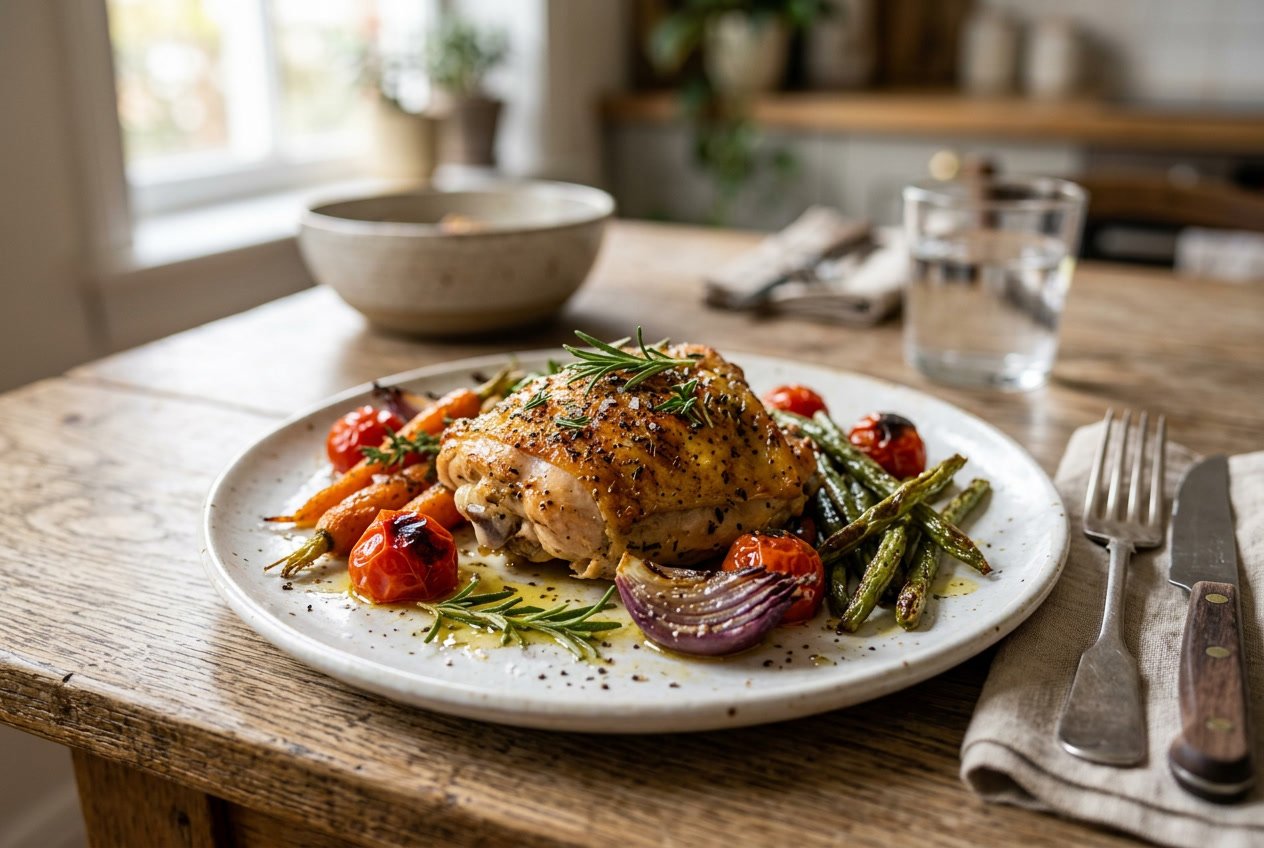
This guide shows how each cut performs and gives simple tips to keep thighs juicy. You’ll see comparisons of cooking methods and get advice on marinades, sauces, and pairings.
Types of Chicken Thighs and Their Uses
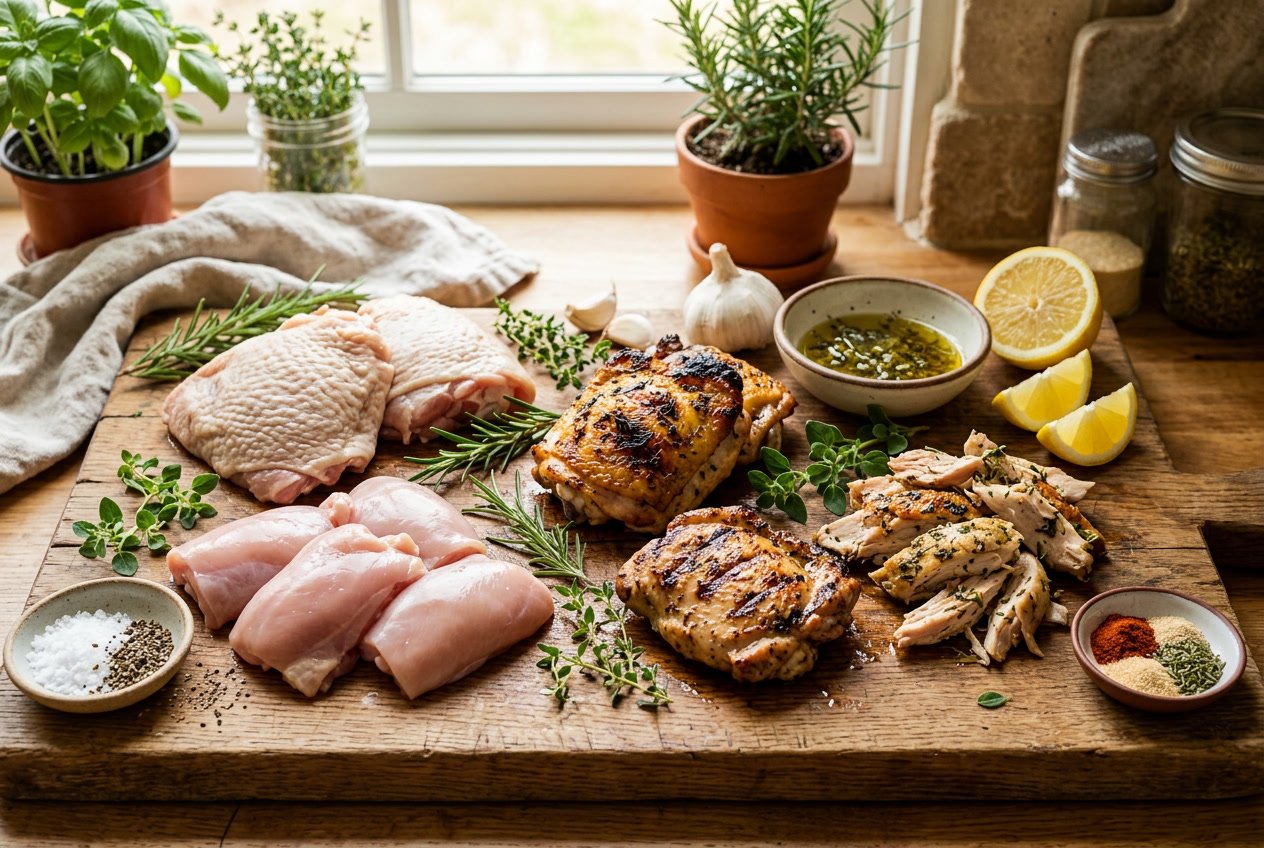
Choose thighs based on texture, cook time, and whether you want crisp skin or easy shredding. The three main trade-offs are bone vs. boneless, skin vs. skinless, and which cut suits searing, braising, or shredding.
Bone-In vs. Boneless Chicken Thighs
Bone-in chicken thighs keep more flavor and resist drying during long cooks. The bone conducts and distributes heat, so stews, braises, and slow-roasted preparations gain deeper taste and a slightly firmer bite.
Plan on 35–50 minutes in the oven at moderate heat for bone-in thighs, depending on size. Boneless chicken thighs cook faster and are easier to portion for stir-fries, skewers, or quick pan-sears.
They’re convenient for shredding into tacos and salads because you can shred warm meat without dealing with bones. Expect 8–12 minutes on the stovetop for boneless pieces, depending on thickness.
Skin-On vs. Skinless Chicken Thighs
Skin-on chicken thighs deliver a crisp, savory exterior when roasted, broiled, or pan-seared. The fat under the skin bastes the meat as it cooks, keeping thighs juicy and giving you a golden crust if you render the skin long enough.
Use skin-on for sheet-pan dinners, cast-iron sears, and oven-roasted dishes. Skinless chicken thighs reduce fat and simplify prep when you want quicker marinades or a uniform texture in curries and stews.
They absorb marinade faster and cut down on splatter when pan-frying. Choose skinless for braises where the liquid softens any remaining skin and for recipes that call for shredded chicken.
Best Cuts for Different Cooking Methods
Pick bone-in, skin-on thighs for high-heat searing and crisp skin. Sear skin down in a hot skillet, then finish in a 375–425°F oven for reliable crispness and juicy interior.
For slow braises, casseroles, and stews, use bone-in thighs. The bone boosts flavor and helps the meat stay tender during long, moist cooking.
Cook low and slow—160–180°C (325–350°F) oven or a simmering stovetop—for 45 minutes to 1.5 hours depending on recipe. For quick stir-fries, sandwiches, and shredded fillings, use boneless, skinless thighs.
They brown quickly, slice evenly, and shred with little effort after a short simmer. If you need crisp texture without bones, use boneless skin-on thighs and remove skin after cooking if desired.
Essential Tips for Juicy Chicken Thighs
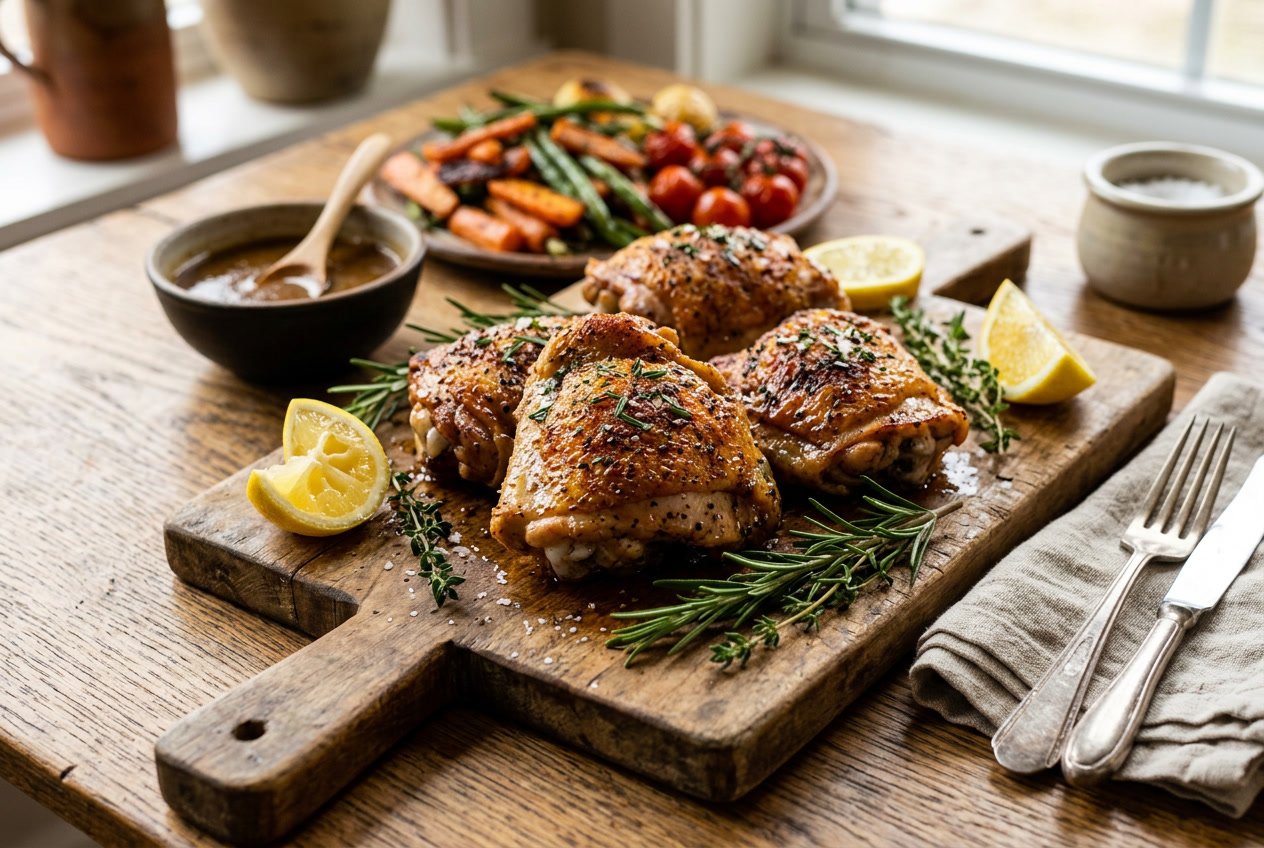
Control moisture, flavor, and texture with a purposeful marinade, precise internal temperature, and the right seasoning blend. These actions deliver tender, juicy chicken thighs with reliable results.
Marinating Techniques and Flavors
Marinate bone-in, skin-on thighs for at least 30 minutes and up to 12 hours to boost flavor and moisture. Use an acid (1–2 tbsp lemon juice or vinegar per cup), oil (2–3 tbsp olive oil), and salt (½–1 tsp per pound) as the base to balance tenderness and surface coating.
Include aromatics and herbs: minced garlic, chopped rosemary or thyme, and a tablespoon of Dijon or soy sauce add savory complexity. For an easy chicken recipe with Italian notes, mix olive oil, lemon, garlic, and 1–2 tsp Italian seasoning.
Pat thighs dry before cooking to ensure the skin crisps while the interior stays juicy. If you plan a quick cook (under 30 minutes), a 30–60 minute marinade concentrates flavor without breaking down texture.
For marinated chicken thighs meant for grilling, reserve a small amount of marinade for basting only if you boil it first to kill bacteria.
Cooking to the Right Temperature
Use an instant-read thermometer to cook thighs to a safe and tender temperature. Aim for 175°F–185°F for bone-in thighs to break down connective tissue and create extra tenderness.
Boneless thighs can be pulled at 165°F–170°F for moistness. Sear skin-side down in a hot pan first (3–6 minutes) to render fat and crisp the skin, then finish in a 375°F oven until the target temp is reached.
On the grill, use two-zone cooking: sear over direct heat, then move to indirect heat to finish without charring. Rest thighs 5–10 minutes after cooking to redistribute juices and keep the meat juicy.
Seasoning and Spice Blends
Season generously and early. Salt each thigh evenly (about ½–1 tsp per pound) at least 30 minutes before cooking or right into the marinade.
Pepper, garlic powder, and onion powder form a reliable backbone for easy chicken recipes. For Italian-style thighs, combine 1–2 tsp Italian seasoning with ½ tsp smoked paprika and ½ tsp kosher salt per pound.
For bolder profiles, add 1 tsp cumin or chili powder and a pinch of sugar to promote caramelization. Apply spice rubs to the skin and under the skin where possible for direct flavor contact.
Finish with a spritz of acid—lemon juice or vinegar—after cooking to brighten flavors and enhance perceived juiciness.
Popular Cooking Methods for Chicken Thighs
You’ll choose a method based on texture goals: crispy skin and caramelized edges, charred smokiness, or tender, braise-ready meat. Each technique requires specific temps and timing for consistent results.
Baked Chicken Thighs
Baking gives reliable, hands-off results for both bone-in and boneless thighs. Preheat the oven to 400–425°F and use a wire rack over a rimmed sheet pan so air circulates and fat drips away.
Bone-in, skin-on thighs typically need 35–45 minutes; boneless cook in 20–30 minutes. Insert an instant-read thermometer into the thickest part: pull boneless at about 165°F and bone-in at 175°F for a more tender texture.
Pat skin dry, season well, and avoid covering with foil to maintain a crisp exterior. For extra crunch, salt ahead and refrigerate uncovered for 1–12 hours.
Finish under the broiler for 2–3 minutes if you need more color.
Grilled Chicken Thighs
Grilling imparts direct char and a smoky flavor that plays well with bolder marinades. For bone-in thighs, set up a two-zone fire: sear skin-side down over high direct heat for 5–6 minutes, then move to indirect heat and cook with the lid closed until 175°F (about 20–25 more minutes).
For boneless thighs, grill over medium-high direct heat for 5–7 minutes per side. Watch for flare-ups from fat drips and resist pressing the meat.
Brined or oil-based marinades help prevent sticking. Use a meat thermometer and rest thighs 5–10 minutes before serving.
Pan-Roasting and Skillet Recipes
Pan-roasting combines sear and oven finish for deep flavor and crisp skin. Start skin-side down in a cold or room-temperature cast-iron or heavy skillet to slowly render fat.
Crank heat to medium-high until the skin releases and browns, about 7–10 minutes. Flip and transfer the skillet to a 400°F oven to finish—bone-in for 15–20 minutes, boneless for 8–12—until the internal temps mentioned above.
For skillet-only recipes, sear both sides and lower the heat to gently finish cooking, or add a splash of stock and cover briefly for braise-like tenderness. Don’t overcrowd the pan, pat thighs dry, and scrape fond to make quick pan sauces with wine, stock, or pan juices.
Must-Try Chicken Thigh Recipes from Around the World
These recipes show how chicken thighs handle bold marinades, long braises, and quick high-heat cooking. Expect hands-on techniques like marinating for tandoori or adobo, reducing sauces for teriyaki or butter chicken, and braising for cacciatore or brown stew.
Asian-Inspired Chicken Thigh Dishes
Start with shoyu chicken and teriyaki chicken thighs for soy-forward, glossy finishes. Marinate thighs in a mixture of soy, mirin, sugar, and garlic for 30–60 minutes, then pan-sear and finish in the oven to get a charred edge and sticky glaze.
For stir-fry, slice thighs thin across the grain and toss them quickly over high heat with aromatics like ginger, scallion, and sesame oil so the meat stays juicy. Add Filipino chicken adobo to your rotation by simmering thighs in a tangy mix of vinegar, soy sauce, bay leaf, and garlic until the sauce reduces and the skin darkens.
If you want bold spice, try tandoori-style thighs: yogurt, lemon, garam masala, and Kashmiri chili give color and tenderize before roasting or grilling.
Classic Italian Chicken Thigh Recipes
Focus on braising and sauce-building for Italian preparations. Chicken cacciatore uses tomatoes, bell peppers, olives, and white wine.
Brown the thighs first, then simmer until the sauce concentrates and the meat pulls from the bone. For a creamy take, adapt stroganoff techniques: sear thighs, make a reduced mushroom and onion pan sauce, then finish with a splash of sour cream or crème fraîche for silkiness.
Use bone-in thighs for more flavor and longer cooking. Boneless works for weeknight speed.
Season simply with rosemary, garlic, and lemon when you want an ingredient-driven dish that pairs well with polenta or pasta.
Rich Caribbean and Latin Flavors
Brown stew chicken and huli huli highlight deep marinades and long simmering or slow roasting. For brown stew chicken, marinate in garlic, thyme, allspice, and Scotch bonnet, then brown heavily and braise in a seasoned, reduced sauce to concentrate flavor.
Huli huli chicken uses a sweet-savory Hawaiian glaze—pineapple, soy, brown sugar—applied while grilling to create caramelized layers. Latin techniques include citrus and annatto marinades; the acid brightens thighs and the annatto adds color without overpowering the meat.
For island-style comfort, cook thighs low and slow in coconut milk and curry spices. The sauce becomes luxurious and the meat falls apart.
Modern and Time-Saving Chicken Thigh Recipes
These methods let you get tender, flavorful thighs with minimal hands-on time while still controlling seasoning, texture, and finishing. Each technique highlights practical timings, seasoning tips, and quick serving ideas.
Slow Cooker Chicken Thighs
Use bone-in or boneless thighs; both become very tender in a slow cooker. Season thighs with salt, pepper, and a base (garlic + onion powder or a sachet of herbs), then add 1/2–1 cup of liquid—broth, canned tomatoes, or a simple soy-honey mixture—to keep meat moist.
Cook on low for 6–8 hours or high for 3–4 hours. Add quick-cooking vegetables (bell peppers, sliced mushrooms) in the last 60–90 minutes.
For shredded results, remove thighs and pull with forks; return to sauce to absorb flavors. Sear first if you want deeper color and flavor.
Thicken sauce with a 1:1 slurry of cornstarch and cold water, added 15 minutes before serving. Try slow-cooker chicken adobo: use soy, vinegar, garlic and bay leaves; reduce liquid at the end on sauté if your cooker supports it.
Serve over rice, noodles, or in tacos. Leftovers reheat well and make quick sandwiches or salads.
Instant Pot Chicken Thighs
The Instant Pot cooks tender thighs in a fraction of the time. Brown the thighs using Sauté mode for 3–4 minutes per side.
Then pressure-cook them with 1 cup of liquid (broth, tomato sauce, or an adobo-style blend) on high for 8–12 minutes depending on bone-in (12) or boneless (8). Quick-release for juicier meat, or use a 5–10 minute natural release for thicker pieces.
If you want shredded meat, allow a 5–7 minute natural release, then shred and stir back into the sauce.
Useful presets and timing:
- Bone-in: 12 min high pressure + 5–10 min natural release
- Boneless: 8–10 min high pressure + quick release
Switch to Sauté to reduce sauces for 3–5 minutes. Add butter or a splash of cream for richness.
For chicken adobo, use vinegar and soy, pressure-cook for 10 minutes, then reduce the sauce.
Layer marinades or aromatics before sealing to build complex flavors quickly.
Air Fryer Chicken Thighs
Air fryers crisp skin and seal juices quickly. Pat thighs dry, rub with oil and your spice blend (paprika, garlic powder, salt).
Preheat to 400°F (200°C) if your model requires it.
Cook times:
- Bone-in skin-on: 18–22 minutes, flip at 10 minutes
- Boneless skinless: 12–15 minutes, flip once
Aim for an internal temperature of 165°F (74°C). For extra crispness, finish with a 2–3 minute burst at 425°F if your unit allows.
Use a meat thermometer to avoid overcooking.
Tips:
- Leave space in the basket for hot air to circulate.
- For sauced recipes, air-fry until nearly done, brush with sauce, then air-fry 1–2 minutes to set the glaze.
- Reheat leftovers in the air fryer at 350°F for 5–7 minutes to restore crisp skin.
Serve air fryer chicken thighs as a main, salad topper, or filling for wraps and bowls.
Creative Sauces, Marinades, and Pairings for Chicken Thighs
Choose marinades to match your cooking method and mood. Pick sides and sauces that balance fat and umami.
Focus on acid, salt, and aromatics for marinades. Select starches or bright vegetables as partners, and finish with concentrated sauces or pan juices for maximum flavor.
Classic and Bold Marinades
Marinades tenderize and add layers of flavor. Use an acid (lemon, vinegar, or mirin), salt (soy or kosher), and oil to carry aromatics like garlic, ginger, rosemary, or smoked paprika.
For honey garlic chicken thighs, mix 1/2 cup honey, 1/4 cup soy sauce, 4 smashed garlic cloves, and 1 tbsp olive oil. Marinate 4–12 hours for bone-in thighs.
For baked teriyaki chicken, use soy, mirin, brown sugar, garlic, and grated ginger. Reserve and boil the marinade before glazing.
For BBQ chicken thighs, whisk ketchup, Worcestershire, brown sugar, apple cider vinegar, smoked paprika, and garlic powder. Marinate 4–12 hours and finish on the grill for char.
For deviled chicken thighs, try a mix of Dijon, honey, vinegar, garlic, and a touch of cayenne. For smothered chicken, use a yogurt- or cream-based marinade with thyme and onion powder.
Best Side Dishes for Chicken Thighs
Pair rich thighs with bright or starchy sides that soak up sauce and cut fat. Serve honey garlic or teriyaki thighs over steamed jasmine rice or coconut rice.
BBQ chicken thighs go well with grilled corn, vinegar-based coleslaw, and baked beans. Smothered chicken matches with creamy mashed potatoes or buttery polenta.
Garlic chicken thighs pair with sautéed greens like spinach, chard, or kale finished with lemon and red pepper flakes. For a lighter contrast, try a citrus-fennel salad or quick-pickled cucumbers.
Shred leftover thighs into chicken and wild rice soup for extra richness and protein.
Sauces That Make Chicken Thighs Shine
Finish with concentrated sauces that match the seasoning and cooking method.
Reduce reserved teriyaki or honey-garlic marinade with a splash of rice vinegar and a cornstarch slurry to thicken and add shine.
For garlic chicken thighs, make a pan sauce.
Deglaze with white wine or chicken stock, then add minced garlic, butter, and chopped parsley.
For BBQ chicken thighs, use a vinegar-forward mop or a smoky tomato glaze.
Brush the sauce on periodically while grilling to build flavor.
A lemon-herb butter brightens roasted thighs and melts into the skin.
For smothered or deviled preparations, make a pan gravy using caramelized onions, stock, and cream or mustard.
Season the gravy to taste and strain for smoothness.
Finish with chopped scallions, toasted sesame seeds, or a squeeze of citrus to add texture.


