
Which Chicken Thigh Marinade: Best Options, Ingredients, and Methods
You want juicy, flavorful chicken thighs and want to know which marinade will actually deliver.
Pick a marinade that balances acid, fat, salt, and aromatics. This combination reliably tenderizes the meat and creates the flavor profile you want, whether smoky, sweet, tangy, or umami.

This post explains what a marinade does and the essential components that make one great. You will also find easy recipes for baking, grilling, or pan-frying.
Expect practical tips on timing and temperature. Learn about small swaps so you can tailor marinades to your schedule and taste.
What Is a Chicken Thigh Marinade?
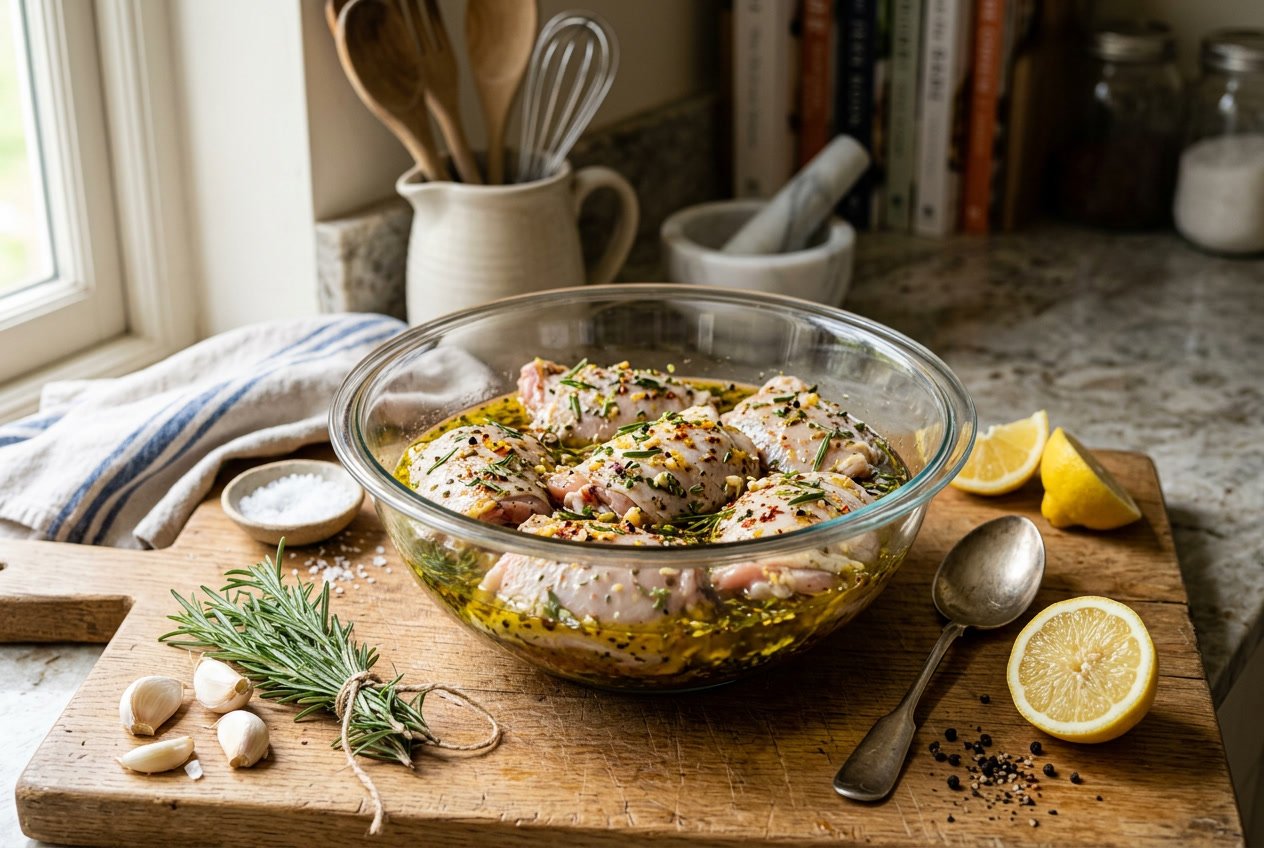
A chicken thigh marinade is a flavored liquid blend that you soak chicken thighs in to add taste and improve texture.
It typically combines an acid, an oil, and seasonings so the meat becomes more tender and better seasoned.
Purpose and Benefits
A marinade’s main job is flavor infusion and tenderizing. Acids like lemon juice, vinegar, or yogurt loosen muscle fibers so the thigh feels less dense after cooking.
Oil helps distribute fat-soluble flavors and keeps the surface from drying during heat. Salt or soy sauce increases moisture retention and enhances savory taste.
Sugars such as honey or brown sugar promote browning and a caramelized crust when you grill or roast. Herbs, spices, garlic, and condiments like mustard or Worcestershire provide distinctive profiles so your marinated chicken thighs match the cuisine you want.
Marinate in the refrigerator. Use a nonreactive container or zip-top bag. Discard or boil any marinade that contacted raw meat before using as a sauce.
How Marinades Transform Chicken Thighs
Marinades change both surface and internal characteristics of the meat. Short marinades (30–60 minutes) mostly season the exterior and lightly affect texture.
Longer soaks (up to 12–24 hours for thighs) let acid and salt penetrate deeper, producing juicier, more tender pieces if you keep acid levels moderate.
Ingredient choice determines outcome. A soy-honey-garlic mix gives sweet-savory glaze and glossy color when cooked.
Yogurt- or buttermilk-based marinades tenderize through enzymes and lactic acid while adding tang. Oil-based marinades with herbs and citrus preserve juiciness and carry aromatic compounds into the meat.
Use milder acids (yogurt, buttermilk) for longer marination, and stronger acids (vinegar, lemon) for shorter periods. Always pat thighs dry before searing or grilling to achieve the best crust and avoid steaming.
Essential Components of the Best Chicken Thigh Marinade
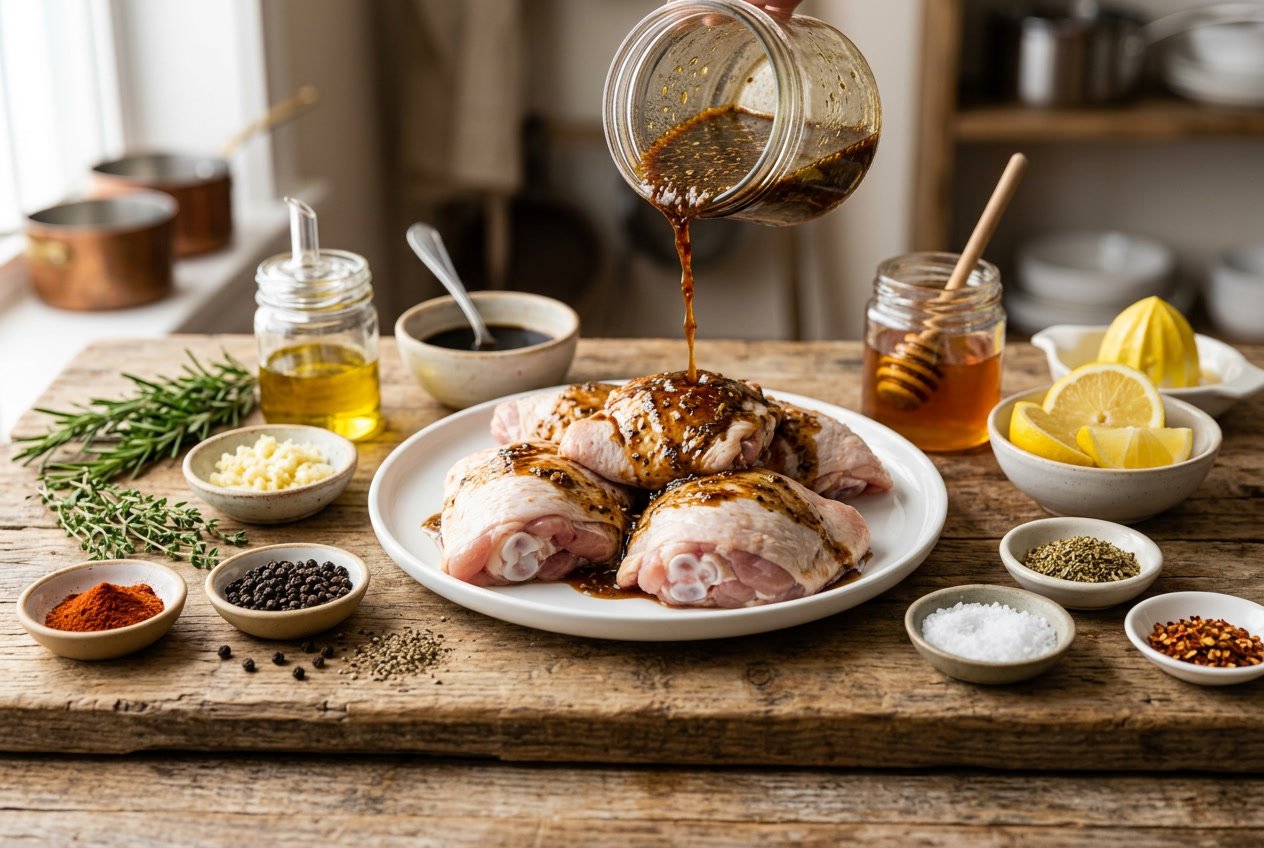
A successful chicken thigh marinade balances tenderizing power with fat-based flavor delivery and precise seasoning.
Focus on four functional ingredients and how they interact so your marinade enhances juiciness, texture, and taste without overpowering the meat.
Key Elements: Acid, Fat, Seasoning, Salt
Use specific acids—lemon or lime juice, vinegar, or yogurt—to add brightness and mild tenderizing action.
For bone-in or skin-on thighs, keep acidic contact under 12 hours to avoid mushy texture. For boneless thighs, marinate 2–8 hours depending on acid strength.
Include 1–3 tablespoons of oil per pound of chicken to carry fat-soluble flavors and protect surface moisture during cooking. Olive oil, avocado oil, or sesame oil help herbs and spices cling to the meat and promote even browning.
Combine fresh aromatics like garlic and ginger with dry spices such as paprika or cumin to build depth. Use a dominant flavor note and support it with one contrasting element like sweetness or acidity.
Salt is essential for moisture retention and flavor penetration. Use 3/4 to 1 teaspoon kosher salt per pound as a starting point. Adjust for soy sauce or salted condiments.
If using briny ingredients (soy, miso, pickle juice), reduce added salt accordingly.
Balancing Flavors for Optimal Results
Aim for a clear ratio: acid + fat + seasoning + salt. A common formula is 1 part acid to 3 parts oil, plus seasonings to taste.
Taste the marinade before adding raw chicken. Adjust sweetness with honey or maple syrup if acidity dominates.
Increase umami with soy sauce, miso, or Worcestershire for deeper savory notes without extra saltiness.
Marinate in the refrigerator for 2–24 hours. Use shorter times for mild flavors and longer for pronounced profiles, but avoid over-marinating acidic mixes.
When cooking, pat thighs lightly to promote sear while leaving enough surface marinade to caramelize for better color and flavor.
How to Marinate Chicken Thighs Properly
You can follow practical steps and timing ranges so your chicken absorbs flavor without turning mushy.
Follow measured steps, refrigerate, and adapt times when using acids or thicker pieces.
Preparation and Marinating Steps
Trim excess fat and pat thighs dry with paper towels. Dryness helps marinades stick and promotes browning.
If using bone-in thighs, leave the skin on for flavor. For crisp skin, dry it thoroughly before cooking.
Combine your marinade in a bowl or resealable bag. Use a balanced formula: 1 part acid, 1–2 parts oil, and flavor agents like soy sauce, garlic, herbs, honey, or Dijon.
Measure salt—about 1/2 teaspoon kosher salt per pound of chicken in short marinades. Adjust if soy sauce adds sodium.
Place the chicken and marinade in a resealable plastic bag or non-reactive container. Remove air and massage marinade over each thigh to ensure full contact.
Refrigerate on a tray to catch leaks and always marinate below 40°F (4°C). Discard used marinade or boil it for 3–5 minutes before using as a sauce.
Recommended Marinating Times
For noticeable surface flavor, marinate at least 30 minutes in the refrigerator. This works well with low-acid marinades like oil, herbs, and garlic.
For the best balance of flavor and texture, marinate for 1 to 1.5 hours. This range lets the marinade penetrate deeper without over-tenderizing, especially with soy-based or mild-acid marinades.
If your recipe includes strong acid, limit marinating to 6–12 hours to avoid a mushy texture.
Avoid marinating longer than 24 hours. For overnight plans, keep acidic components mild or add them later.
Always cook marinated chicken thighs to an internal temperature of 165°F (74°C) for safety.
Tips for Boneless Skinless Chicken Thighs
Boneless skinless chicken thighs absorb marinades faster because they’re thinner and lack skin as a barrier.
Reduce marinating time to 30 minutes to 2 hours for full flavor penetration. If you want a more tender result without acid, use yogurt or buttermilk for 2–6 hours; their enzymes loosen proteins gently.
For high-sodium or sugar-heavy marinades, shorten marinating times to prevent overly salty or caramelized exteriors during cooking.
When ready to cook, remove thighs from the marinade and pat lightly to promote even browning. If you plan to use leftover marinade as a glaze, boil it first.
For consistent results, weigh or portion thighs so marinating time and seasoning stay uniform.
Popular Chicken Thigh Marinade Recipes
These marinades focus on clear, repeatable flavor builds and practical timing for marinating and cooking.
Each recipe highlights the key ingredients, how long to marinate, and simple cooking notes for consistent results.
Honey Garlic Marinade
Combine 1/2 cup honey, 1/4 cup soy sauce, 3–4 minced garlic cloves, 2 tablespoons olive oil, and 1 tablespoon lemon juice or rice vinegar.
Add 1/2 teaspoon black pepper and 1 teaspoon grated ginger if you like warmth.
Marinate bone-in, skin-on thighs for 4–12 hours in the refrigerator. Bake at 400°F for 35–40 minutes or grill over medium heat until the internal temperature is 165°F.
Reserve a small portion of marinade and boil it before using as a glaze.
Pat thighs dry so skin crisps during roasting. Use browned, reduced marinade sparingly for gloss and extra flavor.
Serve with jasmine rice or roasted vegetables.
Cilantro Lime Chicken Marinade
In a blender, process 1 cup packed cilantro leaves, 1/3 cup olive oil, 1/4 cup fresh lime juice, 3 garlic cloves, 1 teaspoon cumin, 1/2 teaspoon salt, and 1–2 tablespoons honey or agave.
Marinate boneless or bone-in thighs for 30 minutes to 4 hours. Acid will tenderize quickly, so avoid overnight for boneless pieces.
Cook over medium-high grill or roast at 425°F until juices run clear and internal temp reads 165°F.
Reserve a few tablespoons of the blended marinade for a finishing drizzle. Add jalapeño or green onion for extra heat and aromatics.
Cilantro lime chicken works well shredded into bowls or sliced for sandwiches.
Garlic Sesame Marinade
Whisk 1/4 cup soy sauce, 2 tablespoons toasted sesame oil, 2 tablespoons honey or brown sugar, 3 minced garlic cloves, 1 tablespoon rice vinegar, and 1 teaspoon grated ginger.
Add 1 tablespoon gochujang or sriracha for spice if desired.
Marinate thighs 2–8 hours for balanced flavor and texture. Cook at 400°F for 35–40 minutes or pan-sear then finish in the oven.
Sprinkle toasted sesame seeds and sliced scallions before serving.
Toast sesame seeds lightly to enhance aroma. If using skin-on thighs, remove excess marinade from skin to help it crisp.
This garlic sesame marinade also works as a stir-fry sauce when reduced and thickened.
Cooking Methods for Marinated Chicken Thighs
Choose a high-heat finish for char and let the chicken rest to lock in juices.
Aim for 165°F (74°C) internal temperature. Avoid overcrowding to ensure even browning.
Grilled Chicken Thighs
Preheat your grill to medium-high (about 400°F / 200°C). Oil the grates to prevent sticking and wipe excess marinade from the thighs so they sear.
Place the thighs skin-side down if using skin-on. Grill 4–6 minutes per side for boneless, or 6–8 minutes per side for bone-in, turning once.
Look for a golden-brown crust and good grill marks. Use a thermometer to confirm 165°F (74°C).
Move the chicken to indirect heat if you see flare-ups from sugary marinades. Let the thighs rest 5 minutes before serving.
Baked Chicken Thighs
Preheat the oven to 425°F (220°C) for crisp skin and faster cooking. Arrange marinated thighs in a single layer on a rimmed baking sheet or in a shallow baking dish with space between pieces.
Bake boneless thighs about 18–25 minutes. Bone-in typically needs 25–35 minutes.
For extra browning, finish under the broiler for 2–4 minutes, watching closely. Test internal temperature at the thickest part and remove at 165°F (74°C).
Pat skin dry before baking. Reserve some marinade (boiled first) to brush on near the end for more flavor.
Alternative Cooking Methods
Pan-searing creates a quick crust and helps when you need dinner fast. Heat a skillet over medium-high with a tablespoon of oil, sear 4–7 minutes per side depending on thickness, and cover briefly to finish through.
Use low heat and a flavorful liquid to slow-cook or braise thighs. Cook until the meat is tender and reaches a safe temperature.
Preheat the air fryer to 375°F (190°C) and cook boneless thighs 12–18 minutes, flipping halfway. Check with an instant-read thermometer and avoid overcrowding the basket for even crisping.
Serving Suggestions and Meal Ideas
Marinated chicken thighs pair well with starches, bright vegetables, and sauces that echo the marinade’s flavor. Plan sides and storage so the flavors stay crisp and the meat stays juicy.
Pairings and Side Dishes
Match the marinade profile to one or two complementary sides.
-
For citrus, herb, or yogurt marinades, serve with jasmine rice or lemon-garlic couscous and a simple cucumber-tomato salad dressed with olive oil and lemon. The starch soaks up pan juices, and the salad adds acidity.
-
For sweet-savory or teriyaki marinades, pick sticky rice, steamed bok choy, and quick-pickled carrots to balance sugar and umami.
-
For smoky, chipotle, or jerk marinades, use charred corn, black bean salad, and lime wedges. Grilled vegetables and roasted sweet potatoes stand up to bold spice.
-
For pesto, balsamic, or garlic-parmesan marinades, pair with roasted broccoli, Israeli couscous, or a peppery arugula salad.
Serve marinated chicken thighs sliced over grain bowls, tucked into warmed pita or tortillas, or placed on a platter with dipping sauces like yogurt-ranch, chimichurri, or hoisin.
Meal Prep and Storage Tips
Plan portions and refrigerate immediately after cooking to maintain safety and texture. Cool cooked marinated chicken thighs to room temperature no longer than two hours, then store in airtight containers in the fridge for up to 4 days.
If you prepare raw marinated thighs for later cooking, keep them sealed in the refrigerator and use within 24 hours for high-acid marinades or up to 48 hours for milder mixes. Freeze raw marinated chicken in a heavy-duty freezer bag for up to 3 months. Thaw overnight in the fridge before cooking.
Reheat gently to preserve moisture. Use a low oven at 300°F (150°C) for 10–15 minutes or slice and pan-sear briefly. For best texture, pat thighs dry before reheating to revive browning and crisp the exterior.
Expert Tips and Variations
Balance salt, acid, fat, sweet, and aromatics for predictable results. Plan marinade timing and storage so you can prep ahead without compromising texture or food safety.
Flavor Profile Adjustments
Increase soy sauce, fish sauce, or miso by 1–2 tablespoons per pound of chicken thighs for more savory depth.
Add citrus juice or vinegar in 1 tablespoon increments to dial up acidity, stopping at 2–3 tablespoons per pound to avoid a mealy texture.
Use honey, maple, or brown sugar for sweetness and better caramelization. Start with 1 tablespoon per pound and adjust to taste.
Add heat with ¼–1 teaspoon crushed red pepper or 1 minced chili per pound.
Add fresh herbs like cilantro or thyme in the last 30–60 minutes of marinating to preserve aroma.
Substitute yogurt or buttermilk for up to half the acidic component if you prefer a creamy tenderizer. This helps with a tender bite and gentle tang.
Making Marinades Ahead and Freezing
Make most marinades up to 5 days in advance and store them refrigerated in an airtight container.
For long-term prep, freeze marinade in portioned freezer bags and label with date and intended use.
When you freeze with sugar or honey, expect slight texture changes. Whisk briefly after thawing to re-emulsify.
Freeze raw chicken already in marinade for up to 3 months. Place the bag flat so it thaws quickly in the fridge.
Thaw overnight in the refrigerator. Discard any marinade that contacted raw meat if you plan to use a portion as sauce unless you boil it.
Using Leftover Marinade Safely
Never reuse marinade that has touched raw chicken unless you sterilize it.
Bring leftover marinade to a vigorous boil for at least 1–2 minutes to kill pathogens. Simmer for 3–5 minutes if you want a thicker consistency.
Reserve a cup of marinade before adding raw chicken if you want a ready-to-serve baste or sauce.
If you plan to baste while grilling, use the reserved portion for the last few minutes of cooking only. This prevents cross-contamination.
Label containers used for raw-marinated chicken separately. Wash utensils and surfaces with hot, soapy water immediately after contact.


