
Which Chicken Thigh Is Boneless? Your Complete Kitchen Guide
You want to know which chicken thigh is boneless so you can buy and cook with confidence.
A boneless chicken thigh has the thigh bone removed. If it’s labeled “skinless,” the skin has been removed too.
Look for packaging that says “boneless” or “boneless skinless” to be sure.
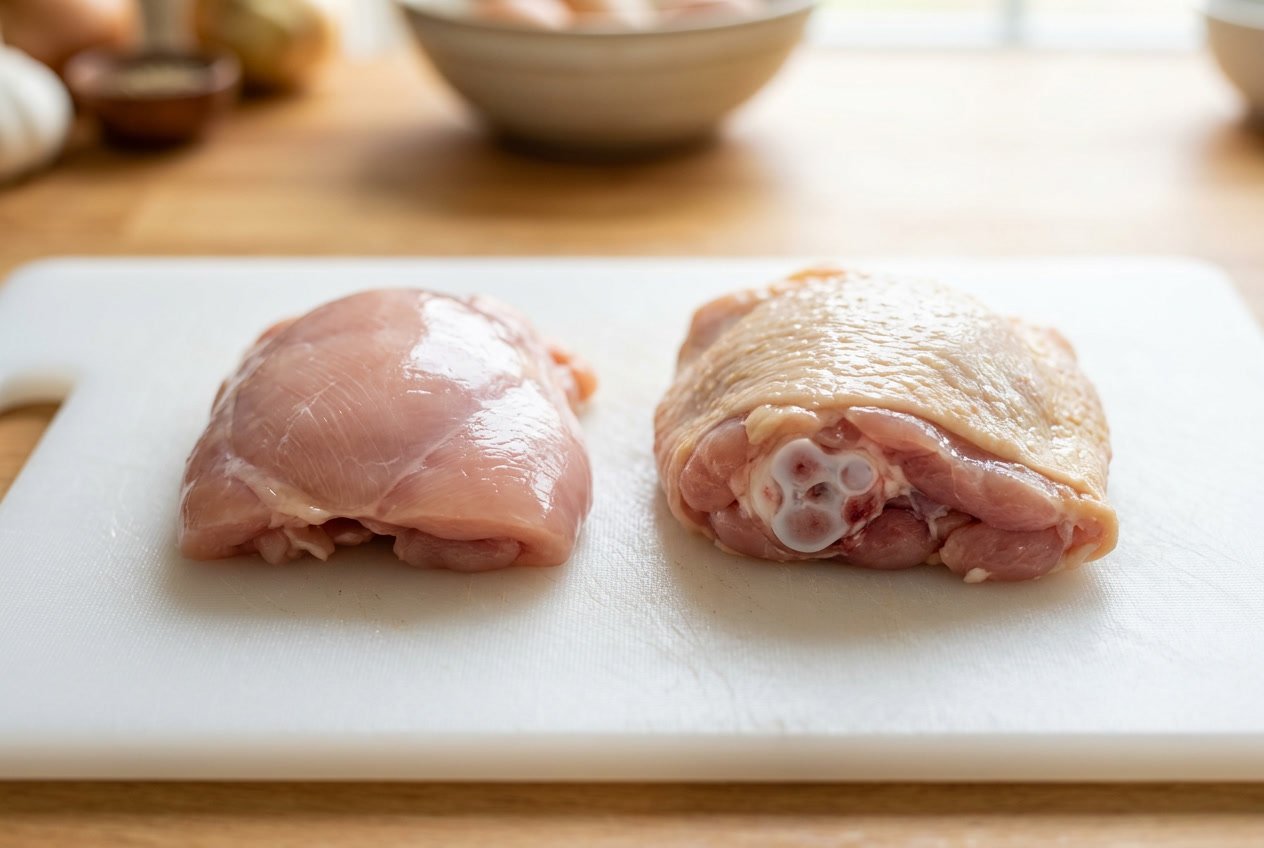
Choose boneless chicken thighs when you want quicker prep, even cooking, and easy shredding for tacos, stir-fries, or casseroles.
This guide explains labels, how to pick the best pack, prep tips, and reliable cooking methods so your thighs turn out juicy every time.
Understanding Boneless Chicken Thighs
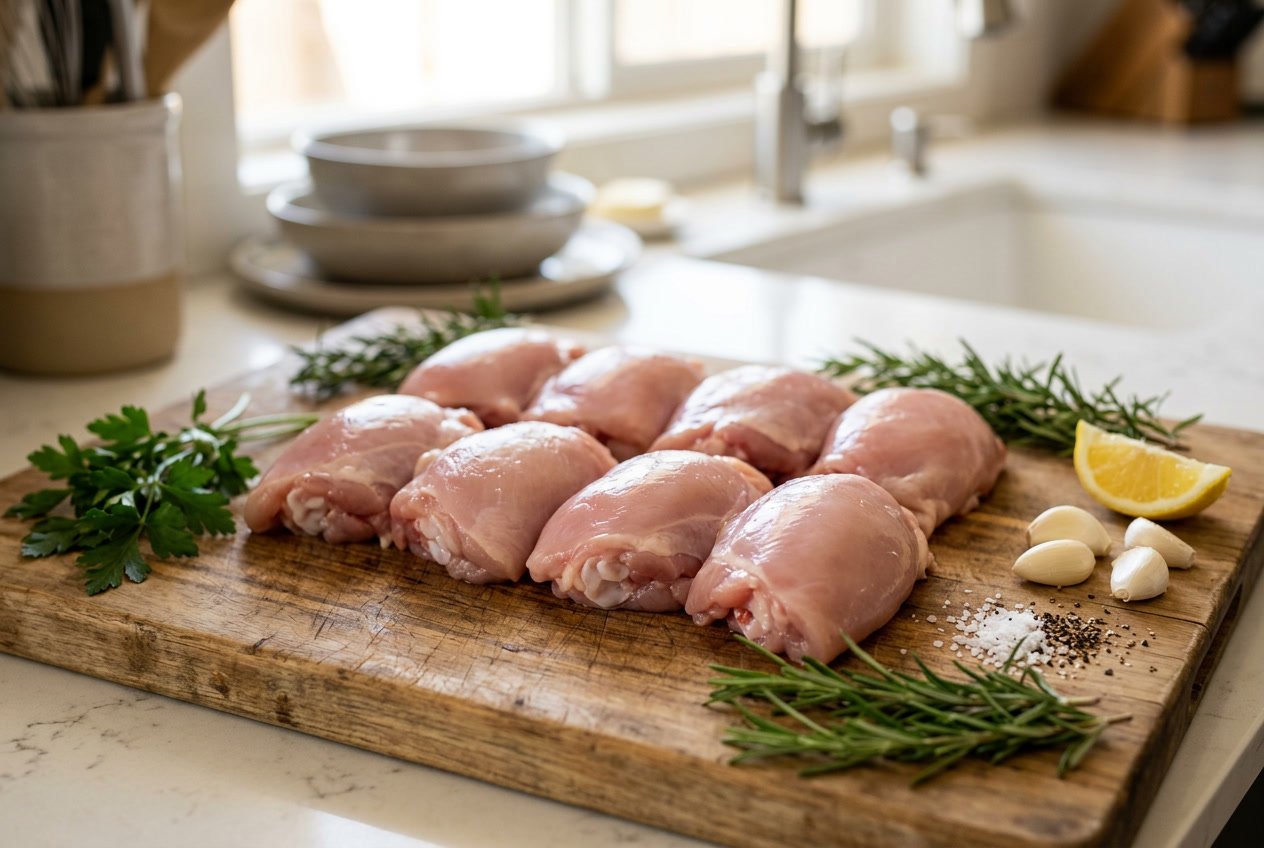
Boneless chicken thighs remove the hindrance of a bone while keeping the meat’s natural fat and connective tissue.
You’ll learn what “boneless” actually means, how it differs from bone-in thighs, and why you might pick boneless or skinless options for a recipe.
What Makes a Chicken Thigh Boneless?
A butcher or processor removes the femur and any attached small bones from a boneless chicken thigh.
They may leave the skin on or remove it, so “boneless” and “skinless” are separate attributes.
You’ll often see “boneless skinless chicken thighs” packaged together; that means both the bone and the skin were removed before sale.
Boneless thighs still contain the dark meat muscle and the higher fat content that gives them flavor.
That fat and connective tissue make them more forgiving to cook than breast meat, especially in quick-cook methods like pan-frying or grilling.
The Difference Between Boneless and Bone-In Thighs
Bone-in chicken thighs keep the bone intact and often retain the skin.
The bone adds flavor during cooking and can help the thigh stay juicier in long braises or roasts.
If you want crisp skin and a roast with pronounced poultry flavor, bone-in skin-on thighs deliver better results.
Boneless thighs cook faster and are easier to cut or shred after cooking.
They also provide more usable meat per piece and simplify portioning for sandwiches, stir-fries, or skewers.
Choose bone-in when you want depth of flavor and slower cooking. Choose boneless when speed, convenience, or uniform cooking matters.
Why Choose Boneless Chicken Thighs?
Pick boneless chicken thighs for convenience and consistent cook times.
They take less prep and fit evenly in a skillet or oven tray, reducing the risk of undercooked centers.
Boneless thighs adapt to many recipes, including quick sautés, curries, shredded fillings, and weeknight bakes.
If you prefer lower-fat or want crisp skin, select bone-in skin-on thighs instead.
For meal prep, tacos, or dishes where you need bite-sized pieces, boneless or boneless skinless chicken thighs make your work faster and more predictable.
Boneless Skinless Chicken Thighs Explained
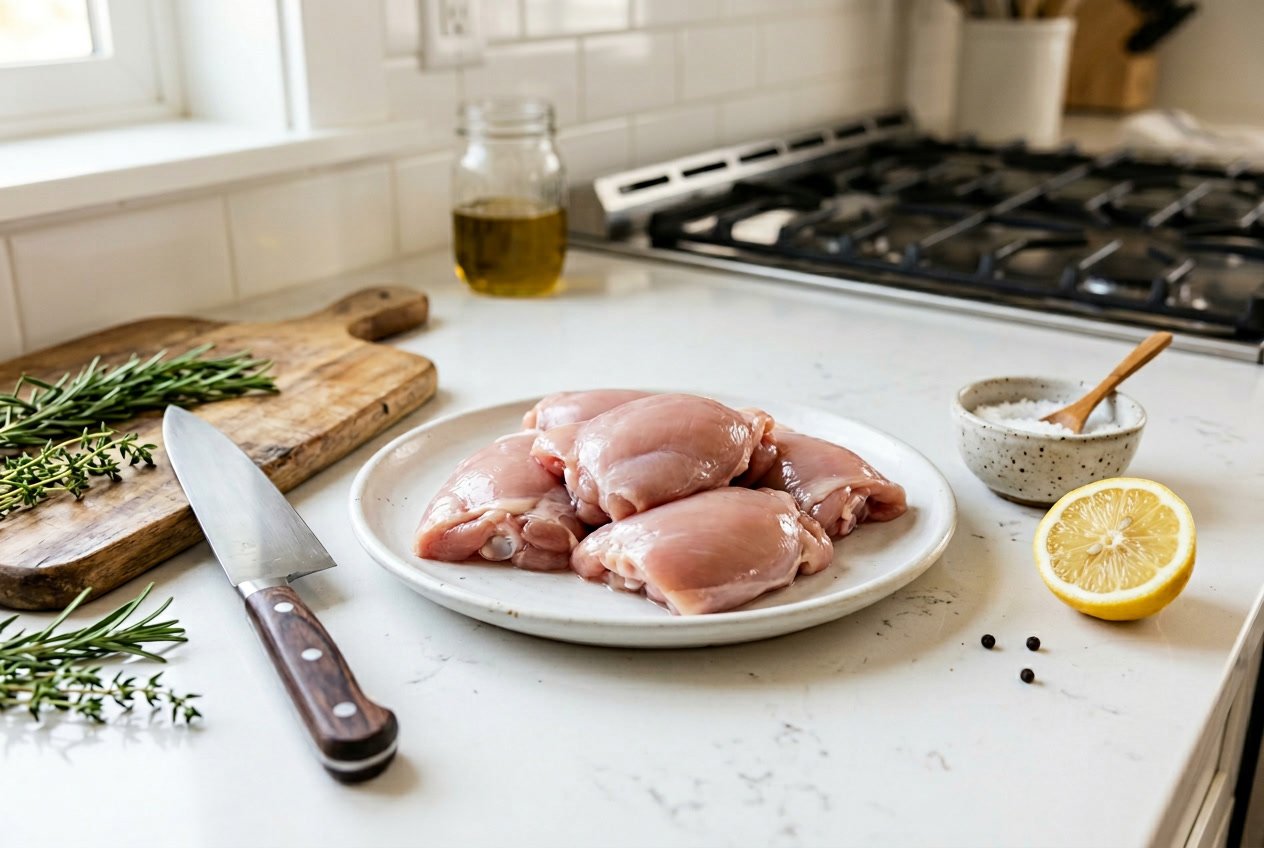
Boneless skinless chicken thighs are a convenient, flavorful cut that cooks faster than bone-in pieces.
They balance juiciness and ease of preparation and differ nutritionally from breast meat in predictable ways.
What Are Boneless Skinless Thighs?
Butchers or processors trim the bone and peel off the skin, producing a compact fillet typically 2–4 ounces each.
You get darker meat than a breast, which contains more myoglobin and intramuscular fat.
That fat keeps the meat moist during high-heat methods like searing or grilling.
Because they lack skin, they won’t crisp in the same way. You can add oil or a breadcrumb coating for texture.
Portion control is easier than with bone-in thighs, yet weights vary by supplier.
Cook them to 165°F (74°C) internal temperature and rest briefly to retain juices.
Nutritional Profile and Health Benefits
Per typical 3-ounce cooked serving, boneless skinless chicken thighs provide roughly 160–210 calories, 18–22 g protein, and 8–12 g fat. Exact figures depend on trimming and cooking method.
They offer more fat and iron than chicken breast, plus B vitamins such as B12 and niacin.
Those additional fats add flavor and help with absorption of fat-soluble vitamins when included in a balanced meal.
If you’re watching calories, trim visible fat or compare to skin-on options. If you want richer flavor and slightly higher iron, thighs are a better choice.
For meal prep, thighs hold moisture well and reheat without drying, making them practical for weekly cooking and higher-protein meal plans.
Selecting and Preparing Boneless Chicken Thighs
Focus on visual clues, packaging details, and basic prep steps that keep boneless chicken thighs safe and cooking-ready.
You’ll learn to spot true boneless cuts and to trim and portion them for even cooking.
How to Identify Boneless Chicken Thighs at the Store
Look for labels that explicitly say “boneless” or “boneless skinless.” Avoid ambiguous terms like “thigh meat” without clarification.
Inspect the package: true boneless thighs sit flat, have no visible bone tips, and show consistent pink color without gray patches.
Check packaging for excess liquid or tears. Minimal liquid suggests proper handling.
Pooled juices can indicate older or previously frozen product.
Feel the pieces through the wrap—boneless skinless chicken thighs should be firm and slightly springy, not slimy.
Verify the sell-by/use-by date and any certification (USDA, organic, or animal welfare) if those factors matter to you.
For variable size, choose evenly sized pieces to ensure uniform cooking.
Trimming and Cutting Tips
Work on a clean board and use a sharp boning or chef’s knife to remove any remaining fat, cartilage, or dark connective tissue from boneless chicken thighs.
Trim thin, ragged edges so pieces cook evenly. Leaving a little fat can boost juiciness, so trim conservatively.
If you need uniform thickness, butterfly or gently pound thighs between plastic wrap to about 1/2 inch thickness.
For bite-sized pieces, slice across the grain into even strips. This reduces chewiness and shortens cook time.
Pat thighs dry with paper towels before seasoning or searing to get a better crust.
Keep raw chicken separate and sanitize surfaces and utensils after handling to prevent cross-contamination.
Key Cooking Methods for Boneless Chicken Thighs
Choose a method that balances time, texture, and flavor.
High heat yields a browned crust and concentrated flavor. Gentler, moist-heat methods give pull-apart tenderness and shredability.
Baking and Roasting
Bake at 400–425°F on a sheet pan or in a casserole dish for reliable results.
Pat the thighs dry, brush with oil, and season well. That prevents excess liquid and promotes browning.
Arrange thighs in a single layer with space between pieces for even cooking.
Timing depends on thickness: expect 20–30 minutes at 400°F, or about 18–22 minutes at 425°F, until an instant-read thermometer reads 165°F.
For crispy edges, finish with a two- to three-minute broil.
Use a rimmed sheet pan or parchment to catch drips for easy cleanup.
If you want sheet pan meals, add vegetables that roast at the same temperature.
Toss vegetables in oil and place them around the thighs to cook together without steaming.
Grilling and Broiling
Preheat your grill to medium-high (450–500°F) for grilled boneless chicken thighs.
Oil and season the thighs, then cook 4–6 minutes per side depending on size, flipping once to develop char and grill marks.
Maintain lid closed for even heat and smoke flavor.
Broiling in the oven mimics high, direct heat. Place thighs on a broiler pan about 6 inches from the element and cook 4–6 minutes per side.
Use a thermometer to avoid overcooking—aim for 165°F with carryover to 170°F if you like slightly more done.
Grilling and broiling both give crisp edges and smoky flavor.
Marinate if you want deeper flavor, but pat dry before cooking to encourage searing and prevent flare-ups.
Slow Cooking and Instant Pot
Use a slow cooker for shreddable, fall-apart meat for tacos, stews, or salads.
Brown the thighs first for better color, then cook on low 4–6 hours or high 2–3 hours with broth or sauce.
Avoid overcooking beyond the recommended window to prevent a mushy texture.
The Instant Pot produces juicy results fast. Brown briefly on sauté, then pressure-cook 4–7 minutes with 1 cup of liquid and a quick or short natural release.
This method works well for casseroles or shredded applications.
Both moist-heat methods reduce the need for extra fat and are forgiving on timing.
Reserve thicker sauces for finishing to concentrate flavor after cooking.
Pan-Searing and Stir-Frying
Pan-searing gives an intense browned crust on chicken thighs.
Heat a heavy skillet over medium-high, add a thin film of oil, and sear presentation-side down 4–6 minutes untouched to form a crust.
Flip and finish on medium heat until 165–170°F.
For stir-frying, cut thighs into uniform strips, toss with a light cornstarch or marinade, and cook in a hot wok or skillet in small batches for 3–5 minutes.
High heat and quick movement preserve juiciness while creating bits of crisp exterior.
Rest briefly after searing to redistribute juices.
For crispier results, finish with a short blast under the broiler or in a hot oven to set coatings.
Best Recipes Using Boneless Chicken Thighs
Boneless chicken thighs shine in quick weeknight mains and in bold, slow-cooked international dishes.
They stay moist when seared, braised, grilled, or shredded.
Everyday Boneless Chicken Thigh Recipe Ideas
Use boneless skinless chicken thigh recipes for fast, reliable dinners.
Pan-sear thighs and finish with a simple lemon dill butter sauce for a 20–30 minute meal that pairs well with roasted cherry tomatoes and rice.
Bread thighs in panko and bake or air-fry for crisp panko chicken thighs perfect for sandwiches or salads.
Make a one-pot chicken and rice by browning thighs, adding stock and aromatics, then finishing in the oven for minimal cleanup.
For shredded chicken, braise thighs with salsa or chipotle and onion in a slow cooker or Instant Pot. The meat pulls apart easily for tacos, burritos, or sandwiches.
If you prefer grilled, marinate in citrus, garlic, and oregano for Greek chicken thighs or in soy, honey, and garlic for sticky baked teriyaki chicken.
Quick sauces and simple sides let you rotate flavors without extra effort.
Global Flavors and Popular Dishes
Explore international recipes that benefit from thigh meat’s fat and connective tissue.
Filipino chicken adobo uses vinegar, soy, garlic, and bay leaf. Braise boneless thighs until the sauce reduces and the meat is tender.
For Japanese comfort, make oyakodon (chicken and egg rice bowl) by simmering thighs in a dashi-soy-sugar broth and finishing with softly cooked eggs.
Try chicken yakitori by skewering bite-sized thighs and basting with a sweet-salty tare for grilling.
Moroccan chicken tagine or spice-forward dishes with ras el hanout reward longer, low-heat cooking. Serve with couscous.
For American-style favorites, bourbon chicken uses a brown sugar-soy glaze, while char siu chicken and huli huli recipes rely on sticky, caramelized marinades.
Adapt other classics like chicken stroganoff, creamy lemon dill butter chicken, or chicken and dumplings so the thighs remain juicy and flavorful.
Frequently Compared: Boneless vs Bone-In and Skin-On Options
You’ll decide based on flavor priorities, cooking method, and how much prep or cleanup you want.
Expect trade-offs between richer taste and ease of use.
Boneless vs Bone-In Thighs: Flavor and Cooking Differences
Bone-in chicken thighs deliver more pronounced savory depth because the bone and marrow release collagen and flavor during long cooking.
When you roast, braise, or slow-cook bone-in thighs, the meat stays juicier near the bone and the dish develops a richer mouthfeel.
Boneless chicken thighs cook faster and more evenly, so they suit quick sautés, stir-fries, and grilling.
You can marinate them longer and get more surface seasoning penetration, but they may need careful timing to avoid drying out since they lack the bone’s insulating effect.
If you want the deepest flavor with less risk of dryness in long cooks, choose bone-in thighs.
If speed, uniformity, and easy portioning matter most, choose boneless chicken thighs.
Skinless vs Skin-On Thighs
Skin-on chicken thighs create a crispy, browned texture and release rendered fat that bastes the meat. The skin keeps the meat moist during high-heat roasting or pan-searing and enhances flavor through Maillard browning.
Skinless chicken thighs lower calories and saturated fat per serving. They work well in dishes where crisp skin isn’t needed, such as soups, stews, or heavily sauced recipes.
Skinless thighs also absorb marinades into the meat more directly. Choose skin-on thighs for crisp texture and extra juiciness, and use skinless thighs for leaner nutrition and easier, sauced preparations.
Cost and Convenience Considerations
Bone-in thighs usually cost less per pound because deboning adds labor and processing costs.
You pay more for boneless chicken thighs but get more edible meat weight per package. This makes portioning and recipe measurements simpler.
Boneless, skinless thighs save prep time since you don’t need to debone or trim skin. They cut into uniform pieces for quick meals.
You may need to cook bone-in, skin-on chicken thighs longer and trim them, but you can buy them in bulk for a lower upfront cost. These thighs work well for slow cooking.
Consider your schedule and recipe when choosing between them. If convenience and speed matter, choose boneless chicken thighs. If you want to save money and enjoy slow-cooked flavor, choose bone-in, skin-on thighs.


