
Where to Cook Chicken Thighs: Best Methods & Pro Tips
You can cook chicken thighs in the oven, on the stovetop, grill, air fryer, broiler, or pressure cooker. Each method offers a different texture and level of hands-on time.
Choose the method that matches your time, equipment, and the result you want. Roast for even cooking and crispy skin, sear then finish in the oven for a restaurant-style crust, grill for smoky char, or use an Instant Pot for fast, tender results.
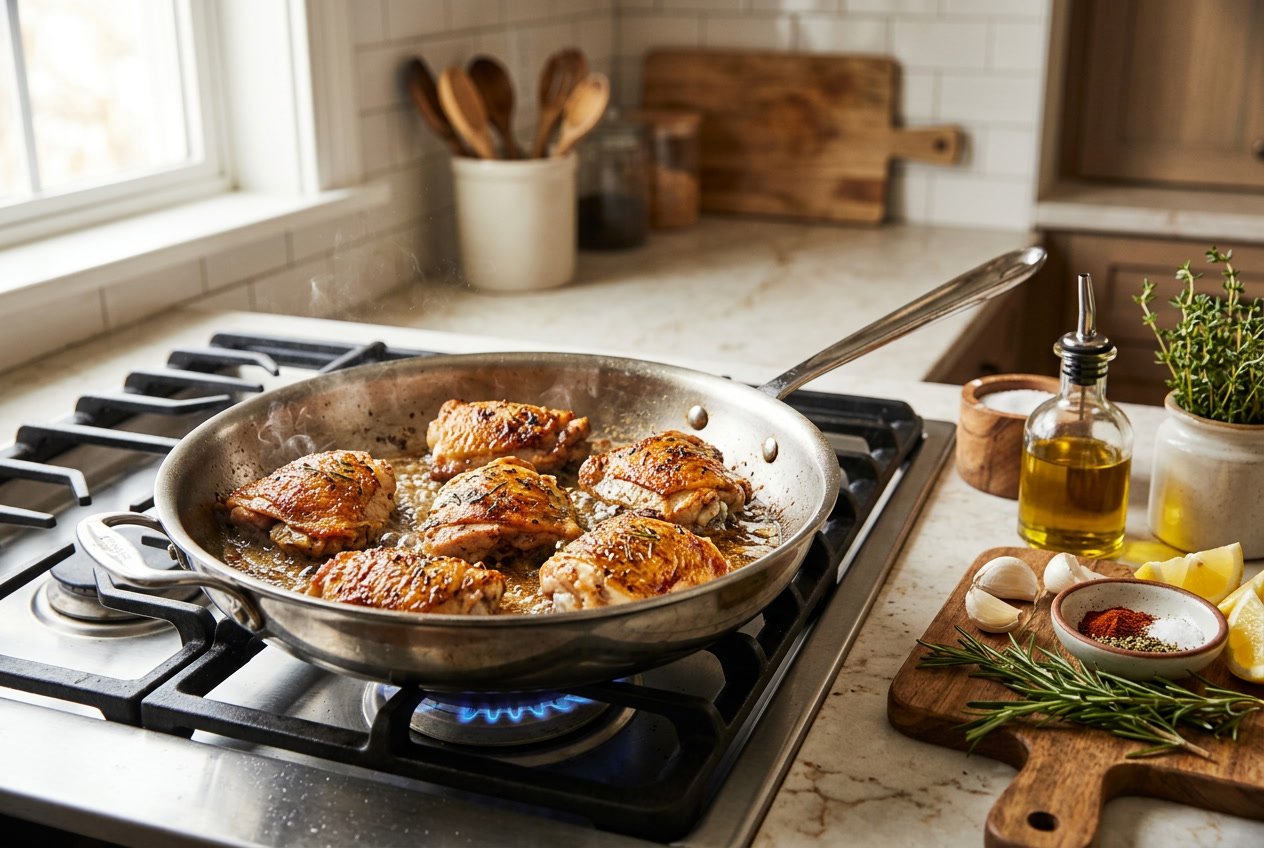
Decide on bone-in or boneless and skin-on or skinless based on budget and flavor. Match the technique to that cut to avoid overcooking.
You’ll get guidance on selecting thighs, hitting the right internal temperature, mastering marinades and seasonings, and turning leftovers into fresh meals.
Choosing the Right Chicken Thighs
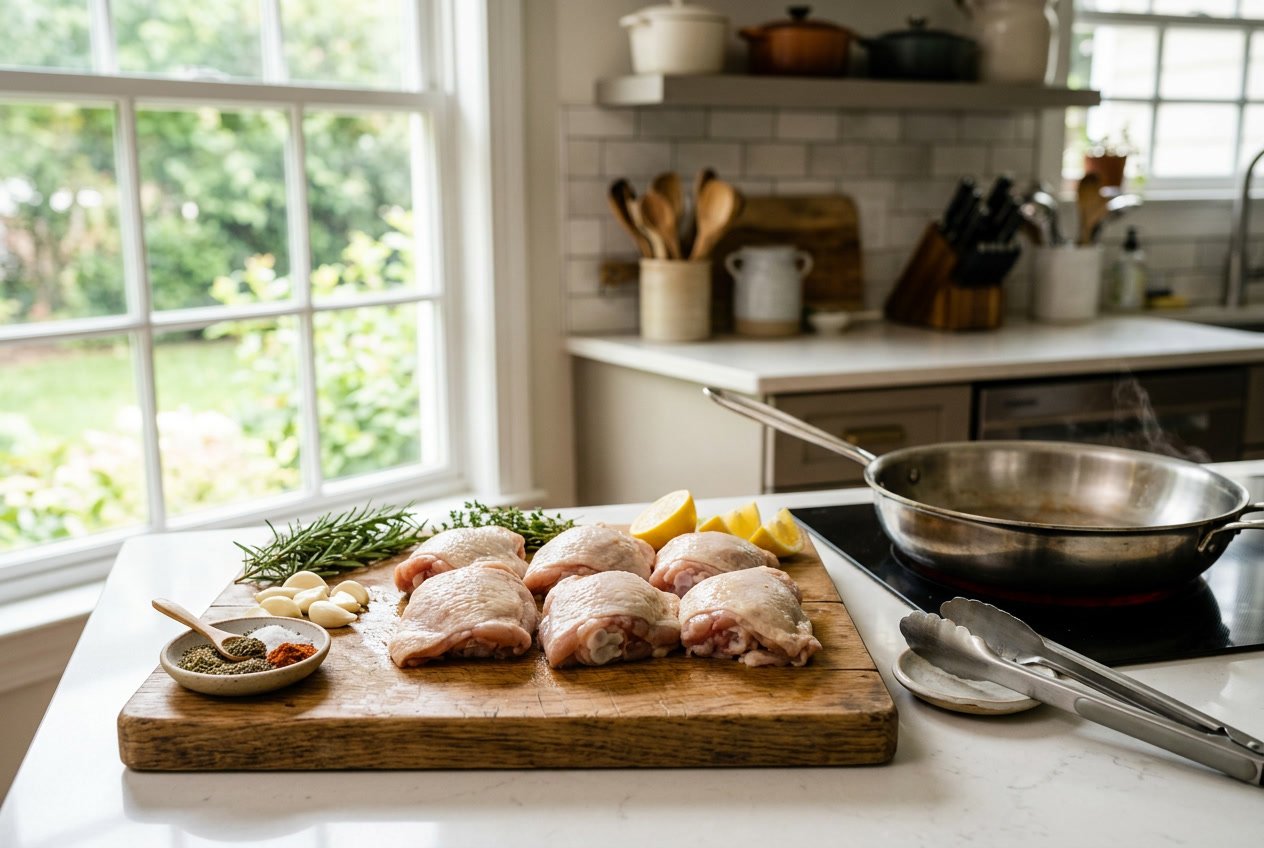
Focus on how you’ll cook the thighs, how much hands-on work you want, and whether crispy skin or quick prep matters most. Match cut and skin choices to technique and flavor goals.
Bone-In vs. Boneless Chicken Thighs
Bone-in chicken thighs hold more flavor and stay moister in long, slow cooks like braises and roasts. The bone slows heat transfer, so you get a juicier interior and a richer pan sauce from the marrow and connective tissue.
If you plan to grill, roast, or braise, choose bone-in for better texture and plating presence.
Boneless chicken thighs cook faster and are easier to slice for stir-fries, salads, or sandwiches. They flatten and sear evenly, which makes them ideal for pan-frying or quick oven bakes.
Expect slightly less pronounced flavor than bone-in. Compensate with marinades, brines, or longer seasoning time.
Skin-On vs. Skinless Chicken Thighs
Skin-on chicken thighs produce the crispiest exterior and more fat-rendered flavor when cooked at high heat. Roast, pan-sear, or air-fry skin-on thighs to get crackling skin and juicy meat beneath.
If you want a crisp finish, pat the skin very dry and salt it ahead of cooking to draw out moisture.
Skinless chicken thighs are leaner and absorb marinades and sauces more readily. Use skinless for curries, stews, or dishes where you want the sauce to cling directly to the meat.
They cook faster and are easier to eat in composed dishes.
Selecting Quality Chicken Thighs
Look for firm, plump thighs with a consistent pink color and minimal liquid in the package. Excess liquid or grayish tones indicate older meat or poor handling.
Smell the package if possible. Fresh thighs should have a neutral, slightly meaty scent.
Check labels for bone-in or boneless and for skin-on or skinless to match your recipe. If you prefer higher welfare or distinct flavor, choose options like “free-range” or “organic,” but expect higher cost.
For cost-effectiveness and reliable results, conventional thighs work well. Prioritize freshness and skin/bone configuration first.
How to Bake Chicken Thighs
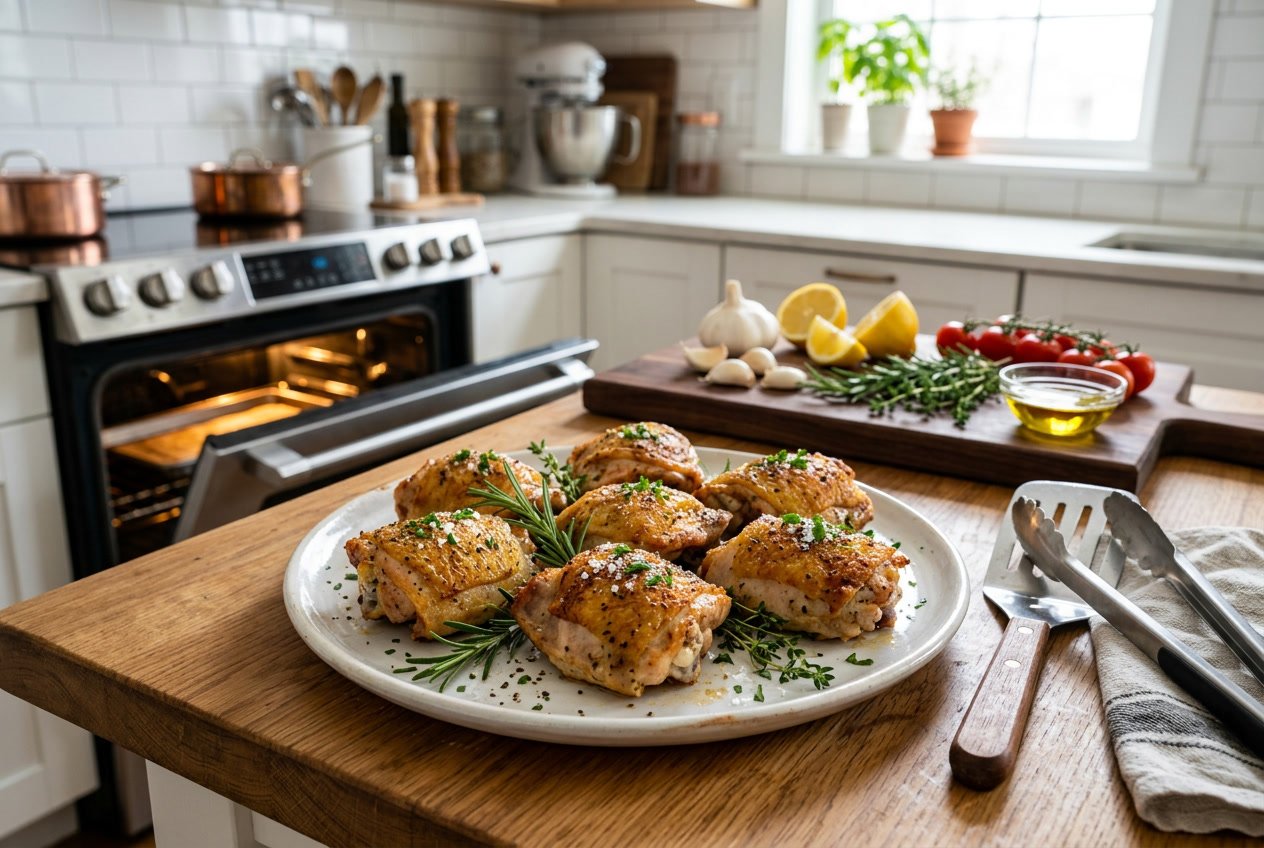
Use the right tools, oven temperatures, and timing to get crispy skin and juicy chicken. Dry the skin, arrange thighs on a rack or sheet pan, and check internal temperature.
Essential Tools for Baking
Use a rimmed sheet pan or a 9×13-inch baking dish to catch juices and allow even heat. A wire rack inside the sheet pan lifts thighs off the pan so air circulates and the skin crisps.
Have an instant-read meat thermometer to check the thickest part of the thigh. Use paper towels to pat the skin dry; moisture prevents crisping.
Tongs or a spatula help turn or move pieces without tearing skin. Keep aluminum foil or parchment for easy cleanup and a small bowl for mixing oil and spices.
Optional tools include kitchen shears to trim excess skin and an ovenproof meat thermometer for continuous monitoring.
Step-by-Step Baking Instructions
Preheat the oven. While it warms, pat thighs completely dry with paper towels to remove surface moisture.
Drizzle 1–2 tablespoons of oil over the thighs and rub evenly. Oil promotes browning and helps spices adhere.
Season each thigh with salt, garlic powder, onion powder, paprika, and black pepper. Slide some of the seasoning under the skin for deeper flavor.
Arrange thighs skin-side up on a wire rack set inside the sheet pan. Space pieces at least 1 inch apart for air flow.
Bake uncovered until the internal temperature reaches your target. Broil for 1–3 minutes if the skin needs extra crispness.
Rest the thighs for 5–10 minutes before serving so juices redistribute.
Optimal Oven Temperatures
High heat (400–425°F / 200–220°C) gives you crispy baked chicken thighs without drying the meat. The higher end (425°F) produces crispier skin faster.
Reduce to 400°F if your oven runs hot or the skin is browning too quickly. For boneless, skinless thighs, 375–400°F works well because they cook faster and lack the insulating bone.
If you prefer very tender, fall-off-the-bone texture, start at 425°F for browning, then lower to 350–375°F to finish gently.
Use the broiler briefly at the end to add extra crunch. Keep the pan several inches below the broiler element and watch for 1–3 minutes to avoid burning.
How Long to Bake Chicken Thighs
Bone-in, skin-on chicken thighs usually take 35–45 minutes at 400–425°F. Check the thickest part with an instant-read thermometer; the safe minimum is 165°F, but aim for 175–185°F for more tender meat near the bone.
Boneless, skinless thighs cook faster. Plan 20–30 minutes at 375–400°F and check temperature at 20 minutes.
If baking from frozen, add at least 50% more time and verify temperature before serving.
Use this guideline:
- Bone-in, skin-on: 35–45 min at 400–425°F
- Boneless, skinless: 20–30 min at 375–400°F
Always verify with an instant-read thermometer and rest the thighs 5–10 minutes before slicing.
Pan-Searing and Oven Finishing
This method gives you crisp skin and tender meat by rendering fat on the stovetop and finishing through gentle, even heat in the oven. Sear skin-side down to develop a deep brown crust, then transfer the pan to a preheated oven to cook through.
How to Pan-Sear Chicken Thighs
Pat thighs dry and season both sides with salt and pepper. Dryness is essential for crispy chicken skin.
Use bone-in, skin-on thighs when possible for better moisture retention and flavor. Heat a heavy skillet (cast iron preferred) over medium-high heat until hot, then add a thin layer of oil with a high smoke point.
Place thighs skin-side down, pressing lightly so the skin contacts the pan evenly. Do not move them for 5–8 minutes; this uninterrupted contact forms a stable, golden crust.
Flip once when the skin releases easily and is deeply browned. Sear the flesh side for 2–4 minutes to color the meat before moving to the oven.
Use tongs and a spatula to avoid piercing the skin and losing juices.
Transitioning from Stove to Oven
Preheat the oven to 350–400°F (175–200°C) while you sear. A 375°F oven balances finishing time and skin protection for average-thickness thighs.
If your skillet is oven-safe, transfer it directly to the oven. If not, move thighs to a rimmed baking sheet or ovenproof pan, skin-side up to keep the crust crisp.
Aim for an internal temperature of 175°F (79°C) for shreddable tenderness; 165°F (74°C) is safe but may be firmer.
Let thighs rest uncovered for 5 minutes after removing them from the oven. Use a probe thermometer to check doneness without cutting into the meat.
Medium-High Heat Tips
Set your burner to a steady medium-high rather than full blast for controlled browning. If the oil smokes heavily, reduce heat slightly.
Use an oil like canola, vegetable, or light olive oil for its high smoke point. Add no more than 1–2 tablespoons of oil.
Keep a splatter screen handy to reduce mess while maintaining pan temperature. If thighs are thicker than 1 inch, extend the skin-side sear by 1–2 minutes and lower oven temperature to 350°F to prevent over-browning.
Adjust times based on thigh size and use a thermometer for consistent results.
Grilling Chicken Thighs Outdoors or Indoors
Grill chicken thighs over direct heat to get quick char and crispy skin. Move them to indirect heat to finish without burning.
Use a two-zone setup on a gas or charcoal grill. Sear on a stovetop grill pan and finish in a 400°F oven if you’re cooking indoors.
Direct vs. Indirect Heat Grilling
Direct heat gives you fast browning and crisp skin. Sear skin-side down over medium-high to high heat for 4–7 minutes per side for boneless thighs, and 5–6 minutes skin-side first for bone-in to build color and render fat.
Indirect heat finishes cooking without excessive charring. After searing, move bone-in thighs to the cooler side and cover the grill. Hold temperature around 350°F.
For boneless thighs you can often stay on direct medium heat but reduce flame after the initial sear to avoid burning.
On a gas grill, light one burner and leave the adjacent burner off for the two-zone method. On charcoal, bank coals to one side and place thighs on the opposite side.
For indoor cooking, sear in a hot cast-iron or grill pan, then transfer to a 400°F oven to complete.
Timing and Temperature for Grilled Thighs
Use an instant-read thermometer and target specific internal temps. Pull boneless skinless thighs at 165°F. Pull bone-in skin-on thighs at 175°F for tender, gelatin-rich meat.
If you want fall-off-the-bone, continue to 185°F for braise-like texture.
Typical timing on a gas grill:
- Boneless: 5–7 minutes per side over medium-high (total 10–14 minutes).
- Bone-in: Sear 5–6 minutes skin-side, then indirect 20–25 minutes until 175°F.
Keep grill lid closed during indirect cooking to maintain steady heat. Allow a 3–5 minute rest after grilling so juices redistribute.
Preventing Overcooking on the Grill
Trim large fat pockets, move thighs off direct flames when drips ignite, and keep a spray bottle or pan nearby to control small flames.
Space pieces at least 1–1.5 inches apart so hot air circulates. Overcrowding traps steam and makes skin soggy.
Use a thermometer instead of guesswork. Check temperature in the thickest part without touching bone.
If skin is done but meat isn’t, move thighs to indirect heat or lower the flame and close the lid to finish gently.
Broiling and Air Frying Methods
You can get fast, well-browned thighs under a broiler or achieve crisp skin with an air fryer using high, dry heat and short cook times. Both methods finish quickly, so monitor internal temperature and surface color.
How to Broil Chicken Thighs
Position an oven rack 6–8 inches below the broiler element for even browning. Pat skin dry, season well, and place thighs on a rimmed baking sheet fitted with a wire rack to let hot air circulate and fat drip away.
Preheat the broiler for 5 minutes. Slide the tray in and broil skin-side up; start with 6–8 minutes, then rotate the pan and check every 2–3 minutes until the skin is deeply browned and an instant-read thermometer reads 165°F in the thickest part.
Use a broiler pan or line the sheet with foil for easier cleanup. Apply sugary glazes only in the last 1–2 minutes to prevent burning.
Let the thighs rest 5–10 minutes before serving to let juices redistribute.
Achieving Crispy Skin in the Air Fryer
Preheat the air fryer to 400°F for 3–5 minutes. Dry the skin thoroughly with paper towels and apply a thin coat of oil and kosher salt to encourage browning.
Arrange thighs skin-side up in a single layer without crowding. Work in batches if needed.
Cook bone-in thighs for 18–22 minutes, flipping once around halfway through. Boneless or skinless pieces need about 12–15 minutes.
Check for 165°F using an instant-read thermometer. If the skin isn’t crisp enough, increase the temperature to 425°F for the last 2–3 minutes or use the air fryer’s crisp function.
Avoid excess breading, which can block airflow. Lightly spray thicker breading once to keep the coating crunchy.
Broiler Safety Tips
Watch the chicken closely and never leave the oven unattended while broiling. Broilers operate at very high heat and can ignite drippings, so use a rimmed sheet to contain grease and a wire rack to reduce flare-ups.
Wear oven mitts and use long-handled tools when placing or removing the pan. Keep the oven door ajar only if your manual recommends it.
If smoke builds up, slide the pan out briefly to lower the heat or turn off the broiler and finish the thighs in a 375°F oven until they reach 165°F.
Frying and Braising Techniques
You can achieve crisp, well-seared skin and turn thighs into tender, saucy braises by focusing on temperature control, timing, and simple tools.
How to Fry Chicken Thighs for Maximum Crisp
Pat the thighs very dry and season both sides with kosher salt and freshly ground black pepper. Let the thighs sit for 10–15 minutes at room temperature if possible.
Heat a heavy skillet over medium-high until a drop of water sizzles. Add 1–2 tablespoons of neutral oil; when it shimmers, place thighs skin-side down and leave them undisturbed for 4–6 minutes.
Flip and cook 3–5 minutes more until an instant-read thermometer in the thickest part reads 165°F. Finish under a 425°F broiler for 1–2 minutes for extra crispness, watching constantly.
Sear in separate rounds for larger batches to avoid overcrowding and losing heat.
Braising Chicken Thighs for Tenderness
Sear thighs skin-side down in a Dutch oven to build flavor. Remove thighs and sweat aromatics like onion, carrot, celery, and garlic in the same pot.
Deglaze with 1 cup wine or ½ cup wine plus 1–1.5 cups broth per 4 thighs, scraping browned bits. Return thighs to the pot, add thyme and bay leaf, and bring to a gentle simmer.
Maintain a low simmer (180°F–200°F) on the stovetop or set the oven to 325°F. Cover and cook 45–60 minutes until the meat pulls from the bone easily.
For a thicker sauce, lift the thighs and reduce the liquid over high heat, or whisk a cornstarch slurry into the simmering sauce. To adapt for a high-pressure cooker, reduce liquid slightly and cook for 10–12 minutes on high pressure, then let pressure release naturally for 10 minutes.
Temperature, Doneness, and Food Safety
Use a reliable thermometer and proper resting to ensure safety and best texture. Target temperatures vary by cut and method, so check and finish chicken thighs correctly.
Using an Instant-Read Thermometer
Check the thickest part of the thigh with a digital instant-read thermometer, avoiding bone. Insert the probe horizontally into the center of the meat and wait for the reading to stabilize.
Verify accuracy periodically with an ice-water test or boiling-water check adjusted for altitude. Clean the probe between uses to avoid cross-contamination.
Check multiple pieces if cooking a batch. Pull bone-in thighs at about 175–185°F for tender results and boneless thighs at 165–175°F to avoid drying.
If you use a leave-in probe, confirm it is accurate and place it in the thickest thigh.
Safe Internal Temperatures
The USDA recommends 165°F as the minimum safe internal temperature for poultry, measured at the thickest part.
Target higher temps for thighs to improve texture, as dark meat contains more collagen. Aim for 165°F for boneless thighs, 175°F for juicy bone-in results, and 180–185°F for very tender, shreddable meat.
Avoid exceeding 205°F, as collagen over-breakdown can make meat stringy and dry. Always measure temperature at the thickest point near the bone for bone-in pieces and at the center for boneless.
Resting Times for Juiciness
Rest thighs for 5–10 minutes after cooking to allow juices to redistribute. Resting raises internal temperature by a few degrees, so remove meat a bit below your target for an exact finish.
Tent loosely with foil to retain heat but avoid sealing tightly, which softens skin. For larger bone-in thighs or a whole roasted tray, rest 10–15 minutes so heat evens out and connective tissue relaxes.
If holding cooked thighs longer, keep them at 140°F or above in a low oven. Refrigerate leftovers within two hours and reheat to 165°F before serving.
Marinades, Seasoning, and Cooking Tips
Use acids, oil, and aromatics to tenderize and flavor the meat. Season liberally with salt and spices, and give each piece room to brown.
Best Marinades for Chicken Thighs
Balance acid to tenderize, oil to carry flavors, and salty or umami elements for depth. Use 1 part acid (lemon juice, apple cider vinegar, or yogurt), 2 parts oil (olive or avocado), and 1–2 tablespoons of a salty element (soy sauce or Worcestershire) per pound of chicken.
Add aromatics such as crushed garlic, grated ginger, and honey or maple syrup for caramelization. Marinate boneless thighs for 1–4 hours and bone-in, skin-on for 4–12 hours.
Avoid more than 24 hours with strong acids to prevent mushy texture. For a quick option, use a high-umami wet rub for 30–60 minutes.
Boil leftover marinade before using as a sauce, or reserve a separate portion before adding raw chicken.
Effective Chicken Seasoning Blends
Use ¾–1 teaspoon kosher salt per pound as a baseline. Add smoked paprika, garlic powder, onion powder, black pepper, and a touch of brown sugar for browning.
Mix thoroughly and rub under and over the skin for skin-on thighs. For herb-forward profiles, combine dried thyme, rosemary, and parsley with lemon zest.
For bold flavors, use cumin, coriander, and a pinch of chili flakes. Pat the chicken dry before applying seasoning to improve crust formation.
Rest seasoned chicken 10–20 minutes at room temperature before cooking to let salt penetrate.
Avoiding Overcrowding the Pan
Give each thigh at least 1 inch of space when baking, grilling, or searing. Crowding traps steam and prevents browning.
Work in batches when pan-searing for even heat and a consistent crust. Preheat a heavy skillet to medium-high and add oil with a high smoke point.
Arrange on a rimmed sheet in a single layer for oven roasting and rotate the pan once for even browning. If juices build up, tilt the pan and spoon them away or increase heat briefly to restore a crisp exterior.
Creative Chicken Thigh Recipes and Leftovers
You can highlight the thigh’s rich flavor and repurpose cooked pieces with specific dishes and quick leftover ideas.
Popular Chicken Thigh Recipes
Roast chicken thighs at 425°F for 25–30 minutes to create crisp skin and juicy meat. Season with salt, pepper, garlic, and smoked paprika.
Pan-seared thighs deliver a quick, savory result. Sear skin-side down in a hot skillet for 6–8 minutes, flip, then finish in a 375°F oven until 165°F internal.
Try braised thighs in a tomato-olive sauce for 35–45 minutes. The longer simmer softens connective tissue and deepens flavor.
For weeknights, make a stir-fry by slicing thighs into 1-inch pieces, marinating briefly in soy, ginger, and honey, then flash-cooking with bell peppers and broccoli.
Quick recipe checklist:
- Roasted: 425°F, 25–30 min, skin-side up.
- Pan-seared: hot skillet, 6–8 min per side, finish in oven.
- Braised: low simmer 35–45 min in sauce.
- Stir-fry: bite-sized pieces, high heat, 4–6 min total.
How to Use Leftover Chicken Thighs
Shred or dice chilled thighs to speed reuse and ensure even reheating.
Mix shredded leftover chicken with mayo, celery, and grapes for a simple chicken salad on whole-grain bread or croissants.
Transform leftovers into fried rice. Use day-old rice, scramble eggs first, then add diced thighs and vegetables. Season with soy and sesame oil.
Make quesadillas by layering shredded thigh meat with Monterey Jack and jalapeños. Crisp in a skillet for 3 to 4 minutes per side.
Try tacos by reheating chicken with lime, cumin, and cilantro. Serve in corn tortillas.
For a casserole, combine diced thighs with rice, cream, and vegetables. Bake for 30 to 40 minutes at 375°F.
Add diced thighs to broths with noodles or rice. Simmer for 10 to 15 minutes to meld flavors.
Store leftovers in airtight containers for up to 3 to 4 days to maintain texture and food safety.


