
Where Is the Thigh in a Chicken? Location, Anatomy & Differences
You can find the thigh on a chicken as the upper portion of the leg, positioned between the hip joint and the knee. It’s the darker, meatier cut that sits above the drumstick.
The thigh is the upper leg section, connected at the hip and ending at the knee. Its darker, fattier meat makes it more flavorful and forgiving in many recipes.
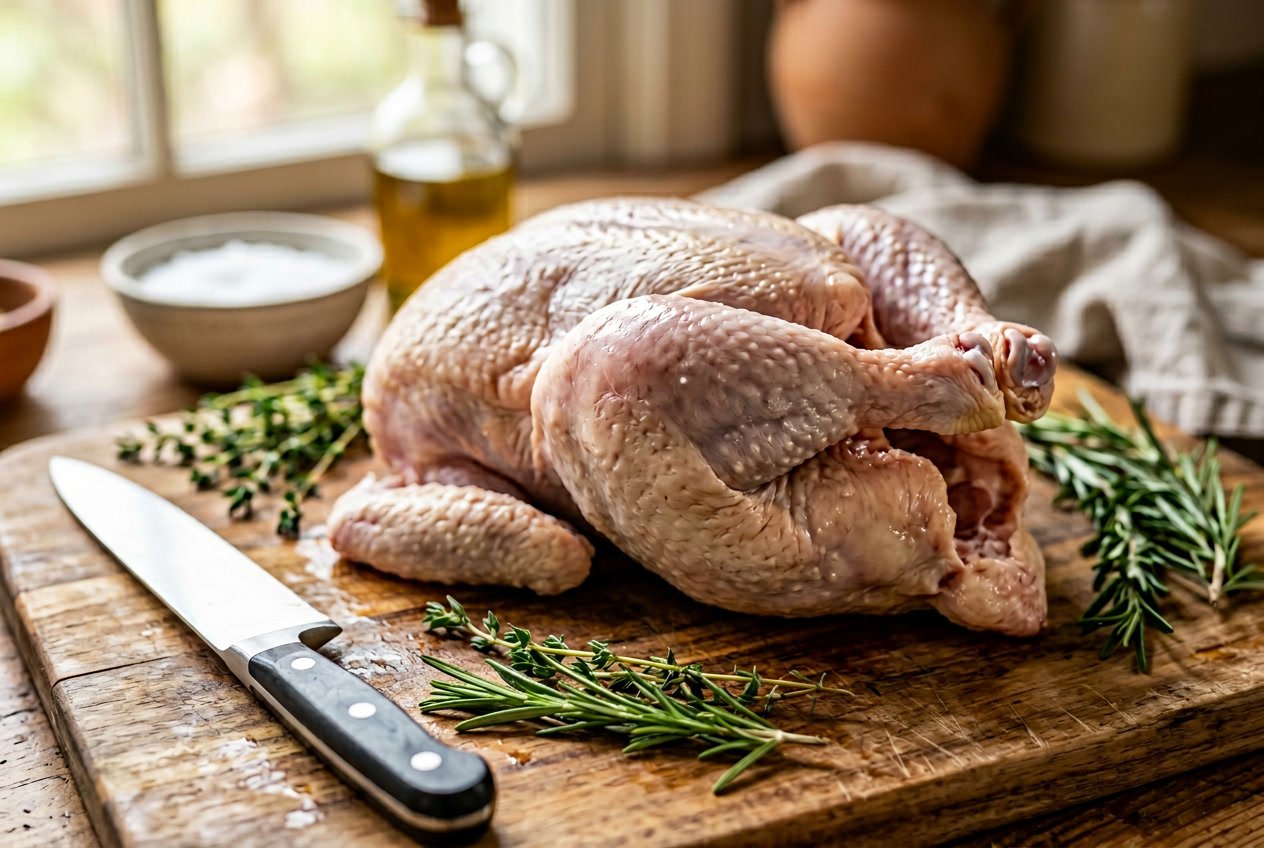
Knowing exactly where the thigh sits helps you separate it from the drumstick and breast. You can then recognize bone-in versus boneless pieces and choose the best cooking method for juicy results.
This post explains basic leg anatomy, how the thigh compares to other cuts, its cooking strengths, and what to look for when buying or preparing thighs.
Locating the Thigh on a Chicken
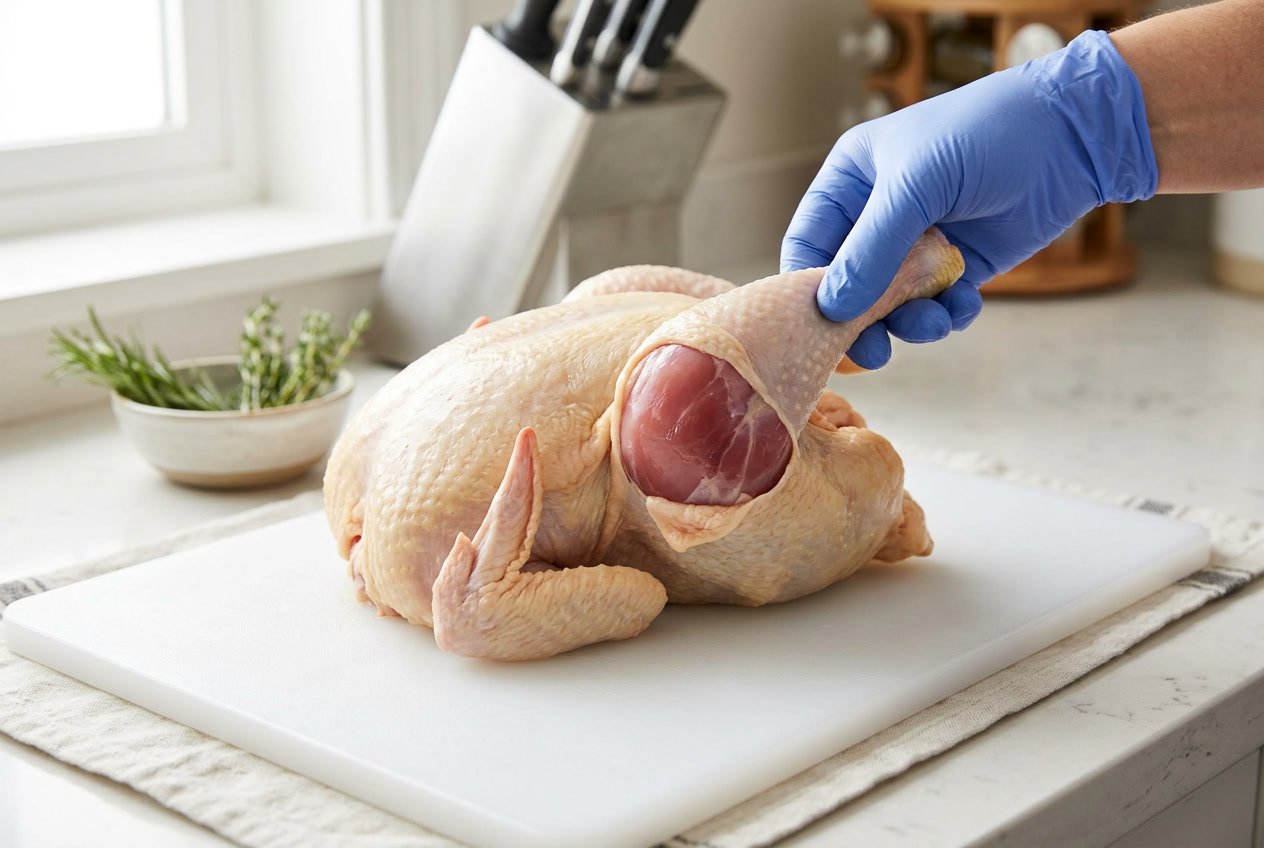
The thigh sits on the upper leg of the bird and connects to the body at the hip. You can learn how it relates to the drumstick, how it looks compared with other chicken parts, and how to spot it on a whole chicken.
Relation to Drumstick and Hip Joint
The thigh sits above the drumstick, running from the hip joint down to the knee joint. The hip joint attaches the thigh to the carcass, and the drumstick continues below the knee.
When the bird lies breast-side up, the thigh forms the upper portion of each leg quarter. It angles outward from the body.
Look for the joint line and the thicker, meatier area above the visible drumstick. If you follow the drumstick upward you reach the knee; continue past it and you enter the thigh, which ends at the hip.
Knowing these joints helps you carve along natural separations and remove the thigh cleanly without tearing the breast meat.
Visual Differences from Other Chicken Parts
The thigh is noticeably darker and fattier than the breast. That dark meat appearance comes from higher myoglobin and fat content, which gives thighs richer flavor and more moisture during cooking.
Thighs are broader and shorter than drumsticks, with a flatter profile compared to the rounded drumstick.
Skin-on, bone-in thighs show a thicker layer of skin and a single larger bone running lengthwise. Boneless thighs appear as irregular, compact pieces of dark meat.
Compared with wings and breasts, thighs sit lower on the body and have a denser grain. You can identify them by color, shape, and texture.
How to Identify on a Whole Chicken
Place the whole chicken breast-side up and locate the legs on either side of the breast. The drumstick is the lower, tapered portion; the thigh is the chunkier section directly above it.
Use your fingers to feel for the hip joint where the leg meets the body. The thigh starts there and extends down to the drumstick.
If carving, bend the leg outward to expose the joint and slice between the body and thigh along the joint line. For visual checks, note color and thickness: darker, thicker, and closer to the body indicates the thigh.
Chicken Leg Anatomy
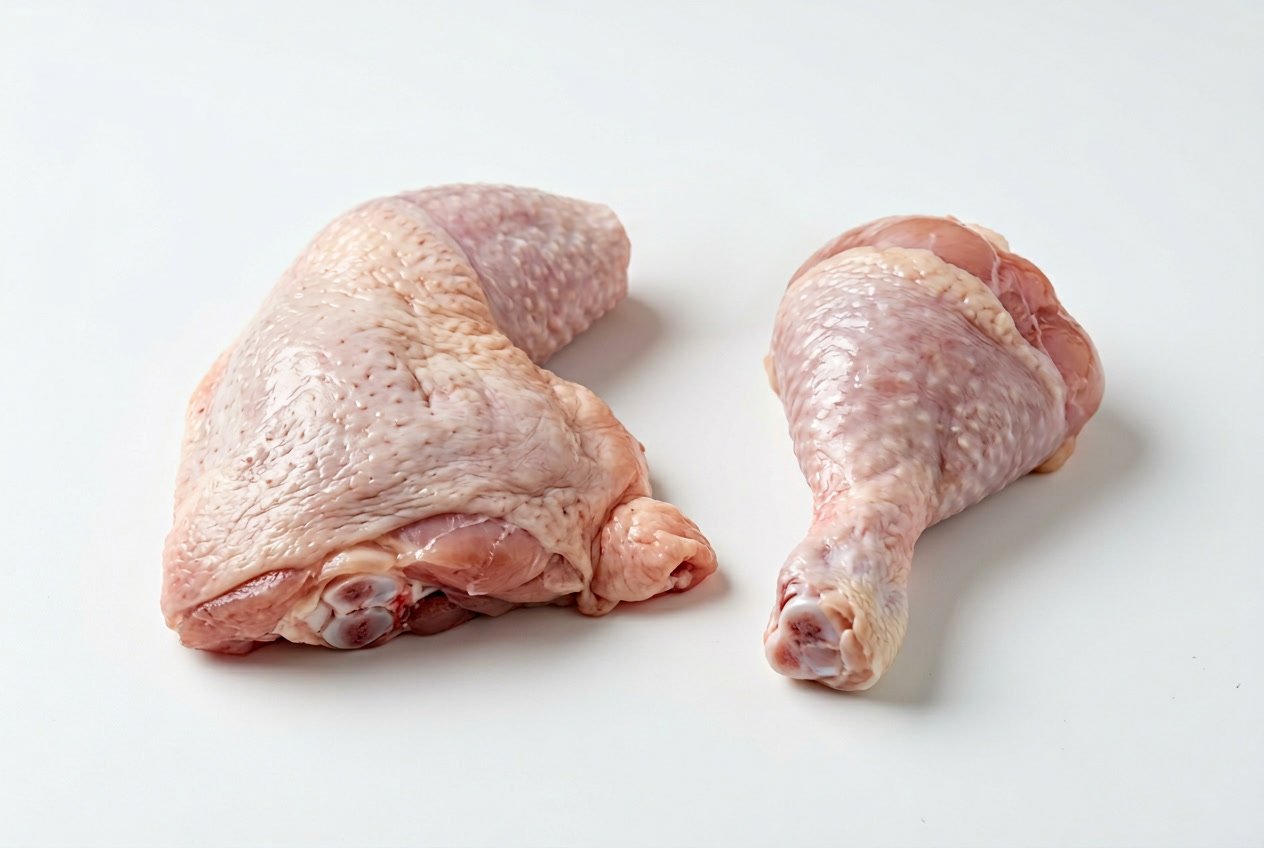
The chicken leg divides into two distinct parts with different bones, muscles, and cooking properties. You’ll learn exactly where the thigh sits and how the knee joint connects the parts.
Thigh and Drumstick Structure
The thigh is the upper leg portion attached to the chicken’s body. It contains the femur and a broad muscle mass often sold as bone-in chicken thighs.
Thigh meat is darker and fattier than white meat, which keeps it moist during slow cooking.
The drumstick is the lower leg below the knee joint. It contains a single long bone and tighter muscle fibers, giving drumsticks a firmer bite.
Skin covers both parts and contributes to browning and flavor when roasted or fried.
When you buy leg quarters, you get both thigh and drumstick together. Boneless thighs result from removing the femur and trimming connective tissue.
Knee Joint and Femur
The knee joint separates the thigh from the drumstick and functions like a hinge. The femur sits inside the thigh and forms the upper half of that joint, while the tibiotarsus forms the lower half.
You can see the joint when the leg is whole as a flexible area with cartilage and connective tissue. In butchery, cutting here separates the thigh’s femur from the drumstick’s long bone cleanly.
The thigh’s femur and surrounding fat need slightly longer, gentler heat to break down connective tissue. Drumsticks cook relatively quickly and hold shape.
Drumstick Differences
Drumsticks taper to a rounded end and concentrate meat around a single central bone. Their muscle fibers are firmer and have less intramuscular fat than thigh meat.
They respond well to high-heat methods like grilling, roasting, or frying. Nutritionally, drumsticks are close to thighs but typically contain slightly less fat per ounce.
In recipes, drumsticks keep form and brown crisply. Thighs shred more easily and suit braises, stews, or recipes calling for pull-apart meat.
When substituting, adjust cooking times. Drumsticks may finish sooner than bone-in chicken thighs, so monitor internal temperature.
How the Thigh Relates to Other Chicken Cuts
The thigh connects directly to larger leg cuts and sits near the bird’s wings and breast. This affects portioning, cooking times, and flavor profiles for adjacent parts.
Thigh and Breast Quarter
A breast quarter pairs the whole breast with part of the shoulder and sometimes the back. When you buy a whole breast or a breast quarter, you get the white-meat pectoral muscles that cook faster and taste milder than thighs.
Thighs are dark meat, higher in fat and collagen, so they tolerate longer, moister cooking methods.
If you portion a whole chicken into quarters, the thigh remains separate from the breast quarter. That separation matters when you plan cooking—breast quarters need gentler heat to avoid drying, while thighs handle braising, roasting, or grilling at higher temperatures.
Proximity to Chicken Wings
The thigh sits on the opposite end of the bird from the wings, but its proximity to the body means it shares connective tissues and some flavor-carrying fats with nearby parts.
Wings are white meat with thin skin and less fat; they crisp quickly and require shorter cook times than thighs.
When you roast or grill a whole bird, keep wings and thighs on separate heat zones or remove wings earlier to prevent overcooking.
If you debone or butterfly sections for recipes, note that wing meat won’t substitute for thighs in texture or richness.
Other Leg Quarter Components
A leg quarter combines the thigh, drumstick, and a portion of the back. When the thigh remains attached to the drumstick, you get a cohesive flavor and moistness profile.
The drumstick is denser and serves well as finger food. Together with the thigh, it makes a substantial portion for grilling or braising.
If you buy leg quarters, expect slightly longer cooking time than isolated thighs due to the thicker drumstick. Leg quarters also produce more stock flavor from the extra bone and connective tissue, which benefits stews and soups.
Characteristics of Chicken Thigh Meat
Chicken thighs offer darker, fattier meat than breasts, with a richer taste and greater tolerance for longer cooking. You’ll find differences in color, texture, and cooking behavior that affect how you shop, store, and prepare them.
Meat Color and Texture
Thigh meat is noticeably darker than breast meat due to higher myoglobin levels in the leg muscles. You’ll see a deep pink to reddish hue in raw thighs and a rich brown when cooked.
This color signals a denser flavor profile and greater iron content compared with white meat.
Texture feels more forgiving when cooked. The muscle fibers are shorter and contain more connective tissue, so thighs stay tender with moist cooking methods like braising or roasting.
If you buy boneless and skinless chicken thighs, expect quicker cooking and a slightly firmer bite. Bone-in chicken thighs retain moisture better and often yield a juicier result.
Fat Content and Flavor
Thighs have higher fat content than breasts; much of that fat sits under the skin and within the muscle. You’ll taste this as a fuller, savory mouthfeel and more pronounced aroma when you brown skin-on chicken thighs.
Fat also protects the meat from drying out, making thighs more forgiving if you overshoot cooking time.
If you trim the skin or choose skinless thighs, flavor concentrates differently. You’ll rely more on marinades, rubs, or sauces.
For leaner preparations, remove skin before cooking or drain rendered fat after searing. For maximum flavor and crisp skin, cook skin-on bone-in thighs at higher heat to render fat and crisp the exterior.
Bone-In vs Boneless Thighs
Bone-in chicken thighs include the femur and often the hip joint. Bones add flavor during cooking and help meat retain moisture.
You’ll notice slower, more even cooking with bone-in pieces. They work best for roasting, braising, or dishes where you want deep flavor without drying.
Boneless thighs cook faster and are easier to portion for stir-fries, skewers, or quick pan-sears. They’re convenient for weeknight meals and pack well for meal prep.
If you buy boneless, skinless thighs, expect leaner results and shorter cook times. Adjust temperature and watch internal temperature rather than time alone.
Popular Cooking Methods for Chicken Thighs
Chicken thighs deliver rich flavor and forgiving texture whether you roast, grill, fry, or simmer them. You’ll find methods that produce crispy skin, tender meat, and flavorful stock.
Roasting and Braising
Roast bone-in, skin-on thighs at 400–425°F (200–220°C) for crisp skin and juicy interior. Pat the skin dry, season with salt, pepper, and herbs, and roast on a rack so air circulates.
Thirty to forty minutes usually finishes thighs through. Braising works when you want fall-off-the-bone meat for dishes like a braised roast chicken or a hearty stew.
Brown the thighs first to develop flavor, then simmer in a flavorful liquid at low heat for 30–60 minutes.
Use a thermometer to confirm doneness; aim for 165°F (74°C) at the thickest part. Longer braising at slightly higher internal temps breaks down connective tissue and makes thighs more tender.
Grilling and Frying
Grilling gives a smoky char and crispy edges. Preheat to medium-high and oil the grates.
Grill bone-in thighs 6–8 minutes per side depending on thickness, and move them to indirect heat if flare-ups occur.
Pan-frying or deep-frying produces golden crust and moist meat. For pan-seared-and-oven-finished thighs, sear skin-side down until deeply browned, then transfer to a 400°F oven to finish.
For deep-frying, maintain oil at 325–350°F and cook until internal temp reaches at least 165°F.
Brine or dry-brine before frying to improve moisture retention. Use a thermometer and rest the thighs briefly to redistribute juices.
Using Thighs in Stocks and Soups
Chicken thighs add gelatin and flavor to stocks more reliably than breasts. Simmer bones and skin with mirepoix and aromatics for 3–4 hours to extract collagen, then strain for a rich chicken stock.
Use shredded cooked thighs directly in soups and stews for texture and depth. Boneless, skinless thighs break up nicely and hold shape better than breast meat in prolonged simmering.
For clear soups, skim fat after chilling or degrease with a fat separator. Store homemade stock in the fridge up to 4 days or freeze in portions for later use.
Benefits of Cooking with Chicken Thighs
Thighs offer higher fat content and connective tissue, which provides more flavor and greater tolerance for varied cooking times than breasts. That fat helps you achieve a crisp crust when roasting or frying.
They cost less per pound than many breast cuts and work across recipes such as roast chicken, fried chicken thighs, braises, and slow-simmered soups.
You can choose bone-in or boneless depending on whether you prioritize flavor or speed and convenience.
Nutritionally, thighs supply iron and slightly more calories from fat. Choose skin removal or trimming if you need lower fat content.
Chicken Thighs in Poultry Varieties and Production
Chicken thighs differ by bird type, production method, and how processors break down poultry into cuts. You will notice differences in size, fat content, and cooking behavior depending on whether the meat comes from a broiler, a laying hen, or a rooster.
Processors portion carcasses into retail cuts like thighs, drumsticks, or necks.
Broiler, Hen, and Rooster Thighs
Broiler thighs are the most common in stores. Broilers grow rapidly and produce large, well-marbled thighs that weigh roughly 110–170 grams each.
These thighs contain higher fat and myoglobin, which keeps them moist during grilling or roasting. If you buy broiler thighs labeled bone-in or boneless, you can expect consistent size and predictable cooking times.
Hen thighs, which come from egg-laying birds, tend to be smaller and leaner. You may notice a firmer texture and less intramuscular fat, which can require slower, moist cooking to stay tender.
Roosters are more active, so their thighs are generally tougher and more muscular than those of hens. These thighs suit stewing, braising, or long slow cooking to break down connective tissue.
Comparing Commercial Cuts
Retail chicken cuts separate the leg into thigh and drumstick at the knee joint. In stores you’ll find whole leg quarters (thigh and drumstick), individual thighs, and boneless skinless thighs.
Choose whole leg quarters for economical roasting. Select boneless thighs for stir-fries or skewers where uniform pieces matter.
Processors sometimes trim thighs to remove excess fat or skin and may add solutions like saline to extend shelf life. Check labels for these details.
“Cut-up” chicken packaging often includes necks and back pieces from the same carcass. Those parts influence yield and cost when you buy whole birds versus individual cuts.
Species and Size Differences
Different chicken breeds yield measurable differences in thigh size and composition. Cornish Cross broilers produce the largest thighs and commercial producers favor them for high meat yield.
Dual-purpose or heritage breeds give smaller but often more flavorful thighs. You’ll see variation if you raise or buy pasture-raised birds.
If you handle whole chickens, cut at the hip and knee joints to separate thighs from drumsticks.
When you compare species beyond Gallus gallus domesticus, turkey thighs are much larger and require longer cooking. Duck thighs contain more fat and benefit from rendering.


